
Vienna travel guide
Vienna
Give the Innere Stadt its own focused day or two before branching out: a Schönbrunn Palace afternoon, a Naschmarkt morning or a Prater evening each answer a different question about the city than the cathedral spire does.
Find your Vienna experience
Explore Vienna Before You Book
Take a virtual drive or walk, then find tours and tickets for the places you like.
Activities
Featured activities in Vienna


Prices at a glance
What we sell today and what recent flight searches found. No hotel prices; nothing here is a trip total.
- Tours and tickets in Viennafrom US$44.53
Live from Viator when this page loaded · per adult · changes by date.
Plan Vienna by time and budget
Top experiences
Top experiences in Vienna
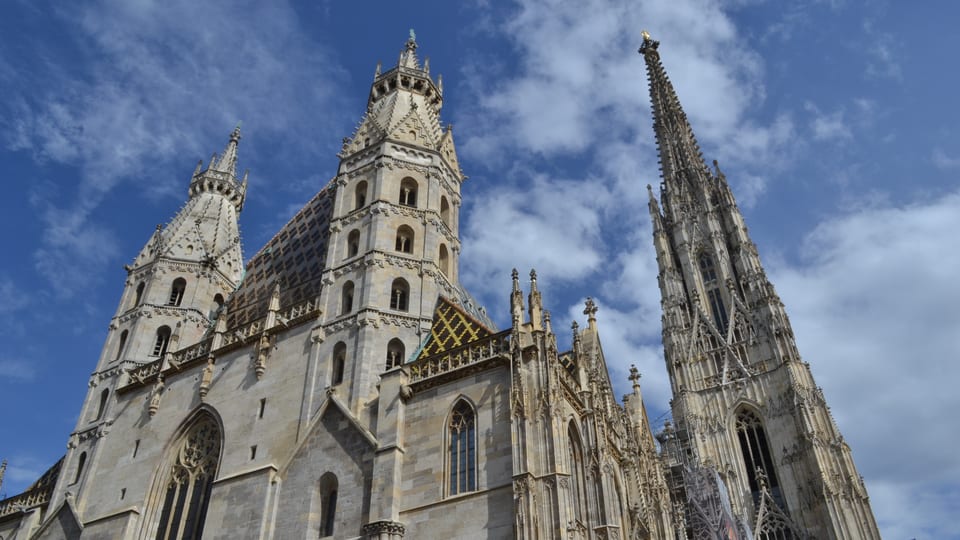
St. Stephen’s Cathedral
Its 136.4-metre south tower took 65 years to build, from 1368 to 1433, and its patterned roof of 230,000 glazed tiles has marked the centre of Vienna’s skyline for centuries.
Best for: Visitors starting a walk of the historic centre from its central landmark · Area: Innere Stadt, Stephansplatz
Plan for Climbing the south tower means 343 narrow spiral steps with no lift, so mid-afternoon queues can run long in summer.
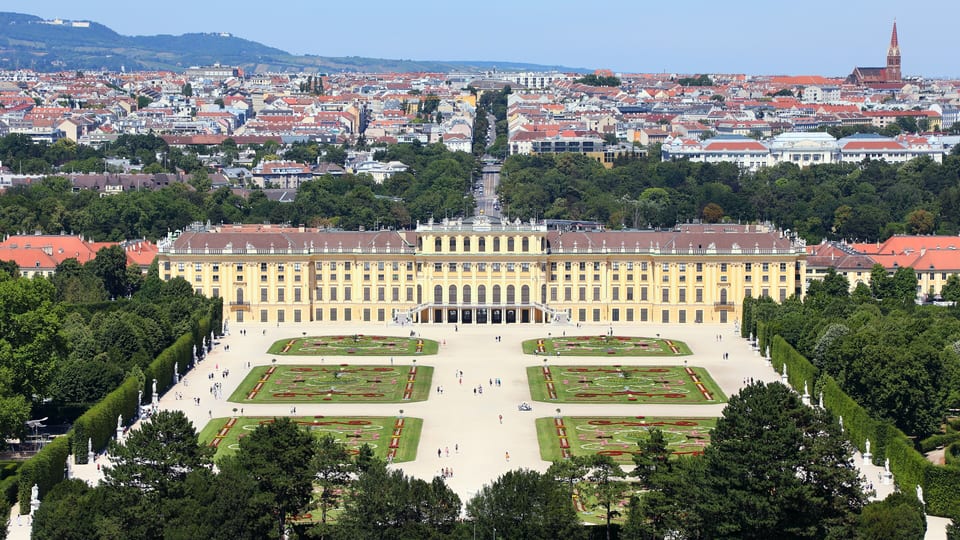
Schönbrunn Palace
Remodelled into a 1,441-room Rococo residence under Empress Maria Theresa and the Habsburgs’ summer residence until 1918, Schönbrunn was inscribed by UNESCO in 1996 alongside its formal gardens.
Best for: History-focused visitors and families · Area: Hietzing, a tram or U-Bahn ride from the centre
Plan for Only 40 of the palace’s 1,441 rooms are open to visitors, and timed-entry tickets for the state apartments sell out on peak-season mornings.
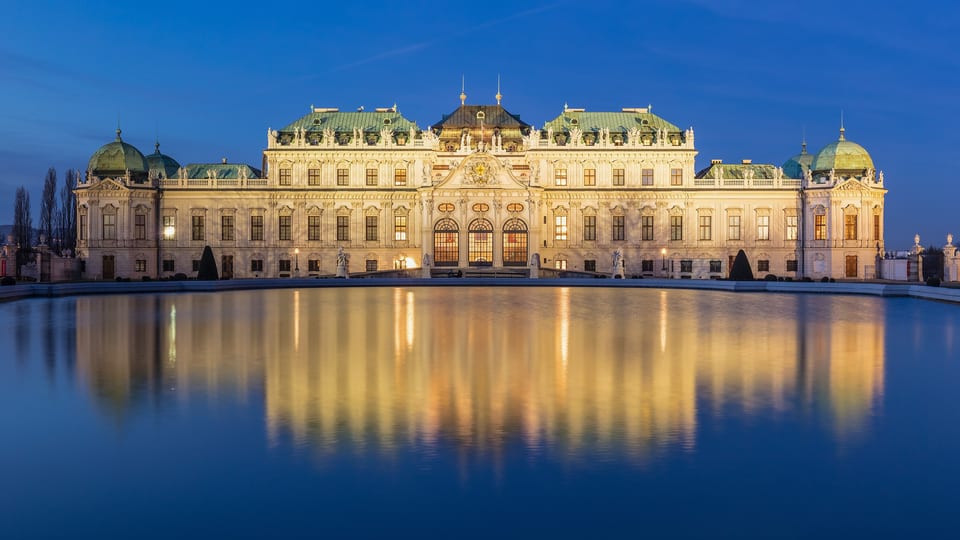
Belvedere Palace
Built from 1712 to 1723 as Prince Eugene of Savoy’s summer residence, the Upper Belvedere now holds the world’s largest single Klimt collection, including The Kiss, bought by the Austrian state in 1908.
Best for: Art-focused visitors wanting Vienna’s Klimt collection · Area: Landstraße, south-east of the Ring
Plan for The Upper Belvedere’s Klimt galleries draw the heaviest visitor numbers in the complex, so a same-day ticket for The Kiss can sell out ahead of a walk-in visit.
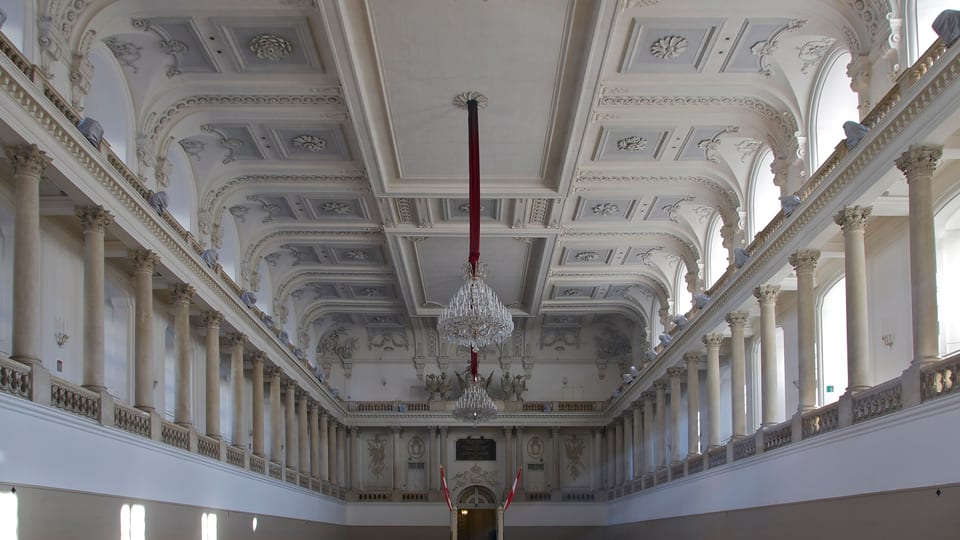
Spanish Riding School (Hofburg)
Its Winter Riding School hall, built into the Hofburg’s Michaelertrakt between 1729 and 1735, still stages the Lipizzaner stallions’ classical dressage performances that resumed here in 1955.
Best for: Visitors wanting a genuinely distinct Habsburg-era tradition, not only architecture · Area: Innere Stadt, Michaelerplatz
Plan for Full performances run on a limited schedule and need advance booking; a training-session visit is easier to arrange but shows a different, quieter side of the same tradition.
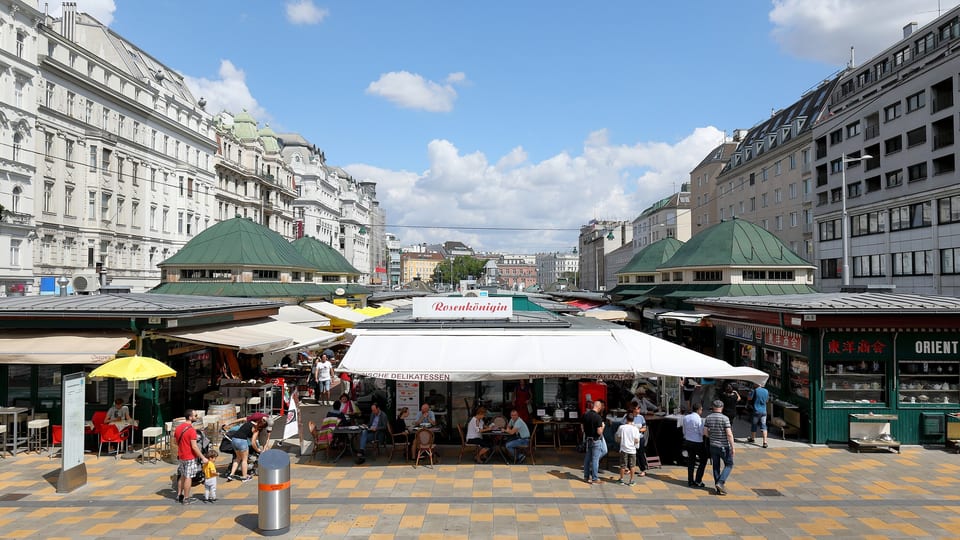
Naschmarkt
Officially named in 1905 on a site used as a market since the 18th century, the Naschmarkt’s roughly 120 stalls and stands still trade six days a week along the covered-over Wien River.
Best for: Food-focused travellers and a break from monument sightseeing · Area: Between Mariahilf and Wieden, south-west of the Ring
Plan for The Saturday flea market at the market’s western end draws its own separate crowds, distinct from the weekday food-stall trade.
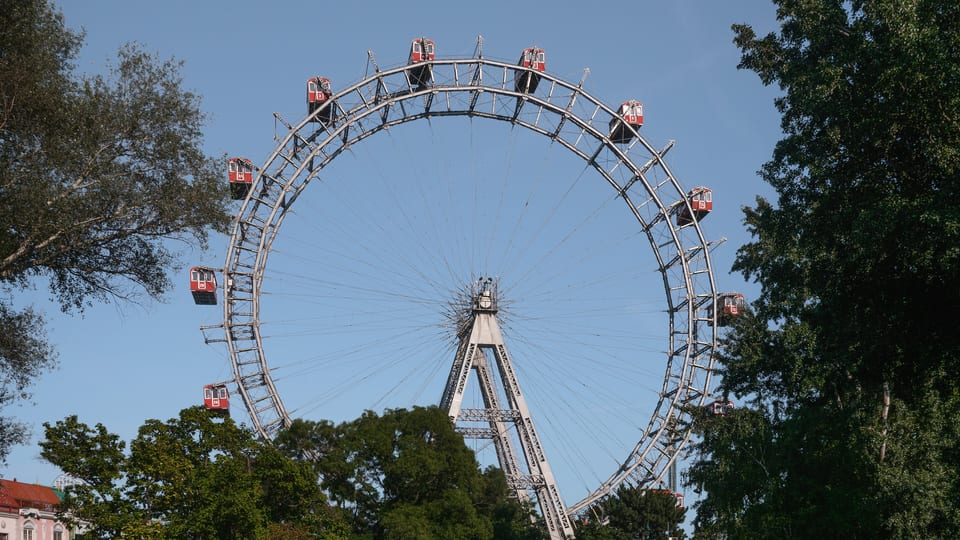
Wiener Riesenrad (Prater)
Built in 1897 for Emperor Franz Josef I’s coronation jubilee and rebuilt after wartime damage alongside St. Stephen’s Cathedral and the State Opera, the 64.75-metre Riesenrad was the world’s tallest Ferris wheel from 1920 to 1985.
Best for: Travellers wanting a skyline view and the Prater’s park-and-fairground setting · Area: Leopoldstadt, the Prater amusement park
Plan for The surrounding Wurstelprater fairground is a separate paid-attractions area from the free public Prater park, so budgeting time and cost needs both to be planned for.
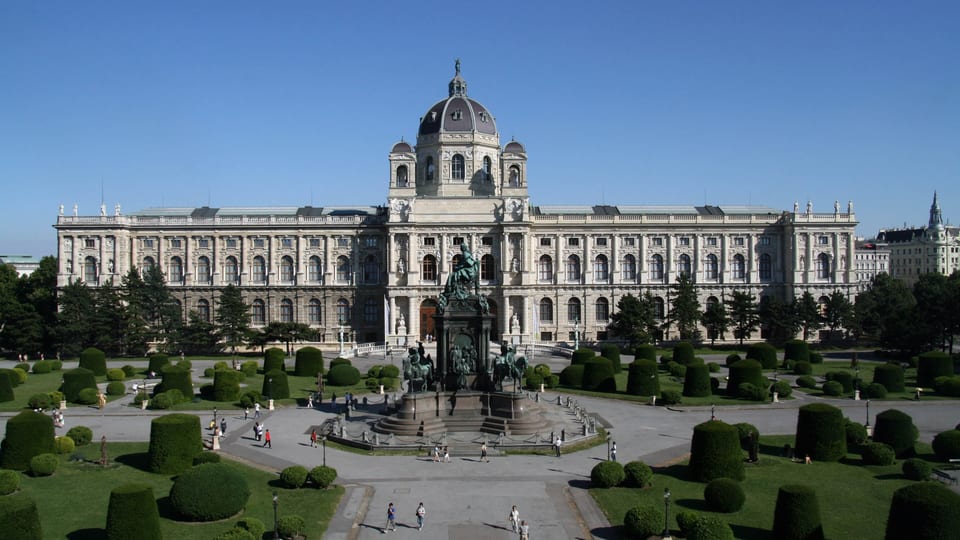
Kunsthistorisches Museum
The Kunsthistorisches Museum holds the Habsburg dynasty’s art collections across five millennia, including an Egyptian and Near Eastern collection spanning nearly 4,500 years and a coin collection of around 600,000 objects, one of the five largest coin collections in the world.
Best for: Art and antiquities-focused visitors wanting depth beyond the Belvedere’s Klimt collection · Area: Maria-Theresien-Platz, just outside the Ring near the MuseumsQuartier
Plan for However, from 8 September 2026 the museum requires a timed-slot reservation, so a walk-in visit without a booked slot is no longer reliable.
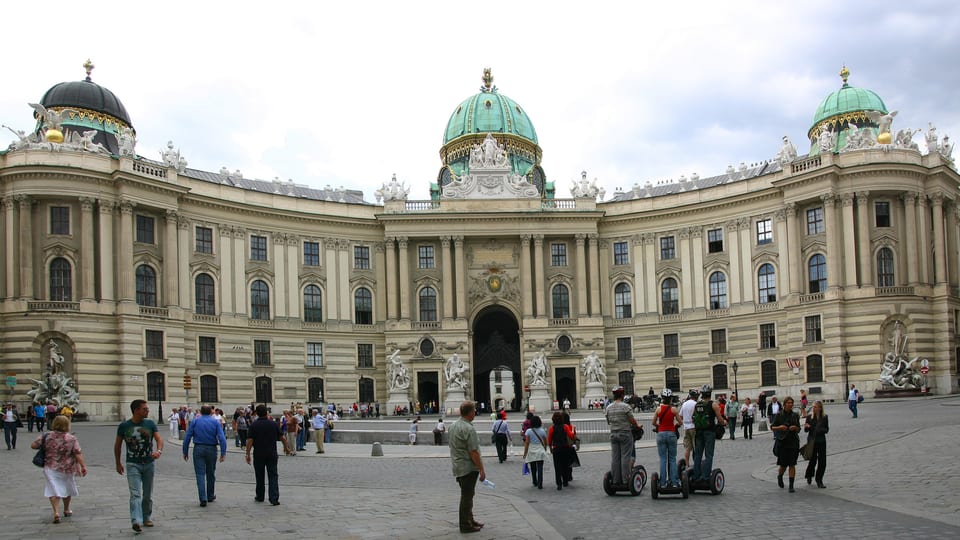
Hofburg Imperial Apartments and Sisi Museum
The Hofburg was the Habsburg dynasty’s residence for more than 600 years, and its Sisi Museum, housed in the Stephan apartments since 2004, displays personal items belonging to Empress Elisabeth alongside the Imperial Apartments and the Silver Collection.
Best for: Visitors wanting the Habsburgs’ domestic and personal history rather than only ceremonial architecture · Area: Innere Stadt, Michaelerkuppel
Plan for However, a combined ticket covers the Sisi Museum and Imperial Apartments in around 60 minutes, so travellers wanting real depth on either half should still expect a fairly fast-paced single visit.
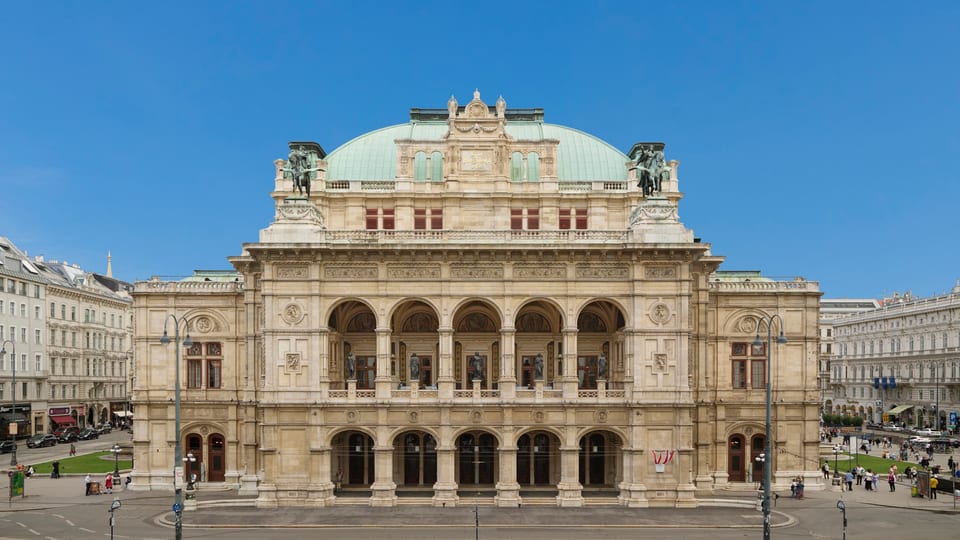
Vienna State Opera
The Vienna State Opera seats 1,700 across its main floor, boxes and gallery, and sells 435 standing-room places exclusively on the day of each performance from 10:00, online and at the house’s own standing-room desk.
Best for: Music-focused travellers without a booked seat and spontaneous same-day visitors · Area: Innere Stadt, Opernring
Plan for However, standing-room tickets are not bookable in advance and go on sale exactly at 10:00 on the performance day, so they suit a flexible schedule rather than a fixed plan.
Plan one, three or five days in Vienna
One day: choose the Innere Stadt or Schönbrunn, not both
Give the Innere Stadt the whole day: St. Stephen’s Cathedral, the Hofburg’s Imperial Apartments and Sisi Museum, and a Ringstrasse walk sit close enough together to do properly without a Schönbrunn detour. Save the palace for a return trip rather than rushing it into the same day.
The cathedral’s south-tower climb alone runs 343 narrow spiral steps with no lift, and the Hofburg’s combined Sisi Museum and Imperial Apartments ticket already runs to around 60 minutes. Adding a tram or U-Bahn ride out to Schönbrunn and back turns a focused day into a day spent mostly in transit.
The trade-off Schönbrunn, the Belvedere and the Naschmarkt wait for a second visit; adding Schönbrunn to this day usually means the gardens and the façade only, with the state apartments unvisited.
Three days: Innere Stadt, Schönbrunn, and Naschmarkt with the Belvedere
Sleep inside the Ring all three nights and let the U4 do the moving: one line links Karlsplatz, the Naschmarkt at Kettenbrückengasse and Schönbrunn. Reserve the Schönbrunn time slot before you fly, since the palace sells admission against fixed times rather than open walk-up entry.
Day one: St. Stephen’s Cathedral, the Hofburg and a Ringstrasse walk. Day two: Schönbrunn Palace, using whichever ticket tier matches the time available, plus the Gloriette if the pace allows. Day three: the Naschmarkt in the morning, then the Belvedere in Landstraße for Klimt’s The Kiss in the afternoon.
The trade-off The Prater and the Wachau stay outside three days; squeezing a fourth district in costs the Belvedere afternoon, which is the one museum visit this plan protects.
Five days: add the Prater and a Wachau Valley day trip
Use the fourth day for Leopoldstadt and the Prater, including the Wiener Riesenrad, and the fifth for a Wachau Valley day trip by train to Krems. Stay in the same hotel all five nights: the districts in this guide are a few U-Bahn or tram stops apart, so a second base buys nothing but a packing morning.
The Riesenrad has anchored the Prater skyline since 1897, a different kind of view from the Innere Stadt’s street-level sights. The Wachau Valley trip covers Melk Abbey and Dürnstein by train and a local bus or river boat, roughly an hour each way to Krems, and needs the whole day rather than a half-day add-on.
The trade-off Resist a second regional trip: it would put two of the five days on trains. A second Naschmarkt morning or a first Kunsthistorisches Museum visit keeps the fifth day in the city.
Costed plans: One Day in Vienna: €40 or Less? → · Vienna in 3 Days for €180? →
Sources
checked 2026-09-13. Recommendations are editorial judgements based on the cited sources below.
Choose a Vienna base and explore nearby
Innere Stadt and the Ringstrasse: a base for sightseeing density
Consider this base when St. Stephen’s Cathedral, the Hofburg and the State Opera being outside your door matters more than a quiet evening, and you accept the highest room rates in the city for that convenience.
Nearly every U-Bahn line reaches the Innere Stadt, so it also works as a hub for day trips out to Schönbrunn, the Naschmarkt or the Prater without changing hotels partway through the stay.
The trade-off The district quiets down earlier in the evening than the Naschmarkt or Landstraße, and its restaurants cater to visitors rather than residents, so a food-focused stay is usually better based elsewhere.
Naschmarkt and Mariahilf-Wieden: a base for food and a local pace
Consider this base when a market-and-café rhythm and independent shops matter more than a short walk to the cathedral, and you are comfortable reaching the Innere Stadt by tram or U-Bahn rather than on foot.
The Naschmarkt itself trades six days a week and sits between the Mariahilf and Wieden districts, so evenings here run later and more locally than around the Ring.
The trade-off Unlike the Innere Stadt, none of the core imperial sights sit within an easy walk, so a first-time visitor prioritising landmark density over neighbourhood pace should choose the Innere Stadt instead.
Landstraße: a base for an art-focused stay anchored on the Belvedere
Consider this base when the Belvedere’s Klimt collection is the trip’s main purpose and you are comfortable with a quieter, embassy-lined district rather than a landmark-dense one.
Tram lines connect Landstraße to the Ring in a few stops, keeping the Innere Stadt and the Naschmarkt both reachable without a long transfer, even though neither sits within walking distance from here.
The trade-off Landstraße makes sense once the Innere Stadt has been walked on an earlier trip; on a first visit it puts every sight except the Belvedere behind a tram ride.
Sources
checked 2026-09-13. Recommendations are editorial judgements based on the cited sources below.
Airport and getting around
Vienna International Airport (VIE), which handled a record 32,559,115 passengers in 2025, is the city’s main international gateway.
The S-Bahn main line is closed from 7 September 2026 to the end of October 2027, so the City Airport Train runs as a bus to Wien Mitte in about 21 minutes. The S7 stops at St. Marx (then tram 18 or 71), and the airport bus (VAB 2) reaches Schwedenplatz in about 20.
Wiener Linien’s five U-Bahn lines, trams and buses cover the Innere Stadt and every district in this guide. The annual Jahreskarte pass adds unlimited U-Bahn, tram, bus and connecting S-Bahn and Badner Bahn travel within Vienna’s core zone, though it excludes the airport zone and the CAT.
Best time to visit
Spring (March–May)
Mild, warming conditions with generally shorter queues at major Innere Stadt sites than summer, though cool snaps and Danube-valley rain remain possible into May.
- Crowds
- Varies by event and attraction
Summer (June–August)
Warm days bring the year’s heaviest visitor numbers to St. Stephen’s Cathedral, Schönbrunn Palace and the Prater; early starts and weekday visits help manage both heat and crowds.
- Crowds
- Varies by event and attraction
Notable events
- Donauinselfest in late June
Autumn (September–November)
September and October keep much of summer’s mild weather with fewer crowds, before cooler, wetter continental conditions typically arrive in November.
- Crowds
- Varies by event and attraction
Notable events
- The Viennale film festival from late October into early November
Winter (December–February)
Vienna’s coldest stretch, when Christmas markets fill the Rathausplatz and Innere Stadt squares and cold, sometimes snowy conditions suit museums and palaces more than long outdoor walks.
- Crowds
- Low
Notable events
- The Vienna Opera Ball at the State Opera in February
Food, markets and local life
The Naschmarkt anchors the city’s everyday food trade with roughly 120 stalls open six days a week, tracing to an 18th-century market site and officially named in 1905, while café culture around the Innere Stadt shows a slower, seated side of the same food tradition.
Leopoldstadt and the streets around the Naschmarkt add a more local evening scene with a different rhythm from either the Innere Stadt’s tourist-facing restaurants or the market’s daytime stalls.
City profile
- Population (City of Vienna (Bundesland Wien), Municipal Department 23 population register, 1 January 2025, 2025): 2,028,289
A Roman legionary camp called Vindobona stood on the site of today’s Innere Stadt from around AD 100, garrisoned by Legio X Gemina, and its street grid still shapes the historic centre’s layout around Michaelerplatz and the Hoher Markt.
UNESCO inscribed the Historic Centre of Vienna as a World Heritage Site in 2001 for its Baroque ensembles and 19th-century Ringstrasse, then placed it on the List of World Heritage in Danger in 2017 over a planned high-rise development near the centre.
Famous for:
- St. Stephen’s Cathedral, its south tower 136.4 metres tall and built between 1368 and 1433.
- Schönbrunn Palace, a 1,441-room former Habsburg summer residence inscribed by UNESCO in 1996.
- A leading European centre of classical music, from Viennese Classicism to today’s State Opera.
What makes a Vienna visit worthwhile
The Innere Stadt layers a Roman camp’s street grid against a 1433 cathedral tower and a 19th-century Ringstrasse within walking distance of each other. Studying St. Stephen’s Cathedral, the Hofburg and the Ringstrasse as three different eras explains the core better than visiting them as unrelated stops.
The contrast that follows the Innere Stadt matters as much as the old town itself: a Schönbrunn Palace afternoon, a Naschmarkt morning or a Prater evening show a lived, neighbourhood-scale city rather than only its imperial core.
Vienna is not a stopover city: the Innere Stadt alone needs two full days and Schönbrunn Palace a further half-day, so a layover under 24 hours sees the Ringstrasse and little else.
- Plan by area
- Innere Stadt · Schönbrunn · Naschmarkt/Belvedere · Prater
- Good first stay
- 4 days for the Innere Stadt and Schönbrunn
- Climate constraint
- Cold winters · Warm summers, continental Danube climate
- Main airport
- VIE · Airport bus to Schwedenplatz in about 20 minutes
Planning your Vienna visit: FAQs
Can I see St. Stephen’s Cathedral, the Hofburg and the State Opera in one day?
St. Stephen’s Cathedral’s south-tower climb runs 343 narrow spiral steps with no lift, the Hofburg’s Imperial Apartments and Sisi Museum run to around 60 minutes, and the State Opera building itself is worth a slower look. Treat the connecting Ringstrasse walk as the day’s spine and pick two of the three rather than rushing all three plus Schönbrunn into one afternoon.
Which area should I stay in for a first visit?
The Innere Stadt keeps St. Stephen’s Cathedral, the Hofburg and the State Opera within walking distance and puts every U-Bahn line one stop away, which matters most on a first, sightseeing-dense visit. Base in the Naschmarkt district instead when a market-and-café rhythm matters more than walking distance to the cathedral, or in Landstraße when the Belvedere is the trip’s anchor.
When is Vienna least crowded?
Early spring and late autumn generally combine milder weather with lighter crowds at major Innere Stadt sites than the summer months, though exact conditions vary from year to year.
How much time does Schönbrunn Palace really need?
A half-day covers the state apartments and immediate gardens; a full day adds the Gloriette viewpoint, the maze and the palace zoo for travellers with time to spend beyond the apartments.
Do I need to book museum tickets before arriving in Vienna?
Schönbrunn Palace tickets already carry fixed admission times, and from 8 September 2026 the Kunsthistorisches Museum requires a timed-slot reservation too, so plan Vienna’s major museums as pre-booked rather than assuming a walk-up queue.
Can I get into the Vienna State Opera without booking months ahead?
Yes: the house sells 435 standing-room places, separate from its 1,700 seats, exclusively on the day of the performance from 10:00, so a same-day visit is possible without an advance seat reservation.
Make your Vienna plans
Compare tours, tickets and activities in Vienna →
Choose your departure market and search flights to Vienna from the Mubboo Flights homepage.
Compare flights ↗Sources
Latest source check: .
Show all 25 sources
- City of Vienna (MA 23) — statistics page (checked 2026-09-12)
- UNESCO World Heritage Centre — Historic Centre of Vienna (checked 2026-09-12)
- UNESCO World Heritage Centre — Palace and Gardens of Schönbrunn (checked 2026-09-12)
- Vienna Tourist Board (wien.info) — St. Stephen’s Cathedral (checked 2026-09-12)
- Schönbrunn Palace — The Palace (checked 2026-09-12)
- Vienna Tourist Board (wien.info) — Klimt’s The Kiss at the Belvedere (checked 2026-09-12)
- Spanish Riding School — History (checked 2026-09-12)
- City of Vienna — Market Authority historical outline, Naschmarkt (checked 2026-09-12)
- Wiener Riesenrad — History (checked 2026-09-12)
- Vienna Airport — 2025 traffic results press release (checked 2026-09-12)
- City Airport Train (checked 2026-09-19)
- Wiener Linien — Jahreskarte (checked 2026-09-12)
- The booking platform — Vienna destination mapping d454 (checked 2026-09-12)
- Kunsthistorisches Museum Wien — Visit (checked 2026-09-12)
- Sisi Museum / Hofburg (Schönbrunn Group) (checked 2026-09-12)
- Vienna State Opera — Ticket Info (checked 2026-09-12)
- Schönbrunn Palace (checked 2026-09-12)
- Donauinselfest (checked 2026-09-17)
- Viennale, Vienna International Film Festival (checked 2026-09-17)
- Vienna Opera Ball (Wiener Staatsoper) (checked 2026-09-17)
- Vienna Airport — City Airport Train (CAT by bus): journey time and frequency (checked 2026-09-19)
- City Airport Train — Main line closure and how to reach the airport (checked 2026-09-19)
- City of Vienna — S-Bahn main-line closure until the end of October 2027 (checked 2026-09-19)
- Vienna Airport — Rail connections (Railjet to Wien Hauptbahnhof) (checked 2026-09-19)
- Vienna Airport — Bus connections (Vienna Airport Bus journey times) (checked 2026-09-19)
Photo credits
- st stephens cathedral — Federicacosta8 · CC BY-SA 4.0.
- schoenbrunn palace — C.Stadler/Bwag · CC BY-SA 4.0.
- belvedere palace — Diego Delso · CC BY-SA 4.0.
- spanish riding school — Jebulon · CC0.
- naschmarkt — C.Stadler/Bwag · CC BY-SA 4.0.
- wiener riesenrad — Thomas Ledl · CC BY-SA 4.0.
- kunsthistorisches museum — Manfred Werner - Tsui · CC BY-SA 3.0.
- hofburg sisi museum — Gerd Eichmann · CC BY-SA 4.0.
- staatsoper — Wiener Staatsoper GmbH · CC BY-SA 4.0.
Mubboo Editorial Team · Reviewed by Mubboo Editorial Team


