
Toronto travel guide
Toronto
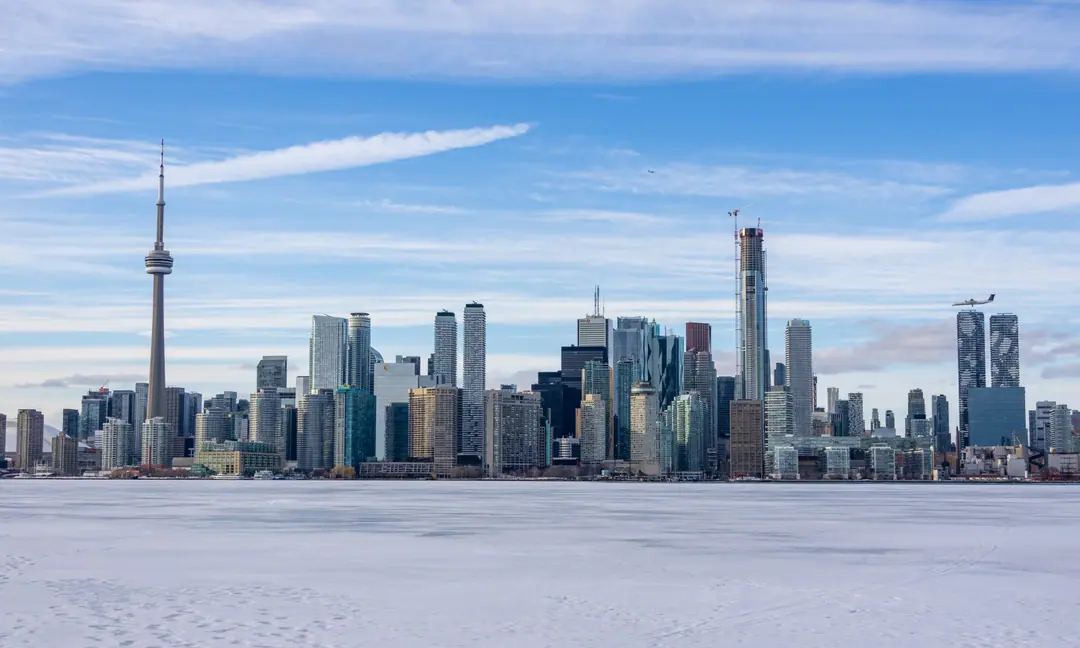
Give downtown Toronto its own focused day or two before branching out: a ferry to the Islands, an evening in the Distillery District, or an afternoon crossing Kensington Market into Chinatown each shows a different side of the city than the skyline does.
Find your Toronto experience
Explore Toronto Before You Book
Take a virtual drive or walk, then find tours and tickets for the places you like.
Activities
Featured activities in Toronto


Prices at a glance
What we sell today and what recent flight searches found. No hotel prices; nothing here is a trip total.
- Tours and tickets in Torontofrom US$27.55
Live from Viator when this page loaded · per adult · changes by date.
Plan Toronto by time and budget
Top experiences
Top experiences in Toronto

CN Tower
Standing 553.3 metres tall and open to the public since 26 June 1976, the CN Tower was the world’s tallest free-standing structure for over three decades and remains downtown Toronto’s clearest orientation point.
Best for: Travellers wanting the skyline view and an overview of downtown’s layout · Area: Downtown, beside the Rogers Centre and Ripley’s Aquarium of Canada
Plan for The Main Observation Level and glass floor can carry timed-entry queues at peak midday hours; an early or evening visit generally moves faster.
Royal Ontario Museum
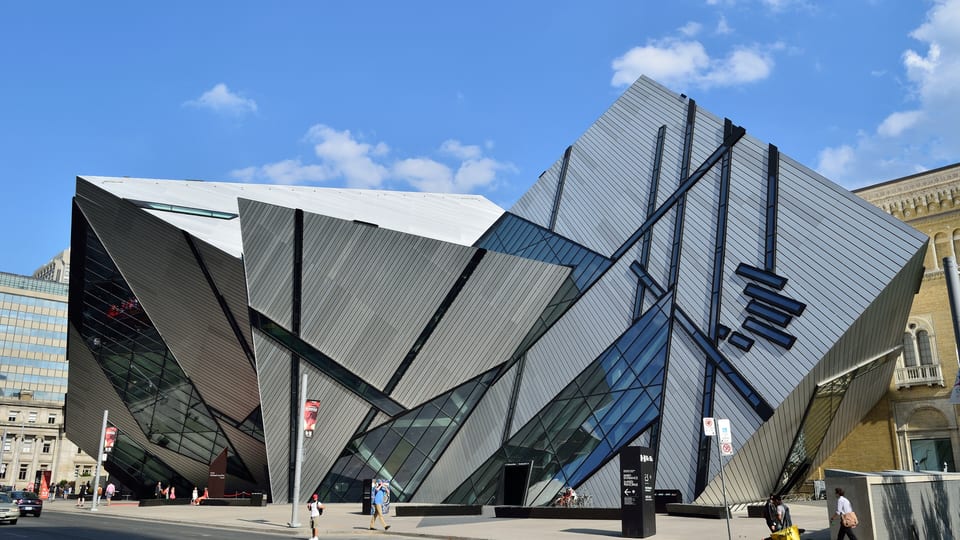
Opened on 19 March 1914 and now Canada’s largest museum, the ROM holds roughly 18 million artworks, cultural objects and natural history specimens across 40 galleries covering both world cultures and natural history.
Best for: Museum-focused visitors and families · Area: University Avenue and Bloor Street
Plan for The collection is large enough that covering every gallery in one visit is unrealistic; choosing two or three sections in advance works better than an unplanned walk-through.
Art Gallery of Ontario (AGO)
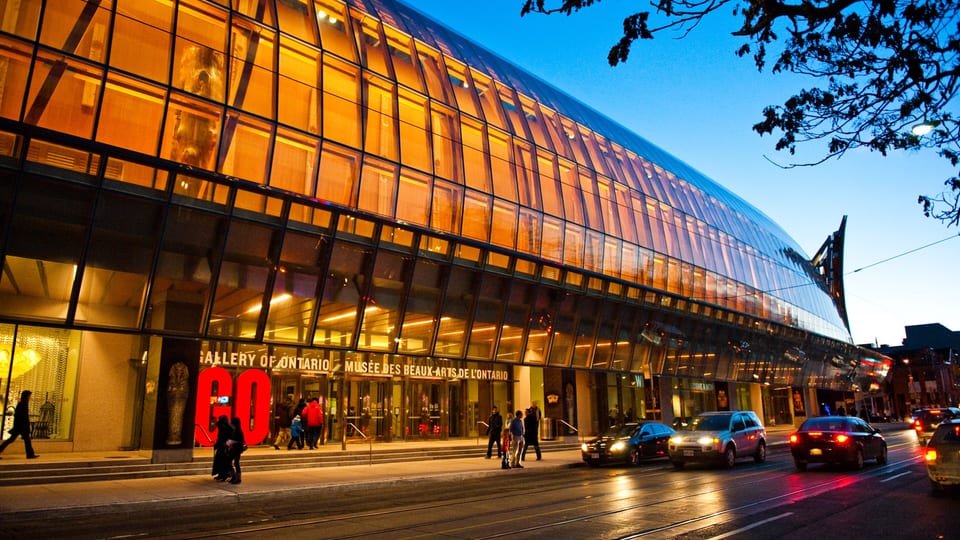
Founded in 1900 and reshaped by a Frank Gehry-designed renovation completed in 2008, the AGO holds more than 95,000 works, including the world’s largest public collection of Henry Moore sculpture and a dedicated Canadian and Indigenous art collection.
Best for: Art-focused visitors wanting a second downtown museum with a different collection than the ROM · Area: Grange Park, Dundas Street West
Plan for Admission is ticketed, but free entry covers specific groups, such as children under 10, Ontarians under 25 and Indigenous Peoples. The First Wednesday Night Free window, from 6 to 9 pm each month, admits everyone, but free tickets must be booked in advance.
St. Lawrence Market
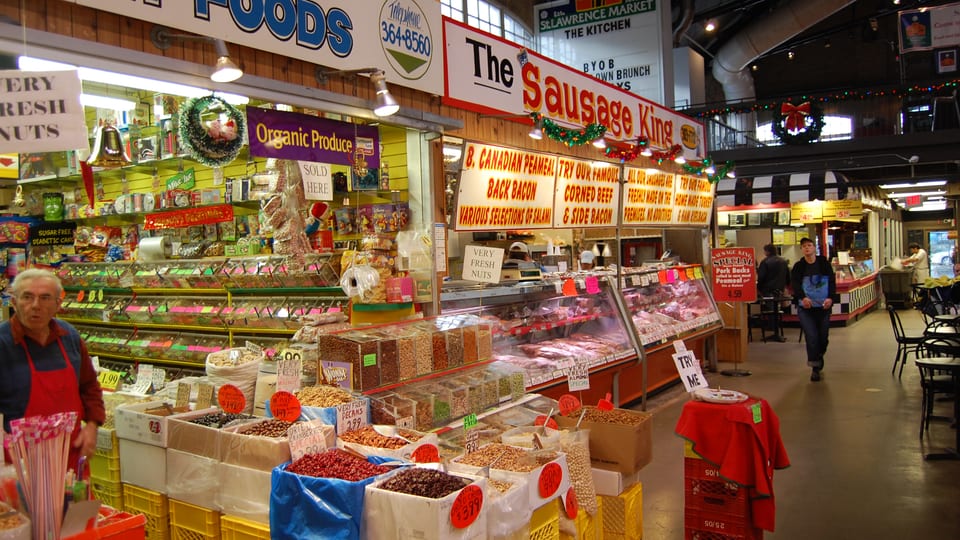
Tracing to 1803 and named the world’s best food market by National Geographic in 2012, the market’s North and South buildings still open at dawn on Saturdays for farmers selling meat, cheese and produce as they have for over two centuries.
Best for: Food-focused travellers and a break from monument sightseeing · Area: Old Town, near Front and Jarvis
Plan for The North Market’s farmers’ hours run Saturdays only; visiting on a weekday still offers the South Market’s permanent food stalls but not the full weekly farmers’ market.
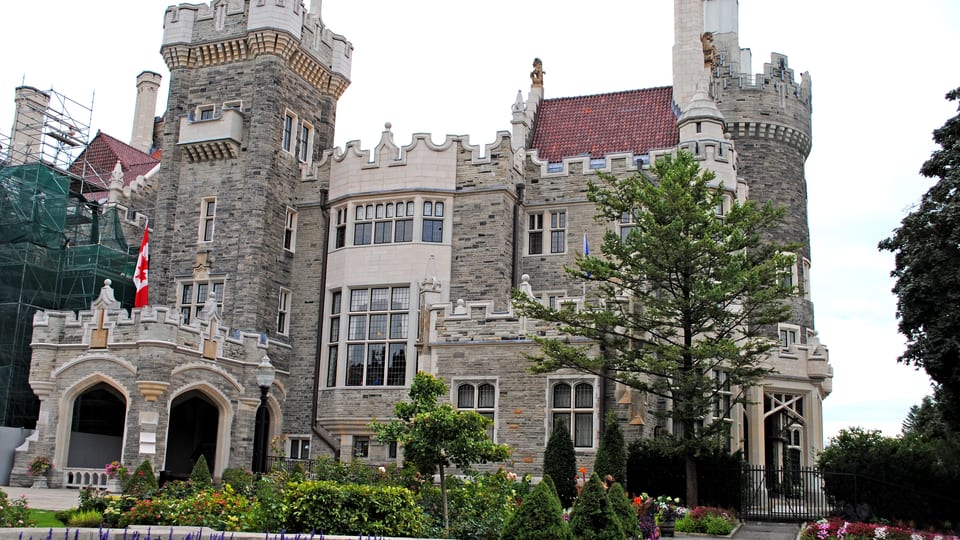
Casa Loma
Built from 1911 to 1914 over three years for financier Sir Henry Pellatt, Casa Loma was the largest private residence ever constructed in Canada and remains a Gothic Revival landmark with gardens, secret passages and stables.
Best for: Architecture and history visitors, and families · Area: Midtown, above the Annex
Plan for It sits north of the downtown core and needs a deliberate subway-and-walk trip, not a stop on a downtown walking route.
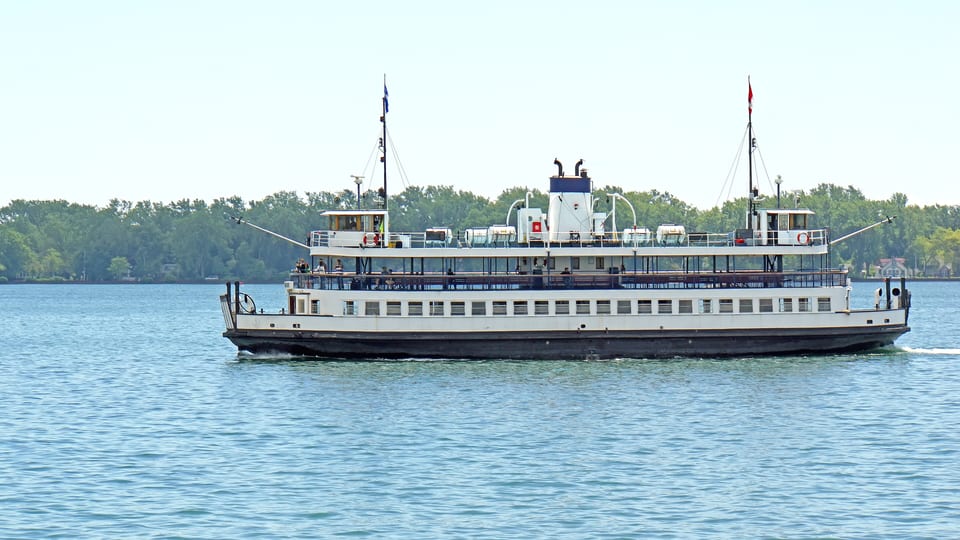
Toronto Islands
Reached only by a ferry that has run since 1883, the roughly 600-acre, car-free Toronto Islands form the largest urban car-free community in North America, with 8 kilometres of pathway and lifeguarded beaches in season.
Best for: Travellers wanting the skyline view from the water and a car-free park · Area: Lake Ontario, ferry from the Jack Layton Ferry Terminal
Plan for There is no bridge or road access; the ferry queue can run long on a summer weekend, so a weekday or early-morning crossing moves faster.
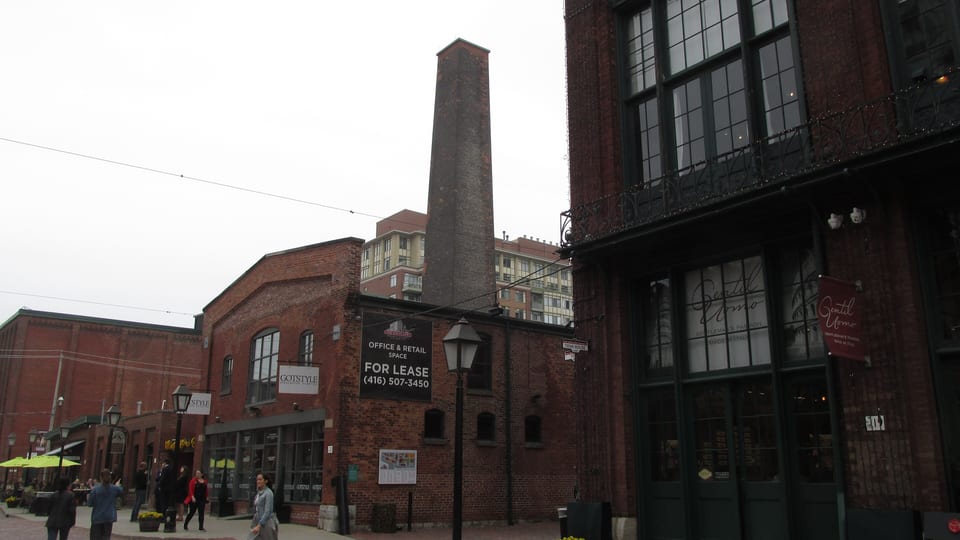
Distillery District
Built between 1859 and 1900 as the Gooderham and Worts Distillery, once the largest in the British Empire, the pedestrian-only Distillery District now holds over 40 Victorian industrial buildings, designated a National Historic Site in 1988.
Best for: Travellers wanting Victorian-era architecture and a pedestrian-only district · Area: East of St. Lawrence Market
Plan for It sits a distinct streetcar or walk from downtown’s core sites, so pairing it with St. Lawrence Market on the same day needs a realistic transit allowance.
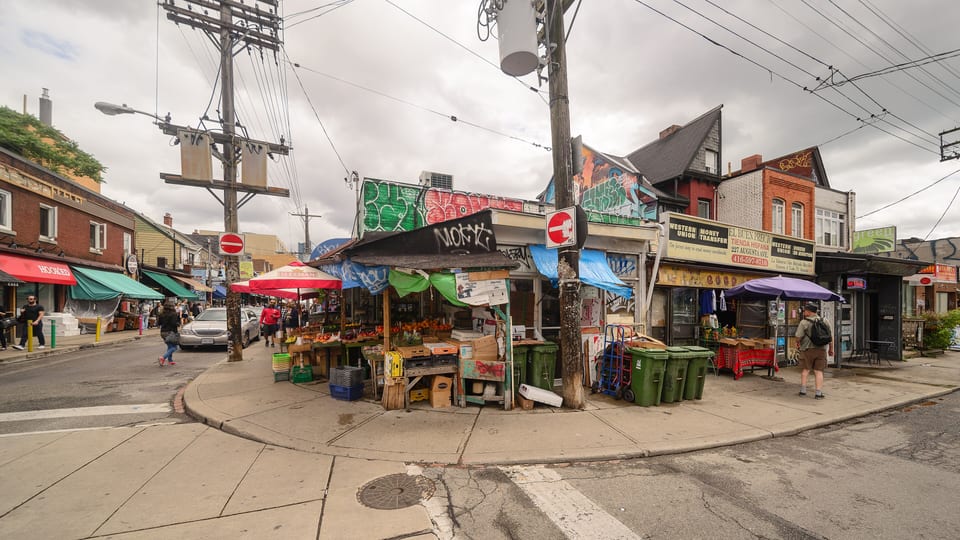
Kensington Market
Designated a National Historic Site of Canada in 2005 for the successive immigrant communities who have shaped it since the early 20th century, Kensington Market’s narrow streets still mix vintage shops, spice merchants and produce stalls block by block.
Best for: Travellers wanting a lived-in, independent-shop district rather than a formal market hall · Area: West of Spadina Avenue, adjoining Chinatown
Plan for The market has no single opening hours since it is a neighbourhood of independently run shops, so a Sunday visit looks different from a Saturday one, when more stalls trade.
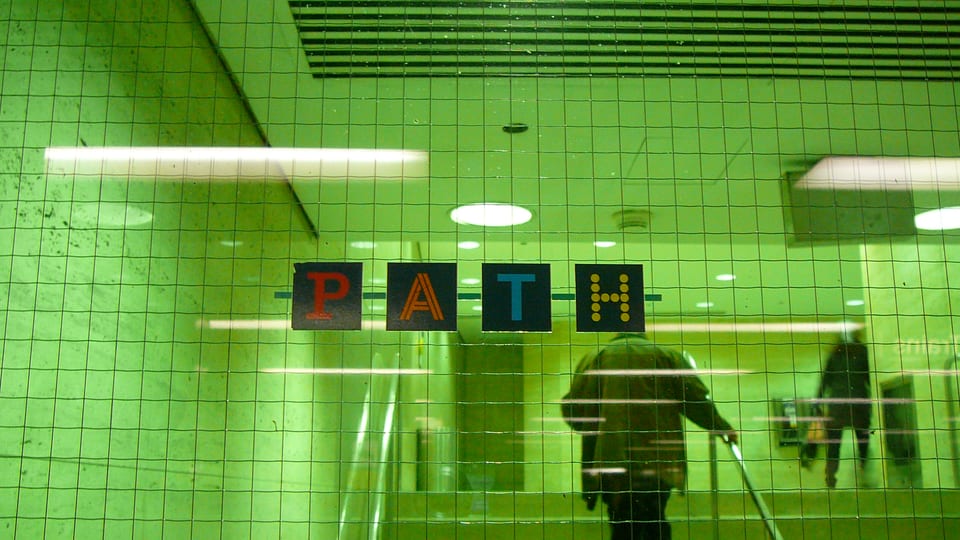
PATH underground city
The City of Toronto’s own PATH network runs more than 30 kilometres of underground walkway linking over 75 buildings and six subway stations to Union Station, carrying more than 200,000 commuters on a typical business day.
Best for: Winter visitors and downtown-based travellers wanting a weatherproof route between sights · Area: Downtown, beneath the Financial District and Entertainment District
Plan for The PATH is unsigned like a single attraction and some sections close outside weekday business hours, so treat it as a practical route between two chosen stops rather than a self-contained sight.
Plan one, three or five days in Toronto
One day: choose downtown or a neighbourhood, not both
Give downtown the whole day: the CN Tower, the Royal Ontario Museum or the AGO, and a PATH-linked walk sit close enough together to cover properly without a neighbourhood detour. Save Old Town, Kensington Market and Chinatown, or Queen West for a return trip rather than rushing one in.
The ROM alone holds 40 galleries and a CN Tower visit that adds the SkyPod can run to a couple of hours with queues. Adding a streetcar ride out to Kensington Market and back turns a focused day into a day spent mostly in transit.
The trade-off Old Town's market, the Distillery District and Queen West's galleries wait for a second visit; adding one of them to this day usually means seeing it only from a moving streetcar window.
Three days: downtown, Old Town, and Kensington Market with Chinatown
Sleep downtown or in Old Town for easy PATH and streetcar access, and reserve any CN Tower EdgeWalk slot or AGO special exhibition ticket before you fly, since both sell out on weekends.
Day one: the CN Tower, the ROM or the AGO, and a PATH walk if the weather is cold. Day two: St. Lawrence Market in the morning, then the Distillery District in the afternoon. Day three: Kensington Market and Chinatown, continuing on foot or by streetcar to Queen West.
The trade-off The Toronto Islands and Casa Loma stay outside three days; squeezing a fourth stop in costs the Queen West afternoon, which is the one neighbourhood walk this plan protects.
Five days: add the Toronto Islands and a Niagara Falls day trip
Use the fourth day for a Toronto Islands ferry crossing and Casa Loma, and the fifth for a Niagara Falls day trip by car, coach or the seasonal GO Train and WEGO bus combo. Stay in the same hotel all five nights: the districts in this guide are a subway or streetcar ride apart, so a second base buys nothing but a packing morning.
The Islands ferry has run since 1883 and shows the skyline from the water, a different view from any downtown street. The Niagara Falls trip covers the Horseshoe Falls and either a boat tour or Journey Behind the Falls, and needs the whole day rather than a half-day add-on.
The trade-off Resist a second regional trip: it would put two of the five days on transit. A second Old Town morning or a first AGO visit keeps the fifth day closer to the city.
Costed plans: One Day in Toronto: C$40 or Less? → · Toronto in 3 Days for C$190? →
Sources
checked 2026-09-13. Recommendations are editorial judgements based on the cited sources below.
Choose a Toronto base and explore nearby
Downtown: a base for sightseeing density and winter weatherproofing
Consider this base when having the CN Tower, the ROM and Union Station outside your door matters more than a quiet evening, and you accept the highest room rates in the city for that convenience.
The PATH links downtown hotels to Union Station, six subway stations and the Financial District entirely underground, over more than 30 kilometres of walkway, which matters most from December to March.
The trade-off After office hours the financial core empties and the PATH closes, so dinner from a downtown base is usually a streetcar ride to Old Town, Kensington Market or Queen West rather than a walk downstairs.
Old Town: a base for market mornings and an early Distillery District start
Consider this base when St. Lawrence Market's Saturday farmers' hours and the Distillery District's Victorian streets matter more than having a subway station outside your door.
Old Town sits a short streetcar ride or a 15 to 20 minute walk from downtown's core sights, so it works as a base for a market-and-history-focused stay without cutting off the CN Tower or the ROM.
The trade-off Unlike downtown, no subway line runs directly through Old Town, so an evening at a downtown theatre or the AGO needs a streetcar ride or a longer walk back.
Kensington Market, Chinatown or Queen West: a base for an independent-shop pace
Consider this base when a food-market-and-gallery rhythm matters more than walking distance to the CN Tower, and you are comfortable reaching downtown by streetcar rather than on foot.
The 501 Queen and College streetcars connect Kensington Market, Chinatown and Queen West to downtown and to each other, keeping every district in this guide reachable without a subway transfer.
The trade-off None of downtown's core landmark sights sit within an easy walk from here, so a first-time visitor most interested in the CN Tower and the ROM should choose downtown or Old Town instead.
Sources
checked 2026-09-13. Recommendations are editorial judgements based on the cited sources below.
Airport and getting around
Toronto Pearson International Airport (YYZ) is the city’s main international gateway; the UP Express train reaches Union Station in about 28 minutes, with departures every 15 minutes. Billy Bishop Toronto City Airport on the waterfront serves some short-haul and regional carriers closer to downtown.
The TTC’s subway lines, streetcar grid and PRESTO fare card cover downtown and much of the city, and a One Fare transfer program introduced in February 2024 allows free or discounted transfers to other Greater Toronto Area transit systems on the same PRESTO tap.
Best time to visit
Spring (March–May)
Mild, warming conditions with generally shorter queues at major downtown sites than summer, though lake-effect rain and cool snaps remain possible into May.
- Crowds
- Varies by event and attraction
Summer (June–August)
Warm and humid days bring the year’s heaviest visitor numbers to the CN Tower, the waterfront and the Islands; early starts and weekday visits help manage both heat and crowds.
- Crowds
- Varies by event and attraction
Notable events
- The Toronto Caribbean Carnival, five days of music, costume and a street parade in August
- The Canadian National Exhibition, 20 August to 6 September 2027
Autumn (September–November)
September and October keep much of summer’s warmth with fewer crowds, before cooler, wetter Great Lakes conditions typically arrive in November.
- Crowds
- Varies by event and attraction
Notable events
- The Toronto International Film Festival, more than a week of screenings in September
- Nuit Blanche, an overnight contemporary art event across the city from 7 p.m. on 3 October 2026
Winter (December–February)
Toronto’s coldest stretch, with lake-effect snow and wind chill that suit museums, the AGO and the PATH’s indoor routes more than long outdoor walks or a Toronto Islands crossing.
- Crowds
- Low
Food, markets and local life
St. Lawrence Market anchors downtown’s food history, tracing to 1803 and still hosting farmers at dawn on Saturdays, while Kensington Market’s spice and produce stalls and the Chinatown restaurants along Spadina Avenue show a different, block-by-block side of the same market culture.
The Distillery District’s converted Victorian buildings add a food-and-drink district built around 19th-century industrial architecture, a different backdrop again from Queen West’s later-running restaurants and bars along the 501 streetcar line.
City profile
- Population (City of Toronto (census subdivision), Statistics Canada 2021 Census of Population, 2021): 2,794,356
Lieutenant Governor John Graves Simcoe established the town of York on the Toronto Purchase lands in 1793; York was incorporated as the City of Toronto on 6 March 1834, adopting the Indigenous Mohawk-derived name meaning "where there are trees standing in the water."
On 1 January 1998, the Municipality of Metropolitan Toronto and its six constituent municipalities were dissolved and replaced by a single-tier City of Toronto, the boundary today’s population figures reflect.
Famous for:
- The CN Tower, 553.3 metres tall and open since 1976, anchoring the downtown skyline.
- The Royal Ontario Museum, Canada’s largest museum, open since 1914.
- St. Lawrence Market, tracing to 1803 and named the world’s best food market by National Geographic in 2012.
What makes a Toronto visit worthwhile
Downtown’s skyline sits within walking distance of the Royal Ontario Museum’s century-old galleries and St. Lawrence Market’s food stalls, which have traded since 1803. Seeing both in one visit shows a financial capital that still runs a working farmers’ market at its centre.
Downtown’s towers give one version of Toronto; a ferry to the car-free Islands, an evening among the Distillery District’s Victorian brick, or an afternoon of Kensington Market’s stalls and Chinatown’s restaurants gives another that only shows up once you leave the financial core.
Toronto has no compact old town to walk in an afternoon: downtown, Old Town, Kensington and Chinatown, Queen West and the waterfront are separate districts joined by streetcar and subway, so a same-day layover sees the CN Tower and the PATH and little else.
- Plan by district
- Downtown · Old Town · Kensington/Chinatown · Queen West · Waterfront/Islands
- Good first stay
- 4 days for downtown and one further district
- Climate constraint
- Cold, snowy winters · Warm, humid summers
- Main airport
- YYZ · UP Express to Union Station in 28 minutes
Planning your Toronto visit: FAQs
Can I see the CN Tower, the ROM and St. Lawrence Market in one day?
Downtown is compact enough to walk between all three, but the ROM alone holds 40 galleries and each site needs a couple of hours of its own. A workable split gives the tower a morning, the ROM an afternoon, and saves the market for the Old Town day instead.
Which area should I stay in for a first visit?
Downtown keeps the CN Tower, the ROM and the PATH’s weatherproof routes within walking distance, which matters most on a short, sightseeing-focused trip. Queen West and Kensington Market and Chinatown fit a longer stay built around galleries, restaurants and an independent-shop pace.
When is Toronto least crowded?
September and October keep much of summer’s warmth at downtown sites while crowds thin from their August peak, though a Great Lakes cold front can still arrive early in some years, so check the week’s forecast rather than assuming the calendar month.
Is a Toronto Islands trip worth adding?
A short public ferry crossing delivers the core Toronto Islands experience, the skyline view and the car-free park, in under half an hour each way; a full day adds the beaches and Centreville’s rides for travellers with time to spend beyond the crossing.
What is the PATH and do I need it?
The PATH is Toronto’s underground walkway linking more than 75 downtown buildings, six subway stations and Union Station over 30 kilometres. It matters most from December to March, when it lets a downtown visitor skip the cold rather than adding a genuinely new sight to see.
Is the Distillery District within walking distance of St. Lawrence Market?
Yes, roughly a 15-minute walk east along the same Old Town streets, though the King streetcar also covers the route directly. The two are commonly paired into one Old Town day rather than visited on separate trips.
Make your Toronto plans
Compare tours, tickets and activities in Toronto →
Choose your departure market and search flights to Toronto from the Mubboo Flights homepage.
Compare flights ↗Sources
Latest source check: .
Show all 26 sources
- Statistics Canada — 2021 Census Profile, Toronto, City (C), Ontario (checked 2026-09-12)
- Statistics Canada — 2021 Census Profile, Toronto, Census Metropolitan Area, Ontario (checked 2026-09-12)
- Destination Toronto — tourism board site (checked 2026-09-12)
- CN Tower — Explore the Tower (checked 2026-09-12)
- Royal Ontario Museum — About ROM (checked 2026-09-12)
- Destination Toronto — St. Lawrence Market Complex (checked 2026-09-12)
- City of Toronto — Toronto Island and Ferries (checked 2026-09-12)
- Casa Loma — History (checked 2026-09-12)
- The Distillery Historic District — self-guided tour document (checked 2026-09-12)
- Parks Canada — Kensington Market National Historic Site of Canada (checked 2026-09-12)
- UP Express (checked 2026-09-19)
- Toronto Transit Commission — Fares and passes (checked 2026-09-12)
- The booking platform — Toronto destination mapping d623 (checked 2026-09-12)
- Destination Toronto — Art Gallery of Ontario (checked 2026-09-12)
- City of Toronto — PATH downtown pedestrian walkway (checked 2026-09-12)
- Destination Toronto — Chinatown neighbourhood guide (checked 2026-09-12)
- Destination Toronto — Queen West neighbourhood guide (checked 2026-09-12)
- Niagara City Cruises — Voyage to the Falls Boat Tour (checked 2026-09-12)
- Niagara Parks — Journey Behind the Falls (checked 2026-09-12)
- Niagara Parks — WEGO bus (checked 2026-09-12)
- GO Transit — Niagara weekend GO Train service (checked 2026-09-12)
- CN Tower (checked 2026-09-12)
- Art Gallery of Ontario — Hours, Location and Admission (checked 2026-09-19)
- Destination Toronto — Must-attend annual festivals (checked 2026-09-17)
- Canadian National Exhibition — The Ex homepage (checked 2026-09-17)
- City of Toronto — Nuit Blanche Toronto (checked 2026-09-17)
Photo credits
- cn tower — Scott Webb scottwebb · CC0.
- royal ontario museum — Raysonho @ Open Grid Scheduler / Grid Engine · CC0.
- ago — John · CC BY-SA 2.0.
- st lawrence market — stu_spivack · CC BY-SA 2.0.
- casa loma — Mark · CC BY 2.0.
- toronto islands — Dennis G. Jarvis · CC BY-SA 2.0.
- distillery district — PvOberstein · CC0.
- kensington market — Arild Vågen · CC BY-SA 4.0.
- path — Steve Harris from Toronto, Canada · CC BY 2.0.
Mubboo Editorial Team · Reviewed by Mubboo Editorial Team


