
Siem Reap travel guide
Siem Reap
Siem Reap is the base town for the Angkor Archaeological Park, not a destination in its own right: the town itself is modest, and its entire tourism reason-to-exist is the temple complex roughly 5-40km to the north.
Most visits centre on the Angkor Pass: a 1-day pass covers the Small Circuit (Angkor Wat, Angkor Thom and the Bayon, Ta Prohm), while the 3-day and 7-day passes unlock the Grand Circuit and Banteay Srei, usable on non-consecutive days across a flexible window.

Find your Siem Reap experience
Explore Siem Reap Before You Book
Take a virtual drive or walk, then find tours and tickets for the places you like.

Activities
Featured activities in Siem Reap


Prices at a glance
What we sell today and what recent flight searches found. No hotel prices; nothing here is a trip total.
- Tours and tickets in Siem Reapfrom US$18.00
Live from Viator when this page loaded · per adult · changes by date.
Top experiences
Top experiences in Siem Reap
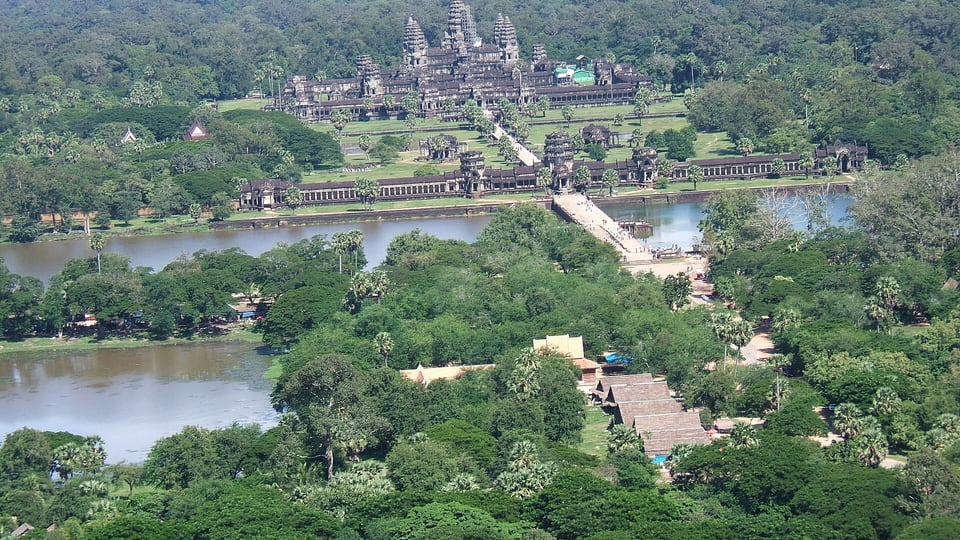
Angkor Wat
Angkor Wat was built primarily during the reign of Suryavarman II (1113-1150 CE), originally dedicated to Vishnu before gradually becoming a Buddhist site from the late 13th century, and is widely documented as the largest religious monument in the world by land area, spanning about 162.6 hectares inside a 190-metre-wide moat.
Best for: First-time visitors who want the single most historically significant structure in the park, ideally on an unhurried morning rather than only the sunrise rush · Area: The southern edge of the main Angkor temple cluster, about 6km north of Siem Reap town
Plan for The sunrise view from the northern reflecting pool is also the single most crowded moment in Cambodian tourism at peak season; a mid-morning or afternoon visit trades that light for a noticeably calmer temple.
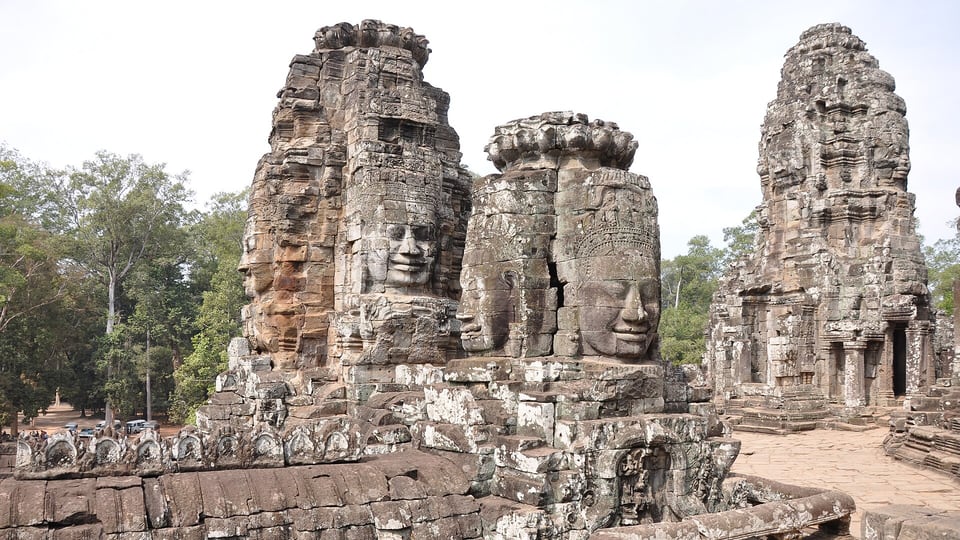
Angkor Thom and the Bayon
Angkor Thom is a 9-square-kilometre walled and moated former royal capital built by Jayavarman VII in the late 12th century, entered through gates such as the South Gate's causeway of 54 gods and 54 demons. The Bayon, bearing roughly 200 giant smiling faces across its towers, stands at its centre.
Best for: Travellers who want to understand that Angkor Thom is a whole city, not a second Angkor Wat, and who want the Bayon's face towers up close · Area: North of Angkor Wat, centred on the Bayon inside the walled city
Plan for Angkor Thom rewards a few unhurried hours on foot or by tuk-tuk between its gates and the Bayon, genuinely more ground to cover than Angkor Wat's single, more contained structure.
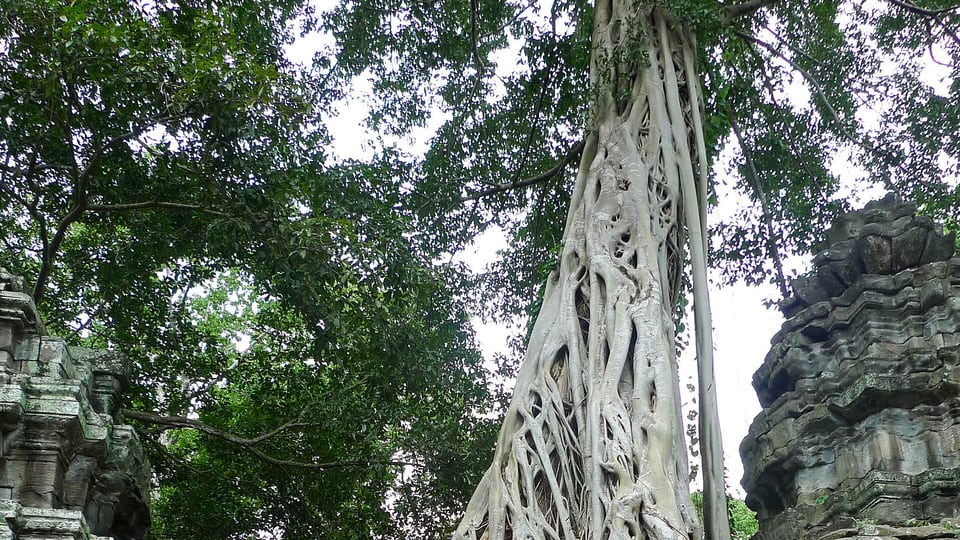
Ta Prohm
Built from 1186 CE as a Buddhist monastery and university under Jayavarman VII, Ta Prohm is genuinely, deliberately unrestored: the Ecole francaise d'Extreme-Orient chose to leave it partly overgrown, with conservator Maurice Glaize describing it as the temple that had "best merged with the jungle, but not yet to the point of becoming a part of it."
Best for: Travellers who want to see a real, documented conservation philosophy rather than only a film-location photo stop · Area: East of Angkor Thom, within the Small Circuit
Plan for Its most photogenic root-covered doorways draw large crowds by mid-morning, genuinely busier than the similarly unrestored Preah Khan.
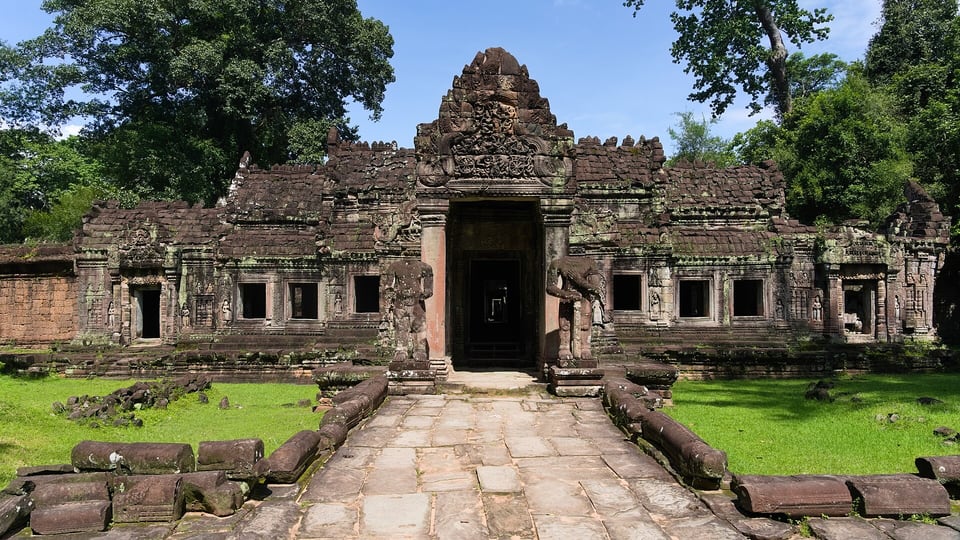
Preah Khan
Preah Khan, built by Jayavarman VII in the 1180s on the site of his 1191 victory over invading Cham forces, functioned as a city, temple and Buddhist university at once. Like Ta Prohm, it has been left largely unrestored with trees growing through its galleries, but draws far fewer visitors.
Best for: Travellers who want Ta Prohm's jungle-temple atmosphere without Ta Prohm's crowds · Area: Northeast of Angkor Thom, on the Grand Circuit
Plan for It requires a 3-day or 7-day Angkor Pass rather than the 1-day pass, since it sits on the Grand Circuit.
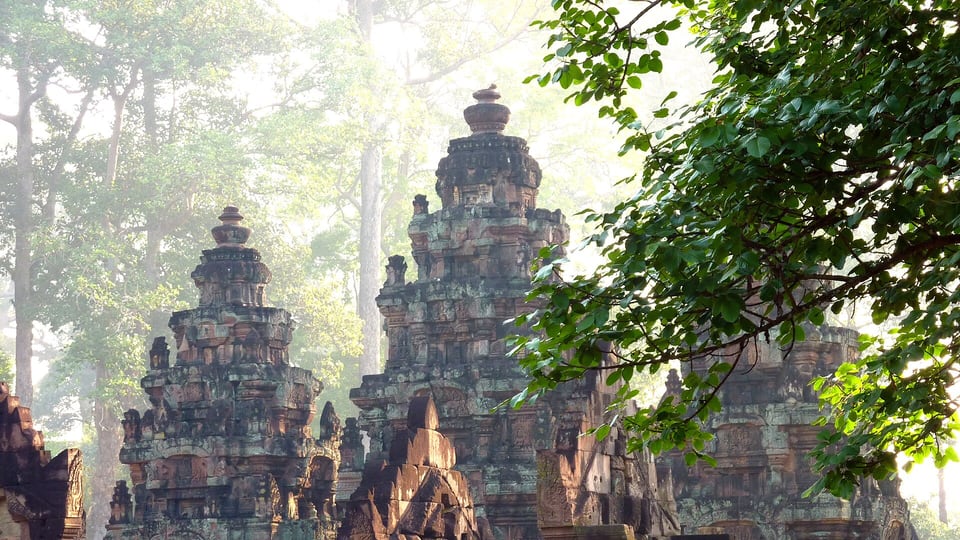
Banteay Srei
Consecrated on 22 April 967 CE, Banteay Srei is the only major Angkor-era temple not commissioned by a reigning king, built instead by courtiers under Rajendravarman II and dedicated to Shiva and Parvati. Its harder pink-red sandstone let carvers achieve far deeper, more intricate relief than the grey sandstone used at Angkor Wat or the Bayon.
Best for: Travellers who want Khmer art from a genuinely different era and a quieter, more remote temple · Area: About 25-40km northeast of Siem Reap town, beyond the main Angkor cluster
Plan for The longer drive puts it out of reach of a 1-day Angkor Pass day that also covers the Small Circuit, so it usually needs its own half day.
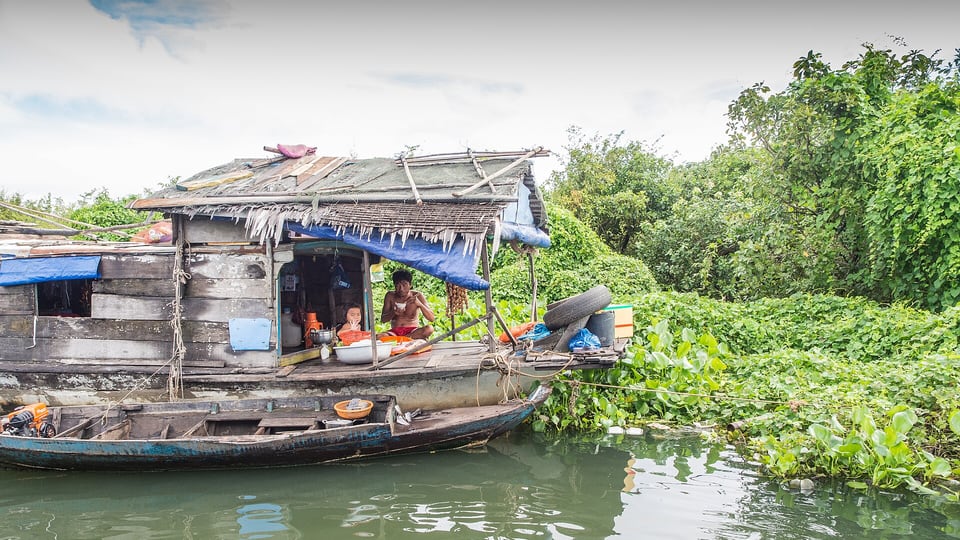
Tonle Sap Floating and Stilt Villages
Villages such as Kampong Phluk are built on stilts roughly 6-8 metres tall rather than true floating structures, a response to a lake that expands from about 2,500-3,000 km2 in dry season to roughly 16,000 km2 in wet season. Community-owned routes at Kampong Khleang, Mechrey and Prek Toal keep tourism revenue with residents, unlike some more heavily marketed operators.
Best for: Travellers who want a genuinely different half day from stone temples, chosen deliberately through a community-owned operator · Area: Roughly 30km south of Siem Reap town
Plan for The more heavily marketed Chong Kneas route is easier to book on short notice but has documented pressure-sales concerns; the community-owned alternatives usually need a little more advance planning.
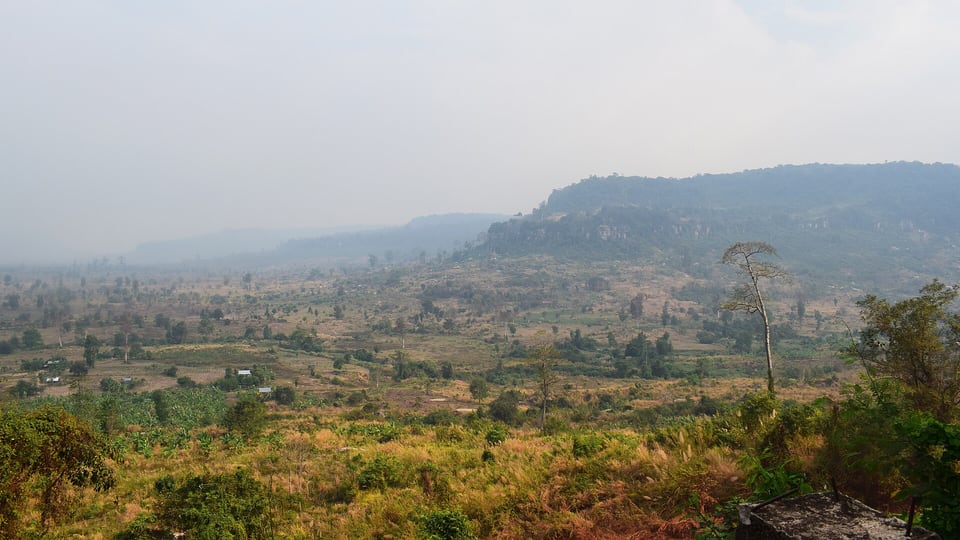
Phnom Kulen
About 50km north of Siem Reap, Phnom Kulen is where King Jayavarman II proclaimed himself chakravartin in 802 CE, an event widely treated as the founding moment of the Khmer Empire. The mountain, anciently named Mahendraparvata, today holds a riverbed carved with hundreds of lingas, a reclining Buddha and a genuine waterfall.
Best for: Travellers with a longer stay who want the Khmer Empire's origin story and a genuine natural landscape beyond the main temple cluster · Area: About 50km north of Siem Reap town, the furthest common day trip in this guide
Plan for Its single access road runs one direction at a time, up before 11am and down after midday, a genuine scheduling constraint on top of the full day it already costs.
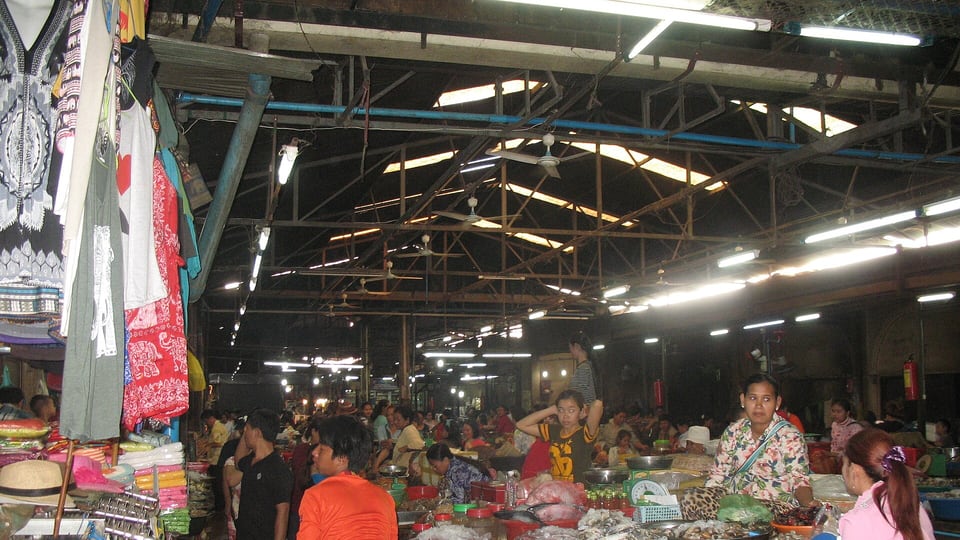
Pub Street and the Old Market
Pub Street and the adjoining Old Market (Psar Chas) form Siem Reap town's real centre of gravity. The market sells a mix of tourist souvenirs and genuine local produce, including prahok, dried fish and stuffed grilled frogs, while Pub Street itself is the town's bar and restaurant strip.
Best for: Travellers who want an evening or an off-temple morning that shows Siem Reap town on its own terms rather than only as a hotel base · Area: Siem Reap town centre, between the Old Market and the Siem Reap River
Plan for It is genuinely a tourist-oriented strip by evening; travellers wanting a quieter, more local market atmosphere should visit the Old Market earlier in the day.
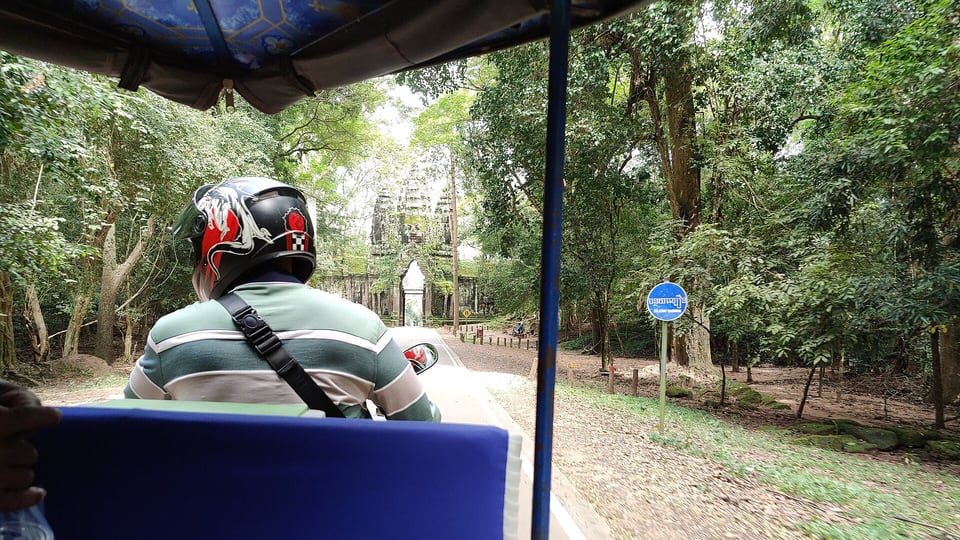
Private Tuk-Tuk Temple Touring
A private tuk-tuk with a driver-guide is a genuinely common way to tour Angkor independently, and real Viator inventory scoped to Siem Reap includes multiple private tuk-tuk temple tours. It is an alternative to a group van tour that trades air conditioning for open-air views and a driver who can adjust the day's pace.
Best for: Travellers who want to set their own pace between temples without renting a vehicle themselves · Area: Arranged from Siem Reap town for any Angkor circuit day
Plan for Open-air tuk-tuk touring means real heat and sun exposure between temples, a genuine trade against an air-conditioned van, especially in the March-April hot season.
Plan two, four or seven days in Siem Reap
Two days: a 1-day Angkor Pass and one Siem Reap day
Choose this plan for a short first visit: cover the Small Circuit on a 1-day pass, then spend the second day on Siem Reap town and a community-owned Tonle Sap half day.
A 1-day pass covers Angkor Wat, Angkor Thom and the Bayon, and Ta Prohm without rushing, provided the day starts early enough for the Small Circuit's full route.
The trade-off A two-day trip has no room for the Grand Circuit, Banteay Srei or Phnom Kulen, so those wait for a longer stay.
Four days: a 3-day pass for the Grand Circuit and Banteay Srei
Choose this plan when two days feels rushed: the 3-day pass's non-consecutive-day validity makes room for the Grand Circuit and a Banteay Srei half day without back-to-back temple days.
Four days is enough to add the Grand Circuit's quieter temples and Banteay Srei's older, different-era art without stacking two full tour days together.
The trade-off Squeezing the Grand Circuit and Banteay Srei into fewer than four days usually means dropping one entirely.
A week or more: a 7-day pass, Phnom Kulen and a weather buffer
Choose this plan on a longer stay: a 7-day pass's month-long window allows a full Phnom Kulen day, repeat visits to favourite temples, and a flexible day if travelling in hot or wet season.
Phnom Kulen and a slower pace both benefit from the slack a week or more allows that a shorter trip does not have.
The trade-off Adding Phnom Kulen and rest days works well across a week or more; compressing both into a shorter trip usually means dropping one.
Sources
checked 2026-09-24. Recommendations are editorial judgements based on the cited sources below.
Choose a Siem Reap base and plan your days
Siem Reap Town: a base for the easiest access to everything
Consider this base when minimising transfer time from the temples and maximising restaurant and tour choice matters more than anything else.
Nearly every tour departure and evening option is within easy reach of Pub Street and the Old Market, at the cost of the town itself being modest and tourism-built.
The trade-off Choosing town for that convenience means accepting a small, largely tourism-oriented centre rather than a large city with independent character.
Tonle Sap or Banteay Srei: a lake day or a quieter temple circuit
Consider a Tonle Sap half day through a community-owned operator for a genuine change from stone temples, or a Banteay Srei half day when a quieter, older-era temple matters more than proximity.
Both sit far enough from town that they need their own half day rather than folding into a Small Circuit day.
The trade-off This choice suits travellers willing to spend a dedicated half day away from the main Angkor cluster in exchange for a genuinely different experience.
Phnom Kulen: a mountain day for a longer stay
Consider this trip when a longer stay allows a full day for the Khmer Empire's origin story and a genuine waterfall and mountain landscape.
Its one-way-traffic access road (up before 11am, down after midday) shapes the day's schedule as much as the drive itself.
The trade-off Waking up early enough for the access window and giving up a temple day elsewhere is a fair trade only for travellers with the extra day to spend.
Sources
checked 2026-09-24. Recommendations are editorial judgements based on the cited sources below.
Airport and getting around
Siem Reap-Angkor International Airport (SAI), a 1.1-billion-US-dollar, Chinese-funded facility with a 3,600-metre runway, opened 16 October 2023 about 50km east of Siem Reap town, replacing the smaller in-town REP airport, which closed the previous day after operating since 1932.
A private tuk-tuk with a driver for the day is the most common way independent travellers reach the temples from town, typically arranged the evening before through a hotel or guesthouse rather than hailed on the street.
Angkor's temples enforce a real dress code at the inner sanctuaries: shoulders and knees must be covered, with sleeveless tops, short shorts and short skirts turned away at the more sacred inner areas, not merely discouraged.
Best time to visit
Winter (November–February)
The coolest, driest and busiest tourist window: daytime highs around 24-32C, humidity typically under 70%, and almost no rain, the most comfortable period for walking long temple circuits.
- Crowds
- High
Spring (March–April)
The hottest months, with daily highs regularly reaching 37-39C and occasionally exceeding 40C, real heat-exposure risk for a full day walking between exposed stone temples with limited shade.
- Crowds
- Varies by event and attraction
Summer (May–August)
The wet season's start: increasing but still often short, intense afternoon downpours, higher humidity around 90%, and a real trade-off of greener temple grounds against muddier paths and wetter moats.
- Crowds
- Varies by event and attraction
Autumn (September–October)
The wet season's peak, with September averaging nearly 300mm of rain, the wettest month of the year and the period when some rural roads, including parts of the route to Phnom Kulen, are most likely affected by flooding.
- Crowds
- Low
Food, produce and local life
Fish amok, a coconut-milk curry built on a pounded kroeung spice paste and steamed in a banana leaf until it sets like a custard, is Cambodia's most-cited signature dish and is served throughout the Pub Street and Old Market restaurant strip.
The Old Market's food stalls sell what residents actually eat alongside the tourist souvenirs, including prahok, dried fish, pork sausages and stuffed grilled frogs, a genuinely local counterpoint to Pub Street's restaurant strip.
City profile
- Population (Siem Reap city, 2019 Cambodian census, 2019): 245,494
"Siem Reap" is popularly translated as "defeat of Siam," attributed by legend to King Ang Chan I repelling a Thai invasion in 1549, though historians treat this as a modern folk story rather than a documented origin.
UNESCO inscribed Angkor as a World Heritage site in 1992, covering a 40,100-hectare property described as containing the remains of the successive capitals of the Khmer Empire from the 9th to the 15th century, including Angkor Wat and the Bayon at Angkor Thom.
Famous for:
- Angkor Wat is widely documented, including by Guinness World Records, as the largest religious monument in the world by land area, spanning about 162.6 hectares within its moat.
- Angkor Wat's sunrise is one of the single most crowded tourism moments in Cambodia: peak-season estimates put 3,000-5,000 visitors at the temple before dawn, while the popular Southern Library viewing spot holds only 150-200 people.
- Cambodia's real landmine legacy remains concentrated in the rural northwest near the Thai border; the Angkor Archaeological Park's own trails and temple perimeters, cleared decades ago, are not part of that remaining contamination.
What makes a Siem Reap visit worthwhile
Siem Reap sits beside a single UNESCO World Heritage property spanning roughly 400 square kilometres and hundreds of individual monuments, a concentration of pre-industrial religious architecture with no close comparison elsewhere in Southeast Asia.
The Angkor Pass has three real tiers in September 2026: a 1-day pass (37 US dollars) valid only on its dated day, and 3-day (62 US dollars) and 7-day (72 US dollars) passes both usable on non-consecutive days. The 1-day pass covers the Small Circuit, while the multi-day passes add the Grand Circuit, a specific, useful planning fact most generic guides skip.
The Angkor Wat sunrise is genuinely one of the most-repeated postcard images of Cambodia, but it is also one of the most crowded single moments in the country's tourism. Travellers who want a calmer version have real, sourced alternatives, including other sunrise-viable temples and a later, less-crowded visit.
Tonle Sap floating and stilt villages near Siem Reap are genuinely worth a visit, but some of the most heavily marketed tours have documented exploitative practices, while community-owned alternatives at Kampong Khleang, Mechrey and Prek Toal direct tour income into local schools and services instead.
- Plan by trip type
- Angkor Wat & Angkor Thom · Ta Prohm & Preah Khan · Banteay Srei · Tonle Sap villages · Phnom Kulen
- Good first stay
- 2 days for the Small Circuit, 4 days to add the Grand Circuit and Banteay Srei, a week+ for Phnom Kulen and rest days
- Climate constraint
- Dry season Nov–Apr is easiest walking · Wet season May–Oct is greener but muddier, Sept wettest
- Main gateway
- Siem Reap-Angkor International Airport (SAI), about 50km east of town, opened Oct 2023
Planning your Siem Reap visit: FAQs
Is Siem Reap town itself worth visiting, or is it just a gateway?
Siem Reap town has real value of its own, Pub Street, the Old Market and Phare, The Cambodian Circus among them, but nearly every visitor correctly treats it as a base: Angkor, not the town centre, is why almost everyone flies here.
What are the real Angkor Pass prices and validity rules?
As of the most recent official update seen in 2026, the 3-day Angkor Pass is usable on any three days within a 7-day window from first use, correcting an older, still widely repeated claim of a 10-day window. Confirm the exact current rule when you buy, since this figure has changed before.
Is the Angkor Wat sunrise worth the crowds?
Yes for most first-time visitors, with an honest caveat: peak-season sunrise crowds run into the thousands at a single viewpoint. Travellers who dislike crowds should consider a later Angkor Wat visit or a sunrise at a quieter temple instead of assuming the postcard moment will feel intimate.
Are Tonle Sap floating village tours ethical?
Choose deliberately: Chong Kneas and some Kampong Phluk operators have documented exploitative practices, including inflated souvenir pressure-sales, while Kampong Khleang, Mechrey and Prek Toal run community-owned boat services that keep tourism revenue with residents.
Are landmines a real safety concern for travellers around Siem Reap and Angkor?
The Angkor Archaeological Park's marked trails and temple grounds carry no meaningful landmine risk. The real, current contamination sits in rural provinces, mainly the northwest near the Thai border, so the practical guidance for temple visitors is simply to stay on marked paths anywhere rural and never wander into unmarked countryside.
How far is the airport from Siem Reap town?
The 50km transfer from SAI airport to town, roughly 45-60 minutes by road, is longer than many travellers expect from the old in-town REP airport's short hop, so booking the first day's schedule with that transfer time in mind avoids a rushed arrival day.
Make your Siem Reap plans
Compare tours, tickets and activities in Siem Reap →
Choose your departure market and search flights to Siem Reap from the Mubboo Flights homepage.
Compare flights ↗Sources
Latest source check: .
Show all 28 sources
- UNESCO World Heritage Centre — Angkor (inscribed 1992) (checked 2026-09-24)
- Angkor Wat — Wikipedia (checked 2026-09-24)
- Suryavarman II — Wikipedia (checked 2026-09-24)
- Bayon — Wikipedia (checked 2026-09-24)
- Angkor Thom — Wikipedia (checked 2026-09-24)
- Ta Prohm — Wikipedia (checked 2026-09-24)
- Banteay Srei — Wikipedia (checked 2026-09-24)
- World Monuments Fund — Preah Khan Temple (checked 2026-09-24)
- APSARA / Angkor Enterprise — FAQs (checked 2026-09-24)
- siemreap.net — Angkor Wat entrance fees and visiting hours (checked 2026-09-24)
- visit-angkor.org — Angkor Pass prices and details (checked 2026-09-24)
- Tonle Sap — Wikipedia (checked 2026-09-24)
- Southeast Asia Backpacker — responsible travel guide to floating villages (checked 2026-09-24)
- PMC — environmental degradation and Tonle Sap communities (checked 2026-09-24)
- Cambodian Mine Action Centre — Impacts (checked 2026-09-24)
- World Nomads — landmine safety guidance for Cambodia (checked 2026-09-24)
- Siem Reap–Angkor International Airport — Wikipedia (checked 2026-09-24)
- Siem Reap International Airport — Wikipedia (checked 2026-09-24)
- Siem Reap — Wikipedia (checked 2026-09-24)
- Phare, The Cambodian Circus (checked 2026-09-24)
- Hello Angkor — Phnom Kulen visiting guide (checked 2026-09-24)
- Angkor Wat Guide — dress code (checked 2026-09-24)
- The booking platform — Siem Reap destination mapping d5480 (checked 2026-09-24)
- siemreap.net — Siem Reap climate guide (checked 2026-09-24)
- Move to Cambodia — climate and weather (checked 2026-09-24)
- Adventures Cambodia — Angkor Wat sunrise crowding guide (checked 2026-09-24)
- APSARA National Authority — Angkor Tourism Management Plan (checked 2026-09-24)
- Cambodianess — Cambodia's mine-free target extended to 2030 (checked 2026-09-24)
Photo credits
- angkor wat — shankar s. from Dubai, united arab emirates · CC BY 2.0.
- angkor thom bayon — Jorge Láscar from Australia · CC BY 2.0.
- ta prohm — David Sim · CC BY 2.0.
- preah khan — Satdeep Gill · CC BY-SA 4.0.
- banteay srei — Anandajoti · CC BY-SA 3.0.
- tonle sap floating village — Esin Üstün from Istanbul, Turkey · CC BY 2.0.
- phnom kulen — Mig Gilbert from Brighton · CC BY-SA 2.0.
- pub street old market — Hzh · CC BY-SA 4.0.
- private tuk tuk temple touring — Elmschrat · CC0.
- angkor thom south gate detail — Francisco Anzola · CC BY 2.0.
- ta prohm doorway detail — GayleKaren · CC BY-SA 3.0.
Mubboo Editorial Team · Reviewed by Mubboo Editorial Team


