
San Francisco travel guide
San Francisco
San Francisco covers about 47 square miles of land between the Pacific and the bay, and its hills set the pace of a visit more than distance does. Give the Golden Gate Bridge and the Presidio a morning, the waterfront and Alcatraz their own outing, and Chinatown and North Beach a day on foot and by cable car. Muir Woods and wine country lie outside the city.

Find your San Francisco experience
Explore San Francisco Before You Book
Take a virtual drive or walk, then find tours and tickets for the places you like.
Activities
Featured activities in San Francisco




Prices at a glance
What we sell today and what recent flight searches found. No hotel prices; nothing here is a trip total.
- Tours and tickets in San Franciscofrom US$39.00
Live from Viator when this page loaded · per adult · changes by date.
Flights to San Francisco
- From Londonone-way from £313
Lowest fare seen in recent flight searches for that route; the airline or booking site confirms the final fare.
Plan San Francisco by time and budget
Top experiences
Top experiences in San Francisco
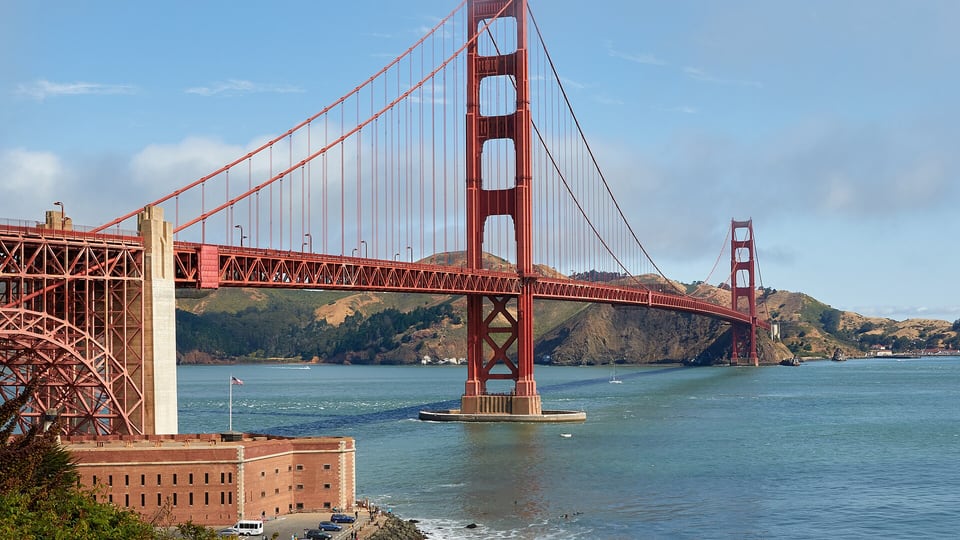
Golden Gate Bridge
The bridge opened in 1937 and is 1.7 miles long, joining the Presidio to the Marin Headlands. Pedestrians cross on the east sidewalk, the side facing the city, and Presidio Tunnel Tops, a free park with bridge views, is open every day.
Best for: Walkers who want the bridge and a park morning together · Area: Presidio and Fort Point, northwest corner of the city
Plan for The east sidewalk is the only pedestrian route, and its closing hour moves with daylight saving time. Summer fog often covers the span, and a full crossing and return is 3.4 miles.
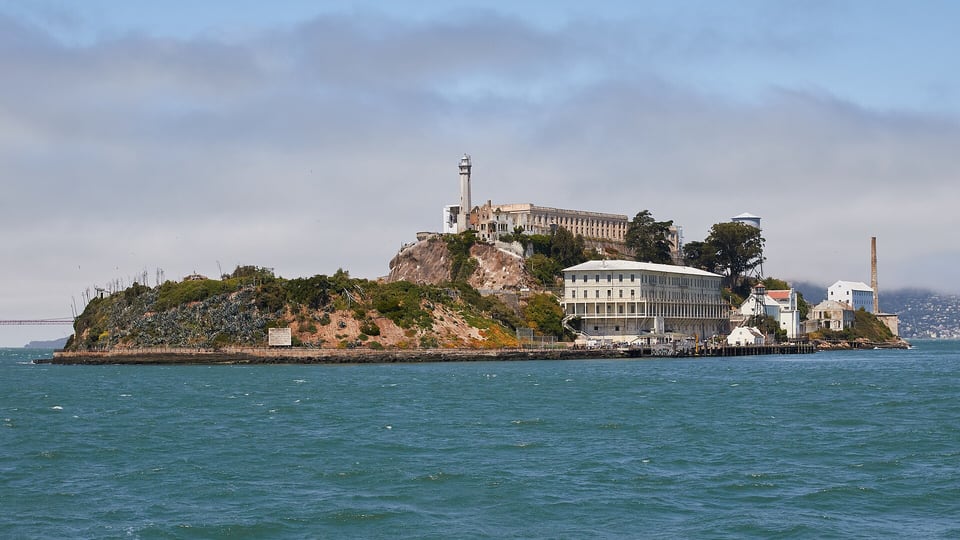
Alcatraz
Alcatraz served as a military fortress and prison, a federal penitentiary from 1934 to 1963, and the site of the American Indian occupation of 1969 to 1971. It is a National Historic Landmark, and each ticket includes the ferry crossing and a cellhouse audio tour.
Best for: History-minded visitors who plan the day around one sailing · Area: Alcatraz Island, sailing from Pier 33 on the Embarcadero
Plan for Only one ferry lands on the island, and tours frequently sell out a week or more ahead. Allow at least a few hours, and eat beforehand, because Alcatraz sells nothing but dry snacks.
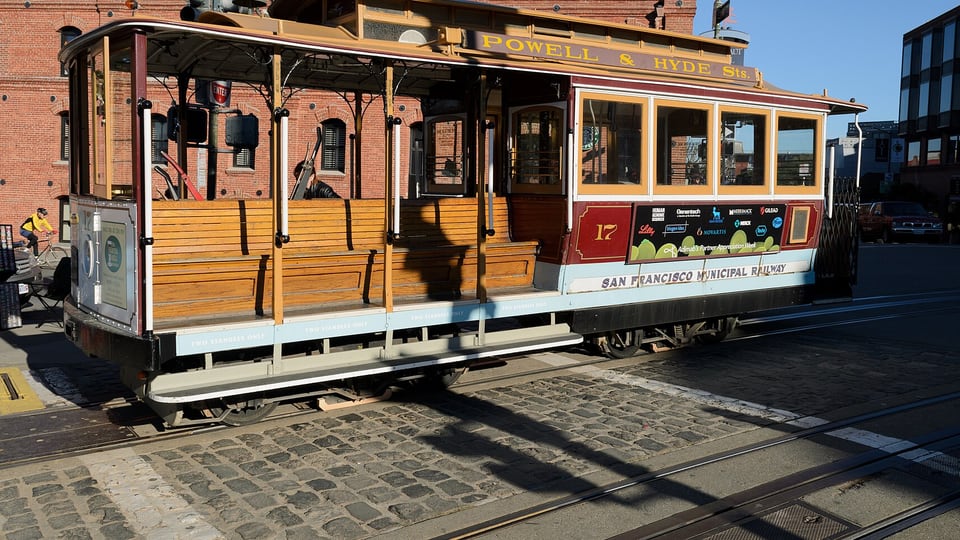
Cable cars
Three lines survive: Powell/Hyde and Powell/Mason climb from Powell and Market toward Fisherman’s Wharf, and California runs from California and Market to Van Ness Avenue. The system is a National Historic Landmark, named in 1964, and still carries riders every day.
Best for: Riders who want a hill climb that also gets them somewhere · Area: Powell Street, Nob Hill and Russian Hill
Plan for Riders must have a ticket before boarding at the Powell and Market, Bay and Taylor, and Hyde and Beach stops from 8 a.m. to 8 p.m. The cars have no accessible boarding, and full-size bicycles are not allowed.
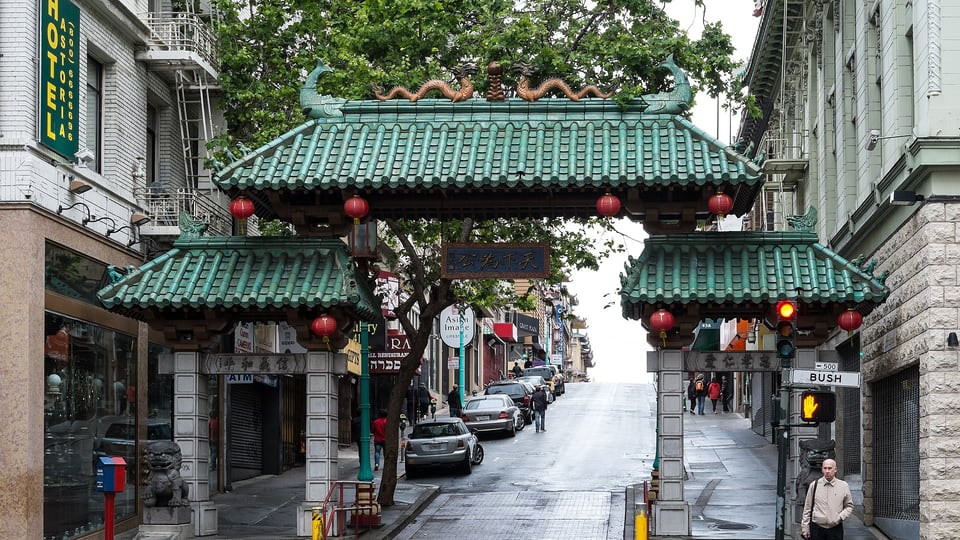
Chinatown
Chinatown was founded in 1849 during the Gold Rush and rebuilt after the 1906 earthquake. It is the oldest Chinatown in North America, and many visitors enter through the Dragon Gate on Grant Avenue at Bush Street.
Best for: Walkers who want a lived-in neighbourhood rather than a monument · Area: Between the Financial District and North Beach
Plan for Portsmouth Square, the neighbourhood’s traditional meeting place, is closed while it is rebuilt. Construction on Kearny Street is changing traffic and Muni routes around the district’s edge.
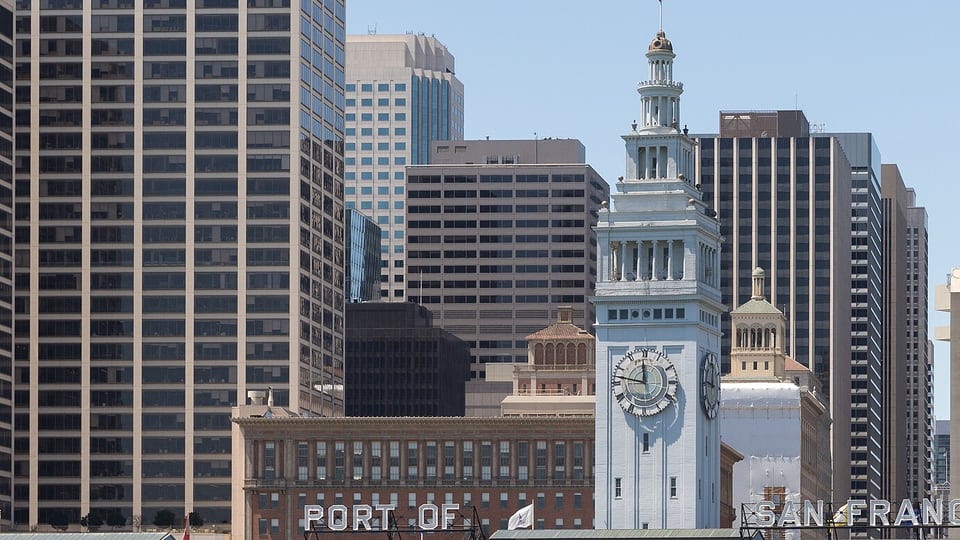
Ferry Building
The Ferry Building has stood on the Embarcadero since 1898, and its clock tower rises over a market hall of nearly 50 food merchants and eateries. The Ferry Plaza Farmers Market runs on Tuesday and Thursday from 10 a.m. to 2 p.m. and on Saturday from 8 a.m. to 2 p.m., all year.
Best for: Food-minded visitors who want a market morning beside the water · Area: Embarcadero waterfront
Plan for The Saturday market, with more than 100 vendors, is the large one. The Tuesday and Thursday markets are smaller and occupy only the front of the building.
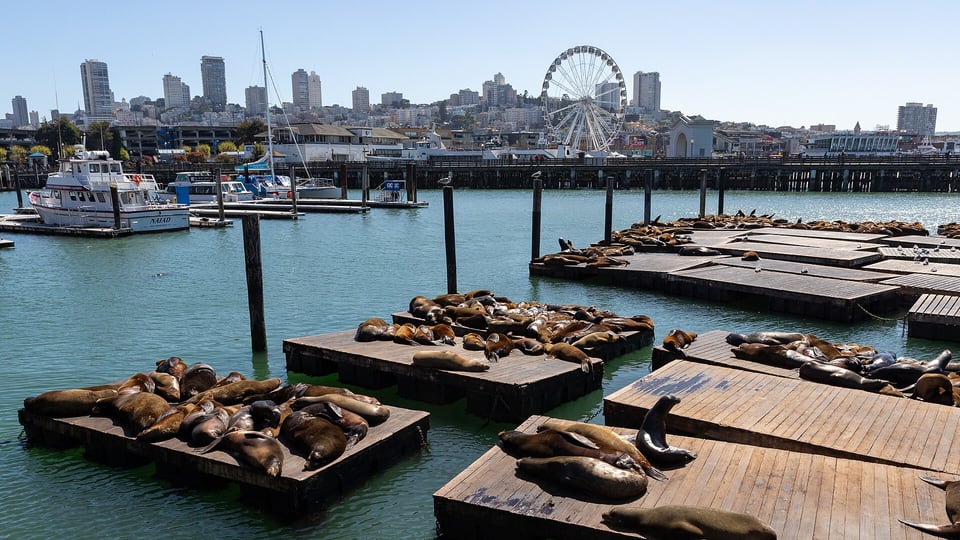
Fisherman’s Wharf
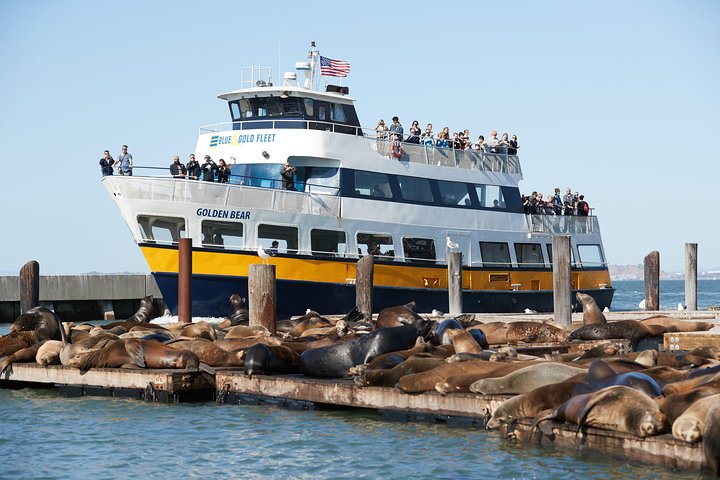
California sea lions began hauling out on Pier 39’s K-Dock after the October 1989 Loma Prieta earthquake, and their numbers rise and fall with the seasons and the food supply. Aquatic Park Cove, the heart of San Francisco Maritime National Historical Park, lies on the same waterfront.
Best for: Families with an hour or two and wildlife in mind · Area: Northern waterfront, from Pier 39 to Aquatic Park
Plan for The piers are given over to shops, restaurants and ticketed attractions, and sea lion numbers change with the season. The museum ships that once berthed at Hyde Street Pier are away at Mare Island while the pier is rebuilt.
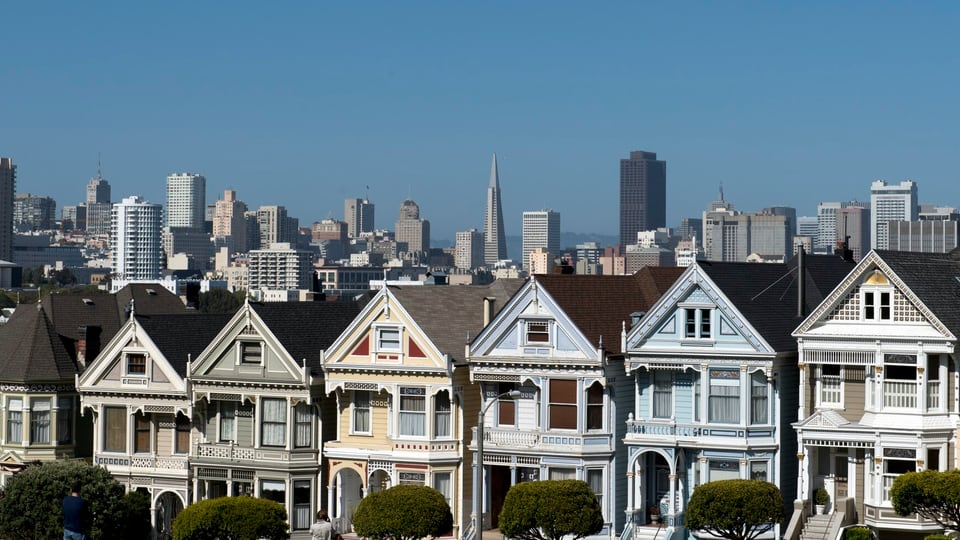
Painted Ladies and Alamo Square
The Victorian row on Steiner Street between Hayes and Grove was built between 1892 and 1896, so it survived the 1906 earthquake and fire. Alamo Square Park, across the street, looks over the rooftops to the downtown skyline.
Best for: Architecture walkers and photographers with an hour to spare · Area: Alamo Square, where the Fillmore, Haight-Ashbury and Hayes Valley meet
Plan for The houses are private homes, so the visit is a view from the park. Afternoon light falls on the fronts, while morning shadow and fog can dull the colours and hide the skyline.
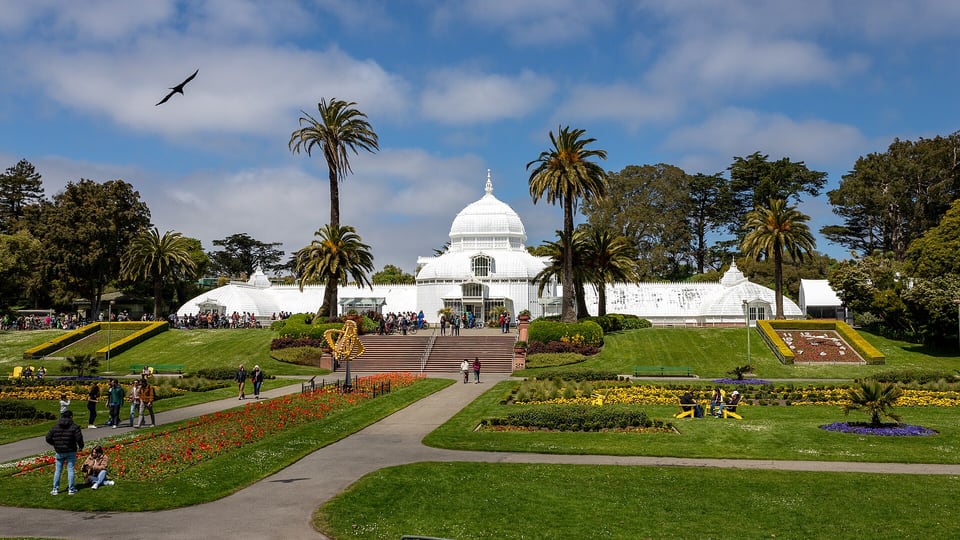
Golden Gate Park
The park’s 1,000-plus acres were carved out of the dunes known as the Outside Lands in 1871. The Conservatory of Flowers, open since 1879, is its oldest building, and the de Young Museum’s ninth-floor observation level is open to all without a museum ticket.
Best for: Visitors who want a slower day of gardens and museums · Area: Western San Francisco, running toward the Pacific
Plan for The museums and gardens cluster together near the Music Concourse. The windmills stand at the western edge, so a visit usually covers one part of the park rather than all of it.
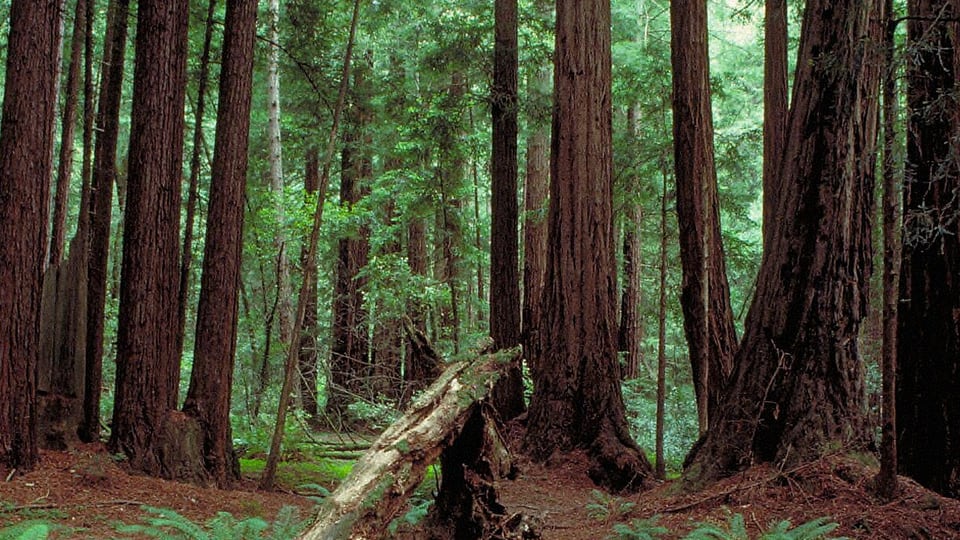
Muir Woods
The 550-acre national monument has protected old-growth coast redwoods since 1908. Its six miles of trail include loops of half an hour, one hour and an hour and a half.
Best for: Visitors who want forest rather than city streets for an outing · Area: Marin County, north of the Golden Gate
Plan for Every vehicle needs a parking reservation and the shuttle is seasonal. The road is steep, traffic can lengthen the drive, and there is no mobile signal in the monument. Pets are not allowed.
Plan one, three or five days in San Francisco
One day: the bridge side or the water side
Give the day to the Golden Gate Bridge and the Presidio, or to Alcatraz and the northern waterfront, and finish either with Chinatown and North Beach on foot.
The Presidio sits at the northern tip beside the bridge, while Alcatraz sails from Pier 33 on the Embarcadero.
The trade-off Trying both in one day makes the Alcatraz sailing the fixed point that everything else must fit around.
Three days: bridge, island and neighbourhoods
Put the bridge and the Presidio first, Alcatraz and Chinatown second, and the Ferry Building, Alamo Square and Golden Gate Park third.
Booking the Alcatraz date first lets the other two days move around it.
The trade-off The third day spreads across three districts and leans on buses.
Five days: add one journey out of town
Add Muir Woods with Sausalito or a Napa and Sonoma day, then leave the last day open for the park or a return to a favourite neighbourhood.
Both journeys start north of the Golden Gate, and each needs something arranged in advance: a Muir Woods reservation or an early wine-country departure.
The trade-off A second out-of-town day would take two of the five days out of the city, so choose one.
Costed plans: One Day in San Francisco for about US$55? → · San Francisco in 3 Days for US$95? →
Sources
checked 2026-09-19. Recommendations are editorial judgements based on the cited sources below.
Choose a San Francisco base and explore nearby
Union Square and Downtown: cable cars and Chinatown on foot
Base here when the cable cars and Chinatown matter more than a waterfront address.
Both anchors of this base, the cable cars and Chinatown, sit around Union Square.
The trade-off The wharf and the Presidio are each a ride away.
Fisherman’s Wharf: boats and Alcatraz within reach
Base here when Alcatraz sailings, the sea lions and the bay are the centre of the trip.
Pier 33 for Alcatraz is on the Embarcadero, and two cable car lines and the F streetcar reach the wharf.
The trade-off Chinatown and North Beach, where daily life goes on, need a ride or a long walk.
Alamo Square and Hayes Valley: a residential stay with a view
Base here for a return visit among occupied Victorian homes rather than as a sightseeing base.
Bus lines connect it with Union Square, and the Painted Ladies are the one sight within walking distance.
The trade-off Every major sight is a bus or shuttle ride across the city.
Sources
checked 2026-09-19. Recommendations are editorial judgements based on the cited sources below.
Arrival and getting around
San Francisco International Airport (SFO) is the main airport. BART rapid rail runs from its International Terminal station into the city, and the AirTrain links the other terminals to it. Oakland’s BART station stands across from its terminals, while San José relies on VTA Route 60 to reach rail at Milpitas or Santa Clara.
In the city, a Muni visitor pass covers buses, Muni Metro, historic streetcars and cable cars, and cable cars are ticketed separately from an ordinary Muni ride. Drivers pay the Golden Gate Bridge toll electronically and only southbound into the city; there is no cash lane.
Best time to visit
Winter (December–February)
Winter brings occasional rain, cool weather and overcast skies broken by bright sunshine, and rain falls mostly between November and April.
- Crowds
- Varies by event and attraction
Spring (March–May)
Trees and flowers begin to bloom in March, and wildflower displays on the surrounding national park land peak in April, May and early June.
- Crowds
- Varies by event and attraction
Summer (June–August)
Summer fog begins to predominate along most of the coast from July, and summer rain is rare. Bring a jacket for the bridge, Alcatraz and the wharf.
- Crowds
- Varies by event and attraction
Autumn (September–November)
From mid to late September through October the skies are clear and sunshine is abundant, which many visitors favour, and rain returns from November.
- Crowds
- Varies by event and attraction
Food and neighbourhood life
Chinatown’s food runs from dim sum rooms to the produce and fish markets on Stockton Street, while Grant Avenue is the main strip of shops. North Beach next door has carried an Italian-American community of cafes and restaurants for generations.
On the waterfront, steaming pots of Dungeness crab line the streets of Fisherman’s Wharf. The Ferry Building gathers California producers under one roof, and one food outing per day is enough to set the neighbourhood you spend it in.
City profile
- Population (San Francisco city as tabulated by the U.S. Census Bureau QuickFacts, not the wider Bay Area or metropolitan area; population estimate of 1 July 2025, 2025): 826,079
Spain founded a presidio at the entrance to San Francisco Bay in June 1776, and the U.S. Army took control of it in 1846 and held it for 148 years.
Chinatown was founded in 1849 during the Gold Rush and rebuilt after the 1906 earthquake.
Famous for:
- The cable car system, a National Historic Landmark since 1964, still climbing the city’s hills on three lines.
- The Golden Gate Bridge, open since 1937 across the strait between the Presidio and the Marin Headlands.
- Alcatraz Island, a National Historic Landmark that held a federal penitentiary from 1934 to 1963.
What draws people to San Francisco
The headline sights sit on the water: the Golden Gate Bridge at the strait, Alcatraz in the bay and the sea lions on the Pier 39 docks. Each takes a few hours, on foot or by ferry. The hills between them decide how the days fit together, and the cable cars exist because of those slopes.
Away from the water the city is a set of walkable neighbourhoods with their own histories. Chinatown dates to the Gold Rush, North Beach keeps an Italian-American character, and the Victorian houses at Alamo Square survived the 1906 earthquake. The trade-off is time: fog, steep streets and trips such as Muir Woods each take half a day or more.
- Plan by outing
- Bridge and Presidio · Waterfront and Alcatraz · Chinatown and North Beach
- First stay
- 3 focused days, 5 with an out-of-town day
- Weather rule
- Summer fog · Clear autumn
- Main airport
- SFO · BART into the city
Planning your San Francisco visit: FAQs
How far ahead should I book Alcatraz?
Tours frequently sell out a week or more ahead, and same-day tickets are rarely available, so book before you arrive. Tickets go on sale up to 90 days in advance. Only one ferry lands on the island, and narrated cruises around it do not dock.
Do I need a car in San Francisco?
Not for the city itself. Muni and the cable cars reach the main sights, and the free Presidio GO shuttle runs from downtown to the Presidio. A car matters for Muir Woods, which requires a parking reservation, and for wine country; the Golden Gate Bridge toll applies only southbound into the city.
Is San Francisco a beach destination?
Not in the usual sense. Summer fog begins to predominate along the coast from July, and the warmest weather of the year is often found in autumn and spring. The bridge, Alcatraz and the wharf are outdoor stops where an extra layer is useful in any season.
Why does the weather change so much between seasons and neighbourhoods?
Mountains that run parallel to the coast create microclimates, and gaps in the coastal ranges let ocean fog move inland, which cools the city in summer. Rain falls almost entirely between November and April, and the clear autumn days are the exception to the fog.
Which cable car line should I ride?
Powell/Hyde runs through Nob Hill and Russian Hill to the bay end of Hyde Street, and it stops at the top of the Lombard Street switchbacks. Powell/Mason passes North Beach and stops at Lombard Street and Columbus Avenue. California runs through Chinatown to Van Ness Avenue and starts away from the Powell Street boarding points.
Is Lombard Street worth a stop?
The crooked block runs between Hyde and Leavenworth streets with eight hairpin turns, and the winding block is one way from west to east. It is also a residential street, so avoid rush hour and weekend afternoons, and stay out of the neighbours’ gardens and doorways.
Make your San Francisco plans
Compare tours, tickets and activities in San Francisco →
Choose your departure market and search flights to San Francisco from the Mubboo Flights homepage.
Compare flights ↗Sources
Latest source check: .
Show all 46 sources
- U.S. Census Bureau, QuickFacts for San Francisco city (checked 2026-09-19)
- National Park Service, history of the Presidio of San Francisco (checked 2026-09-19)
- National Park Service, Presidio Spanish period 1776 to 1822 (checked 2026-09-19)
- Presidio Trust, Presidio Tunnel Tops (checked 2026-09-19)
- Presidio Trust, getting to and around the park (checked 2026-09-19)
- Golden Gate Bridge District, bikes and pedestrians (checked 2026-09-19)
- Golden Gate Bridge District, tolls and payment (checked 2026-09-19)
- San Francisco Travel, Golden Gate Bridge (checked 2026-09-19)
- National Park Service, Alcatraz fees and ticketing (checked 2026-09-19)
- National Park Service, plan your visit to Alcatraz (checked 2026-09-19)
- National Park Service, history and culture of Alcatraz (checked 2026-09-19)
- Alcatraz City Cruises, frequently asked questions (checked 2026-09-19)
- National Park Service, Alcatraz weather (checked 2026-09-19)
- SFMTA, cable cars (checked 2026-09-19)
- SFMTA, Muni fares and visitor passes (checked 2026-09-19)
- SFMTA, Powell/Hyde cable car route (checked 2026-09-19)
- SFMTA, Powell/Mason cable car route (checked 2026-09-19)
- SFMTA, California cable car route (checked 2026-09-19)
- SFMTA, F Market and Wharves streetcar route (checked 2026-09-19)
- San Francisco Travel, Lombard Street (checked 2026-09-19)
- San Francisco County Transportation Authority, Lombard Crooked Street (checked 2026-09-19)
- San Francisco Travel, Fisherman’s Wharf (checked 2026-09-19)
- PIER 39, California sea lions (checked 2026-09-19)
- National Park Service, San Francisco Maritime National Historical Park (checked 2026-09-19)
- San Francisco Travel, Chinatown (checked 2026-09-19)
- San Francisco Public Works, Chinatown projects and street closures (checked 2026-09-19)
- San Francisco Travel, North Beach (checked 2026-09-19)
- Ferry Building Marketplace, about the Ferry Building (checked 2026-09-19)
- Ferry Building Marketplace, Ferry Plaza Farmers Market (checked 2026-09-19)
- Golden Gate Ferry, schedules and maps (checked 2026-09-19)
- San Francisco Travel, visitor guide to Golden Gate Park (checked 2026-09-19)
- San Francisco Travel, Painted Ladies (checked 2026-09-19)
- National Park Service, Muir Woods National Monument (checked 2026-09-19)
- National Park Service, plan your visit to Muir Woods (checked 2026-09-19)
- National Park Service, Muir Woods directions and transportation (checked 2026-09-19)
- National Park Service, Muir Woods entrance fees and reservations (checked 2026-09-19)
- San Francisco Travel, Sausalito and Marin County (checked 2026-09-19)
- San Francisco Travel, wine country (checked 2026-09-19)
- Visit Napa Valley, getting to Napa Valley (checked 2026-09-19)
- Sonoma County Tourism, travelling to Sonoma County (checked 2026-09-19)
- San Francisco International Airport, public transit (checked 2026-09-19)
- Oakland San Francisco Bay Airport, public transportation (checked 2026-09-19)
- San José Mineta International Airport, public transit access (checked 2026-09-19)
- National Park Service, Golden Gate National Recreation Area weather (checked 2026-09-19)
- National Park Service, Presidio climate (checked 2026-09-19)
- The booking platform Partner API, destinations endpoint (checked 2026-09-19)
Photo credits
- golden gate — Frank Schulenburg · CC BY-SA 4.0.
- alcatraz — Frank Schulenburg · CC BY-SA 4.0.
- cable cars — King of Hearts · CC BY-SA 3.0.
- fishermans wharf — Oren Rozen · CC BY-SA 4.0.
- chinatown — Alice Wiegand · CC BY-SA 4.0.
- ferry building — Frank Schulenburg · CC BY-SA 4.0.
- golden gate park — Oren Rozen · CC BY-SA 4.0.
- painted ladies — Carol M. Highsmith · Public domain.
- muir woods — NPS staff · Public domain.
Mubboo Editorial Team · Reviewed by Mubboo Editorial Team


