
Reykjavík travel guide
Reykjavík
Reykjavík is a compact capital built less around itself than around the day trips that surround it — the Golden Circle east to Þingvellir, Geysir and Gullfoss, the Blue Lagoon on the way to Keflavík Airport, and glacier excursions further afield.
In the city, Hallgrímskirkja's tower, Harpa's waterfront and the Old Harbour fill an easy day or two, and travelling between roughly September and April adds a real, never-guaranteed chance at the Northern Lights.

Find your Reykjavík experience
Explore Reykjavík Before You Book
Take a virtual drive or walk, then find tours and tickets for the places you like.

Activities
Featured activities in Reykjavík

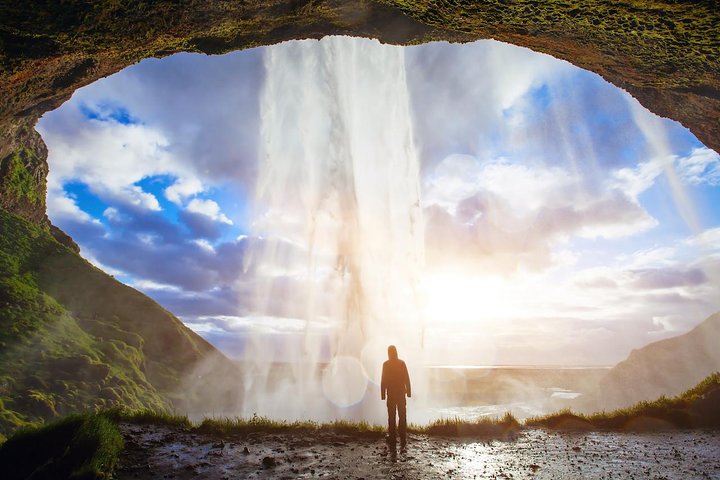
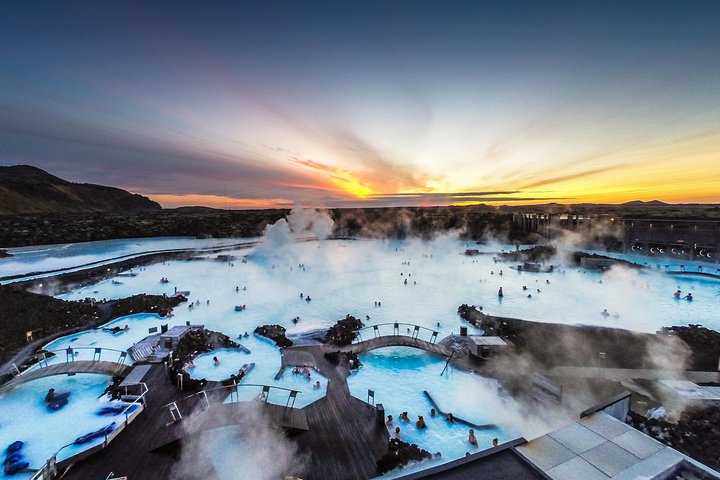


Prices at a glance
What we sell today and what recent flight searches found. No hotel prices; nothing here is a trip total.
- Tours and tickets in Reykjavíkfrom US$82.21
Live from Viator when this page loaded · per adult · changes by date.
Plan Reykjavík by time and budget
Top experiences
Top experiences in Reykjavík
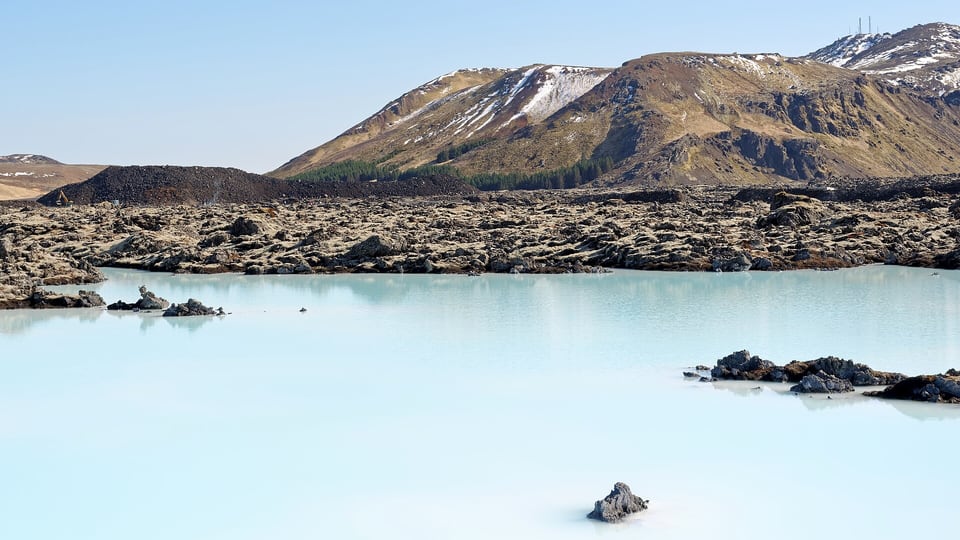
The Blue Lagoon
The Blue Lagoon is a geothermal seawater lagoon covering about 10,000 square metres at an average 37–40°C, named one of National Geographic's 25 Wonders of the World in 2012. Every admission tier includes a silica mud mask and unlimited use of the sauna, steam bath and colder lagoon.
Best for: Travellers who want Iceland's best-known single paid attraction and can commit to a timed booking · Area: Reykjanes Peninsula, between Reykjavík and Keflavík Airport
Plan for Pre-booking is essential — there is no walk-in admission — and peak-season (June–August) and festive-period slots can sell out three to four weeks ahead, so it needs booking before other plans are fixed.
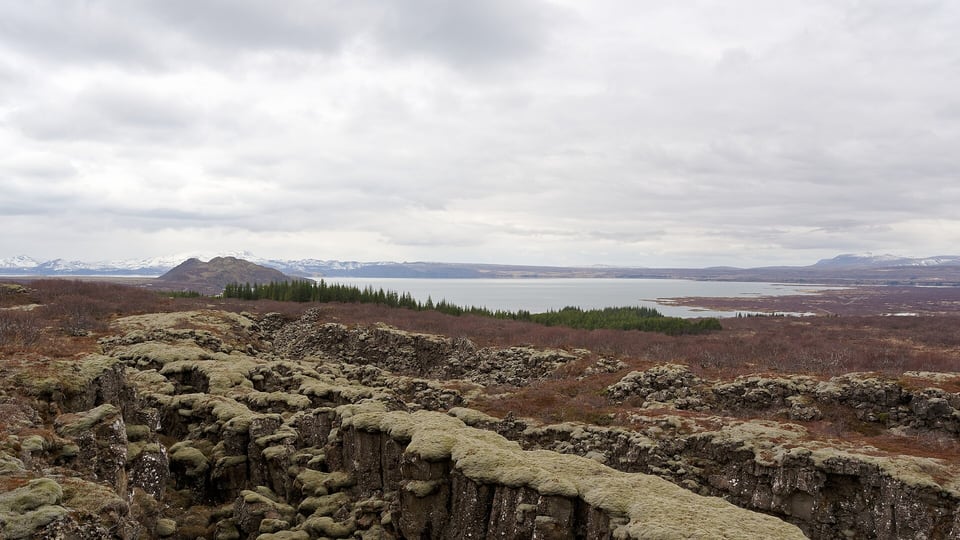
Þingvellir National Park
Þingvellir is where Iceland's national assembly, the Alþingi, was established around 930 and met until 1798, and the park sits on the visible rift between the North American and Eurasian tectonic plates.
Best for: Travellers who want the Golden Circle's history and geology stop, not just a photo · Area: Southwest Iceland, about an hour east of Reykjavík, the Golden Circle's first stop
Plan for The park charges a service fee at its more popular parking areas rather than one flat admission, so a visit budget should plan for parking rather than assuming the whole park is free.
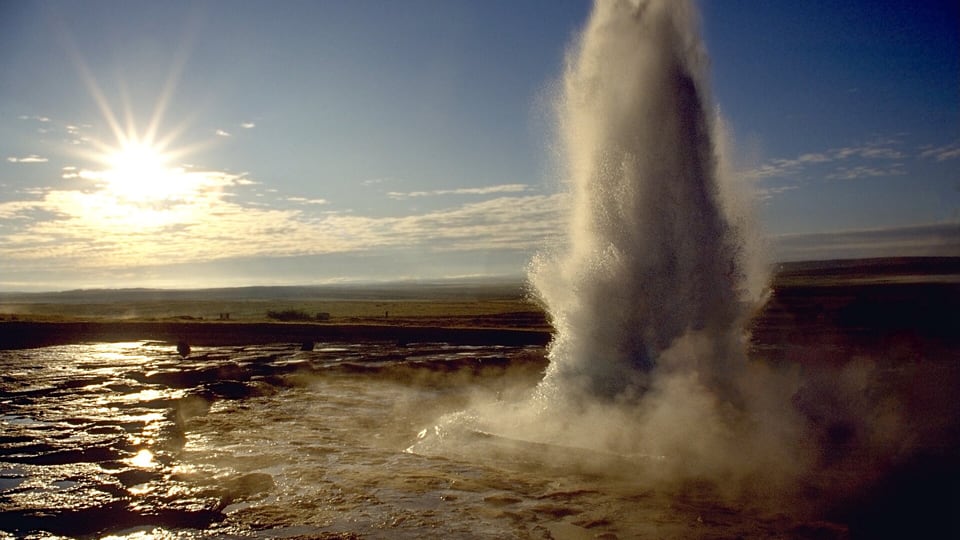
Geysir Geothermal Area (Strokkur)
The Haukadalur geothermal field is one of the few places on Earth where active geysers are easy to reach on foot. Strokkur, the field's reliable performer, erupts roughly every 8–10 minutes to as high as 30 metres, while the original Great Geysir it is named after rarely erupts today.
Best for: Travellers who want a guaranteed, repeatable natural spectacle rather than a one-off view · Area: Haukadalur valley, the Golden Circle's midpoint between Þingvellir and Gullfoss
Plan for Marked paths keep visitors back from the hottest pools and vents for safety, so this is a walk-and-watch stop, not a soak — travellers wanting to get into geothermal water need the Blue Lagoon, Sky Lagoon or a public pool instead.
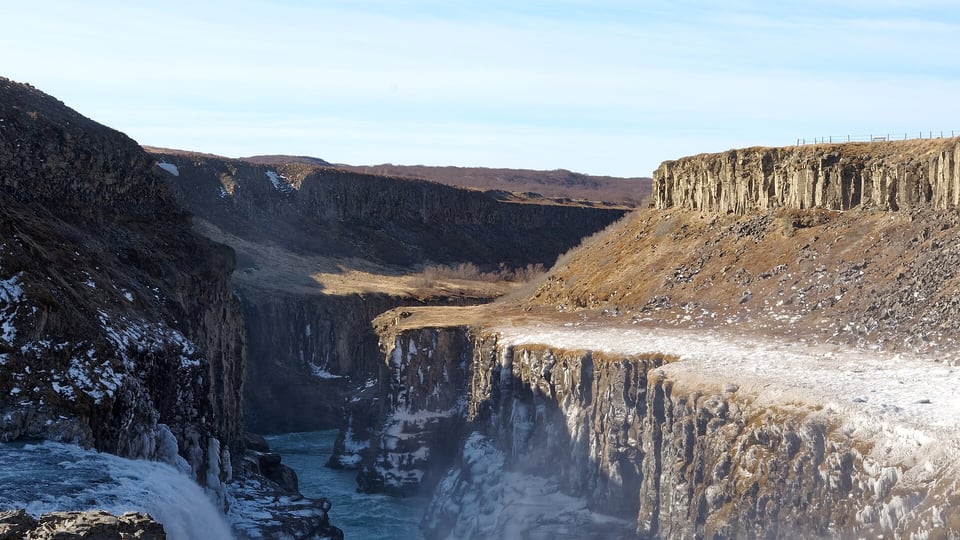
Gullfoss Waterfall
Gullfoss drops in two tiers on the glacier-fed Hvítá River and has been a protected nature reserve since 1979, preserved after local farmer Sigríður Tómasdóttir's opposition to a hydroelectric plan; it is free to visit, with two parking areas and year-round ranger presence.
Best for: Travellers who want the Golden Circle's single most dramatic natural view · Area: Southwest Iceland, the Golden Circle's third and final classic stop
Plan for The upper viewpoint path can be exposed to spray and wind, and a lower canyon trail adds real walking time, so footwear and clothing matter more here than at a paved stop.
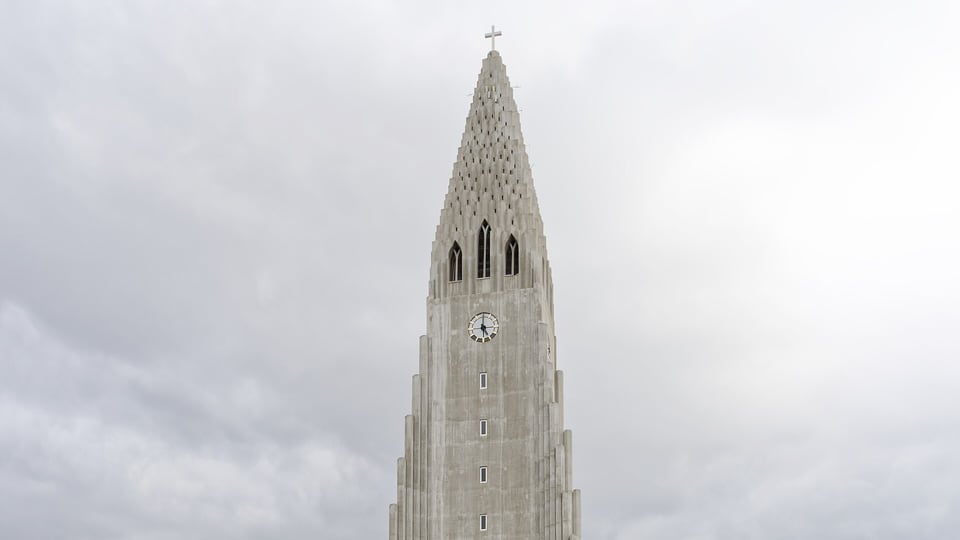
Hallgrímskirkja
At 73 metres, Hallgrímskirkja is the tallest building in the capital; state architect Guðjón Samúelsson designed it in 1937, construction ran from 1945 to its 1986 consecration, and a lift up the tower gives Reykjavík's highest public viewpoint.
Best for: First-time visitors wanting the city's skyline view and defining landmark in one stop · Area: Skólavörðuholt hill, central Reykjavík
Plan for Church entry is free but the tower charges its own admission, cannot be booked ahead, and closes to visitors during Sunday services, so a fixed-time visit needs checking against the schedule.
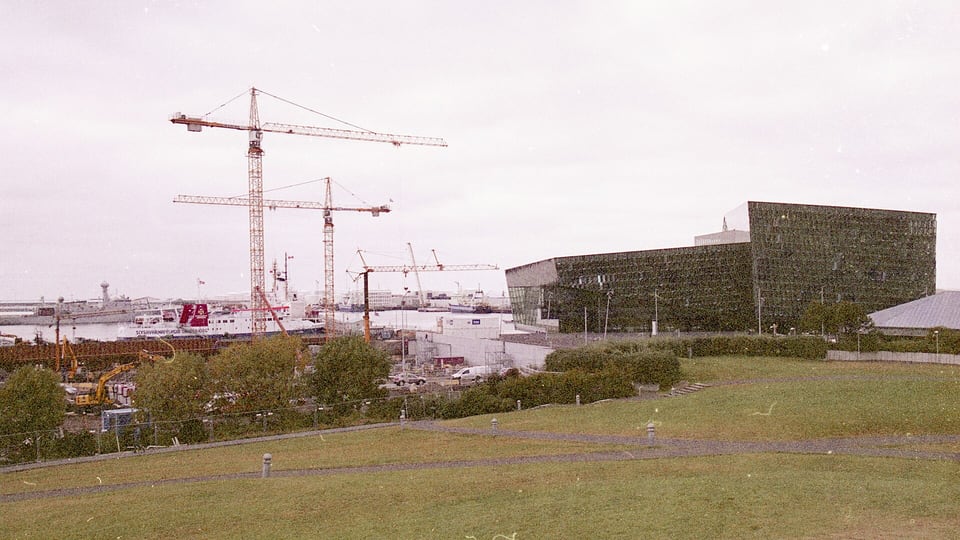
Harpa Concert Hall
Harpa's glass facade has anchored Reykjavík's waterfront since opening in 2011, drawing millions of visitors as a concert and conference venue as well as an architectural landmark in its own right.
Best for: Travellers who want a free architectural stop between downtown and the Old Harbour · Area: Austurbakka 2, the waterfront between downtown and the Old Harbour
Plan for Harpa is a working concert hall, so parts of the building close to the public around performances and events rather than staying open on one fixed daily schedule.
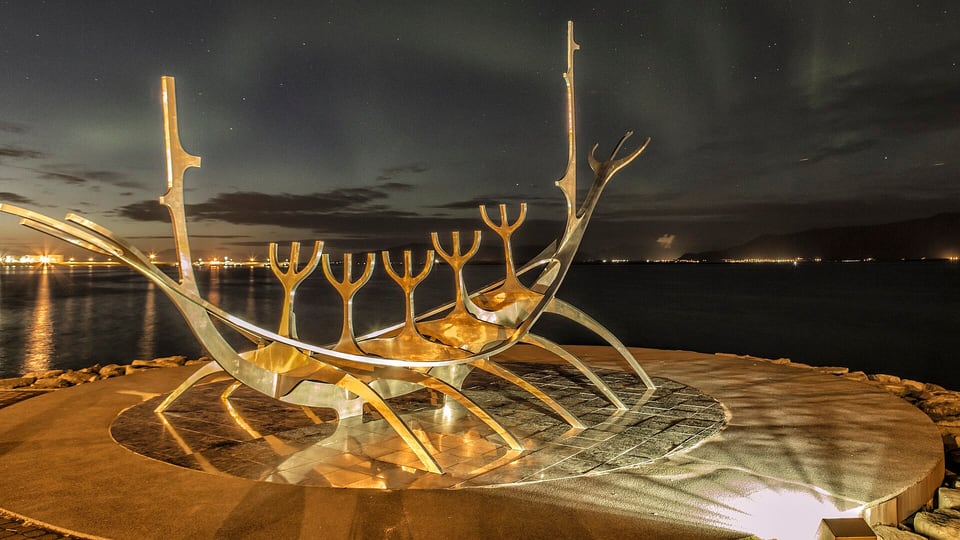
Northern Lights (Aurora Borealis)
The Icelandic Meteorological Office rates aurora activity on a 0–9 scale and combines it with a cloud-cover forecast. In its own words, 'the spectacle of Aurora Borealis requires dark and partly clear skies' — even a modest grade 2 or 3 forecast can be a real display.
Best for: Travellers visiting between roughly September and April who understand it as a chance, not a booking · Area: Anywhere with dark skies; inside Reykjavík, Grótta at Seltjarnarnes is the city's own low-light-pollution spot
Plan for Reykjavík's near-24-hour summer daylight (sunset near midnight in June and July) rules out any sighting outside the darker months, and even in season a clear forecast can still be blocked by cloud on the night.
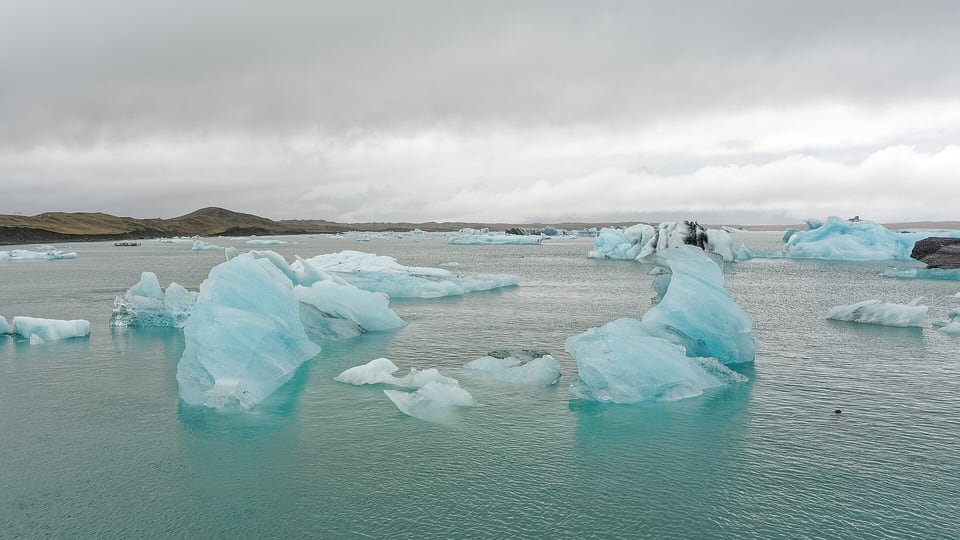
Glacier and Ice Cave Tours
Iceland's glacier tours split into two real options from Reykjavík: a half-day to Langjökull's man-made ice tunnel, around 2–3 hours' drive each way, an 11-hour day from the city. The alternative is a full South Coast day to Jökulsárlón glacier lagoon and Diamond Beach at the edge of Vatnajökull National Park, where rangers manage the natural ice caves in Breiðamerkurjökull.
Best for: Travellers with a full day (or more) to spend and realistic expectations about drive time · Area: Langjökull (west-central highlands) or the South Coast/Vatnajökull National Park (southeast)
Plan for Both options are full-day commitments from Reykjavík — Jökulsárlón alone is roughly a five-hour drive each way — and natural ice caves are seasonal and guided-only, so a specific cave is never guaranteed to be open on a given date.
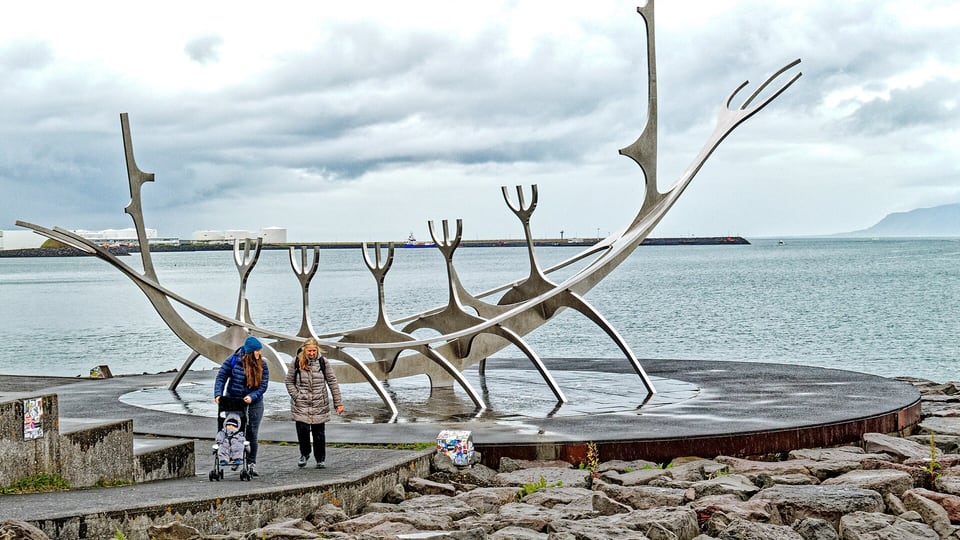
Sun Voyager and the Old Harbour
Sculptor Jón Gunnar Árnason's steel Sun Voyager (Sólfar) was unveiled on the Sæbraut waterfront on 18 August 1990, marking Reykjavík's 200th anniversary as a trading town; Árnason died the year before and never saw it installed.
Best for: A free, walkable stop that pairs easily with the Old Harbour's whale-watching departures and waterfront food scene · Area: Sæbraut waterfront, between downtown and the Old Harbour
Plan for The sculpture itself takes minutes to see; its real value is as a waypoint on a longer waterfront walk rather than a standalone destination.
Plan one, three or five days in Reykjavík
One day: downtown and the Golden Circle can't both fit — pick one
If it's a downtown day, walk Hallgrímskirkja's tower, Laugavegur, Harpa and the Old Harbour, ending at the Sun Voyager. If it's a Golden Circle day, give the whole day to Þingvellir, Geysir and Gullfoss rather than trying to add city sights either side.
The Golden Circle alone is a multi-hour loop with three separate stops, each with real walking time, so treating it as a half-day add-on to a city day usually means rushing all three.
The trade-off A one-day trip has to choose between the city and the countryside; there genuinely isn't time to do both properly.
Three days: downtown, the Golden Circle and the Blue Lagoon
Spend day one on downtown and the waterfront as above. Give day two entirely to the Golden Circle: Þingvellir, Geysir and Gullfoss. Use day three for the Blue Lagoon, timed around your airport transfer since it sits directly on that route.
The Blue Lagoon is about 20 minutes from Keflavík and 50 minutes from Reykjavík, so building it around a flight rather than a separate city trip avoids doubling the drive.
The trade-off Squeezing the Blue Lagoon into the middle of a stay, rather than an arrival or departure day, adds an extra round trip that a flight-day visit avoids entirely.
Five days or more: add a glacier day and slack for the aurora
Use a fourth day for either Langjökull's ice tunnel or a South Coast day to Jökulsárlón and Diamond Beach — not both unless the trip runs longer. Keep at least one open evening between September and April to check the aurora forecast and head to Grótta if it looks promising, rather than committing every night to a fixed plan.
Both glacier options are full-day commitments in different directions from Reykjavík, and the Icelandic Meteorological Office's own forecast means an aurora attempt needs a flexible night, not a fixed one, to have a real chance.
The trade-off Adding a glacier day and open aurora evenings works well across five or more days; compressing both into a shorter trip usually means dropping one or rushing the other.
Costed plans: One Day in Reykjavík: Free to Splurge → · Reykjavík in 3 Days: Plan by Direction →
Sources
checked 2026-09-23. Recommendations are editorial judgements based on the cited sources below.
Choose a Reykjavík base and explore nearby
Downtown (101 Reykjavík): a base for walking to everything
Consider this base when minimising walking distance to Hallgrímskirkja, Laugavegur's restaurants and the tour pickup points most Golden Circle and Blue Lagoon operators use matters more than a quiet street at night.
Downtown's compact core puts Hallgrímskirkja, Harpa and the Old Harbour all within a walkable line, and most day-tour operators pick up directly from downtown hotels.
The trade-off Laugavegur's shops and bars stay open late, so a stay directly on it trades quiet evenings for minimal walking distance to everything else.
Old Harbour and Grandi: a base for the waterfront and whale-watching
Consider this base when a quieter, more maritime evening, easy access to whale-watching departures and Grandi's newer restaurant scene matter more than being inside the densest part of downtown.
The Old Harbour and Grandi have grown from Reykjavík's former fishing-industry district into what the city's own tourism office calls its 'booming creative quarter.'
The trade-off A base here trades a few minutes of extra walking (or a short bus ride) back to Laugavegur's late-night options for a quieter waterfront evening.
Seltjarnarnes: a base for a quieter edge and in-city aurora chances
Consider this base when a quiet coastal walk and easy access to the city's own best in-town Northern Lights spot, Grótta, matter more than being in the densest part of downtown.
Grótta's western exposure keeps it away from the worst of the city centre's light pollution, making it a genuine in-city aurora option rather than requiring a drive out of Reykjavík.
The trade-off This base trades downtown's density and tour pickups for a quieter, more residential edge of the city, with a slightly longer walk or bus ride back into the centre.
Sources
checked 2026-09-23. Recommendations are editorial judgements based on the cited sources below.
Airport and getting around
Keflavík International Airport (KEF), Iceland's main gateway, sits about 50km from downtown Reykjavík. The Flybus meets every arriving flight around 40 minutes after landing and reaches central Reykjavík (BSÍ Bus Terminal) in about 45 minutes; taxis run 24 hours for a direct door-to-door option.
The Blue Lagoon sits on the route between the airport and the city — about 20 minutes from KEF and 50 minutes from downtown — so most itineraries visit it directly on arrival or departure rather than as a separate trip from Reykjavík.
Reykjavík's own domestic airport (RVK/RKV) sits inside the city and handles only internal Icelandic routes such as Akureyri and the Westman Islands; it is not where international flights land and should not be confused with Keflavík.
Best time to visit
Spring (March–May)
Daylight lengthens quickly through spring, from only a few hours in March toward the near-midnight sunsets of early June. The Icelandic Meteorological Office's own year-to-year station data shows how much a single season can vary, so packing for cool, changeable weather matters more than trusting a fixed forecast.
- Crowds
- Varies by event and attraction
Summer (June–August)
June and July bring the midnight sun: a June sunrise at 3:24am and sunset at 11:29pm, alongside 2025's warmest reading of 21.8°C on 14 July. This is also when the Northern Lights are not visible at all, since the sky never gets dark enough.
- Crowds
- Varies by event and attraction
Autumn (September–November)
Nights start turning dark enough for aurora forecasts again from around September, and days shorten quickly toward winter; this shoulder season pairs Golden Circle weather that is still manageable with the start of the aurora season.
- Crowds
- Varies by event and attraction
Winter (December–February)
December's daylight is genuinely short — a sunrise near 10:45am and sunset near 3:47pm, with the shortest days close to four hours — and 2025's coldest reading was -10.9°C on 1 January; this is also peak aurora season, though a clear-sky forecast is still never a guarantee of a sighting.
- Crowds
- Varies by event and attraction
Food, markets and local life
Bæjarins Beztu Pylsur, the hot dog stand founded in 1937 on Tryggvagata in central Reykjavík, is the city's best-known food stop — famous enough that Bill Clinton ordered one (mustard only) during a 2004 visit, a combination the stand now sells as 'the Clinton.' It is a five-minute stop, not a meal in itself, and suits a downtown or Old Harbour walk rather than a sit-down plan.
Grandi, once the sand spit housing Reykjavík's fish-processing plants and shipyards, is now described by the city's own tourism office as 'Reykjavík's booming creative quarter.' Culture, cuisine and marine heritage meet there in converted industrial buildings, a natural pairing with the Sun Voyager walk rather than a separate trip.
City profile
- Population (Reykjavík municipality, Statistics Iceland population count at 1 January 2026, 2026): 139,804
Reykjavík's Sun Voyager sculpture was unveiled on 18 August 1990 specifically to mark the 200th anniversary of the city's founding as a trading town, one of the few fixed historical dates the city itself treats as a public anniversary marker.
Reykjavík's name is traditionally read as 'smoky bay,' after the geothermal steam early settlers saw rising along the shore; today about 90% of the energy Iceland uses for domestic heating still comes from geothermal sources, according to the National Energy Authority (Orkustofnun).
Famous for:
- The Blue Lagoon, the Golden Circle and the Northern Lights: the three reasons many first-time visitors choose Iceland at all, all reachable from Reykjavík as a base.
- Hallgrímskirkja's distinctive concrete tower, the tallest building in the capital at 73 metres, visible from most of the compact downtown core.
- A geothermal-heated capital where public swimming pools, not bars, are the city's actual daily social habit — Laugardalslaug alone runs a 50-metre outdoor pool, hot tubs and water slides year-round.
- Harpa's glass concert hall on the waterfront, opened in 2011 and now one of the most-visited buildings in the country.
What makes a Reykjavík visit worthwhile
Reykjavík works best as a compact, walkable base for the day trips that are the real reason most visitors come to Iceland. The Golden Circle runs east to Þingvellir, Geysir and Gullfoss, the Blue Lagoon sits on the way to Keflavík, and, with a full day to spare, a glacier excursion reaches Langjökull or the South Coast. None of these need a rental car if a guided day tour fits the schedule better.
The city itself rewards a slower morning or evening between those trips: Hallgrímskirkja's tower for the skyline view, Harpa's waterfront architecture, the Sun Voyager and Old Harbour on foot, and Laugardalslaug's geothermal pool for the local habit rather than the tourist one.
The Northern Lights are worth building real flexibility around rather than a fixed night — a visit timed for roughly September to April gives the season a real chance without promising any single evening will deliver.
- Plan by trip type
- Golden Circle · Blue Lagoon · City
- Good first stay
- 2–3 days for the core, 5 with a glacier day
- Climate constraint
- Near-24h daylight Jun–Jul · Aurora only Sep–Apr
- Main airport
- KEF · Flybus, ~45 min to downtown
Planning your Reykjavík visit: FAQs
Do I need to book the Blue Lagoon in advance?
Yes: pre-booking is essential and there is no walk-in admission, with peak-season (June–August) and festive-period slots selling out three to four weeks in advance. It sits between Reykjavík and Keflavík Airport, so it fits naturally around a flight rather than needing a dedicated day from downtown.
Are the Northern Lights guaranteed if I visit in winter?
No. The Icelandic Meteorological Office's own forecast requires dark, partly clear skies, and even a favourable activity score can be blocked by cloud on the night. Visit between roughly September and April for dark-enough skies, but treat any specific night as a chance, not a booking.
How do I get from Keflavík Airport to Reykjavík?
The Flybus meets every landing about 40 minutes after touchdown and takes around 45 minutes to central Reykjavík; taxis run 24 hours, and the airport is about 50km from downtown.
Can I do the Golden Circle without a car?
Yes — it is sold as a standard guided day tour from Reykjavík covering Þingvellir, Geysir and Gullfoss, so a rental car is a self-drive choice for setting your own pace, not a requirement.
Can the Blue Lagoon and a Golden Circle day be combined?
Not comfortably: the Golden Circle runs east from Reykjavík while the Blue Lagoon sits southwest toward the airport, in the opposite direction, so combining both into one day means a very long day on the road rather than unhurried time at either.
What's the difference between the Blue Lagoon and Sky Lagoon?
Sky Lagoon sits at Kársnes Harbour in Kópavogur, about a 15-minute drive from central Reykjavík, versus the Blue Lagoon's roughly 50-minute drive out toward Keflavík. Sky Lagoon opened in 2021 as the closer, in-city geothermal option, while the Blue Lagoon remains the larger, better-known original.
Make your Reykjavík plans
Compare tours, tickets and activities in Reykjavík →
Choose your departure market and search flights to Reykjavík from the Mubboo Flights homepage.
Compare flights ↗Sources
Latest source check: .
Show all 30 sources
- Statistics Iceland — Iceland's population 1 January 2026 (checked 2026-09-23)
- Visit Reykjavík (checked 2026-09-23)
- Hallgrímskirkja — opening hours and tower admission (checked 2026-09-23)
- Hallgrímskirkja — the building and history (checked 2026-09-23)
- Harpa Concert Hall — about Harpa (checked 2026-09-23)
- Visit Reykjavík — Sun Voyager (checked 2026-09-23)
- Blue Lagoon Iceland — plan your visit, admission tiers and opening hours (checked 2026-09-23)
- Blue Lagoon Iceland — how to get here (checked 2026-09-23)
- Þingvellir National Park (checked 2026-09-23)
- Nature Conservation Iceland — Gullfoss (checked 2026-09-23)
- Visit Iceland — South Iceland's dynamic geosites: geysers, glaciers, rifts (checked 2026-09-23)
- Visit Iceland — the Golden Circle (checked 2026-09-23)
- Vatnajökull National Park (checked 2026-09-23)
- Vatnajökull National Park — Jökulsárlón (checked 2026-09-23)
- Into the Glacier — Langjökull ice tunnel tour operator (checked 2026-09-23)
- Icelandic Meteorological Office — aurora forecast (checked 2026-09-23)
- Icelandic Meteorological Office — instructions for the aurora forecast (checked 2026-09-23)
- Icelandic Meteorological Office — the weather in Iceland in 2025 (checked 2026-09-23)
- Visit Reykjavík — sunrise and sunset by month (checked 2026-09-23)
- Keflavík Airport — getting to and from KEF (checked 2026-09-23)
- Keflavík Airport — the Blue Lagoon from KEF Airport (checked 2026-09-23)
- Keflavík Airport (checked 2026-09-23)
- Isavia Innanlandsflugvellir — Reykjavík domestic airport (checked 2026-09-23)
- Visit Reykjavík — Laugardalslaug (checked 2026-09-23)
- Visit Reykjavík — Seltjarnarnes and Grótta (checked 2026-09-23)
- Visit Reykjavík — Grandi (checked 2026-09-23)
- Bæjarins Beztu Pylsur (checked 2026-09-23)
- Orkustofnun (National Energy Authority) — district heating (checked 2026-09-23)
- Sky Lagoon — plan your visit (checked 2026-09-23)
- The booking platform — Reykjavík destination mapping d905 (checked 2026-09-23)
Photo credits
- blue lagoon — Jakub Hałun · CC BY-SA 4.0.
- thingvellir national park — Jakub Hałun · CC BY-SA 4.0.
- geysir strokkur — Andreas Tille · CC BY-SA 3.0.
- gullfoss waterfall — Jakub Hałun · CC BY-SA 4.0.
- hallgrimskirkja — Jakub Hałun · CC BY-SA 4.0.
- harpa concert hall — Matthew Bellemare · CC BY-SA 2.0.
- northern lights — john.purvis · CC BY 2.0.
- glacier and ice cave tours — Jakub Hałun · CC BY 4.0.
- sun voyager old harbour — Holger Uwe Schmitt · CC BY-SA 4.0.
- grotta lighthouse — Olga Ernst · CC BY-SA 4.0.
- old harbour — Richard Bartz · CC BY-SA 3.0.
Mubboo Editorial Team · Reviewed by Mubboo Editorial Team


