
Phuket travel guide
Phuket
Phuket is Thailand's largest island, made up of several genuinely distinct areas rather than one town centre: Patong for nightlife, Kata and Karon for quieter beaches, Phuket Old Town for Sino-Portuguese heritage, and Rawai for a more local, working-harbour character.
Two real, different boat trips anchor most visits. The Phi Phi Islands sit roughly 40-48km southeast, about 45 minutes to two hours by boat and home to Maya Bay's real, current access rules, while James Bond Island in Phang Nga Bay sits roughly 25km northeast, 45-90 minutes by boat.

Find your Phuket experience
Explore Phuket Before You Book
Take a virtual drive or walk, then find tours and tickets for the places you like.

Activities
Featured activities in Phuket


Prices at a glance
What we sell today and what recent flight searches found. No hotel prices; nothing here is a trip total.
- Tours and tickets in Phuketfrom US$36.80
Live from Viator when this page loaded · per adult · changes by date.
Top experiences
Top experiences in Phuket
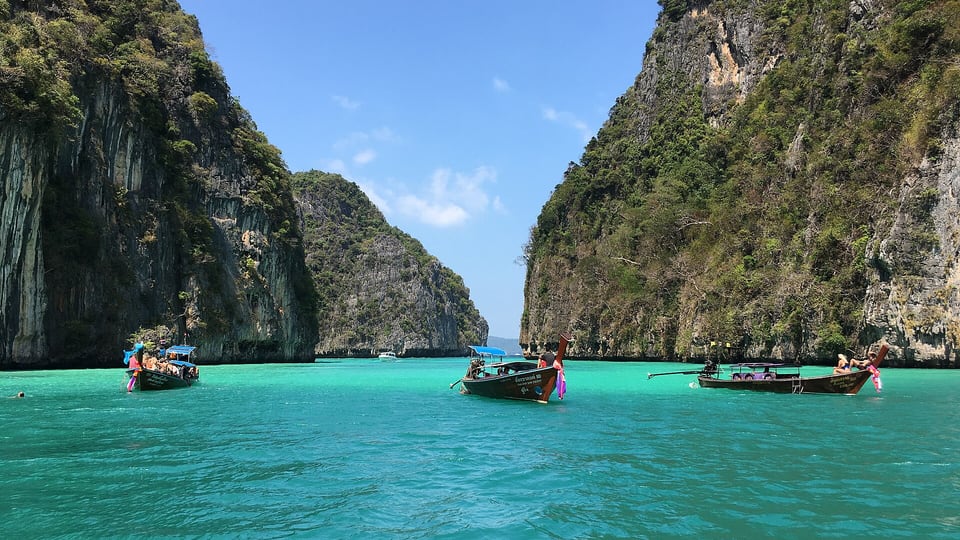
Phi Phi Islands and Maya Bay
The Phi Phi Islands, roughly 40-48km southeast of Phuket, are a ring of limestone-cliff islands reachable only by boat; day trips typically combine Maya Bay (when open), Pileh Lagoon, Monkey Beach and snorkeling at Bamboo Island in a 9-12 hour outing.
Best for: First-time visitors who want Phuket's single most-photographed island scenery, planned around Maya Bay's real current access rules · Area: Offshore, southeast of Phuket; day trips depart from piers including Rassada and Ao Por
Plan for Maya Bay genuinely pauses every 1 August-30 September and, even in season, limits visitors to a floating-pier arrival and ankle-deep wading only, not the open beach access older photos show.
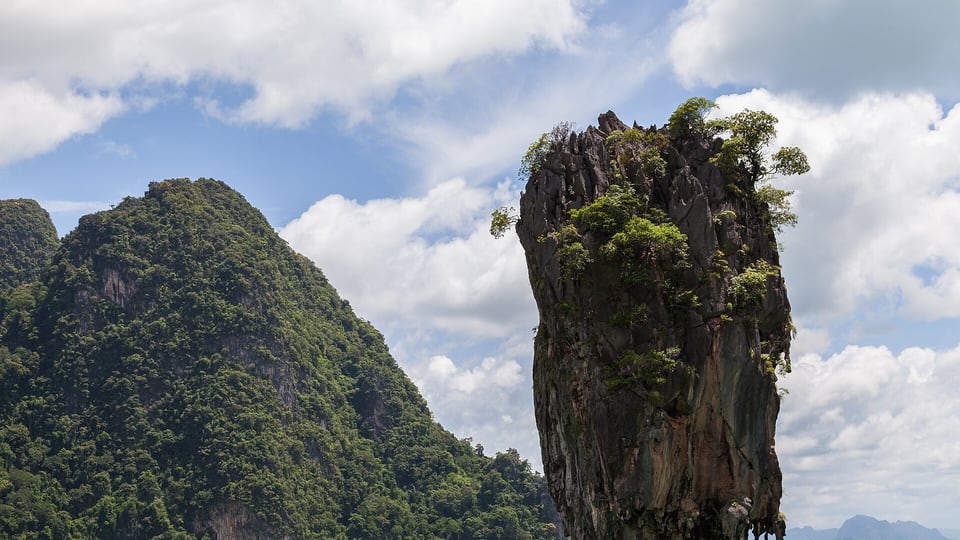
James Bond Island and Phang Nga Bay
James Bond Island is the popular name for Khao Phing Kan and the adjoining Ko Tapu limestone tower in Phang Nga Bay, part of Ao Phang Nga National Park. It was named for its role in the 1974 film "The Man with the Golden Gun," and most tours pair it with sea-canoeing through the bay's hidden hong lagoons.
Best for: Travellers who want Phang Nga Bay's dramatic karst scenery and a shorter overall travel time than Phi Phi · Area: Phang Nga Bay, roughly 25km northeast of Phuket; day trips depart from piers including Ao Por and Royal Phuket Marina
Plan for The island itself is a short 20-30 minute stop within a longer full-day tour; the real draw is the surrounding bay scenery and canoeing, not extended time on Khao Phing Kan itself.
Patong Beach and Bangla Road
Patong Beach runs about 3.5km along Phuket's west coast and is genuinely the island's busiest, most nightlife-dense area, anchored by Bangla Road's roughly 400-metre strip of 200-plus bars and clubs open until around 4am.
Best for: Travellers who want the widest choice of nightlife, restaurants and shopping within walking distance of their hotel · Area: Phuket's central west coast
Plan for Patong's density and nightlife-first atmosphere genuinely suit some travellers and genuinely do not suit others, including most families wanting a quiet evening beach walk.
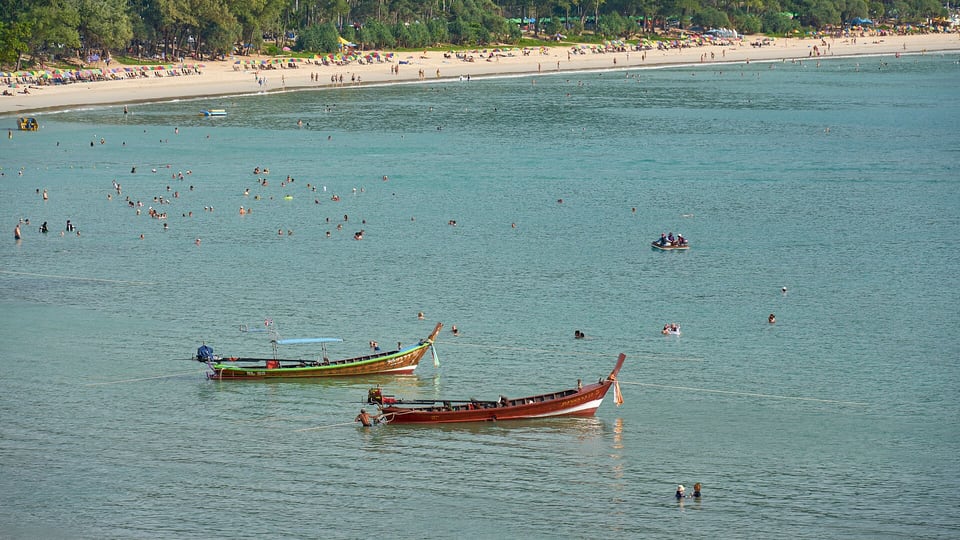
Kata and Karon, Phuket's Quieter Beaches
Kata and Karon sit immediately south of Patong on the same west coast but offer a genuinely calmer, more family-oriented atmosphere. Karon runs about four kilometres and is separated from Patong by a large headland, while Kata is often named the more family-favoured of the two.
Best for: Families and travellers who want a real beach-town pace rather than Patong's density, without leaving Phuket's west coast · Area: South of Patong on Phuket's west coast
Plan for Fewer nightlife and shopping options than Patong is a genuine trade-off, not a hidden downside, for travellers who specifically want that quieter pace.
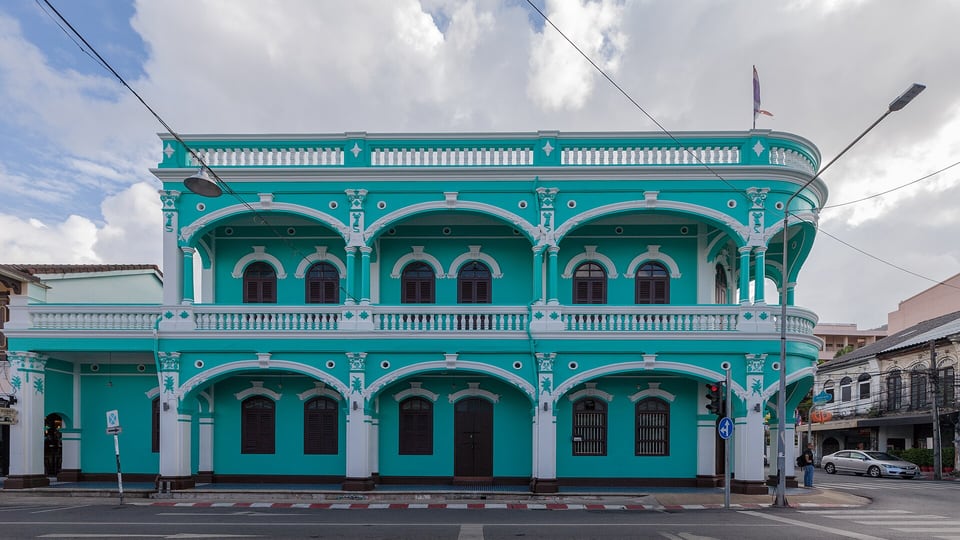
Old Phuket Town
Old Phuket Town's Sino-Portuguese shophouses on streets like Thalang, Dibuk and Yaowarat Road were built during the 19th- and early-20th-century tin-mining boom by Chinese immigrant wealth. The weekly Sunday Walking Street (Lard Yai) turns Thalang Road into a 360-metre food and craft market every Sunday evening.
Best for: Travellers who want Phuket's real history rather than only its beaches, ideally timed to a Sunday evening for the Walking Street market · Area: Inland, central-east Phuket, around Phuket Town
Plan for The architecture and street life are best appreciated on foot in the cooler morning or Sunday evening; midday heat between the beaches and Old Town is a real planning cost.
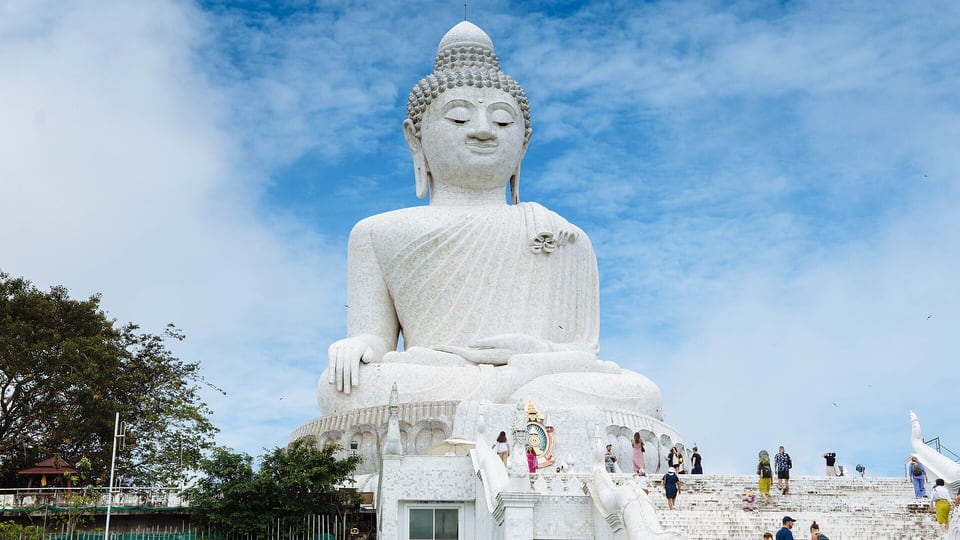
The Big Buddha
The Big Buddha (Phra Puttamingmongkol Akenagakhiri) is a 45-metre white marble-clad seated statue on the Nakkerd Hills above Chalong, built between 2002 and 2014 largely through public donation, with 360-degree views over Chalong Bay, Rawai, Kata and Karon.
Best for: Travellers who want Phuket's best single viewpoint alongside a real religious landmark, not only a photo stop · Area: Nakkerd Hills, above Chalong, south-central Phuket
Plan for The hilltop site has limited shade and can be busy at midday with tour groups; an early-morning or late-afternoon visit trades some heat for a calmer, cooler visit.
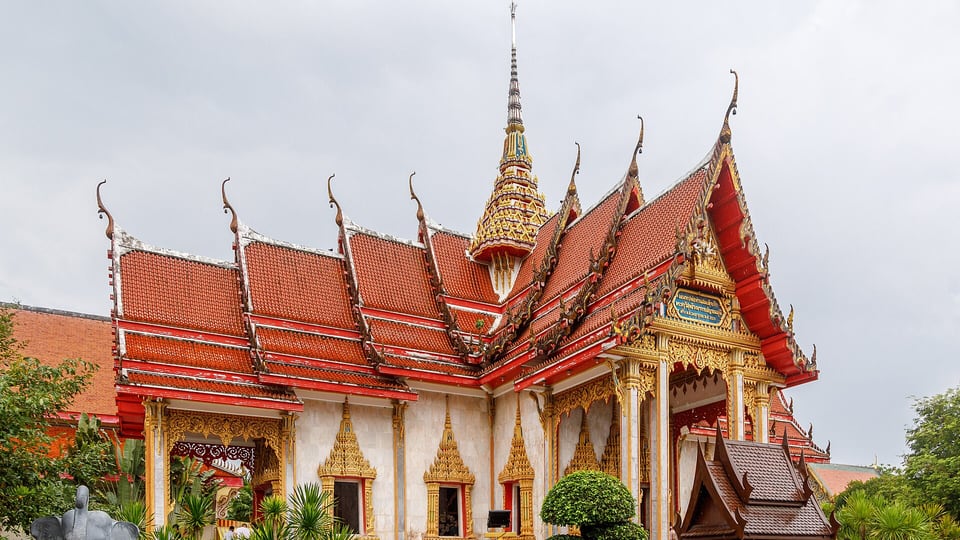
Wat Chalong
Wat Chalong (officially Wat Chaiyathararam) is Phuket's largest and most-visited Buddhist temple, founded around 1837 and famous for a 60-metre golden chedi said to hold a fragment of the Buddha's bone, alongside statues honouring the two monks who led Phuket through the 1876 Angyee Rebellion.
Best for: Travellers who want Phuket's most significant religious site and a real, specific piece of the island's history · Area: Chalong, south-central Phuket, near the Big Buddha
Plan for As the island's most-visited temple, it draws large domestic and international tour-group traffic by mid-morning; visiting early avoids the busiest window.
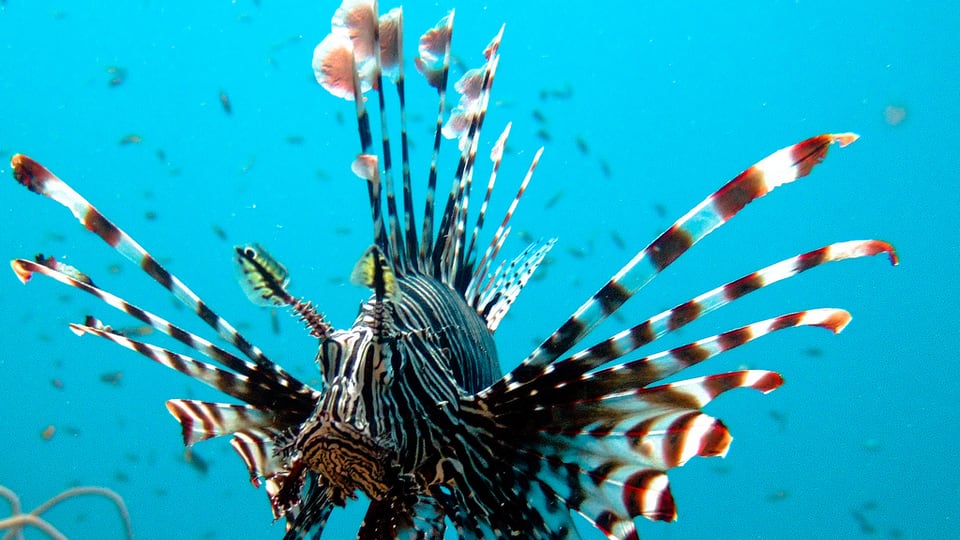
Snorkeling and Scuba Diving Day Trips
Phuket is a genuine departure point for both casual snorkeling (Coral Island, the Racha Islands, Phi Phi's Bamboo Island) and certified scuba diving, including full-day, multi-dive trips to sites around the Phi Phi archipelago and further offshore.
Best for: Travellers who want time in or under the water rather than only viewing islands from a boat deck · Area: Multiple departure piers; specific sites depend on the operator and season
Plan for Monsoon-season swell (roughly May-October) reduces underwater visibility and cancels some trips outright; the dry season (November-April) gives calmer, clearer conditions instead.
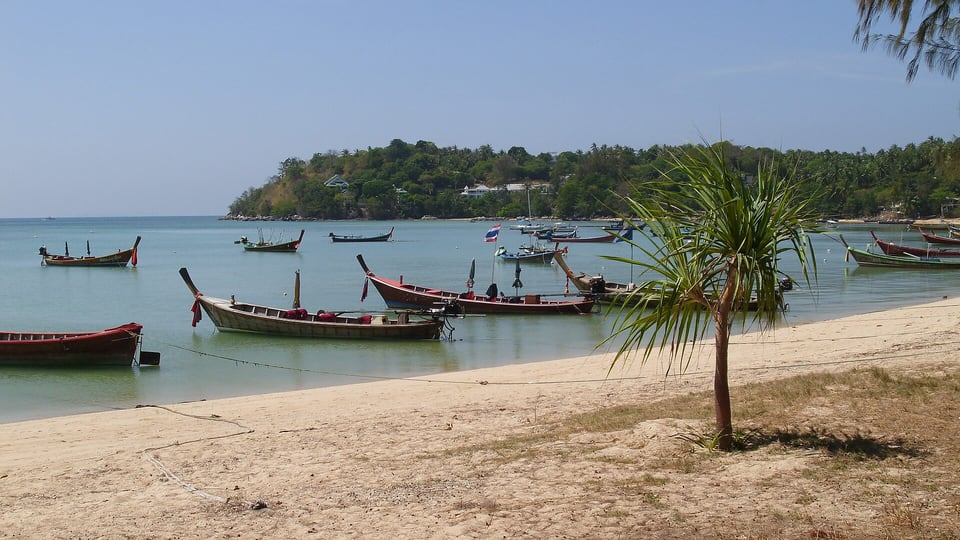
Rawai and Its Longtail Boats
Rawai, on Phuket's southern tip, keeps a genuinely more local, working-harbour character than the west-coast resort beaches. It is one of the island's main boat piers, historically home to Urak Lawoi sea-gypsy communities, with a beachfront lined by longtail boats and seafood restaurants rather than sunbathing crowds.
Best for: Travellers who want to see Phuket's fishing and boat-charter side, and to eat seafood facing the boats that caught it · Area: Phuket's southern tip
Plan for Much of Rawai's own shoreline is rocky or very shallow at low tide, genuinely not a swimming beach in the way Kata or Karon are.
Ethical Elephant Sanctuary Visit
Real, current Viator inventory scoped to Phuket includes no-riding elephant sanctuaries where visitors observe, feed and bathe rescued elephants without touching, riding or hand-feeding for entertainment, a genuinely different animal-welfare model from the traditional riding camps still found elsewhere in Thailand.
Best for: Travellers who want a wildlife experience and specifically want to check its animal-welfare model before booking · Area: Inland Phuket; exact locations vary by operator
Plan for No Wikimedia Commons candidate photographed at an actual Phuket sanctuary cleared rights verification for this page; this item carries no dedicated experience image as a result, reported honestly rather than illustrated with an unrelated venue's photo.
Plan three, six or seven-plus days in Phuket
Three to four days: one boat trip and the island's landmarks
Choose this plan for a short first visit: pick either Phi Phi or James Bond Island for one full-day boat trip, then spend a half day on Big Buddha, Wat Chalong and Old Town.
A single boat trip plus the landmark half day fits comfortably into three to four days without rushing either.
The trade-off A short trip means choosing only one of the two signature boat trips, not both.
Six to seven days: both boat trips plus water activities
Choose this plan when one boat trip feels incomplete: book Phi Phi and James Bond Island on separate days, add a snorkeling or diving day, and spend a relaxed day in a quieter base like Kata or Rawai.
Six to seven days is enough to do both signature boat trips without stacking them back-to-back, plus a genuine water-activity day.
The trade-off Fitting both boat trips and a water-activity day still leaves limited slack for weather delays during monsoon season.
A week or more: a weather buffer and a second base area
Choose this plan on a longer stay: build in a genuine buffer day for monsoon-season rain delays, add an ethical elephant sanctuary half day, and split the stay across two base areas rather than one long one.
A week or more allows a real weather buffer and lets you experience two genuinely different Phuket areas rather than only one.
The trade-off Splitting a stay across two base areas means packing and moving once mid-trip, a real cost against staying in one hotel the whole time.
Sources
checked 2026-09-24. Recommendations are editorial judgements based on the cited sources below.
Choose a Phuket base area
Patong: a base for nightlife and the widest choice of everything
Consider this base when the widest choice of restaurants, nightlife and shopping within walking distance matters more than a quiet evening.
Patong's density puts nearly everything within easy reach, at the cost of the area's genuinely busy, nightlife-first atmosphere.
The trade-off Choosing Patong for that convenience means accepting its real character rather than expecting a quiet family beach experience.
Kata or Karon: a quieter west-coast beach base
Consider Kata or Karon when a calmer, more family-oriented atmosphere matters more than nightlife density, while staying on the same west coast as Patong.
Both sit a short drive from Patong, so the nightlife is still reachable, just not on your own doorstep.
The trade-off Choosing this quieter pace means fewer restaurants and bars within a short walk than a Patong base offers.
Old Town or Rawai: a heritage or working-harbour base
Consider Old Town for heritage architecture and Sunday market access, or Rawai for boat charters, fresh seafood and a more local pace, when a genuinely different kind of stay matters more than direct beach access.
Neither area has the kind of swimmable beach Kata or Karon offer directly outside the hotel, a real trade for their distinct character.
The trade-off A stay in either area means a real daily drive or taxi to reach the main west-coast beaches.
Sources
checked 2026-09-24. Recommendations are editorial judgements based on the cited sources below.
Airport and getting around
Phuket International Airport (HKT) sits about 32km north of Phuket Town and roughly 35-42km from Patong, with a taxi or fixed-rate transfer typically taking 45-60 minutes, up to 90 in heavy traffic. HKT remains the island's only operating gateway.
Phuket is a true island, connected to mainland Phang Nga province only by the Sarasin Bridge across the narrow Pak Phra Strait; the original 1967 bridge is now a pedestrian walkway beside its 2010 replacement.
Distances between Phuket's own areas are genuinely significant: Patong to Old Town is roughly 30-40 minutes by road, and Rawai or Kata to the airport can run well over an hour.
Best time to visit
Winter (November-February)
Phuket's coolest, driest and busiest tourist season, with the calmest seas of the year on the west coast, the most reliable weather for a Phi Phi or James Bond Island boat trip, and the highest hotel occupancy.
- Crowds
- High
Spring (March-April)
Phuket's hottest months, with daytime temperatures regularly in the low-to-mid 30s Celsius and high humidity; seas remain generally calm before the monsoon begins.
- Crowds
- Varies by event and attraction
Summer (May-August)
The start of the southwest monsoon: rain becomes more frequent and west-coast swimming genuinely more dangerous, with local lifeguards raising red flags at popular beaches whenever rip currents form.
- Crowds
- Varies by event and attraction
Autumn (September-October)
Phuket's wettest months and the peak of monsoon-season rip-current risk on west-coast beaches; Maya Bay is also closed for its entire annual 1 August-30 September ecological rest during most of this window.
- Crowds
- Low
Food, produce and local life
Phuket's Peranakan (Baba-Nyonya) heritage produced dishes not found the same way elsewhere in Thailand. Hokkien mee (stir-fried wide noodles with pork and squid, distinct from Malaysian or Singaporean versions), moo hong (pork belly braised in a sweet soy-and-spice marinade), and o-aew (a shaved-ice dessert with local-fruit jelly and red beans) are the three worth seeking out first.
Old Town's Sunday Walking Street (Lard Yai) on Thalang Road, running 4pm-10pm every Sunday since late 2013, is the single easiest stop to try most of Phuket's Peranakan street food in one visit, though everyday stalls on Thalang Road's side streets run all week.
City profile
- Population (Phuket province, 2025, 2025): 432,464
Phuket's wealth through the 18th and 19th centuries came from tin mining, which drew waves of Chinese immigrants; Portuguese traders who employed Chinese builders produced the narrow, ornately fronted Sino-Portuguese shophouses and mansions that still line Phuket Old Town.
Chinese tin-mining migrants who married local women formed Phuket's Peranakan (Baba-Nyonya) community, a distinct culture with its own cuisine and architecture that flourished during the early-1900s mining boom and remains visible in Old Town today.
Wat Chalong, founded around 1837, became Phuket's most revered temple after two of its monks, Luang Pho Chaem and Luang Pho Chuang, led and cared for the wounded during the 1876 Angyee Rebellion, an uprising by Chinese tin-mine labourers.
Famous for:
- Phuket's two most-booked boat-trip destinations, the Phi Phi Islands and James Bond Island, are genuinely different places in different directions, and neither is a substitute for the other.
- Phuket was significantly affected by the 26 December 2004 Indian Ocean tsunami, which struck the Andaman coast with no working regional warning system at the time; Thailand has since built a dedicated tsunami warning and evacuation network covering the Andaman coast.
- Patong is genuinely Phuket's nightlife-dense area, centred on Bangla Road's bars and clubs open into the early hours, while Kata, Karon, Rawai and Phuket Old Town offer real, distinctly quieter alternatives.
- An estimated 20 to 30 tourists drown off Phuket's beaches every year, almost all during the May-to-October monsoon when red flags are flying and rip currents form on west-coast beaches, most frequently at Karon and southern Kata Yai.
What makes a Phuket visit worthwhile
Travellers who expect Phuket to have one walkable centre are usually surprised: the island's real tourist geography is five-plus separate areas connected mainly by road, each with a different character, so choosing a base area is a genuine first decision rather than an afterthought.
Phuket sits within reach of two real, different offshore excursions. The Phi Phi Islands lie roughly 40-48km southeast, about 45 minutes by speedboat or up to two hours by regular ferry, while James Bond Island in Phang Nga Bay lies roughly 25km northeast, 45-90 minutes by boat depending on the vessel.
Maya Bay, the cove on Koh Phi Phi Leh made famous by the film "The Beach," stopped taking visitors from 2018 for ecological recovery. It reopened in 2022 under new rules: no boats mooring inside the bay, arrival via a floating pier at Loh Samah Bay, no swimming beyond ankle depth, and a visitor cap. It now also pauses every year from 1 August to 30 September for continued coral recovery.
Two real safety facts are worth stating plainly rather than glossing over. Phuket's west-coast beaches see genuinely dangerous rip currents during the May-October monsoon, and the island was significantly affected by the 2004 tsunami, though Thailand has since built a dedicated Andaman-coast warning and evacuation system.
- Plan by trip type
- Phi Phi Islands & Maya Bay · James Bond Island & Phang Nga Bay · Patong nightlife · Kata & Karon quieter beaches · Old Phuket Town
- Good first stay
- 3-4 days for one boat trip plus the island's landmarks, 6-7 days for both Phi Phi and James Bond Island, a week+ with a weather buffer
- Climate constraint
- Dry season Nov-Apr is calmest for boat trips · Monsoon May-Oct brings real rip-current risk on west-coast beaches, Sept wettest
- Main gateway
- Phuket International Airport (HKT), about 32km north of Phuket Town, 17.4 million passengers in 2025
Planning your Phuket visit: FAQs
Is Phuket a single town, or is it several different areas?
Phuket is not one walkable town but a whole island of separate areas connected by road; most visitors pick one or two base areas (commonly Patong plus a quieter beach, or Old Town) rather than expecting to explore the whole island on foot.
Is Maya Bay open, and what are the current visiting rules?
As of the most recent rules seen in 2026, Maya Bay is open outside its fixed annual 1 August-30 September closure. Real restrictions still apply: boats moor at Loh Samah Bay rather than inside the cove, visitors reach the beach via a floating pier, swimming is limited to ankle depth, and a visitor cap applies. Confirm the exact current rule with your tour operator, since these figures have changed before.
Is there a real difference between a Phi Phi Islands trip and a James Bond Island trip?
Yes: Phi Phi Islands and James Bond Island are in different directions from Phuket (southeast versus northeast) and are normally sold as separate full-day trips, though a small number of genuine combined-day products exist. Check the specific itinerary before assuming a "Phuket islands tour" covers both.
Is it safe to swim at Phuket's beaches year-round?
Not always: Phuket's west-coast beaches see genuinely dangerous rip currents during the May-October monsoon, and an estimated 20-30 tourist drownings occur most years, almost all during that window. Follow the red/yellow/green flag system strictly; a red flag means no swimming, not merely caution.
Is Phuket still at risk from another tsunami, and what warning system exists now?
Phuket was significantly affected by the 26 December 2004 Indian Ocean tsunami, when no regional warning system existed. Thailand has since built a dedicated Andaman-coast tsunami warning and evacuation network, including offshore monitoring buoys, tide gauges and more than 100 coastal warning towers, so today's risk picture is materially different from 2004.
Should I stay in Patong, or is a quieter area a better fit?
Choose Patong for the widest choice of nightlife, restaurants and shopping within walking distance; choose Kata, Karon, Rawai or Phuket Old Town for a genuinely quieter, more family- or heritage-oriented base, since the difference in atmosphere between Patong and its neighbours is real, not marketing.
Make your Phuket plans
Compare tours, tickets and activities in Phuket →
Choose your departure market and search flights to Phuket from the Mubboo Flights homepage.
Compare flights ↗Sources
Latest source check: .
Show all 47 sources
- Phuket International Airport - Wikipedia (checked 2026-09-24)
- Phuket (city) - Wikipedia (checked 2026-09-24)
- Phuket province - Wikipedia (checked 2026-09-24)
- Statista - Population of Phuket (checked 2026-09-24)
- Khao Phing Kan (James Bond Island) - Wikipedia (checked 2026-09-24)
- Phang Nga Bay - Wikipedia (checked 2026-09-24)
- Ao Phang Nga National Park - Wikipedia (checked 2026-09-24)
- James Bond Island Tours - about Khao Phing Kan and Ko Tapu (checked 2026-09-24)
- Qbic Travel - why is it called James Bond Island (checked 2026-09-24)
- Ko Phi Phi Le - Wikipedia (checked 2026-09-24)
- Phi Phi Islands - Wikipedia (checked 2026-09-24)
- Journee Mondiale - Thailand closed this beach for 3 years and reopened it with a daily visitor cap (checked 2026-09-24)
- Phuket101 - Maya Bay, new rules and what it is like now (checked 2026-09-24)
- Simba Sea Trips - Maya Bay current rules, hours and entry fee (checked 2026-09-24)
- 5 Star Marine Phuket - Maya Bay reopening 1 October 2024 (checked 2026-09-24)
- Club Med - From Phuket to the Phi Phi Islands, is it worth the trip (checked 2026-09-24)
- Gecko Routes - from Phuket to Koh Phi Phi, schedules, prices and tips (checked 2026-09-24)
- Phuket101 - James Bond Island day trip from Phuket, prices and tips (checked 2026-09-24)
- Centara Hotels and Resorts - a complete guide to James Bond Island from Phuket (checked 2026-09-24)
- USGS - medieval forewarning of the 2004 Indian Ocean tsunami in Thailand (checked 2026-09-24)
- Effect of the 2004 Indian Ocean earthquake on Thailand - Wikipedia (checked 2026-09-24)
- The ASEAN Magazine - Thailand's progress 20 years after the Indian Ocean tsunami (checked 2026-09-24)
- Radio Free Asia - on 20th anniversary of Indian Ocean tsunami, disaster preparedness questioned (checked 2026-09-24)
- Phuket.net - staying safe at the beach in rainy season (checked 2026-09-24)
- Phuket Expat Guide - Phuket rip currents and beach safety guide (checked 2026-09-24)
- Phuket Travel Store - rainy season, hidden dangers of rip currents on the west coast beaches (checked 2026-09-24)
- Window on Phuket - beach safety in Phuket (checked 2026-09-24)
- The Land of Wanderlust - Patong vs Kata vs Karon, which Phuket beach is best for you (checked 2026-09-24)
- Phuket Insider - 14 popular areas of Phuket, a guide to choosing where to stay (checked 2026-09-24)
- Patong - Wikipedia (checked 2026-09-24)
- Hat Kata - Wikipedia (checked 2026-09-24)
- Remote Lands - Sino-Portuguese Phuket, the quirky cultural side of Thailand's party island (checked 2026-09-24)
- Renown Travel - Old Phuket Town, Sino Portuguese historic buildings (checked 2026-09-24)
- Phuket Insider - Peranakan culture in Phuket, history (checked 2026-09-24)
- Phuket Big Buddha - Wikipedia (checked 2026-09-24)
- Wat Chalong - Wikipedia (checked 2026-09-24)
- Bangkok Airways blog - Wat Chalong, Phuket, a temple rich in history and stories (checked 2026-09-24)
- Will Fly for Food - 10 Phuket restaurants, hokkien mee, moo hong, o-aew (checked 2026-09-24)
- Deccan Herald - Phuket food guide, Peranakan flavours in Old Phuket Town (checked 2026-09-24)
- Sawasdee (Thai Airways) - to understand the culture of Phuket, slurp a bowl of mee hokkien (checked 2026-09-24)
- Phuket101 - Phuket Sunday Walking Street Market (Lard Yai) in Old Town (checked 2026-09-24)
- Sarasin Bridge - Wikipedia (checked 2026-09-24)
- Wise - how to go from Phuket International Airport to Patong (checked 2026-09-24)
- The booking platform - Phuket destination mapping d349 (checked 2026-09-24)
- AAA TripCanvas - Phuket Elephant Nature Reserve, ethical sanctuary (checked 2026-09-24)
- Wikivoyage - Rawai travel guide (checked 2026-09-24)
- Mueang Phuket district - Wikipedia (checked 2026-09-24)
Photo credits
- phi phi maya bay — Mksg1 · CC BY-SA 4.0.
- james bond island — Diego Delso · CC BY-SA 3.0.
- patong beach — Wolfgang Holzem · CC BY-SA 4.0.
- kata karon quieter beaches — Radek Kucharski · CC BY 2.0.
- old phuket town — This Photo was taken by Supanut Arunoprayote . Feel free to use any of my images, but please mention me as the author and may send me a message. (สามารถใช้ภาพได้อิสระ แต่กรุณาใส่เครดิตผู้ถ่ายและอาจส่ง ข้อความบอกกล่าวด้วย ) Please do not upload an updated image here without consultation with the Author. The author would like to make corrections only at his own source. This ensures that the changes are preserved. Please if you think that any changes should be required, please inform the author. Otherwise you can upload a new image with a new name. Please use one of the templates derivative or extract . · CC BY 4.0.
- big buddha — Subhrajyoti07 · CC BY-SA 4.0.
- wat chalong — CEphoto, Uwe Aranas · CC BY-SA 4.0.
- snorkeling diving day trip — Ilse Reijs and Jan-Noud Hutten · CC BY 2.0.
- rawai longtail boats — ADwarf · Public domain.
- karon beach detail — กสิณธร ราชโอรส · CC BY-SA 4.0.
Mubboo Editorial Team · Reviewed by Mubboo Editorial Team


