
France · Europe
Paris
Build your Paris visit around the art, views or neighbourhoods you most want to experience: the Louvre, Eiffel Tower and Notre-Dame offer very different days. Leave room between reservations for the Seine, a garden or a market meal.

Find your Paris experience
Explore Paris Before You Book
Take a virtual drive or walk, then find tours and tickets for the places you like.

Activities
Featured activities in Paris


Prices at a glance
What we sell today and what recent flight searches found. No hotel prices; nothing here is a trip total.
- Tours and tickets in Parisfrom US$44.53
- Seine River Cruise ticketsfrom €18.00
- Louvre Museum ticketsfrom €79.00
Live from Viator when this page loaded · per adult · changes by date.
Flights to Paris
- From Dubaione-way from AED 457
- From Montrealone-way from CA$334
- From Torontoone-way from CA$351
Lowest fare seen in recent flight searches for that route; the airline or booking site confirms the final fare.
Plan Paris by time and budget
Choose a top Paris attraction
Top experiences
Top experiences in Paris

Eiffel Tower
330 metres (1,083 feet) tall, took just over two years to build, and draws almost 7 million visitors a year.
Best for: Photographers, anyone wanting to see the Paris skyline’s signature landmark up close · Area: 7th arrondissement (Champ de Mars) · Time: 2-3 hours
Plan for Summer is the tower's busiest time to visit, so book tickets well in advance.
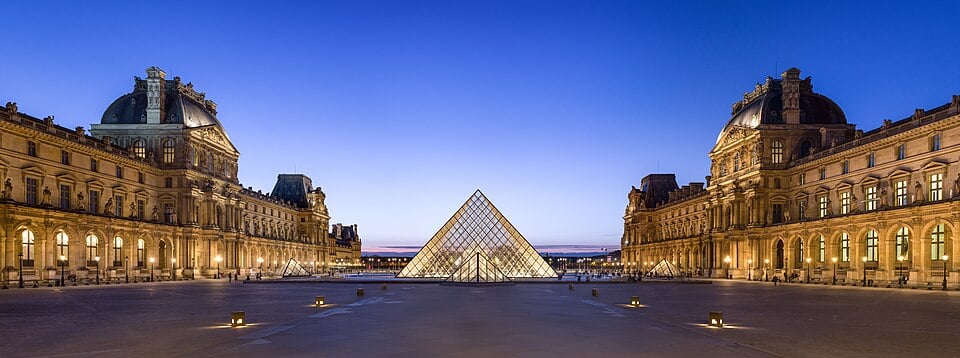
Louvre
403 rooms and 70,000 square meters of exhibition space, with nearly 500,000 works held and about 30,000 on display.
Best for: Art-focused visitors who want to plan a route through one very large collection · Area: 1st arrondissement · Time: Half a day or more
Plan for Time-slot bookings recommended, including for free-admission visitors; closed Tuesdays.
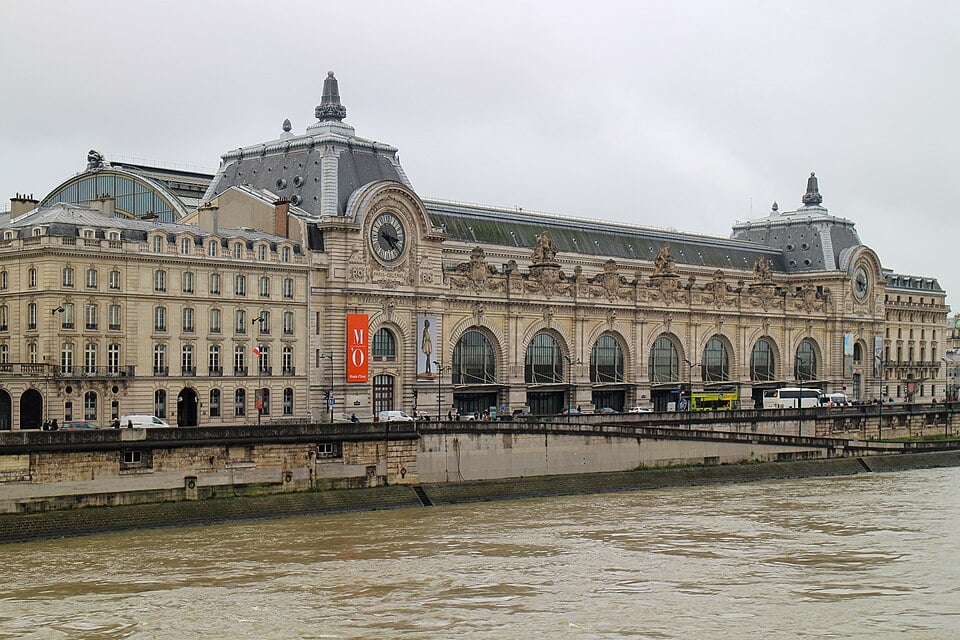
Musée d'Orsay
Occupies the former Gare d'Orsay railway station, built by architect Victor Laloux for the 1900 Exposition Universelle and opened as a museum in December 1986.
Best for: Impressionist and Post-Impressionist focus, visitors who want one strong collection without the Louvre's scale · Area: 7th arrondissement, across the Seine from the Louvre · Time: 2-3 hours
Plan for A single grand former-station layout rather than the Louvre's sprawl: easier to see in one visit, less exhaustive.
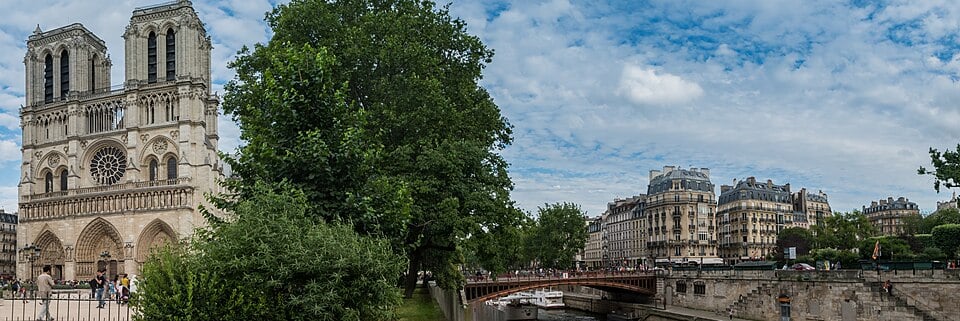
Notre-Dame de Paris
Reopened to the public in December 2024 after the April 2019 fire, following a major restoration.
Best for: Visitors who want to see the interior post-restoration, not just the exterior · Area: 4th arrondissement (Île de la Cité) · Time: 1-1.5 hours
Plan for The reopening drew such demand that the cathedral now runs a free timed-ticket system alongside a walk-in queue. Plan ahead, or expect to wait.
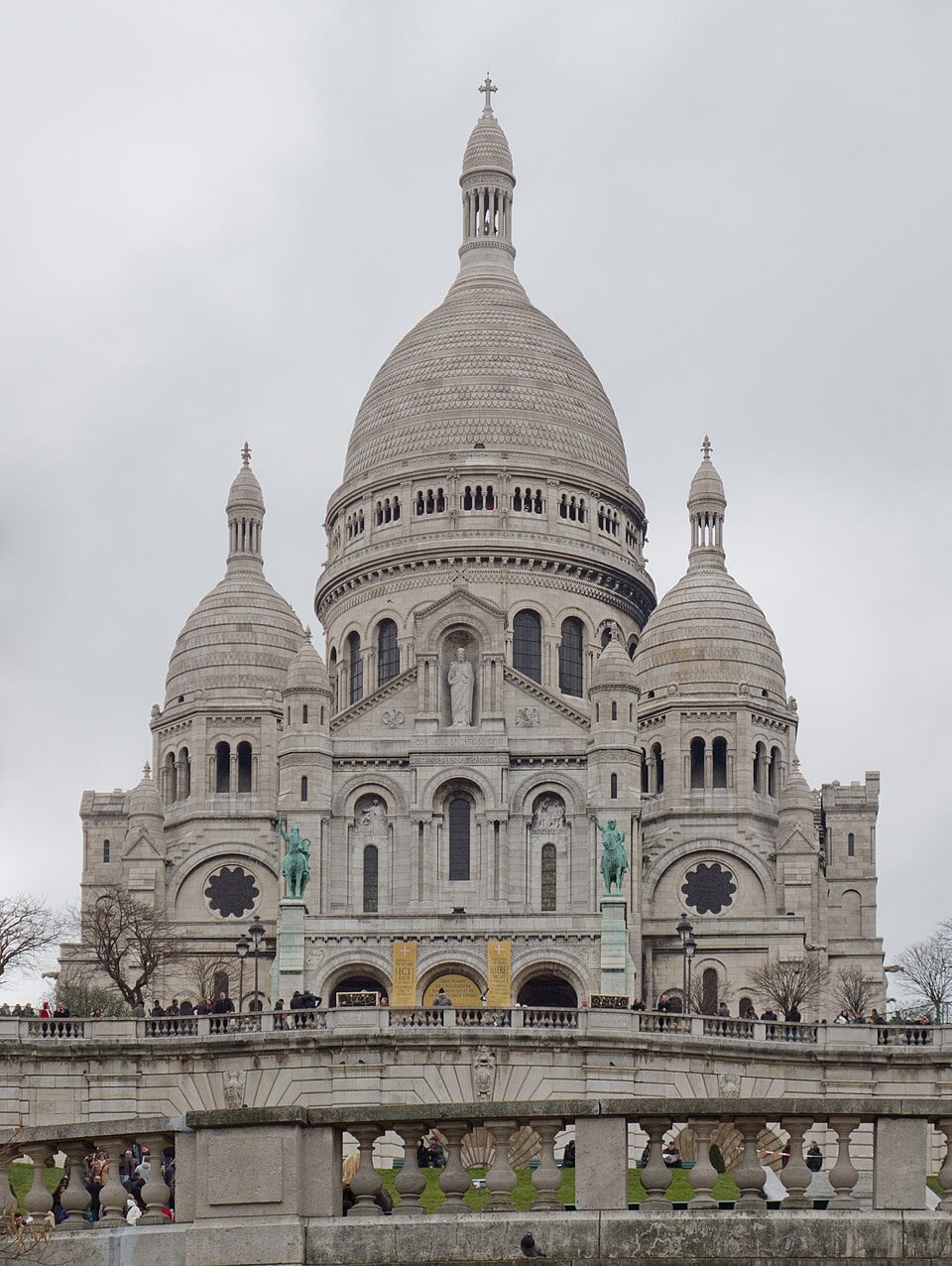
Montmartre / Sacré-Cœur Basilica
A free basilica open daily 6:30am-10:30pm atop Montmartre's hilltop, housing the 19-tonne Savoyarde, the largest bell in France.
Best for: Visitors wanting a free, elevated view plus a distinct hilltop neighborhood · Area: 18th arrondissement · Time: 2-3 hours
Plan for The basilica alone draws up to 11 million visitors a year, among France's most-visited sites, so expect crowds at the summit viewpoint.
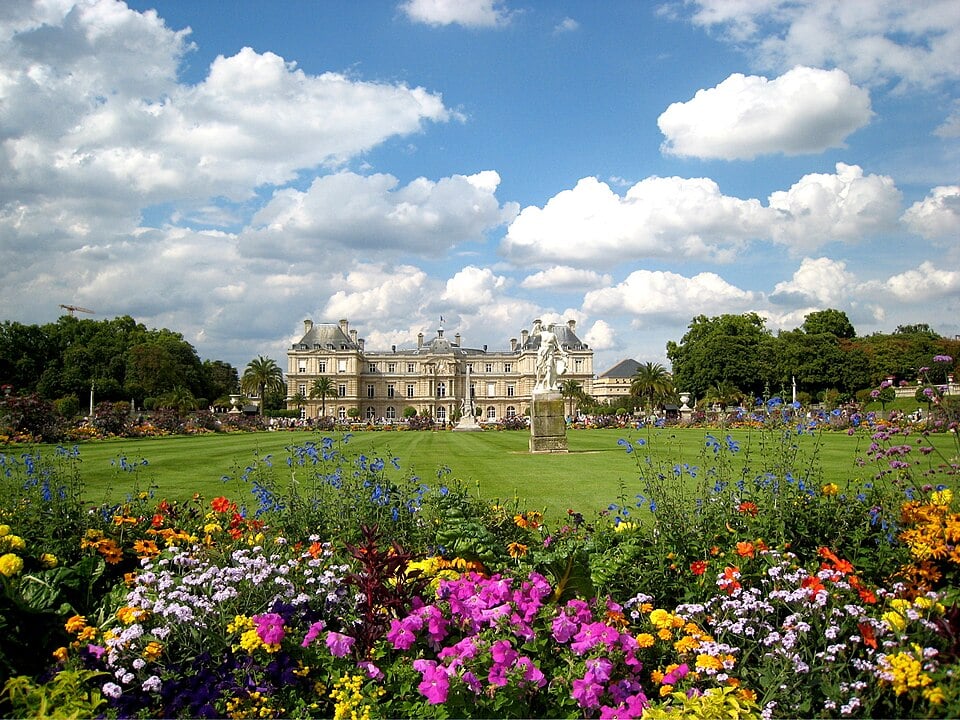
Jardin du Luxembourg
A 23-hectare garden with about 3,000 trees and 106 statues and monuments, managed by the French Senate since 1879.
Best for: Free, no-booking green space; a contrast to the museum and monument circuit · Area: 6th arrondissement · Time: 1-2 hours
Plan for Like other central Paris parks, it fills up on sunny weekends.
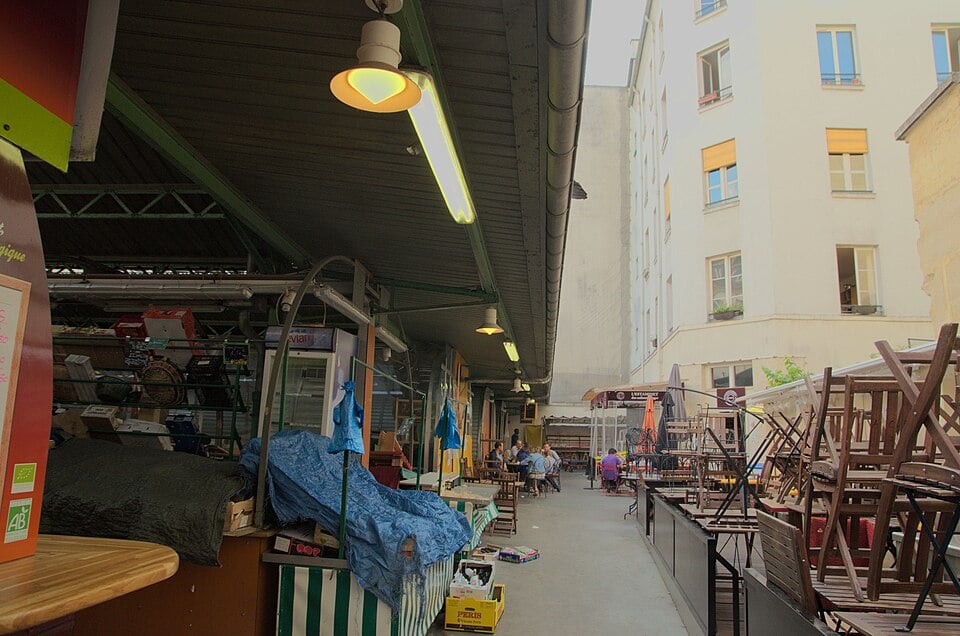
Marché des Enfants Rouges
Founded in 1615 and classified as a Historical Monument, described by the official tourism board as the oldest covered market hall in Paris.
Best for: Food-focused travelers, a working market rather than a tourist food hall · Area: 3rd arrondissement (Le Marais) · Time: 1-1.5 hours
Plan for Closed Mondays; a working market with its own vendor rhythms, not a curated food-hall experience.
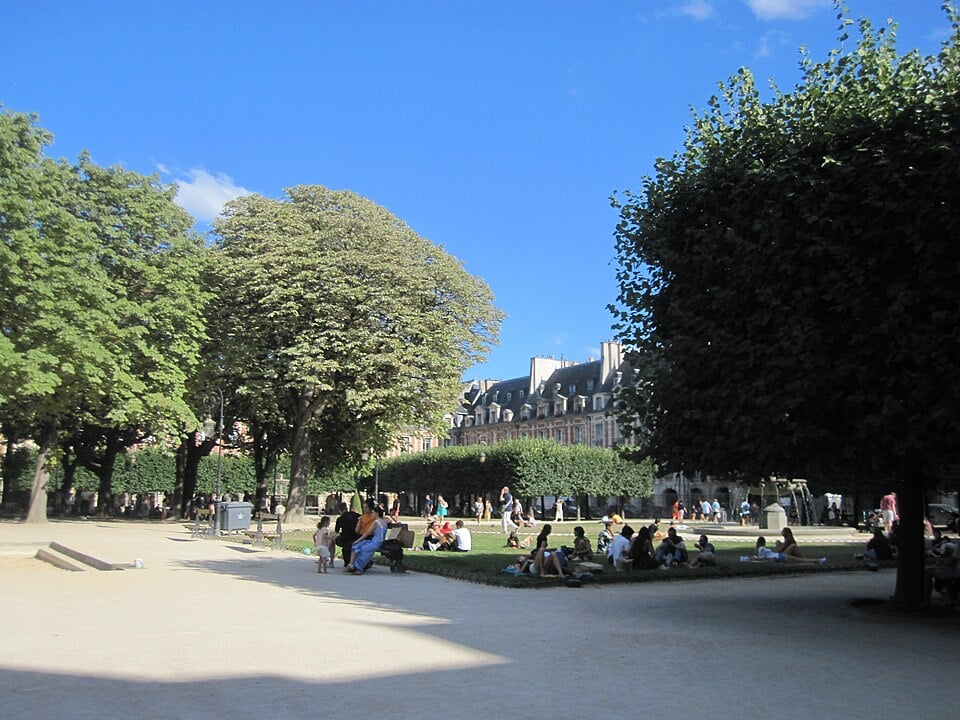
Le Marais
Developed from the 16th through 18th centuries as noblemen and the bourgeoisie built grand townhouses there; became France's first protected heritage sector in 1962 under the Malraux law, per the city's own Carnavalet history museum.
Best for: Walkable historic-architecture neighborhood, distinct from any single monument · Area: 3rd/4th arrondissements · Time: 2-3 hours
Plan for A dense, popular neighborhood where narrow streets can feel crowded at peak times.
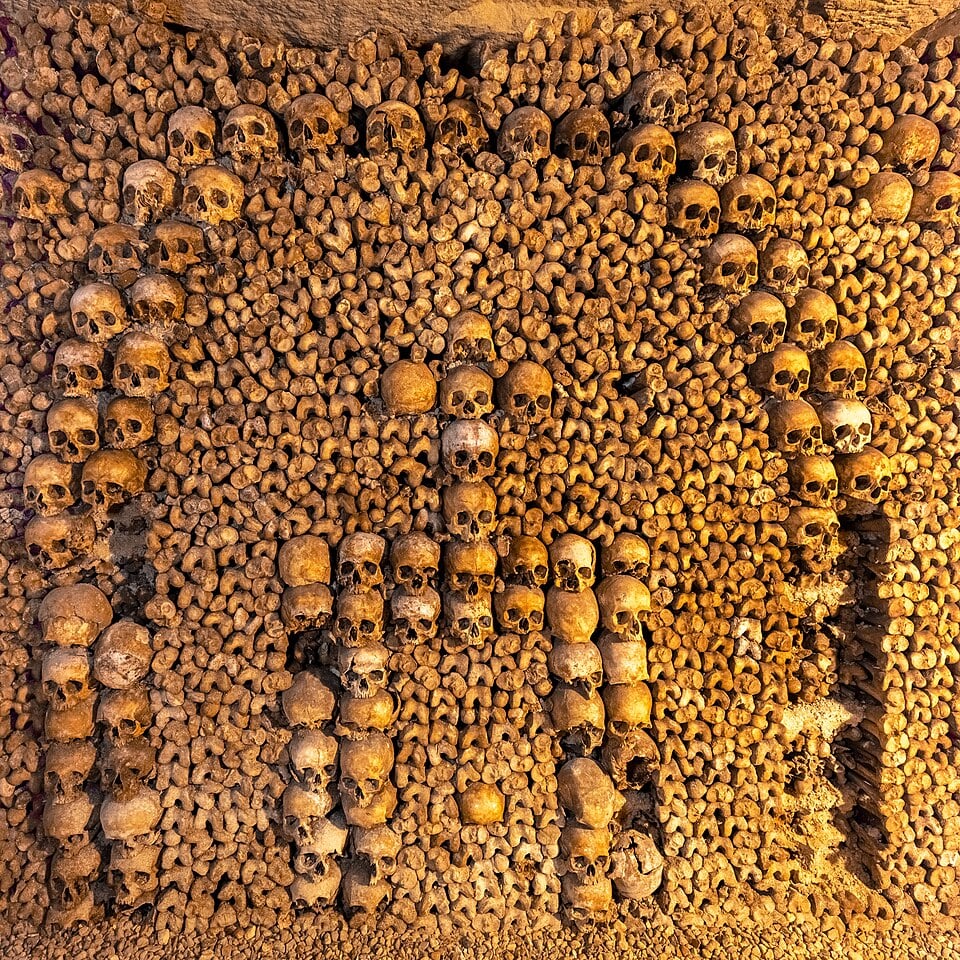
Catacombs of Paris
An underground ossuary 20 meters below the surface, installed in former quarry tunnels, holding the remains of several million Parisians.
Best for: Visitors comfortable in enclosed underground spaces who want to go beyond the landmark circuit · Area: 14th arrondissement · Time: 1-1.5 hours
Plan for Online booking strongly recommended; not suited to visitors uncomfortable in enclosed underground spaces.
Make one, three or five days work for you
One day: protect your time on the ground
Choose your main visit before deciding the rest of the route. If this is an arrival or departure day, start with the station or airport commitment and leave a generous buffer.
For an art-led day, pair the Louvre with the Tuileries and a meal around Palais-Royal. Choose the museum session first; use the outdoor portion before or after it. For a neighbourhood-led alternative, explore the Marais around Rue des Rosiers and Place des Vosges without adding a cross-city museum reservation.
The trade-off Versailles sits outside Paris and needs a day of its own, and a second major museum would compete with the first for the same hours. A full sightseeing day and a few hours between journeys need different plans.
Three days: one base, three different moods
Give each day a clear purpose and let the Metro link it to where you are staying: art and the river, a landmark and nearby streets, then a neighbourhood-led day.
Day one: Louvre, Tuileries and Palais-Royal. Day two: your Eiffel Tower visit and a Seine cruise only if its departure pier fits the route. Day three: Saint-Germain cafés and Luxembourg Gardens, or the Marais streets and Place des Vosges. Choose one neighbourhood cluster for that day rather than covering both by default.
The trade-off We would keep this version inside Paris. Replacing a day with Versailles is reasonable when the estate is a priority, but it removes a full share of your city time.
Five days: add depth before another hotel
Use the extra time for a contrasting museum, an unhurried neighbourhood and, if it matters to you, one Versailles day. Versailles is a day out and back from the city, so it needs no hotel change unless your onward journey provides a reason to move.
Start with the three-day framework, then give Versailles its own day if the estate is a priority. Use the fifth day for the neighbourhood you left out: Saint-Germain and Luxembourg Gardens, or the Marais. Put the excursion before your departure day and keep that final city day easy to shorten.
The trade-off Do not add multiple distant excursions merely because there are five calendar days. A slower return to somewhere you enjoyed can offer more than another transport-heavy outing.
Costed plans: One Day in Paris: Can You Do It for €85? → · Paris in 3 Days for €200? A Plan by Area →
Sources
checked 2026-09-08. Recommendations are editorial judgements based on the cited sources below.
Choose a Paris base and explore nearby
Louvre and Palais-Royal: an art-led base
Consider staying here when the Louvre is your main reservation and you want nearby gardens and streets to fill the rest of that day.
Pair the museum with the Tuileries, then explore Palais-Royal and its arcades. Choose the hotel by its actual address and your arrival route; a listing described as “central Paris” can cover a much wider area.
The trade-off This base supports the museum day especially well. It does not remove the need to plan separate journeys for the Eiffel Tower or an excursion outside Paris.
Saint-Germain: cafés and a Left Bank day
Consider this area if sitting down for a café, visiting a smaller cultural site and spending time in a garden matter as much as ticking off landmarks.
Build a local outing around Saint-Germain-des-Prés, Rue de Furstemberg and Luxembourg Gardens. Choose a museum stop only if its collection interests you; the neighbourhood works as a walk and a meal without another admission ticket.
The trade-off The famous café names need not decide where you sleep or eat. Compare the exact street and room conditions, then check the route to your first booked activity.
The Marais: streets, shops and a flexible day
Consider a Marais base when you want to explore between planned visits rather than give every day a major monument as its focus.
Use Rue des Rosiers, Rue des Francs-Bourgeois and Place des Vosges as one neighbourhood outing. Leave time for the shops or food stops that interest you instead of prescribing a fixed stop at every address.
The trade-off A district name says nothing about whether a given room is quiet or has easy luggage access. Check the property’s street, lift and arrival instructions before choosing it over a more convenient base for your bookings.
Sources
checked 2026-09-08. Recommendations are editorial judgements based on the cited sources below.
Arriving and getting around
Charles de Gaulle (CDG) connects with central Paris by RER B. Orly (ORY) has Métro Line 14 and the Orlyval connection to RER B; choose the route for your actual address.
Use the Métro for journeys between sightseeing areas, then walk within the neighbourhood you are visiting. Check service changes before a time-sensitive connection.
Best time to visit
Winter (Dec-Feb)
Average highs of about 8-9°C (46-48°F) and lows of about 3°C (37-38°F), per Météo-France's 1991-2020 normals: the coldest stretch of the year.
- Crowds
- Low
Spring (Mar-May)
Spring highs climb toward about 20°C (68°F) by May, up from about 13°C (55°F) in March, with lows of about 6-11°C (42-52°F), per the same normals.
- Crowds
- Moderate
Notable events
- The official Paris Tourist Office (parisjetaime.com) describes spring as one of two shoulder seasons with moderate tourist numbers, avoiding both summer's crowds and winter's cold.
Summer (Jun-Aug)
The warmest stretch of the year: average highs of about 23-26°C (74-78°F) and lows of about 14-16°C (58-61°F). It is also Paris's busiest season, so book tickets well in advance.
- Crowds
- High
Autumn (Sep-Nov)
Autumn highs taper from about 22°C (71°F) in September to about 11°C (52°F) by November, with lows of about 6-13°C (43-55°F), per the same normals.
- Crowds
- Moderate
Notable events
- The official Paris Tourist Office (parisjetaime.com) describes autumn as one of two shoulder seasons with moderate tourist numbers, avoiding both summer's crowds and winter's cold.
Make food part of the outing
Choose a market for the kind of meal you want. Marché des Enfants Rouges works well when your group wants to choose among prepared-food stalls while exploring Le Marais. A produce market such as Aligre or Bastille offers a different experience: shopping, browsing and seeing what is being sold that day.
Treat a market as part of a neighbourhood visit rather than another timed attraction. Individual traders and market days matter, so check the specific market before building lunch around it; a food tour is most useful when you want someone to explain what you are tasting.
City profile
- Population (city proper (Paris commune, 20 arrondissements), INSEE 2023 count, 2023): 2,103,778
- Population (Île-de-France region (metropolitan area), INSEE, January 1, 2022, 2022): 12,380,964
One of Paris's oldest surviving structures, the Louvre, began as a defensive fortress built in 1190 and became a royal residence in 1364.
Famous for:
- The Eiffel Tower, which draws almost 7 million visitors a year and stands 330 metres (1,083 feet) tall.
- The Louvre, holding nearly 500,000 works across 403 rooms.
- The Louvre, Notre-Dame and the Eiffel Tower all sit within the Banks of the Seine UNESCO World Heritage Site, inscribed in 1991.
What makes this visit worthwhile
A museum visit and a neighbourhood walk reveal different sides of Paris. With 403 rooms, the Louvre is best seen through a few chosen galleries; Le Marais turns attention back to streets, courtyards and the everyday life around them. For a first visit, we would combine those scales rather than spend every day moving between interiors.
Montmartre gives you a hilltop outing, while the Seine and Luxembourg Gardens leave more room to pause. Choose the walking and climbing you want before buying a tightly scheduled combination of sights.
Watch Paris
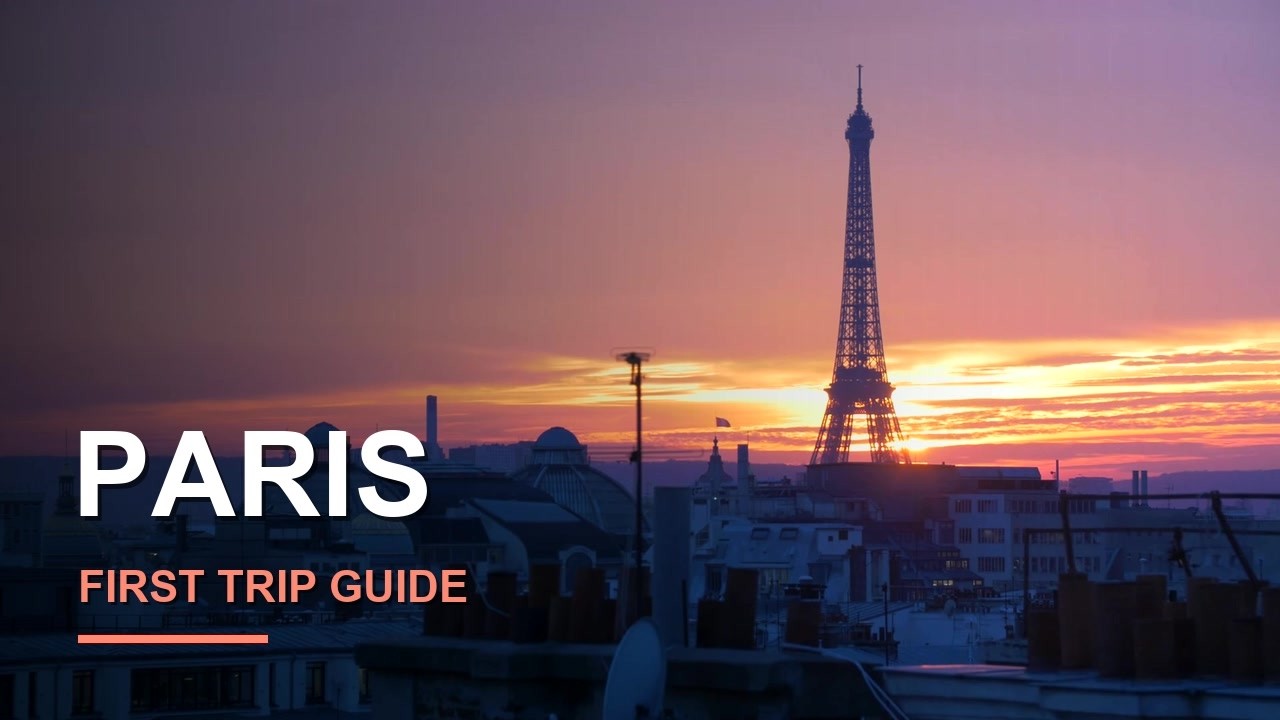
Paris travel video: a practical first-trip guide | Mubboo Flights
This 5.3-minute city guide connects Eiffel Tower, Louvre, Le Marais, Montmartre, and Paris Métro into a practical first-trip plan, helping travellers choose what fits instead of rushing through a checklist. English narration with reviewed English subtitles in the YouTube player.
Planning your Paris visit: FAQs
What should I prioritise on a first visit to Paris?
Choose the experience you would most regret missing, then give it a generous part of the day. Our first-visit choice is one major museum, one view of the city and time in a neighbourhood such as Le Marais or Montmartre. Adding every landmark leaves less room for the streets and meals between them.
Can I enjoy Paris without booking an activity every day?
Yes: Neighbourhood walks, the Seine riverbanks and the Luxembourg Gardens can be worthwhile parts of the trip without a guided booking. Book an activity where it gives you access or interpretation you would not get on your own, rather than turning every stop into a booking.
Should I visit the Louvre on a rainy day?
It is an indoor option, but do not assume rain makes last-minute entry easy. The Louvre recommends a time-slot booking, including for free-admission visitors, and closes on Tuesdays. Check gallery closures and choose what you want to see before arriving.
Is Notre-Dame only accessible on a paid tour?
No: Cathedral admission is free, with an optional free reservation. A paid activity may add guiding or a wider neighbourhood route. Read its inclusions carefully: an exterior walking tour and an interior visit are different experiences.
Does a standard Métro ticket cover the trip to the airport?
No. Île-de-France Mobilités’ Metro-Train-RER ticket is not valid at the Charles de Gaulle or Orly airport stations. For those journeys, buy the Paris Region-Airports ticket, which covers RER B to Charles de Gaulle and Line 14 or Orlyval to Orly. Both load onto a smartphone or a Navigo Easy pass, but a pass already holding Metro-Train-RER tickets cannot take an airport ticket as well.
Can I visit the Musée d’Orsay in the evening?
On Thursdays, yes. The museum stays open until 21:45, with last admission at 21:00 and galleries closing at 21:15. On its other opening days it closes at 18:00, and it is closed every Monday.
Make your Paris plans
Compare tours, tickets and activities in Paris →
Choose your departure market and search flights to Paris from the Mubboo Flights homepage.
Compare flights ↗Sources
Latest source check: .
Show all 46 sources
- Musée Carnavalet -- Histoire de Paris (city of Paris museum) -- "Le Marais en héritage(s)" (checked 2026-08-29)
- Catacombes de Paris (checked 2026-08-29)
- Eiffel Tower (Société d'Exploitation de la Tour Eiffel) (checked 2026-08-29)
- Eiffel Tower -- "Our tips for visiting the Eiffel Tower in summer" (checked 2026-08-29)
- Île-de-France Mobilités -- Métro network overview (checked 2026-08-29)
- Île-de-France Mobilités press release -- "Réseau ferré francilien: des résultats en hausse en 2025" (checked 2026-08-29)
- INSEE (checked 2026-08-29)
- INSEE (Institut national de la statistique et des études économiques) (checked 2026-08-29)
- Musée du Louvre (checked 2026-08-29)
- Musée du Louvre (checked 2026-08-29)
- Météo-France -- Paris-Montsouris climate normals (1991-2020) (checked 2026-08-29)
- Musée d'Orsay -- "1986-2026: le musée d'Orsay fête ses 40 ans" (checked 2026-08-29)
- Musée d'Orsay -- "Victor Laloux (1850-1937): Architect of the Gare d'Orsay" (checked 2026-08-29)
- Paris Aéroport / Groupe ADP -- "To/From Paris-CDG by public transport" (checked 2026-08-29)
- Paris Aéroport / Groupe ADP -- "To/From Paris-Orly by public transport" (checked 2026-08-29)
- Rebâtir Notre-Dame de Paris (the public establishment in charge of the cathedral's restoration) (checked 2026-08-29)
- Basilique du Sacré-Cœur de Montmartre (checked 2026-08-29)
- French Senate (Jardin du Luxembourg) (checked 2026-08-29)
- Sortiraparis -- "Is Notre-Dame de Paris easily accessible without a ticket? Is there still a queue?" (checked 2026-08-29)
- UNESCO World Heritage Centre (checked 2026-08-29)
- Vatican News -- "Six million visitors to Notre Dame Cathedral in six months" (checked 2026-08-29)
- Visit Paris Region (checked 2026-08-29)
- Visit Paris Region -- "Les marchés incontournables à Paris" (checked 2026-08-29)
- Visit Paris Region (Comité Régional du Tourisme Paris Île-de-France) (checked 2026-08-29)
- Visit Paris Region -- "Que faire dans le quartier Montmartre ?" (checked 2026-08-29)
- Visit Paris Region -- "Que faire dans le Quartier latin ?" (checked 2026-08-29)
- Louvre — plan your visit (checked 2026-09-07)
- Eiffel Tower — planning a smooth visit (checked 2026-09-07)
- Palace of Versailles — plan your visit (checked 2026-09-07)
- UNESCO — Paris, Banks of the Seine (checked 2026-09-07)
- SETE — 2024 visitor satisfaction study (checked 2026-09-07)
- Firsthand Paris report — parent and teen, April 2026 (checked 2026-09-07)
- Notre-Dame de Paris — individual reservations (checked 2026-09-07)
- Catacombs of Paris: opening hours (checked 2026-09-13)
- Paris tourist office: explore the 7th arrondissement (checked 2026-09-13)
- Musée Rodin: plan your visit (checked 2026-09-13)
- Paris tourist office: explore the 9th arrondissement (checked 2026-09-13)
- Opéra national de Paris: visit the Palais Garnier (checked 2026-09-13)
- Île-de-France Mobilités: Paris Region-Airports ticket (checked 2026-09-13)
- Île-de-France Mobilités: Metro-Train-RER ticket (checked 2026-09-13)
- Musée d’Orsay: visit, hours and entrances (checked 2026-09-13)
- Musée d’Orsay: Masterpieces of the Musée d’Orsay guided tour (checked 2026-09-13)
- Canauxrama: Old Paris cruise on the Canal Saint-Martin (checked 2026-09-13)
- Canauxrama: Canal Saint-Martin and Seine cruises (checked 2026-09-13)
- Moulin Rouge: frequently asked questions (checked 2026-09-13)
- Moulin Rouge: practical information (checked 2026-09-13)
Photo credits
- eiffel tower — TheDigitalArtist (Wikimedia Commons) · CC0 1.0 Universal Public Domain Dedication.
- louvre — Benh LIEU SONG (Flickr) · CC BY-SA 4.0.
- musee dorsay — Suicasmo · CC BY-SA 4.0.
- notre dame — dronepicr · CC BY 2.0.
- montmartre sacre coeur — Carlos Delgado · CC BY-SA 3.0.
- jardin du luxembourg — Rdevany at English Wikipedia · CC BY-SA 3.0.
- marche des enfants rouges — Popolon · CC BY-SA 3.0.
- le marais — DiscoA340 · CC BY-SA 4.0.
- catacombs of paris — Diego Delso · CC BY-SA 4.0.
Mubboo Editorial Team · Reviewed by Mubboo Editorial Team


