
New Orleans travel guide
New Orleans
New Orleans sits on a crescent bend of the Mississippi River in southeastern Louisiana, with the walkable French Quarter and Garden District close to downtown. The Honey Island and Barataria swamps, plus the River Road plantations, are each a separate half- or full-day trip rather than an extension of the city itself.
Most first visits centre on the French Quarter, its jazz history and a Mississippi River cruise, plus one swamp tour. A longer stay adds a real River Road plantation day and the Garden District's streetcar ride, each worth its own dedicated time rather than squeezed into a single French Quarter day.

Find your New Orleans experience
Explore New Orleans Before You Book
Take a virtual drive or walk, then find tours and tickets for the places you like.

Activities
Featured activities in New Orleans


Prices at a glance
What we sell today and what recent flight searches found. No hotel prices; nothing here is a trip total.
- Tours and tickets in New Orleansfrom US$25.00
Live from Viator when this page loaded · per adult · changes by date.
Top experiences
Top experiences in New Orleans
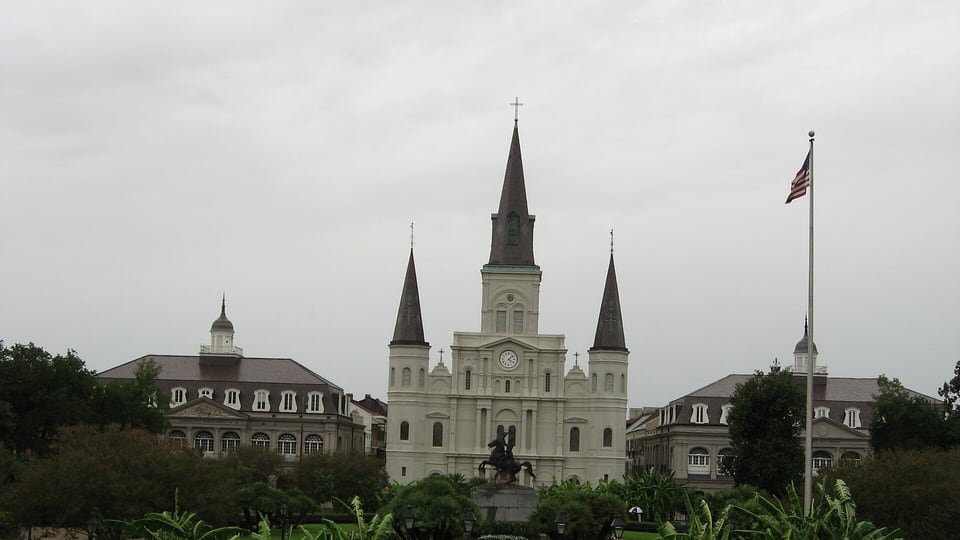
The French Quarter and St. Louis Cathedral
Founded in 1718 and still New Orleans' oldest neighbourhood, the French Quarter's grid was laid out in 1721 by royal engineer Adrien de Pauger; its centrepiece, St. Louis Cathedral on Jackson Square, traces an active parish to 1720 and is the oldest Catholic cathedral in continuous use in the United States.
Best for: Every first-time visitor, ideally spread across a full day and evening · Area: The French Quarter (Vieux Carré), between the Mississippi River and Rampart Street
Plan for The Quarter's daytime, family-friendly character along Royal and Chartres Streets shifts after dark on Bourbon Street, where crowds, noise and pickpocketing risk rise; quieter streets a block over stay calmer.
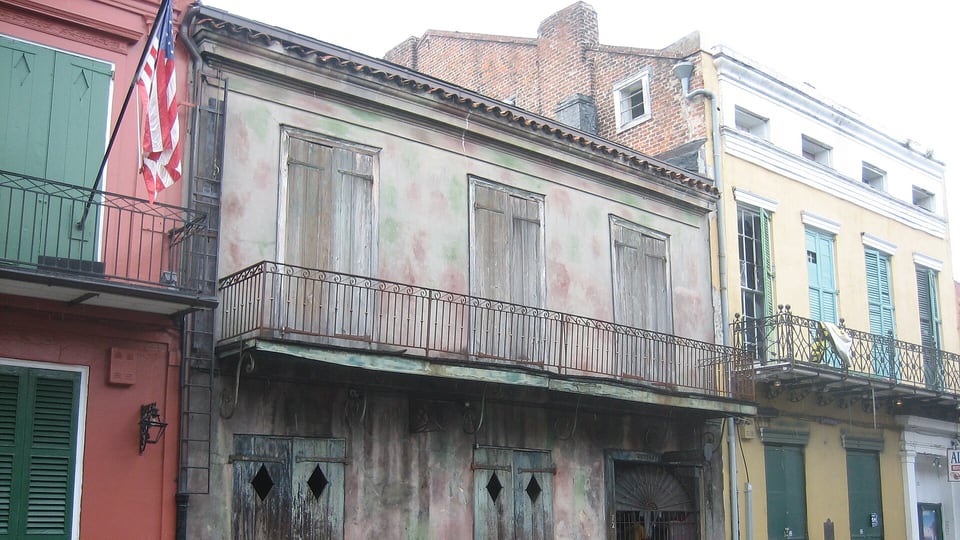
New Orleans Jazz National Historical Park and Preservation Hall
Congress created New Orleans Jazz National Historical Park on 31 October 1994 (Public Law 103-433) specifically because New Orleans is documented as jazz's birthplace; its Trémé visitor centre sits near Congo Square, while Preservation Hall, founded in 1961 on St. Peter Street, has presented traditional New Orleans jazz nightly ever since, including racially integrated bands and audiences during the Jim Crow era.
Best for: Music history travellers wanting both the National Park Service's own interpretation and a real, still-operating jazz venue · Area: Trémé (the National Historical Park) and the French Quarter (Preservation Hall)
Plan for Preservation Hall's shows are short, acoustic, standing-room-heavy sets in a small room without air conditioning in the traditional style, a deliberately different experience from a modern club or dinner-cruise band.
See New Orleans Jazz National Historical Park and Preservation Hall tours
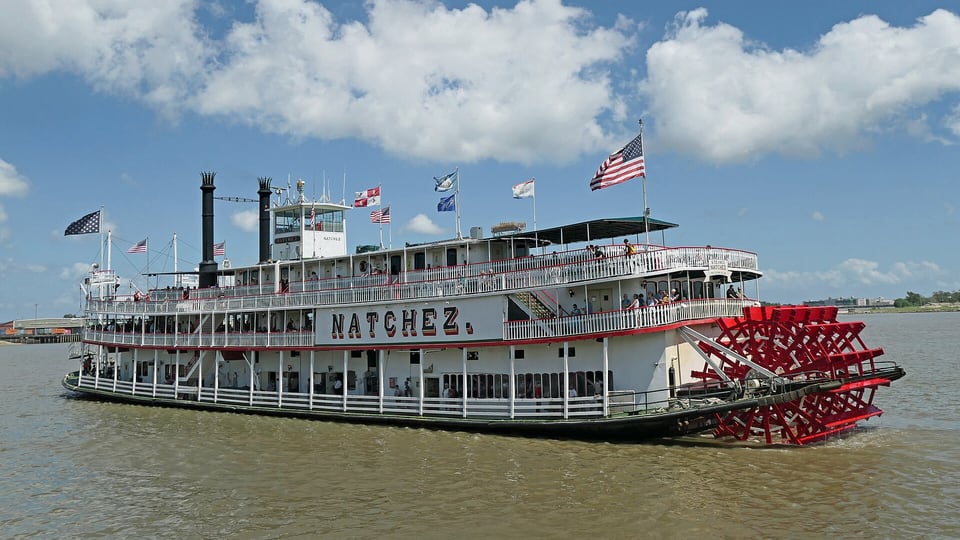
Steamboat Natchez and the Mississippi River
The Steamboat Natchez, one of the last authentic steam-powered paddlewheelers still working the Mississippi, runs daytime sightseeing cruises and evening jazz dinner cruises from the French Quarter's riverfront, a real, distinct way to see the river and the city's working port from the water.
Best for: Travellers wanting a genuinely different vantage point on the river and skyline, day or evening · Area: Toulouse Street Wharf, French Quarter riverfront
Plan for A daytime sightseeing cruise and an evening jazz dinner cruise are genuinely different products at different price points and lengths, so travellers should confirm which one a ticket actually covers.
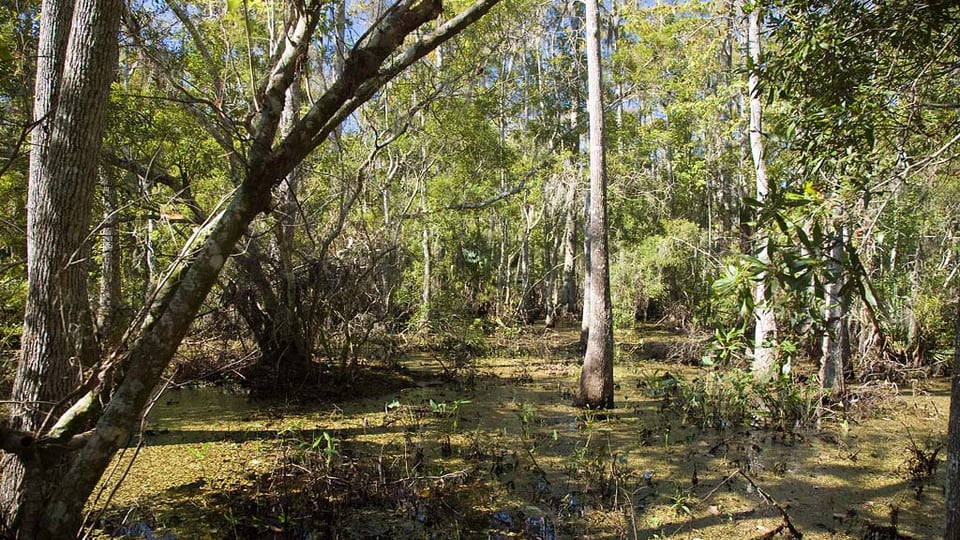
Honey Island Swamp or Barataria Preserve swamp tour
Honey Island Swamp is a roughly 250-square-mile wetland with nearly 70,000 protected acres, one of the least-altered river swamps in the country; Barataria Preserve, inside Jean Lafitte National Historical Park and Preserve, offers a closer, more accessible wetland. Both are real, named wetlands with documented, frequent alligator sightings.
Best for: Travellers wanting genuine Louisiana wetland wildlife, not a theme-park version of it · Area: Honey Island (across the Pearl River, roughly 45 minutes from downtown) or Barataria Preserve (about 30 minutes south)
Plan for Larger group airboats cover more ground and see more wildlife activity but are noisier and less private than smaller guided boats; alligator sightings are common but never guaranteed on any single outing.
See Honey Island Swamp or Barataria Preserve swamp tour tours

River Road plantation history: Whitney, Oak Alley or Laura
Whitney Plantation opened in 2014 as the only Louisiana plantation museum built entirely around the documented history of slavery, using restored buildings and first-person narratives. Oak Alley's tour covers its Big House and blends owner and enslaved perspectives. Laura Plantation's tour is told largely through the manuscript of Laura Locoul.
Best for: Travellers wanting River Road history told honestly, with the real interpretive differences between sites named rather than blended together · Area: River Road, roughly 45-60 minutes west of New Orleans along the Mississippi
Plan for Whitney Plantation's tour is explicitly built to be sobering and does not offer a grand-house architectural tour in the Oak Alley style; travellers wanting primarily architecture and gardens, versus primarily the documented history of enslaved people, should choose accordingly.
See River Road plantation history: Whitney, Oak Alley or Laura tours
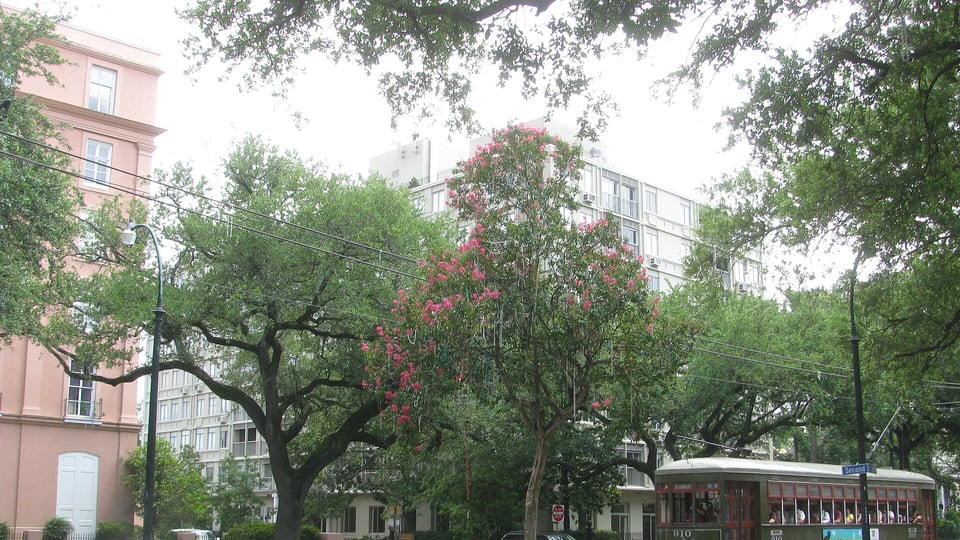
Garden District and the St. Charles Avenue Streetcar
Laid out in 1832 by American cotton and shipping fortunes who built outside the French-speaking Creole city, the Garden District's Greek Revival and Italianate mansions are reached by the St. Charles Avenue Streetcar, in continuous service since September 1835 and recognized as the world's oldest continuously operating streetcar line, a National Historic Landmark since 2014.
Best for: Travellers wanting a genuinely different architectural and historical register from the French Quarter · Area: Garden District (Uptown) and the St. Charles Avenue streetcar corridor
Plan for The Garden District is a residential neighbourhood, not a museum, so its main mansions are viewed from the sidewalk rather than toured inside, and the streetcar itself can run slower than a rideshare at peak times.
See Garden District and the St. Charles Avenue Streetcar tours
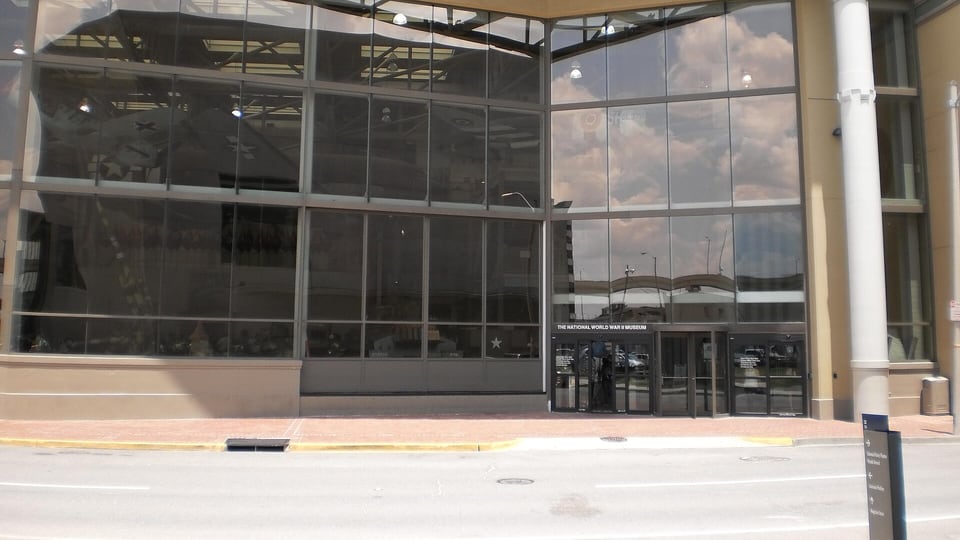
The National WWII Museum
The museum traces its origin to a 1990 conversation between historian Stephen Ambrose and Gordon "Nick" Mueller about Andrew Higgins, the New Orleans boatbuilder whose Higgins boats Dwight Eisenhower credited with helping win the war. It opened 6 June 2000 as The National D-Day Museum and was designated by Congress in 2003 as the country's official WWII museum, now spanning seven pavilions on a seven-acre campus.
Best for: History travellers wanting a genuinely major, Congressionally designated national museum, not a small local exhibit · Area: Warehouse District / Central Business District
Plan for The full campus easily takes most of a day for a thorough visit, so travellers with limited time should plan to prioritise specific pavilions rather than attempt all seven.
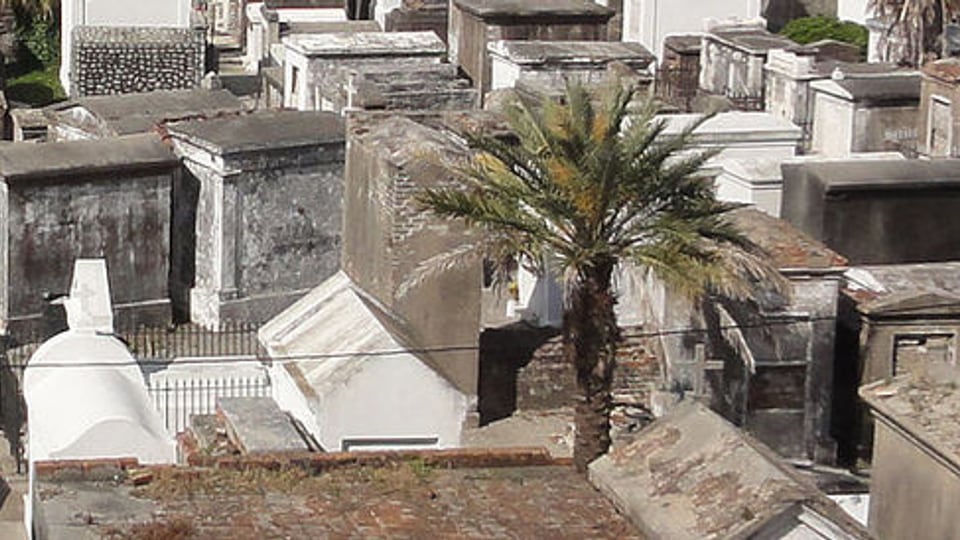
St. Louis Cemetery No. 1 and the city's above-ground "Cities of the Dead"
Established in 1789, St. Louis Cemetery No. 1 shifted from underground to mandated above-ground burial after an 1803 city ordinance, because the city's high water table floated coffins back to the surface. The first above-ground tombs appeared by 1804 and were common by 1818, a real, documented engineering and cultural response, not a spooky invention.
Best for: Travellers interested in the real, practical reason behind New Orleans' distinctive above-ground tombs · Area: Edge of the French Quarter / Trémé, on Basin Street
Plan for St. Louis Cemetery No. 1 requires a licensed guide for entry under current archdiocese rules, so independent wandering is not an option here the way it is in many other historic cemeteries.
See St. Louis Cemetery No. 1 and the city's above-ground "Cities of the Dead" tours
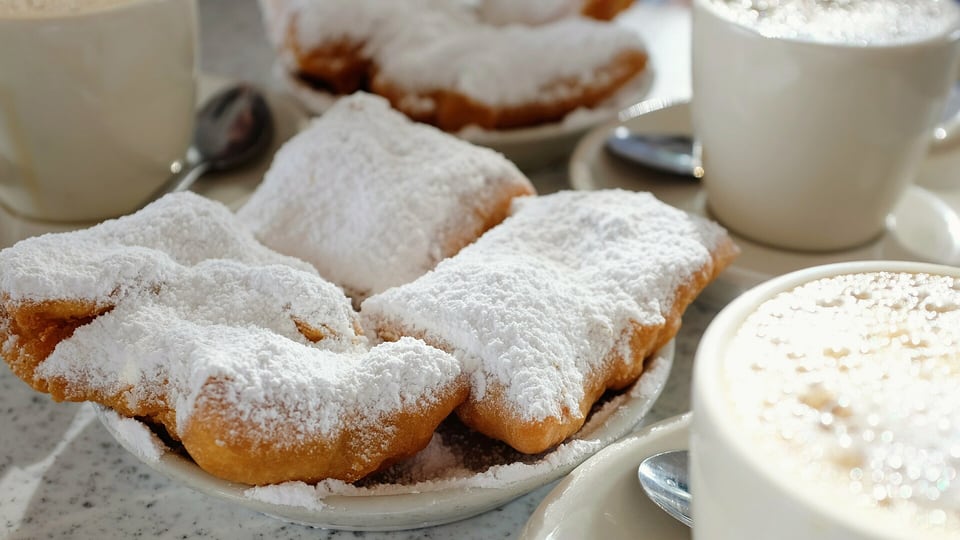
Café du Monde and the French Market
Established in 1862 in the French Market and family-run since Hubert Fernandez bought it in 1942, Café du Monde has served the same short menu of beignets and chicory coffee for over a century and a half. It is a real, specific, continuously operating landmark rather than a generic "try the local coffee shop" suggestion.
Best for: Every visitor wanting the specific, historically continuous version of New Orleans' signature coffee-and-beignets tradition · Area: French Market, French Quarter riverfront
Plan for The original French Market location has no reservations and can carry a real wait at peak hours; several branch locations around the city and airport offer the same menu with shorter lines.
Plan three, five or seven days in New Orleans
Three to four days: the French Quarter and jazz history
Pick this length when the French Quarter, St. Louis Cathedral, jazz history and a Mississippi River steamboat cruise are the goal, all within a compact, mostly walkable core.
The Quarter, Trémé's jazz sites and the riverfront steamboat wharf sit close together, so this length covers New Orleans' historic core without a long drive each day.
The trade-off A three-to-four-day trip has to skip both a swamp tour and a plantation day, so this length suits a French-Quarter-focused visit.
Five to six days: add a swamp tour and a plantation day
Pick this length once a real half-day swamp tour and a full River Road plantation day both matter enough to justify extra full days outside the city core.
Honey Island Swamp, Barataria Preserve and the River Road plantations each need their own dedicated time rather than being squeezed into a Quarter-day itinerary.
The trade-off Adding both means less time for the Garden District or WWII Museum on this length, since fitting everything needs the longer stay below.
A week or more: unhurried, with the Garden District and WWII Museum
Pick this length to spread the French Quarter, a swamp tour, a plantation day, the Garden District's streetcar and the National WWII Museum's full seven-pavilion campus across genuinely unhurried days.
A week or more absorbs the real travel time the swamp and plantation trips take without forcing a rushed final morning or a skipped major site.
The trade-off This length costs more overall time, but it is the only one that comfortably fits both River Road and the WWII Museum alongside the Quarter.
Sources
checked 2026-09-24. Recommendations are editorial judgements based on the cited sources below.
Choose a New Orleans base and explore nearby
The French Quarter: a base for the shortest walk to everything historic
Consider this base when minimising travel time to Jackson Square, St. Louis Cathedral and the jazz history sites matters most.
The Quarter puts nearly every founding-era sight within a short walk, at the cost of the city's busiest, most tourist-oriented streets.
The trade-off Choosing the Quarter trades quiet for being steps from nearly everything, a fair swap for a short first stay.
The CBD or Warehouse District: a base for modern hotels and the WWII Museum
Consider this base for direct access to the National WWII Museum and the city's modern hotel stock, a short walk across Canal Street from the Quarter.
This working downtown core trades French Quarter atmosphere for modern convenience and easy access to the WWII Museum's seven pavilions.
The trade-off The CBD/Warehouse District is quieter at night than the Quarter, a reasonable trade for business travellers or WWII Museum-focused visitors.
The Garden District: a base for architecture and a slower pace
Consider the Garden District when the St. Charles Avenue Streetcar, Greek Revival mansions and a quieter, more residential pace matter more than walking distance to the Quarter.
The Garden District's 1832 layout and historic streetcar access suit a slower, less commercial stay than the historic core.
The trade-off Basing in the Garden District means a streetcar ride into the Quarter rather than a walk, a worthwhile trade for a quieter, more residential stay.
Sources
checked 2026-09-24. Recommendations are editorial judgements based on the cited sources below.
Airport, safety and getting around
Louis Armstrong New Orleans International Airport (MSY), renamed in 2001 for the city's native-born jazz icon, sits about 15 miles / 25-30 minutes west of the French Quarter in Kenner and opened a new terminal in November 2019.
New Orleans & Company, the city's official tourism authority, advises visitors to travel in groups and avoid walking alone on unlit streets at night. The New Orleans Police Department has added officers to the French Quarter's 8th District, and a downtown Public Safety Ranger program offers free daytime SafeWalk escorts, alongside reported multi-year declines in the city's homicide rate.
Bourbon Street's character shifts notably after roughly 9pm into a louder, more crowded scene where pickpocketing and drink-related risk are the most commonly cited concerns. Quieter parallel streets like Royal or Chartres stay calmer after dark, a genuine, specific safety distinction rather than a blanket warning about the whole Quarter.
The city's flood-protection system was substantially rebuilt after Hurricane Katrina's 2005 levee failures. The Army Corps' Hurricane and Storm Damage Risk Reduction System now spans roughly 350 miles of levees, floodwalls, pump stations and gated structures across five parishes, engineered to a 1%-annual-chance storm-surge standard, though 2025 anniversary reporting also noted ongoing subsidence concerns.
Best time to visit
Spring (March-May)
March through May brings warm, comfortable temperatures, blooming gardens and Carnival's tail end into early spring festivals, widely recommended as one of New Orleans' best windows to visit before summer heat and hurricane season set in.
- Crowds
- Varies by event and attraction
Summer (June-August)
June through August is New Orleans' hottest, most humid stretch and falls entirely within NOAA's official Atlantic hurricane season. That season runs 1 June to 30 November, covers roughly 97% of the basin's tropical storm and hurricane activity, and climatologically peaks around 10 September.
- Crowds
- Varies by event and attraction
Autumn (September-November)
September into November keeps warm days and cooling evenings while remaining inside official hurricane season through 30 November, so travellers should track storm forecasts even as crowds and humidity ease from the August peak.
- Crowds
- Varies by event and attraction
Winter (December-February)
December through February is New Orleans' mild, driest and least humid season, and it hosts Carnival season, which runs from Twelfth Night (6 January) through Fat Tuesday, a state legal holiday since Louisiana's 1875 Mardi Gras Act.
- Crowds
- Varies by event and attraction
Food, markets and local life
Creole and Cajun cuisine are genuinely distinct Louisiana traditions often blurred together. Creole cooking developed in New Orleans itself from French, Spanish, African, Caribbean and Italian influences, shaped by enslaved African and Caribbean cooks, and commonly uses tomatoes. Cajun cooking comes from Acadian settlers exiled from Canada, is generally spicier with more pork and crawfish, and skips tomatoes.
Gumbo, po'boys and beignets are each real, specific New Orleans dishes rather than interchangeable "Cajun-Creole" fare. Gumbo is a slow-cooked roux-based stew tracing Creole and West African culinary roots, the po'boy is a New Orleans-specific sandwich on French bread, and beignets have been served with chicory coffee at Café du Monde since 1862.
City profile
- Population (City of New Orleans (Orleans Parish), U.S. Census Bureau Population Estimates Program, 2024 vintage, 2024): 362,701
New Orleans was founded in 1718 by French-Canadian naval officer Jean-Baptiste Le Moyne de Bienville on a crescent-shaped bend of the Mississippi River, at a site reached by an existing Native American portage between the river and Bayou St. John.
The city passed from French to Spanish control in 1763, briefly returned to France in 1800, and was sold to the United States in the 1803 Louisiana Purchase. The French Quarter's street grid, laid out by royal engineer Adrien de Pauger in 1721, still carries French royal and Catholic saints' names from that founding era.
In August 2005, Hurricane Katrina's storm surge breached New Orleans' federal levee system in more than 50 places, flooding roughly 80% of the city. The U.S. Army Corps of Engineers responded with the Hurricane and Storm Damage Risk Reduction System, about 350 miles of levees, floodwalls, pump stations and gates, largely complete by 2011 to a 1%-annual-chance storm-surge standard.
Famous for:
- Congress established New Orleans Jazz National Historical Park on 31 October 1994 under Public Law 103-433, a National Park Service unit created because New Orleans is widely recognized as jazz's birthplace. It cites the city's mix of French Creole, African, Caribbean and European musical traditions and Congo Square's preserved African musical practices dating to the mid-18th century.
- The French Quarter (Vieux Carré), New Orleans' 1718 founding site, was designated a National Historic Landmark in 1965. Its buildings and streetscape have been protected since 1936 by the state-created Vieux Carré Commission, making it the oldest continuously regulated historic district of its kind in the United States.
- Mardi Gras traces its New Orleans connection to 1699, when French explorer Pierre Le Moyne d'Iberville landed near the future city on the eve of the holiday and named the spot Pointe du Mardi Gras. Louisiana's 1875 "Mardi Gras Act" made Fat Tuesday a state legal holiday, and it remains one today.
- New Orleans' relationship with water is real and double-sided: the same high water table that forced the city's historic cemeteries above ground also makes it vulnerable to storm surge. Hurricane Katrina's 2005 flooding is a documented part of the city's modern history, not a glossed-over footnote to its charm.
What makes a New Orleans visit worthwhile
New Orleans Jazz National Historical Park exists because the National Park Service and Congress specifically recognized New Orleans as jazz's birthplace in 1994. Preservation Hall has kept traditional New Orleans jazz playing nightly since 1961, including through the Jim Crow era when its racially integrated bands and audiences were a deliberate, risky stance.
Naming Hurricane Katrina's 2005 flooding accurately, the real levee breach count, the roughly 80% of the city that flooded, and the U.S. Army Corps of Engineers' subsequent large-scale, 350-mile Hurricane and Storm Damage Risk Reduction System, funded by a decade-long, multi-billion-dollar Congressional commitment, treats the city's modern history as documented fact rather than an unmentioned backdrop.
River Road's plantation sites are genuinely different, not one interchangeable stop. Whitney Plantation is the only Louisiana plantation museum built entirely around the documented history of the enslaved people who lived there, Oak Alley's tour blends owner and enslaved perspectives, and Laura Plantation is told largely through one Creole family's own memoir.
- Plan by trip type
- French Quarter & jazz history · Mississippi River steamboat · swamp tour · plantation history day trip · Garden District & streetcar
- Good first stay
- 3-4 days for the Quarter, jazz history and a steamboat cruise, 5-6 with a swamp tour and plantation day, a week+ with the Garden District
- Climate constraint
- Best Mar-May & Oct-Nov · official Atlantic hurricane season runs Jun 1-Nov 30 · Jul-Aug hot, humid and stormy
- Main gateway
- MSY airport, about 15 miles / 25-30 minutes from the French Quarter
Planning your New Orleans visit: FAQs
Is New Orleans really, officially the birthplace of jazz?
Yes, documented rather than just claimed: Congress established New Orleans Jazz National Historical Park on 31 October 1994 under Public Law 103-433 specifically because the city is recognized as jazz's birthplace. It cites the city's unique mix of French Creole, African, Caribbean and European musical traditions and Congo Square's preserved African musical practices from the mid-18th century onward.
What's the actual difference between Creole and Cajun food?
Creole cuisine developed in New Orleans from French, Spanish, African, Caribbean and Italian influences and commonly uses tomatoes. Cajun cuisine comes from Acadian settlers exiled from Canada who built a rustic tradition in the countryside, is spicier with more pork and crawfish, and traditionally skips tomatoes; they are genuinely distinct, not interchangeable labels.
Should I visit Whitney Plantation, Oak Alley or Laura Plantation?
It depends what you want: Whitney Plantation is the only Louisiana plantation museum built entirely around the documented history of the enslaved people who lived there. Oak Alley's tour covers its Big House and weaves together owner and enslaved perspectives. Laura Plantation's tour is told largely through one Creole family's own manuscript. None of these is interchangeable with the others.
Is the French Quarter, and specifically Bourbon Street, safe at night?
The French Quarter overall is heavily policed and the city's tourism authority reports a multi-year decline in homicides. Bourbon Street specifically becomes louder and more crowded after roughly 9pm, when pickpocketing and drink-related risk rise; quieter parallel streets like Royal or Chartres stay calmer, and New Orleans & Company advises travelling in groups after dark.
Did New Orleans actually fix its flood defenses after Hurricane Katrina?
Yes, substantially: after 2005's levee failures flooded roughly 80% of the city, the Army Corps built the Hurricane and Storm Damage Risk Reduction System, about 350 miles of levees, floodwalls, pump stations and gates, largely complete by 2011 to a 1%-annual-chance storm-surge standard. 2025 anniversary reporting also flagged ongoing subsidence and funding concerns.
When is hurricane season, and should I avoid visiting then?
NOAA's official Atlantic hurricane season runs 1 June through 30 November, covering roughly 97% of the basin's tropical storm and hurricane activity, with the climatological peak around 10 September. It is not a reason to avoid New Orleans outright, but travellers visiting June through November should track storm forecasts.
Make your New Orleans plans
Compare tours, tickets and activities in New Orleans →
Choose your departure market and search flights to New Orleans from the Mubboo Flights homepage.
Compare flights ↗Sources
Latest source check: .
Show all 35 sources
- National Park Service — New Orleans Jazz National Historical Park (checked 2026-09-24)
- National Park Service — Jazz Origins in New Orleans (checked 2026-09-24)
- Wikipedia — New Orleans Jazz National Historical Park (checked 2026-09-24)
- Wikipedia — New Orleans (checked 2026-09-24)
- Wikipedia — French Quarter (checked 2026-09-24)
- New Orleans & Company — French Quarter History (checked 2026-09-24)
- Wikipedia — St. Louis Cathedral (New Orleans) (checked 2026-09-24)
- Honey Island Swamp Tours (checked 2026-09-24)
- TripShock — Bayou and Swamp Tours in New Orleans (checked 2026-09-24)
- Whitney Plantation — Slavery and Remembrance partner profile (checked 2026-09-24)
- Concerning History — Interpreting the Big Easy: Oak Alley and Whitney Plantations (checked 2026-09-24)
- Travlin' Mad — 3 Unforgettable New Orleans Plantations Along the Great River Road (checked 2026-09-24)
- Gray Line New Orleans — Whitney Plantation Tour (checked 2026-09-24)
- U.S. Army Corps of Engineers — Hurricane Storm Damage Risk Reduction System fact sheets (checked 2026-09-24)
- Wikipedia — Hurricane & Storm Damage Risk Reduction System (checked 2026-09-24)
- Louisiana Illuminator — 20 years after Katrina, New Orleans' levees are sinking and short on money (checked 2026-09-24)
- Escoffier — Cajun vs. Creole: What's the Difference? (checked 2026-09-24)
- Explore Louisiana — Cajun vs. Creole Food: What's the Difference? (checked 2026-09-24)
- NOAA — Tropical Cyclone Climatology (checked 2026-09-24)
- New Orleans & Company — Visitor Safety FAQ (checked 2026-09-24)
- Wikipedia — Louis Armstrong New Orleans International Airport (checked 2026-09-24)
- Wikipedia — St. Charles Streetcar Line (checked 2026-09-24)
- The National WWII Museum — How New Orleans Became Home to America's National WWII Museum (checked 2026-09-24)
- Wikipedia — The National WWII Museum (checked 2026-09-24)
- Preservation Hall — Our Story (checked 2026-09-24)
- Smithsonian Magazine — How Preservation Hall Has Kept New Orleans' Iconic Jazz Alive (checked 2026-09-24)
- Preservation Resource Center of New Orleans — Garden District (checked 2026-09-24)
- SAH Archipedia — St. Louis Cemetery No. 1 (checked 2026-09-24)
- Wikipedia — Historic Cemeteries of New Orleans (checked 2026-09-24)
- Café du Monde — history (checked 2026-09-24)
- Wikipedia — Café du Monde (checked 2026-09-24)
- History.com — Mardi Gras: Date, Meaning, Origin & Traditions (checked 2026-09-24)
- Mardi Gras New Orleans — History (checked 2026-09-24)
- Data Commons — New Orleans population (U.S. Census Bureau Population Estimates, 2024 vintage) (checked 2026-09-24)
- The booking platform — New Orleans destination mapping d675 (checked 2026-09-24)
Photo credits
- french quarter cathedral — Ken Lund from Las Vegas, Nevada, USA · CC BY-SA 2.0.
- jazz history preservation hall — Infrogmation · CC BY 2.5.
- mississippi steamboat — Bernard Spragg. NZ from Christchurch, New Zealand · CC0.
- swamp tour — Elliot · CC BY 2.0.
- plantation history — Bill Leiser · CC BY-SA 4.0.
- garden district streetcar — ( t / c / bio / en:WP:CHICAGO / en:WP:LOTM ) · CC BY-SA 3.0.
- national wwii museum — Nolabob · CC BY-SA 3.0.
- st louis cemetery 1 — City_of_the_Dead_2011.jpg : Bart Everson derivative work: Eco84 · CC BY 2.0.
- cafe du monde food — Pburka · CC BY-SA 4.0.
Mubboo Editorial Team · Reviewed by Mubboo Editorial Team


