
Mexico City travel guide
Mexico City
Mexico City sits at 2,240 metres in the Valley of Mexico, and its sights lie in separate districts. Take the historic centre and Bellas Artes as one day, Chapultepec and its museums as another, and Coyoacán in the south as a third. Xochimilco and Teotihuacan each need a day of their own.

Find your Mexico City experience
Explore Mexico City Before You Book
Take a virtual drive or walk, then find tours and tickets for the places you like.
Activities
Featured activities in Mexico City


Prices at a glance
What we sell today and what recent flight searches found. No hotel prices; nothing here is a trip total.
- Tours and tickets in Mexico Cityfrom US$49.00
Live from Viator when this page loaded · per adult · changes by date.
Top experiences
Top experiences in Mexico City
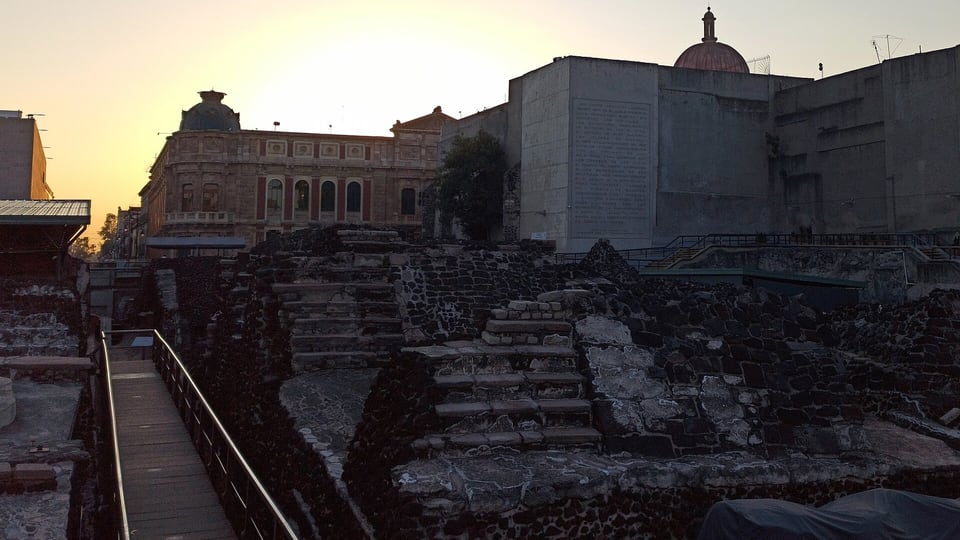
Zócalo, Templo Mayor
The Zócalo lies over the centre of ancient Tenochtitlan, with the cathedral to the north and the National Palace to the east, and it stages concerts, fairs and parades through the year. The Templo Mayor site beside it holds the excavated temple base and a museum of more than 3,000 Mexica objects.
Best for: Visitors who want the origin of the city before any museum · Area: Centro Histórico, Cuauhtémoc
Plan for Events can fill the square on the day. The Templo Mayor museum is open Tuesday to Sunday from 09:00 to 17:00, so Monday is not a day for it.
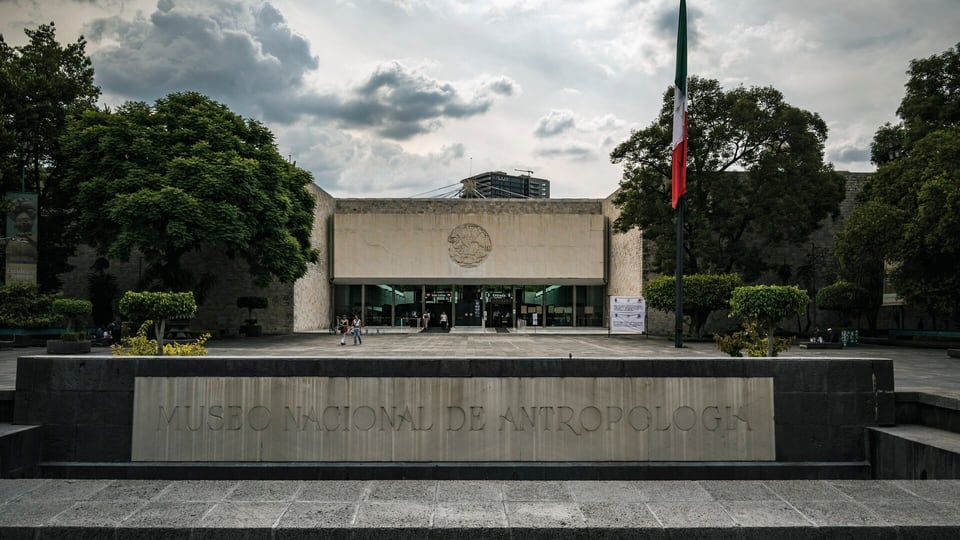
Anthropology Museum
The Museo Nacional de Antropología’s archaeology halls run from the peopling of the Americas through Teotihuacan, the Mexica and the Maya, with the ethnography of living peoples in the same building. It was built between 1963 and 1964 to a design by Pedro Ramírez Vázquez.
Best for: Visitors who want the pre-Hispanic story in one building before or after a site · Area: Chapultepec, Miguel Hidalgo
Plan for The halls are too many for one sweep, so choose the cultures that match the rest of the trip. The museum is open Tuesday to Sunday from 09:00 to 18:00 and lies about 1.3 kilometres from the nearest Metro stations.
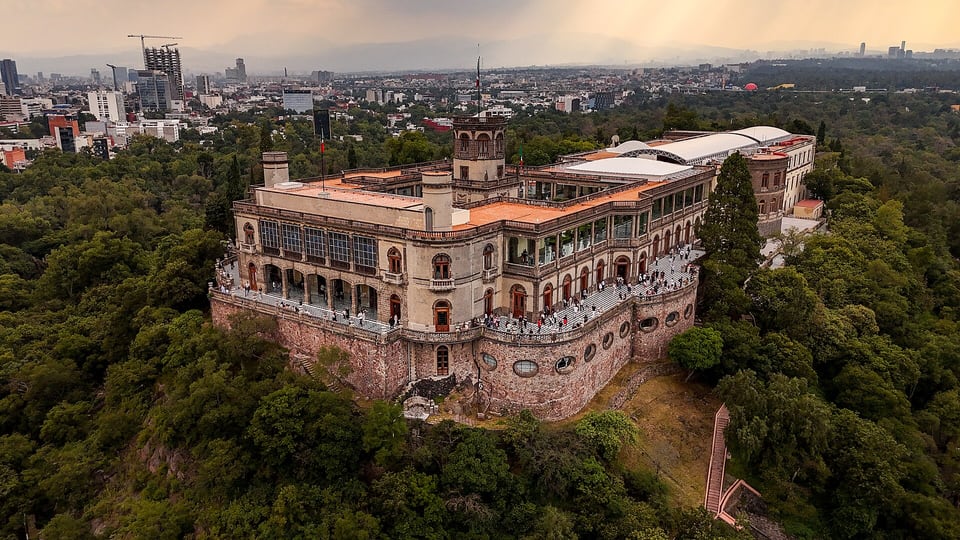
Chapultepec Castle and Park
The park covers about 686 hectares in four sections around Chapultepec Hill, where the castle stands. The castle was begun in 1785, housed Emperor Maximilian and Empress Carlota from 1864 to 1867, and now holds the Museo Nacional de Historia.
Best for: Visitors who want shade and a view between museum days · Area: Chapultepec, Miguel Hidalgo
Plan for The castle museum is open Tuesday to Sunday from 09:00 to 17:00, an hour less than the anthropology museum. The oldest section draws most visitors, the second is far less visited and the third is mainly a wildlife reserve, so a first day belongs in the first.
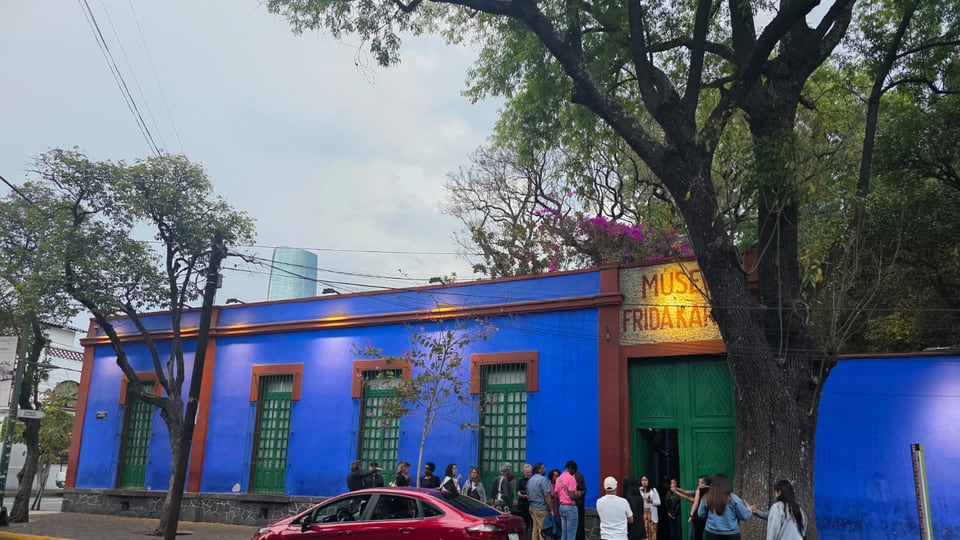
Coyoacán and the Frida Kahlo Museum
Coyoacán keeps the 16th-century layout of its twin squares, Jardín Hidalgo and Jardín Centenario. The Casa Azul is the house where Frida Kahlo was born, lived and died, opened as a museum in 1958, and the Coyoacán market stands within walking distance.
Best for: Visitors who want a village-scale day built around one booked museum · Area: Coyoacán, south of the centre
Plan for The house is open Tuesday to Sunday and opens at 11:00 on Wednesdays. Its ticket includes courtesy entry to the Anahuacalli museum.
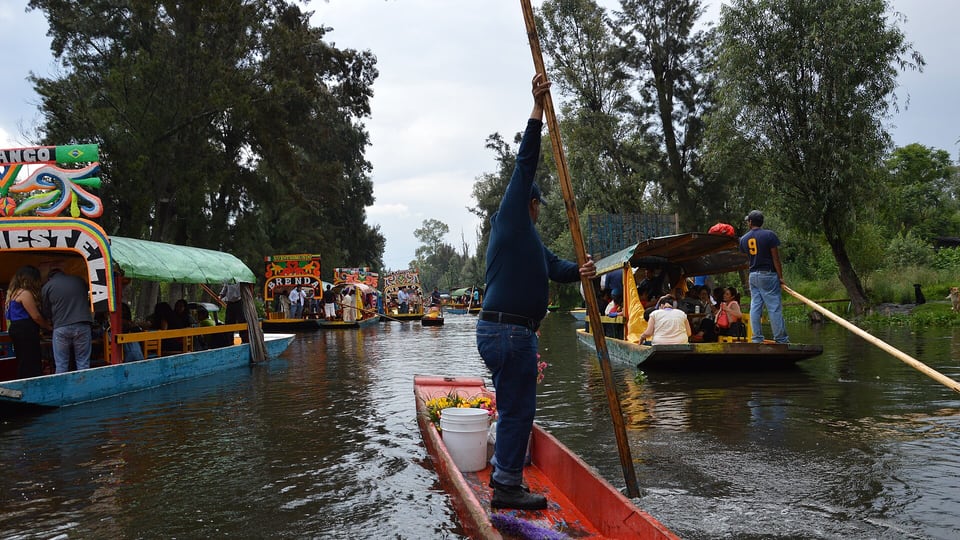
Xochimilco trajineras
Xochimilco’s canals run between chinampas, hand-built farming plots estimated to date from the 14th to the 16th century. The borough counts about 184 kilometres of waterways and ten boat landings, open every day of the year, and trajineras are the boats that work them.
Best for: Visitors who want a slow group outing on the water · Area: Xochimilco, far south
Plan for Each boat carries up to 18 people and most trips last two to three hours. Nativitas and Zacapa are traditional landings with craft markets and restaurants; Cuemanco, Fernando Celada and Puente de Urrutia run through the protected natural zone.
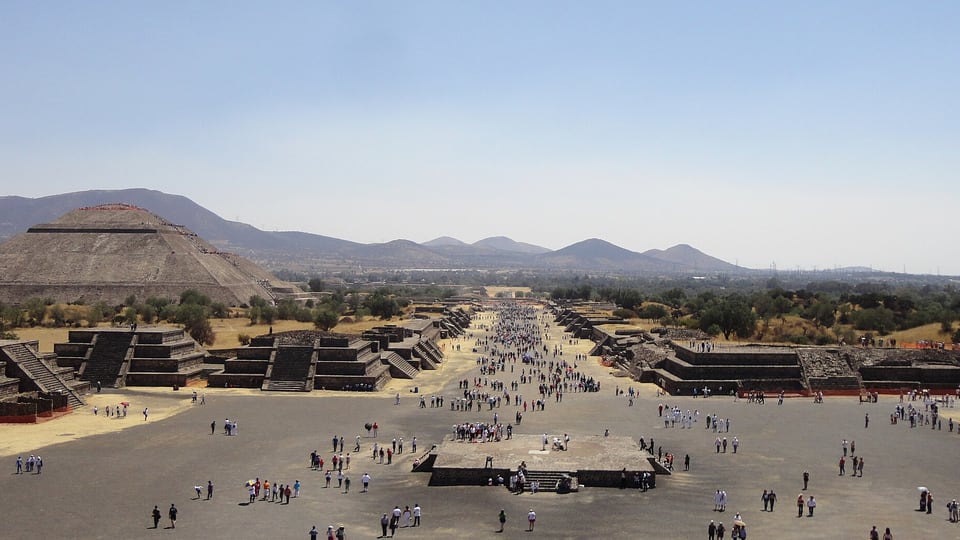
Teotihuacan
Teotihuacan was among the largest cities of the ancient world, with more than 100,000 people at its peak, and it has been on the World Heritage List since 1987. The zone is an open expanse of plazas beneath the Pyramids of the Sun and the Moon, about an hour north-east of the centre. It is open every day from 08:00 with last entry at 16:30.
Best for: Visitors ready to give a morning and a long return to one archaeological site · Area: State of Mexico, north-east of the city
Plan for INAH does not allow climbing the Pyramid of the Sun and has opened and closed the first level of the Pyramid of the Moon by notice, so a summit is not a plan. The tourism portal says the zone is crowded from noon to 16:00, so start early.
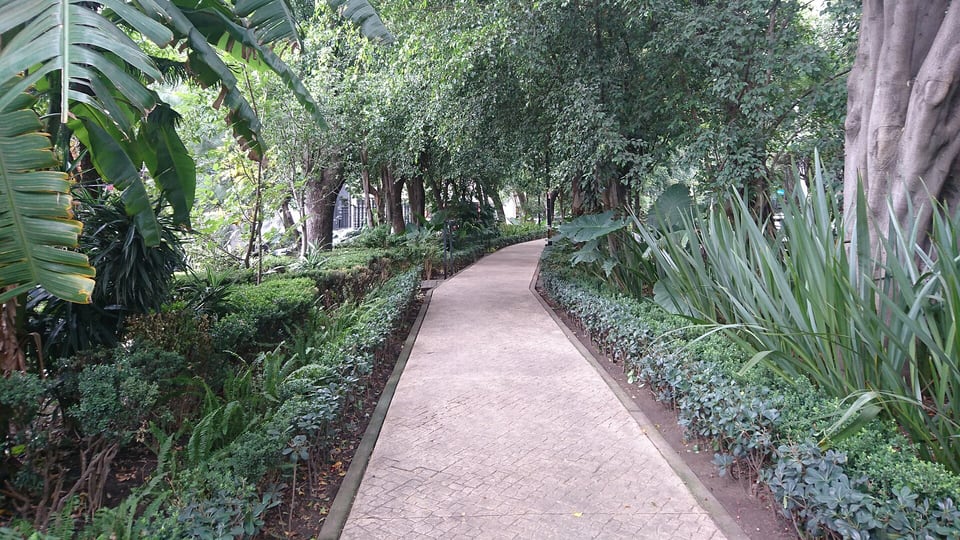
Roma and Condesa
Roma, founded in 1903, keeps eclectic, art nouveau and belle époque houses. Condesa, founded in 1902, follows the oval of a former hippodrome around Parque México, which opened in 1927, and both districts are laid out for walking under trees.
Best for: Visitors who want a slow walking day away from the museums · Area: Roma Norte, Roma Sur and Condesa, Cuauhtémoc
Plan for The districts have few named sights, so a day is a route through parks, markets and streets. Avenida Insurgentes divides the area, with most of Roma on its east side.
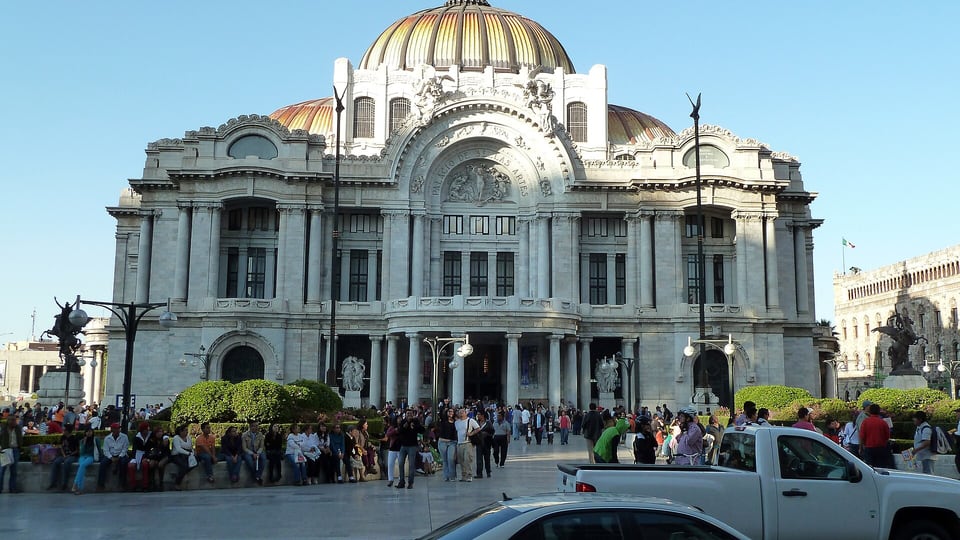
Palacio de Bellas Artes
The museum opened on 29 November 1934 as the first art museum in Mexico, and it now shows 17 murals by seven Mexican artists made between 1928 and 1963. Metro Line 2 stops at Bellas Artes and at the Zócalo.
Best for: Visitors who want the mural painters as well as the historic centre · Area: Avenida Juárez and Eje Central, Centro
Plan for The museum is open Tuesday to Sunday from 10:00 to 18:00, and photography needs a separate permit. The murals are the reason to go in, so a visit that stops outside misses the collection.
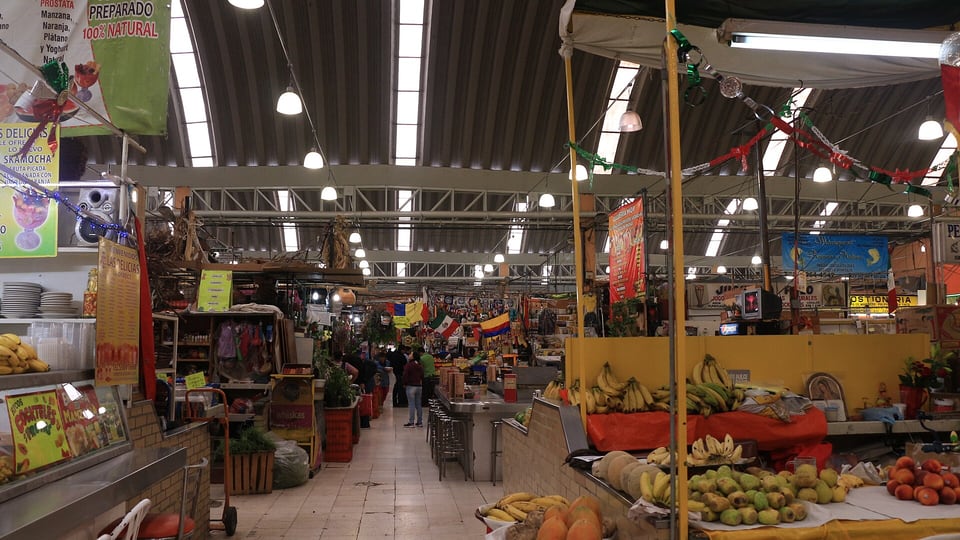
Public markets
The tourism portal counts hundreds of public markets. La Merced groups eight markets in and around the historic centre, Mercado de Medellín in Roma Sur gathers South American and Caribbean ingredients and dishes, and the market in Coyoacán stands within walking distance of the Casa Azul.
Best for: Visitors who want a meal stop inside a district they are already visiting · Area: La Merced, Roma Sur and Coyoacán
Plan for The Central de Abasto, at about 327 hectares in Iztapalapa, is a wholesale market and a different kind of outing from the three above.
Plan one, three or five days in Mexico City
One day: the centre on Metro Line 2
Begin at the Templo Mayor site, cross the Zócalo, and ride Line 2 to Bellas Artes for the afternoon.
Line 2 stops at both ends of this walk, so the day needs no other transport.
The trade-off Chapultepec and the south each need their own day, and every museum in this plan is shut on Mondays.
Three days: centre, Chapultepec and the south
Give one day to the centre, one to the two Chapultepec museums, and one to Coyoacán, booking the Casa Azul before anything else.
The Casa Azul ticket is bought in advance, so its date settles which weekday the south takes.
The trade-off Xochimilco and Teotihuacan do not fit inside these three days without dropping one of the others.
Five days: Teotihuacan and a boat day
Spend one extra day at Teotihuacan on the Monday when the national museums are closed, and another on the water at Xochimilco.
Teotihuacan opens every day from 08:00 with last entry at 16:30, so a Monday start suits it.
The trade-off The two outings lie in opposite directions from the centre, so they cannot share a day.
Sources
checked 2026-09-19. Recommendations are editorial judgements based on the cited sources below.
Choose a Mexico City base by your anchor day
Centro Histórico: the Zócalo at both ends of the day
Base here when the Templo Mayor, the Zócalo and Bellas Artes are the anchor days.
Metro Line 2 links the Zócalo and Bellas Artes without a change.
The trade-off The Metro stops at midnight and the square fills on event days, so a late return means an app or an authorised taxi.
Roma and Condesa: walks with a bus line on the doorstep
Base here for tree-lined evenings between two museum days.
One bus corridor on Avenida Insurgentes passes both districts.
The trade-off The museums and the Zócalo are each a bus or Metro ride away, so mornings begin with a journey.
Chapultepec and Polanco: museums at the forest edge
Base here when the anthropology museum and the castle are the priority days.
Metro Lines 1 and 7 and Metrobús Line 7 all serve the forest.
The trade-off Coyoacán and the centre are both a full crossing of the city away.
Sources
checked 2026-09-19. Recommendations are editorial judgements based on the cited sources below.
Arrival and getting around
Aeropuerto Internacional de la Ciudad de México (MEX) is the main airport. Metro Line 5 reaches Terminal 1, and the Metrobús airport service boards at Terminal 1 door 7 and Terminal 2 door 2 for the Historic Centre. Felipe Ángeles International (NLU) is a separate airport outside the city, reached by the Tren Felipe Ángeles to Buenavista in about an hour.
Metro and Metrobús gates take the Movilidad Integrada card, contactless bank cards and phones. The Metro runs from 05:00 on weekdays, 06:00 on Saturdays and 07:00 on Sundays, and stops at midnight.
Best time to visit
Spring (March–May)
The tourism portal calls spring pleasant, with warm afternoons and cooler evenings. April and May are the hottest months at about 28°C on average, the sun is intense, and jacaranda trees bloom from February to early April.
- Crowds
- Varies by event and attraction
Summer (June–August)
The rainy season runs from June to early October and brings about 85% of the year’s rain, usually in downpours of a few hours. Hail can fall in heavier storms.
- Crowds
- Varies by event and attraction
Autumn (September–November)
Rain continues until early October and then eases, and the tourism portal counts autumn among the seasons that avoid the extremes of cold and wet. The night of 15 September and the Day of the Dead season bring large public events to the Zócalo and the centre.
- Crowds
- Varies by event and attraction
Winter (December–February)
Winter days are mild, peaking between 20 and 24°C, and nights and early mornings can drop close to freezing. December to February also see slight rain, and the Christmas season brings posadas and coloured lights.
- Crowds
- Varies by event and attraction
Markets and local life
Public markets are the working kitchens of the city, and each district has its own. La Merced groups eight markets, Mercado de Medellín in Roma Sur gathers South American and Caribbean dishes, and Coyoacán’s market is known for tostadas with stewed toppings and fried quesadillas.
Eat inside the district you are already visiting. A Coyoacán lunch follows the Casa Azul, a Roma meal follows a walk under the trees, and the Central de Abasto, a wholesale market of about 327 hectares, is a supply hub and not a lunch stop.
City profile
- Population (Ciudad de México federal entity as counted by INEGI in Census 2020; excludes the wider metropolitan area in the State of Mexico, 2020): 9,209,944
The Zócalo lies over the centre of ancient Tenochtitlan. The Templo Mayor was taken apart after the Spanish war of 1519 to 1521, and the rescue of its remains began in 1978.
Chapultepec Castle was begun in 1785 as a viceregal residence and served as the home of Emperor Maximilian and Empress Carlota from 1864 to 1867.
Famous for:
- The Museo Nacional de Antropología, which the city’s tourism portal calls the most visited museum in Mexico.
- A historic centre where Metro Line 2 links the Zócalo and Bellas Artes.
- Xochimilco, where trajineras work about 184 kilometres of canal between chinampa plots.
Why Mexico City is planned by district and by weekday
The main sights lie in separate parts of a very large capital, so each day works best around one district. The historic centre with Bellas Artes, the museums of Chapultepec, and Coyoacán in the south are each a full block of time.
Altitude and the wet season shape the pace as much as distance does. Keep the first afternoon light, and keep an indoor museum in reserve for the hours it rains.
A beach holiday or a single walkable centre is a different trip, and Cancún has its own guide for the first. Here the distances between districts are part of the plan.
- Plan by district
- Centre · Chapultepec · The south · Teotihuacan
- First stay
- 3 days, 5 with Teotihuacan
- Altitude and rain
- 2,240 m · rain June to October
- Main airport
- MEX · Metro Line 5 and Metrobús
Planning your Mexico City visit: FAQs
What can I do on a Monday?
The Templo Mayor, the anthropology museum, Chapultepec Castle, Bellas Artes and the Frida Kahlo Museum are open Tuesday to Sunday. Teotihuacan and the Xochimilco boat landings open every day, so a Monday belongs to the outdoor sites.
Can I climb the pyramids at Teotihuacan?
INAH’s notices bar the ascent of the Pyramid of the Sun, and INAH has reopened and then closed the first level of the Pyramid of the Moon by notice. Build the visit around the plazas and the museums, and treat any climb as a bonus the day may not offer.
How do the altitude and the air affect a visit?
At 2,240 metres the city is above the level where altitude sickness usually starts, though many visitors notice nothing and the tourism portal calls extreme symptoms rare. Pollutants can hang in the air, so travellers with asthma may cut back outdoor activity when the city’s indicators run high.
Is the Metro or a ride-hailing app better after dark?
The Metro stops at midnight every day, with rush hours from 07:00 to 10:00 and 17:00 to 21:00. After the last trains, use a ride-hailing app or an authorised taxi; the city app’s Mi Taxi feature can verify the driver of a street taxi.
Does rain change how long a cross-city ride takes?
Yes. Heavy rain can bring drainage problems and traffic delays, and Metrobús buses slow down in the wet, so allow extra minutes between districts.
Do I need to book the Frida Kahlo Museum ahead?
Yes. The museum sells no tickets on site, so the ticket comes first and the day is built around it. Bags larger than 35 centimetres go to a checkroom before entry.
Make your Mexico City plans
Compare tours, tickets and activities in Mexico City →
Choose your departure market and search flights to Mexico City from the Mubboo Flights homepage.
Compare flights ↗Sources
Latest source check: .
Show all 34 sources
- INEGI, Censo de Población y Vivienda 2020, Ciudad de México results (checked 2026-09-19)
- Mexico City tourism portal, El Zócalo (checked 2026-09-19)
- Mexico City tourism portal, Templo Mayor Archaeological Site and Museum (checked 2026-09-19)
- INAH, Museo del Templo Mayor (checked 2026-09-19)
- Museo Nacional de Antropología, general information (checked 2026-09-19)
- Mexico City tourism portal, Museo Nacional de Antropología (checked 2026-09-19)
- INAH, Museo Nacional de Historia, Castillo de Chapultepec (checked 2026-09-19)
- Mexico City tourism portal, Bosque de Chapultepec (checked 2026-09-19)
- Museo Frida Kahlo, visit page (checked 2026-09-19)
- Museo Frida Kahlo, ticket page (checked 2026-09-19)
- Mexico City tourism portal, Coyoacán and University City (checked 2026-09-19)
- Mexico City tourism portal, Mercado de Coyoacán (checked 2026-09-19)
- Alcaldía Xochimilco, tourism (checked 2026-09-19)
- Mexico City tourism portal, Xochimilco boat launch tips and regulations (checked 2026-09-19)
- INAH, Zona Arqueológica de Teotihuacan (checked 2026-09-19)
- INAH bulletin 233, ascent to the Pyramid of the Moon, 19 May 2025 (checked 2026-09-19)
- INAH bulletin 166, Teotihuacan reopening, 21 April 2026 (checked 2026-09-19)
- INAH bulletin 106, spring equinox operation, March 2026 (checked 2026-09-19)
- Mexico City tourism portal, Teotihuacán (checked 2026-09-19)
- INBA, Museo del Palacio de Bellas Artes (checked 2026-09-19)
- Mexico City tourism portal, Roma, Condesa and Polanco (checked 2026-09-19)
- Mexico City tourism portal, Condesa and Roma (checked 2026-09-19)
- Mexico City tourism portal, public markets (checked 2026-09-19)
- Mexico City tourism portal, using the Metro (checked 2026-09-19)
- Mexico City tourism portal, traveling by Metrobús (checked 2026-09-19)
- Mexico City tourism portal, getting around (checked 2026-09-19)
- AICM, Metrobús at the airport (checked 2026-09-19)
- AICM, Metro at the airport (checked 2026-09-19)
- AICM, authorised taxis (checked 2026-09-19)
- AIFA, Tren Felipe Ángeles (checked 2026-09-19)
- Mexico City tourism portal, altitude sickness (checked 2026-09-19)
- Mexico City tourism portal, weather, pollution and UV (checked 2026-09-19)
- Mexico City tourism portal, best seasons to visit (checked 2026-09-19)
- The booking platform Partner API, destinations endpoint, Mexico City id 628 (checked 2026-09-19)
Photo credits
- zocalo — Juan Carlos Fonseca Mata · CC BY-SA 4.0.
- anthropology — ProtoplasmaKid · CC BY-SA 4.0.
- chapultepec — ProtoplasmaKid · CC BY-SA 4.0.
- coyoacan — Rebeccananonof · CC0.
- xochimilco — Ivo Kruusamägi · CC BY-SA 4.0.
- teotihuacan — Juan Carlos Fonseca Mata · CC BY-SA 4.0.
- roma condesa — Estef93 · CC BY-SA 4.0.
- bellas artes — Rob Young from United Kingdom · CC BY 2.0.
- markets — Stephanie Lopez · CC BY-SA 4.0.
Mubboo Editorial Team · Reviewed by Mubboo Editorial Team


