
Maui travel guide
Maui
Maui centers on four genuinely different coasts: West Maui's Kaanapali resorts and the still-recovering historic town of Lahaina, South Maui's drier Wailea/Kihei beaches and Molokini boat departures, Central Maui's Kahului airport and Iao Valley, and Upcountry's cooler Haleakalā-slope farms. The Road to Hana and Haleakalā's summit are each a genuine day trip on their own, not a quick stop along the way.
A first visit usually centers one of the Road to Hana or Haleakalā sunrise, a Molokini or whale-watching boat trip depending on season, and a beach day in West or South Maui. A longer stay adds Upcountry's farms, a respectful visit to Lahaina's recovering historic district, and an overnight in Hana rather than a single long round trip.

Find your Maui experience
Explore Maui Before You Book
Take a virtual drive or walk, then find tours and tickets for the places you like.

Activities
Featured activities in Maui



Prices at a glance
What we sell today and what recent flight searches found. No hotel prices; nothing here is a trip total.
- Tours and tickets in Mauifrom US$99.95
Live from Viator when this page loaded · per adult · changes by date.
Top experiences
Top experiences in Maui
Road to Hana (Hana Highway)
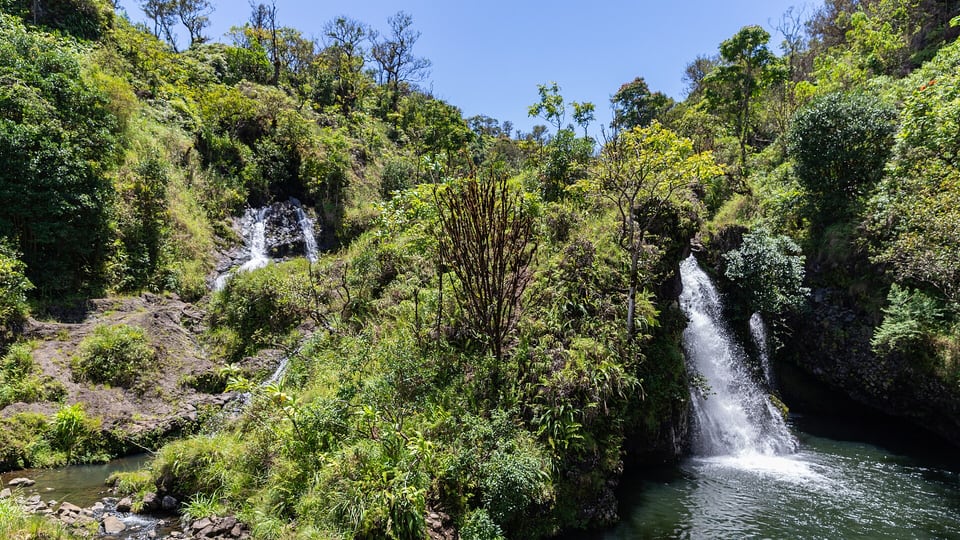
The 64.4-mile Hana Highway winds through roughly 620 curves and over 59 bridges, 46 of them one-lane. The full road officially opened 18 December 1926, was not completely paved until the 1960s, and has been listed on the National Register of Historic Places since 15 June 2001.
Best for: Travelers who want a genuine full-day drive, not a rushed afternoon detour · Area: East Maui, from just east of Kahului to Hana town
Plan for An uninterrupted drive takes roughly 2.5 hours one way, but the real trip most visitors take, stopping at waterfalls and lookouts, commonly runs 10-12 hours round trip -- a genuinely different time commitment than "2.5 hours" alone suggests.
Haleakalā National Park and its sunrise
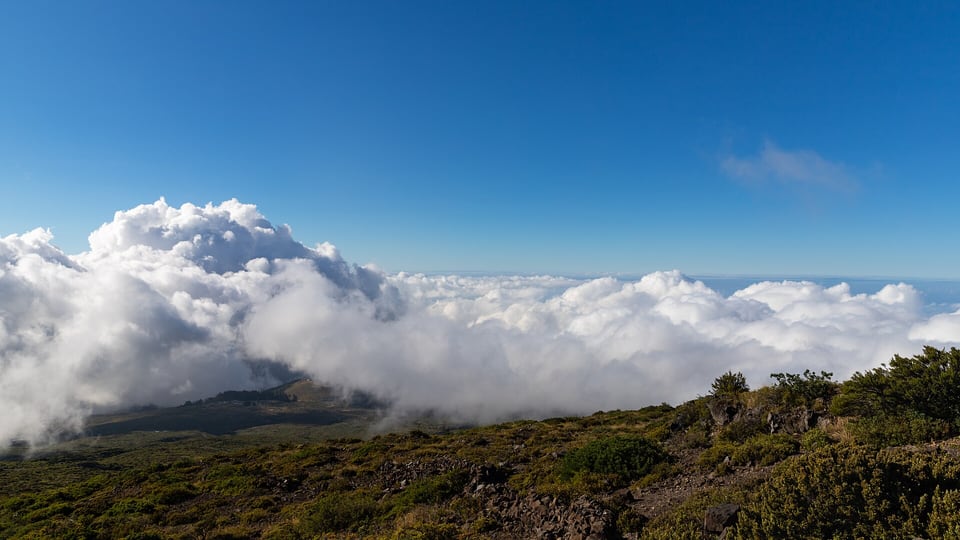
Haleakalā's summit rises to 10,023 feet, the dormant volcano last erupted sometime between 1480 and 1600 AD, and the 33,265-acre park became its own national park on 1 July 1961, after 45 years as part of the combined Hawaii National Park.
Best for: Travelers wanting a real above-the-clouds sunrise, if they plan around the reservation system · Area: Upcountry Maui / Haleakalā summit district, roughly a 2-hour drive from Kahului
Plan for A sunrise vehicle reservation (bookable up to 60 days ahead on recreation.gov, more inventory released 48 hours out) is required for the four highest parking lots between 3:00 and 7:00 a.m., is non-refundable for weather, and is limited to one per vehicle per three-day period, on top of the standard per-vehicle park entrance fee.
Lahaina -- historic town and its 2023 wildfire recovery
Lahaina served as the Kingdom of Hawaii's capital from 1837 to 1845 under Kamehameha III; the 8 August 2023 wildfire killed 102 people and destroyed roughly 80% of the town, including the 1828 Waiola Church and the Baldwin Home. The 151-year-old banyan tree survived but lost about 40% of its canopy and remains fenced off through at least 2028.
Best for: Travelers wanting to understand Lahaina's real, current state rather than a pre-fire assumption · Area: West Maui, Front Street and the surrounding historic district
Plan for As of the fire's third anniversary in August 2026, roughly 600 of the 2,145 destroyed Lahaina and Upcountry homes had been rebuilt and occupied, with 315 more under construction. Front Street's commercial district has been especially slow to rebuild, so a visit here is respectful observation and support for a community still recovering, not sightseeing at a restored attraction.
See Lahaina -- historic town and its 2023 wildfire recovery tours
Molokini Crater snorkeling
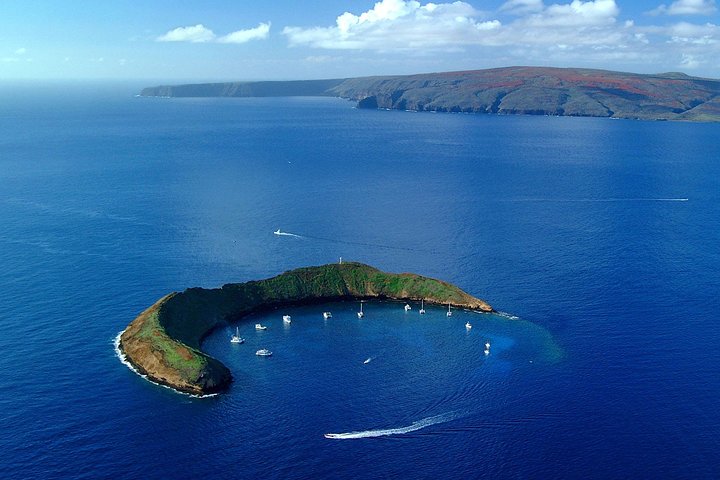
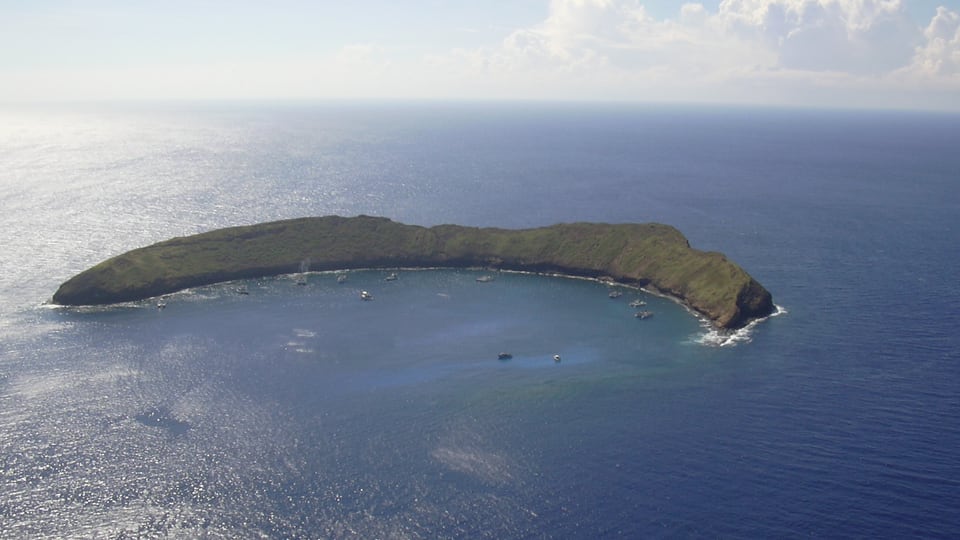
Molokini is a partially submerged volcanic crater roughly 2.5 miles off Maui's southwest coast, formed about 230,000 years ago; its crescent rim, rising 160 feet above the water, shelters a Marine Life Conservation District and state seabird sanctuary with more than 250 marine species and underwater visibility that often exceeds 100 feet.
Best for: Travelers wanting Hawaii's clearest reliably accessible snorkeling, not a general reef stop · Area: Boat trips depart from Maalaea or Kihei harbors, roughly 20-40 minutes each way
Plan for Molokini is boat-access only, so the trip adds transit time and cost beyond a shore snorkel, and conditions still vary day to day despite the site's sheltered shape.
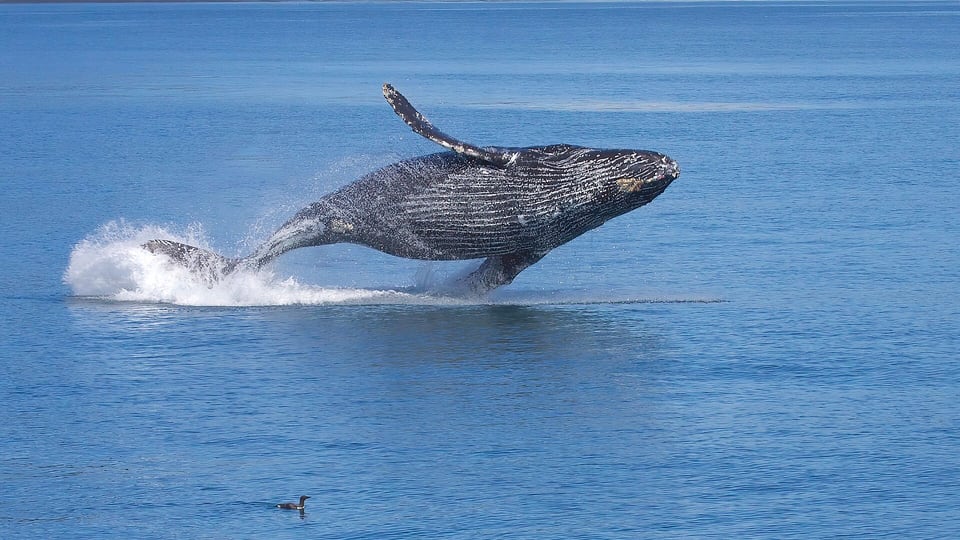
Whale watching (seasonal humpback whales)
The Hawaiian Islands Humpback Whale National Marine Sanctuary's own season runs roughly December through May, with more than half of the North Pacific's humpback population migrating to Hawaiian waters to breed and calve. Maui's Auau Channel is the sanctuary's most densely populated whale habitat, and February typically sees the most whales in the water.
Best for: Travelers visiting between December and April who want a real, seasonal wildlife event, not a year-round guarantee · Area: Auau Channel, between Maui, Lanai and Molokai; boats depart Lahaina and Maalaea harbors
Plan for Outside the roughly December-May season, whale sightings are genuinely unlikely, so this experience only belongs on a winter or spring itinerary.
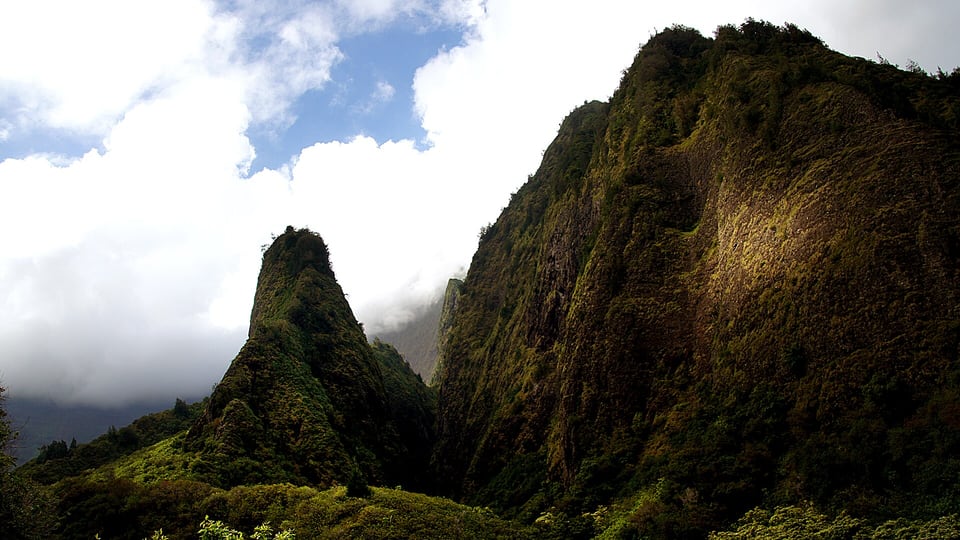
Iao Valley State Monument and the Iao Needle
The Iao Needle, a basalt spire locally called Kuka'emoku, rises about 1,200 feet from the valley floor in the 4,000-acre Iao Valley. The valley was the site of the 1790 Battle of Kepaniwai, where Kamehameha I's forces, using Western cannon, defeated Maui's army under Kalanikupule -- fighting so intense it gave the battle site its name, Kepaniwai ("the damming of the waters").
Best for: Travelers wanting real, documented pre-contact and unification-era Hawaiian history close to the airport · Area: Central Maui, a short drive west of Wailuku
Plan for The park's paved loop trail is short, well under an hour, so it suits a stop on the way to or from the airport rather than a half-day excursion on its own.
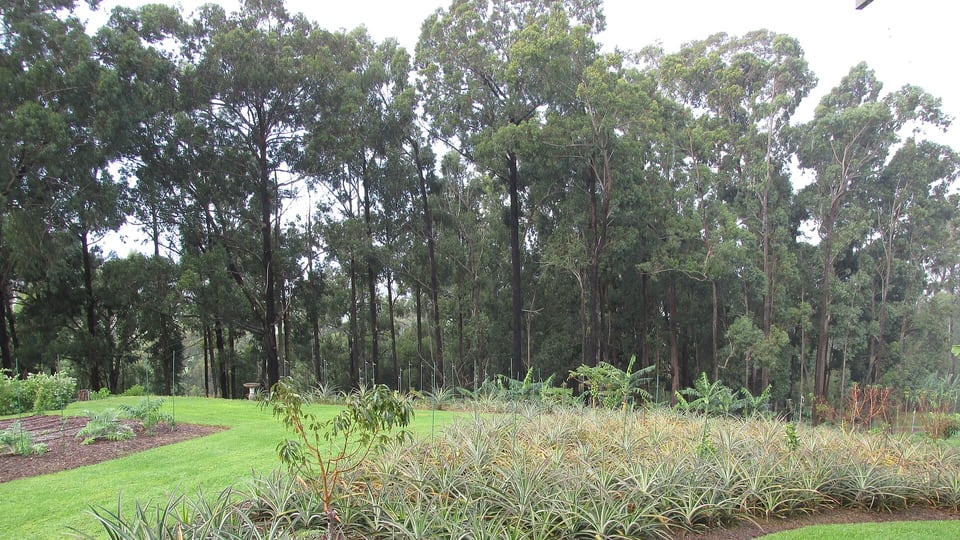
Upcountry Maui and Maui Gold pineapple farms
Maui's pineapple industry dates to the late 19th century, when David and Henry Baldwin planted the island's first pineapple farm above Honolua Bay, formalized as the Maui Pineapple Company by 1909; today Maui Gold Pineapple Company, formed in 2010, is the island's last working commercial pineapple farm, hand-harvesting roughly 3.7 million pineapples a year on Haleakalā's slopes.
Best for: Travelers wanting Maui's real agricultural identity, not just beaches and volcanoes · Area: Upcountry Maui (Kula, Makawao, Haliimaile), on Haleakalā's lower slopes
Plan for Upcountry's farms and lavender/protea fields are spread out and best reached by rental car, with cooler, wetter weather than the coast given the elevation.
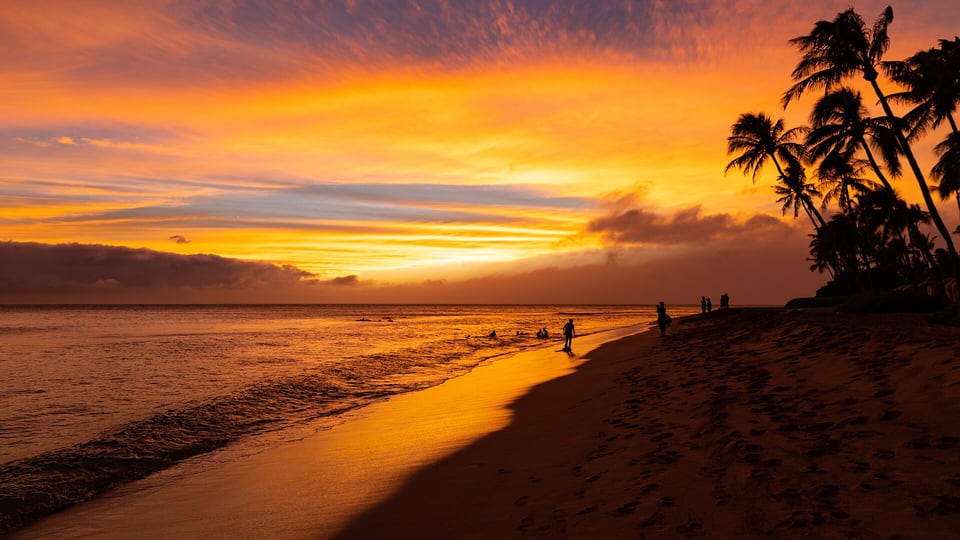
Kaanapali and Wailea beaches
Kaanapali Beach, on West Maui, was Hawaii's first master-planned resort destination, developed starting in 1962 along roughly three miles of sand. Wailea's beaches on South Maui's drier leeward coast sit beneath Haleakalā's rain shadow, giving that side of the island a genuinely sunnier, lower-rainfall climate than Hana or the windward coast.
Best for: Travelers choosing a home beach for calmer, resort-oriented swimming and sunset views · Area: West Maui (Kaanapali/Kapalua) and South Maui (Wailea/Kihei)
Plan for West and South Maui's calmer resort beaches trade the more dramatic, undeveloped coastline of East Maui for easier swimming access and more consistent sun.
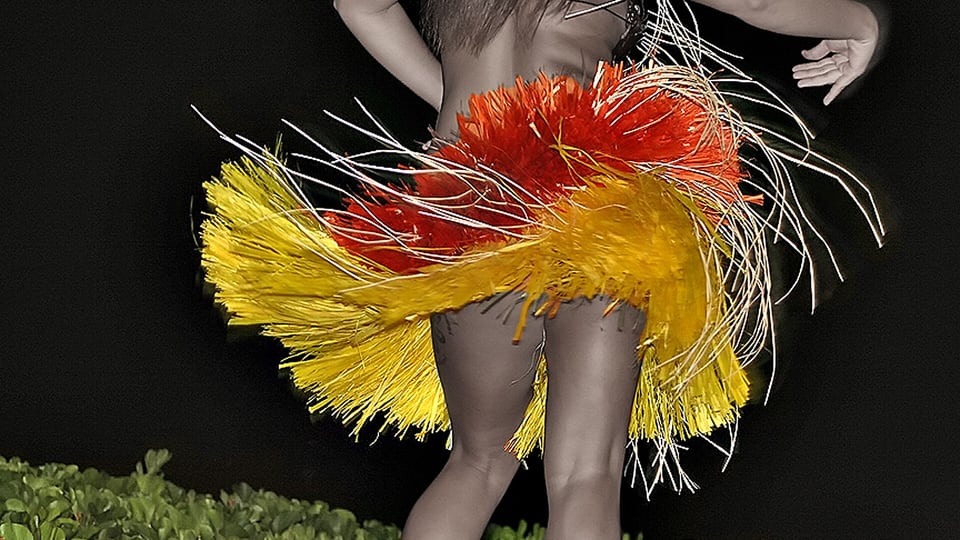
Luau: a real Hawaiian feasting and dance tradition
The modern luau descends from the ancient Hawaiian 'aha'aina ("gathering meal"), traditionally held to mark achievements, victories or a new canoe launch; the practice took its current name after King Kamehameha II's 1819 feast that publicly ended the traditional kapu system. Old Lahaina Luau, operating since 1986, is widely regarded for historically accurate presentation of hula and Hawaiian traditions.
Best for: Travelers wanting a real, historically grounded introduction to Hawaiian feasting and dance traditions · Area: West Maui (Lahaina) and resort luaus in Kaanapali, Wailea and Kihei
Plan for A historically focused luau typically costs more than a generic resort luau, so travelers choosing on price alone may get a broader, less culturally specific show instead.
See Luau: a real Hawaiian feasting and dance tradition tours
Plan three, five or seven-plus days in Maui
Three to four days: one big drive plus a beach and a boat trip
Pick this length when one of the Road to Hana or a Haleakalā sunrise, a Molokini or whale-watching trip, and a West or South Maui beach day are the goal.
These fit into a focused first visit, though choosing only one of Road to Hana or Haleakalā means leaving the other for a return trip.
The trade-off A three-to-four-day trip has to skip either the Road to Hana or Haleakalā, plus Upcountry and Lahaina, so this length suits a highlights-only visit.
Five to seven days: add the second big drive, Upcountry and Lahaina
Pick this length once both the Road to Hana and Haleakalā sunrise matter, alongside an Upcountry farm stop and a respectful Lahaina visit.
Both major drives, plus Upcountry and West Maui, fit without back-to-back marathon driving days.
The trade-off This length still moves at a fairly full pace; an unhurried trip with a Hana overnight needs the longer stay below.
A week or more: unhurried, with a Hana overnight
Pick this length to spread West, South, Central and Upcountry Maui across genuinely unhurried days, with an overnight stay in Hana instead of a single long round trip.
An overnight in Hana avoids driving the 620-curve highway twice in one day and allows a calmer, fuller look at East Maui.
The trade-off This length costs more overall time, but it is the only one that comfortably avoids the real fatigue of a same-day Hana round trip.
Sources
checked 2026-09-24. Recommendations are editorial judgements based on the cited sources below.
Choose a Maui base and explore nearby
West Maui: a base for resort beaches near a recovering Lahaina
Consider this base for Kaanapali's resort beaches, while approaching nearby Lahaina as a respectful, still-recovering visit rather than a restored attraction.
West Maui puts Kaanapali's beaches and Lahaina's historic district within a short drive, at the cost of the island's worst peak-time traffic on a single coastal highway.
The trade-off Choosing West Maui means accepting real single-road traffic in return for resort beaches and proximity to Lahaina, a fair exchange for most first visits.
South Maui: a base for reliable sun and boat departures
Consider South Maui for direct access to Wailea's beaches and the Maalaea/Kihei harbors used for Molokini and whale-watching trips.
This coast trades East Maui's green scenery for Haleakalā's rain shadow and consistently drier, sunnier weather.
The trade-off South Maui has fewer services than West Maui and draws heavy resort crowds, a reasonable trade for travelers prioritising sun and boat access.
Upcountry: a base for Haleakalā's summit road and real farm country
Consider Upcountry when a shorter drive to Haleakalā's summit and real, dated agricultural history (Maui Gold pineapple since 2010, Baldwin family origins from the 1900s) matter more than beach proximity.
Upcountry's cooler, greener elevation suits a slower pace than the coast, with a genuinely different, farm-oriented character.
The trade-off Basing in Upcountry means a longer drive to any beach, a worthwhile trade for travelers prioritising Haleakalā and farm country.
Sources
checked 2026-09-24. Recommendations are editorial judgements based on the cited sources below.
Airport, safety and getting around
Kahului Airport (OGG, ICAO PHOG), operated by the Hawaii Department of Transportation, has served as Maui's main airport since 1952, handling both inter-island and mainland traffic.
From Kahului Airport, Wailea (South Maui) is roughly 17 miles / 29 minutes, Lahaina (West Maui) roughly 24 miles / 36-50 minutes depending on traffic, and Kaanapali roughly 27 miles / 42 minutes. A rental car is close to essential since Maui has no island-wide public transit connecting these areas.
About 800 people drowned in Hawaii's waters over the past decade, and roughly 69% of ocean drowning victims statewide were visitors. Maui's drowning rate is now roughly double Oahu's despite receiving a fraction of Oahu's beach-safety funding. The state's DLNR Hawaii Beach Safety site rates beach conditions daily with a green/yellow/red system.
Hawaii's Act 104, signed 3 July 2018 and effective 1 January 2021, banned the sale of sunscreens containing oxybenzone and octinoxate to protect coral reefs, making Hawaii the first US state to restrict these UV filters. The 2022 Act 117 expanded the banned list to include avobenzone and octocrylene, effective 1 January 2023.
Best time to visit
Winter (December-February)
December through February is Maui's wetter season and the heart of whale-watching season, with the Hawaiian Islands Humpback Whale National Marine Sanctuary's official window running roughly December-May; it is also the island's busiest visitor season around the winter holidays.
- Crowds
- Varies by event and attraction
Spring (March-May)
March through May is a drier transitional stretch as the wet season eases; it still overlaps the tail end of whale season, with sightings tapering off by May.
- Crowds
- Varies by event and attraction
Summer (June-August)
June through August is Maui's driest, warmest stretch, best for swimming and beach time; it also falls within the Central Pacific's official 1 June-30 November hurricane season, though a direct hit on Maui remains rare.
- Crowds
- Varies by event and attraction
Autumn (September-November)
September through November is a genuine shoulder season with fewer crowds and still-warm weather, though it remains inside the Central Pacific hurricane season through the end of November.
- Crowds
- Varies by event and attraction
Food, markets and local life
The Hawaiian plate lunch traces to 1880s plantation-era lunch wagons, where Japanese, Chinese, Filipino, Portuguese and Korean laborers traded dishes across cultures. The resulting format -- two scoops of rice and macaroni salad alongside a protein such as kalua pork, chicken katsu or chicken adobo -- outlived the plantations themselves.
Poke is a genuinely pre-contact Hawaiian dish: Native Hawaiian fishermen seasoned fresh reef fish with sea salt, limu (seaweed) and inamona (roasted, ground kukui nut) long before the modern mainland "poke bowl" trend. Malasadas, brought by Portuguese plantation laborers from Madeira and the Azores starting in 1878, became a Fat Tuesday tradition still marked across Hawaii as "Malasada Day."
City profile
- Population (Island of Maui, 2020 US Census, the third-most populous Hawaiian island; Maui County (Maui, Molokai, Lanai and Kahoolawe combined) was estimated at roughly 160,600-165,000 residents in 2024-2025, a slight decline that partly reflects displacement after the 2023 Lahaina wildfire, 2020): 168,307
Polynesian voyagers, originally from Tahiti, settled the Hawaiian Islands centuries before Western contact. Captain James Cook was the first European to sight Maui, in 1778.
In 1790, Kamehameha I's forces defeated Maui chief Kalanikupule's army at the Battle of Kepaniwai in Iao Valley, using Western cannon as part of his campaign to unify the Hawaiian Islands. The fighting was said to have been so intense it dammed Iao Stream with bodies, giving the battle site its name, Kepaniwai ("the damming of the waters").
Lahaina served as the Kingdom of Hawaii's official capital from 1837 to 1845 under Kamehameha III, after functioning as a royal residence and whaling-era center from around 1820.
Hawaii became the 50th US state on 21 August 1959. Maui, Molokai, Lanai and Kahoolawe together make up Maui County, one of Hawaii's four counties.
Famous for:
- The 64.4-mile Hana Highway winds through roughly 620 curves and over 59 bridges, 46 of them one-lane. The full road officially opened 18 December 1926 and was not completely paved until the 1960s, and it has been listed on the National Register of Historic Places since 15 June 2001.
- Haleakalā's summit rises to 10,023 feet above sea level. The dormant volcano last erupted sometime between 1480 and 1600 AD, and the 33,265-acre park became its own national park on 1 July 1961, after 45 years as part of the combined Hawaii National Park.
- Molokini is a partially submerged volcanic crater roughly 2.5 miles off Maui's southwest coast, formed about 230,000 years ago. Its crescent rim rises 160 feet above the water and shelters a Marine Life Conservation District and state seabird sanctuary with more than 250 marine species.
- The 8 August 2023 wildfire killed 102 people and destroyed roughly 80% of historic Lahaina, including the 1828 Waiola Church and the Baldwin Home, Maui's oldest surviving house. The town's 151-year-old banyan tree survived but lost about 40% of its canopy and remains fenced off from the public while recovery continues.
What makes a Maui visit worthwhile
An uninterrupted drive along the Hana Highway takes roughly 2.5 hours one way, but the real trip most travelers take, stopping at waterfalls, lookouts and black-sand beaches, commonly runs 10-12 hours round trip -- a genuinely different time commitment than "2.5 hours" alone suggests.
As of the fire's third anniversary in August 2026, roughly 600 of the 2,145 homes destroyed across Lahaina and Upcountry Maui had been rebuilt and occupied, with 315 more under construction. Front Street's commercial district has been especially slow to rebuild, so visiting Lahaina today means supporting a community still recovering, not sightseeing at a restored attraction.
About 800 people drowned in Hawaii's waters over the past decade, and roughly 69% of ocean drowning victims statewide were visitors, with Maui's drowning rate now roughly double Oahu's. Hawaii also became the first US state to restrict oxybenzone- and octinoxate-containing sunscreens to protect coral reefs, so reef-safe sunscreen is a real, current requirement, not a suggestion.
- Plan by trip type
- Road to Hana · Haleakalā sunrise · Lahaina & West Maui · Molokini snorkeling · Whale watching (roughly Dec-May)
- Good first stay
- 3-4 days for one of Road to Hana or Haleakalā plus a beach day, 5-7 with both, a week+ with an Upcountry day and a Hana overnight
- Climate constraint
- Two real seasons -- drier Apr-Oct, wetter Nov-Mar -- with big microclimate swings: sunny, dry South/West Maui coasts vs. much wetter Hana and Haleakalā's summit
- Main gateway
- OGG airport (Kahului), Maui's main gateway; a rental car is close to essential since there's no island-wide public transit between resort areas
Planning your Maui visit: FAQs
Is Lahaina safe and open to visit after the 2023 wildfire?
Parts of Lahaina are open, but honestly: as of August 2026, roughly 600 of the 2,145 homes destroyed across Lahaina and Upcountry had been rebuilt, with 315 more under construction, and Front Street's commercial core has been slow to rebuild. The banyan tree survived but remains fenced off. Treat a visit as respectful support for a recovering community, not a restored attraction.
How long does the Road to Hana actually take?
An uninterrupted drive takes roughly 2.5 hours one way along 620 curves and 59 bridges, but the real trip most travelers take, with stops at waterfalls and lookouts, commonly runs 10-12 hours round trip -- plan a full day, not an afternoon.
Do I need a reservation for Haleakalā sunrise?
Yes: a sunrise vehicle reservation is required for the four highest parking lots between 3:00 and 7:00 a.m., carries a small separate reservation fee, is bookable up to 60 days ahead on recreation.gov with more inventory released 48 hours out, is non-refundable for weather, and is limited to one per vehicle per three-day period, on top of the standard per-vehicle park entrance fee.
When can I actually see whales in Maui?
The Hawaiian Islands Humpback Whale National Marine Sanctuary's official season runs roughly December through May (some years starting in November), with February typically seeing the most whales in Maui's Auau Channel.
What is the deal with reef-safe sunscreen in Hawaii?
Hawaii's Act 104 (2018/2021) and Act 117 (2022/2023) together ban the sale of sunscreens containing oxybenzone, octinoxate, avobenzone and octocrylene to protect coral reefs -- pack or buy a mineral (reef-safe) sunscreen before swimming or snorkeling.
Is Molokini actually worth a boat trip?
Molokini is a partially submerged volcanic crater about 2.5 miles off Maui's southwest coast, formed roughly 230,000 years ago; its protected Marine Life Conservation District status and sheltered crescent shape give it more than 250 marine species and visibility that often exceeds 100 feet, but it is boat-access only.
Make your Maui plans
Compare tours, tickets and activities in Maui →
Choose your departure market and search flights to Maui from the Mubboo Flights homepage.
Compare flights ↗Sources
Latest source check: .
Show all 27 sources
- Wikipedia — Maui (checked 2026-09-24)
- Wikipedia — Hana Highway (checked 2026-09-24)
- Wikipedia — Haleakalā National Park (checked 2026-09-24)
- Wikipedia — Kahului Airport (checked 2026-09-24)
- Wikipedia — Iao Valley (checked 2026-09-24)
- Wikipedia — 2023 Hawaii wildfires (checked 2026-09-24)
- Wikipedia — Lahaina, Hawaii (checked 2026-09-24)
- Wikipedia — Lahaina Banyan Tree (checked 2026-09-24)
- Wikipedia — Maui County, Hawaii (checked 2026-09-24)
- Wikipedia — Poke (dish) (checked 2026-09-24)
- Wikipedia — Malassada (checked 2026-09-24)
- National Park Service — Haleakalā Sunrise Reservations (checked 2026-09-24)
- NOAA — Hawaiian Islands Humpback Whale National Marine Sanctuary (checked 2026-09-24)
- NOAA Fisheries — Turtles, Tourism, and Traffic: Keeping Hawai'i Honu Safe (checked 2026-09-24)
- Hawaii DLNR Division of State Parks — Iao Valley State Monument (checked 2026-09-24)
- Hawaii Tourism Authority — Hawaii Tourism Authority Launches Educational Mālama Hawai'i Campaign (checked 2026-09-24)
- Honolulu Civil Beat — Hawaii Governor Starts The Clock On Sunscreen Ban (checked 2026-09-24)
- Maui Recovers — Official County of Maui Recovery Information (checked 2026-09-24)
- Honolulu Civil Beat — Maui Wildfires 3 Years Later: Lahaina Recovery Continues (checked 2026-09-24)
- Maui Now — County releases recovery update ahead of 2023 Maui Wildfires anniversary (checked 2026-09-24)
- Honolulu Civil Beat — Lahaina's Famed Banyan Tree Still 'In The ICU' (checked 2026-09-24)
- Honolulu Civil Beat — 800 Drownings And 12 Years Later, Hawai'i To Step Up Anti-Drowning Efforts (checked 2026-09-24)
- Old Lahaina Luau — What is a luau? (checked 2026-09-24)
- Maui Gold Pineapple Company (checked 2026-09-24)
- Hawaii Guide — Road to Hana: Mile-by-Mile Stops, Map & Itinerary (checked 2026-09-24)
- Where Traveler — Plate Lunches: A Scoop of Hawaiian History (checked 2026-09-24)
- The booking platform — Maui destination mapping d671 (checked 2026-09-24)
Photo credits
- road to hana — dronepicr · CC BY 2.0.
- haleakala sunrise — dronepicr · CC BY 2.0.
- molokini — Forest & Kim Starr · CC BY 3.0.
- whale watching — Gregory "Slobirdr" Smith · CC BY 2.0.
- iao valley — Bernard Spragg. NZ from Christchurch, New Zealand · CC0.
- upcountry pineapple — Forest and Kim Starr · CC BY 3.0 us.
- kaanapali wailea beaches — dronepicr · CC BY 2.0.
- luau — Matt · CC BY-SA 2.0.
Mubboo Editorial Team · Reviewed by Mubboo Editorial Team


