
Marrakech travel guide
Marrakech
Marrakech is centred on a walled medina built from red-ochre pise, with Jemaa el-Fnaa at its heart, the modern Gueliz district to the west, and the Atlas Mountains and Sahara reachable only as day or multi-day trips, not from inside the city itself.
Most first visits centre on the medina's monuments and souks, Majorelle Garden, and one Atlas Mountains day trip; a longer stay makes room for a genuine multi-day Sahara trip to Merzouga, roughly 550km away by road.

Find your Marrakech experience
Explore Marrakech Before You Book
Take a virtual drive or walk, then find tours and tickets for the places you like.

Activities
Featured activities in Marrakech


Prices at a glance
What we sell today and what recent flight searches found. No hotel prices; nothing here is a trip total.
- Tours and tickets in Marrakechfrom US$22.92
Live from Viator when this page loaded · per adult · changes by date.
Top experiences
Top experiences in Marrakech
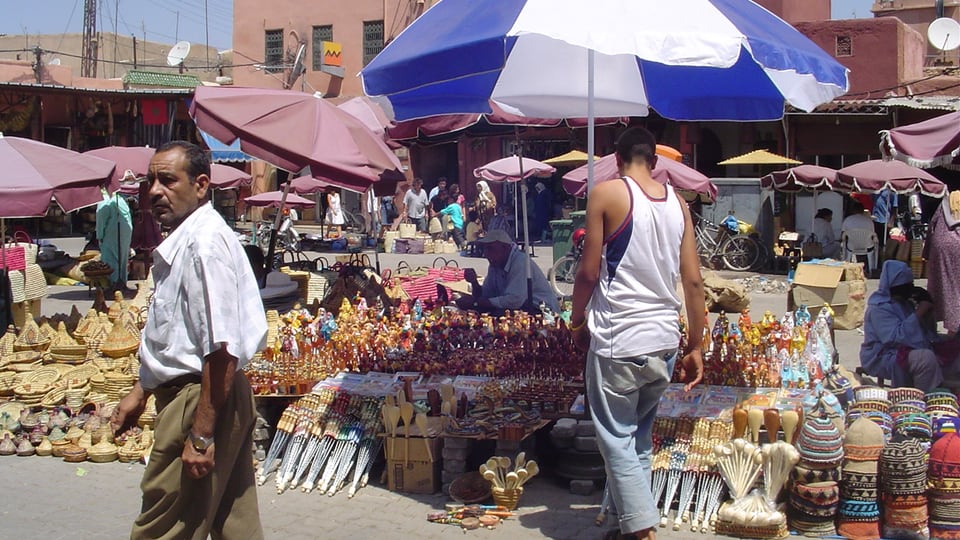
Jemaa el-Fnaa Square by Day and by Night
Jemaa el-Fnaa's daytime character (orange-juice carts, henna artists, storytellers) and its night market (rows of numbered food stalls, drummers, crowds) are genuinely different enough that visiting only once misses half of what the UNESCO listing actually recognises.
Best for: Every first-time visitor, ideally at both ends of the day rather than once · Area: Entrance to the medina, the city's central square
Plan for The night market's food-stall competition can feel aggressive to travellers unused to it, and prices are not fixed, so agreeing a price before ordering matters here more than almost anywhere else in the city.
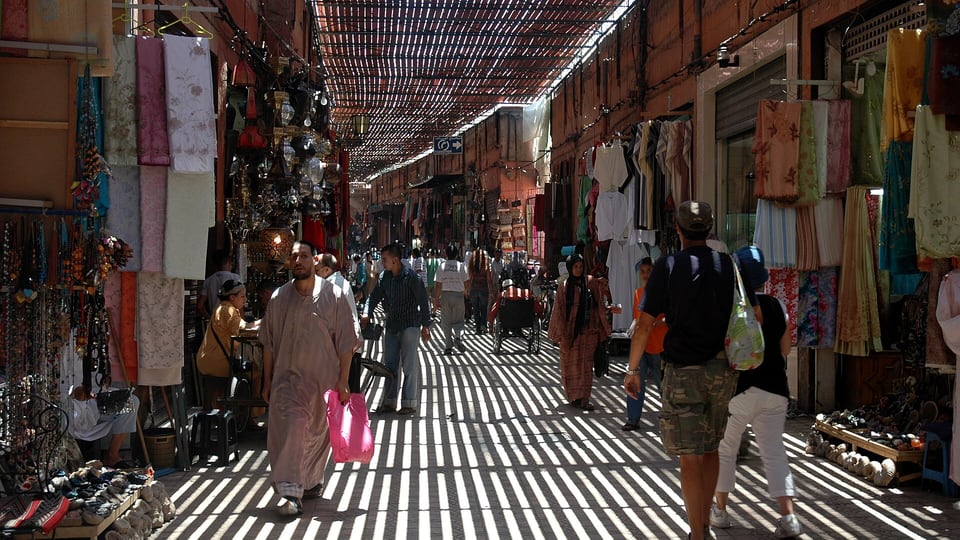
The Medina Souks
The souks divide loosely by craft, dyers, leatherworkers and metalworkers each cluster in their own historic quarter, so wandering with a rough sense of these zones reveals more than chasing a single fixed route, and haggling is the expected way to buy.
Best for: Travellers who want genuine craft shopping and are prepared to haggle and occasionally get turned around · Area: The medina's central and northern lanes, radiating out from Jemaa el-Fnaa
Plan for No reliable street numbering and many dead-end lanes make getting lost a normal part of a first souk visit, not a failure, and offline maps help more than turn-by-turn navigation apps.
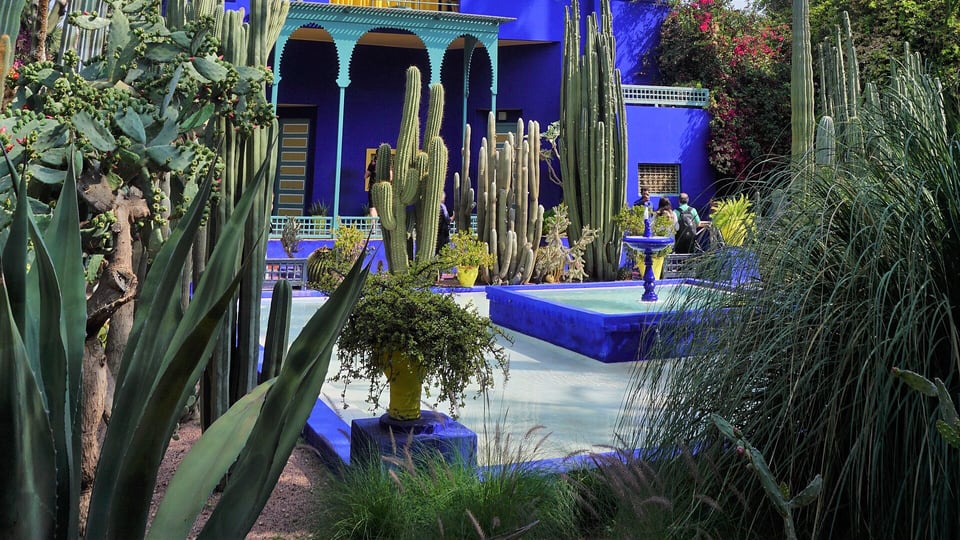
Majorelle Garden and the Yves Saint Laurent Museum
Majorelle Garden's cactus collection, bamboo groves and cobalt-blue pavilions sit beside the Yves Saint Laurent Museum, opened in 2017 next to the garden Saint Laurent and Berge saved from a 1980s real-estate redevelopment.
Best for: Travellers who want Marrakech's most specific, well-documented restoration story alongside a genuinely striking botanical garden · Area: Gueliz, the modern district west of the medina
Plan for Popularity means peak-season queues and a genuinely busy path network by midday, so an early slot matters more here than at most Marrakech sights.
See Majorelle Garden and the Yves Saint Laurent Museum tours
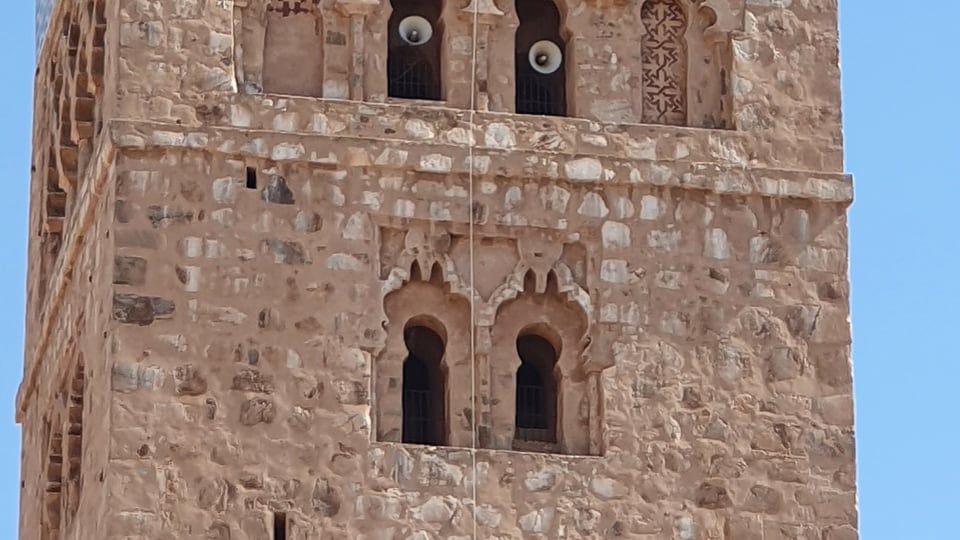
Koutoubia Mosque Minaret
The Koutoubia Mosque's 77-metre minaret, completed around 1199 under Almohad caliph Yaqub al-Mansur, is the oldest and most complete of the Almohad dynasty's three great towers, alongside Rabat's Hassan Tower and Seville's Giralda.
Best for: Travellers who want Marrakech's most recognisable skyline landmark and a reference point for medina navigation · Area: Just south-west of Jemaa el-Fnaa
Plan for Non-Muslim visitors cannot enter the mosque itself, so the experience is external: the minaret, the surrounding gardens and the view from a nearby rooftop cafe.
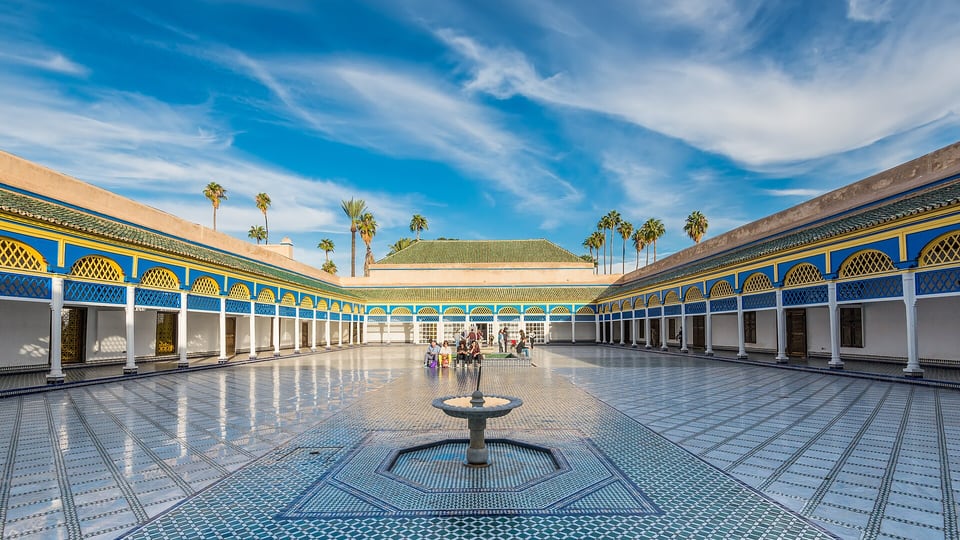
Bahia Palace
Bahia Palace, begun in the 1860s by grand vizier Si Musa and expanded to roughly 150 rooms by his son Si Ba Ahmed between 1894 and 1900, is Marrakech's largest surviving 19th-century palace.
Best for: Travellers who want a real, dated royal-court history rather than a generic 'Moroccan palace' visit · Area: The Kasbah, the medina's southern quarter
Plan for The palace's roughly 150 empty rooms photograph beautifully but carry little on-site interpretation, so a guide or prior reading adds real context a self-guided walk-through misses.
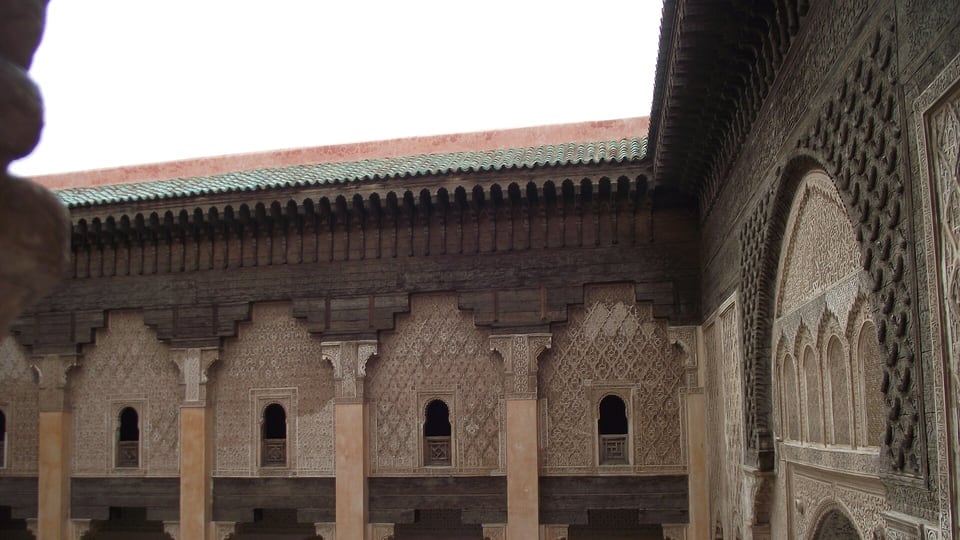
Ben Youssef Madrasa
Ben Youssef Madrasa, rebuilt in 1564-65 by Saadian sultan Abdallah al-Ghalib, once housed up to 900 students in 132 cells and reopened to visitors in 2022 after a four-year restoration.
Best for: Travellers who want the medina's most intricate zellij tilework and carved stucco in one compact, walkable site · Area: Northern medina, a short walk from Jemaa el-Fnaa
Plan for Its 2022 reopening after restoration means some online reviews and guides still describe it as closed; confirming current hours before visiting avoids planning around outdated information.
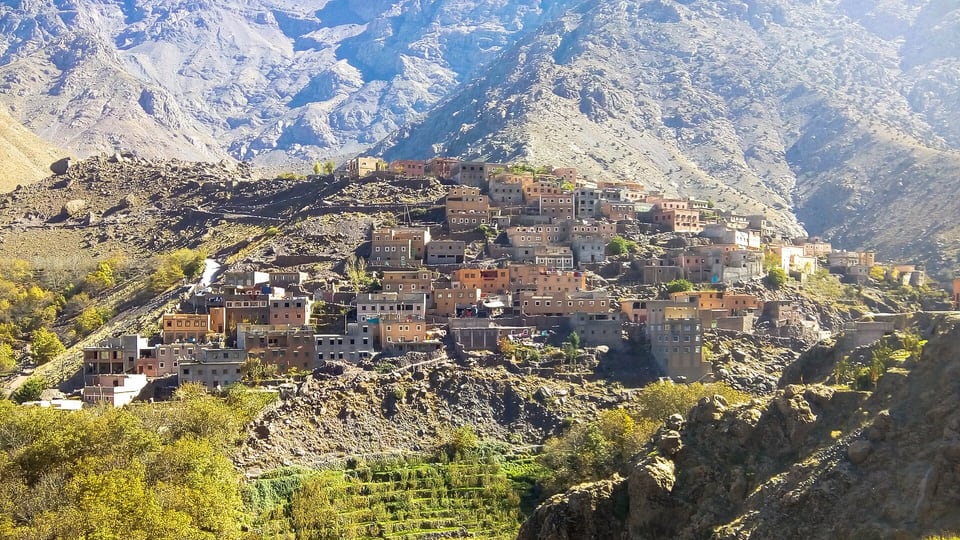
Atlas Mountains Day Trip: Imlil or the Ourika Valley
Imlil, roughly 65-90km and up to three hours from Marrakech, reaches genuine High Atlas trekking terrain and Toubkal National Park's gateway village; the closer Ourika Valley, under an hour away, trades altitude for easier access to Berber villages and waterfalls.
Best for: Travellers who want real mountain scenery and Berber village life without a multi-day trek · Area: High Atlas Mountains, south of Marrakech
Plan for Imlil's extra distance and altitude suit travellers wanting real trekking; Ourika's shorter drive suits a half-day with less time in the car, a real trade-off rather than a simple upgrade.
See Atlas Mountains Day Trip: Imlil or the Ourika Valley tours
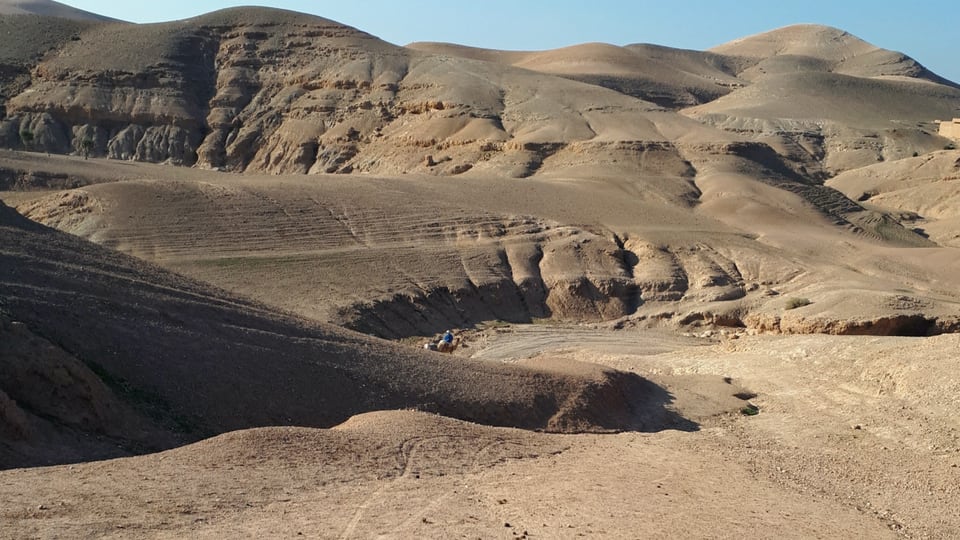
Agafay Desert Quad Biking and Hot Air Ballooning
Agafay, a rocky lunar-like desert roughly 40km and about 40 minutes from Marrakech, hosts quad-biking operators; the closer, greener Palmeraie is the more common launch point for a sunrise hot-air-balloon flight over the Atlas foothills.
Best for: Travellers wanting an active desert adventure close to the city without committing to the multi-day Sahara drive · Area: Agafay Desert (40km south-west) and the Palmeraie (20-30 minutes north)
Plan for Agafay's rocky terrain and dry riverbeds are a real, distinctive lunar landscape, not the sand-dune scenery many travellers picture when they hear 'desert tour'.
Multi-Day Sahara Trip to Merzouga
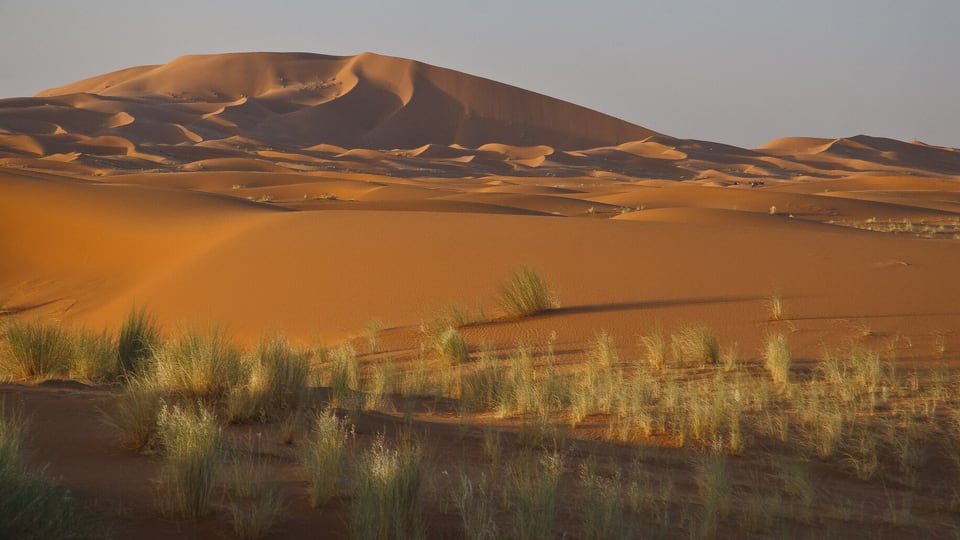
Erg Chebbi, the Sahara dune field near Merzouga most Marrakech 'Sahara Desert' tours actually visit, is roughly 550km and 9-10 hours away by road, which is why every genuine Erg Chebbi trip runs two or three days with an overnight stop, never a single day.
Best for: Travellers with a week or more who want the actual Sahara, not Agafay's closer rocky desert · Area: Merzouga and Erg Chebbi, near Morocco's border with Algeria
Plan for The long drive itself, crossing the High Atlas at the Tizi n'Tichka pass and continuing through Ouarzazate, is a substantial part of the trip's time and should be budgeted for honestly, not treated as a formality before the dunes.
A Traditional Hammam
A neighbourhood public hammam is a real social institution locals use several times a week for a small, fixed local fee, while a tourist-oriented spa hammam in a riad or hotel is a considerably more expensive, guided experience with everything provided.
Best for: Travellers curious about a genuine Moroccan daily ritual, whether choosing the authentic local version or the easier tourist one · Area: Every medina neighbourhood has its own public hammam; spa hammams cluster in riads and hotels across the medina and Gueliz
Plan for A public hammam is authentic and cheap but requires bringing your own kit and following local etiquette without much English-language guidance; a spa hammam removes that friction at a materially higher cost.
Plan two, four or seven days in Marrakech
Two to three days: the medina, the square and Majorelle Garden
Pick this length when the city itself, not a mountain or desert excursion, is the goal: it keeps every stop within a short taxi ride and avoids the extra logistics a day trip would force into the schedule.
Marrakech's core sights sit close together inside or just outside the medina, so a rental-free traveller covers the essentials without a long drive on this length of trip.
The trade-off A two-to-three-day trip has to skip both the Atlas Mountains and the Sahara entirely, so this length suits a city-focused visit rather than a mountain or desert trip.
Four to five days: add an Atlas Mountains day trip and a hammam
Pick this length once a single mountain excursion matters enough to justify a full extra day away from the medina, rather than trying to squeeze it between city sights.
Four to five days is enough to add one genuine day trip outside the city without stacking two full excursion days back to back.
The trade-off Squeezing an Atlas day trip and a hammam into fewer than four days usually means dropping one of the medina's secondary monuments entirely.
A week or more: a genuine multi-day Sahara trip
Pick this length only once a real desert crossing, not a rocky-desert half day, is the priority, since Merzouga's genuine distance forces a multi-day commitment no shorter itinerary can absorb.
Merzouga's genuine distance from Marrakech means a Sahara trip only fits comfortably into a week-or-longer itinerary, not a shorter one.
The trade-off Adding a genuine Sahara trip works well across a week or more; compressing it into a shorter trip usually means either skipping it or turning it into an exhausting non-stop drive.
Sources
checked 2026-09-24. Recommendations are editorial judgements based on the cited sources below.
Choose a Marrakech base and explore nearby
The Medina: a base for the easiest access to everything historic
Consider this base when minimising travel time to Jemaa el-Fnaa, the souks and the monuments matters more than modern comfort or easy navigation.
The medina's density puts nearly every historic sight within a short walk, at the cost of its unnumbered, maze-like lanes.
The trade-off Choosing the medina for that convenience means accepting the hardest navigation of any Marrakech base, a trade worth making only if immersion matters more than ease.
Gueliz or Hivernage: a base for modern comfort and easy navigation
Consider Gueliz when wanting Majorelle Garden nearby and fixed-price modern shopping, or Hivernage when hotel comfort and nightlife matter more than historic atmosphere.
Both sit outside the medina's maze with wide, numbered streets and a short taxi ride to the historic centre.
The trade-off This choice suits travellers willing to taxi into the medina for sightseeing in exchange for easier day-to-day navigation and modern amenities.
The Kasbah or the Palmeraie: a base for a quieter pace
Consider the Kasbah when wanting medina character with fewer crowds, or the Palmeraie when resort-style calm and an easy hot-air-balloon departure matter more than medina walkability.
Both trade central Jemaa el-Fnaa's density for a genuinely calmer daily rhythm, in two very different ways.
The trade-off Waking up in the quieter Kasbah or the resort-style Palmeraie means a longer walk or taxi ride back to the central souks and square.
Sources
checked 2026-09-24. Recommendations are editorial judgements based on the cited sources below.
Airport, taxis and getting around
Marrakech Menara Airport (RAK), operated by Airports of Morocco, sits roughly 6km south-west of the medina; a bus or metered petit taxi both reach the city.
Petit taxis handle in-city trips and must legally run a meter, though drivers skipping it for tourists is a common complaint. Grand taxis or a private transfer reach the Atlas Mountains or Agafay.
The medina's core is car-free; lanes are too narrow for a vehicle, so visitors navigate on foot using landmarks such as the Koutoubia minaret and Jemaa el-Fnaa.
The UK FCDO's own Morocco advice states plainly that people posing as official guides commonly harass tourists, and advises confirming an official badge before hiring anyone in a medina.
Best time to visit
Spring (March–May)
Warm days, cool nights and Marrakech's most reliably comfortable walking weather, one of the two shoulder windows most guides recommend for a first visit.
- Crowds
- Varies by event and attraction
Summer (June–August)
Marrakech's hottest stretch, with daytime highs regularly in the high 30s to low 40s Celsius and negligible rainfall, making midday medina walking or Atlas hiking genuinely uncomfortable outside early morning or evening.
- Crowds
- Varies by event and attraction
Autumn (September–November)
Marrakech's second shoulder window: daytime heat eases from summer's peak while evenings stay warm enough for the roof terraces most riads are built around.
- Crowds
- Varies by event and attraction
Winter (December–February)
Mild, sunny medina days but genuinely cold nights; the High Atlas peaks visible from the city carry snow, a real contrast most first-time winter visitors do not expect from a desert-adjacent city.
- Crowds
- Varies by event and attraction
Food, markets and local life
Slow-cooked tagines, couscous (traditionally a Friday dish) and sweet mint tea poured from height are Marrakech's everyday staples, served in the same form at a family table as at most medina restaurants.
Jemaa el-Fnaa's numbered night food stalls sell grilled meat, snails and fresh juice cheaply and safely by local standards, but agreeing the price out loud before ordering avoids the inflated-bill pattern travel-safety guides document there.
City profile
- Population (Marrakech urban prefecture/commune proper, Haut-Commissariat au Plan 2024 general census (RGPH), legal population, published November 2024, 2024): 1,014,813
Marrakech was founded around 1070 by the Almoravid dynasty under Abu Bakr ibn Umar and his cousin Yusuf ibn Tashfin, who made the new city his empire's capital.
The medina's ramparts and many older buildings are built from a reddish-pink pise (rammed earth) rather than painted stone, the real origin of Marrakech's 'red city' nickname.
Famous for:
- Jemaa el-Fnaa, the medina's central square and marketplace, was proclaimed a Masterpiece of the Oral and Intangible Heritage of Humanity by UNESCO in 2001 and formally inscribed on UNESCO's Representative List of the Intangible Cultural Heritage of Humanity in 2008.
- Majorelle Garden, built by French painter Jacques Majorelle from 1931, was restored from the 1980s by fashion designer Yves Saint Laurent and his partner Pierre Berge and is now run by the nonprofit Fondation Jardin Majorelle.
- Marrakech's medina souks are a genuine maze of narrow, largely unnamed and unnumbered lanes organised loosely by craft guild, where haggling over a stated price is the normal way to buy rather than an optional local flourish.
- Marrakech is the standard overland gateway to the High Atlas Mountains and, much further south, the Sahara dunes at Merzouga, both reached by road rather than from inside the city.
What makes a Marrakech visit worthwhile
Jemaa el-Fnaa is a working public square by day, with orange-juice stalls, henna artists and snake charmers, and becomes considerably more crowded, commercial and insistent after dark, when dozens of numbered food stalls compete loudly for the same passing visitors. Both versions are worth seeing; neither alone is the whole picture.
The medina's souks genuinely have no reliable street numbering and many dead-end lanes, so getting turned around is a normal, expected part of a first visit rather than a sign of doing it wrong. Haggling over a stated price is likewise the normal way to buy here, not an optional local flourish.
Marrakech's June-to-August heat is a real planning constraint, not a minor inconvenience: daytime highs regularly exceed 38°C, which reshapes when the medina, hammams and any Atlas Mountains walking are actually comfortable to do.
- Plan by trip type
- Jemaa el-Fnaa & souks · Majorelle Garden · Atlas Mountains · Sahara multi-day
- Good first stay
- 2–3 days for the medina, 4–5 with an Atlas day trip, a week+ for a real Sahara trip
- Climate constraint
- Best Mar–May & Sep–Nov · June–Aug regularly tops 38–40°C
- Main gateway
- RAK airport, about 6km / 15–20 minutes from the medina
Planning your Marrakech visit: FAQs
Is Jemaa el-Fnaa worth visiting both by day and by night?
Worth visiting at both ends of the day for most first-time travellers: the calmer daytime square and the louder, more commercial night market are genuinely different experiences, and neither alone shows the full UNESCO-recognised cultural space.
Are the unsolicited 'guides' who approach me in the medina legitimate?
Treat an unsolicited offer of help in the medina with polite scepticism: the UK FCDO's own advice names posing-as-guide harassment as common practice and recommends confirming an official badge, or booking a guide in advance through a hotel or a reviewed tour operator instead.
Is the Sahara Desert actually a day trip from Marrakech?
No: the Sahara dunes most 'Sahara Desert' tours actually visit, at Merzouga's Erg Chebbi, sit roughly 550km and 9-10 hours from Marrakech by road, so a genuine visit needs two or three days with an overnight stop, not a single long day.
What's the difference between a tourist spa hammam and a traditional local hammam?
A neighbourhood public hammam is a cheap, basic, bring-your-own-kit local ritual most Marrakchis still use weekly; a tourist spa hammam in a riad or hotel costs considerably more, supplies everything, and adds guided scrubbing and a private, mixed-schedule setting.
How hot does Marrakech get, and when should I avoid visiting?
June through August is the honest answer for travellers who dislike extreme heat: daytime highs regularly exceed 38°C with negligible rain, while March-May and September-November keep similar sunshine at a genuinely more comfortable temperature.
Do I need to haggle in the souks, and how does it work?
Yes, haggling is genuinely expected in the souks, unlike most Western retail: sellers typically start well above their real minimum, offering roughly half the first price and settling in the middle is the normal local rhythm, and starting a negotiation implies real intent to buy.
Make your Marrakech plans
Compare tours, tickets and activities in Marrakech →
Choose your departure market and search flights to Marrakech from the Mubboo Flights homepage.
Compare flights ↗Sources
Latest source check: .
Show all 29 sources
- UNESCO Intangible Cultural Heritage — Cultural Space of Jemaa el-Fna Square (checked 2026-09-24)
- Musee Yves Saint Laurent Marrakech — Le Jardin Majorelle (checked 2026-09-24)
- Musee Yves Saint Laurent Paris — Acquisition of the Villa Oasis and the Jardin Majorelle (checked 2026-09-24)
- Airports of Morocco (ONDA) — Marrakech-Menara Airport (checked 2026-09-24)
- World Travel Guide — Marrakech Menara Airport (checked 2026-09-24)
- Moroccan National Tourist Office (ONMT) — Marrakech (checked 2026-09-24)
- Haut-Commissariat au Plan du Royaume du Maroc — Population legale, RGPH 2024 (checked 2026-09-24)
- UK Foreign, Commonwealth & Development Office — Morocco travel advice, safety and security (checked 2026-09-24)
- Morocco Ministry of Culture — Bahia Palace ticketing (checked 2026-09-24)
- Ben Youssef Madrasa (checked 2026-09-24)
- ArchNet — Jami' al-Kutubiyya, Marrakech (checked 2026-09-24)
- Wikipedia — Bahia Palace (checked 2026-09-24)
- Wikipedia — Kutubiyya Mosque (checked 2026-09-24)
- Wikipedia — Ben Youssef Madrasa (checked 2026-09-24)
- Wikipedia — Marrakesh (checked 2026-09-24)
- Wikipedia — History of Marrakesh (checked 2026-09-24)
- Wikipedia — Tizi n'Tichka (checked 2026-09-24)
- Toubkal Trekking — How far are the Atlas Mountains (Imlil) from Marrakech (checked 2026-09-24)
- Toubkal Trekking — How far is Ourika Valley from Marrakech (checked 2026-09-24)
- Sahara Feeling — 3 days from Marrakech: gorges and the dunes of Erg Chebbi, Merzouga (checked 2026-09-24)
- Climates to Travel — Marrakesh climate (checked 2026-09-24)
- Climate-Data.org — Marrakesh climate by month (checked 2026-09-24)
- World Nomads — Common tourist scams to watch out for in Morocco (checked 2026-09-24)
- Morocco Tips — Best hammams in Marrakech (checked 2026-09-24)
- Unlimited Marrakech — Navigate the Marrakech medina (checked 2026-09-24)
- Travel Noire — How to negotiate at the souks in Morocco (checked 2026-09-24)
- Nomad Morocco Travel — Hot air balloon rides Marrakech sunrise (checked 2026-09-24)
- Sun Trails — Quad biking Marrakech Morocco (checked 2026-09-24)
- The booking platform — Marrakech destination mapping d5408 (checked 2026-09-24)
Photo credits
- jemaa el fnaa square — mwanasimba from La Réunion · CC BY-SA 2.0.
- medina souks — DimiTalen · CC0.
- majorelle garden — FriedrichFrisch · CC BY-SA 4.0.
- koutoubia mosque — Yair Haklai · CC BY-SA 4.0.
- bahia palace — Val Traveler · CC BY-SA 4.0.
- ben youssef madrasa — Parsifall · CC BY-SA 3.0.
- atlas mountains day trip — Mounir Neddi · CC BY-SA 4.0.
- agafay desert quad balloon — Pierre.hamelin · CC BY-SA 4.0.
- sahara merzouga multiday — Mike Prince from Bangalore, India · CC BY 2.0.
- hammam experience — Maverickhawkesley · CC0.
- koutoubia night detail — Costard Julien · CC BY-SA 3.0.
Mubboo Editorial Team · Reviewed by Mubboo Editorial Team


