
Lisbon travel guide
Lisbon
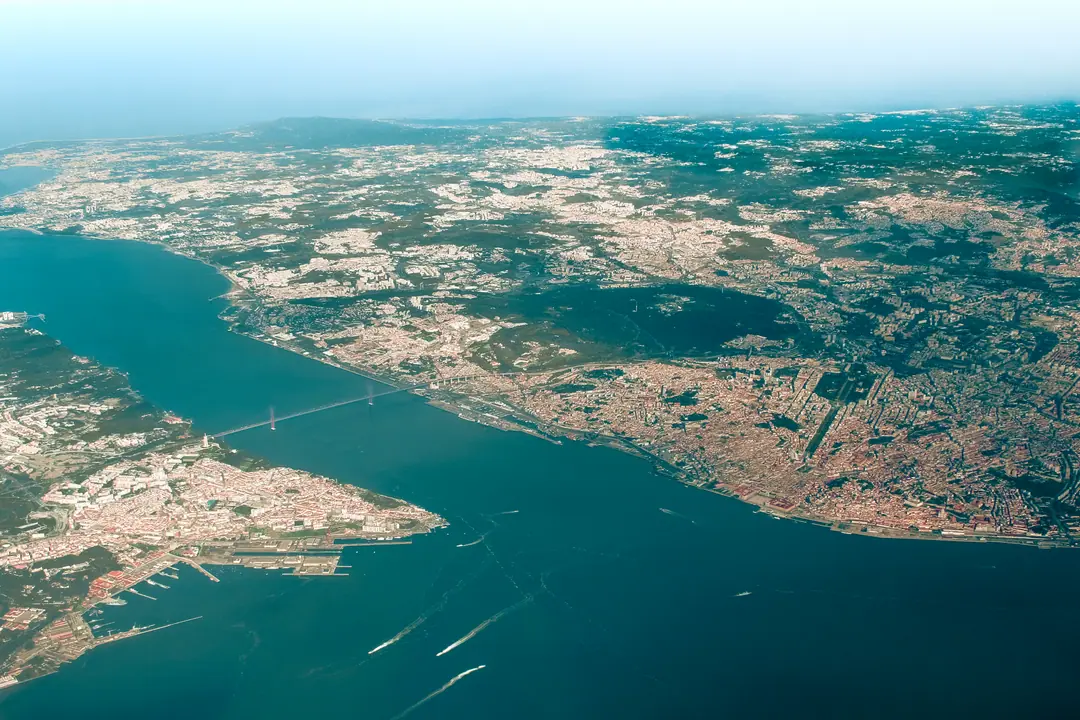
Plan Lisbon around three separate areas: Belém's monastery and tower first, then Alfama's castle hill and Moorish streets, then the Pombaline grid of Baixa and Chiado a short walk or tram ride away. A Sintra day trip adds a fourth, completely different kind of day.
Find your Lisbon experience
Explore Lisbon Before You Book
Take a virtual drive or walk, then find tours and tickets for the places you like.
Activities
Featured activities in Lisbon


Prices at a glance
What we sell today and what recent flight searches found. No hotel prices; nothing here is a trip total.
- Tours and tickets in Lisbonfrom US$15.99
Live from Viator when this page loaded · per adult · changes by date.
Flights to Lisbon
- From Londonone-way from £23.00
- From New Yorkone-way from US$294
Lowest fare seen in recent flight searches for that route; the airline or booking site confirms the final fare.
Plan Lisbon by time and budget
Top experiences
Top experiences in Lisbon
Belém Tower & Jerónimos Monastery
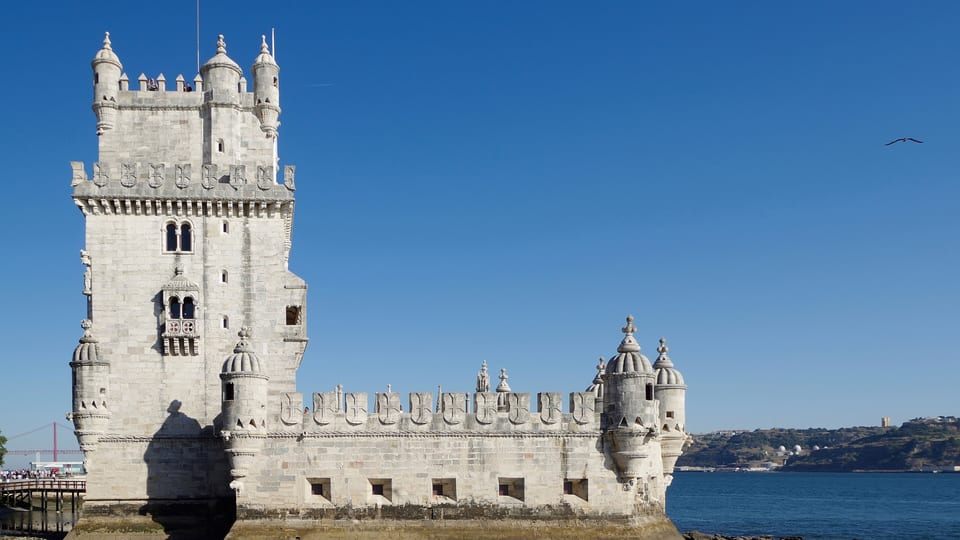
Construction of the Monastery of the Hieronymites began in 1502 and the nearby Tower of Belém was built around 1514 to commemorate Vasco da Gama's expedition; UNESCO inscribed both together as one World Heritage property in 1983.
Best for: History-focused travellers tracing the Age of Discoveries · Area: Belém
Plan for Belém sits several kilometres from the historic centre, so it needs its own dedicated half day rather than a stop on an Alfama or Baixa walk. Both monuments close on Mondays, and the tower reopened on 27 May 2026 after conservation work with a new fixed-time entry slot, replacing the open walk-up access it used before.
São Jorge Castle & Alfama
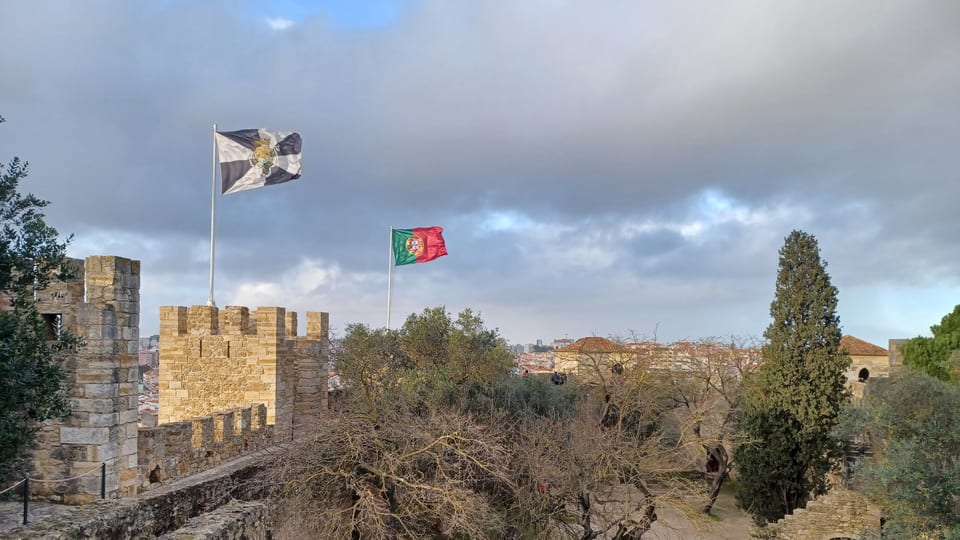
Human occupation of the castle hill dates to at least the 8th century BC, and the hilltop fortress overlooks Alfama, whose Moorish-era street layout survived the 1755 earthquake largely intact.
Best for: Travellers who want the clearest view over the city and the river · Area: Alfama
Plan for The climb from the riverside to the castle is steep and the narrow lanes are genuinely hard to navigate with luggage or limited mobility.
Praça do Comércio & Baixa
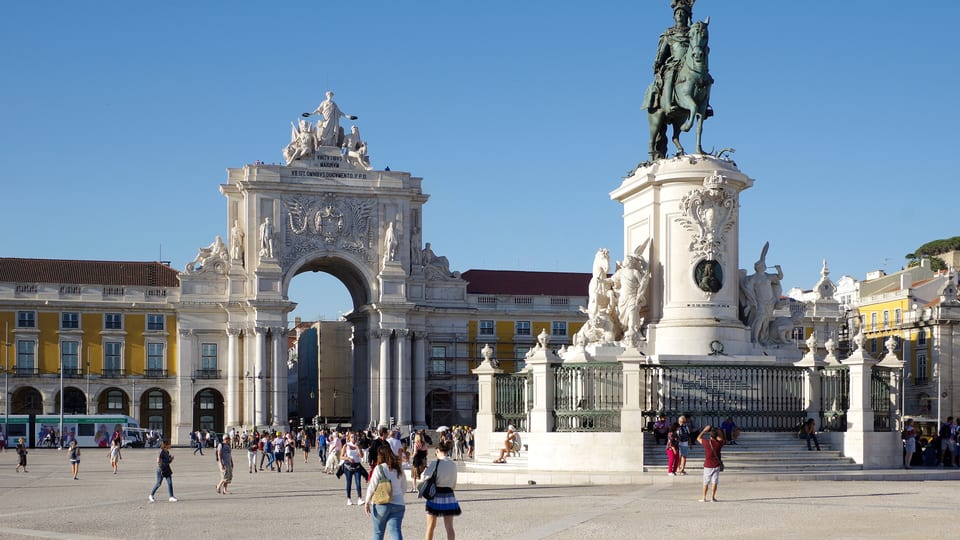
The Marquis of Pombal rebuilt Baixa on a strict grid after the 1 November 1755 earthquake killed an estimated 30,000 to 40,000 residents. Praça do Comércio, the riverside square where the royal palace once stood, anchors that rebuilt district.
Best for: Travellers wanting one landmark square to anchor a walk of the downtown grid · Area: Baixa
Plan for The square and the pedestrianised shopping streets behind it are the most touristed part of downtown, and summer afternoon heat has little shade across the open square.
Fado in Alfama, Mouraria or Bairro Alto
Fado is believed to have originated in Lisbon's Alfama, Mouraria and Bairro Alto districts in the early 19th century, and UNESCO inscribed it on the Intangible Cultural Heritage list in 2011.
Best for: Travellers wanting Lisbon's everyday culture rather than a monument · Area: Alfama, Mouraria and Bairro Alto
Plan for The most tourist-oriented fado houses bundle a set dinner menu with the performance; a small listening-only bar gives a more local experience but takes more research to find.
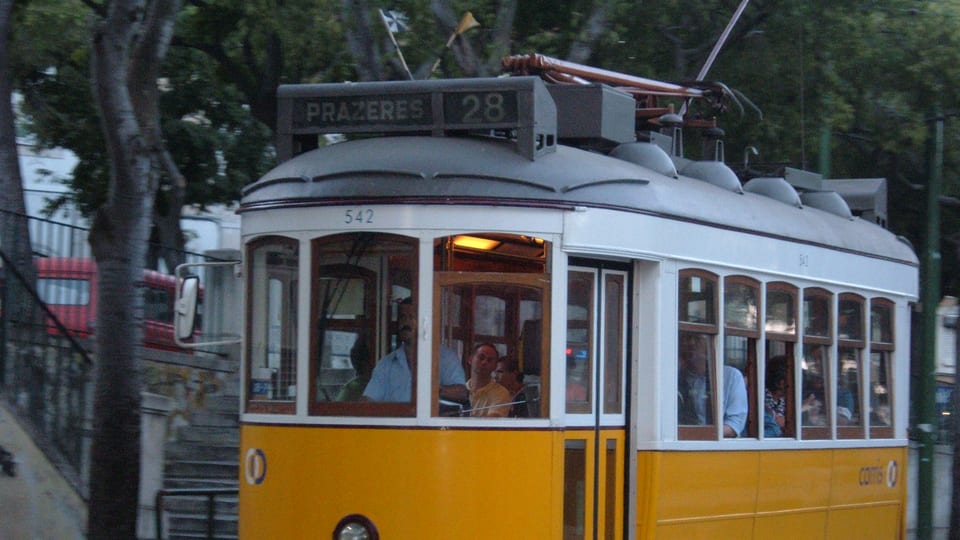
Tram 28 through Alfama and Graça
Carris's historic yellow Remodelado trams climb the same steep, narrow routes through Alfama and Graça that have long been part of the city's public transport network, linking several viewpoints without a long uphill walk.
Best for: Travellers who want the hill views without the full climb · Area: Alfama and Graça
Plan for The route is a genuine transit line, not a tour bus, so it gets standing-room crowded by mid-morning, and pickpocketing is a documented risk on the busiest carriages.
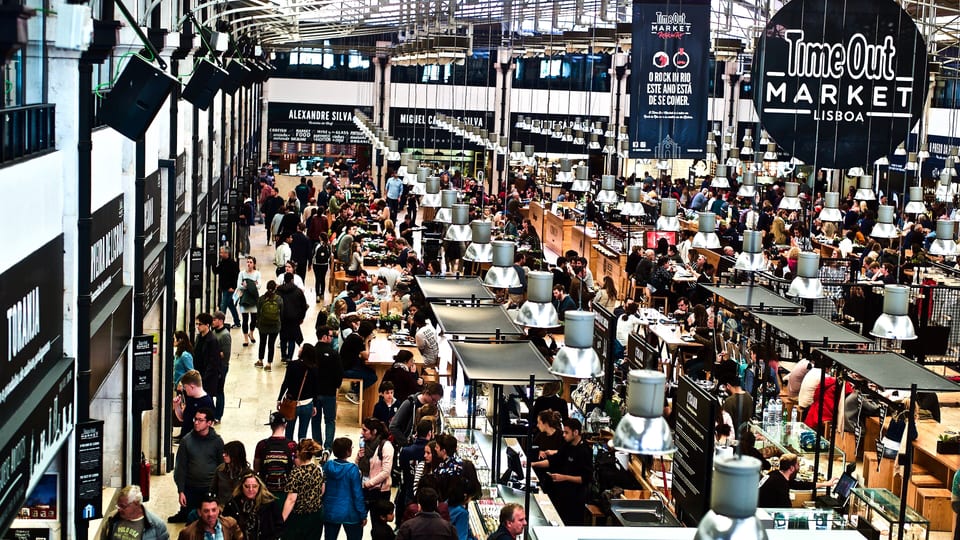
Time Out Market at Mercado da Ribeira
Time Out Market opened in May 2014 inside part of the historic Mercado da Ribeira, a market hall dating to 1892, inviting restaurants and chefs the magazine had already reviewed to run permanent stalls under one roof.
Best for: Food-focused travellers wanting several kitchens in one stop · Area: Cais do Sodré
Plan for The curated stalls make it a busy food hall, not a neighbourhood café. Lunch and dinner peaks mean a real wait for a table.
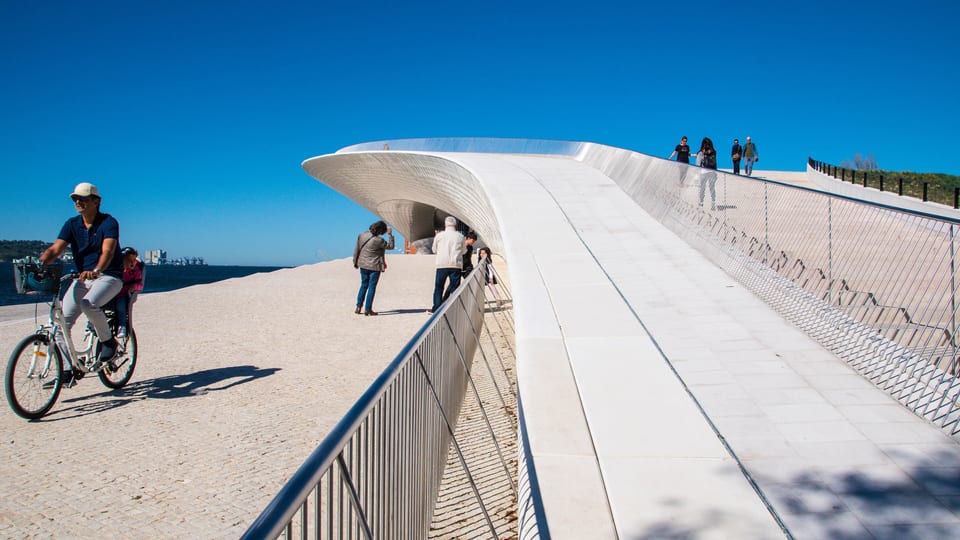
MAAT (Museum of Art, Architecture and Technology)
MAAT's tiled riverside building, designed by Amanda Levete's studio AL_A, opened to the public on 5 October 2016 next to the restored Central Tejo power station, one of Portugal's most prominent early-20th-century industrial buildings, and the two are run together as one museum site.
Best for: Travellers wanting contemporary Lisbon rather than another Age-of-Discoveries monument · Area: Belém
Plan for MAAT is closed on Tuesdays, a different closure day from the Monday closure the monastery and tower share, so a single Belém day plan needs to check both before it is built.
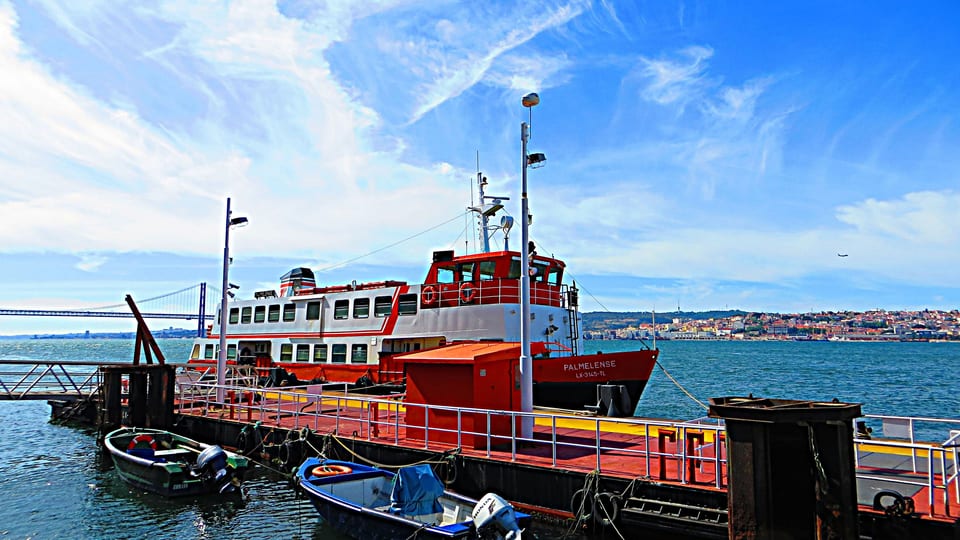
Ferry across the Tagus to Cacilhas
Transtejo & Soflusa's passenger ferries cross the Tagus from Cais do Sodré to Cacilhas in about ten minutes, with departures roughly every ten to twenty minutes through the day, the same commuter route Lisboetas use daily.
Best for: Travellers wanting a Lisbon skyline view from the water without booking a paid river cruise · Area: Cais do Sodré
Plan for Cacilhas itself is an ordinary Almada riverfront rather than a curated stop, so a traveller wanting commentary or a longer river route should compare it against a paid sightseeing cruise instead.
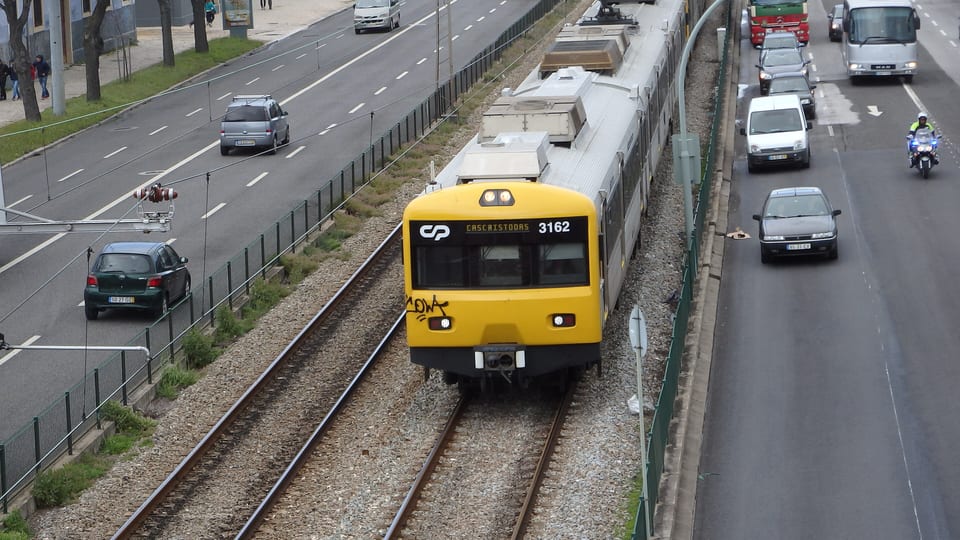
Cascais by train along the coast
CP's Cascais Line runs from Cais do Sodré along the coast through Belém, Oeiras and Estoril to Cascais in roughly 35 to 40 minutes, with trains roughly every 20 minutes through the day.
Best for: Travellers wanting a beach and coastal promenade rather than a second historic quarter or hillside palace town · Area: Cascais (coastal day trip)
Plan for Cascais and Sintra both work as a single day trip from Lisbon, but not on the same day once the return trains are counted, so the choice is palaces versus coastline, not both.
Plan one, three or five days in Lisbon
One day: choose Belém or Alfama, not both
Give Belém the whole day for Jerónimos Monastery and the Tower of Belém, or give Alfama the whole day for São Jorge Castle and the old streets below it. Both districts sit on opposite sides of downtown with Baixa between them, so a single day cannot cover either properly plus a transfer to the other.
Both Belém monuments now sell against a fixed schedule rather than casual walk-up entry, so the monastery-and-tower pairing needs its ticket order planned before arrival. Alfama's climb from the riverside to the castle fills a comparable half day on the opposite side of the city.
The trade-off Baixa and Chiado wait for a second day; adding Praça do Comércio to a Belém or Alfama day usually means walking through the square rather than stopping in it.
Three days: one full district each for Belém, Alfama and Baixa
Use day one for Jerónimos Monastery, the Tower of Belém and MAAT next door. Use day two for São Jorge Castle, Alfama's lanes and a fado evening in Alfama or Bairro Alto. Use day three for Praça do Comércio, the Baixa grid and Chiado's shopping streets.
MAAT closes on Tuesdays, a different day from the Monday closure shared by Jerónimos Monastery and the Tower of Belém, so a Belém day built around a Tuesday still reaches all three if the schedule is checked first. Fado houses in Alfama and Bairro Alto get busiest on weekend evenings.
The trade-off Sintra and the coast wait for a longer stay; squeezing either into these three days costs the Belém morning or the Alfama climb, and Baixa gains nothing from the trade.
Five days: add a Sintra day and a coastal or river day
Use day four for a full Sintra day trip by the direct Rossio-station train, about 40 minutes each way. Use day five for the CP Cascais Line from the separate Cais do Sodré station, roughly 35 to 40 minutes to a seafront town, or for a shorter Tagus ferry crossing to Cacilhas if a lighter day suits the trip better.
Sintra trains leave from Rossio; Cascais Line trains leave from Cais do Sodré, a different station on the other side of downtown, so the two day trips do not share a departure point and cannot be chained into one journey.
The trade-off A further day trip beyond Sintra and Cascais, such as Óbidos or Évora, is realistic on a longer visit but turns a fifth day built around two already-full excursions into a rushed third transfer; save it for a return trip instead.
Costed plans: One Day in Lisbon: €45 or Less? → · Lisbon in 3 Days for €110? →
Sources
checked 2026-09-12. Recommendations are editorial judgements based on the cited sources below.
- Museus e Monumentos de Portugal — Jerónimos Monastery, visitor information
- Museus e Monumentos de Portugal — Belém Tower reopens to the public
- Visit Lisboa — MAAT: Museum of Art, Architecture and Technology
- Museus e Monumentos de Portugal — Belém Tower, visitor information
- CP Rossio–Sintra rail-travel guide (Sintra-Portugal.com), corroborating CP's own client-side-rendered timetable pages
- Cascais Line rail-travel guide (Cascais-Portugal.com), corroborating CP's own client-side-rendered timetable pages
Choose a Lisbon base and explore nearby
Baixa: the base that minimises transfers
Choose Baixa when the plan mixes Belém, Alfama and a Sintra or Cascais day trip, since it sits between the Sintra departure at Rossio and the Cascais departure at Cais do Sodré, with the metro's main interchange stations close by.
The cost is crowding rather than location: Baixa carries the highest concentration of visitors of the areas in this guide, along its grid of shopping streets between Rossio and Praça do Comércio.
The trade-off A traveller who wants a quiet evening rather than transit convenience should compare Baixa against Alfama or Bairro Alto and Chiado instead.
Alfama: the base for atmosphere over convenience
Choose Alfama when fado evenings and the castle-hill streets matter more than flat, fast transfers, and plan to arrive with light luggage rather than a large case.
The steep lanes that keep Alfama's Moorish-era layout intact are the same lanes that make it the least wheeled-luggage-friendly base among the areas in this guide.
The trade-off A traveller prioritising the Sintra or Cascais train departures over evening atmosphere should choose Baixa or Bairro Alto and Chiado instead.
Belém: only when the monuments are the whole point
Sleep in Belém only when Jerónimos Monastery, the Tower of Belém and MAAT are the trip's main purpose; otherwise day-trip into Belém from a Baixa or Alfama base and sleep closer to the evening's activity.
Belém's own evening scene is quieter and more spread out than Baixa, Alfama or Bairro Alto, since the district was built around the riverside monuments rather than a dense night-time core.
The trade-off A Belém base puts the monuments on the doorstep but leaves fado, Baixa's shops and the transit interchange several kilometres away.
Sources
checked 2026-09-12. Recommendations are editorial judgements based on the cited sources below.
Airport and getting around
Humberto Delgado Airport sits about seven kilometres northeast of the historic centre; the Metro Red Line’s Aeroporto station, opened in 2012, reaches downtown interchange stations in roughly 15–20 minutes.
The Lisbon Metro has run since December 1959 and now operates four lines (Blue, Yellow, Green and Red) across 44.5 kilometres and 56 stations; Carris trams and buses cover the routes the metro doesn't reach, including the historic Alfama tram lines.
Best time to visit
Spring (March–May)
Transitional weather with rising temperatures and fewer crowds than summer at Belém and Sintra's palaces.
- Crowds
- Varies by event and attraction
Summer (June–August)
Lisbon's hottest, driest and most crowded season, averaging around 27.9°C by day in July and 28.3°C in August; Belém and Sintra's palace queues run longest during these peak-visitor months.
- Crowds
- High
Notable events
- St Anthony's Night on 12 and 13 June, with popular marches on Avenida da Liberdade and neighbourhood street parties
Autumn (September–November)
Early autumn keeps much of summer's warmth with lighter crowds, before rain becomes more frequent by November.
- Crowds
- Varies by event and attraction
Notable events
- Web Summit at MEO Arena, 9 to 12 November in 2026
Winter (December–February)
Lisbon's mildest season by reputation, averaging around 14.8°C by day and 8.3°C by night in January, with rain concentrated in this season rather than summer.
- Crowds
- Varies by event and attraction
Notable events
- New Year's Eve fireworks over the Tagus at Praça do Comércio
Food, markets and local life
Time Out Market opened in May 2014 inside part of the historic Mercado da Ribeira, a market hall dating to 1892 at Cais do Sodré, inviting already-reviewed restaurants and chefs to run permanent stalls under one roof instead of a conventional food court.
Fado is sung nightly in Alfama, Mouraria and Bairro Alto in two formats: listening-only neighbourhood bars where the room goes silent for each song, and dinner-and-show houses with a set menu. Choose by whether the meal or the music is the point of the evening.
City profile
- Population (City of Lisbon (municipality proper), 2025 estimate; the wider Lisbon Metropolitan Area held a separate, much larger 3,352,939 residents the same year and must not be merged with the city-proper figure, 2025): 548,703
Lisbon began as a Phoenician trading post around 1000 BC and became the Roman municipium of Felicitas Julia around 138 BCE; Muslim rule followed the 711 CE conquest and lasted roughly 400 years.
Afonso I of Portugal besieged and conquered Lisbon in 1147 with the help of crusader knights, and the city became Portugal's capital in 1255.
Famous for:
- The Monastery of the Hieronymites and the Tower of Belém, a joint UNESCO World Heritage Site inscribed in 1983 that commemorates the Age of Discoveries.
- Alfama, the oldest district, whose Moorish-era street layout survived the 1755 earthquake largely intact.
- Fado, the melancholic Portuguese song tradition inscribed on UNESCO's Intangible Cultural Heritage list in 2011, believed to have originated in Alfama, Mouraria and Bairro Alto.
What makes a Lisbon visit worthwhile
The 1755 earthquake drew Lisbon's map: Alfama's Moorish-origin lanes on the castle hill survived it, the Pombaline grid of Baixa replaced what it destroyed, and Belém's Manueline monastery and tower stand downriver from both, untouched. Each district is a separate day and a separate tram or train ride, not three stops on one loop.
The monuments are the daytime city; the evenings belong to the neighbourhoods: fado sung in an Alfama or Mouraria bar, or the stalls of Time Out Market inside the 1892 Mercado da Ribeira at Cais do Sodré.
Lisbon is not a flat city or a one-night stop: Alfama, Graça and Bairro Alto climb steeply between the river and the castle, and Belém sits far enough downriver that it needs its own half day rather than an add-on to the centre.
- Plan by area
- Belém & monuments · Alfama & castle · Baixa & Chiado · Sintra day trip
- Good first stay
- 3-4 days for Belém, Alfama and Baixa
- Climate constraint
- Mild winters, hot dry summers · Rain concentrates Oct–Mar
- Main airport
- LIS Humberto Delgado · Metro Red Line to centre
Watch Lisbon
Lisbon: Iconic Sights, Local Food & Lively Nights
Explore Lisbon through castle-hill views, Baixa and Chiado, the monuments and riverfront of Belem, local food and lively evenings. Compare ticket inclusions and food-tour experiences for your visit. English narration and subtitles.

Planning your Lisbon visit: FAQs
Can I see Belém, Alfama and Baixa in one day?
Not well: Belém is a tram or train ride downriver and needs its own half day, Alfama is a climb, and Baixa sits between them. Give Belém a morning and Alfama an afternoon on separate days, and walk Baixa on the way between things rather than as its own stop.
Which area should I stay in for a first visit?
Baixa or Chiado on a first visit: flat, central, on the metro and within walking distance of both the Cais do Sodré and Rossio stations the day trips leave from. Alfama suits a return visit, or travellers ready to haul a wheeled suitcase up its hills to have evenings in the old lanes on the doorstep.
When is Lisbon least crowded?
November to February, outside the Christmas and New Year weeks, are the quiet months at Belém and on the castle hill, with mild temperatures but more rain than the rest of the year; June brings the Santo António festivities and the fullest streets in Alfama.
Is Sintra worth a day trip from Lisbon?
Yes. A direct train from Rossio station reaches Sintra in about 40 minutes, and the UNESCO-listed Cultural Landscape of Sintra's palaces are not reachable as a quick add-on to any Lisbon neighbourhood, making a dedicated day trip the practical way to see them.
Which day of the week should I avoid for Belém sightseeing?
Monday. Jerónimos Monastery's cloister and the Tower of Belém are both closed on Mondays. The tower reopened on 27 May 2026 after conservation work under a new timed-entry system. MAAT closes on Tuesdays instead, so pairing it with the monastery works better earlier or later in the week than fitting all three into one day.
Is Cascais a better day trip than Sintra?
Not better, just different. Sintra's palaces sit inland and need the direct Rossio-station train, about 40 minutes; Cascais is a seafront town on the separate Cascais Line from Cais do Sodré, roughly 35 to 40 minutes, with beaches and a promenade instead of Romantic-era architecture. Pick one; a same-day double is unrealistic once return trains are counted.
Make your Lisbon plans
Compare tours, tickets and activities in Lisbon →
Choose your departure market and search flights to Lisbon from the Mubboo Flights homepage.
Compare flights ↗Sources
Latest source check: .
Show all 25 sources
- Wikipedia — Lisbon (population, founding history) (checked 2026-09-12)
- Wikipedia — Lisbon (Humberto Delgado) Airport (checked 2026-09-12)
- Wikipedia — Lisbon Metro (checked 2026-09-12)
- Wikipedia — Alfama (checked 2026-09-12)
- Wikipedia — Fado (checked 2026-09-12)
- Wikipedia — São Jorge Castle (checked 2026-09-12)
- Wikipedia — Climate of Lisbon (checked 2026-09-12)
- Wikipedia — Time Out Market Lisboa (checked 2026-09-12)
- UNESCO World Heritage Centre — Monastery of the Hieronymites and Tower of Belém (checked 2026-09-12)
- UNESCO World Heritage Centre — Cultural Landscape of Sintra (checked 2026-09-12)
- The booking platform — Lisbon destination mapping d538 (checked 2026-09-12)
- Visit Lisboa — Lisbon tourism site (checked 2026-09-12)
- CP's own Rossio–Sintra line pages render client-side and returned no readable text to an automated fetch; this independent Sintra-focused rail-travel guide corroborates the ~39–40 minute direct journey and 20-minute frequency (checked 2026-09-12)
- Wikipedia — Alfa Pendular (Lisbon–Porto–Faro rail corridor) (checked 2026-09-12)
- Museus e Monumentos de Portugal (DGPC) — Belém Tower, visitor information (checked 2026-09-12)
- Museus e Monumentos de Portugal (DGPC) — Belém Tower reopens to the public, 21 May 2026 (checked 2026-09-12)
- Museus e Monumentos de Portugal (DGPC) — Jerónimos Monastery, visitor information (checked 2026-09-12)
- Parques de Sintra — Tickets, Park and National Palace of Pena (checked 2026-09-12)
- Visit Lisboa — MAAT: Museum of Art, Architecture and Technology (checked 2026-09-12)
- Wikipedia — Museum of Art, Architecture and Technology (checked 2026-09-12)
- Transtejo & Soflusa — Cacilhas–Cais do Sodré ferry schedule (checked 2026-09-12)
- CP's own Cascais Line timetable pages render client-side and returned no readable text to an automated fetch, the same limitation already documented for the Rossio–Sintra line; this independent Cascais-focused rail-travel guide corroborates the journey time and frequency (checked 2026-09-12)
- Visit Lisboa, St Anthony's Night (checked 2026-09-17)
- Web Summit 2026, Lisbon (checked 2026-09-17)
- Visit Lisboa, New Year's Eve at Terreiro do Paço (checked 2026-09-17)
Photo credits
- belem tower jeronimos — Berthold Werner · CC BY-SA 4.0.
- sao jorge castle alfama — Simon Burchell · CC BY-SA 4.0.
- praca comercio baixa — Berthold Werner · CC BY-SA 4.0.
- tram 28 — Garsd · CC BY-SA 3.0.
- time out market — Pedro Ribeiro Simões · CC BY 2.0.
- maat — Maria Eklind · CC BY-SA 2.0.
- cacilhas ferry — Mister No · CC BY 3.0.
- cascais train — Mike Steele · CC BY 2.0.
Mubboo Editorial Team · Reviewed by Mubboo Editorial Team


