
Kyoto travel guide
Kyoto
Kyoto sits in a basin with hills on three sides, and most of its great temples stand toward the edges of the city. Give each day one corner: east for Kiyomizu-dera and Gion, south for Fushimi Inari, west for Arashiyama and Kinkaku-ji, the middle for Nijo Castle and Nishiki Market.

Find your Kyoto experience
Explore Kyoto Before You Book
Take a virtual drive or walk, then find tours and tickets for the places you like.
Activities
Featured activities in Kyoto



Prices at a glance
What we sell today and what recent flight searches found. No hotel prices; nothing here is a trip total.
- Tours and tickets in Kyotofrom US$54.00
Live from Viator when this page loaded · per adult · changes by date.
Plan Kyoto by time and budget
Top experiences
Top experiences in Kyoto
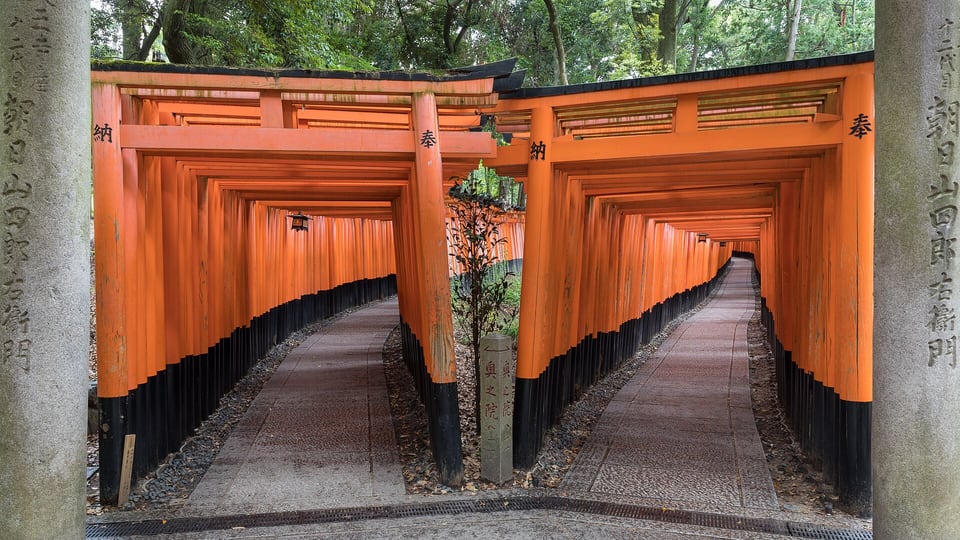
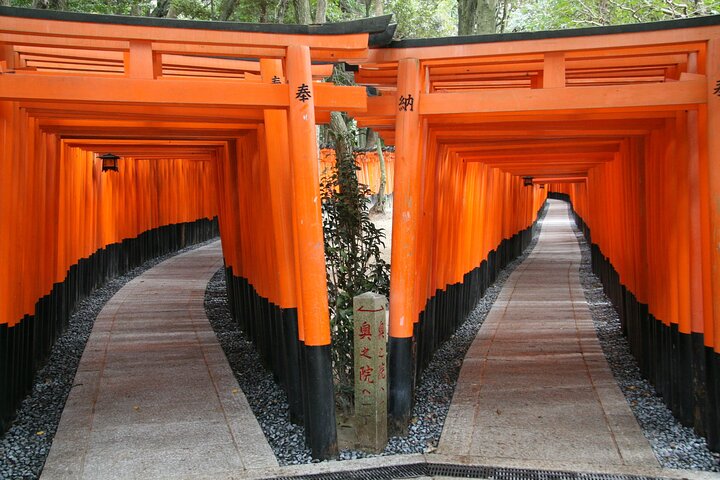
Fushimi Inari Taisha
The head shrine of about 30,000 Inari shrines climbs Inariyama, a 233 m mountain that forms most of the shrine precinct. Several thousand vermilion torii line the path to the summit, and about 10,000 gates of all sizes stand along the mountain paths.
Best for: Walkers who want a forest climb, not a single photo stop · Area: Fushimi, south of central Kyoto
Plan for The shrine asks visitors not to eat while walking outside its marked rest areas or to stop on narrow paths to photograph. A snack belongs at the start or the end of the climb.
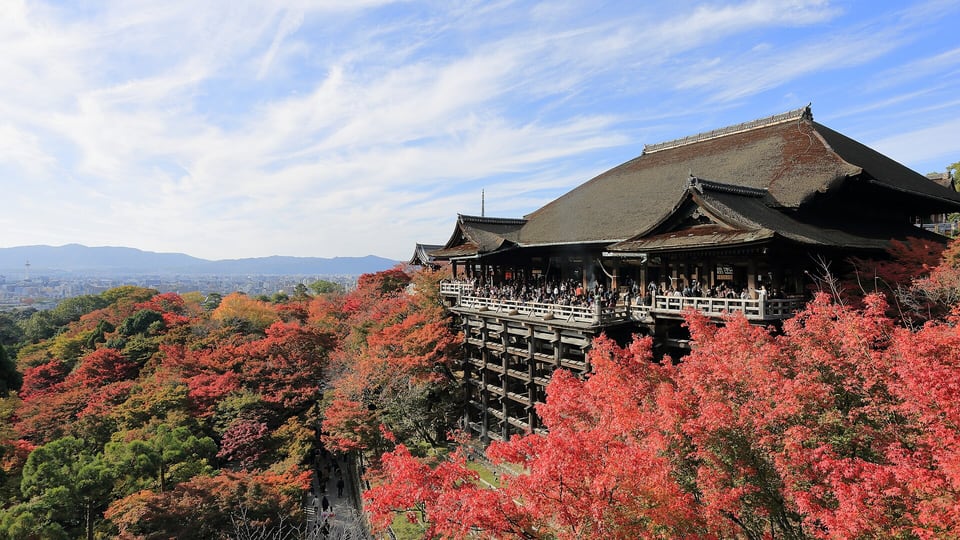
Kiyomizu-dera
The main hall, rebuilt in 1633, stands on a steep slope of Mt. Otowa with its stage carried on tall wooden pillars. The grounds hold about thirty temple buildings across 130,000 square metres and take their name from the pure waters of Otowa Waterfall.
Best for: Early risers and autumn visitors who want the wooden stage and the view over the city · Area: Higashiyama, eastern Kyoto
Plan for There is no parking, the street in front of the main gate is closed to traffic from 8:00 to 19:00, and some map apps send walkers to a route that does not enter the grounds. Arrive on foot, by bus or by taxi, and follow the signs to the Nio-mon gate.
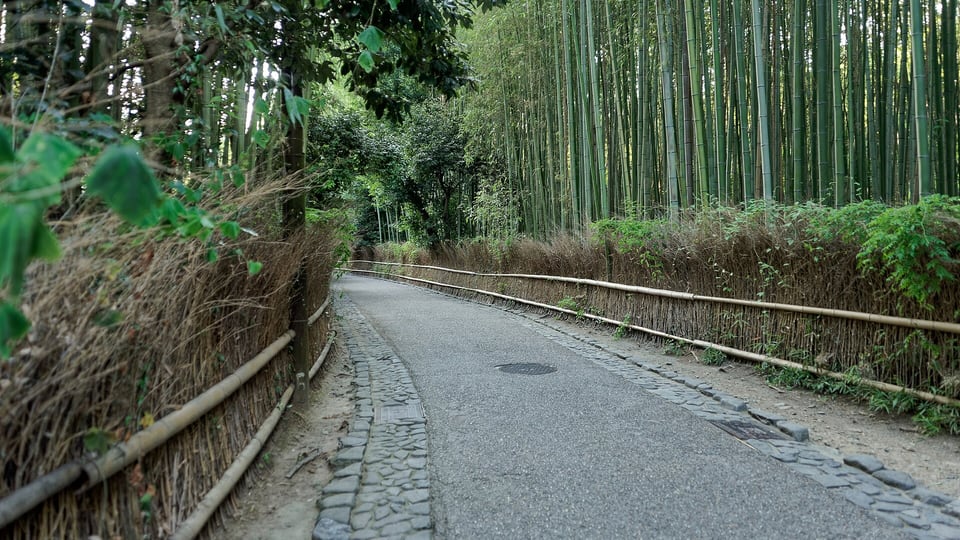
Arashiyama bamboo grove
The bamboo grove is a 10-minute walk from Saga-Arashiyama Station and leads toward Nonomiya Shrine. Tenryu-ji, built in 1339 on the site of Emperor Go-Daigo’s villa, holds a pond garden that borrows the Arashiyama hills as its backdrop, and Togetsukyo Bridge has crossed the river for more than four hundred years.
Best for: Garden lovers and walkers with a full west-side day · Area: Saga and Arashiyama, western Kyoto
Plan for The bridge and the paths fill with visitors in cherry-blossom and autumn-leaf weeks, and carving into the bamboo is treated as property damage. The subway-and-Randen route from Kyoto Station spreads visitors away from the rail platform most travellers use.
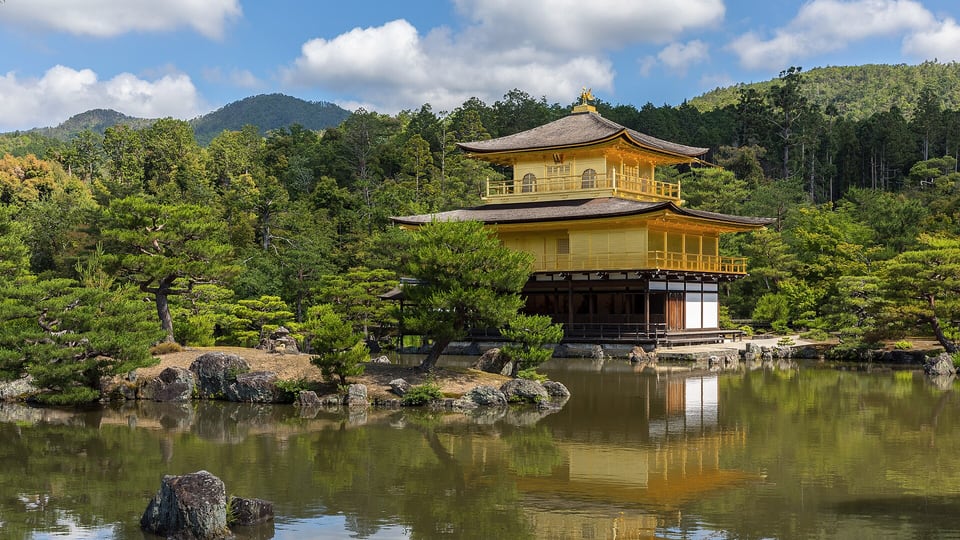
Kinkaku-ji
Ashikaga Yoshimitsu built the gold-leafed pavilion as a retirement residence, and it became a Zen temple soon after his death. A monk burned it down in 1950 and it was rebuilt in 1955, so the pavilion seen across the mirror pond is the 1955 building.
Best for: Visitors who want a widely recognised image of Kyoto in one stop · Area: Kinugasa and Kita, north-western Kyoto
Plan for The temple opens at 9:00 a.m. and closes at 5:00 p.m., so it cannot anchor an early start the way Kiyomizu-dera does. City buses stop at Kinkakuji-michi, and the JR Sagano Line to Enmachi Station plus a short bus avoids Kyoto Station.
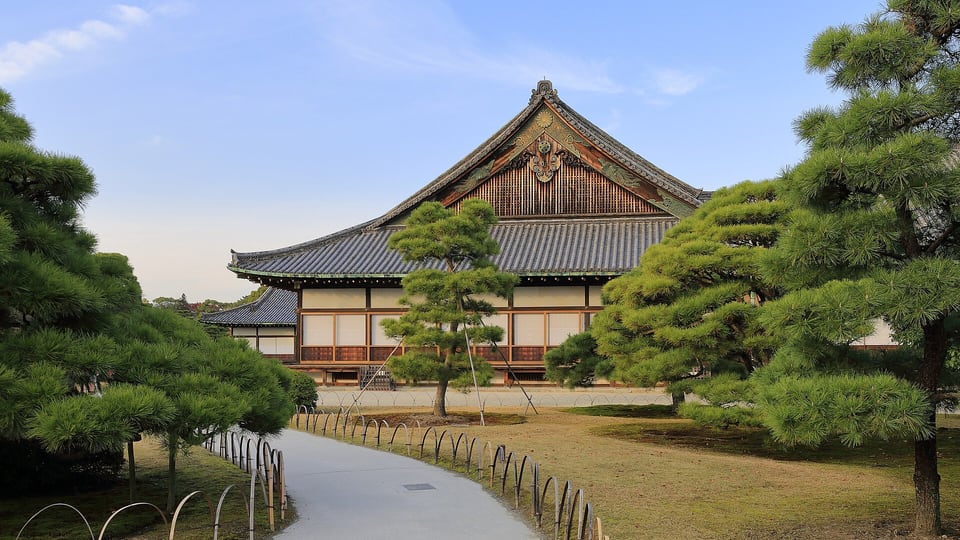
Nijo Castle
Completed in 1603 for Tokugawa Ieyasu, Nijo Castle holds the Ninomaru Palace, a National Treasure of six connected buildings with Kano School wall paintings, including the tiger rooms where visiting lords waited. In 1867 the last shogun announced the end of Tokugawa rule here.
Best for: History and design visitors who want interiors, not only façades · Area: Central Kyoto, near Nijojo-mae Station
Plan for The Ninomaru Palace is closed on Tuesdays in January, July, August and December. The separate Honmaru Palace needs a timed web ticket that goes on sale 30 days before the visit and cannot be changed or refunded, so decide which palace matters before fixing the day.
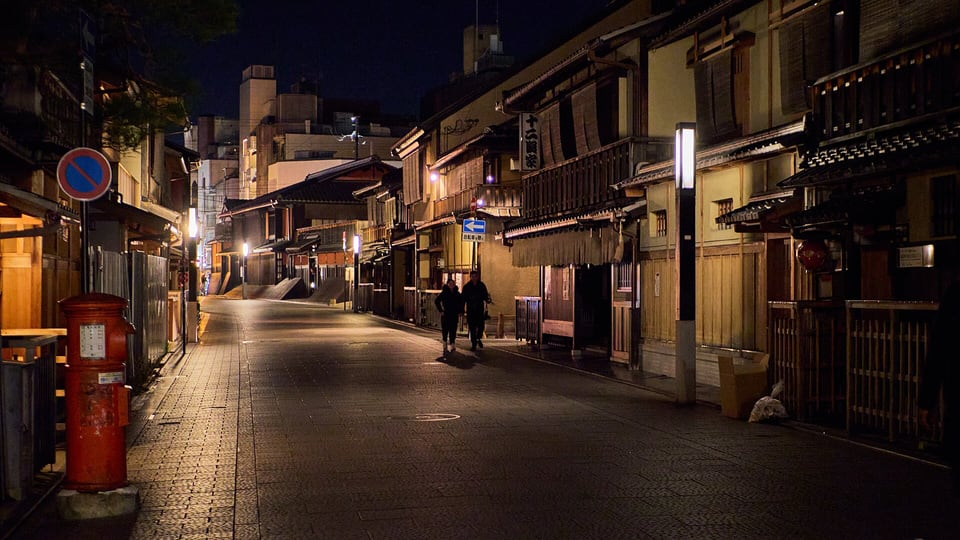
Gion
Southern Gion is a working district of wooden townhouses and tea houses where geiko and maiko live and work. Its tea house association, temple and residents describe it as a place where people live their daily lives, not a theme park.
Best for: Visitors who want to see a living old quarter and will follow its rules · Area: Gion and Higashiyama, eastern Kyoto
Plan for Stopping, following or photographing geiko and maiko without permission, entering private property and blocking the road are all listed as nuisance behaviour, and some carry legal penalties. A scheduled Kyomai dance performance is the invited way to see the art.
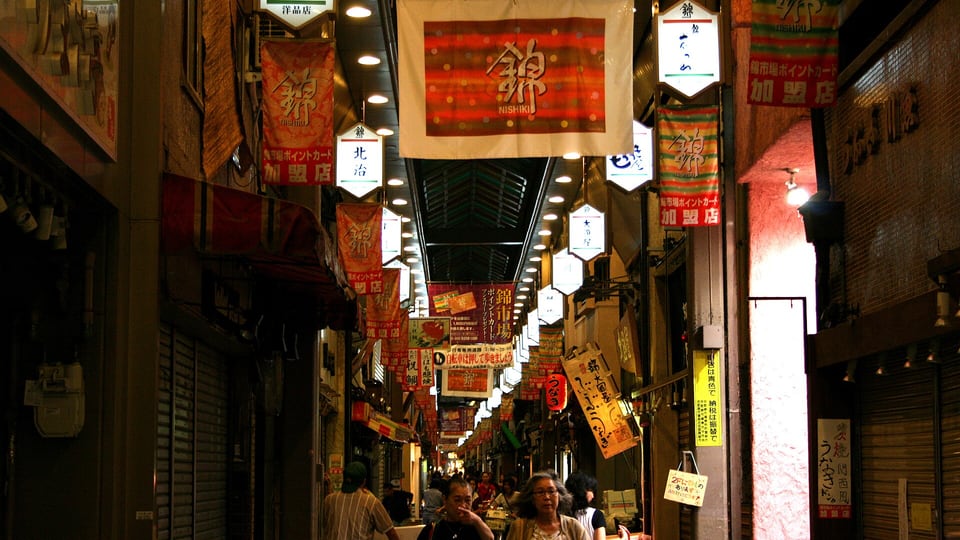
Nishiki Market
The covered arcade runs 390 metres, and its shops sell fish, dried foods, side dishes, yuba and Kyoto vegetables. It is known as the kitchen of Kyoto and traces its history back about four hundred years.
Best for: Food-minded visitors who want to taste Kyoto ingredients in small pieces · Area: Central Kyoto, Nakagyo
Plan for The association asks visitors not to walk while eating and to finish food in front of the shop where it was bought. Plan to stop at each stall instead of carrying a snack through the arcade.
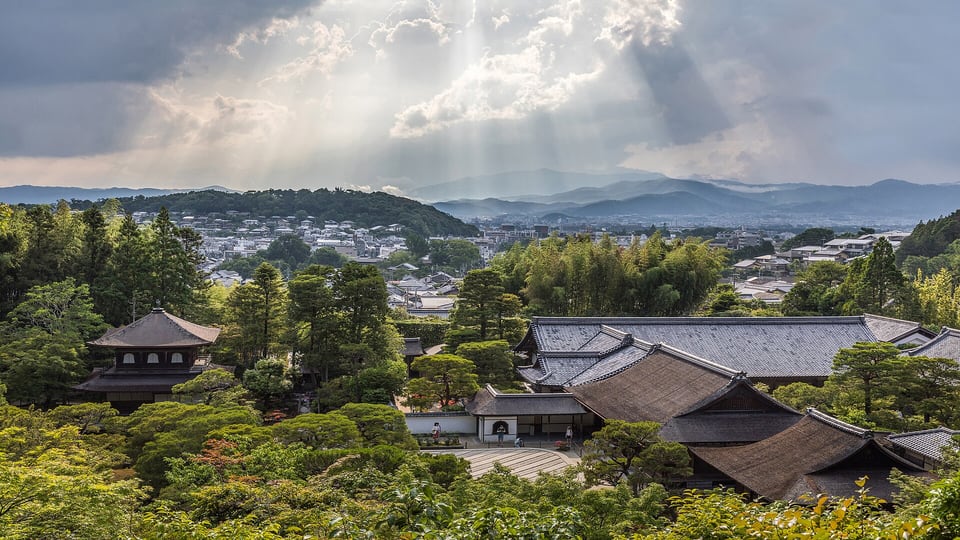
Ginkaku-ji and the Philosopher’s Path
Ginkaku-ji began as Ashikaga Yoshimasa’s Higashiyama retirement villa, and its sand garden and hillside trail keep the plain taste of that era; the pavilion was never covered in silver. The Philosopher’s Path, named for the thinker Nishida Kitaro, runs past the temple’s front gate.
Best for: Walkers who want a gentler east-side afternoon · Area: Ginkaku-ji and Okazaki, north-eastern Kyoto
Plan for The temple is reached by city bus, not by subway, so it belongs to its own half day more than to a Kiyomizu-dera day.
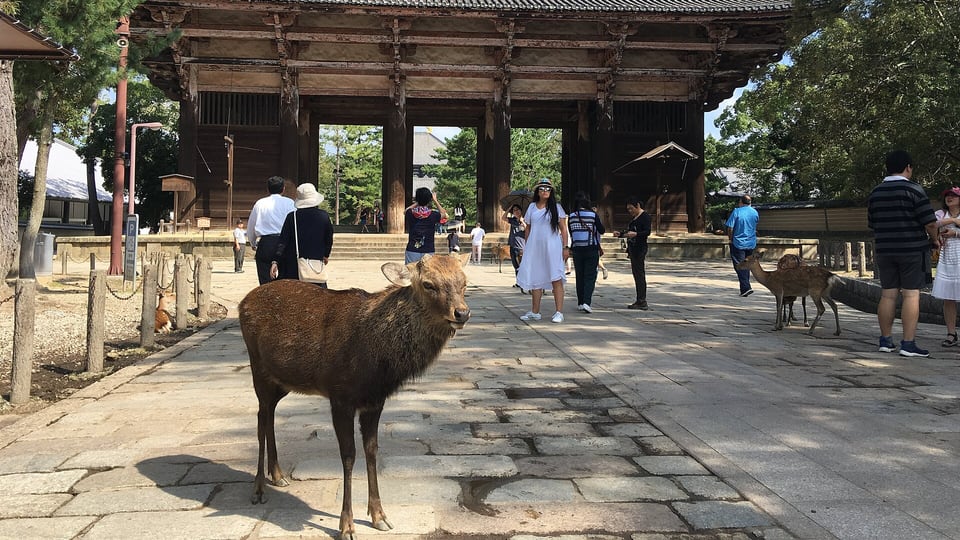
Nara: Todai-ji and the deer
Todai-ji’s Great Buddha, Vairocana, is an eighth-century National Treasure, and Nara Park around it is home to about 1,300 wild deer that are designated natural monuments. Trains run from Kyoto Station to Kintetsu Nara Station in about 50 minutes.
Best for: Visitors with a spare day who want a separate town, not another Kyoto temple · Area: Nara, a separate city south of Kyoto
Plan for The walk from Kintetsu Nara Station to Todai-ji takes about 20 minutes. The deer are wild animals: feed them only deer biscuits and keep clear of stags in autumn, when they can turn aggressive.
Plan one, three or five days in Kyoto
One day: choose a corner
Take the east side: Kiyomizu-dera when it opens at 6:00 a.m., the Higashiyama lanes and Gion on foot, then Fushimi Inari on a Keihan or JR train in the afternoon.
The two sights share a train corridor, so the day needs one transfer instead of a cross-city ride.
The trade-off Nijo Castle, Nishiki Market and Arashiyama wait for another day, since each belongs to a different corner of the city.
Three days: east, west and centre
Give day one to the east and south, day two to Arashiyama and Kinkaku-ji, and day three to Nijo Castle and Nishiki Market.
Reserve the Honmaru Palace time at Nijo Castle before fixing the order of the three days.
The trade-off A late Arashiyama morning pushes Kinkaku-ji toward its closing hour, so start the west-side day early.
Five days: Ginkaku-ji and one excursion
Add Ginkaku-ji with the Philosopher’s Path as an afternoon, then pick one excursion for a full day.
Uji pairs with Fushimi Inari because both lie on the JR Nara Line, while Nara is a 50-minute train ride into another prefecture and fills a day by itself.
The trade-off Each excursion day is a day away from Kyoto itself, so choose Nara or Uji for the sight, not for a longer list.
Costed plans: One Day in Kyoto: Can You Do It for ¥6,000? → · Kyoto in 3 Days for ¥18,000? →
Sources
checked 2026-09-19. Recommendations are editorial judgements based on the cited sources below.
Choose a Kyoto base by the corner you will repeat
Kyoto Station: rail first
Choose it when a Shinkansen, JR or Kintetsu departure starts or ends most days.
Kyoto Station has several bus stops close together, so check the stop for your temple before boarding.
The trade-off Nishiki Market and the downtown shopping streets are a subway ride to Shijo, so an evening out starts with a short trip north.
Downtown: market and subway
Choose it for market mornings and the subway to Nijo Castle.
Nishiki Market is three minutes from Shijo Station, and the Karasuma Oike interchange leads to the Tozai Line for Nijo Castle.
The trade-off Arashiyama and Kinkaku-ji are each a further bus or rail ride from here, so a downtown base suits central and east-side days best.
Gion and Higashiyama: early temple, evening lanes
Choose it when Kiyomizu-dera at opening time and evening walks are the point of the stay.
A base within walking distance removes the awkward last leg to the temple gate.
The trade-off The west-side day becomes the long ride, since Arashiyama and Kinkaku-ji lie on the far side of the city.
Sources
checked 2026-09-19. Recommendations are editorial judgements based on the cited sources below.
Getting to Kyoto and around it
Kyoto has no airport of its own. The direct Haruka express from Kansai International Airport reaches Kyoto Station in about 80 minutes, buses from Osaka Itami Airport take 50 to 55 minutes, and the fastest Shinkansen from Tokyo needs about 130.
Inside the city, ride trains and buses together. A one-day subway and bus pass is valid only on the day it is first used, not for 24 hours, and the city tourism association suggests leaving luggage at Kyoto Station or sending it ahead.
Best time to visit
Spring (March–May)
Temperatures rise from mid-March, with plum blossom first, then cherry, azalea, wisteria and iris. Kiyomizu-dera lists cherry blossom for late March to early April, and the best week moves every year.
- Crowds
- Varies by event and attraction
Notable events
- Kiyomizu-dera holds special evening openings in spring; the dates change each year.
Summer (June–August)
Early June to mid-July is the rainy season. July to September brings the highest temperatures, up to about 35 °C, in a hot, humid basin.
- Crowds
- Varies by event and attraction
Notable events
- The Gion Matsuri and the Gozan-no-Okuribi bonfires are summer events; the Daimonji bonfire above Ginkaku-ji is lit on 16 August.
Autumn (September–November)
Days stay warm into October and cool in November, when the maple leaves turn. Kiyomizu-dera lists mid-November to early December for autumn colour, with the peak changing each year.
- Crowds
- Varies by event and attraction
Notable events
- Kiyomizu-dera holds special evening openings in late November; the dates change each year.
Winter (December–February)
Average temperatures sit near 7 °C in December and 5 °C in January and February, with many clear, dry days; snow seldom settles on the ground.
- Crowds
- Varies by event and attraction
Kyoto cooking, from Nishiki Market to the tea town
Vegetables sit at the centre of Kyoto’s table because of Buddhist temple cooking, and Nishiki Market’s shops sell them beside yuba, pickles, dried foods and fish. The city’s cooking runs from formal kyo-kaiseki to temple vegetarian shojin-ryori and the everyday dishes called obanzai.
Kyoto sweets belong to the tea ceremony, and much of the tea itself comes from around Kyoto. Uji, 17 minutes from Kyoto Station on the JR Nara Line, is the town most associated with green tea.
City profile
- Population (Kyoto City municipal boundary, not Kyoto Prefecture; 1 October 2025 census, Kyoto City preliminary tabulation, 2025): 1,431,713
Emperor Kanmu moved the imperial court to Kyoto in 794, and the city stayed the capital until 1869.
Nijo Castle was completed in 1603 for Tokugawa Ieyasu, and in 1867 the last shogun announced the end of Tokugawa rule in its Ninomaru Palace.
Famous for:
- Fourteen UNESCO World Heritage properties within the city limits, from Kiyomizu-dera to Tenryu-ji.
- Fushimi Inari’s mountain of vermilion torii, Higashiyama’s hillside temples and Arashiyama’s bamboo path.
Why Kyoto works for slow, temple-led days
Kyoto was Japan’s capital from 794 until 1869, and fourteen World Heritage properties stand within the city limits. Its sights are spread wide, so a good day here follows one direction with one or two long visits, not a dash between icons.
Walkers, garden lovers and early risers get the most from the city. Crossing it corner to corner in one day means mostly bus rides, and Gion’s lanes belong to residents first.
- Best day shape
- One corner a day: east · south · west · centre
- First stay
- 3 full days, 5 with an excursion
- Rides from Kyoto Station
- Inari 10 · Arashiyama 25 · Kiyomizu-dera 35 min
- Gateway
- Kyoto Station · no airport in the city
Watch Kyoto
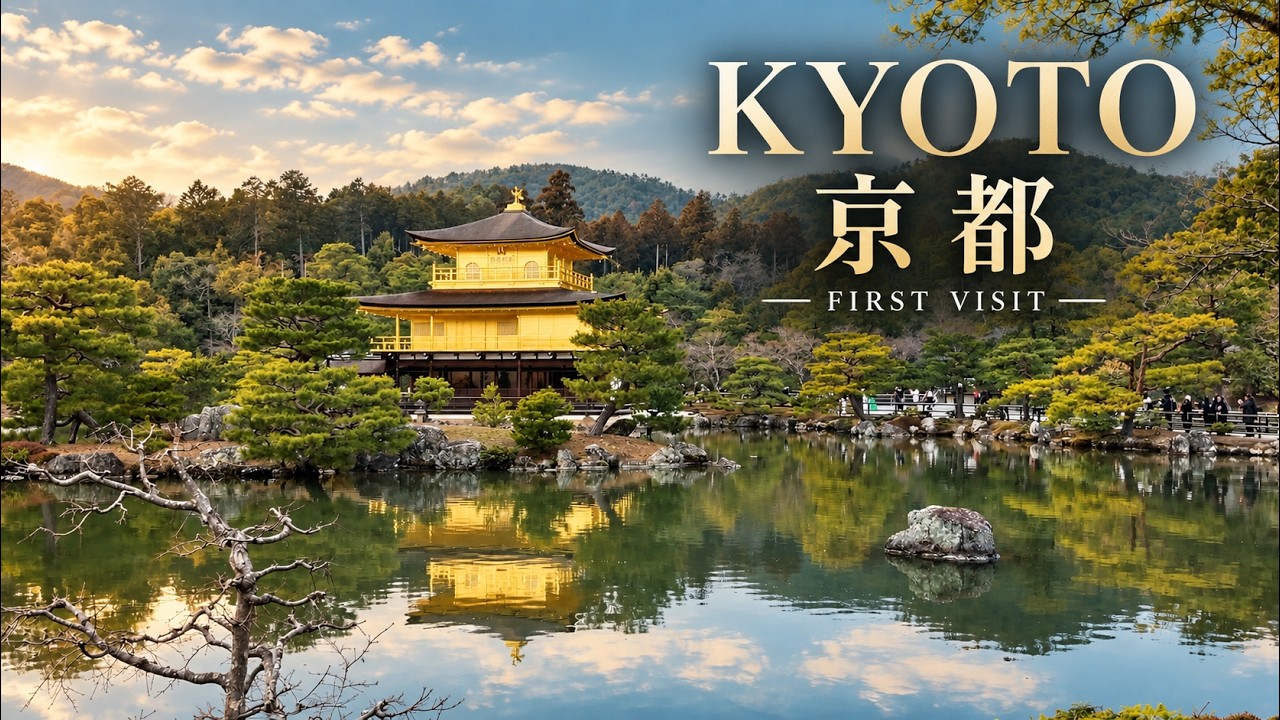
First Time in Kyoto? Pick Your Must-See Sights & Stay After Dark
Choose Kyoto by area: walk the east from Kiyomizu-dera through Higashiyama to Gion, make Fushimi Inari and Arashiyama separate visits, and leave time for Nishiki Market, tea, the Kamo River and Pontocho after dark. The animated map helps first-time visitors choose what matters most.
Planning your Kyoto visit: FAQs
How many days does Kyoto need?
Three full days cover the east and south, the west and the centre once each. Add a fourth for Ginkaku-ji with the Philosopher’s Path and a fifth for one excursion to Nara or Uji.
Should I use buses or the subway?
Use both, together with trains. The tourism association recommends riding a JR or private line to the station nearest your temple and changing there, and it lists limited-express buses on busy sightseeing routes.
Which Kyoto sights need a reservation?
Nijo Castle’s Honmaru Palace needs a timed ticket, Byodoin’s Phoenix Hall interior is entered at set times in small groups, Katsura Imperial Villa is a guided tour arranged by application, and Saihoji admits small numbers by reservation. The Kyoto Imperial Palace accepts walk-in visitors.
Can I photograph geiko and maiko in Gion?
Not without permission. Gion’s residents and tea house associations ask visitors not to stop, touch, follow or photograph them, not to enter private property and not to block the road, and they point visitors to scheduled dance performances.
Can I eat while I walk at the big sights?
Not at three of the sights in this guide. Fushimi Inari forbids eating outside its marked rest areas, Kiyomizu-dera asks visitors not to eat or drink outside cafes and tea houses, and Nishiki Market asks visitors to finish food in front of the shop.
What should I do with luggage between hotels?
Leave it. The tourism association notes that sightseeing with luggage inconveniences those around you, that Kyoto Station has several places to leave bags, and that a delivery service can send them ahead.
Does Kyoto charge a hotel tax?
Yes. Kyoto City charges an accommodation tax on overnight guests, and since 1 March 2026 the amount rises through five bands set by the nightly rate per person, so it depends on the room.
Make your Kyoto plans
Compare tours, tickets and activities in Kyoto →
Choose your departure market and search flights to Kyoto from the Mubboo Flights homepage.
Compare flights ↗Sources
Latest source check: .
Show all 48 sources
- Kyoto City Tourism Association, Discover Kyoto (checked 2026-09-19)
- Kyoto City, 2025 census population (city tabulation, preliminary) (checked 2026-09-19)
- Kyoto City Tourism Association, Getting around Kyoto (checked 2026-09-19)
- Kyoto City Tourism Association, transportation tickets and passes (checked 2026-09-19)
- Kyoto City Transportation Bureau, Subway & Bus 1-Day Pass (checked 2026-09-19)
- Kyoto City Tourism Association, Getting to Kyoto (checked 2026-09-19)
- Kyoto City Tourism Association, weather and clothing (checked 2026-09-19)
- Kyoto City Tourism Association, seasonal information (checked 2026-09-19)
- Kyoto City Tourism Association, accommodation tax change (checked 2026-09-19)
- Kyoto City Tourism Association, Gion manners (message from Southern Gionmachi) (checked 2026-09-19)
- Kyoto City Tourism Association, sightseeing guidelines (checked 2026-09-19)
- Kyoto City Tourism Association, food and drink (checked 2026-09-19)
- Fushimi Inari Taisha, FAQ (checked 2026-09-19)
- Fushimi Inari Taisha, Inariyama (checked 2026-09-19)
- Fushimi Inari Taisha, access (checked 2026-09-19)
- Fushimi Inari Taisha, requests to visitors (checked 2026-09-19)
- Kiyomizu-dera, FAQ and opening hours (checked 2026-09-19)
- Kiyomizu-dera, history and grounds (checked 2026-09-19)
- Kiyomizu-dera, the grounds and events schedule (checked 2026-09-19)
- Kyoto City Tourism Association, Kiyomizu-dera (checked 2026-09-19)
- Japan National Tourism Organization, Arashiyama Bamboo Grove (checked 2026-09-19)
- Kyoto City Tourism Association, Tenryu-ji (checked 2026-09-19)
- Tenryu-ji, buildings and grounds (checked 2026-09-19)
- Kyoto City Tourism Association, Togetsukyo Bridge (checked 2026-09-19)
- Kyoto City Tourism Association, subway and Randen route to Arashiyama (checked 2026-09-19)
- Kyoto City Tourism Association, Kinkaku-ji (checked 2026-09-19)
- Kinkaku-ji, access and visiting hours (checked 2026-09-19)
- Nijo Castle, history and features (checked 2026-09-19)
- Nijo Castle, Ninomaru Palace and garden (checked 2026-09-19)
- Nijo Castle, viewing the Honmaru Palace (checked 2026-09-19)
- Nijo Castle, opening hours and closed days (checked 2026-09-19)
- Kyoto Nishiki Market Shopping Street Promotion Association, home (checked 2026-09-19)
- Nishiki Market, requests to visitors (checked 2026-09-19)
- Nishiki Market, access (checked 2026-09-19)
- Kyoto City Tourism Association, Nishiki Food Market (checked 2026-09-19)
- Ginkaku-ji, about the temple (checked 2026-09-19)
- Ginkaku-ji, access (checked 2026-09-19)
- Kyoto City Tourism Association, Ginkaku-ji (checked 2026-09-19)
- Todai-ji, Daibutsu-den and the Great Buddha (checked 2026-09-19)
- Todai-ji, access (Japanese-language page) (checked 2026-09-19)
- Nara City Tourism Association, the deer of Nara Park (checked 2026-09-19)
- Japan National Tourism Organization, Uji (checked 2026-09-19)
- Byodoin, temple history (checked 2026-09-19)
- Byodoin, visiting the interior of Phoenix Hall (checked 2026-09-19)
- Imperial Household Agency, Kyoto Imperial Palace visit (checked 2026-09-19)
- Imperial Household Agency, Katsura Imperial Villa visit (checked 2026-09-19)
- Saihoji, visiting and spiritual practice (checked 2026-09-19)
- The booking platform Partner API, destinations endpoint (Kyoto id 332) (checked 2026-09-19)
Photo credits
- fushimi inari — Basile Morin · CC BY-SA 4.0.
- kiyomizu dera — Martin Falbisoner · CC BY-SA 4.0.
- arashiyama — Jakub Hałun · CC BY 4.0.
- kinkaku ji — Basile Morin · CC BY-SA 4.0.
- nijo castle — Martin Falbisoner · CC BY-SA 4.0.
- gion — lumoplank · CC0.
- nishiki market — pokpok313 · CC BY-SA 2.0.
- ginkaku ji — Basile Morin · CC BY-SA 4.0.
- nara — Christophe95 · CC BY-SA 4.0.
Mubboo Editorial Team · Reviewed by Mubboo Editorial Team


