
Kraków travel guide
Kraków
Kraków escaped major destruction in the Second World War, so its UNESCO-listed Old Town still holds the Main Market Square, the Cloth Hall and St. Mary’s Basilica much as they stood centuries ago. Wawel Hill, the royal seat for five centuries, rises just south. Across the river, Kazimierz carries a Jewish history nearly erased in the Holocaust, and Podgórze holds the wartime ghetto site and Schindler’s factory.
Three to four days cover the Old Town, Wawel and Kazimierz. A longer stay makes room for what many visitors consider the trip’s most important stop: Auschwitz-Birkenau, about 70km west, which needs a full day and advance planning. Wieliczka Salt Mine and the Tatra Mountains around Zakopane are separate day trips in the other direction.

Find your Kraków experience
Explore Kraków Before You Book
Take a virtual drive or walk, then find tours and tickets for the places you like.

Activities
Featured activities in Kraków


Prices at a glance
What we sell today and what recent flight searches found. No hotel prices; nothing here is a trip total.
- Tours and tickets in Krakówfrom US$22.19
Live from Viator when this page loaded · per adult · changes by date.
Top experiences
Top experiences in Kraków
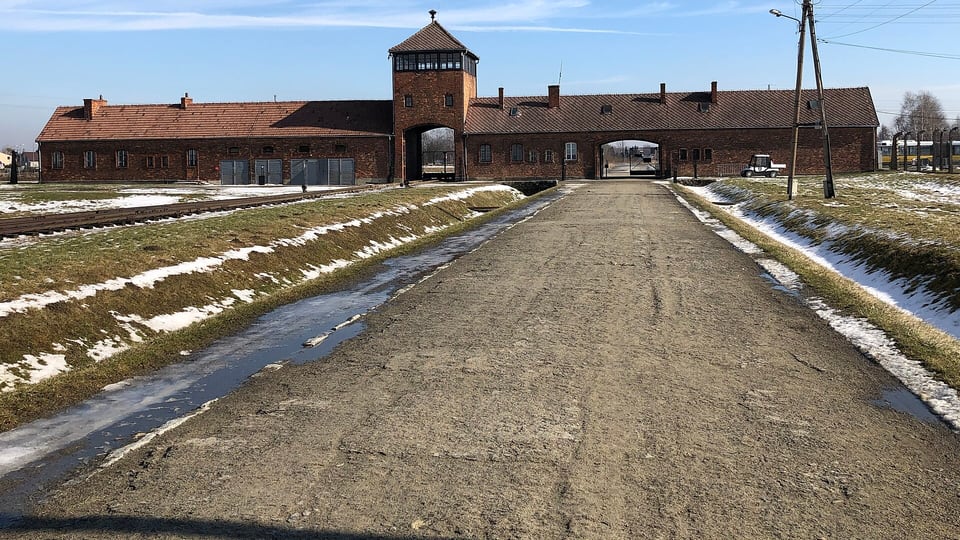
Auschwitz-Birkenau State Museum
The former Nazi German concentration and extermination camp, about 70km west of Kraków, where more than a million people were murdered, most of them Jews. UNESCO inscribed it in 1979 as a unique site and deliberately restricted the World Heritage List from adding other camps of the same kind, so that Auschwitz-Birkenau stands as the single representation of the Holocaust on the list.
Best for: Enough time for a serious, unhurried visit, planned and booked well in advance; this is not an add-on to another day’s itinerary · Area: Oświęcim, about 70km west of Kraków
Plan for Admission to the grounds is free, but entry cards must be booked online in advance; during busier hours individual visitors must join a guided tour rather than walk independently. Arrive at least 30 minutes early for security checks. The museum asks visitors to dress and behave with solemnity, and has publicly asked people to stop taking smiling photographs on the camp’s railway tracks.
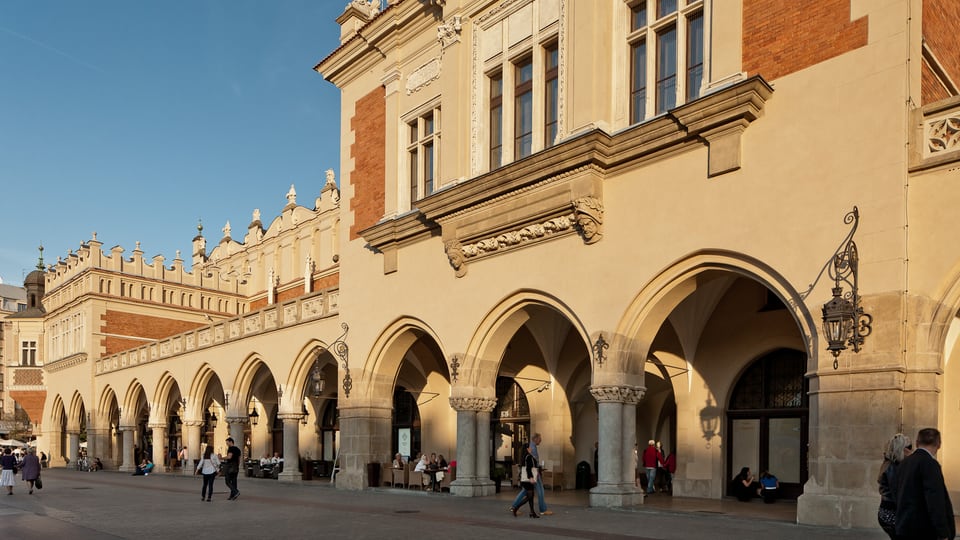
Rynek Główny (Main Market Square) and the Cloth Hall
Laid out in 1257 when Kraków received its city charter, the roughly 200m-by-200m square is one of the largest medieval town squares surviving in Europe. The Cloth Hall (Sukiennice), a Renaissance-roofed trading hall running down its centre, has served Kraków’s cloth and textile trade since the Middle Ages and now mixes souvenir stalls at ground level with a Polish art museum upstairs.
Best for: An hour or more absorbing the square, the Cloth Hall’s interior, and the surrounding cafés · Area: Stare Miasto (Old Town)
Plan for The square is Kraków’s single busiest tourist spot; visiting early morning or evening avoids the heaviest crowds and tour groups.
See Rynek Główny (Main Market Square) and the Cloth Hall tours
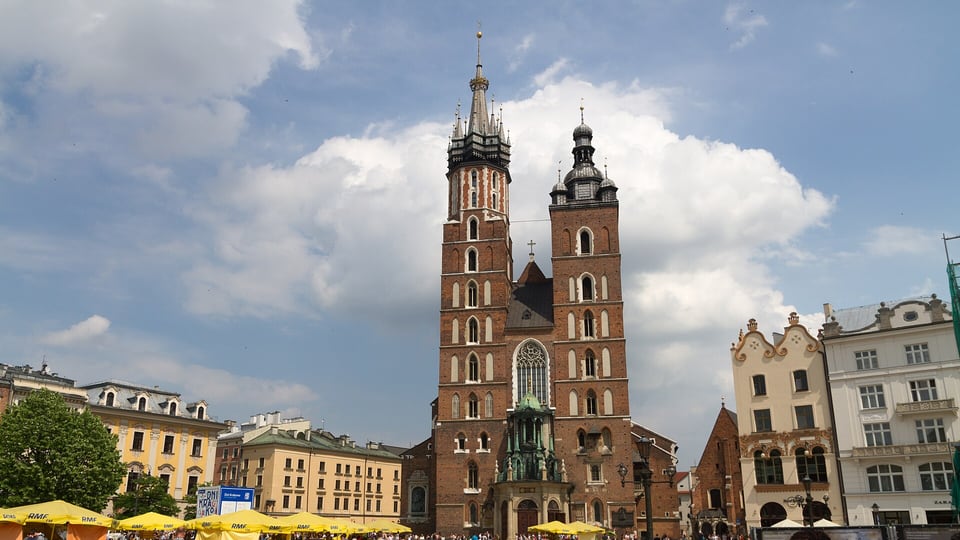
St. Mary’s Basilica and the Hejnał trumpet call
This Gothic brick church on the Main Market Square holds the wooden Veit Stoss altarpiece, one of the largest Gothic altarpieces in Europe. Every hour, a trumpeter plays the five-note Hejnał mariacki from the taller of its two towers, facing all four directions in turn, and the call always stops abruptly on an unfinished note.
Best for: A visit timed to the hour, to hear the trumpet call, plus time inside for the altarpiece · Area: Stare Miasto (Old Town), on the Main Market Square
Plan for A popular story holds that the call breaks off because a medieval trumpeter was shot in the throat by a Tatar arrow while warning the city of an attack. The earliest known written version of that specific story dates only to a 1928 American children’s book and a 1935 Polish tourist guide, so it reads as a twentieth-century legend built around a much older musical tradition, not a documented medieval event.
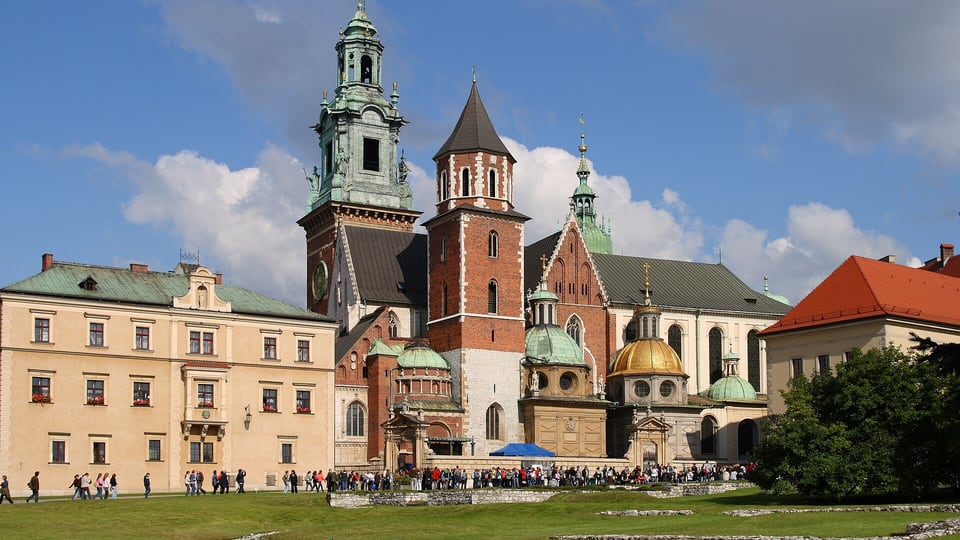
Wawel Castle, Cathedral and the Dragon
Wawel Hill was the residence of Polish monarchs and the site of coronations from 1320 until 1764. The Cathedral’s crypts and chapels hold the tombs of all but four of Poland’s 45 rulers, along with national figures including Tadeusz Kościuszko.
Best for: A half-day covering the Cathedral, at least one Castle exhibition, and the dragon statue below the hill · Area: Wawel Hill, just south of the Old Town
Plan for The Castle and Cathedral sell tickets separately, by different administrations, for different parts of the complex: state rooms, treasury, Cathedral, Royal Tombs, Sigismund Bell. Plan ahead for which parts matter to you rather than assuming one ticket covers the hill.
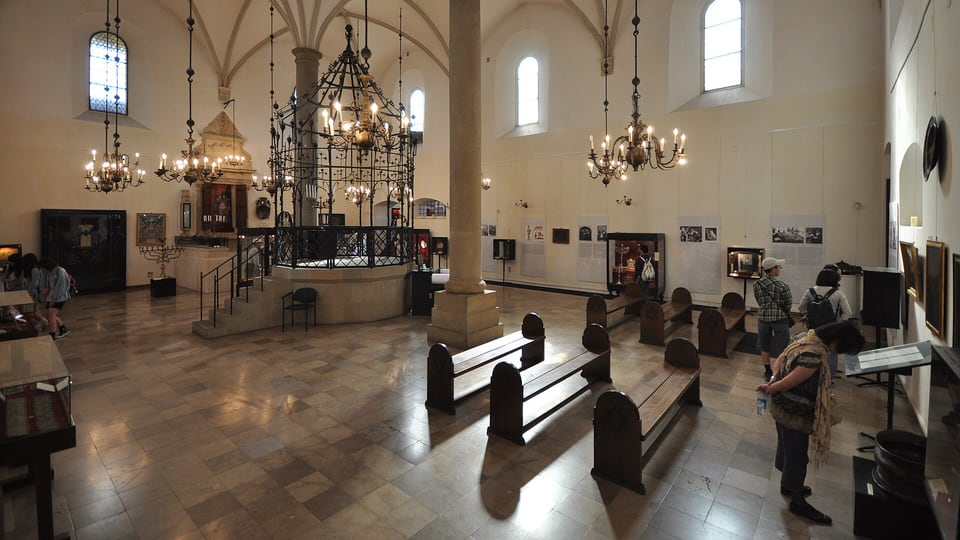
Kazimierz: Jewish heritage and nightlife
Founded as a separate royal city in 1335 and home to an autonomous Jewish quarter from 1495, Kazimierz was, by the mid-sixteenth century, one of the world’s significant centres of Jewish life; by 1939 Kraków’s Jewish community numbered 60,000-80,000. Only seven of its pre-war synagogues survive, including the Old Synagogue, now a museum, and the still-active Remuh Synagogue beside its historic cemetery.
Best for: A daytime walk through the surviving synagogues and Plac Nowy, with an honest look at the nightlife the district has also become · Area: Kazimierz, south of the Old Town across a former channel of the Vistula
Plan for Kazimierz is not the site of the wartime ghetto itself; that was across the river in Podgórze. Conflating the two districts is a common visitor mistake this guide avoids.
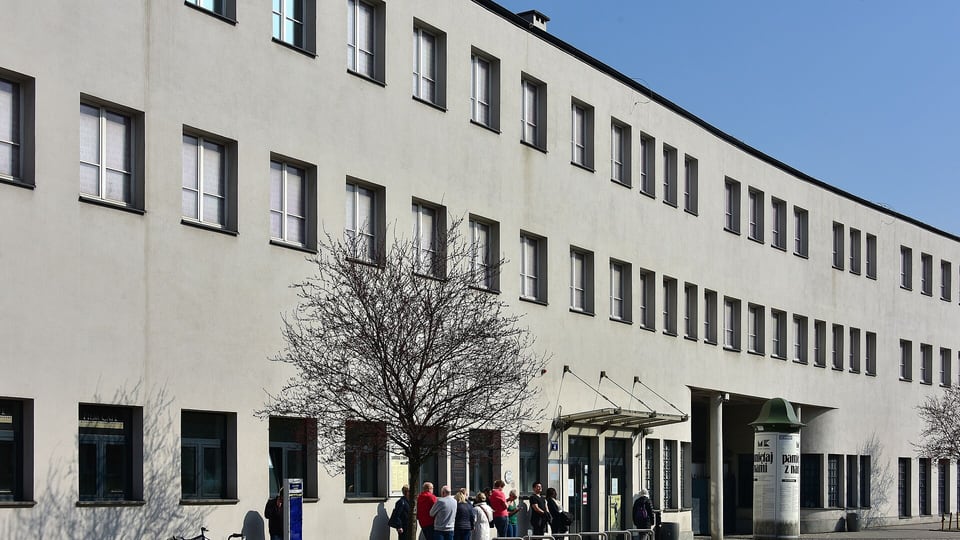
Oskar Schindler’s Factory Museum
The former administrative building of Oskar Schindler’s enamelware factory, at 4 Lipowa Street in the Zabłocie part of Podgórze, now houses a permanent exhibition. "Kraków under Nazi Occupation 1939-1945" tells the story of the city and its Polish and Jewish residents during the war, run by the Museum of Kraków.
Best for: Two to three hours, ideally combined with a walk through the former ghetto area in Podgórze · Area: Podgórze (Zabłocie), across the Vistula from Kazimierz, about 2.5km from the Main Market Square
Plan for The museum is popular enough that pre-booking is recommended; it is a serious historical exhibition, not a dramatized "Schindler’s List" film-set experience.
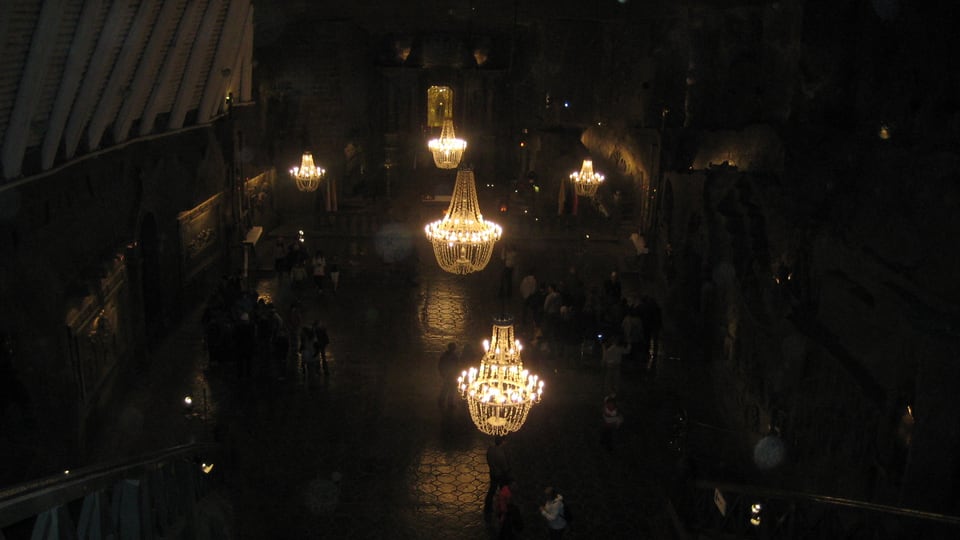
Wieliczka Salt Mine
A working salt mine for over seven centuries, inscribed by UNESCO in 1978 as one of the original twelve World Heritage sites worldwide. The Tourist Route descends to 135m underground across roughly 3.5km of galleries and around 800 stairs, ending at St. Kinga’s Chapel, an underground church carved entirely from rock salt, floor, altar, chandeliers and all.
Best for: Two to three hours, always with a guide · Area: Wieliczka, about 13km southeast of Kraków
Plan for The Tourist Route is guided-only and involves real physical exertion: about 800 stairs, most of them at the start, and no lift down (a lift does bring visitors back up). It is not well suited to visitors with limited mobility.
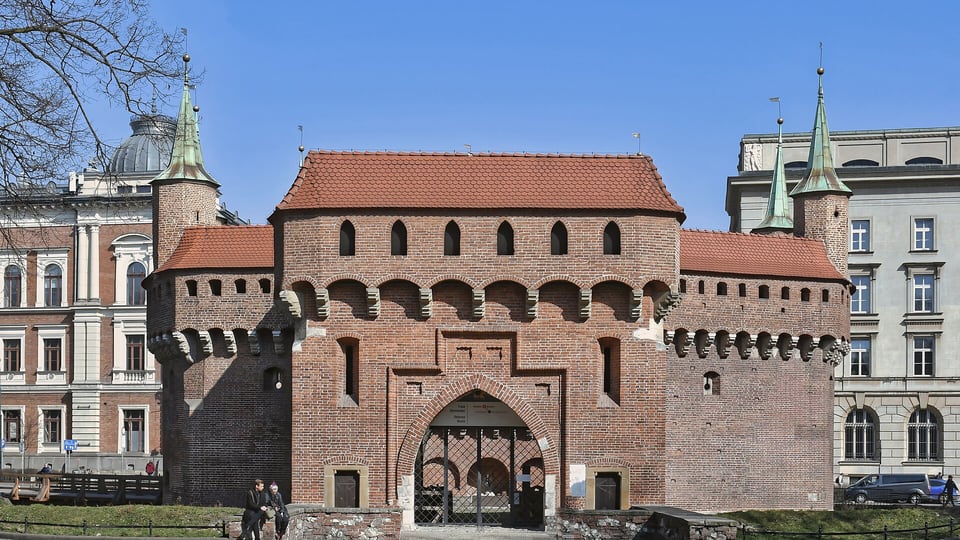
The Barbican and the surviving city walls
Built in the late fifteenth century to defend St. Florian’s Gate, Kraków’s circular Barbican has three-metre-thick walls, 130 firing slots and seven watch turrets. Its round plan, rare in European fortification design, let defenders fire in every direction. Most of Kraków’s medieval walls came down in the nineteenth century to make way for the Planty park that now rings the Old Town, but the Barbican survived.
Best for: Twenty to thirty minutes on the way into or out of the Old Town via St. Florian’s Gate · Area: The northern edge of Stare Miasto, on the Planty ring
Plan for Most of the rest of the city walls were demolished in the nineteenth century; only short sections near St. Florian’s Gate remain alongside the Barbican itself.
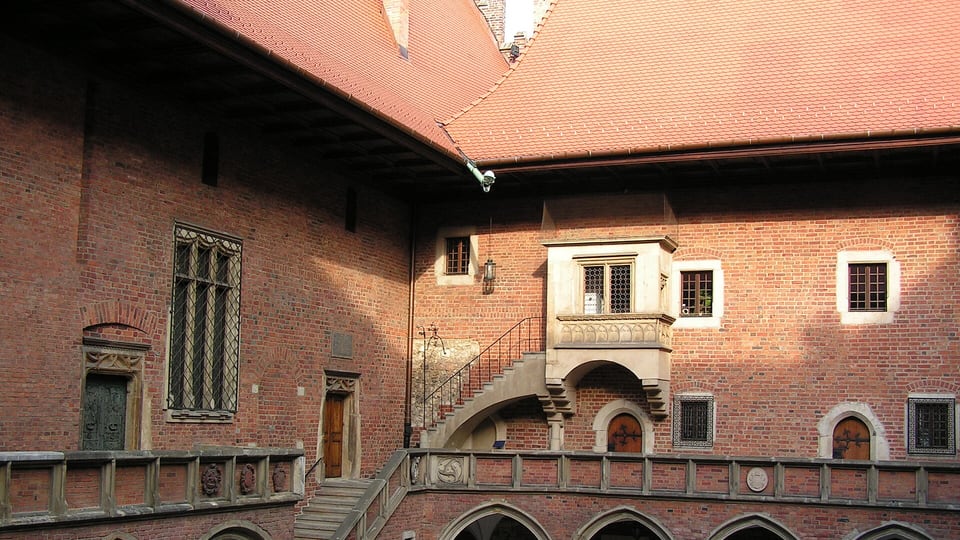
Collegium Maius, Jagiellonian University Museum
The oldest building of Jagiellonian University, founded in 1364 by Casimir the Great, Collegium Maius is a Gothic courtyard building now housing Poland’s oldest university museum, opened in 1964, with the academy’s historic scientific instruments, art and memorabilia. Alumni of the university include Nicolaus Copernicus and Pope John Paul II.
Best for: An hour for visitors interested in the university’s six-and-a-half-century history rather than only the Old Town’s squares and churches · Area: Stare Miasto (Old Town), a short walk from the Main Market Square
Plan for The museum shows the university’s history and collections rather than an active academic building; not all interior areas are open without a guided visit.
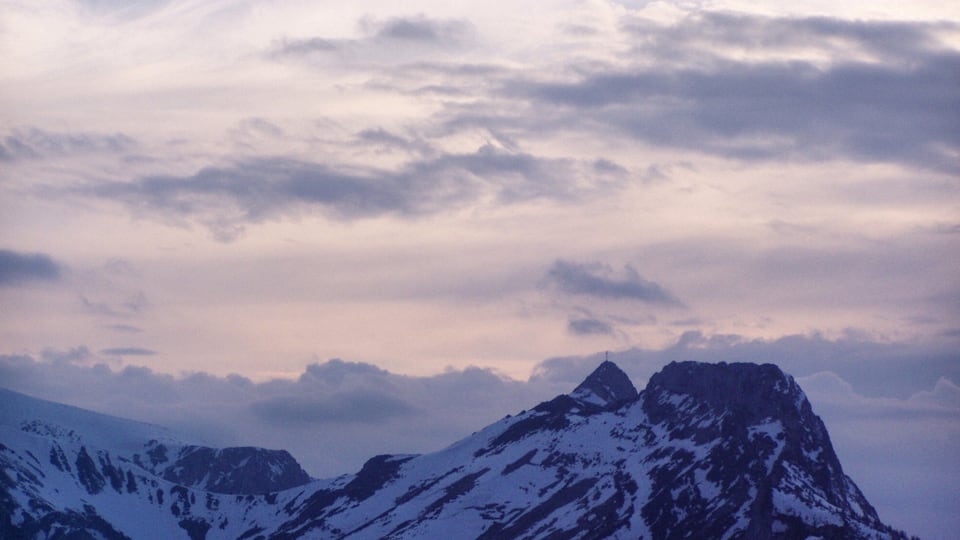
Zakopane and the Tatra Mountains
Zakopane, Poland’s winter-sports capital at the foot of the Tatra Mountains, sits roughly two hours south of Kraków by road. It is the usual base for reaching the Tatras, Poland’s only alpine-scale mountain range, on the border with Slovakia.
Best for: A dedicated day trip combining mountain views, the Gubałówka funicular or cable car, and Zakopane’s distinct highland architecture and culture · Area: Zakopane, in the Podhale region south of Kraków
Plan for This needs a dedicated day given the roughly two-hour drive each way; the UK FCDO also flags altitude and mountain-weather risk generally for Poland’s higher terrain, worth a look before a Tatras hike specifically.
Plan three, five or seven-plus days in Kraków
Three to four days: the Old Town, Wawel and Kazimierz
Pick this length for the UNESCO-listed core: the Main Market Square, Wawel Hill and a day covering Kazimierz and Podgórze.
This length leaves Auschwitz and Wieliczka for a future trip rather than rushing them.
The trade-off Skipping Auschwitz misses what many consider the trip’s most important stop.
Five to six days: add Auschwitz and Wieliczka
Pick this length to add a full day at Auschwitz-Birkenau, booked well ahead, plus a half-day at Wieliczka.
Book Auschwitz entry as early as possible; it is the planning constraint the rest of the trip should work around.
The trade-off Two half-days of the trip go to transit rather than Kraków itself.
A week or more: add Zakopane and the Tatra Mountains
Pick this length to fit a mountain day without rushing the city or the two major day trips.
Check mountain weather and any funicular or cable car availability before committing to the day.
The trade-off Outside a longer stay, this extra day is the first one worth cutting.
Sources
checked 2026-09-28. Recommendations are editorial judgements based on the cited sources below.
Choose where to focus in Kraków
Stare Miasto (Old Town), for the UNESCO core
Consider it for the Main Market Square, Cloth Hall, St. Mary’s Basilica and Wawel Hill nearby.
Visit early morning for the square before the busiest midday crowds.
The trade-off It is the single busiest part of the city for tour groups.
Kazimierz, for Jewish heritage and nightlife
Consider it for the surviving synagogues by day and the bars and restaurants by night.
Visit the Old and Remuh Synagogues in daylight hours, separate from an evening out.
The trade-off The historic and nightlife layers share the same streets, which some visitors find jarring if not planned around.
Podgórze, for the occupation-era history
Consider it for Schindler’s Factory Museum and the former ghetto area, separate from Kazimierz.
Pre-book Schindler’s Factory Museum given its popularity.
The trade-off It is a working residential district, more spread out than Kazimierz or the Old Town.
Sources
checked 2026-09-28. Recommendations are editorial judgements based on the cited sources below.
Poland’s second-busiest airport, with a direct rail link
John Paul II International Airport Kraków–Balice (KRK) is Poland’s second-busiest airport, about 11km west of the city centre. As of September 2026 around 32 airlines serve it from over 130 airports, with Ryanair, Wizz Air and easyJet operating most flights; LOT is the only carrier flying non-stop from the United States, year-round from Chicago.
A direct rail line connects the airport to Kraków Główny, the main train station, and city buses and licensed taxis also serve the terminal.
Best time to visit
Spring (March-May)
Spring temperatures climb from around 6-8°C highs in March to about 18-19°C by May, with rain increasing through the season. Smog levels usually ease once the heating season ends.
- Crowds
- Varies by event and attraction
Summer (June-August)
Summers are warm, with July and August highs averaging around 24-25°C and July the wettest month at roughly 100mm of rain. This is Kraków’s peak tourist season and its clearest air of the year.
- Crowds
- Varies by event and attraction
Autumn (September-November)
Temperatures ease from the high teens in September to single digits by November, with the heating season, and the return of the city’s winter smog problem, typically starting in the autumn’s later weeks.
- Crowds
- Varies by event and attraction
Winter (December-February)
Winter is cold, with January highs averaging around 0-2°C and lows below freezing. This is also when Kraków’s documented smog problem is worst: coal and wood heating combined with valley temperature inversions have put the city among the most polluted in the world in multiple recent Januaries, most recently in 2026.
- Crowds
- Varies by event and attraction
Food: pierogi, the protected obwarzanek, milk bars and Plac Nowy zapiekanka
Pierogi, boiled and often pan-fried dumplings, are one of Poland’s national dishes and date to at least the thirteenth century. The most common variety in Poland, pierogi ruskie, is filled with a quark-like cheese, mashed potato and fried onion; other common fillings include meat, mushroom, cabbage and sweet fruit.
The obwarzanek krakowski, a braided, boiled-then-baked ring of bread sold from stalls across the Old Town, has held European Union Protected Geographical Indication status since 2010. The certificate fixes its weight, shape and production method, and it can only carry the name if made in Kraków or Kraków and Wieliczka counties.
A bar mleczny, or milk bar, is a self-service cafeteria dating to the late nineteenth century. The communist state turned it into a nationwide network of subsidised canteens from the late 1940s so any worker, student or pensioner could afford a hot meal. Many closed after 1989, but the government still subsidises the survivors, which now serve simple, low-priced Polish food to pensioners, students and visitors alike.
Zapiekanka, a halved baguette topped with mushrooms, cheese and sauce and grilled, was invented in the 1970s once Poland’s communist government relaxed rules on private street-food catering. Plac Nowy in Kazimierz, a circular market square built around a 1900 rotunda that once served as a kosher slaughterhouse, is the city’s best-known place to eat one, from hatches that have operated in the same spots for decades.
City profile
- Population (The municipality of Kraków, per Wikipedia, 2025): 816,614
Kraków became the capital of the Kingdom of Poland in 1038 under Casimir I the Restorer, and Polish monarchs were crowned and buried at Wawel Cathedral for over five centuries. Sigismund III Vasa moved the royal court to Warsaw in 1596, ending Kraków’s run as capital, though it kept its status as a coronation and burial site for a time after.
King Casimir the Great founded the Academy of Kraków, now Jagiellonian University, in 1364. It is Poland’s oldest university and, in Central Europe, second in age only to Prague’s Charles University (1348). Its alumni include Nicolaus Copernicus and Pope John Paul II.
King Casimir III founded the separate city of Kazimierz in 1335, south of the Old Town. In 1495 King Jan Olbracht established an autonomous Jewish quarter in its eastern section, and by the mid-sixteenth century Kazimierz was one of the most significant centres of Jewish life anywhere. It merged into Kraków as a district in 1800.
By 1939, roughly 60,000-80,000 Jews lived in Kraków, about a quarter of the municipality’s population, with as many as ninety active prayer houses. In 1941 German occupying forces forced the Jewish population into a walled ghetto across the river in Podgórze; most did not survive the Holocaust. Only seven of the district’s pre-war synagogues still stand today.
UNESCO inscribed the Historic Centre of Kraków in 1978, in its first year of operation, covering the Old Town, Wawel Hill, Kazimierz and the former suburb of Stradom as one nearly 150-hectare complex rather than individual monuments. The nearby Wieliczka Salt Mine was inscribed the same year.
Famous for:
- The Historic Centre of Kraków, one of the first twelve places UNESCO ever inscribed, in 1978, centred on the Main Market Square, one of the largest medieval town squares surviving in Europe.
- Its proximity to Auschwitz-Birkenau, the former Nazi German camp about 70km away, which most visitors reach as a day trip from the city and which UNESCO lists separately as a unique warning against the crimes committed there.
- The Wieliczka Salt Mine, a working mine for over 700 years and one of the original twelve UNESCO World Heritage sites, with chapels carved entirely from rock salt more than 100 metres underground.
- Jagiellonian University, Poland’s oldest, founded in 1364 and still teaching, whose alumni include Copernicus and Pope John Paul II.
Why Kraków is more than a stopover before Auschwitz
For most visitors, the single most important part of a Kraków trip is not in Kraków at all. Auschwitz-Birkenau, about 70km west, is where Nazi Germany murdered more than a million people, most of them Jews. Entry is free, but entry cards must be reserved online in advance, and during peak hours visitors must join a guided tour rather than walk the grounds alone.
The museum asks visitors to behave with due solemnity and dress appropriately. It has publicly asked people to stop posing for smiling photographs on the camp’s railway tracks, after one such photo drew wide criticism online.
Unlike Warsaw, Kraków’s Old Town survived the Second World War largely intact, so the Main Market Square, the Cloth Hall and St. Mary’s Basilica are the genuine medieval and Renaissance fabric of the city, not a post-war reconstruction. UNESCO listed the whole historic centre, together with Wawel Hill and Kazimierz, as one of its first twelve World Heritage sites in 1978.
Kraków was the capital of Poland for over five centuries, from 1038 until Sigismund III Vasa moved the royal court to Warsaw in 1596. Polish kings kept being crowned and buried at Wawel Cathedral for a period after that move, so the hill remains, in the Cathedral Chapter’s own words, a site of coronations, royal weddings and state funerals.
Kazimierz and Podgórze together hold one of the most complete, and most difficult, Jewish histories in Europe. Kazimierz was, before 1939, a significant centre of Jewish life. Podgórze, across the river, held the wartime ghetto where that community was destroyed. Kazimierz today is also a lively nightlife district, a duality this guide states plainly.
Kraków has a well-documented winter air-quality problem. Coal and wood heating, combined with the surrounding valley’s temperature inversions, have repeatedly put the city among the most polluted in the world in January readings, most recently in January 2026. A coal-burning ban has improved the figures over the years, but the problem still recurs each heating season, roughly November to March.
The US State Department rates Poland Level 1, exercise normal precautions, its lowest advisory level, most recently reissued in August 2026. The UK FCDO’s Poland advice, updated 11 August 2026, warns mainly of petty theft in crowded tourist areas and train stations, unofficial taxi drivers, and drink spiking in bars and clubs.
The FCDO also notes Russian military strikes have occurred within 20km of the Polish border with Ukraine, an area with restricted access. That border sits well over 200km east of Kraków.
- Plan by trip type
- The Old Town and Wawel Hill · Kazimierz and Podgórze · Auschwitz-Birkenau as a serious day trip · Wieliczka Salt Mine underground
- Good first stay
- 3-4 days for the Old Town, Wawel, Kazimierz and one major day trip. 5-7 days to add Auschwitz, Wieliczka and the Tatra Mountains without rushing
- Climate
- Cold winters (January averages around -2 to 2°C) with a documented smog problem, and warm summers (July highs near 24-25°C)
- Main gateway
- John Paul II International Airport Kraków–Balice (KRK), Poland’s second-busiest airport, with LOT flying non-stop from Chicago
Planning your Kraków visit: FAQs
Is Kraków safe?
The US State Department rates Poland Level 1, exercise normal precautions, its lowest advisory level, reissued in August 2026. The UK FCDO’s Poland advice warns of petty theft in crowded tourist areas and train stations, unofficial taxi drivers, and drink spiking in some bars and clubs. It also notes restricted access near the Ukraine border, an area far from Kraków.
How far is Auschwitz-Birkenau, and do I need to book ahead?
It is about 70km west of Kraków, roughly 65-80 minutes by car or organised transfer. Entry to the memorial grounds is free, but entry cards must be reserved online in advance, and individual visitors must join a guided tour during peak hours rather than walk the site independently.
Is the story of the Hejnał trumpeter being shot by a Tatar arrow true?
It is a popular legend, not a documented medieval event. The earliest known written version traces only to a 1928 American children’s book and a 1935 Polish tourist guide. The five-note trumpet call itself, played hourly and stopping on an unfinished note, is a genuine and much older Kraków tradition; the arrow story explaining why it stops abruptly is the part that is legend.
Can I still visit Kazimierz’s synagogues?
Some of them. Only seven of Kazimierz’s pre-war synagogues survive, out of as many as ninety active prayer houses before 1939. The Old Synagogue now operates as a museum, and the Remuh Synagogue remains an active place of worship beside its historic cemetery.
Is Kraków’s air pollution a real health concern?
Yes, seasonally. Coal and wood heating combined with the surrounding valley’s temperature inversions have repeatedly put Kraków among the most polluted cities in the world in January readings, most recently in January 2026, though anti-smog measures have improved the city’s figures over recent years. The problem is worst roughly November to March and largely absent in summer.
Which airport should I fly into?
John Paul II International Airport Kraków–Balice (KRK), Poland’s second-busiest airport, about 11km from the centre with a direct rail link. LOT is the only carrier flying non-stop from the United States, year-round from Chicago; most other international connections route through a European hub.
How do I visit Wieliczka Salt Mine?
The Tourist Route is always guided, runs about 2-3 hours, descends to 135m and covers roughly 3.5km with around 800 stairs, mostly near the start (a lift brings visitors back up). The mine is about 13km southeast of Kraków, reachable by train from Kraków Główny, city bus, or an organised tour.
What is the difference between Kazimierz and Podgórze?
Kazimierz, south of the Old Town, was Kraków’s historic Jewish quarter and is now a nightlife district that also preserves surviving synagogues. Podgórze, across the river, is where the occupation forced Kraków’s Jewish residents into a walled ghetto in 1941, and where Schindler’s factory now stands as a museum. The two are often confused but are distinct.
Make your Kraków plans
Compare tours, tickets and activities in Kraków →
Choose your departure market and search flights to Kraków from the Mubboo Flights homepage.
Compare flights ↗Sources
Latest source check: .
Show all 52 sources
- UNESCO World Heritage Centre — Historic Centre of Kraków (checked 2026-09-28)
- UNESCO World Heritage Centre — Auschwitz Birkenau German Nazi Concentration and Extermination Camp (1940-1945) (checked 2026-09-28)
- UNESCO World Heritage Centre — Wieliczka and Bochnia Royal Salt Mines (checked 2026-09-28)
- Auschwitz-Birkenau Memorial and Museum — Visiting information (checked 2026-09-28)
- Auschwitz-Birkenau Memorial and Museum — Basic information for visitors (checked 2026-09-28)
- Auschwitz-Birkenau Memorial and Museum — Auschwitz-Birkenau on the World Heritage List (checked 2026-09-28)
- New Zealand Herald — Auschwitz museum responds to viral photo of tourist posing on the camp railway tracks (checked 2026-09-28)
- Visit Krakow — How to get to Auschwitz-Birkenau from Kraków (checked 2026-09-28)
- Wikipedia — Kraków (checked 2026-09-28)
- Wikipedia — History of Kraków (checked 2026-09-28)
- Wikipedia — Kraków Old Town (checked 2026-09-28)
- Wikipedia — Historic Centre of Kraków (checked 2026-09-28)
- Wikipedia — Main Square, Kraków (Rynek Główny) (checked 2026-09-28)
- Wikipedia — St. Mary’s Trumpet Call (Hejnał mariacki) (checked 2026-09-28)
- Wikipedia — St. Mary’s Basilica, Kraków (checked 2026-09-28)
- Wikipedia — Wawel Cathedral (checked 2026-09-28)
- Katedra Wawelska (Wawel Cathedral Chapter) — The Royal Cathedral, history (checked 2026-09-28)
- Wawel Royal Castle — FAQ (checked 2026-09-28)
- Wikipedia — Wawel Dragon (statue) (checked 2026-09-28)
- Wikipedia — Kazimierz, Kraków (checked 2026-09-28)
- Wikipedia — Synagogues of Kraków (checked 2026-09-28)
- Museum of Kraków — Oskar Schindler’s Enamel Factory, branch page (checked 2026-09-28)
- Wieliczka Salt Mine (Cracow Saltworks Museum) — Tourist Route information (checked 2026-09-28)
- Wikipedia — Wieliczka Salt Mine (checked 2026-09-28)
- Wikivoyage — Wieliczka (distance and transit from Kraków) (checked 2026-09-28)
- City of Kraków (culinary.krakow.pl) — Obwarzanek, the round symbol of Kraków (checked 2026-09-28)
- UK Government — Protected food and drink names: Obwarzanek krakowski (PGI) (checked 2026-09-28)
- Wikipedia — Obwarzanek krakowski (checked 2026-09-28)
- Wikipedia — Bar mleczny (milk bar) (checked 2026-09-28)
- Notes from Poland — Communist-era Warsaw milk bar added to monuments register (checked 2026-09-28)
- Kraków visitor guide — Zapiekanki at Plac Nowy, Kazimierz (checked 2026-09-28)
- Wikipedia — Pierogi (checked 2026-09-28)
- IQAir — Kraków among the most polluted cities in the world (14 January 2026) (checked 2026-09-28)
- European Commission — Kraków air protection (checked 2026-09-28)
- US Department of State — Poland Travel Advisory (Level 1, reissued 20 August 2026) (checked 2026-09-28)
- GOV.UK — Poland travel advice (updated 11 August 2026) (checked 2026-09-28)
- GOV.UK — Poland travel advice: safety and security (checked 2026-09-28)
- Wikipedia — Kraków John Paul II International Airport (checked 2026-09-28)
- Kraków Airport — regular flights schedule and destinations (checked 2026-09-28)
- Wikipedia — Jagiellonian University (checked 2026-09-28)
- Wikipedia — Collegium Maius, Kraków (checked 2026-09-28)
- Wikipedia — Kraków Barbican (checked 2026-09-28)
- Wikipedia — City walls of Kraków (checked 2026-09-28)
- Wikipedia — Nowa Huta (checked 2026-09-28)
- climate-data.org — Kraków long-term monthly climate averages (checked 2026-09-28)
- The booking platform — Things to do in Kraków (destination d529) (checked 2026-09-28)
- The booking platform — Kraków to Auschwitz-Birkenau Guided Tour with Transfer and Ticket (product 55893P2, verified ACTIVE, primary destination 529, 2026-09-28) (checked 2026-09-28)
- The booking platform — Wieliczka Salt Mine Guided Tour from Kraków with Pickup Options (product 5752P39, verified ACTIVE, primary destination 529, 2026-09-28) (checked 2026-09-28)
- The booking platform — Old Town Kraków & Wawel Castle Walking Tour (product 28867P7, verified ACTIVE, primary destination 529, 2026-09-28) (checked 2026-09-28)
- The booking platform — Kraków: Wawel Castle & Cathedral Guided Tour (product 92178P18, verified ACTIVE, primary destination 529, 2026-09-28) (checked 2026-09-28)
- The booking platform — Schindler Story in Kraków Guided Tour: Kazimierz and Ghetto (product 92178P174, verified ACTIVE, primary destination 529, 2026-09-28) (checked 2026-09-28)
- The booking platform — From Kraków: Zakopane, Tatra Mountains & Gubałówka Day Trip (product 282468P3, verified ACTIVE, primary destination 529, 2026-09-28) (checked 2026-09-28)
Photo credits
- auschwitz birkenau — Dakstor · CC BY-SA 4.0.
- rynek glowny cloth hall — Piotrekwas · CC BY-SA 3.0 pl.
- st marys basilica — Maksym Kozlenko · CC BY-SA 4.0.
- wawel castle cathedral — Lestat (Jan Mehlich) · CC BY-SA 3.0.
- kazimierz jewish quarter — Jorge Láscar · CC BY 2.0.
- schindlers factory — Adrian Grycuk · CC BY-SA 3.0 pl.
- wieliczka salt mine — Antony Stanley from Gloucester, UK · CC BY-SA 2.0.
- barbican city walls — Jeremiah Z. Cockroach · CC BY-SA 4.0.
- collegium maius jagiellonian — Cancre · CC BY-SA 3.0.
- zakopane tatra day trip — Marek Ślusarczyk ( Tupungato ) Photo gallery · CC BY 3.0.
Mubboo Editorial Team · Reviewed by Mubboo Editorial Team


