
Istanbul travel guide
Istanbul
Start Istanbul at Sultanahmet: Hagia Sophia, the Blue Mosque, Topkapi Palace and the Basilica Cistern sit close enough to walk between in one focused day, before the Bosphorus, Beyoğlu and Kadıköy on the Asian side each add a genuinely different kind of day.
Find your Istanbul experience
Explore Istanbul Before You Book
Take a virtual drive or walk, then find tours and tickets for the places you like.
Activities
Featured activities in Istanbul


Prices at a glance
What we sell today and what recent flight searches found. No hotel prices; nothing here is a trip total.
- Tours and tickets in Istanbulfrom US$32.00
Live from Viator when this page loaded · per adult · changes by date.
Flights to Istanbul
- From Banjulone-way from GMD 43,157
- From Londonone-way from £47.00
Lowest fare seen in recent flight searches for that route; the airline or booking site confirms the final fare.
Plan Istanbul by time and budget
Top experiences
Top experiences in Istanbul
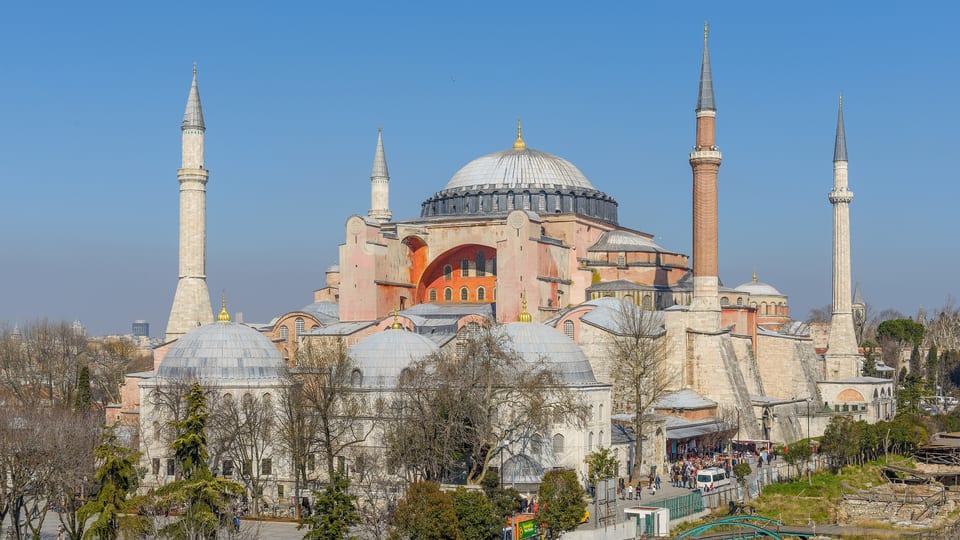
Hagia Sophia
Built as a 6th-century Byzantine cathedral, converted to a mosque after 1453, then a museum, and redesignated for Muslim worship in 2020, Hagia Sophia’s dome and interior carry thirteen centuries of continuous change.
Best for: First-time history and architecture visitors · Area: Sultanahmet
Plan for Since 15 January 2024, foreign visitors enter through a separate gate opposite the Sultan Ahmed III Fountain and pay for gallery-floor access to the upper gallery’s Byzantine mosaics, while the ground-floor sanctuary stays an active mosque closed to visiting between 12:00 and 14:00 on Fridays.
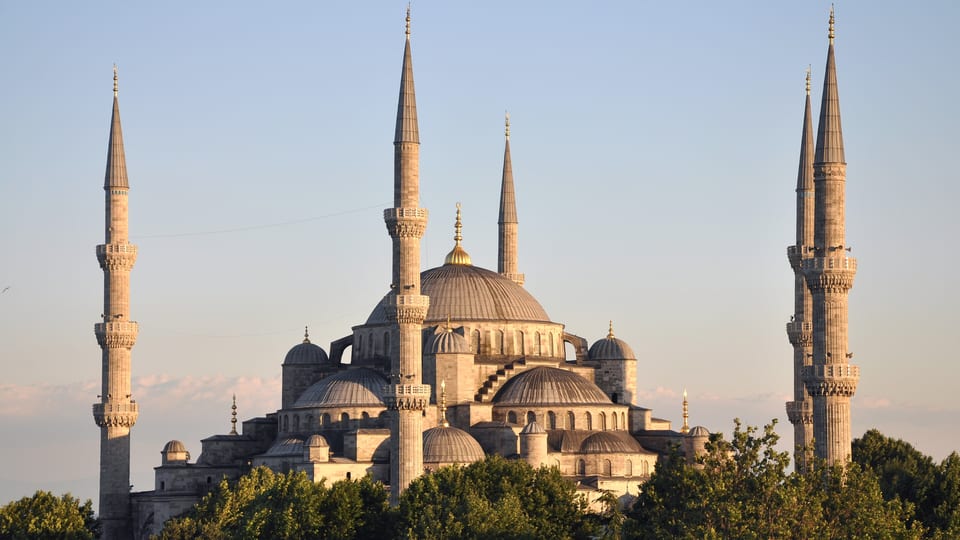
Blue Mosque (Sultan Ahmed Mosque)
Architect Sedefkâr Mehmed Ağa built the mosque between 1609 and 1616 for Sultan Ahmed I, designing it to answer Hagia Sophia across the same square.
Best for: Travellers pairing it directly with Hagia Sophia · Area: Sultanahmet
Plan for It closes to visitors during the five daily prayers, so timing a visit around the prayer schedule matters more than the order you choose to visit in.
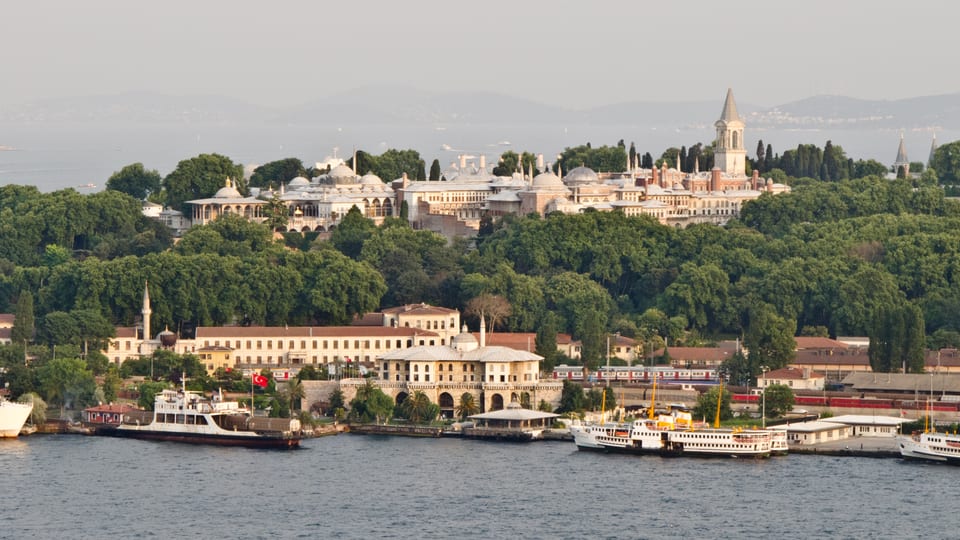
Topkapi Palace
Built from 1460 by Sultan Mehmed II at the point where the Bosphorus, the Golden Horn and the Sea of Marmara meet, Topkapi served as the residence and administrative centre of Ottoman sultans until the mid-19th century before becoming a museum in 1924.
Best for: Visitors wanting Ottoman court life beyond religious architecture · Area: Sultanahmet
Plan for The Harem section and treasury carry separate admission and can add a queue; decide before entering whether the full complex or a shorter visit fits the day.
Basilica Cistern
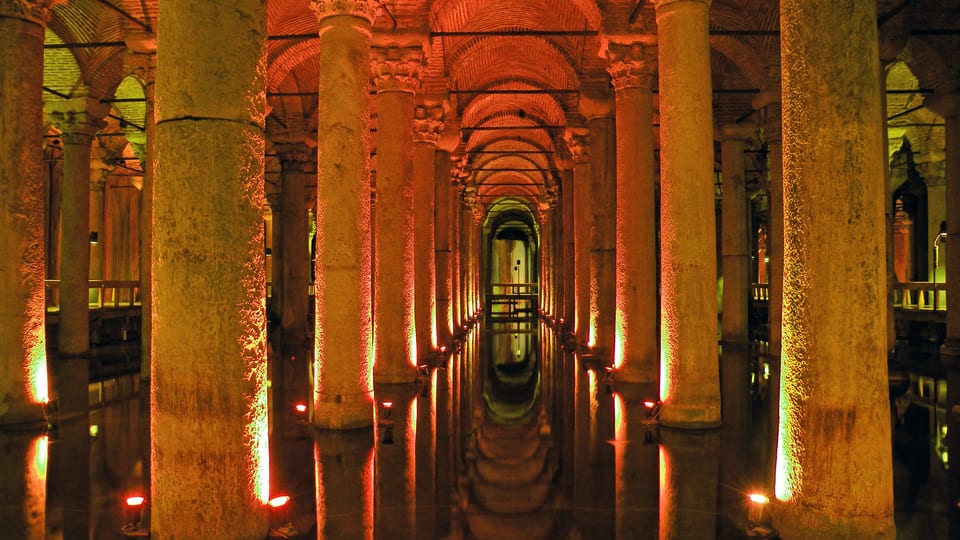
Built between 527 and 542 under Emperor Justinian I, the cistern held up to 80,000 cubic metres of water on 336 columns and supplied the Great Palace and, later, Topkapi.
Best for: Travellers wanting a Byzantine site distinct from church or mosque architecture · Area: Sultanahmet
Plan for It sits below street level and the walkways can be humid and slippery; it suits a short visit slotted between the peninsula’s larger sites rather than an anchor of its own.
Grand Bazaar
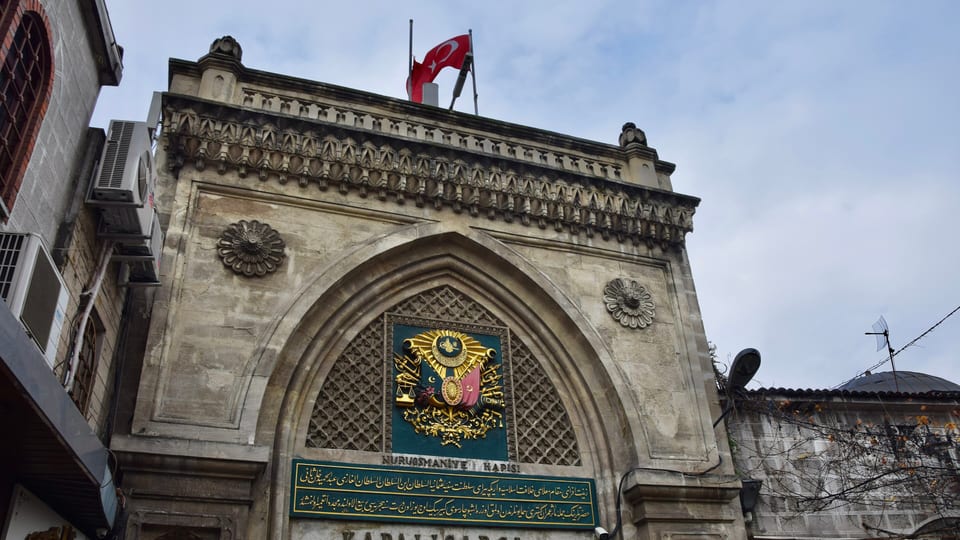
One of the world’s oldest and largest covered markets, the Grand Bazaar’s vaulted streets extend the peninsula’s commercial history into everyday trade rather than monuments.
Best for: Shoppers and travellers wanting a break from monument-focused sightseeing · Area: Beyazıt, adjoining Sultanahmet
Plan for Persistent vendor approaches and a maze-like layout can overwhelm a first visit; treat browsing time, not a shopping list, as the goal.
Bosphorus strait crossing
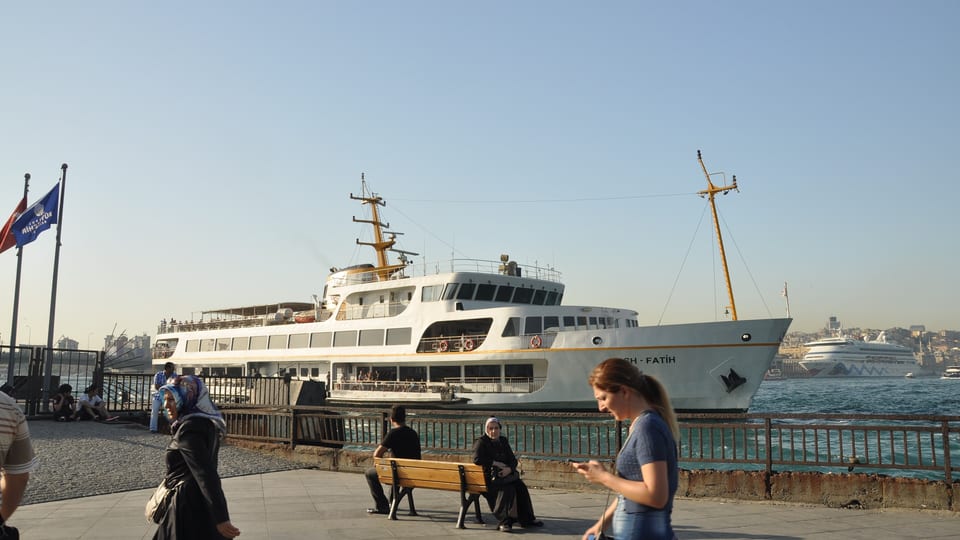
Istanbul is the only city built across two continents, and a Bosphorus crossing by public ferry or a longer cruise is the most direct way to feel that geography rather than read about it.
Best for: Travellers who want the city’s defining geography, not another monument · Area: Eminönü to Üsküdar, or a longer Bosphorus route
Plan for A short public ferry gives the crossing itself; a longer tourist cruise adds waterfront palaces and villages but keeps you on the water far longer than the crossing itself.
Süleymaniye Mosque
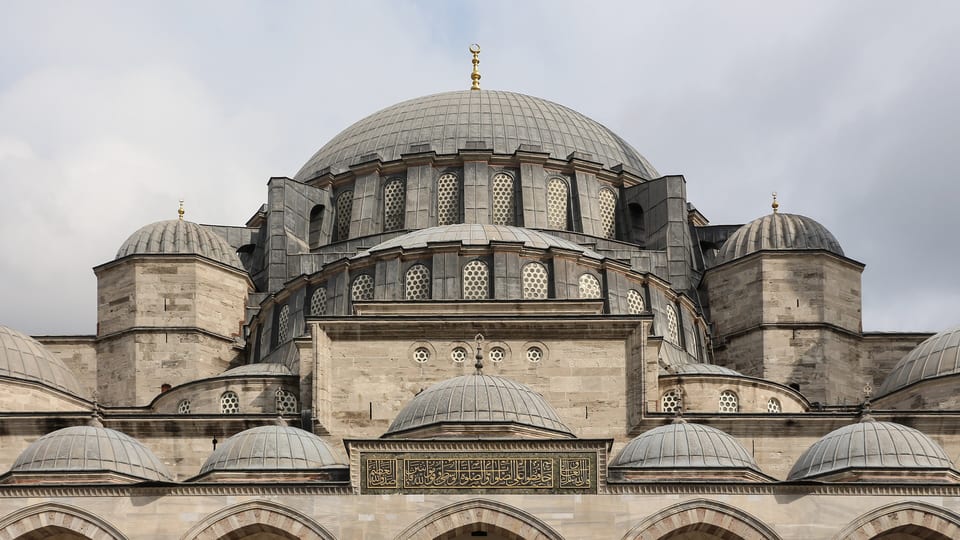
Mimar Sinan built the Süleymaniye Mosque for Suleiman the Magnificent between 1550 and 1557 on Istanbul’s Third Hill, and its original külliye combined the mosque with a hospital, soup kitchen and four madrasas rather than standing as worship space alone.
Best for: Travellers who have covered Sultanahmet and want an active Ottoman mosque away from the Blue Mosque’s queues · Area: Süleymaniye, Fatih
Plan for It sits a walk or short uphill tram-and-foot route from Sultanahmet rather than inside the same square, and as an active mosque it closes to visitors during the five daily prayers like the Blue Mosque.
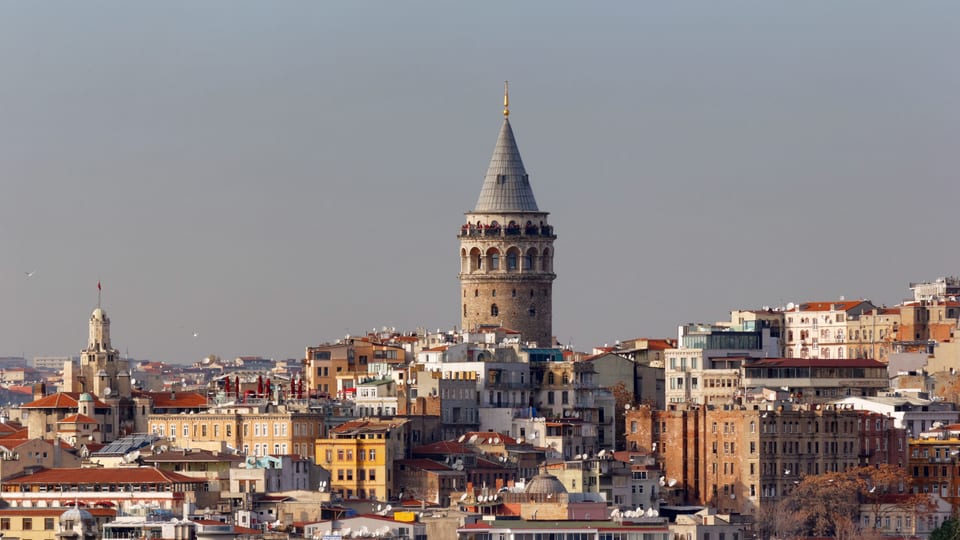
Galata Tower
Built by Byzantine Emperor Justinian in 507–508 and rebuilt by the Genoese in 1348–49, Galata Tower has served as a fire lookout, a prison and a watchtower before becoming a museum with a 360-degree observation deck.
Best for: Travellers wanting an elevated view that ties the peninsula, the Golden Horn and the Bosphorus together · Area: Galata, Beyoğlu
Plan for The observation deck is compact and queues build toward sunset, so a visit well before sunset means a shorter wait without the golden-hour light.
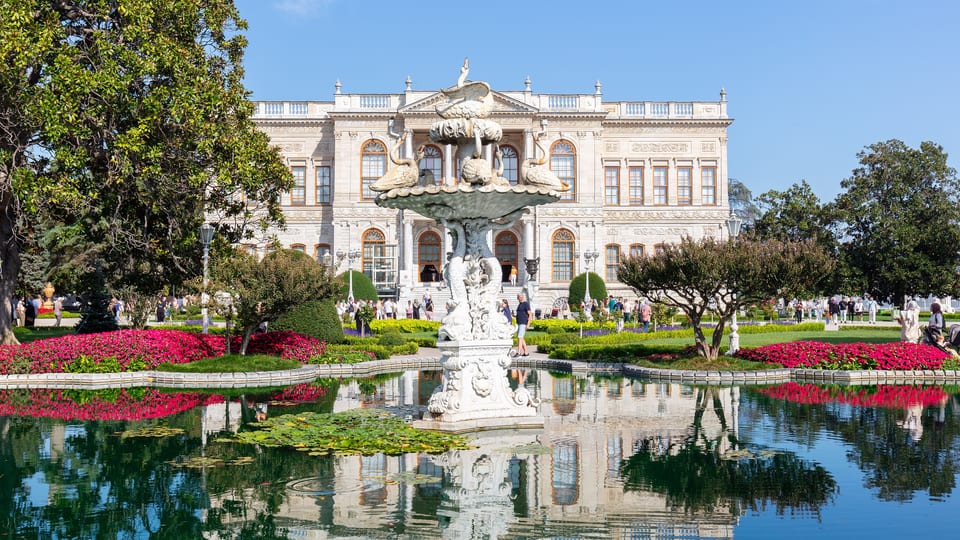
Dolmabahçe Palace
During the reign of Sultan Abdülmecid (1839–1861), Dolmabahçe Palace replaced the ageing Beşiktaş shore palace, built along the Bosphorus in a European-influenced style rather than Topkapi’s older Ottoman courtyards.
Best for: Visitors comparing Ottoman power across centuries, from Topkapi’s 15th-century court to a 19th-century Bosphorus-front palace · Area: Beşiktaş, Bosphorus waterfront
Plan for The palace can only be visited on a guided tour through timed sections, so it needs a reserved slot rather than a walk-up visit, and it sits a transfer away from Sultanahmet rather than inside the peninsula.
Plan one, three or five days in Istanbul
One day: Sultanahmet only, and choose depth over completeness
Spend the whole day on the historic peninsula and accept that the Harem, a Bosphorus crossing and Beyoğlu wait for a longer trip. Pair Hagia Sophia and the Blue Mosque first, since they sit across the same square, then add Topkapi Palace's outer courtyards or the Basilica Cistern depending on how much of the morning the Hagia Sophia queue takes.
Hagia Sophia's foreign-visitor ticket routes through a separate gate opposite the Sultan Ahmed III Fountain, and the mosque closes to visitors between 12:00 and 14:00 on Fridays; build the day around that gate and that closure window rather than around opening time alone. The Blue Mosque closes to visitors at each of the five daily prayers.
The trade-off One day cannot also fit the Grand Bazaar and Topkapi's Harem without turning each stop into a walk-through. Drop one of the two rather than rushing all of Sultanahmet's major sites into a single afternoon.
Three days: Sultanahmet, then the Bosphorus and Beyoğlu as separate days
Use day one for Sultanahmet's cluster: Hagia Sophia, the Blue Mosque, Topkapi Palace and the Basilica Cistern. Give day two to a Bosphorus ferry crossing plus Beyoğlu and Galata Tower. Spend day three at the Grand Bazaar and Spice Bazaar, then a slower neighbourhood such as Kadıköy or Fener and Balat.
Galata Tower and a Bosphorus crossing sit close enough to combine in one afternoon: a ferry from Eminönü to Karaköy lands a short walk from the tower. Kadıköy and Fener-Balat both need a deliberate ferry or bus rather than a walk from Sultanahmet, so pick one for day three rather than attempting both.
The trade-off Dolmabahçe Palace and Süleymaniye Mosque wait for a longer stay; adding either to day two or three cuts the Beyoğlu evening short.
Five days: add Dolmabahçe Palace and Süleymaniye Mosque without compressing the first three days
Give day four to Dolmabahçe Palace, which opens only through a guided, timed-section tour, and day five to Süleymaniye Mosque plus a slower walk back through Fatih. Book the Dolmabahçe slot before the trip rather than on arrival.
Dolmabahçe tickets are sold from 09:00 to 17:00 and the palace closes on Mondays, so a Monday landing pushes this day later in the trip. Süleymaniye sits on Istanbul's Third Hill, giving wide Golden Horn views that Sultanahmet's lower ground does not.
The trade-off The Princes' Islands and a longer Bosphorus cruise each take most of a day on the water, so adding either to these five days means dropping the Süleymaniye afternoon.
Costed plans: One Day in Istanbul: ₺5,800 or Less? → · Istanbul in 3 Days for ₺9,700? →
Sources
checked 2026-09-12. Recommendations are editorial judgements based on the cited sources below.
- Müze İstanbul (muze.gen.tr): Hagia Sophia / Ayasofya
- Encyclopaedia Britannica: Blue Mosque, Istanbul, Turkey
- Müze İstanbul (muze.gen.tr): Galata Tower
- Wikipedia: Ferries in Istanbul (documented fallback; sehirhatlari.istanbul returned a bot-detection challenge page during research)
- Directorate of National Palaces (millisaraylar.gov.tr): Dolmabahçe Palace
- Encyclopaedia Britannica: Süleymaniye Mosque
Choose an Istanbul base and explore nearby
Sultanahmet: a base for sightseeing density
Consider this base when having Hagia Sophia, the Blue Mosque and Topkapi Palace within walking distance matters more than an evening scene, and you accept the city's most crowded daytime streets for that convenience.
The T1 tram runs the length of the peninsula and continues over the Golden Horn to Karaköy, so Sultanahmet also works as a hub for a Bosphorus or Beyoğlu day without changing hotels partway through the stay.
The trade-off The neighbourhood quiets down earlier at night than Beyoğlu or Kadıköy, so a traveller prioritising evening life over morning proximity to the monuments should base elsewhere.
Beyoğlu and Galata: a base for evenings and a later pace
Consider this base when restaurants, bars and Istiklal Avenue's later hours matter more than a short walk to Sultanahmet, and a five-to-ten-minute tram or funicular crossing to the peninsula each morning is acceptable.
Galata Tower and the Bosphorus waterfront both sit within this district, so a Beyoğlu base also covers two of the guide's Top Experiences without a separate transfer.
The trade-off Steep, cobbled streets and Sultanahmet's morning light both favour an early start from Sultanahmet itself; based in Beyoğlu, the first Hagia Sophia queue of the day starts after a tram ride rather than a short walk.
Kadıköy: a base for a local pace on a second stay
Consider this base on a second or third Istanbul trip, once Sultanahmet's major sites are already covered, when a quieter, food-focused, less touristic pace matters more than proximity to the peninsula.
The ferry crossing from Kadıköy to Eminönü or Karaköy is itself part of the Bosphorus experience described in Top Experiences, and the M4 metro line also links Kadıköy directly to Sabiha Gökçen Airport on the Asian side.
The trade-off A first-time visitor prioritising monument density over local pace should choose Sultanahmet or Beyoğlu instead; every Sultanahmet morning from Kadıköy starts with a ferry crossing rather than a short walk.
Sources
checked 2026-09-12. Recommendations are editorial judgements based on the cited sources below.
Airport and getting around
Istanbul Airport (IST) is the city’s main international gateway; the M11 metro reaches Gayrettepe in about 30 minutes, where a change to the M2 line continues towards Taksim and the historic peninsula. Sabiha Gökçen (SAW) on the Asian side serves as a secondary airport for some carriers.
Istanbulkart, a single rechargeable card, covers buses, the metro, trams, the funicular, Marmaray and ferries. İETT describes the network as serving roughly 16 million residents and visitors across the metropolitan area, though the historic peninsula itself is best covered on foot once the tram delivers you there.
Best time to visit
Spring (March–May)
Mild, warming conditions with generally shorter queues at major sites than summer, though rain remains possible into May.
- Crowds
- Varies by event and attraction
Notable events
- The Istanbul Tulip Festival in April, with Emirgan Park among its main venues
Summer (June–August)
Warm to hot days bring the year’s heaviest visitor numbers at Hagia Sophia, the Blue Mosque and the Bosphorus; early starts and shaded midday breaks help.
- Crowds
- Varies by event and attraction
Notable events
- The Istanbul Music Festival, 11 to 25 June in 2026
- The Istanbul Jazz Festival, held every July
Autumn (September–November)
September and October keep much of summer’s warmth with fewer crowds, before cooler, wetter conditions typically arrive in November.
- Crowds
- Varies by event and attraction
Winter (December–February)
Istanbul’s coolest, wettest stretch; mild but damp conditions suit museums and indoor sites more than long outdoor walks.
- Crowds
- Low
Food, markets and local life
The Grand Bazaar and the nearby Spice Bazaar anchor the peninsula’s market history, but Kadıköy’s market and food streets on the Asian side show a different, more local everyday trade.
A meyhane meze evening in Beyoğlu, a fish dinner on the Bosphorus shore and Kadıköy’s market-street tables are three different nights on three different pieces of water; pick the neighbourhood first and the food follows.
City profile
- Population (Istanbul Province, TUIK Address-Based Population Registration System at 31 December 2025, 2025): 15,754,053
Byzantium became Constantinople under Roman and Byzantine rule, then the Ottoman capital after 1453; Topkapi Palace was built from 1460 by Sultan Mehmed II and served as the seat of Ottoman government for roughly four centuries.
UNESCO inscribed the Historic Areas of Istanbul in 1985, protecting the Sultanahmet peninsula’s Byzantine and Ottoman monuments as one heritage site.
Famous for:
- Hagia Sophia, the Blue Mosque and Topkapi Palace clustered around Sultanahmet Square.
- The Bosphorus strait, the only stretch of water that splits one city across two continents.
- The covered Grand Bazaar and the neighbouring Spice Bazaar.
What makes an Istanbul visit worthwhile
Two empires share one square in Sultanahmet: a Byzantine cathedral turned mosque faces the Ottoman imperial mosque built to answer it, with the sultans’ palace a short walk behind them. Take the Byzantine and the Ottoman buildings on separate mornings and the skyline starts to read as a sequence rather than a backdrop.
The peninsula is the imperial city; the water is the living one. A Bosphorus crossing, an evening in Beyoğlu or the ferry to Kadıköy on the Asian side show where Istanbul’s nearly sixteen million people actually eat, commute and stay out late.
Istanbul is not a restful stopover: the historic peninsula alone fills two days, the Bosphorus and the Asian side need a third, and the city’s pace is dense rather than slow, so a layover under 48 hours sees Sultanahmet’s queues and little else.
- Plan by area
- Historic peninsula · Bosphorus · Beyoğlu · Asian side
- Good first stay
- 4 days for the historic peninsula and Bosphorus
- Climate constraint
- Winter rain · Summer heat and crowds
- Main airport
- IST · M11 metro to Gayrettepe then M2
Watch Istanbul
Istanbul First Time: Sunlight, Street Life & the Bosphorus | Mubboo Tours & Tickets
A first look at Istanbul through historic buildings, markets, food streets, Beyoğlu, ferries and evening lights. Choose a major visit, a neighbourhood and time on the water, with the Princes’ Islands and Şile treated as separate outings.

Planning your Istanbul visit: FAQs
Can I see Hagia Sophia, the Blue Mosque and Topkapi Palace in one day?
All three are within a few minutes’ walk of each other in Sultanahmet, but Hagia Sophia’s foreign-visitor gate and Topkapi’s courtyards each take a morning, and the Blue Mosque closes to visitors at every prayer time. Pair Hagia Sophia with the Blue Mosque on one morning and Topkapi with the Basilica Cistern on the next; stacking all three plus the Grand Bazaar into one day means queuing more than looking.
Should I stay on the European or Asian side?
A European-side base near Sultanahmet or Beyoğlu puts the peninsula’s major sites and the T1 tram on the doorstep, which matters most on a first visit. Kadıköy on the Asian side works once that density is no longer the priority and a local, ferry-commute pace is.
When is Istanbul least crowded?
March-to-May and September-to-October both sit between summer’s heat and winter’s rain at the major peninsula sites, with fewer visitors than the June-to-August peak. Neither shoulder season is guaranteed dry, so keep an indoor option such as the Basilica Cistern ready.
Is a Bosphorus cruise worth adding?
A short public ferry crossing between the European and Asian sides delivers the core experience of a city split across two continents. A longer tourist cruise adds waterfront palaces and villages for travellers with half a day to give to the water.
Where do I buy the Hagia Sophia ticket, and is it different from a museum ticket?
Foreign visitors buy it through a temporary gate opposite the Sultan Ahmed III Fountain or the state muze.gen.tr channel, at a fixed price for gallery-floor access to the upper gallery’s mosaics. No reseller or guided product is needed to reach the gallery floor.
Is the Istanbul Museum Pass worth buying?
It is worth buying once Topkapi Palace and at least one or two further paid museums are already on the plan, since it covers more than ten museums for five consecutive days after first use. It does not cover Hagia Sophia, which sits outside the pass system now that the site is an active mosque.
Make your Istanbul plans
Compare tours, tickets and activities in Istanbul →
Choose your departure market and search flights to Istanbul from the Mubboo Flights homepage.
Compare flights ↗Sources
Latest source check: .
Show all 22 sources
- TUIK — Address-Based Population Registration System, 2025 Results (checked 2026-09-12)
- UNESCO World Heritage Centre — Historic Areas of Istanbul (checked 2026-09-12)
- UNESCO Silk Road Programme — The Topkapı Palace Museum (checked 2026-09-12)
- Basilica Cistern (Yerebatan Sarnıcı) — About Us (checked 2026-09-12)
- Encyclopaedia Britannica — Blue Mosque, Istanbul, Turkey (checked 2026-09-12)
- Grand Bazaar Istanbul — history site (checked 2026-09-12)
- iGA Istanbul Airport (checked 2026-09-12)
- İETT — Istanbul public transportation (checked 2026-09-12)
- Climate-Data.org — Istanbul climate normals (documented fallback; Turkish State Meteorological Service tables required interactive JS the automated fetch could not execute) (checked 2026-09-12)
- The booking platform — Istanbul destination mapping d585 (checked 2026-09-12)
- Encyclopaedia Britannica — Süleymaniye Mosque (documented fallback: an active mosque under Diyanet, outside the muze.gov.tr museum system) (checked 2026-09-12)
- Müze İstanbul (muze.gen.tr) — Galata Tower (checked 2026-09-12)
- Presidency of the Republic of Türkiye, Directorate of National Palaces (millisaraylar.gov.tr) — Dolmabahçe Palace (checked 2026-09-12)
- Müze İstanbul (muze.gen.tr) — Istanbul Museum Pass (checked 2026-09-12)
- Müze İstanbul (muze.gen.tr) — Hagia Sophia / Ayasofya (checked 2026-09-12)
- Müze İstanbul (muze.gen.tr) — Topkapı Palace (checked 2026-09-12)
- Istanbul Sabiha Gökçen International Airport — Metro (checked 2026-09-12)
- Wikipedia — Ferries in Istanbul (documented fallback; sehirhatlari.istanbul returned a bot-detection challenge page to both automated fetch and browser-tool access during research) (checked 2026-09-12)
- Go Türkiye (Ministry of Culture and Tourism destination guide) — Fener and Balat neighbourhoods (checked 2026-09-12)
- GoTürkiye, Emirgan Park (checked 2026-09-17)
- İKSV, the 54th Istanbul Music Festival (checked 2026-09-17)
- İKSV, Istanbul Jazz Festival history (checked 2026-09-17)
Photo credits
- hagia sophia — Arild Vågen · CC BY-SA 3.0.
- blue mosque — Moonik · CC BY-SA 3.0.
- topkapi palace — Carlos Delgado · CC BY-SA 3.0.
- basilica cistern — Moise Nicu · CC BY 3.0.
- grand bazaar — Ank Kumar · CC BY-SA 4.0.
- bosphorus crossing — Moonik · CC BY-SA 3.0.
- suleymaniye mosque — Bernard Gagnon · CC BY-SA 3.0.
- galata tower — Alexxx1979 · CC BY-SA 4.0.
- dolmabahce palace — Diego Delso · CC BY-SA 4.0.
Mubboo Editorial Team · Reviewed by Mubboo Editorial Team


