
Honolulu travel guide
Honolulu
Honolulu’s core is compact: Waikiki is the base, and Diamond Head and Pearl Harbor each fit a day from it. Hanauma Bay, the North Shore and the windward coast each need a separate outing across the island. Weekly closures set the order, since the Palace, Hanauma Bay and the Polynesian Cultural Center close on different days.

Find your Honolulu experience
Explore Honolulu Before You Book
Take a virtual drive or walk, then find tours and tickets for the places you like.
Activities
Featured activities in Honolulu


Prices at a glance
What we sell today and what recent flight searches found. No hotel prices; nothing here is a trip total.
- Tours and tickets in Honolulufrom US$27.50
Live from Viator when this page loaded · per adult · changes by date.
Plan Honolulu by time and budget
Top experiences
Top experiences in Honolulu
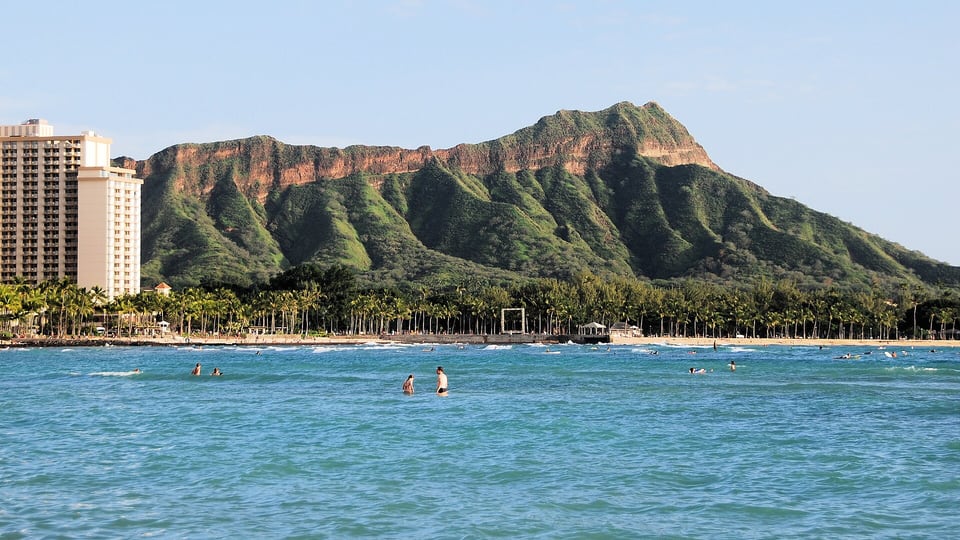
Waikiki Beach
Waikiki has six named beaches, among them Kuhio, Gray’s, Fort DeRussy and Queen’s, and most of the sand was brought in between the 1920s and the 1970s. The Ala Wai Canal, dug between 1921 and 1928, drained the wetlands behind the shore.
Best for: Visitors who want the shoreline as the daily anchor and a base for the rest of the island · Area: Waikiki, between the Ala Wai Canal and the ocean
Plan for On Oahu’s shores box jellyfish arrive in a lunar pattern, most often eight to ten days after a full moon, and heavy rain can bring a brown water advisory. Read the forecast, swim where lifeguards are posted, and ask before entering.
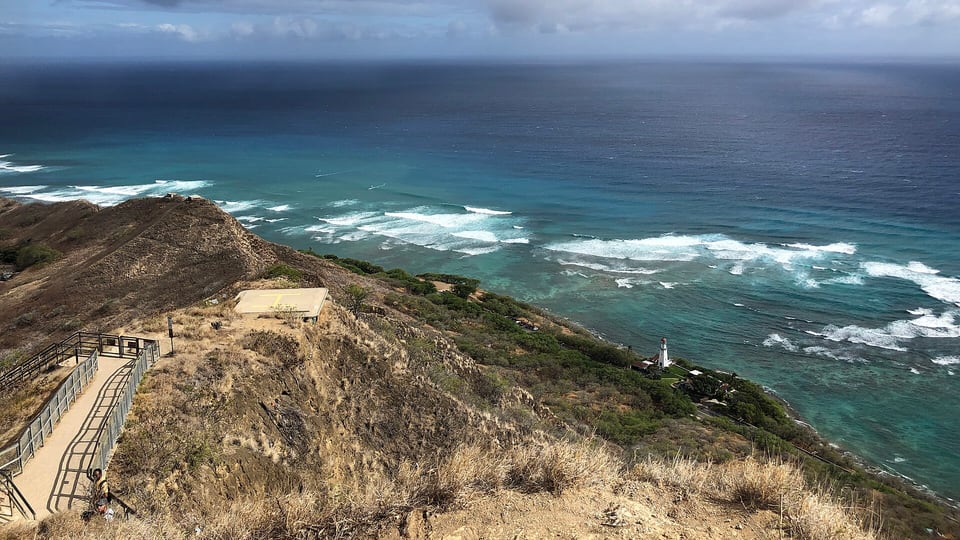
Diamond Head
Diamond Head, known to Hawaiians as Lēʻahi, is a volcanic tuff cone with a 0.8-mile trail from the crater floor to the summit, built in 1908 as part of the Army’s coastal defences. Reservations start at 6:00 a.m., the last entry is 4:30 p.m., and everyone must be out of the crater by 6:00 p.m.
Best for: Visitors who want a summit view of the whole south shore and will commit to a reserved time · Area: Diamond Head State Monument, at the eastern end of Waikiki
Plan for No reservation means no entry, and a start more than 30 minutes into the slot can mean being turned away with no refund. Rain alone does not earn a refund, and every visitor over three needs a ticket, hiking or not.
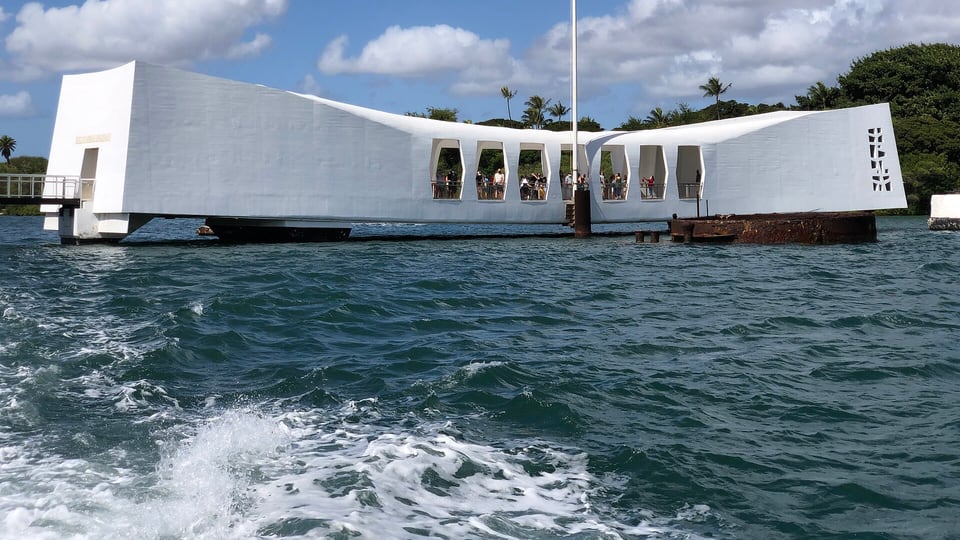
Pearl Harbor
Pearl Harbor National Memorial has no entrance fee and holds a visitor center with two museums, the USS Arizona Memorial program by boat and, on a separate reserved tour, the USS Utah and USS Oklahoma Memorials on Ford Island. The visitor center opens daily at 7 a.m., the first program starts at 8 a.m. and the last boat leaves at 3:30 p.m.
Best for: Visitors with a half day who want the history told at the site itself · Area: Pearl Harbor, on the south shore west of the city
Plan for The program is limited by time and capacity, standby waits can run to several hours on a busy day, and base security can cancel the Ford Island tour at short notice. Only water is allowed inside the museums, theaters and on the memorial.
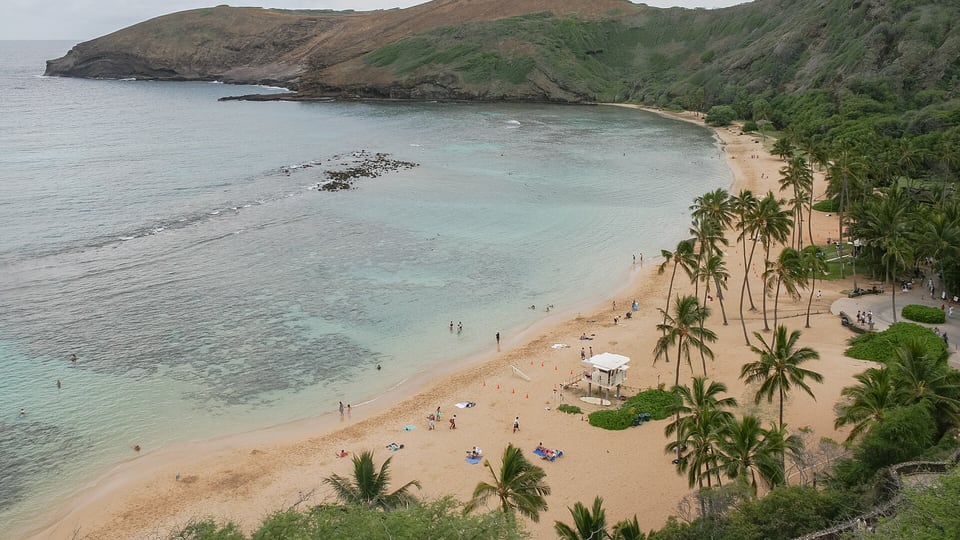
Hanauma Bay
Hanauma Bay was designated Hawaii’s first Marine Life Conservation District in 1967, and the preserve sits in a bay formed within a volcanic tuff ring. A management plan in 1990 cut visitor numbers and banned the feeding of fish, and every visitor watches an education video before going down to the beach.
Best for: Visitors who plan to snorkel and can fit a morning into the Wednesday-to-Sunday week · Area: Hanauma Bay Nature Preserve, at the eastern end of the south shore
Plan for It is closed on Mondays and Tuesdays, entry ends at 1:30 p.m. and everyone must leave by 4 p.m., and the schedule can change at any time. A reservation secures entry but not a parking stall, and the reef is sharp close to the shore.
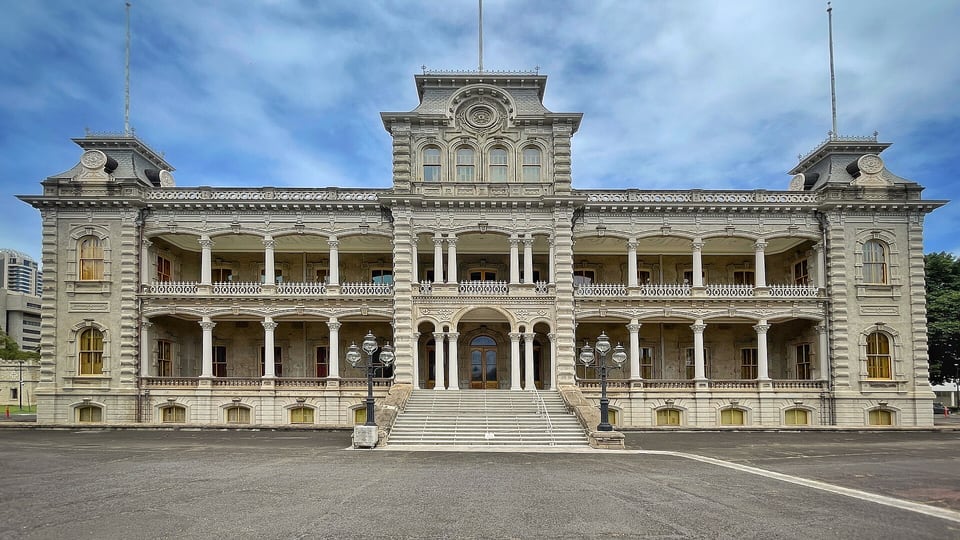
ʻIolani Palace
The Palace was completed in 1882, and its tours follow the story from then to the overthrow of the monarchy in 1893. It is open Tuesday to Saturday, 9 a.m. to 4 p.m., and closed Sunday, Monday and public holidays, and visitors must be at least five years old.
Best for: Visitors who want the monarchy’s story in the building where it was lived · Area: Downtown Honolulu, at King and Richards Streets
Plan for Tickets are timed and must be bought in advance, with no walk-up or same-day sales. Docent-led tours run only on Wednesday and Thursday, other days offer a self-led audio tour, and beachwear and large bags are not allowed in what the Palace calls a sacred place.
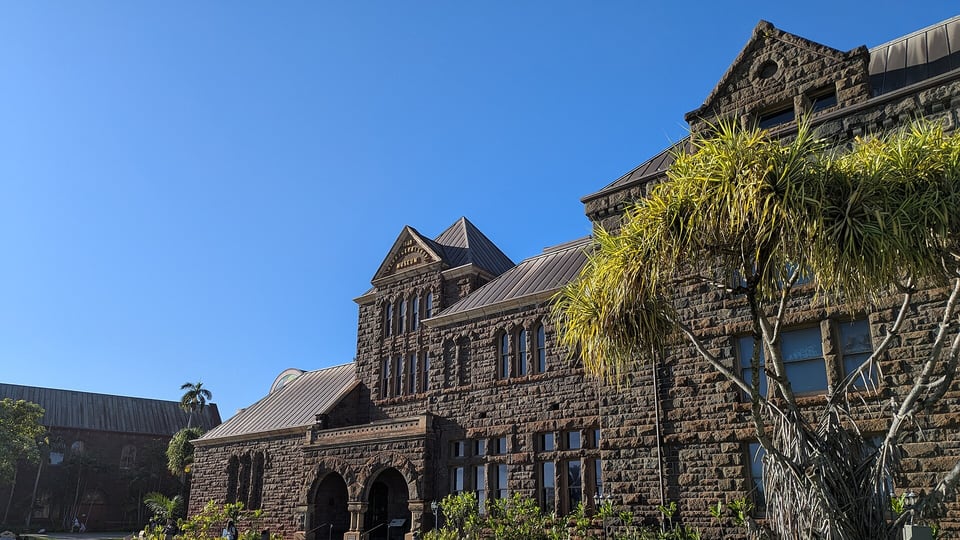
Bishop Museum
Charles Reed Bishop founded the museum in 1889 in honour of his wife, Princess Bernice Pauahi Bishop, the last descendant of the Kamehameha dynasty. Hawaiian Hall rises through three floors that move from gods and legend, to work and land, to the aliʻi and key moments of Hawaiian history.
Best for: Visitors who want the Native Hawaiian and wider Pacific context before or after the beach · Area: Bernice Street in Kalihi, north-west of Downtown
Plan for It sits in Kalihi rather than in Waikiki, so it is a bus or car leg, and most of the visit is indoors in halls that suit reading and looking. Backpacks over 20 pounds and travel luggage cannot enter the exhibit spaces.
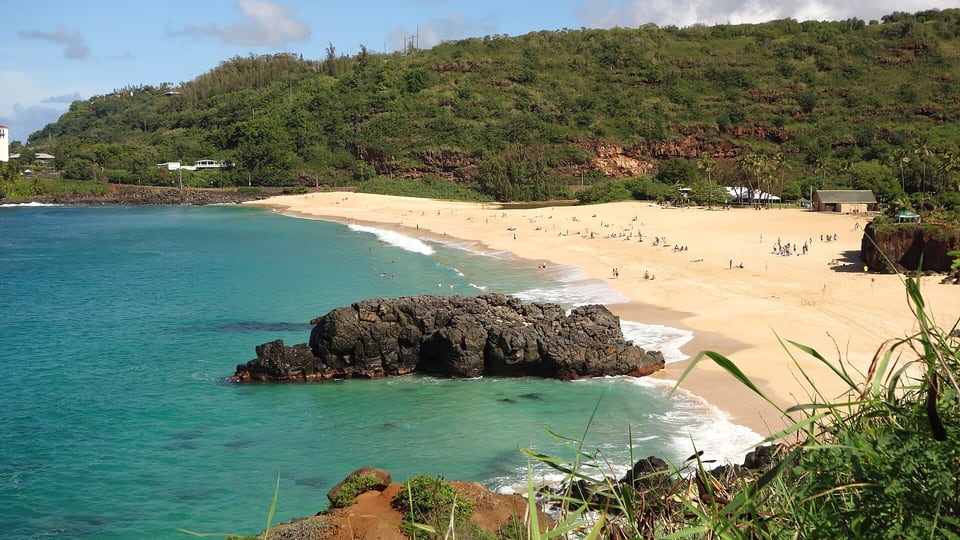
North Shore
The North Shore runs from Kaʻena Point to Kahuku, and Haleʻiwa is its largest town, with plantation-era buildings and beach parks on both sides. In the northern winter, swells from the North Pacific make Waimea Bay, Sunset Beach and the Banzai Pipeline surfing names, and in summer Waimea Bay is typically calm.
Best for: Visitors with a rental car or a booked circle tour who want a coast that changes with the season · Area: North Shore, between Haleʻiwa and Kahuku
Plan for Winter surf regularly floods sections of Kamehameha Highway and can close it for a time, and seasonal high surf on any shore can make swimming difficult and create strong currents. Read the daily forecast and swim only where lifeguards are posted.
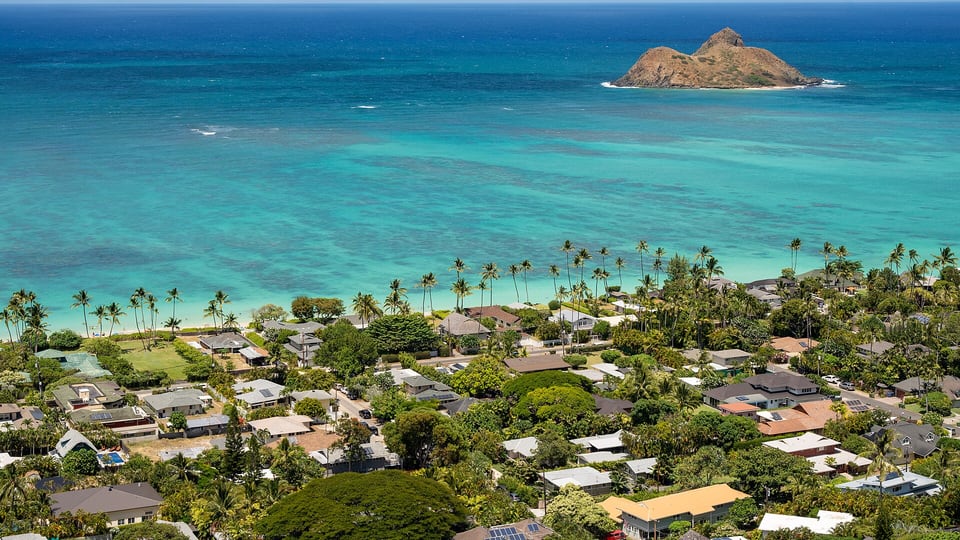
Kailua, Lanikai and Kualoa
Kailua lies over the Koʻolau range on the windward coast, with a crescent beach about two and a half miles long where the steady trade winds draw windsurfers and kitesurfers, and the Mokulua islets offshore. Kualoa Ranch, farther north on the same coast, runs guided tours of 90 minutes to three hours.
Best for: Visitors who want beach and ridge scenery without the North Shore drive · Area: Windward Oahu, from Kailua to Kualoa
Plan for Kualoa’s tours have limited availability, run rain or shine except in high wind or lightning, and count the briefing inside the listed time. Kailua and Kualoa are separate stops on the same road, so combining them takes a day.
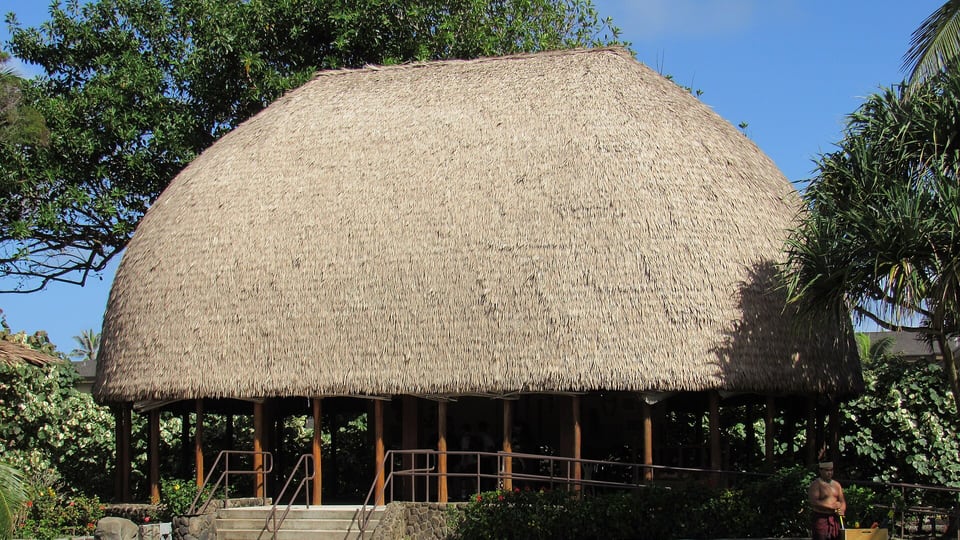
Polynesian Cultural Center
The Polynesian Cultural Center in Lāʻie is a self-guided visit through six island villages, each with hands-on stations and cultural presentations, followed in the evening by a luau or buffet and the HĀ: Breath of Life production. The villages are open 12:15 p.m. to 5:30 p.m., and the show ends at about 9 p.m.
Best for: Visitors who want an organised introduction to Polynesian cultures in one place, not a dinner show alone · Area: Lāʻie, on the windward end of the North Shore
Plan for The Center is closed on Sundays and most Wednesdays, and the drive from Waikiki takes at least 60 to 75 minutes, longer in the weekday afternoon rush. The full programme runs to about 9 p.m., so the return is a night drive.
Plan one, three or five days in Honolulu
One or two days: start from the weekday
On a Monday keep to Pearl Harbor, the Bishop Museum and an early Diamond Head slot; from Tuesday add the Palace.
Monday is the one day when the Palace and Hanauma Bay are both closed.
The trade-off A stay that begins on a Monday reaches Hanauma Bay on Wednesday at the earliest.
Three or four days: one city day on each side
Give Pearl Harbor and the Bishop Museum one day, the Palace and Chinatown another, and one Wednesday-to-Sunday morning to Hanauma Bay.
Skyline reaches Pearl Harbor, while the Palace and Chinatown are a bus ride from Waikiki.
The trade-off Docent-led Palace tours run only on Wednesday and Thursday, so a Tuesday visit is an audio tour.
Five days or more: a full day for each far coast
Spend one day on the North Shore and one on the windward coast, and add the Polynesian Cultural Center on a Monday, Tuesday, Thursday, Friday or Saturday.
The Center’s programme runs from noon to about 9 p.m., which pairs with a North Shore morning.
The trade-off Winter swells can flood the coast road, so keep the North Shore day free of fixed evening plans.
Costed plans: One Day in Honolulu: US$50 or Less? →
Sources
checked 2026-09-19. Recommendations are editorial judgements based on the cited sources below.
Choose a Honolulu base and explore nearby
Waikiki or Downtown?
Stay in Waikiki for beach mornings and tour pick-ups, and Downtown for the Palace and Chinatown on foot.
Waikiki has no rail station, and Downtown is served by the A Line bus from the rail.
The trade-off Downtown has no beach, and Waikiki is a bus leg from the Palace.
Ala Moana as the middle
Choose Ala Moana when shops, a city beach park and quick bus links matter more than the Waikiki strip.
The W Line and A Line buses both stop at Ala Moana.
The trade-off A stay here suits errands and bus days better than an early beach start.
Windward coast or North Shore for a second base?
Base on the windward coast for Kailua and Kualoa, and on the North Shore only for winter surf or a day that starts in Haleʻiwa.
Both coasts are a long drive from Waikiki, and the Polynesian Cultural Center puts that drive at 60 to 75 minutes.
The trade-off A far base pays off for one purpose, such as a winter surf season or a Kualoa booking, and less for a general stay.
Sources
checked 2026-09-19. Recommendations are editorial judgements based on the cited sources below.
Arrival and getting around
Daniel K. Inouye International Airport (HNL) handles both mainland arrivals and inter-island flights. Skyline’s airport station is beside Terminal 2, and the W Line bus runs from the airport through Downtown and Ala Moana to Waikiki every 10 to 15 minutes, less often after 7 p.m.
Skyline and TheBus take the same HOLO card, with a two-hour transfer window and a daily cap, and cash rides carry no transfer and no change. Rail runs between 4 a.m. and 10:30 p.m. and ends at the Kalihi Transit Center, so Waikiki and Downtown need a bus leg.
Rental cars are collected at a consolidated facility by shuttle from the terminals. TheBus and Skyline allow one standard suitcase and one smaller carry-on.
Best time to visit
Winter (December–February)
Average highs run 80.5 to 81.8°F (27 to 28°C) and lows 67 to 69°F (19 to 21°C) at the airport station on the south coast. This is the wetter half of the year there, at 1.8 to 2.2 inches a month, and the season when North Pacific swells reach the North Shore.
- Crowds
- Varies by event and attraction
Spring (March–May)
Highs rise four degrees between March (81°F) and May (85°F), and rainfall at the airport station falls to under an inch in April and May after 2.4 inches in March.
- Crowds
- Varies by event and attraction
Summer (June–August)
Highs reach 87 to 89°F (31 to 32°C), the warmest and driest stretch at the station, with 0.5 to 0.8 inches of rain a month. Waimea Bay is typically calm and clear on the North Shore.
- Crowds
- Varies by event and attraction
Autumn (September–November)
September is still near 88°F and dry at the station, then rain builds through October and November as highs ease to 84°F. Figures describe the south coast, not every shore of the island.
- Crowds
- Varies by event and attraction
Food and market life
Oahu’s farmers’ markets run on a weekly rota, so plan a meal by the day of the week. The market at Kapiʻolani Community College is on Saturday morning, the one at the Blaisdell Center is on Wednesday evening, and Kailua Town Center’s is on Thursday evening. The growers’ association advises bringing small notes.
Chinatown is the other half of the food map. Oahu Market, opened in 1904 at King and Kekaulike Streets, still sells fresh fish and produce from open-air stalls, and the streets around it were rebuilt after the fires of 1886 and 1900. Treat it as a market walk first and a meal second.
City profile
- Population (Urban Honolulu census-designated place (the urban core), not the island of Oahu or the City and County of Honolulu; 2020 census count, 2020): 350,964
Kamehameha III moved the permanent capital of the Hawaiian Kingdom to Honolulu in 1845. The city has been the capital since, first of the kingdom, then of the territory and, since 1959, of the state.
The attack on Pearl Harbor on 7 December 1941 brought the United States into the Second World War, and the harbor remains a major Navy base.
Famous for:
- Waikiki, a beach of six named stretches whose sand is largely imported, beneath the outline of Diamond Head.
- The ʻIolani Palace, completed in 1882, and Pearl Harbor, two chapters of Hawaiian history in one city.
Why Honolulu is planned by closing day and by shore
Honolulu is the capital of an island about 44 miles from end to end, and its main sights are set by the weekday more than by the map. Put the closing days on the calendar first, then fit the sights around them.
Waikiki faces south and holds most of the island’s hotel rooms. The North Shore takes the North Pacific swells in the northern winter, the windward coast lies over the Koʻolau range, and Pearl Harbor sits west of the city. Each is a separate leg from a Waikiki base.
A beach week can stay in Waikiki with Diamond Head as the one fixed appointment. A trip that adds the history and culture on this page spends more of its hours on schedules than on sand.
- Weekly closures
- Palace Sun–Mon · Hanauma Bay Mon–Tue
- First stay
- 4 days, 6 with the far coasts
- Moving around
- Skyline, TheBus, tours, rental car
- Main airport
- HNL · Skyline station and W Line bus
Watch Honolulu
Honolulu Must-Sees for First-Time Visitors: 4, 5 or 6 Days?
Build four core days around Waikīkī and Lēʻahi, Downtown Honolulu, Pearl Harbor and Hanauma Bay. Add a full North Shore day and another on Windward Oʻahu for a six-day plan. With five days, choose the coast that best fits your trip.

Planning your Honolulu visit: FAQs
Which days are the Palace, Hanauma Bay and the Polynesian Cultural Center closed?
The Palace is closed Sunday and Monday, Hanauma Bay is closed Monday and Tuesday, and the Polynesian Cultural Center is closed Sundays and most Wednesdays. Monday closes both the Palace and the bay, so it suits Pearl Harbor, the Bishop Museum and Diamond Head. The Bishop Museum and the Pearl Harbor visitor center open daily apart from a few holidays.
Do I need a rental car on Oahu?
Not for Waikiki, Downtown or Pearl Harbor, which buses and Skyline serve. A car or a booked transfer helps for Hanauma Bay, the North Shore, the windward coast and the Polynesian Cultural Center, which is a drive of at least 60 to 75 minutes from Waikiki. Diamond Head parking is reserved with the entry, and a Hanauma Bay reservation does not include a parking stall.
How do I reach Pearl Harbor without a car?
Ride Skyline to Hālawa Aloha Stadium station. Cross Kamehameha Highway to the ocean side and walk east to the visitor center, or take TheBus route 40, 42 or 51 one stop from across the station. Bags beyond a very small size are not allowed on the site, and storage is near the entrance.
Is a luau the same as a visit to the Polynesian Cultural Center?
No. A luau is a dinner and show, while the Center is a ticketed park of six island villages with hands-on stations, a canoe show and an evening production, and its luau is one meal option among several. The Bishop Museum and the Palace tell the Hawaiian story through collections and rooms instead of performance.
How close can I go to turtles, monk seals and dolphins?
Stay at least 10 feet from sea turtles and 50 feet from Hawaiian monk seals, and at least 150 feet from a mother seal and her pup. Federal law bars approaching spinner dolphins within 50 yards and humpback whales within 100 yards. Do not disturb animals that are sleeping on the beach.
Is there a separate tourist fee, or green fee, for Hawaii?
The change people call the green fee is a tax on lodging. Act 96 raised the state’s transient accommodations tax on hotel rooms, resort timeshares and other short-term rentals with effect on 1 January 2026. Parks and attractions set their own entry rules, as Diamond Head and Hanauma Bay do above.
Make your Honolulu plans
Compare tours, tickets and activities in Honolulu →
Choose your departure market and search flights to Honolulu from the Mubboo Flights homepage.
Compare flights ↗Sources
Latest source check: .
Show all 44 sources
- Wikipedia, Honolulu (2020 census count, capital since 1845, districts) (checked 2026-09-19)
- Wikipedia, Oʻahu (island size, City and County of Honolulu) (checked 2026-09-19)
- Wikipedia, Waikīkī (six beaches, imported sand, Ala Wai Canal) (checked 2026-09-19)
- Wikipedia, Diamond Head (tuff cone, Lēʻahi, 1908 trail) (checked 2026-09-19)
- Wikipedia, North Shore (Oʻahu) (checked 2026-09-19)
- Wikipedia, Waimea Bay (checked 2026-09-19)
- Wikipedia, Hanauma Bay (tuff ring, marine life conservation district) (checked 2026-09-19)
- Wikipedia, Kailua, Hawaii (beach, wind, Mokulua islets) (checked 2026-09-19)
- Wikipedia, Chinatown, Honolulu (Oahu Market, 1886 and 1900 fires) (checked 2026-09-19)
- Hawaii State Parks, Diamond Head State Monument, FAQ (checked 2026-09-19)
- Hawaii State Parks, Diamond Head State Monument, about the reservations (checked 2026-09-19)
- National Park Service, Pearl Harbor National Memorial, basic information (checked 2026-09-19)
- National Park Service, Pearl Harbor National Memorial, frequently asked questions (checked 2026-09-19)
- City and County of Honolulu, Hanauma Bay Nature Preserve (checked 2026-09-19)
- City and County of Honolulu, Hanauma Bay safety and accessibility (checked 2026-09-19)
- ʻIolani Palace, hours of operation (checked 2026-09-19)
- ʻIolani Palace, tours and things to know before a visit (checked 2026-09-19)
- ʻIolani Palace, docent-led tours (checked 2026-09-19)
- Bishop Museum, plan your visit (checked 2026-09-19)
- Bishop Museum, signature galleries (checked 2026-09-19)
- Polynesian Cultural Center, hours of operation (checked 2026-09-19)
- Polynesian Cultural Center, directions, parking and shuttle (checked 2026-09-19)
- Polynesian Cultural Center, island villages and activities (checked 2026-09-19)
- Kualoa Ranch, frequently asked questions (checked 2026-09-19)
- City and County of Honolulu Department of Transportation Services, Skyline and the airport (checked 2026-09-19)
- City and County of Honolulu Department of Transportation Services, Skyline connections (checked 2026-09-19)
- City and County of Honolulu Department of Transportation Services, TheBus and Skyline HOLO card and pass structure (checked 2026-09-19)
- City and County of Honolulu Department of Transportation Services, Skyline operating hours and frequency (checked 2026-09-19)
- City and County of Honolulu Department of Transportation Services, baggage and rider rules (checked 2026-09-19)
- HOLO, passes for visitors (checked 2026-09-19)
- Honolulu Authority for Rapid Transportation, Skyline operating segments (checked 2026-09-19)
- Hawaii Department of Transportation Airports, Daniel K. Inouye International Airport (checked 2026-09-19)
- Hawaii Department of Transportation Airports, car rentals and the consolidated rental car facility (checked 2026-09-19)
- NOAA NCEI, 1991–2020 monthly climate normals, Honolulu International Airport station (checked 2026-09-19)
- National Weather Service Honolulu, surf zone forecast (checked 2026-09-19)
- Waikīkī Aquarium, box jellies (checked 2026-09-19)
- Waikīkī Aquarium, box jellyfish calendar and caution (checked 2026-09-19)
- Hawaii Department of Health Clean Water Branch, beach monitoring and brown water advisories (checked 2026-09-19)
- NOAA Fisheries, viewing marine wildlife in Hawaii (checked 2026-09-19)
- Hawaii Department of Taxation, Announcement 2025-03 on Act 96 (checked 2026-09-19)
- Hawaii Farm Bureau, farmers’ markets (checked 2026-09-19)
- The booking platform Partner API, GET /partner/destinations (Honolulu 59070, Oahu 672) (checked 2026-09-19)
- TheBus, W Line Airport-Waikiki timetable (weekday, Saturday, Sunday), effective 31 May 2026 (checked 2026-09-28)
- Hawaii Department of Transportation Airports, HNL: TheBus and Skyline (hours and frequencies) (checked 2026-09-28)
Photo credits
- waikiki — Ossewa · CC BY-SA 4.0.
- diamond head — Famartin · CC BY-SA 4.0.
- pearl harbor — Famartin · CC BY-SA 4.0.
- iolani palace — Steven Pavlov · CC BY-SA 4.0.
- hanauma bay — Diego Delso · CC BY-SA 3.0.
- bishop museum — Sdkb · CC BY-SA 4.0.
- north shore — Daniel Ramirez from Honolulu, USA · CC BY 2.0.
- windward coast — Raita Futo from Tokyo, Japan · CC BY 2.0.
- polynesian cultural center — Farragutful · CC BY-SA 4.0.
Mubboo Editorial Team · Reviewed by Mubboo Editorial Team


