
Hoi An travel guide
Hoi An
Hoi An is a former river port near the mouth of the Thu Bon, about 29km south of Da Nang airport. Its UNESCO-listed old town sits on the north bank of the river, with palm wetlands and the beaches of An Bang and Cua Dai between it and the sea.
Three days cover the old town, an evening of lanterns on the Hoai River and a sunrise trip to My Son. Four or five days add a beach day or a boat to the Cham Islands, and a week leaves room for Da Nang’s Marble Mountains, Ba Na Hills or a long day to Huế.

Find your Hoi An experience
Activities
Featured activities in Hoi An


Prices at a glance
What we sell today and what recent flight searches found. No hotel prices; nothing here is a trip total.
- Tours and tickets in Hoi Anfrom US$19.27
Live from Viator when this page loaded · per adult · changes by date.
Top experiences
Top experiences in Hoi An
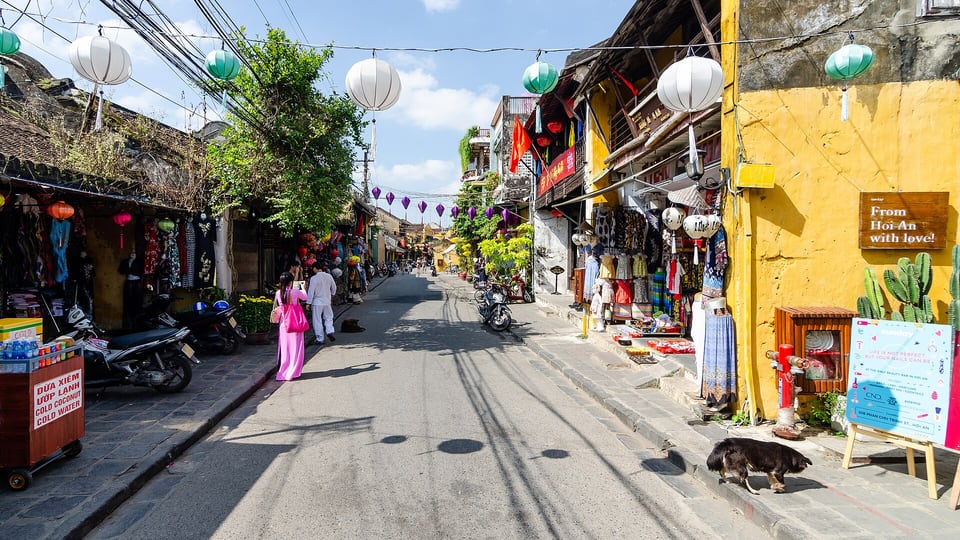
Hoi An Ancient Town on foot
UNESCO counts 1,107 timber-frame buildings in the 30-hectare core, set in unbroken rows along narrow streets. Shopfronts face the street and backs open to the river, a layout made for unloading boats that survived because trade moved away in the 19th century.
Best for: Tran Phu and Nguyen Thai Hoc streets in the early morning, before the shops fill · Area: Minh An, between Tran Phu Street and the Hoai River
Plan for Visiting the streets needs the heritage ticket, which also opens a set number of houses, halls and museums. The core is reserved for pedestrians and non-motorised vehicles from 09:00 to 21:30 in summer and to 21:00 in winter.
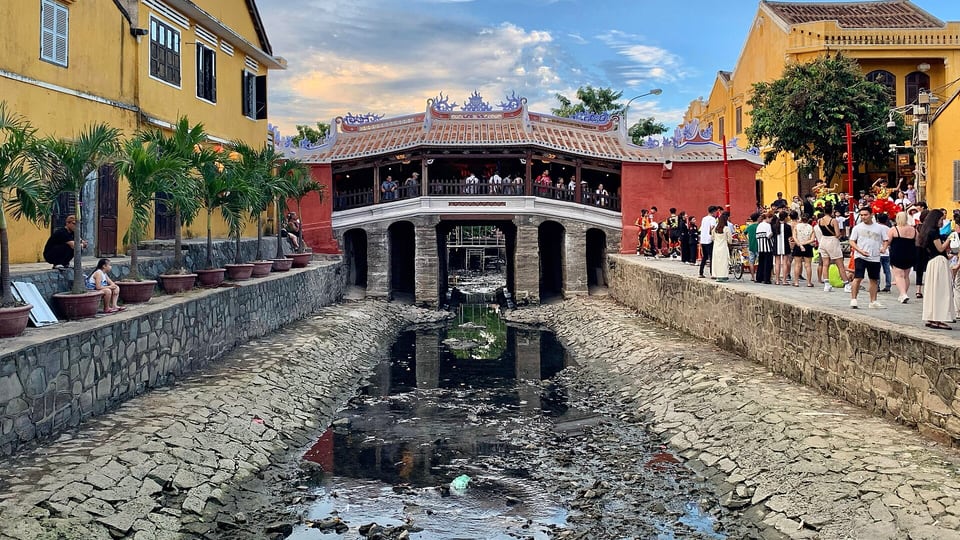
The Japanese Covered Bridge (Chùa Cầu)
The 18m wooden bridge carries a small temple on its north side, and in 1719 Lord Nguyễn Phúc Chu named it Lai Viễn Kiều, the bridge for guests from afar. It is said to date from 1593, though the evidence is inconclusive, and UNESCO dates it to the 18th century.
Best for: An early look at the carved roof, the monkey and dog statues, and the canal below · Area: West end of Tran Phu Street, crossing to Nguyen Thi Minh Khai Street
Plan for It closed for restoration in December 2022 and reopened in August 2024, after work on its foundation, pillars and abutments. Crossing into the temple uses the old-town ticket, which covers either the bridge or the Quan Công Temple.
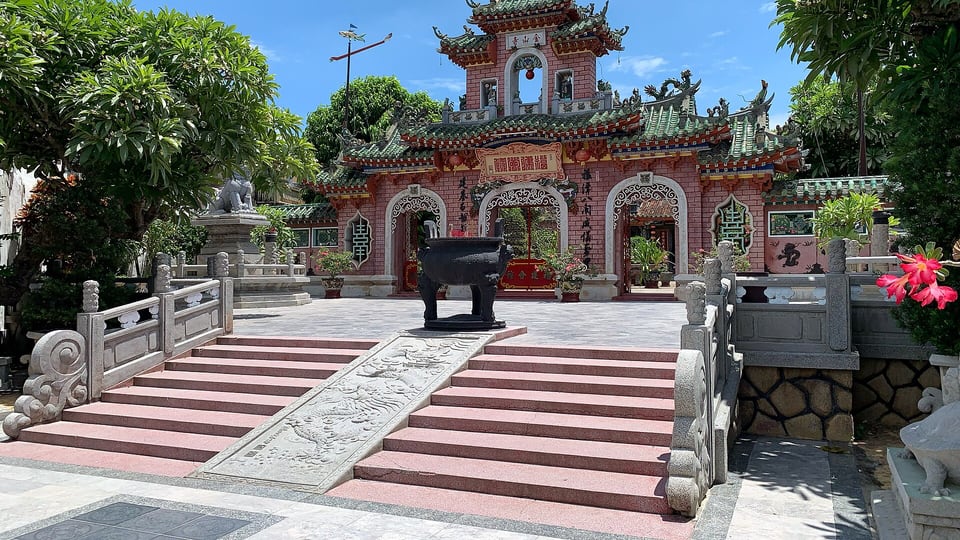
Assembly halls and merchant houses
Five Chinese community halls stand on Tran Phu Street, founded by merchants from Fujian, Guangdong, Hainan and Chaozhou, plus one for the Chinese community as a whole. The Fujian hall, the largest, began as a Vietnamese temple of 1697 that Fujian merchants bought in 1759.
Best for: Carved wood, glazed tiles and altars to Mazu in the halls, and a family home still lived in · Area: Tran Phu and Nguyen Thai Hoc streets
Plan for Tan Ky House on Nguyen Thai Hoc Street, built in the late 18th century and kept by seven generations of one family, became Hoi An’s first house named a national heritage site in 1985. Each hall or house counts as one of the ticket’s site visits.
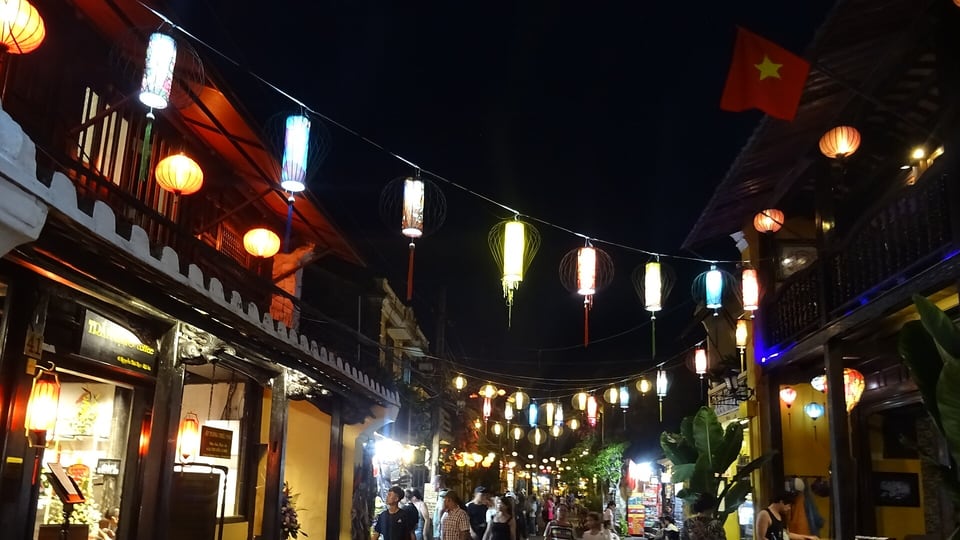
Lantern nights on the Hoai River
On the 14th night of every lunar month, the eve of the full moon, the town holds Old Town Night. Electric lights give way to candles and lanterns, and local groups play folk music, bài chòi card-singing and chess in the streets.
Best for: A full-moon evening walk, then a short boat ride on the river · Area: The Hoai River waterfront and Bach Dang Street
Plan for The date follows the lunar calendar, so check the month you travel. Boat rides with a floating lantern run every evening, and the ones checked for this page last 15 to 20 minutes.
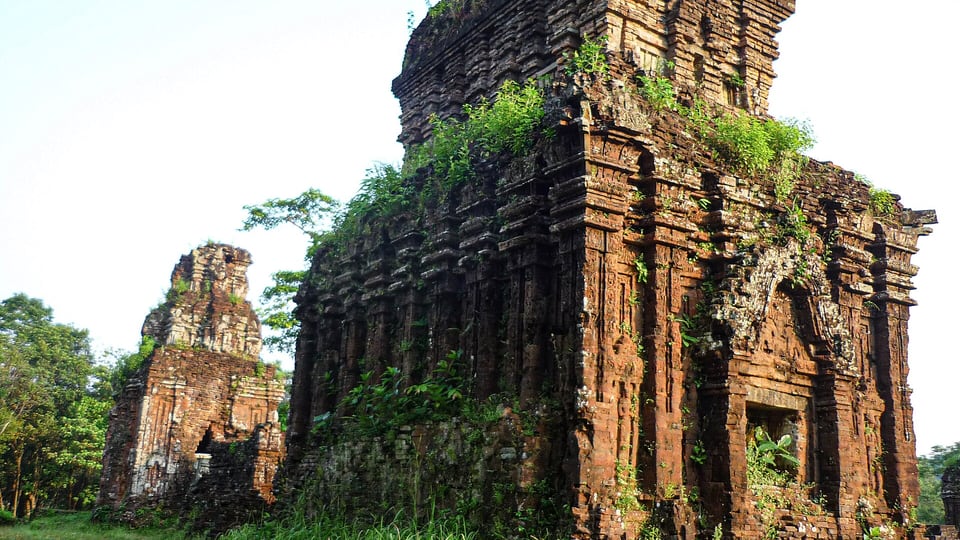
My Son Sanctuary
UNESCO lists 71 standing monuments in eight groups at My Son, brick tower temples built between the 4th and 13th centuries in what was the religious and political capital of the Champa kingdom. Many were damaged in 20th-century wars, and US aircraft bombed the area in August 1969.
Best for: Carved brick towers in a quiet valley, seen at sunrise before the heat · Area: Thu Bon commune, about 36km from Hoi An
Plan for The temples sit in a valley ringed by hills, about 36km from town. UNESCO notes that unexploded ordnance may remain in the buffer zone, so keep to the marked paths.
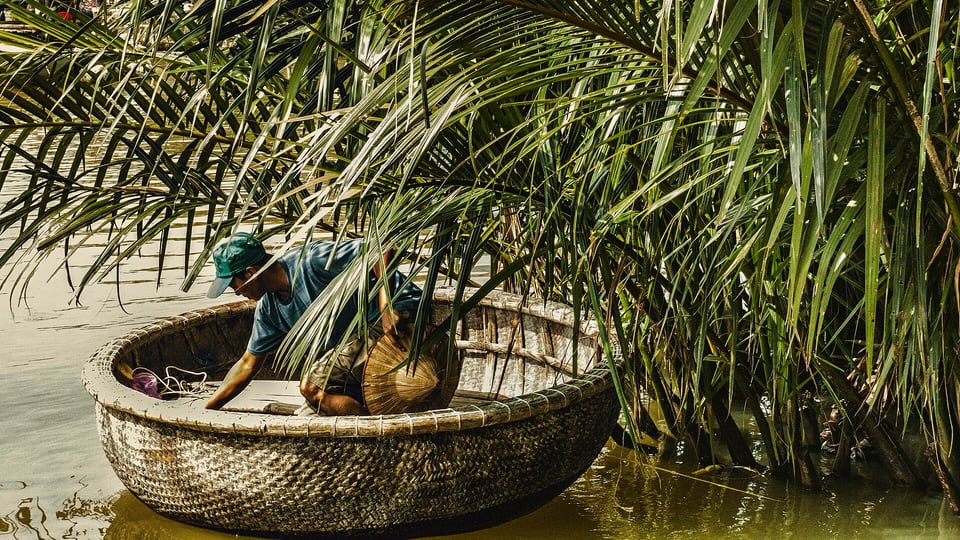
Basket boats in the Cam Thanh coconut forest
The Bảy Mẫu coconut forest in Cam Thanh is a nipa palm wetland of nearly 100 hectares near the Thu Bon estuary, crossed by creeks where boatmen paddle round basket boats. It lies inside the Cu Lao Cham–Hoi An Biosphere Reserve, designated by UNESCO in 2009.
Best for: A morning on the water among the palms, with net-casting and crab fishing · Area: Cam Thanh, east of the old town toward the estuary
Plan for The creeks are a living for families who fish for shrimp and crab, as well as a ride. The site has charged its own entrance since December 2017, and the basket-boat trips checked for this page include that ticket.
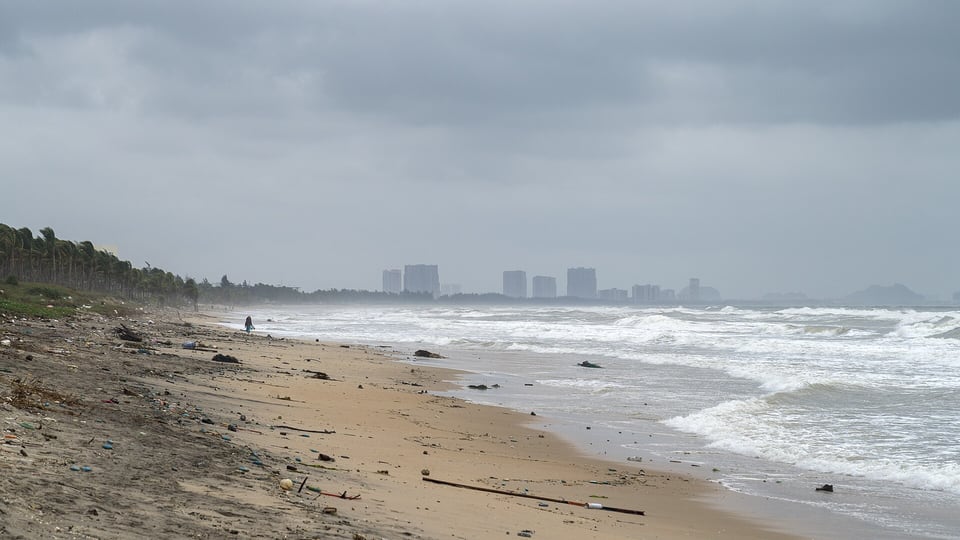
An Bang and Cua Dai beaches
Hoi An’s coast runs from Cua Dai at the river mouth north to An Bang. Cua Dai lost much of its sand to erosion, and an embankment of more than 2km, built from 2020, had restored a stretch of beach by 2022.
Best for: A swim and a seafood lunch between old-town days, when the sea is calm · Area: The coast east of the old town, from Cua Dai to An Bang
Plan for Storms between 23 October and 3 November 2025 eroded nearly 8km of coast between Cua Dai and An Bang, cutting cliffs of 6 to 7m into the sand. A protection project begun in early 2025 is due to finish in 2026.
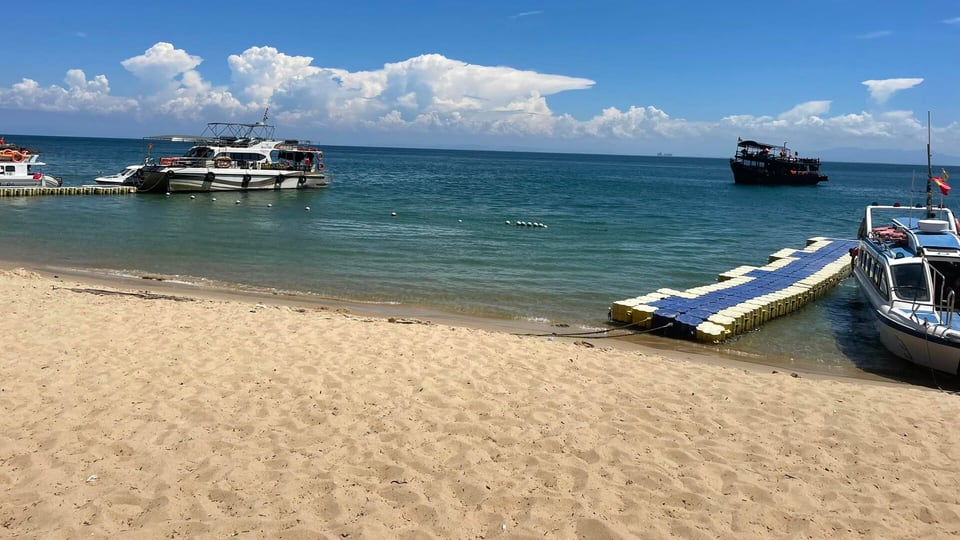
The Cham Islands (Cu Lao Cham)
Cu Lao Cham is a group of eight islands about 15km offshore, some 25 minutes by speedboat from Cua Dai pier. With Hoi An it forms a UNESCO biosphere reserve designated in 2009, and surveys there have recorded 134 species of coral.
Best for: Snorkelling over coral and a lunch of seafood on a calm-sea day · Area: Off the coast, reached from Cua Dai pier
Plan for Vietnam’s national tourism authority says rough seas often cut the islands off from October to February. Islanders banned plastic bags in 2009, and arrivals are checked at the pier.
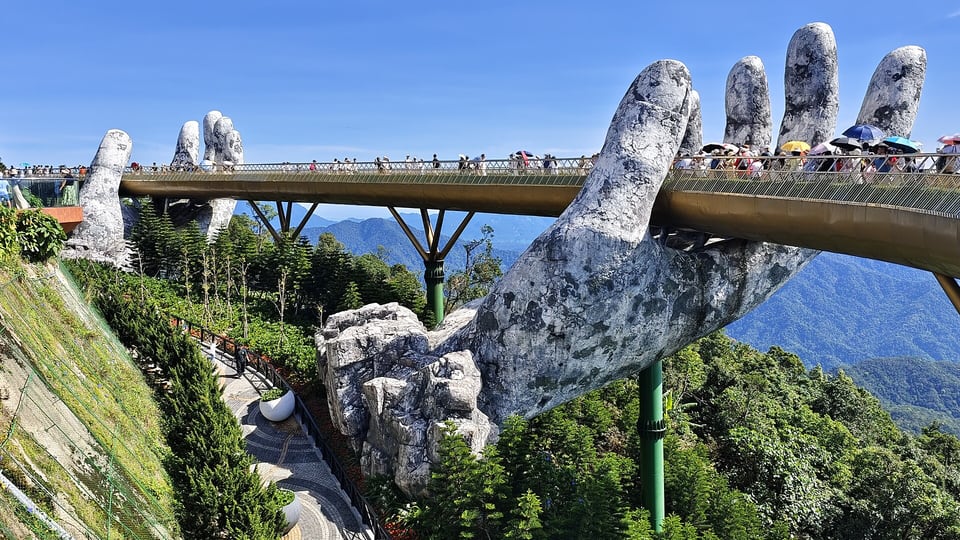
Ba Na Hills and the Golden Bridge
Ba Na is a hill station the French founded in 1919, about 42km from Da Nang at some 1,500m. Its cable car, opened in 2013, holds the record for the longest non-stop single-track cable car at 5,801m, and the 150m Golden Bridge opened in June 2018.
Best for: Cooler mountain air and the bridge held up by two giant hands · Area: Hòa Vang, in the Trường Sơn Mountains west of Da Nang
Plan for The hands look like weathered stone but are made of fibreglass and wire mesh. The hill station is now a resort run by Sun Group, and tours are sold with or without the cable-car ticket, so check which one you are buying.
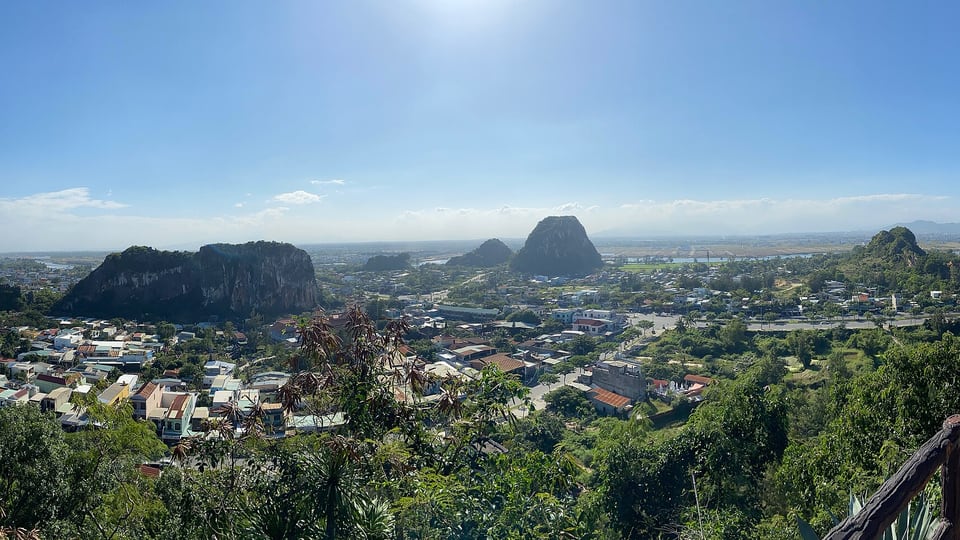
The Marble Mountains
Five marble and limestone hills on Da Nang’s southern edge are named for the five elements. Thủy Sơn, the one open to visitors, has a 156-step stairway to its summit and caves holding Buddhist and Hindu sanctuaries, among them Huyền Không.
Best for: Cave shrines and a summit view over the coast on the road between Da Nang and Hoi An · Area: Ngũ Hành Sơn, south of central Da Nang
Plan for Stone-carving workshops line the base, but cutting stone from the mountains themselves has been banned. The UK FCDO asks visitors to cover shoulders and knees at religious sites.
How to split a Hoi An trip
Two to three days: the old town, the river and My Son
Pick this length for the old town streets, a lantern evening and a sunrise trip to the Cham temples.
My Son is about 36km from town, so a sunrise tour is back before lunch and leaves the afternoon for the halls and houses.
The trade-off The coast and the islands wait for a longer stay.
Four to five days: add the palms, the beach and the islands
Pick this length once the Cam Thanh basket boats, An Bang and a Cham Islands day all matter.
The islands are about 25 minutes by speedboat from Cua Dai, and boats run most reliably from March to September.
The trade-off In the wet months from October a sea day may not run at all, so shift the spare days to the old town.
A week: Da Nang, Ba Na Hills and Huế
Pick this length to add the Marble Mountains, Ba Na Hills and a long day to Huế.
Ba Na lies about 42km from Da Nang, and Huế is on the far side of the Hải Vân Pass.
The trade-off Two northern day trips mean two early starts and long drives back to Hoi An.
Sources
checked 2026-09-27. Recommendations are editorial judgements based on the cited sources below.
- UNESCO World Heritage Centre — My Son Sanctuary
- Hoi An World Cultural Heritage Conservation Centre — Old Town Night on the 14th lunar night (8 July 2025)
- Vietnam Tourism (Vietnam National Authority of Tourism) — Cu Lao Cham
- Wikipedia — Bảy Mẫu Coconut Forest
- Wikipedia — Bà Nà Hills
- Wikipedia — Hải Vân Pass
Where to stay in and around Hoi An
The Ancient Town: lanterns on your doorstep
Consider the old town or its edges to walk the streets early and to be back from the river on foot at night.
The core is closed to motor traffic from 09:00 until 21:00 or 21:30, depending on the season.
The trade-off Riverside rooms are the first to take floodwater in October and November.
An Bang and Cua Dai: the coast east of town
Consider the beach strip for sea mornings and an early speedboat from Cua Dai pier.
Guesthouses and seafood restaurants sit behind the sand, a short ride from the old town.
The trade-off The late-2025 storms took nearly 8km of beach, and the repair project runs into 2026.
Da Nang: the airport city
Consider Da Nang for the first or last night, a city beach at My Khe and the Dragon Bridge at the weekend.
The airport is about 29km from Hoi An, and Ba Na Hills and the Marble Mountains are closer to Da Nang.
The trade-off Every old-town evening becomes a drive of 40 minutes or more each way.
Sources
checked 2026-09-27. Recommendations are editorial judgements based on the cited sources below.
- Hoi An World Cultural Heritage Conservation Centre — Old town ticket and pedestrian-street information
- Wikipedia — Hội An (city)
- VnExpress International — Storms and rising seas sweep away 8km of beach in Hoi An (15 November 2025)
- Vietnam Tourism (Vietnam National Authority of Tourism) — Cu Lao Cham
- Wikipedia — Da Nang
- VinWonders — Da Nang Airport to Hoi An (14 November 2025)
Airports and getting around
Hoi An has no airport of its own. Da Nang International Airport (DAD), Vietnam’s third international airport, lies about 29km north, and the drive takes roughly 40 to 50 minutes depending on traffic and route.
Chu Lai International Airport, 73km to the south, is a second option, about an hour and a half by road.
Inside the old town you walk or cycle, since the core is closed to motor traffic during the day. For longer rides the UK FCDO suggests pre-arranged transport or the Grab and XanhSM apps, and it warns that motorbike accidents have killed and injured British nationals in Vietnam.
Best time to visit
Spring (February-April)
The driest stretch: Da Nang averages 23.6mm of rain in February and 25mm in March, with daytime highs rising from 26°C to 31°C. Boats to the Cham Islands usually run again from March.
- Crowds
- Varies by event and attraction
Summer (May-August)
The hottest months, with average highs of 33°C to 34.5°C, and rain under 150mm a month. The UK FCDO notes that the tropical storm season runs from May to November.
- Crowds
- Varies by event and attraction
Autumn (September-November)
Rain climbs from 350.7mm in September to 628mm in October and 448.2mm in November. The FCDO dates central Vietnam’s seasonal flooding to October and November, and in late October 2025 floodwater reached waist height in the old town.
- Crowds
- Varies by event and attraction
Winter (December-January)
Cooler, with highs near 25°C and 218.4mm of rain in December. The FCDO says central Vietnam’s rain season runs to December, and boats to the Cham Islands are often suspended until February.
- Crowds
- Varies by event and attraction
Food: cao lầu, bánh mì and white rose dumplings
Cao lầu is Hoi An’s own noodle dish: rice noodles soaked in lye water, pork cooked like char siu, fresh herbs and a spoonful of broth. Local legend says the water must come from the old Bá Lễ well and the ash from the Cham Islands. A cook told CNN in 2019 that her noodle water still comes from that well.
Hoi An’s bánh mì gained a following after Anthony Bourdain declared one from Bánh Mì Phượng the best in the world, a story CNN reported in 2018. White rose dumplings pair thin, shrimp-filled bánh bao with larger bánh vạc, traditionally made with water from the Bá Lễ well.
Mì Quảng, wide rice noodles in a little turmeric-tinted broth with peanuts and sesame rice crackers, comes from Quảng Nam, the former province around Hoi An. Vietnam added it to the national intangible cultural heritage list in August 2024.
City profile
- Population (Former Hội An city, Quảng Nam Province, 2018 figure; the city was dissolved in Vietnam’s 2025 reforms and its wards now belong to Da Nang, 2018): 152,160
Before the Vietnamese arrived, the Cham traded from the Thu Bon estuary, with My Son upriver as their spiritual capital and the port as their commercial one.
From the 15th to the 19th century Hoi An was a trading port for Southeast and East Asia and beyond. A Japanese quarter had formed by 1617, and Chinese merchants, mostly from Fujian, later took over much of its trade.
In the 19th century the river channels silted and large ships could no longer dock, and after 1888 many Chinese merchants moved to Da Nang. The slowdown left the old town largely unchanged.
UNESCO inscribed Hoi An Ancient Town in 1999. On 1 July 2025 Quảng Nam province merged into Da Nang, and Hoi An’s wards have been part of Da Nang city since.
Famous for:
- The Japanese Covered Bridge, which has appeared on the 20,000 dong banknote since 2006.
- Old Town Night on the 14th night of each lunar month, when candles and lanterns replace the town’s electric lights.
- Express tailoring, with hundreds of shops able to make a suit to measure in about five hours.
- Cao lầu, rice noodles soaked in lye water and served with pork, herbs and a little broth, a dish local legend ties to the town’s wells.
Why Hoi An is worth the trip
UNESCO describes Hoi An as an exceptionally well-preserved Southeast Asian trading port of the 15th to 19th centuries. Its 30-hectare core holds 1,107 timber-frame buildings, from shophouses to pagodas and family cult houses, on a street grid that still backs onto the river.
Walking the old town streets needs a heritage ticket. Since May 2023 it has covered the streets, the Japanese Bridge or the Quan Công Temple, and a set number of other sites, and its revenue funds conservation. By February 2026, twelve self-service ticket kiosks had been installed.
The old town floods most years. On 30 October 2025 the Thu Bon rose to 5.62m, 0.14m above the 1964 record, and about 40,000 tourists were moved between hotels. The UK FCDO dates central Vietnam’s seasonal flooding to October and November.
The US State Department rates Vietnam Level 1, exercise normal precautions, and notes that unexploded ordnance remains, with low risk in tourist areas. The UK FCDO warns of bag-snatching from motorbikes and of methanol in drinks. Both were checked on 27 September 2026.
Since July 2025 Hoi An has belonged to Da Nang city. Many visitors split a stay between the two: Hoi An for the old town and the river, Da Nang for My Khe beach, the Marble Mountains and the cable car to Ba Na Hills.
- Plan by trip type
- The old town and the Hoai River · My Son and the Cam Thanh palms inland · An Bang and the Cham Islands by sea · Da Nang and Ba Na Hills to the north
- Good first stay
- 3 days: old town, a lantern night, My Son; 4-5 days adds the coast or Cham Islands; a week adds Da Nang, Ba Na Hills or Huế
- Climate
- Driest February to April; rain peaks in October and November, when the old town can flood
- Main gateway
- No airport of its own: Da Nang (DAD), about 29km north, is roughly 40-50 minutes by road
Planning your Hoi An visit: FAQs
Do I need a ticket to walk around Hoi An old town?
Yes. The heritage ticket covers the old town streets plus a set number of sites, including the Japanese Bridge or the Quan Công Temple and houses such as Tan Ky. The current ticket took effect in May 2023, after the town said only about 40% of its 15,000 daily visitors were buying one.
Is the Japanese Covered Bridge open after its restoration?
Yes. It closed in December 2022 and reopened in August 2024, after its foundation, pillars and abutments were reinforced and the temple inside repainted. Entry to the temple is one of the choices on the old-town ticket.
When is the Hoi An lantern festival?
Old Town Night is held on the 14th night of each lunar month, the eve of the full moon, so its date on the Western calendar moves every month. The town has held a monthly lantern night since 1998.
Should I avoid Hoi An in the flood season?
Plan around it. The FCDO dates central Vietnam’s seasonal flooding to October and November, and in 2025 the Thu Bon passed its 1964 record on 30 October. If you travel then, keep plans flexible and follow local warnings.
Should I stay in Hoi An or Da Nang?
Stay in Hoi An to walk the old town early and late, and in Da Nang for city beaches and a short airport ride. Da Nang’s Dragon Bridge breathes fire at 9pm on weekend nights, while Hoi An’s lanterns are best seen from a room within walking distance.
How far is Hoi An from Da Nang airport?
About 29km, or roughly 40 to 50 minutes by car. Chu Lai airport, 73km to the south, is the other option.
Can I really get clothes tailored in a day?
Often, yes: VnExpress reported in May 2026 that express shops make a suit in about five hours. One shop owner warned that some newer businesses cut quality to offer low prices, so leave time for a second fitting and pay only once the fit is right.
Is cao lầu only made in Hoi An?
It is Hoi An’s own dish, and local legend says it cannot be made properly elsewhere, because the noodles need water from the Bá Lễ well and ash from the Cham Islands. That is legend rather than a documented rule, although one cook told CNN in 2019 that she still uses the well.
What do the US and UK governments advise for Vietnam?
The US State Department rates Vietnam Level 1, exercise normal precautions, as updated on 24 June 2026. The UK FCDO flags petty theft, drink spiking and methanol poisoning, and landmines in former battlefields of central Vietnam. Both were checked on 27 September 2026.
Make your Hoi An plans
Compare tours, tickets and activities in Hoi An →
Choose your departure market and search flights to Hoi An from the Mubboo Flights homepage.
Compare flights ↗Sources
Latest source check: .
Show all 39 sources
- Wikipedia — Hội An (city) (checked 2026-09-27)
- Wikipedia — Hội An Old Town (checked 2026-09-27)
- UNESCO World Heritage Centre — Hoi An Ancient Town (checked 2026-09-27)
- UNESCO World Heritage Centre — My Son Sanctuary (checked 2026-09-27)
- UNESCO Man and the Biosphere — Cu Lao Cham–Hoi An Biosphere Reserve (checked 2026-09-27)
- Wikipedia — Japanese Bridge (Chùa Cầu) (checked 2026-09-27)
- VietnamNet — Hoi An’s Japanese Bridge reopens after two years of restoration (29 July 2024) (checked 2026-09-27)
- Hoi An World Cultural Heritage Conservation Centre — Old town ticket and pedestrian-street information (checked 2026-09-27)
- Hoi An World Cultural Heritage Conservation Centre — Old Town Night on the 14th lunar night (8 July 2025) (checked 2026-09-27)
- VnExpress International — Hoi An needs revenue to maintain conservation (7 April 2023) (checked 2026-09-27)
- Vietnam.vn — Hoi An launches automated ticketing kiosks (9 February 2026) (checked 2026-09-27)
- Danang Fantasticity (Da Nang city tourism portal) — Tan Ky Ancient House (checked 2026-09-27)
- Wikipedia — Mỹ Sơn (checked 2026-09-27)
- Wikipedia — Bảy Mẫu Coconut Forest (checked 2026-09-27)
- Wikipedia — Cu Lao Cham Marine Park (checked 2026-09-27)
- Vietnam Tourism (Vietnam National Authority of Tourism) — Cu Lao Cham (checked 2026-09-27)
- VnExpress International — Underwater embankment restores eroded Cua Dai beach (22 July 2022) (checked 2026-09-27)
- VnExpress International — Storms and rising seas sweep away 8km of beach in Hoi An (15 November 2025) (checked 2026-09-27)
- VnExpress International — A year under water: record floods in 2025 (25 December 2025) (checked 2026-09-27)
- ABC News — Vietnam tourist sites submerged as record rainfall causes flooding (29 October 2025) (checked 2026-09-27)
- US Department of State — Vietnam Travel Advisory (Level 1, updated 24 June 2026) (checked 2026-09-27)
- GOV.UK — Vietnam travel advice: safety and security (updated 21 September 2026) (checked 2026-09-27)
- GOV.UK — Vietnam travel advice: warnings and insurance, tropical storm season (checked 2026-09-27)
- Wikipedia — Da Nang (checked 2026-09-27)
- Wikipedia — Da Nang International Airport (checked 2026-09-27)
- VinWonders — Da Nang Airport to Hoi An (14 November 2025) (checked 2026-09-27)
- Wikipedia — Bà Nà Hills (checked 2026-09-27)
- Wikipedia — Golden Bridge (Vietnam) (checked 2026-09-27)
- Wikipedia — Marble Mountains (Ngũ Hành Sơn) (checked 2026-09-27)
- Wikipedia — Dragon Bridge (Da Nang) (checked 2026-09-27)
- Wikipedia — Hải Vân Pass (checked 2026-09-27)
- Wikipedia — Complex of Huế Monuments (checked 2026-09-27)
- Wikipedia — Cao lầu (checked 2026-09-27)
- CNN Travel — Cao lau: the culinary emblem of Hoi An (24 September 2019) (checked 2026-09-27)
- CNN Travel — On the hunt for Vietnam’s best banh mi (24 September 2018) (checked 2026-09-27)
- Wikipedia — Mì Quảng (checked 2026-09-27)
- VnExpress International — Tailoring that takes hours for a suit in Hoi An (9 May 2026) (checked 2026-09-27)
- The booking platform — Hoi An destination mapping d5229 (checked 2026-09-27)
- The booking platform — Da Nang destination d4680 (not mapped; referenced for Da Nang departures) (checked 2026-09-27)
Photo credits
- hoi an ancient town — Steffen Schmitz · CC BY-SA 4.0.
- japanese covered bridge — Chainwit. · CC BY 4.0.
- assembly halls merchant houses — Chainwit. · CC BY 4.0.
- lantern nights hoai river — Christophe95 · CC BY-SA 4.0.
- my son sanctuary — Philip Nalangan · CC BY 4.0.
- cam thanh basket boats — Chester Ho chesterho · CC0.
- an bang cua dai beaches — Alexkom000 · CC BY 4.0.
- cham islands — Theguywithkpdomain · CC0.
- ba na hills golden bridge — DvTor8303 · CC0.
- marble mountains — Kuroczynski · CC BY-SA 4.0.
Mubboo Editorial Team · Reviewed by Mubboo Editorial Team


