
Hanoi travel guide
Hanoi
Hanoi is built around the Old Quarter’s 36 historic guild streets by Hoàn Kiếm Lake, with the Ho Chi Minh Mausoleum complex, Ba Đình Square and the Temple of Literature forming Hanoi’s second historic cluster nearby. Ha Long Bay and Ninh Binh’s Tràng An and Tam Cốc are each a separate day trip outside the city, not an extension of it.
Most first visits centre on the Old Quarter, Hoàn Kiếm Lake and the Ba Đình historic complex, plus one day trip to either Ha Long Bay or Ninh Binh. A longer stay adds Tây Hồ’s Trấn Quốc Pagoda, the Imperial Citadel of Thăng Long, and a second day trip, each worth its own time rather than squeezed into a single day.

Find your Hanoi experience
Explore Hanoi Before You Book
Take a virtual drive or walk, then find tours and tickets for the places you like.

Activities
Featured activities in Hanoi


Prices at a glance
What we sell today and what recent flight searches found. No hotel prices; nothing here is a trip total.
- Tours and tickets in Hanoifrom US$18.26
Live from Viator when this page loaded · per adult · changes by date.
Top experiences
Top experiences in Hanoi
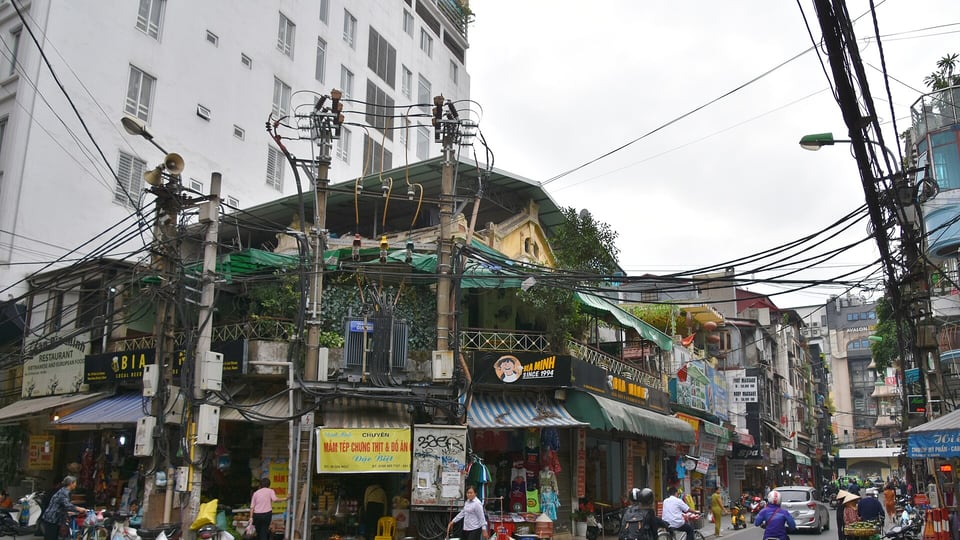
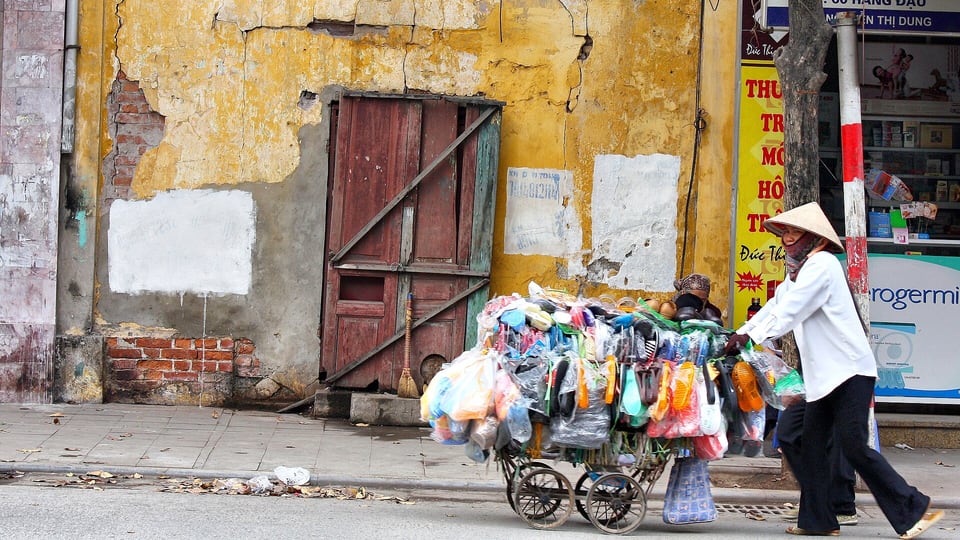
Hanoi Old Quarter (36 Phố Phường)
The Old Quarter’s roughly 100 hectares and 76 streets across 10 wards trace back to a guild-street system formalised under the Lý and Trần dynasties, where merchants and artisans clustered by trade. Many streets still carry “Hàng” (goods) names today, from Hàng Bạc (silver) to Hàng Gai (silk and rope) to Hàng Mã (votive paper offerings).
Best for: Travellers wanting Hanoi’s working commercial heart, not a preserved-in-amber recreation · Area: Hoàn Kiếm district, immediately north of Hoàn Kiếm Lake
Plan for Not every street still sells its namesake goods, and the district’s narrow streets carry dense, near-continuous motorbike traffic at most hours.
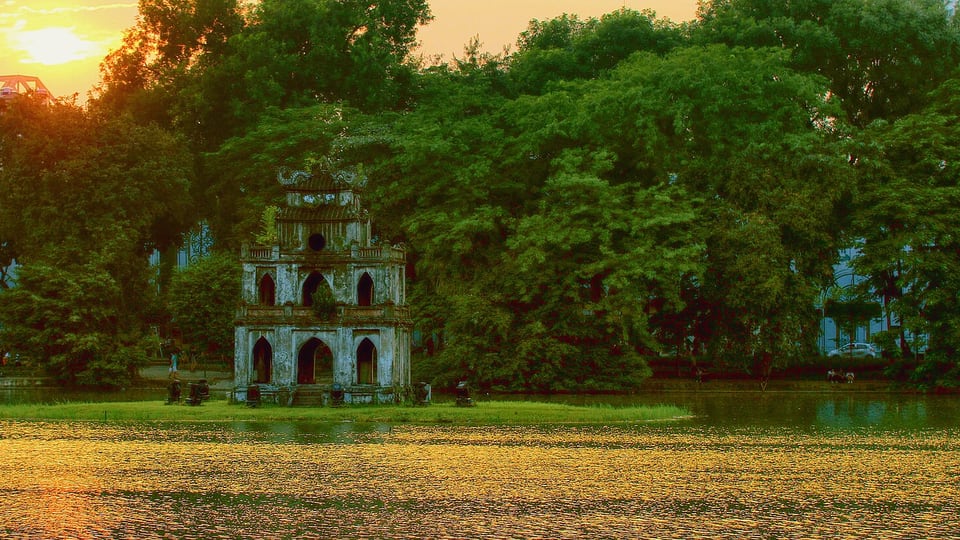
Hoàn Kiếm Lake and Ngọc Sơn Temple
Named for the legend of Emperor Lê Lợi returning a magic sword to the Golden Turtle God, the lake’s Ngọc Sơn Temple sits on Jade Islet, reached by the vermillion Thê Húc Bridge, and honours 13th-century military leader Trần Hưng Đạo. The lake’s rare softshell turtles (Rafetus swinhoei) were a living link to the legend until the last known individual was found dead on 19 January 2016.
Best for: Travellers wanting Hanoi’s central, walkable landmark and its real, documented legend · Area: Hoàn Kiếm district, between the Old Quarter and the French Quarter
Plan for The lake itself is a short, easy loop rather than a half-day activity; most visits pair it with an adjoining Old Quarter or French Quarter walk.
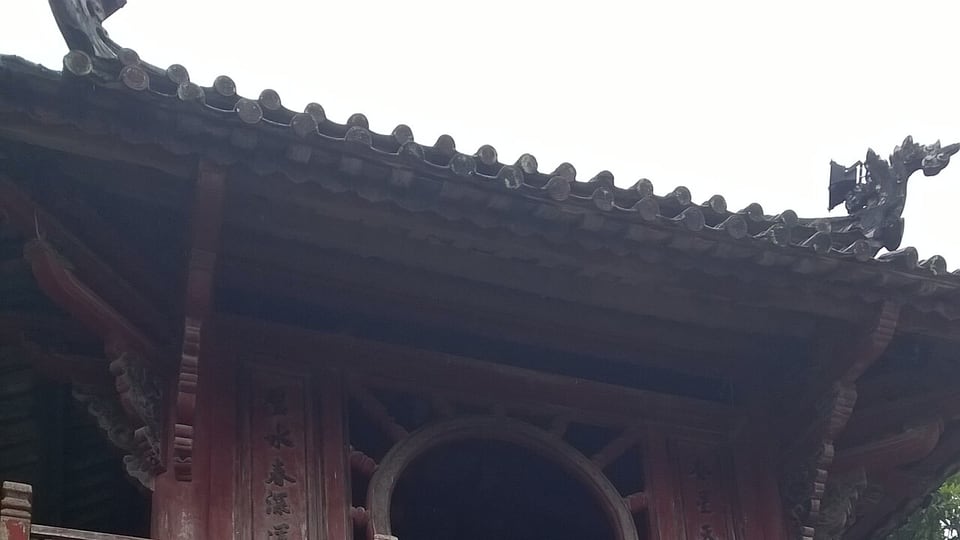
Temple of Literature (Văn Miếu – Quốc Tử Giám)
Built in 1070 under Emperor Lý Thánh Tông and dedicated to Confucius, the temple grounds became Vietnam’s first national university, the Quốc Tử Giám, in 1076, and operated until 1779. 82 of the original stone turtle stelae, recording 1,307 doctoral graduates, survive and carry UNESCO Memory of the World status since 2011.
Best for: Travellers wanting Vietnam’s documented educational and Confucian history at an exact founding date · Area: Đống Đa district, central Hanoi
Plan for The five-courtyard, 54,000 sqm complex draws large tour groups by mid-morning; an early visit avoids the busiest crowds around the stelae.
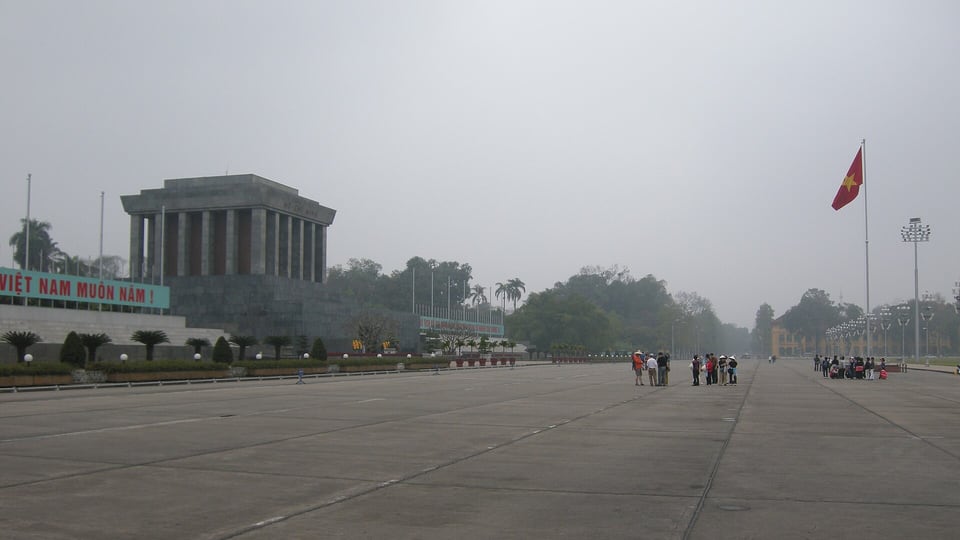
Ho Chi Minh Mausoleum, Ba Đình Square and One Pillar Pagoda
The mausoleum, inaugurated 29 August 1975, sits on Ba Đình Square, where Hồ Chí Minh read Vietnam’s Declaration of Independence on 2 September 1945. The adjacent One Pillar Pagoda, built in 1049 under Emperor Lý Thái Tông and rebuilt on a single stone pillar to resemble a lotus throne, is one of Vietnam’s most recognisable religious structures.
Best for: Travellers wanting the exact site of Vietnam’s 1945 independence declaration alongside a thousand-year-old pagoda · Area: Ba Đình district
Plan for The mausoleum itself follows strict visitor rules and a roughly two-month annual maintenance closure, so this stop needs date-checking before a specific day is booked.
See Ho Chi Minh Mausoleum, Ba Đình Square and One Pillar Pagoda tours
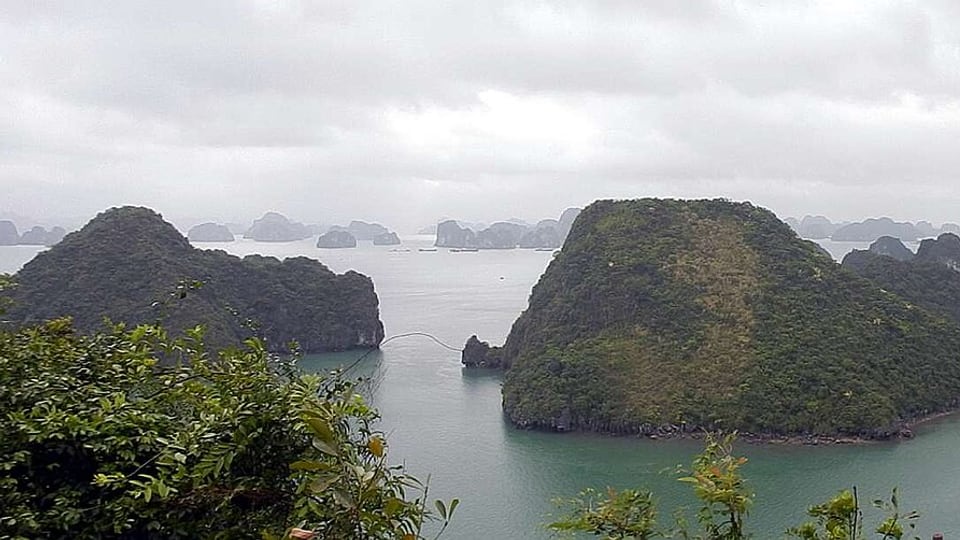
Ha Long Bay day trip or overnight cruise
UNESCO World Heritage-listed in 1994 and extended in 2000 for its geology, the bay’s roughly 1,969 limestone islands formed over some 20 million years of weathering and slow tectonic movement; it sits about 160km from Hanoi, a genuine 2.5-4 hour drive, making a same-day round trip a real trade-off against an overnight cruise.
Best for: Travellers wanting Vietnam’s best-known natural landscape, honestly scoped as a real half-day-each-way trip · Area: Quảng Ninh province, roughly 160km / 2.5-4 hours northeast of Hanoi
Plan for A single-day round trip leaves only a few hours actually on the water; an overnight cruise costs an extra day but avoids the long same-day drive twice.
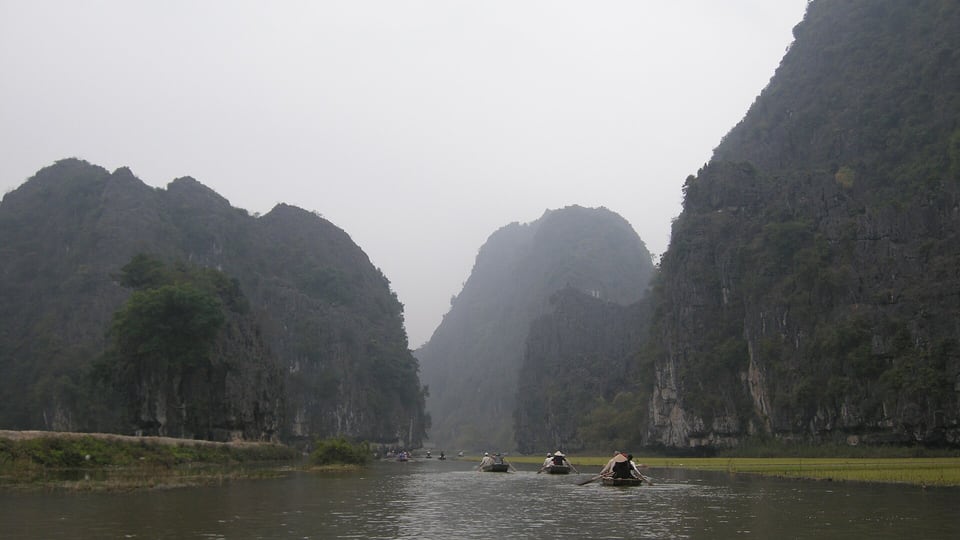
Ninh Binh: Tràng An and Tam Cốc
Often informally called “Ha Long Bay on land,” Tràng An is a genuinely separate karst-and-river landscape, inscribed by UNESCO in June 2014 as Vietnam’s first mixed cultural-and-natural World Heritage Site. It recognises the site’s limestone scenery and 30,000+ years of documented human interaction; Tam Cốc, a smaller boat-through-caves circuit nearby, is a distinct, separate attraction.
Best for: Travellers wanting a genuinely different karst landscape from Ha Long Bay, reached by road rather than boat · Area: Ninh Binh province, roughly 95-120km / 1.5-2.5 hours south of Hanoi
Plan for A single day trip covers either Tràng An’s boat route or Tam Cốc’s, plus Bái Đính Pagoda or Hoa Lư; seeing all of Ninh Binh’s major sites properly needs an overnight stay.
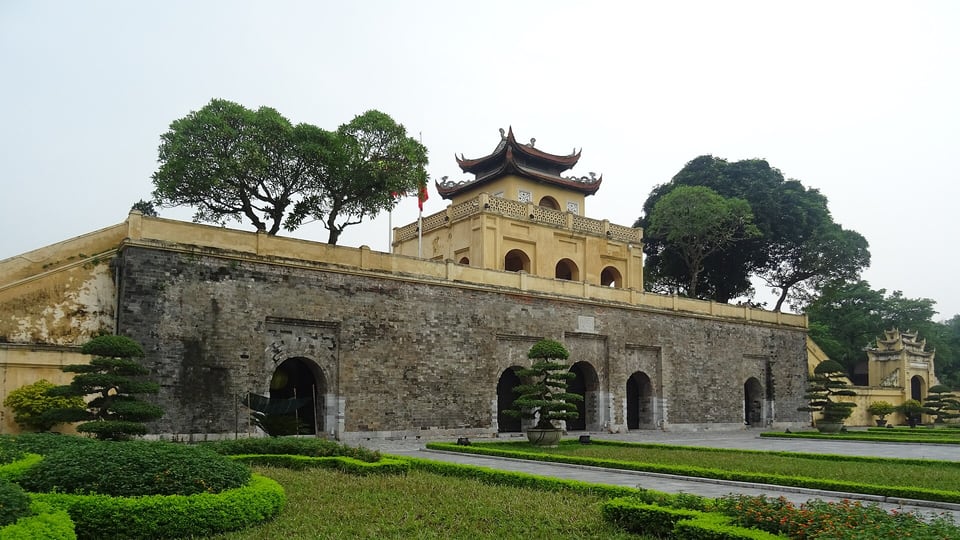
Imperial Citadel of Thăng Long
UNESCO World Heritage-listed in 2010, the citadel’s archaeological site spans Vietnamese dynasties from the 11th-century Lý through the Trần, Lê, Mạc and Nguyễn periods into the 20th century. Excavations from 2002-2004 at 18 Hoàng Diệu Street uncovered foundations and ceramics from across that span, and the 1812-built Flag Tower still stands as a city landmark.
Best for: Travellers wanting Hanoi’s full millennium of dynastic history in one excavated site · Area: Ba Đình district, near the Ho Chi Minh Mausoleum complex
Plan for Much of the site is excavated foundations and archaeological remains rather than intact standing structures, which rewards a visitor with some historical context more than a purely visual one.
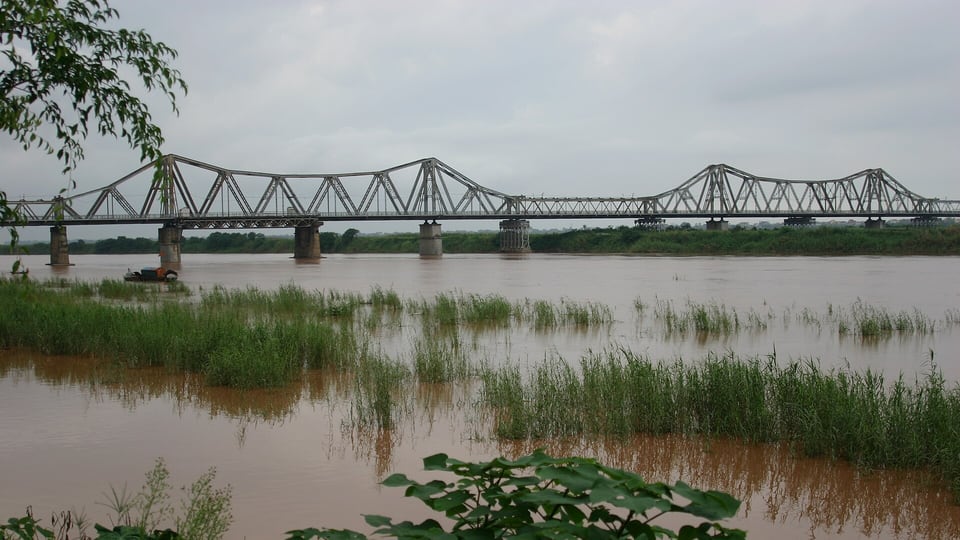
Long Biên Bridge and Train Street
Built 1899-1902 by Paris firm Daydé & Pillé, not Gustave Eiffel despite a persistent myth, Long Biên Bridge survived repeated Vietnam War bombing and still carries trains and pedestrians across the Red River. The Old Quarter’s “Train Street” nearby saw commercial activity banned in October 2019 after a train made an emergency stop.
Best for: Travellers interested in Hanoi’s railway history and the real safety story behind a famous photo spot · Area: Long Biên Bridge spans the Red River from central Hanoi; Train Street is inside the Old Quarter
Plan for Train Street’s cafe-and-track experience has been repeatedly restricted since 2019; current access varies and should be checked locally rather than assumed open.
Phở, bún chả and cà phê trứng: Hanoi’s own food and drink
Phở is genuinely a northern-Vietnamese dish, first documented southeast of Hanoi in Nam Định province between 1900 and 1907. Bún chả became internationally famous when Barack Obama and Anthony Bourdain ate it together on 23 May 2016, and cà phê trứng (egg coffee) was invented in Hanoi in 1946 by Nguyễn Văn Giang, using whisked egg yolk as a wartime milk substitute.
Best for: Travellers wanting dishes with real, documented Hanoi or northern-Vietnamese origins rather than a generic “Vietnamese food” list · Area: Citywide, concentrated in the Old Quarter
Plan for Bún Chả Hương Liên’s fame means queues and a marked-up “Obama Combo” menu; travellers wanting a quieter bún chả stop should look beyond the famous address.
See Phở, bún chả and cà phê trứng: Hanoi’s own food and drink tours
Plan three, five or seven days in Hanoi
Three to four days: the Old Quarter and Ba Đình’s historic core
Pick this length when the Old Quarter, Hoàn Kiếm Lake, the Ho Chi Minh Mausoleum complex and the Temple of Literature are the goal, all within a compact core.
These sights sit close enough together to cover without a long drive each day, though the mausoleum’s limited hours need checking in advance.
The trade-off A three-to-four-day trip has to skip both Ha Long Bay and Ninh Binh, so this length suits a city-focused visit.
Five to six days: add Ha Long Bay or Ninh Binh
Pick this length once a real Ha Long Bay day trip/overnight cruise or a Ninh Binh day trip matters enough to justify an extra day outside the city.
Ha Long Bay and Ninh Binh each need their own dedicated day rather than being squeezed into a city itinerary.
The trade-off Adding one of the two leaves less time for Tây Hồ or the Imperial Citadel at this length, since fitting both needs the longer stay below.
A week or more: unhurried, with Tây Hồ and the Citadel
Pick this length to spread the Old Quarter, Ha Long Bay, Ninh Binh, the Imperial Citadel of Thăng Long and Tây Hồ’s Trấn Quốc Pagoda across genuinely unhurried days.
A week or more absorbs the real travel time the Ha Long Bay and Ninh Binh trips take without forcing a rushed final morning or a skipped major site.
The trade-off This length costs more overall time, but it is the only one that comfortably fits both day trips alongside the Old Quarter, Tây Hồ and the Citadel.
Sources
checked 2026-09-24. Recommendations are editorial judgements based on the cited sources below.
Choose a Hanoi base and explore nearby
Old Quarter: a base for the shortest walk to everything historic
Consider this base when minimising travel time to Hoàn Kiếm Lake, street food and the widest range of sights matters most.
The Old Quarter puts nearly every central sight within a short walk, at the cost of the city’s heaviest tourist traffic and motorbike density.
The trade-off Choosing the Old Quarter means accepting near-constant motorbike noise in return for nearly every major sight being a short walk away, a fair exchange on a short first visit.
Ba Đình: a base for independence-era and dynastic history
Consider Ba Đình for direct access to the Ho Chi Minh Mausoleum complex, Ba Đình Square and the Imperial Citadel of Thăng Long.
This district trades Old Quarter convenience for direct access to Hanoi’s government and historic-power sites, several with strict opening hours.
The trade-off Ba Đình has fewer restaurants and shops aimed at visitors than the Old Quarter, a reasonable trade for travellers prioritising this history.
Tây Hồ: a base for a quieter, lakeside stay
Consider Tây Hồ when a quieter, greener pace and real, dated religious history (Trấn Quốc Pagoda, 6th century) matter more than walking distance to the Old Quarter.
Tây Hồ’s lakeside setting suits a slower, less commercial stay than the historic core, with an increasingly international cafe scene.
The trade-off Basing in Tây Hồ means a taxi or ride-hail into the Old Quarter rather than a walk, a worthwhile trade for a quieter, greener stay.
Sources
checked 2026-09-24. Recommendations are editorial judgements based on the cited sources below.
Airport, safety and getting around
Noi Bai International Airport (HAN), operated by Airports Corporation of Vietnam, is Vietnam’s second-busiest airport after Tan Son Nhat, sitting roughly 25-35km northeast of central Hanoi and reached via the Nhật Tân Bridge in about 45 minutes to an hour by taxi or airport bus.
Vehicle traffic, rather than crime, is the hazard visitors notice first. The Old Quarter’s dense, near-continuous motorbike flow rewards crossing at a slow, steady, predictable pace and letting riders steer around you instead of stopping or jumping back, which breaks the flow the traffic depends on.
The UK Foreign, Commonwealth & Development Office advises that travelling by motorbike in Vietnam is much riskier than in the UK and that accidents are frequent, sometimes fatal. It recommends against hiring a motorbike without riding experience, using a proper helmet, and renting only from a reputable operator.
The FCDO also flags bag-snatching by thieves on motorcycles as common in crowded, tourist-visited areas, advising travellers to hold bags in front of them or away from traffic, and separately notes a risk of petty theft on overnight trains and buses, particularly while asleep.
Best time to visit
Winter (December-February)
December through February is Hanoi’s genuine winter: persistently cool, often grey and drizzly, with daytime temperatures typically in the 14-20°C range and occasional colder dips.
- Crowds
- Varies by event and attraction
Spring (March-April)
March through April is a mild transitional spring, warming steadily out of winter’s cool, drizzly stretch toward the year’s hotter months, with rising humidity as the wet season approaches.
- Crowds
- Varies by event and attraction
Summer (May-August)
May through August is Hanoi’s hottest, most humid stretch, with temperatures commonly reaching 32-35°C and the bulk of the city’s roughly 1,612mm of annual rainfall falling between May and October.
- Crowds
- Varies by event and attraction
Autumn (September-November)
September through November is widely regarded as Hanoi’s most comfortable season, as summer’s heat and rain ease into cooler, drier air before winter’s cool, grey stretch sets back in.
- Crowds
- Varies by event and attraction
Food, markets and local life
Phở is genuinely a northern-Vietnamese dish: food historians trace its documented origin to villages southeast of Hanoi in Nam Định province between 1900 and 1907, entering the mainstream in the 1910s. Hanoi’s own phở style keeps a clear, savoury broth with light garnishing, a genuinely different bowl from the sweeter, herb-heavy southern style served in Ho Chi Minh City.
Bún chả became internationally known when Barack Obama and Anthony Bourdain ate it together at Bún Chả Hương Liên on 23 May 2016. Cà phê trứng (egg coffee) has its own exact, documented invention story: Nguyễn Văn Giang created it in Hanoi in 1946, whisking egg yolk into coffee as a milk substitute during a wartime shortage, a recipe his family’s Café Giảng still serves today.
City profile
- Population (City of Hanoi, Vietnam’s 1 April 2019 Population and Housing Census; a 2025 estimate put the city at 8,855,946, Vietnam’s second-most populous city after Ho Chi Minh City, 2019): 8,053,663
Emperor Lý Thái Tổ founded the city as the capital in 1010 under the name Thăng Long (“ascending dragon”), beginning nearly a millennium as Vietnam’s political and cultural centre under successive dynasties.
The city was renamed Đông Kinh (“eastern capital”) in 1428 after the Lam Sơn uprising, then Hà Nội by the Nguyễn dynasty in 1831; both older names still surface in Vietnamese place-name history today.
France ruled Hanoi as a colonial city from 1873 and made it the capital of French Indochina in 1902, a period that left the French Quarter’s colonial villas, the 1901-1911 Hanoi Opera House and the 1899-1902 Long Biên Bridge.
Hanoi became the capital of North Vietnam in 1954 after French withdrawal, and of the reunified Socialist Republic of Vietnam in 1976. Hồ Chí Minh had already read the Declaration of Independence at Ba Đình Square on 2 September 1945, the moment the modern republic dates itself from.
Famous for:
- The Old Quarter’s roughly 100 hectares and 76 streets grew from a guild-street system developed under the Lý and Trần dynasties, where each street traditionally specialised in one trade and took a “Hàng” (goods) name. Hàng Bạc (silver), Hàng Gai (silk/rope) and Hàng Mã (votive paper) are among the streets that still trade close to their original craft today.
- The Ho Chi Minh Mausoleum, inaugurated 29 August 1975, holds Hồ Chí Minh’s embalmed body in a granite building inspired by Lenin’s Mausoleum in Moscow but built with distinctly Vietnamese architectural elements.
- French colonial-era landmarks built between 1899 and 1911, including Long Biên Bridge and the Hanoi Opera House, still anchor the French Quarter’s street grid alongside a thousand-year-older Vietnamese dynastic core at the Imperial Citadel of Thăng Long.
- Hanoi is the standard overnight base for two separate, genuinely different UNESCO-listed karst landscapes: Ha Long Bay’s limestone islands by boat, and Ninh Binh’s Tràng An/Tam Cốc river-and-cave landscape reached by road.
What makes a Hanoi visit worthwhile
The Old Quarter is a genuinely lived-in trading district, not a preserved museum piece: motorbike traffic is dense and near-continuous on most streets. Some “Hàng” streets still sell close to their historic trade, but others have shifted to entirely different goods, so a street’s name is a clue to its past, not always its present.
A Ho Chi Minh Mausoleum visit runs on real, strict rules rather than casual sightseeing: modest dress, no cameras or phones with recording function, no talking, and a fixed short viewing window. It also closes for a roughly two-month annual maintenance period and every Monday and Friday, so check the current calendar before planning a specific date.
Travellers arriving expecting “Vietnam equals tropical heat” are often caught off guard by a genuine Hanoi winter. December to February brings persistent grey skies, drizzle and daytime temperatures that can sit in the mid-teens Celsius, cool enough that light jackets are a real packing need, not an overcautious one.
- Plan by trip type
- Old Quarter & Hoàn Kiếm Lake · Ho Chi Minh Mausoleum complex · Temple of Literature · Ha Long Bay · Ninh Binh (Tràng An/Tam Cốc)
- Good first stay
- 3-4 days for the Old Quarter and Ba Đình’s historic core, 5-6 with Ha Long Bay or Ninh Binh, a week+ with Tây Hồ and a second day trip
- Climate constraint
- Four real seasons -- cool winter Dec-Feb (~14-20°C) · hot, humid summer May-Aug (32-35°C) · ~1,612mm rain/year, mostly May-Oct
- Main gateway
- HAN airport (Noi Bai), about 25-35km / 45 minutes-1 hour from central Hanoi
Planning your Hanoi visit: FAQs
How is Hanoi actually different from Ho Chi Minh City?
Genuinely, in climate and history: Hanoi has four real seasons, including a cool, sometimes cold winter (roughly 14-20°C, December-February), unlike tropical southern Vietnam, and it carries nearly a millennium more documented history as the 1010-founded former Thăng Long, versus Ho Chi Minh City’s French-colonial-era growth. Phở itself is a northern/Hanoi-area dish by documented origin, not a Ho Chi Minh City one.
What should I know before visiting the Ho Chi Minh Mausoleum?
It runs on strict, real rules: modest dress, no cameras or recording phones, no talking inside, and a short fixed viewing window during limited opening hours. It also closes every Monday and Friday, plus a roughly two-month annual maintenance closure (5 September-3 November in 2026) -- check the current calendar before planning a specific date.
Can I do Ha Long Bay as a day trip from Hanoi?
Yes, but honestly it is a long one: the bay sits roughly 160km / 2.5-4 hours from Hanoi depending on route, so a single-day round trip leaves only a few hours actually on the water. An overnight cruise trades an extra day for far more time seeing the bay’s limestone islands without two long drives in one day.
Is Ninh Binh the same as Ha Long Bay “on land”?
Only informally, and not accurately: Tràng An is a real, separate UNESCO World Heritage Site (inscribed June 2014, Vietnam’s first mixed cultural-and-natural listing) with its own limestone-and-river landscape and more than 30,000 years of documented human history, distinct from Ha Long Bay’s 1994/2000-listed island seascape. Tam Cốc, nearby, is a separate smaller attraction again, not the same site as Tràng An.
Is it true the Old Quarter’s streets are named for what they sell?
Largely yes, and it is real, documented history: the guild-street system developed under the Lý and Trần dynasties, and many streets still carry their historic “Hàng” (goods) names, such as Hàng Bạc (silver) or Hàng Gai (silk and rope). Some streets have shifted to different trades since, so the name is a reliable historical clue, not always today’s exact inventory.
What food is genuinely from Hanoi, and how does it differ from Ho Chi Minh City’s food?
Phở, first documented in villages southeast of Hanoi between 1900 and 1907, is genuinely a northern-Vietnamese dish, and Hanoi’s own style keeps a clearer, less-garnished broth than the sweeter southern version served everywhere in Ho Chi Minh City. Bún chả and cà phê trứng (egg coffee, invented in Hanoi in 1946) are two more dishes with real, documented Hanoi origins worth seeking out specifically here.
Make your Hanoi plans
Compare tours, tickets and activities in Hanoi →
Choose your departure market and search flights to Hanoi from the Mubboo Flights homepage.
Compare flights ↗Sources
Latest source check: .
Show all 31 sources
- Wikipedia — Hanoi (checked 2026-09-24)
- Wikipedia — Noi Bai International Airport (checked 2026-09-24)
- Wikipedia — Old Quarter, Hanoi (checked 2026-09-24)
- Wikipedia — Ha Long Bay (checked 2026-09-24)
- Wikipedia — Tràng An Scenic Landscape Complex (checked 2026-09-24)
- Wikipedia — Temple of Literature, Hanoi (checked 2026-09-24)
- Wikipedia — Ho Chi Minh Mausoleum (checked 2026-09-24)
- Wikipedia — Phở (checked 2026-09-24)
- Wikipedia — Hoàn Kiếm Lake (checked 2026-09-24)
- Wikipedia — Long Biên Bridge (checked 2026-09-24)
- Wikipedia — Trấn Quốc Pagoda (checked 2026-09-24)
- Wikipedia — Imperial Citadel of Thăng Long (checked 2026-09-24)
- Wikipedia — One Pillar Pagoda (checked 2026-09-24)
- Wikipedia — Ba Đình Square (checked 2026-09-24)
- Wikipedia — Declaration of independence of the Democratic Republic of Vietnam (checked 2026-09-24)
- Wikipedia — Hanoi Train Street (checked 2026-09-24)
- UK Foreign, Commonwealth & Development Office — Vietnam travel advice: safety and security (checked 2026-09-24)
- UNESCO World Heritage Centre — Ha Long Bay (checked 2026-09-24)
- UNESCO World Heritage Centre — Trang An Landscape Complex (checked 2026-09-24)
- Historic Vietnam — Debunking the Eiffel Myth (checked 2026-09-24)
- Institute of Culinary Education — History of Pho (checked 2026-09-24)
- Viet World Kitchen — What is the History of Pho? (checked 2026-09-24)
- The Takeout — Hanoi Restaurant Where Barack Obama And Anthony Bourdain Ate (checked 2026-09-24)
- Nguyen Coffee Supply — History of Vietnamese Egg Coffee (checked 2026-09-24)
- VietnamNet — Ba Đình Square’s historical milestones (checked 2026-09-24)
- VietnamPlus — 10 years since Trang An Landscape Complex recognised as world heritage (checked 2026-09-24)
- VietnamNet — One Pillar Pagoda: a symbol of Hanoi’s millennial culture (checked 2026-09-24)
- Vietcetera — Hanoi’s Insta-Famous Train Street Shut Over Safety Violations (checked 2026-09-24)
- VietnamPlus — Hanoi festival marks 237th anniversary of Ngoc Hoi – Dong Da Victory (checked 2026-09-24)
- Hanoi Times — One Pillar Pagoda: a symbol of Hanoi’s millennial culture (checked 2026-09-24)
- The booking platform — Hanoi destination mapping d351 (checked 2026-09-24)
Photo credits
- old quarter — Richard Mortel from Riyadh, Saudi Arabia · CC BY 2.0.
- hoankiem lake — Khoitran1957 · CC BY-SA 4.0.
- temple of literature — Cookie Nguyen · CC BY-SA 4.0.
- hcm mausoleum complex — Vyacheslav Argenberg · CC BY 4.0.
- ha long bay — FLASHPACKER TRAVELGUIDE · CC BY-SA 2.0.
- ninh binh tamcoc trangan — Vyacheslav Argenberg · CC BY 4.0.
- imperial citadel thanglong — Christophe95 · CC BY-SA 4.0.
- longbien trainstreet — Pierre De Hanscutter · CC BY-SA 3.0.
- street food eggcoffee — Christine Zenino · CC BY 2.0.
Mubboo Editorial Team · Reviewed by Mubboo Editorial Team


