
Dublin travel guide
Dublin
Dublin's compact core sits along the River Liffey: Trinity College and Temple Bar on the south side, Georgian Dublin and St Stephen's Green nearby, and Kilmainham and the 707-hectare Phoenix Park to the west. The Cliffs of Moher sit far outside the city, in County Clare on Ireland's west coast.
A first visit usually centers Trinity College, Temple Bar and Kilmainham Gaol. A longer stay adds Phoenix Park and Dublin Castle, and a genuinely full trip sets aside a dedicated day for the Cliffs of Moher rather than rushing the three-plus-hour drive each way.

Find your Dublin experience
Explore Dublin Before You Book
Take a virtual drive or walk, then find tours and tickets for the places you like.

Activities
Featured activities in Dublin


Prices at a glance
What we sell today and what recent flight searches found. No hotel prices; nothing here is a trip total.
- Tours and tickets in Dublinfrom US$42.25
Live from Viator when this page loaded · per adult · changes by date.
Flights to Dublin
- From New Yorkone-way from US$258
Lowest fare seen in recent flight searches for that route; the airline or booking site confirms the final fare.
Top experiences
Top experiences in Dublin
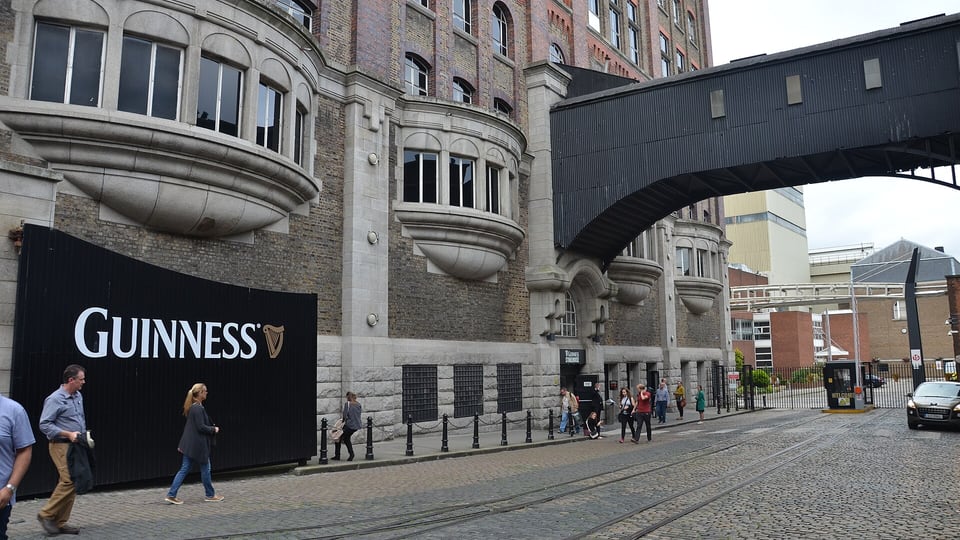
Guinness Storehouse
The Storehouse occupies the real St. James's Gate site where Arthur Guinness signed his 9,000-year lease on 31 December 1759 at 45 pounds sterling a year -- confirmed on Guinness's own corporate site, not a marketing legend.
Best for: Travelers wanting the documented history behind Guinness stout, on the actual site where it began · Area: St. James's Gate, west of the city center
Plan for The self-guided tour draws heavy crowds at the rooftop Gravity Bar; visiting on a weekday morning or late afternoon avoids the longest queues.
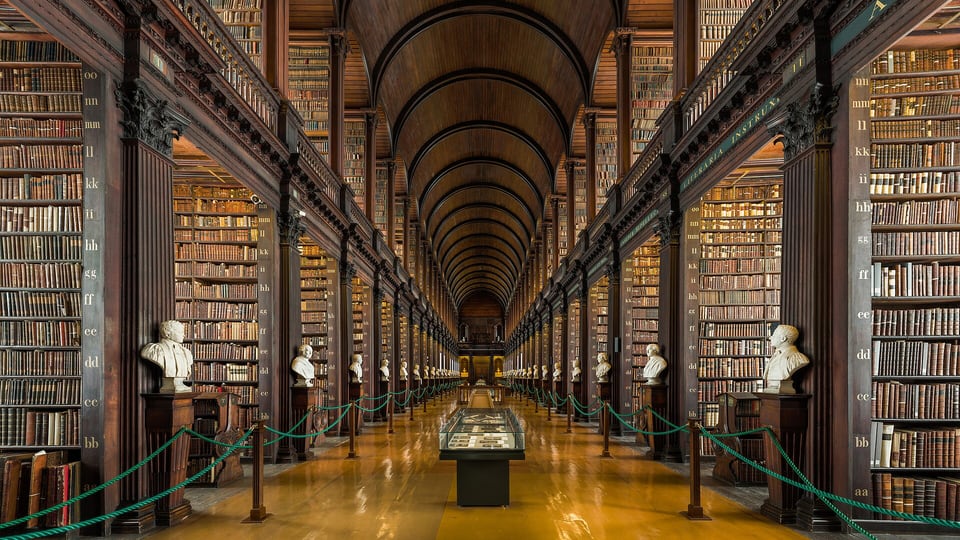
Trinity College: the Book of Kells and the Long Room
The Old Library holds two genuinely distinct attractions: the Book of Kells, an illuminated manuscript created around 800 AD, and the separate Long Room -- a 65-metre chamber built 1712-1732 with a barrel-vaulted ceiling added in 1860, holding around 200,000 of the library's oldest books.
Best for: Travelers wanting the real, dated history behind Ireland's most famous manuscript and its equally famous but distinct library hall · Area: Trinity College campus, city center
Plan for Both sit on one ticket but are genuinely separate spaces; rushing past the Long Room to reach the manuscript first skips its own 200,000-book collection and 1916 Proclamation copy.
See Trinity College: the Book of Kells and the Long Room tours
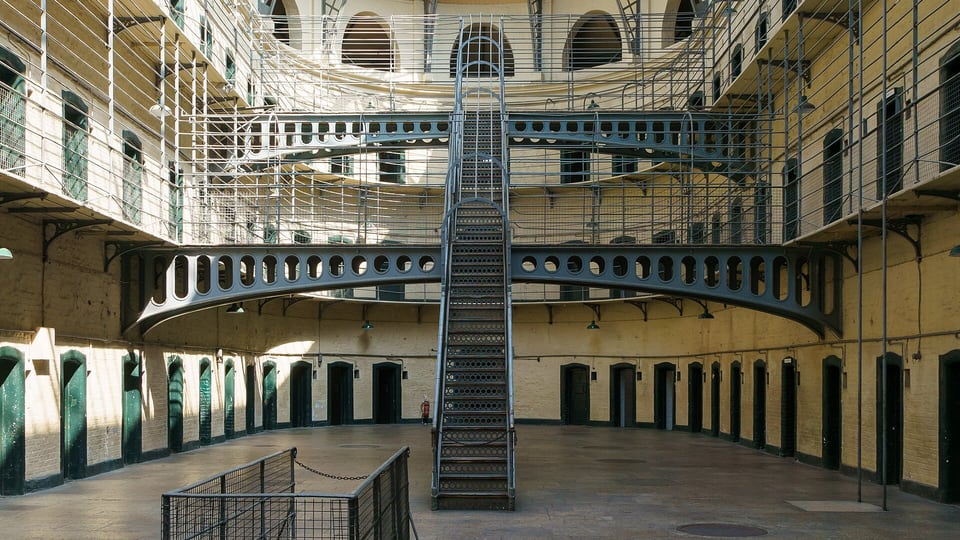
Kilmainham Gaol
Built in 1796 and operated as a prison until 1924, Kilmainham Gaol's own museum states 14 leaders of the 1916 Easter Rising were executed by firing squad in its Stonebreakers' Yard. These included Patrick Pearse, Thomas Clarke and Thomas MacDonagh on 3 May and James Connolly, shot in a chair due to his wounds, on 12 May.
Best for: Travelers seeking a real, historically accurate encounter with this specific history, approached with the gravity it deserves · Area: Kilmainham, west of the city center
Plan for Entry requires an advance-booked guided tour, and the visit rewards a genuinely unhurried, respectful hour rather than a rushed stop.
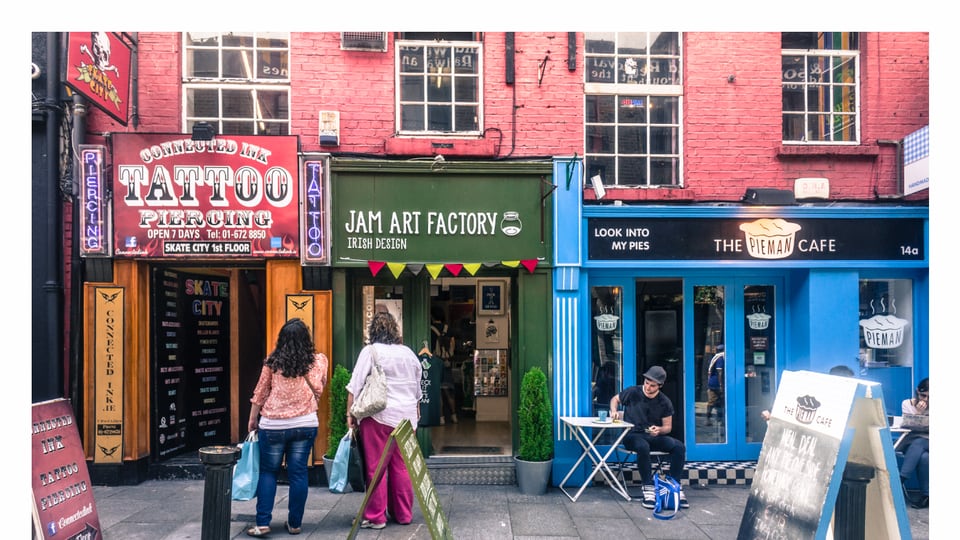
Temple Bar
Temple Bar's cobbled lanes were revived as a cultural quarter in the 1990s, but the original plan to balance day and night activity was quietly dropped by 2005. The area is now a tourist-oriented nightlife district known for higher drink prices than elsewhere in the city.
Best for: Travelers wanting an honest, balanced read of Dublin's most photographed neighborhood before deciding how much time and money to spend there · Area: Between Trinity College and the Liffey's south quays
Plan for Genuinely worth a daytime walk for its historic lanes and galleries; evenings mean higher prices and heavier crowds than neighborhood pubs elsewhere in the city.
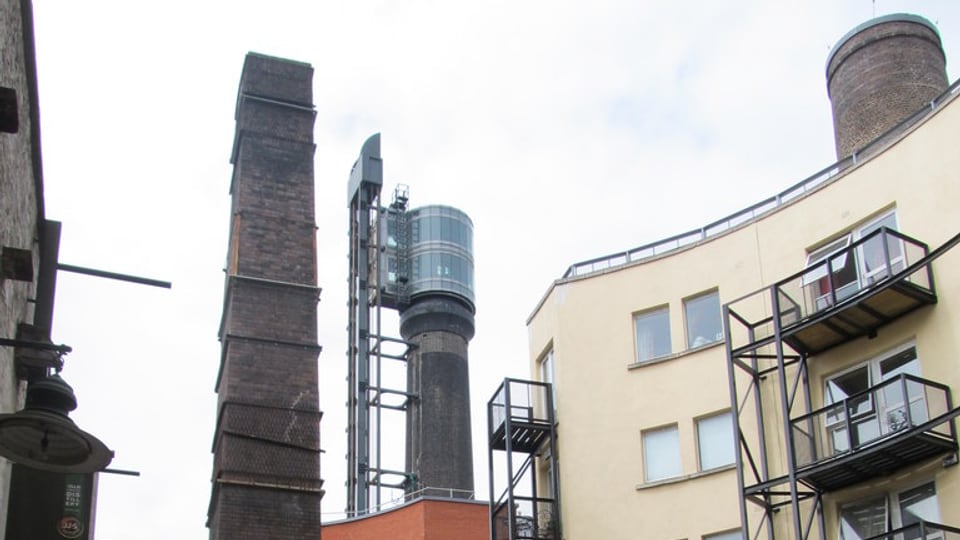
Jameson Distillery Bow St.
Jameson Distillery Bow St. occupies the actual 1780 distillery site where John Jameson began production; whiskey-making there ended in 1976 when production consolidated at the new Midleton Distillery in Cork, and the Bow St. building reopened as a visitor experience in 1997, renovated in 2016-17.
Best for: Travelers wanting one specific brand's real, dated distillery history at its original site · Area: Smithfield, north of the Liffey
Plan for Bow St. tells only Jameson's own story; travelers wanting the wider history of Irish whiskey as a category should pair it with, or choose instead, the Irish Whiskey Museum.
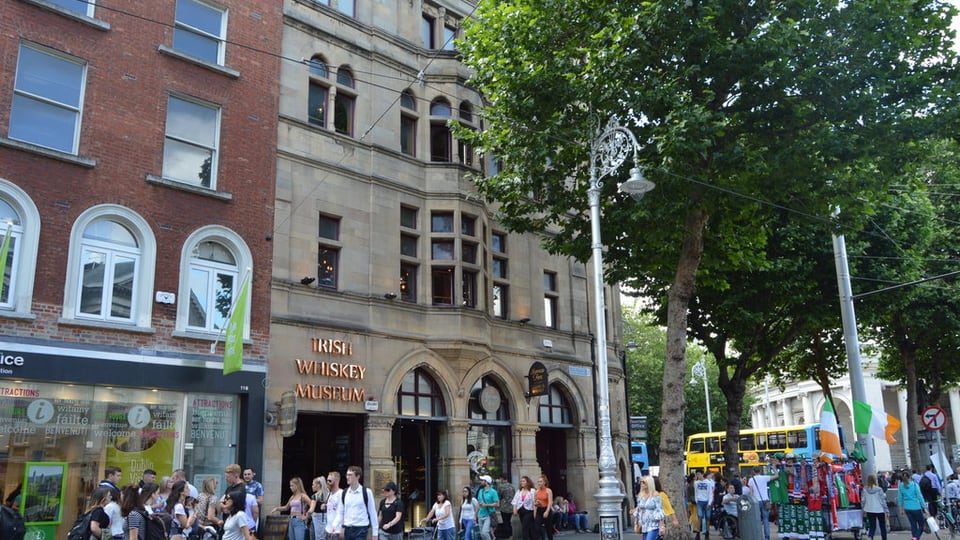
Irish Whiskey Museum
The Irish Whiskey Museum on Grafton Street is a genuinely distinct, brand-independent attraction from Jameson's single-brand Bow St. experience: it tells the wider roughly 2,000-year story of Irish whiskey with tastings drawn from more than 100 distilleries.
Best for: Travelers wanting the broader category history and a wider tasting flight rather than one company's own story · Area: Grafton Street, city center
Plan for The broader historical scope means less depth on any single brand's own distillery and story than a dedicated distillery tour provides.
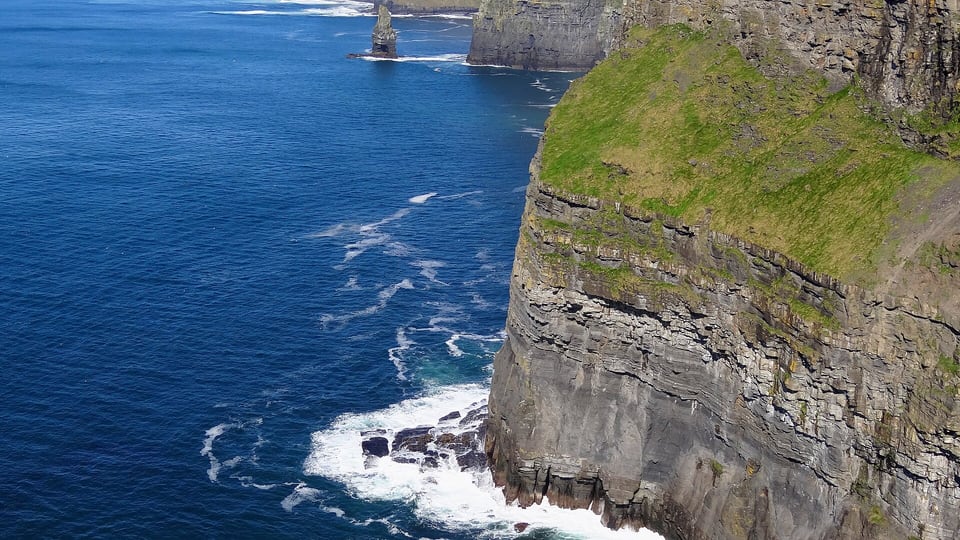
Cliffs of Moher (day trip)
The Cliffs of Moher rise to a maximum height of 214 metres near O'Brien's Tower and run about 14km along County Clare's Atlantic coast, roughly 267km (166 miles) and a genuine three-plus-hour drive from Dublin each way -- drawing about 1.1 million visitors in 2022, 41% of them from the United States.
Best for: Travelers willing to commit real travel time to Ireland's most famous coastal landmark, understood honestly as a long day trip, not a quick add-on · Area: County Clare, Ireland's west coast, roughly 267km from Dublin
Plan for The round trip realistically needs six to seven hours of driving alone -- a genuinely long day, not a quick add-on to another day's sightseeing in Dublin.
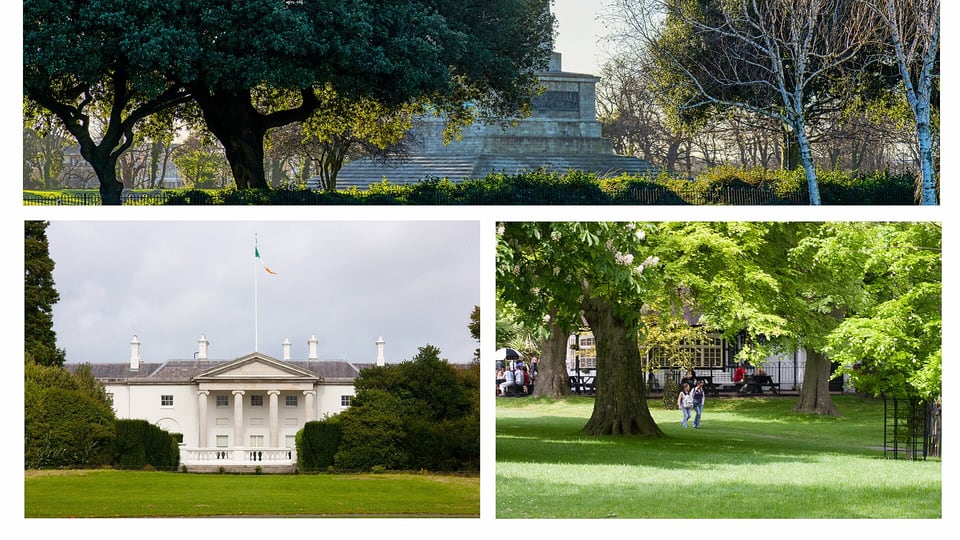
Phoenix Park
Phoenix Park has enclosed 707 hectares (1,750 acres) behind an 11km perimeter wall since the 1660s and has been open to the public since 1747 -- the largest enclosed urban park in Europe. It is home to a wild fallow deer herd present since the 17th century, Dublin Zoo and the President of Ireland's official residence.
Best for: Travelers wanting a real, sizeable urban park with genuine wildlife and history, not just a generic 'nice green space' · Area: Northwest of the city center
Plan for The park's full scale rewards a genuinely unhurried half-day on foot, by bike or by the park's own shuttle; a rushed visit sees only the area nearest the main gates.
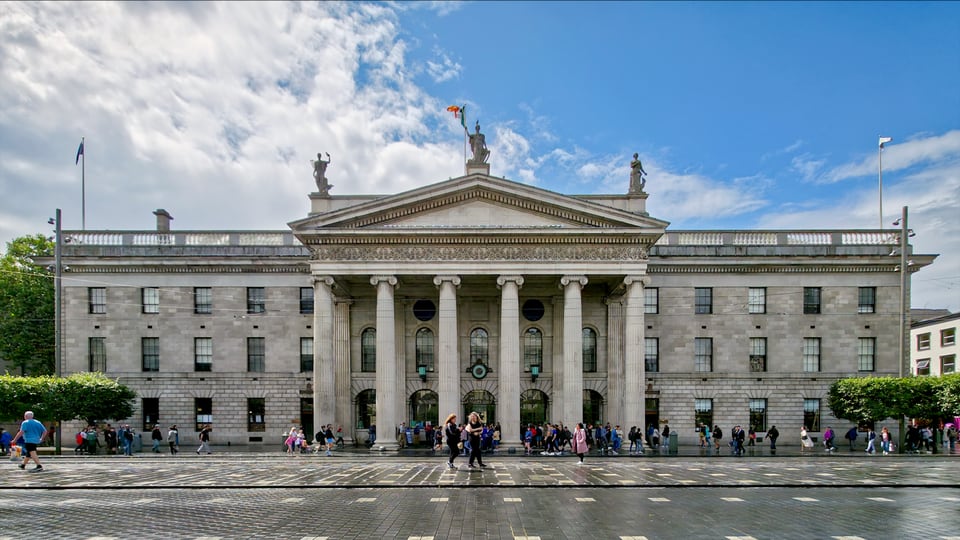
The GPO and O'Connell Street
The GPO, opened in 1818, was seized on 24 April 1916 and served as rebel headquarters through the Easter Rising; it burned down in the fighting and was not rebuilt until 1929. Today its own museum, GPO Witness History, tells that story on the actual site.
Best for: Travelers wanting the real building where the Proclamation of the Irish Republic was read, not just a description of a 'historic post office' · Area: O'Connell Street, city center
Plan for The building functions as a working post office alongside its museum, so visitors should check GPO Witness History's own opening hours separately from the postal counters.
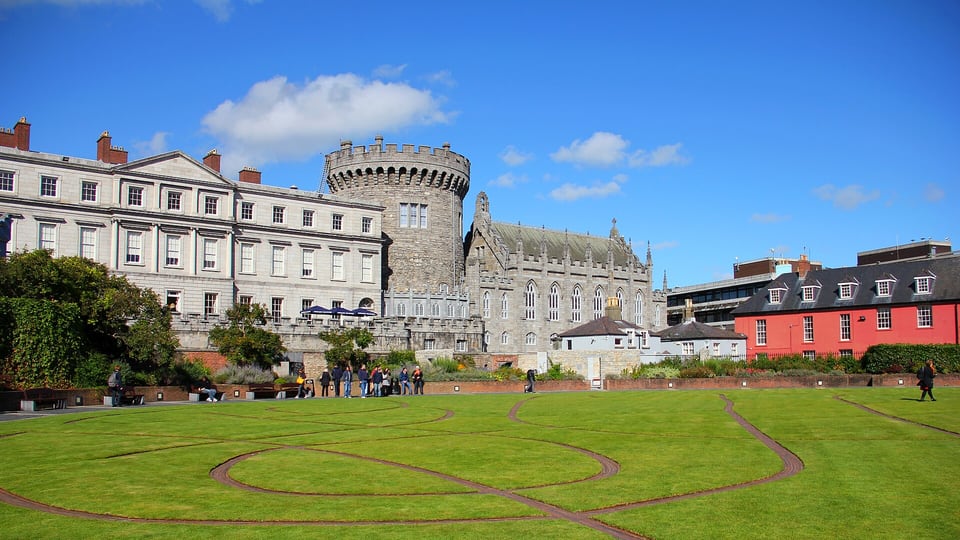
Dublin Castle
Ordered built by King John in 1204 and completed by 1230, Dublin Castle served as the seat of English and British rule in Ireland for over 700 years until 1922. A fire in 1684 led to its rebuilding as a Georgian palace, whose State Apartments still host state occasions today.
Best for: Travelers wanting the real, 700-year continuous political history behind a building that still functions as a state site today · Area: City center, near Temple Bar
Plan for The State Apartments sometimes close for genuine state occasions; checking current opening hours before visiting avoids a wasted trip.
Plan two, four or seven-plus days in Dublin
Two to three days: the Dublin essentials
Pick this length to cover Trinity College's Book of Kells and Long Room, Temple Bar, Kilmainham Gaol and one museum.
These fit comfortably without rushing, all within the walkable city center and a short Luas ride to Kilmainham.
The trade-off This length skips Phoenix Park, Dublin Castle and the Cliffs of Moher entirely, so it suits a highlights-only visit or a stop within a longer trip.
Four to five days: add Phoenix Park, Dublin Castle and a distillery
Pick this length once Phoenix Park, Dublin Castle and a whiskey stop -- Jameson Bow St. or the Irish Whiskey Museum -- all matter.
This spreads Dublin's sightseeing across more days and adds real depth beyond the highlights-only itinerary.
The trade-off This length still leaves the Cliffs of Moher day trip for the longer stay below, since it realistically needs its own full day.
A week or more: the Cliffs of Moher, unhurried
Pick this length to fit the full-day Cliffs of Moher trip without rushing it, plus a genuinely unhurried pace through the city's museums and landmarks.
A week allows the full city beyond the highlights, including the major day trip at its own realistic pace.
The trade-off A shorter trip cannot fit this depth without turning the Cliffs of Moher into a rushed, stressful dash.
Sources
checked 2026-09-25. Recommendations are editorial judgements based on the cited sources below.
Choose a Dublin base and explore nearby
Trinity College / Grafton Street: a base for landmarks and walkability, at the cost of tourist crowds
Consider this base for the Book of Kells, Grafton Street and St Stephen's Green all within walking distance, accepting the densest tourist crowds in the city.
This puts Dublin's core landmarks within a short walk, at the cost of higher hotel prices and heavier foot traffic than other districts.
The trade-off Choosing this area means accepting crowds and cost for landmark density and flat, easy walking.
Kilmainham: a base for a quieter pace near a major historic site
Consider Kilmainham for direct access to Kilmainham Gaol and the Irish Museum of Modern Art, alongside a genuinely quieter, more residential daily feel than the city center.
This trades some landmark density and dining options for a calmer neighborhood a short Luas ride from the core.
The trade-off Kilmainham means a short tram ride to reach most other sightseeing, a reasonable trade for quieter surroundings.
Georgian Dublin: a base for architecture and a quieter pace
Consider Georgian Dublin when the city's 18th-century townhouses, colorful doorways and a genuinely quieter, more residential pace matter more than nightlife.
This area's real architectural history gives it a different character than Temple Bar's dense commercial core.
The trade-off Basing here means a short walk to reach Trinity College's landmarks, a worthwhile trade for architecture and quieter surroundings.
Sources
checked 2026-09-25. Recommendations are editorial judgements based on the cited sources below.
Airport, safety and getting around
Dublin Airport (DUB), Ireland's busiest by a significant margin, carried just under 22 million passengers in the first seven months of 2026, up 5.2% year on year, with a record single-day total of 136,375 passengers on Sunday 28 June 2026.
Dublin's city center is genuinely walkable between Trinity College, Temple Bar and Grafton Street; the wider city relies on Dublin Bus, the Luas tram and DART rail. As of 2026 there is still no direct rail line to the airport -- the Railway Order for the MetroLink project only became operative on 12 January 2026, with operation not expected until at least the mid-2030s.
Reaching the Cliffs of Moher takes a genuine three to three-and-a-half hours by car via the M6 or M7 motorway, roughly 267km (166 miles) each way -- a realistic six to seven hours of driving alone, before any time at the cliffs themselves.
The UK FCDO says terrorist attacks in Ireland cannot be ruled out and separately flags bag-snatching and pickpocketing in crowded urban areas as the ordinary, current risk, alongside strict, heavily enforced penalties for any drug possession.
Best time to visit
Winter (December-February)
Dublin's coldest season, averaging around 4.1°C in February without heavy continental snow, and genuinely the quietest time to see Trinity College and Kilmainham Gaol without peak crowds.
- Crowds
- Low
Spring (March-May)
A genuine shoulder season as temperatures climb from Dublin's cold winter, with lighter crowds at Trinity College and Kilmainham Gaol than the summer peak.
- Crowds
- Varies by event and attraction
Summer (June-August)
Dublin's warmest season, averaging around 20.1°C in July, drawing the year's largest crowds to Temple Bar, Trinity College and the Guinness Storehouse -- also the busiest and driest window for the Cliffs of Moher day trip.
- Crowds
- High
Autumn (September-November)
Crowds ease from the summer peak as Dublin's average rainfall, spread across roughly 200 days a year, becomes more noticeable heading into winter.
- Crowds
- Varies by event and attraction
Food, markets and local life
Dublin's pub culture centers on stout -- Guinness above all -- served in traditional pubs across the city; the brand's global identity was forged at the real St. James's Gate site under Arthur Guinness's 9,000-year lease.
Dublin coddle -- a slow-cooked sausage, bacon, potato and onion stew dating to the 1700s as a way of using leftovers -- sits alongside Irish stew and boxty potato pancakes as the city's genuinely traditional dishes. These are still served in long-running pubs rather than invented for tourists.
George's Street Arcade, Dublin's first purpose-built Victorian shopping arcade, opened as the South City Markets in 1881, burned down in an 1892 city fire and reopened in 1894 -- a genuinely working market of independent stalls, not a themed food hall.
City profile
- Population (City of Dublin, 2022 census; the Greater Dublin Area is a distinct, broader figure of roughly 1.5 million or more, 2022): 592,713
Dublin traces its origins to a Viking longphort called Dyflin, founded around 841 AD where the Liffey and Poddle rivers meet -- distinct from the separate Gaelic settlement of Ath Cliath ('ford of hurdles') further upriver.
The Irish government officially recognizes 988 AD as Dublin's founding year, the year Norse king Glun Iarainn recognized Mael Sechnaill II as High King and accepted Brehon law. The city marked its official millennium in 1988, even though the Viking settlement itself dates from about 841 AD, nearly 150 years earlier.
King John of England ordered Dublin Castle built in 1204, completed by 1230 as a Norman fortress; from 1204 until 1922 it served as the seat of English and later British rule in Ireland.
Georgian Dublin (18th century) briefly became the second-largest city in the British Empire, producing the elegant townhouses and colorful doorways -- Henrietta Street's 1720s houses among the earliest -- that still define much of the city center.
On 24 April 1916, Irish Volunteers and Irish Citizen Army members led by Patrick Pearse seized the General Post Office, and Pearse read the Proclamation of the Irish Republic outside it, opening the Easter Rising. The leaders were later executed by firing squad at Kilmainham Gaol.
Famous for:
- Arthur Guinness signed a 9,000-year lease on the disused St. James's Gate brewery on 31 December 1759, at an annual rent of 45 pounds sterling -- an official, documented act of confidence, confirmed on Guinness's own corporate site.
- UNESCO designated Dublin a City of Literature on 26 July 2010, the fourth city to receive the title, recognizing a lineage that includes Jonathan Swift, Oscar Wilde, Bram Stoker, James Joyce and Samuel Beckett.
- The Book of Kells, an illuminated Gospel manuscript created around 800 AD, is one of the most famous medieval manuscripts in the world and has been held at Trinity College Dublin since the 17th century.
- Dublin's brightly painted Georgian doors -- most concentrated around Merrion Square and Fitzwilliam Square -- are a real, photographed architectural feature of the 18th-century building boom, not a modern tourist invention.
What makes a Dublin visit worthwhile
The Guinness Storehouse occupies the real St. James's Gate site where Arthur Guinness signed his 9,000-year lease on 31 December 1759 at 45 pounds sterling a year -- a documented act, not a legend, confirmed directly on Guinness's own corporate site.
Kilmainham Gaol is presented here with the gravity this history deserves: 14 leaders of the 1916 Easter Rising, including Patrick Pearse and James Connolly, were executed by firing squad in its Stonebreakers' Yard. The site is approached as a place of Irish national memory rather than a casual attraction.
The Cliffs of Moher are not in Dublin and not a short trip: they sit in County Clare on Ireland's west coast, roughly 267km (166 miles) away. The drive alone realistically takes about three to three and a half hours each way -- stated plainly rather than implied as a quick add-on.
The UK FCDO's Ireland travel advice says terrorist attacks 'cannot be ruled out' and separately flags bag-snatching and pickpocketing in urban areas as the main real risk, alongside severe, strictly enforced penalties for drug possession.
- Plan by trip type
- Trinity College & Temple Bar · Grafton Street & Georgian Dublin · Kilmainham & Phoenix Park · the Cliffs of Moher as a genuinely long day trip
- Good first stay
- 2-3 days: Trinity College, Temple Bar, Kilmainham Gaol; 4-5 days adds Phoenix Park & Dublin Castle; a week+ fits a full-day Cliffs of Moher trip
- Climate
- Temperate oceanic, Ireland's driest region: 772.5mm rain/year across ~200 days (Dublin Airport, 1991-2020 average), ~4.1°C February, ~20.1°C July
- Main gateway
- DUB airport, roughly 10km north of the center; no direct rail link as of 2026 -- Airlink/Aircoach buses and taxis reach the center in about 30-45 minutes
Planning your Dublin visit: FAQs
Is the Guinness 9,000-year lease story actually real?
Yes -- it is real and documented by Guinness: Arthur Guinness signed it on 31 December 1759 for the disused St. James's Gate brewery at 45 pounds sterling a year, and the site is still Guinness's home today.
How old is the Book of Kells, and is it the same thing as the Long Room?
The Book of Kells was created around 800 AD, and it is a separate exhibition from the Long Room -- Trinity's 65-metre historic library chamber built 1712-1732 -- even though both are visited together at the Old Library.
What happened at Kilmainham Gaol, and how should a visitor approach it?
Kilmainham Gaol's own museum records 14 leaders of the 1916 Easter Rising executed by firing squad in its Stonebreakers' Yard between 3 and 12 May 1916; it is best approached as a serious historical site, with advance-booked guided tours required for entry.
Is Temple Bar worth visiting, or is it just a tourist trap?
Temple Bar is genuinely historic and worth a walk through, but its own city planners abandoned the balanced day-and-night cultural plan by 2005, so expect tourist-oriented pricing rather than the quieter cultural quarter the area was originally designed to be.
How far are the Cliffs of Moher from Dublin?
The Cliffs of Moher are not near Dublin -- they sit roughly 267km (166 miles) away in County Clare, and the drive alone takes a genuine three to three-and-a-half hours each way, making the round trip a full-day commitment.
Is Dublin safe to visit, honestly?
Dublin is a large, generally welcoming capital that also carries real, documented risks: the UK FCDO says terrorist attacks cannot be ruled out and flags pickpocketing in crowds as an ordinary, current concern.
Make your Dublin plans
Compare tours, tickets and activities in Dublin →
Choose your departure market and search flights to Dublin from the Mubboo Flights homepage.
Compare flights ↗Sources
Latest source check: .
Show all 26 sources
- Wikipedia — Dublin (checked 2026-09-25)
- Wikipedia — Guinness (checked 2026-09-25)
- Guinness.com — brand history (the 9,000-year lease) (checked 2026-09-25)
- Wikipedia — Book of Kells (checked 2026-09-25)
- Trinity College Dublin — the Long Room (checked 2026-09-25)
- Wikipedia — Kilmainham Gaol (checked 2026-09-25)
- Kilmainham Gaol Museum (OPW) (checked 2026-09-25)
- Wikipedia — Temple Bar, Dublin (checked 2026-09-25)
- Wikipedia — Jameson Irish Whiskey (checked 2026-09-25)
- The Better Vacation — Jameson Distillery vs Irish Whiskey Museum comparison (checked 2026-09-25)
- Wikipedia — Cliffs of Moher (checked 2026-09-25)
- kimkim — Dublin to the Cliffs of Moher: routes and travel time (checked 2026-09-25)
- Wikipedia — Phoenix Park (checked 2026-09-25)
- Wikipedia — General Post Office, Dublin (checked 2026-09-25)
- GPO Witness History — museum site (checked 2026-09-25)
- Wikipedia — Dublin Castle (checked 2026-09-25)
- Dublin Castle — history (OPW) (checked 2026-09-25)
- Wikipedia — Dublin Airport (checked 2026-09-25)
- RTE — timeline: the long journey to Dublin's MetroLink (checked 2026-09-25)
- GOV.UK — Ireland travel advice: safety and security (checked 2026-09-25)
- Dublin.de — Dublin weather and climate (reporting Met Éireann's 1991-2020 Dublin Airport normals) (checked 2026-09-25)
- Wikipedia — Climate of Ireland (checked 2026-09-25)
- The booking platform — Dublin destination mapping d503 (checked 2026-09-25)
- Dublin City Council — Dublin: UNESCO City of Literature (checked 2026-09-25)
- Travel Insighter — traditional Irish/Dublin dishes (coddle, boxty, Irish stew) (checked 2026-09-25)
- Wikipedia — George's Street Arcade (checked 2026-09-25)
Photo credits
- guinness storehouse — Steven Lek · CC BY-SA 4.0.
- trinity college book of kells — Diliff · CC BY-SA 4.0.
- kilmainham gaol — Colin · CC BY-SA 4.0.
- temple bar — William Murphy · CC BY-SA 2.0.
- jameson distillery bow st — Eric Jones · CC BY-SA 2.0.
- irish whiskey museum — N Chadwick · CC BY-SA 2.0.
- cliffs of moher — Bjørn Christian Tørrissen · CC BY-SA 3.0.
- phoenix park — William Murphy · CC BY-SA 2.0.
- gpo oconnell street — NateBergin · CC BY 4.0.
- dublin castle — J.-H. Janßen · CC BY-SA 3.0.
Mubboo Editorial Team · Reviewed by Mubboo Editorial Team


