
Copenhagen travel guide
Copenhagen
Copenhagen traces its origins to a fortress Bishop Absalon built on Slotsholmen in 1167, and became Denmark’s capital around 1416 when King Eric of Pomerania moved his seat there. The harbor and canals still shape the city today: Nyhavn’s waterfront, Christianshavn’s canals, and Frederiksstaden’s royal quarter. First-time visitors read the city best by following the water, though it rewards a bike as much as a map.
Three to four days cover the harbor sights, the royal palaces and Christianshavn, including Freetown Christiania. A longer stay makes room for Tivoli Gardens, which only runs on a seasonal schedule, and for Kronborg Castle, Shakespeare’s Hamlet setting, about an hour north. First-time visitors should plan the shorter length unless a Tivoli or Kronborg date happens to line up with the trip.

Find your Copenhagen experience
Explore Copenhagen Before You Book
Take a virtual drive or walk, then find tours and tickets for the places you like.

Activities
Featured activities in Copenhagen


Prices at a glance
What we sell today and what recent flight searches found. No hotel prices; nothing here is a trip total.
- Tours and tickets in Copenhagenfrom US$32.13
Live from Viator when this page loaded · per adult · changes by date.
Top experiences
Top experiences in Copenhagen
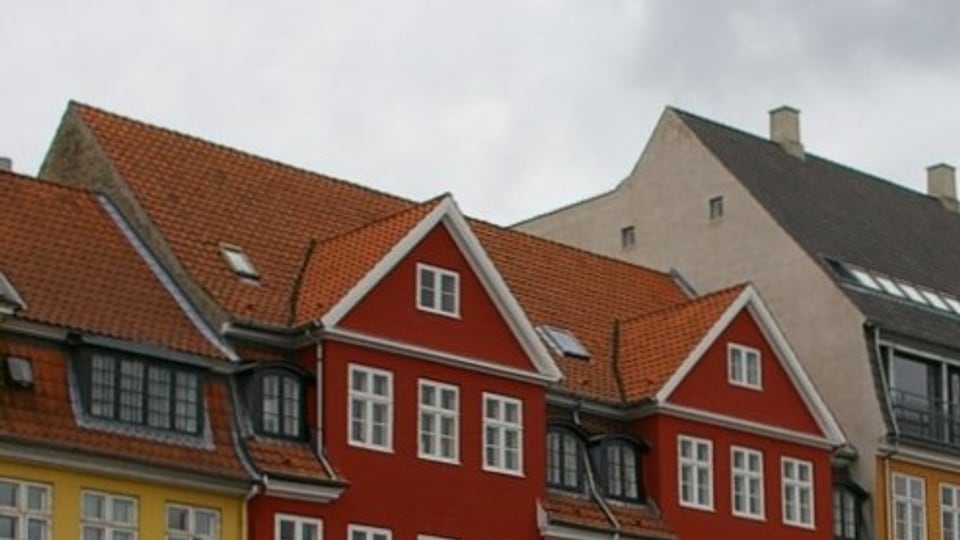
Nyhavn
Dug between 1670 and 1675 by Danish soldiers and Swedish prisoners of war to connect the harbor to Kongens Nytorv, Nyhavn spent its first two-plus centuries as a working harbor known for sailors, drinking and prostitution. That was not the picture-postcard canal it is today. Hans Christian Andersen lived at two addresses on Nyhavn for a total of 18 years, both now marked.
Best for: An hour along the water, and a meal or drink at one of the townhouse restaurants · Area: Nyhavn, Frederiksstaden
Plan for Restaurants directly on the canal front are aimed squarely at visitors; a short walk into the surrounding streets usually finds better value and fewer crowds.
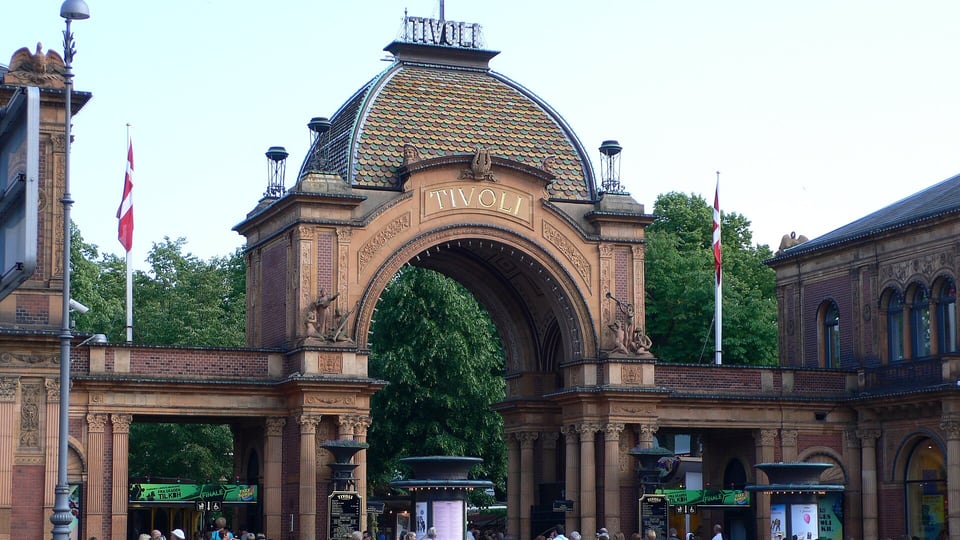
Tivoli Gardens
Opened 15 August 1843, Tivoli is the second-oldest continuously operating amusement park in the world, behind only Copenhagen’s own Dyrehavsbakken. Walt Disney visited Tivoli in 1951, years before Disneyland opened in 1955. Travel-press accounts describe the visit as a real influence on Disneyland’s design, and this guide treats it as documented rather than assumed.
Best for: An evening for the gardens, rides and (in season) the illuminated grounds after dark · Area: Vesterbro, next to Copenhagen Central Station
Plan for Tivoli does not run year-round: it operates in four seasonal windows (roughly Easter, summer, Halloween and Christmas) and is normally closed from January into March. Check the current calendar before planning a visit outside peak summer.
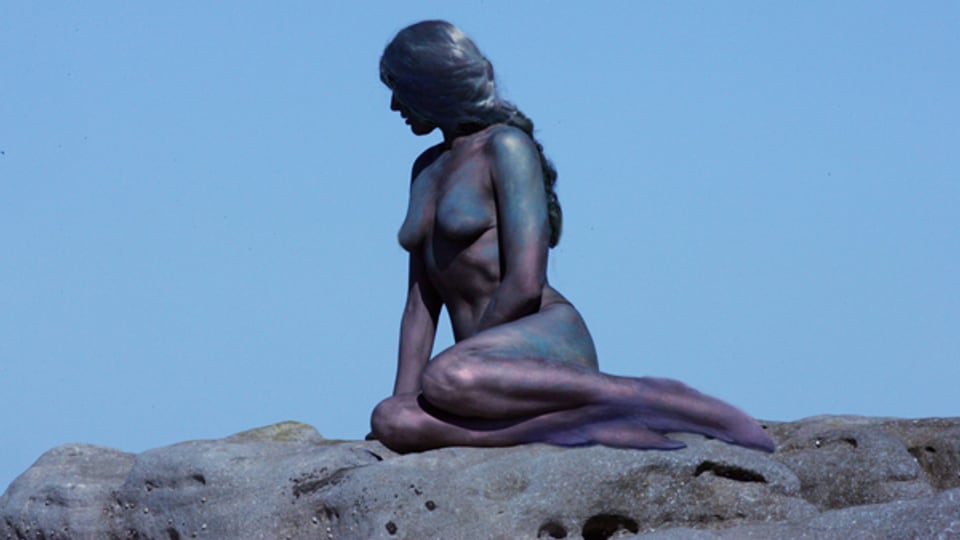
The Little Mermaid statue
Sculptor Edvard Eriksen’s bronze statue, inspired by Hans Christian Andersen’s fairy tale and commissioned by Carlsberg heir Carl Jacobsen, was unveiled on the Langelinie promenade on 23 August 1913. It stands just 1.25m tall.
Best for: A brief stop, ideally combined with a harbor walk rather than a dedicated trip · Area: Langelinie, north of the city center
Plan for Multiple travel-press reviews describe the statue as smaller and less dramatic in person than its fame suggests. It is a reaction similar to Brussels’ Manneken Pis. It also draws heavy crowds around midday in summer, when a clear photo can be difficult.
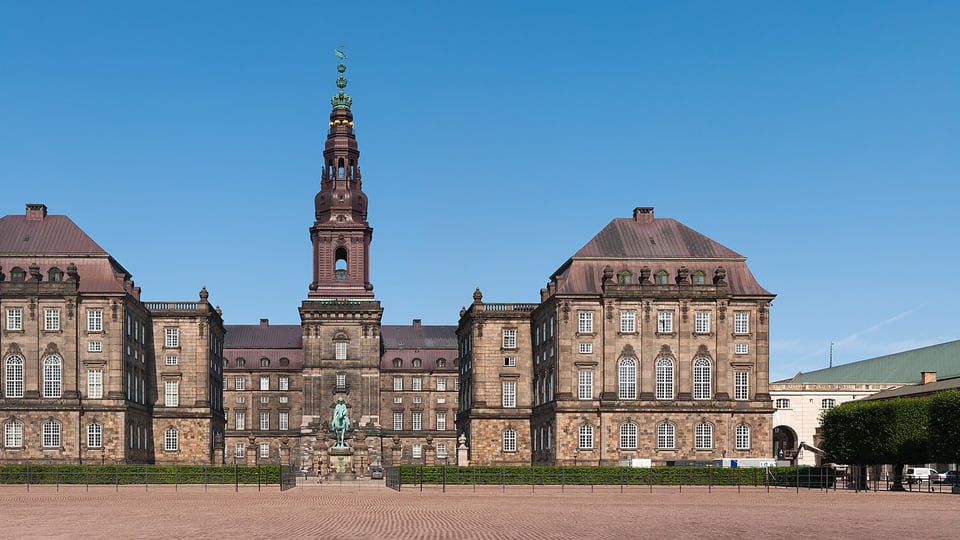
Christiansborg Palace
The current, third Christiansborg, built 1907-1928 on the site of Bishop Absalon’s original 1167 fortress, is the only building anywhere housing a country’s parliament (the Folketing), Supreme Court and Prime Minister’s Office at once. The Royal Reception Rooms are open to visitors. So are the excavated ruins beneath the palace, open since 1924, and a tower viewing platform, the city’s tallest, opened in 2014.
Best for: Two to three hours for the ruins, the Reception Rooms and the tower view · Area: Slotsholmen, the palace islet just south of the city center
Plan for The Folketing chamber itself is a working legislature, not a museum space. Visitor access there depends on the parliamentary calendar. The Reception Rooms, ruins and tower operate on their own separate visiting arrangements.
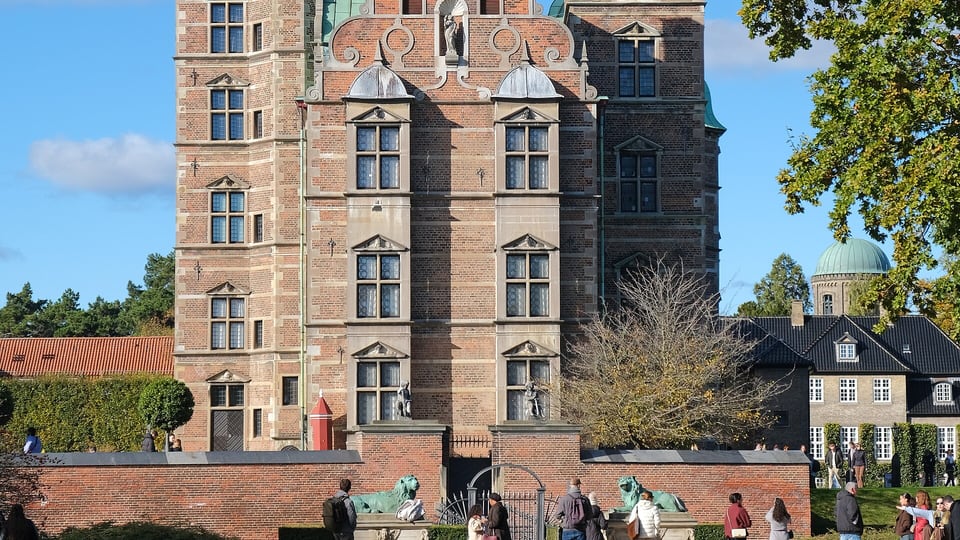
Rosenborg Castle and the Crown Jewels
Built for King Christian IV between 1606 and 1624 as a summer residence in Dutch Renaissance style, Rosenborg opened to the public in 1838. It now houses the Royal Collections, including the Danish Crown Jewels and regalia. The treasury holds the Crown of Christian IV, the Crown of Christian V, a 1648 royal orb, and Christian III’s Sword of State.
Best for: Ninety minutes to two hours for the treasury and the surrounding King’s Garden (Kongens Have) · Area: Indre By, beside the King’s Garden
Plan for The Royal Guard marches past Rosenborg on its way to Amalienborg every day at noon. Timing a visit around that adds a second, free sight to the same outing.
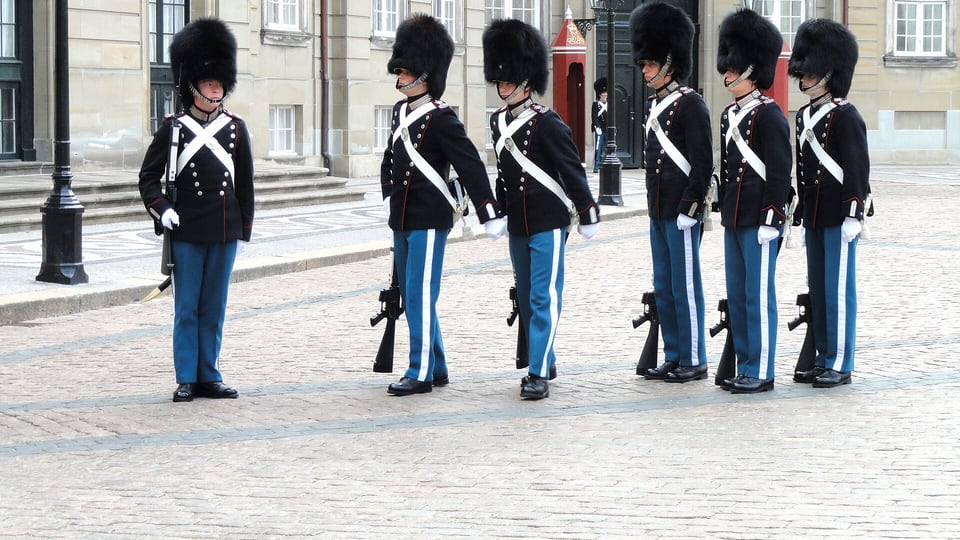
Amalienborg Palace
Four identical Rococo palaces around an octagonal courtyard were built 1750-1760 by architect Nicolai Eigtved for four noble families. They became the royal family’s home only after Christiansborg burned down on the night of 26-27 February 1794. King Frederik X now lives in Christian IX’s Palace, while Christian VIII’s Palace is open to the public as a museum on the constitutional monarchy.
Best for: The daily changing of the Royal Guard at noon, plus the Christian VIII Palace museum for those who want the interior · Area: Frederiksstaden, near Nyhavn and the Opera House
Plan for Only one of the four palaces is generally open to visitors. The other three remain working royal residences or reception spaces with limited or no public access.
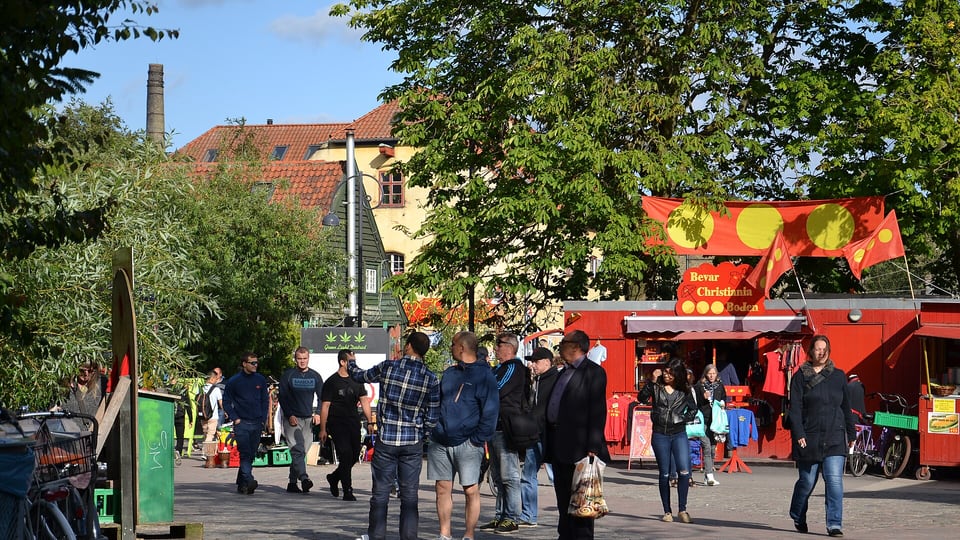
Freetown Christiania
Declared an open "free town" in 1971 after activists occupied former military barracks, Christiania was formally legalized by the Danish Parliament in 1989. Its roughly 19 acres became resident-owned after a 2012 agreement. Cannabis sales on Pusher Street stayed illegal; after a 2023 shooting killed one person and injured four, residents and police dug up the street in 2024, closing the market.
Best for: A daytime walk through the community’s art, architecture and gardens · Area: Christianshavn
Plan for The community itself has long discouraged photography around its drug-trade areas, formerly marked with "no photo" signs on Pusher Street. Ask before photographing people. Expect a distinctly different, sometimes rundown, atmosphere from the rest of Copenhagen.
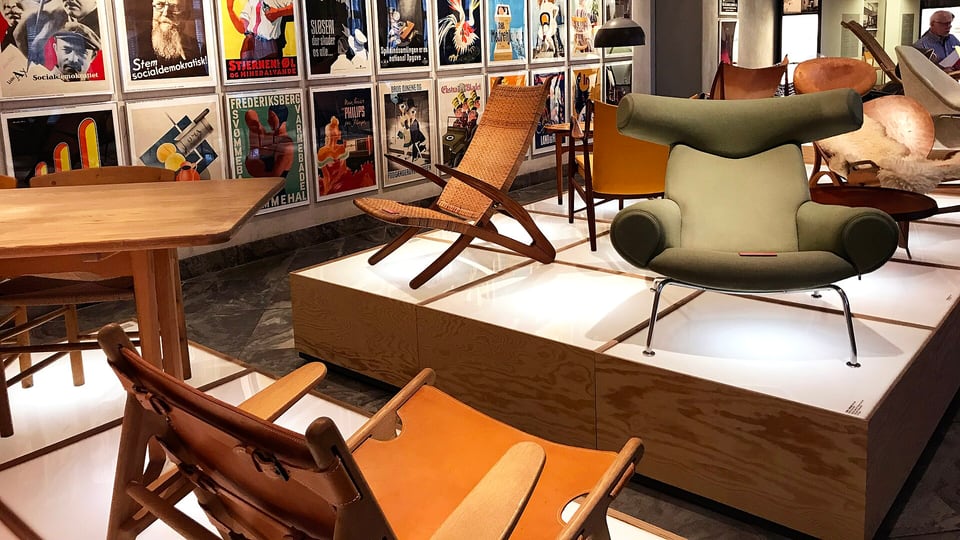
Designmuseum Danmark
Housed in an 18th-century Rococo building that has held the collection since 1926, Designmuseum Danmark is one of the largest collections of Danish design anywhere. It holds furniture by Arne Jacobsen, Hans Wegner, Finn Juhl, Poul Kjærholm and Verner Panton, including a "Chair Tunnel" display of 125 chairs.
Best for: Ninety minutes for visitors who want Danish design grounded in specific objects rather than a general impression · Area: Frederiksstaden, near Amalienborg
Plan for It is a design and craft collection, not a hands-on or interactive museum; visitors expecting a livelier format may prefer it as a shorter, focused stop.
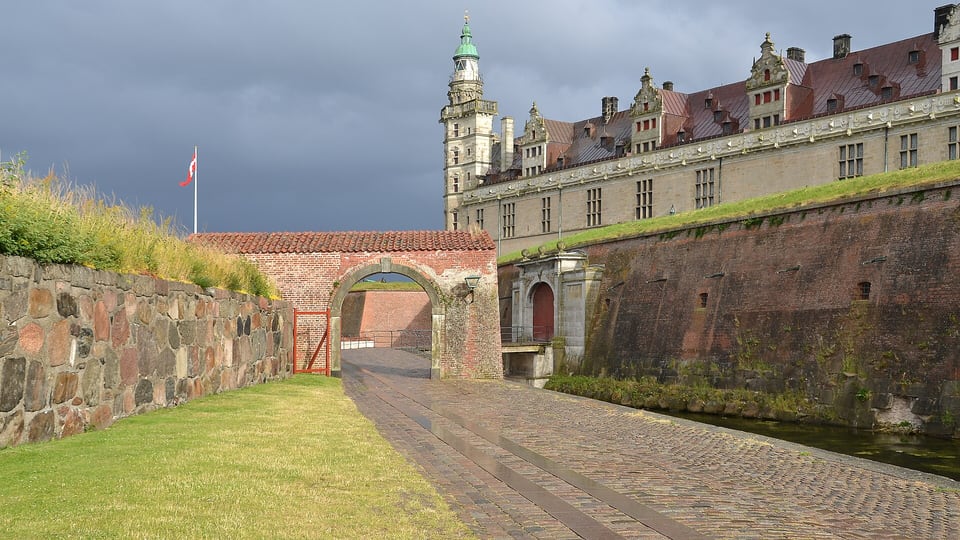
Kronborg Castle (Hamlet’s Elsinore)
UNESCO inscribed Kronborg Castle, in Helsingør (Elsinore) about 45km north of Copenhagen, in 2000. Construction began in 1574 under King Frederik II, and Christian IV rebuilt the Renaissance castle in the early 1600s. It is best known as the setting of Shakespeare’s Hamlet, drawing on the 12th-century Amleth legend; an annual Shakespeare Festival has staged Hamlet in the courtyard since 1816.
Best for: A dedicated day trip combining the castle with Helsingør’s old town · Area: Helsingør (Elsinore), North Zealand, about an hour from Copenhagen by train
Plan for This needs a dedicated day given the round trip and the site’s scale. Check the castle’s own current opening hours and any Shakespeare Festival dates before planning around a specific date.
Plan three, five or seven-plus days in Copenhagen
Three to four days: the harbor, royal sites and Christianshavn
Pick this length for Nyhavn, Amalienborg, Christiansborg and Freetown Christiania.
This length leaves Tivoli and Kronborg for a future trip rather than rushing either.
The trade-off Skipping Tivoli means missing a distinctive, seasonal experience.
Five to six days: add Rosenborg, Designmuseum Danmark and Tivoli
Pick this length to add the Crown Jewels, Danish design, and Tivoli Gardens if the season lines up with your dates.
Check Tivoli’s current seasonal calendar before counting on it being open.
The trade-off Outside Tivoli’s open seasons, this extra time is better spent on Kronborg instead.
A week or more: add Kronborg Castle
Pick this length to fit a full day trip to Helsingør without rushing the city itself.
Check the castle’s current opening hours and any Shakespeare Festival dates before committing to a day.
The trade-off Outside a longer stay, this extra day is the first one worth cutting.
Sources
checked 2026-09-28. Recommendations are editorial judgements based on the cited sources below.
Choose where to focus in Copenhagen
Frederiksstaden, for the royal quarter and the harbor
Consider it for Amalienborg, Nyhavn, the Opera House and Designmuseum Danmark.
Time a visit around the noon Royal Guard march between Rosenborg and Amalienborg.
The trade-off Nyhavn’s canal-front dining is priced for the view rather than value.
Christianshavn, for Freetown Christiania
Consider it for the canals and a daytime walk through Christiania.
Skip photographing people in Christiania’s drug-trade areas, per the community’s own long-standing request.
The trade-off Plan this district for daylight hours rather than a late-evening visit.
Indre By, for Rosenborg and Strøget
Consider it for the Crown Jewels at Rosenborg Castle and central shopping streets.
Keep bags and valuables secure around Strøget and Nørreport station specifically.
The trade-off It is the most crowded part of the city for pickpocket risk, per the UK FCDO.
Sources
checked 2026-09-28. Recommendations are editorial judgements based on the cited sources below.
The Nordic countries’ busiest airport, with a direct metro link
Copenhagen Airport (CPH), on Amager island about 8km south of the city center, is the busiest airport in the Nordic countries. It handled a record 32.4 million passengers in 2025, and serves as Scandinavian Airlines’ primary hub alongside operations for Norwegian Air Shuttle and others.
The airport has its own Metro station, opened in 2007, connecting directly to the city center. A separate underground rail station serves regional and long-distance trains.
Best time to visit
Spring (March-May)
Spring temperatures climb from around 4°C in March to about 12°C by May. Tivoli Gardens typically reopens for its Easter season in this window; exact dates move year to year.
- Crowds
- Varies by event and attraction
Summer (June-August)
Summers are mild rather than hot, with July highs averaging around 18°C. This is Copenhagen’s peak tourist season, when Tivoli, the canal tours and outdoor cafes are all running.
- Crowds
- Varies by event and attraction
Autumn (September-November)
Temperatures ease from the mid-teens in September to single digits by November. Tivoli runs a Halloween season in this window before closing again ahead of winter.
- Crowds
- Varies by event and attraction
Winter (December-February)
Winter is cold and often gray, with January averages around 2-3°C. Tivoli reopens for a Christmas season through the holidays, then closes again for most of January through March.
- Crowds
- Varies by event and attraction
Food: smørrebrød, wienerbrød and Noma’s new chapter
Smørrebrød, literally "butter-bread," traces to the Middle Ages, when workers carried thick slices of rye bread as an edible plate for whatever leftovers they had: pickled herring, cured meats, cheese. By the early 20th century it had become a structured dining tradition. The Copenhagen restaurant Ida Davidsen built its menu on a list of more than 170 open-faced sandwich combinations, first compiled around 1901.
What English calls a "Danish pastry" is, in Denmark itself, wienerbrød, "Vienna bread." Austrian bakers brought the laminated-dough technique to Denmark around a mid-19th-century bakery strike, when local owners hired them as replacement workers. The name stuck to the bread’s origin rather than the country that later made it famous.
Noma, long one of the most talked-about restaurants in the world, closed its original format at the end of 2024. It reopened in August 2026 under new leadership, without founder René Redzepi running daily service, and said it would not appear in this year’s Michelin Guide, since it had not been open long enough in 2026 to qualify. Check its current format and reservation system directly before planning around it.
Food and drink in Copenhagen sit well above the European average by most cost-of-living comparisons. This guide gives no evergreen prices, since restaurant and grocery costs move constantly. First-time visitors should plan for that in advance, though supermarket meals and bakery lunches keep costs down without much sacrifice.
City profile
- Population (The municipality of Copenhagen, 1 January 2026, per Wikipedia, 2026): 671,714
Bishop Absalon built a fortress on the small harbor island of Slotsholmen in 1167, traditionally treated as the city’s founding date. Christiansborg Palace, the seat of Denmark’s Parliament, Supreme Court and Prime Minister’s Office, now stands on the same site, and the excavated ruins of Absalon’s Castle remain open beneath it.
Copenhagen became Denmark’s capital when King Eric of Pomerania moved his seat to Copenhagen Castle around 1416. The University of Copenhagen followed in 1479, and the city grew rapidly under King Christian IV’s long reign, 1588-1648, who founded Christianshavn and Rosenborg Castle among many other projects.
The Copenhagen Fire of 1728 destroyed about 28 percent of the city, reshaping much of what is now the historic center. Christiansborg Palace itself has burned twice, in 1794 and 1884; the current, third palace was built between 1907 and 1928 in a Neo-baroque style with a granite facade over reinforced concrete.
The 1794 Christiansborg fire explains why the royal family lives at Amalienborg rather than Christiansborg. The four Rococo palaces at Amalienborg, built 1750-1760 for four noble families, were never meant as a royal residence. The family moved in after the fire and never left.
Famous for:
- Nyhavn, the 17th-century canal harbor now lined with brightly colored townhouses, cafes and restaurants, one of the most photographed streets in Northern Europe.
- Tivoli Gardens, opened in 1843 and the second-oldest continuously operating amusement park in the world, after Copenhagen’s own Dyrehavsbakken.
- A cycling culture backed by roughly 400km of dedicated cycle tracks, more than 25 bicycle and pedestrian bridges. By the city’s own account, there are more bicycles than residents.
- Freetown Christiania, a self-governing community founded in 1971 on former military land, one of the most distinctive and debated neighborhoods in Europe.
Why Copenhagen is more than Scandinavia’s cycling capital
Copenhagen is built around its harbor and canals. The best of the city rewards walking or cycling along the water: Nyhavn’s 17th-century townhouses, the Little Mermaid statue on the Langelinie promenade, and the modern waterfront at the Copenhagen Opera House.
Few capitals pack this much working royal and government history into so small an area. Christiansborg Palace is the only building anywhere that houses a country’s parliament, supreme court and head-of-government office together. Amalienborg, a short walk away, is where the royal family actually lives, its Royal Guard marching between the two each day.
Freetown Christiania is one of Europe’s most unusual neighborhoods, not a curated attraction: a legally recognized, tax-paying community that moved from a 1970s squat to partly owning its own land. Cannabis sales on Pusher Street, tolerated for decades, stayed illegal and led to real violence, including a 2023 shooting that killed one and injured four. In 2024, police and residents dug up the street to shut it down.
Danish design has a specific, verifiable home in the city rather than a marketing slogan. Designmuseum Danmark, in an 18th-century building that has held the collection since 1926, holds work by Arne Jacobsen, Hans Wegner, Finn Juhl, Poul Kjærholm and Verner Panton, including a 125-chair “Chair Tunnel” tracing the furniture’s influences.
Cycling is not a novelty here but daily infrastructure. The city itself counts roughly 400km of cycle tracks, more than 25 dedicated bicycle and pedestrian bridges, and over 2.7 million kilometers cycled on an average weekday, with a recorded injury rate of just 0.1 per million kilometers cycled.
Copenhagen consistently ranks near the top of cost-of-living indexes for European cities, well above the regional average for food, drink and accommodation. This guide gives no evergreen prices for that reason. First-time visitors can still visit comfortably, but should expect to trade some restaurant meals for self-catering and free sights to keep costs down.
The US State Department rates Denmark Level 2, exercise increased caution, due to terrorism, most recently reissued in September 2024. The UK FCDO’s Denmark advice, updated 11 August 2026, flags pickpocketing around the central station, Nørreport, Strøget, Nyhavn and Christiania. It advises extra caution in Christiania and Nørrebro late at night given past gang-related violence.
- Plan by trip type
- Harbor and canals · Royal Copenhagen: Amalienborg, Rosenborg, Christiansborg · Christianshavn and Christiania · Tivoli, seasonal · Kronborg day trip
- Good first stay
- 3-4 days for the harbor, the royal sites and Christianshavn. 5-7 days to add Tivoli Gardens (in season) and a Kronborg Castle day trip without rushing
- Climate
- Mild by Nordic standards but changeable, with cool winters (January averages around 2-3°C) and mild summers (July highs near 18°C)
- Main gateway
- Copenhagen Airport (CPH), Kastrup, the busiest airport in the Nordic countries and Scandinavian Airlines’ primary hub
Planning your Copenhagen visit: FAQs
Is Copenhagen safe?
The US State Department rates Denmark Level 2, exercise increased caution, due to terrorism, most recently reissued in September 2024. The UK FCDO’s Denmark advice, updated 11 August 2026, flags pickpocketing in crowded areas including the central station, Nørreport, Strøget, Nyhavn, Christiania and the airport. It advises extra caution in Christiania and Nørrebro late at night given past gang-related violence.
Is Tivoli Gardens open year-round?
No. Tivoli operates in four seasonal windows, roughly Easter, summer, Halloween and Christmas, and is normally closed from January into March. Check the current calendar before planning a trip around it, especially outside summer.
Did Walt Disney really visit Tivoli Gardens before building Disneyland?
Yes: Disney visited Tivoli in 1951, years before Disneyland opened in 1955, as part of a wider European trip, and multiple travel-press accounts describe the visit as a real influence on Disneyland’s design. This guide treats that as a documented visit, not an assumed connection.
Is the Little Mermaid statue worth visiting?
Worth a stop if you are already walking the harbor, but set expectations. The bronze statue is only 1.25m tall, and multiple travel reviews describe it as smaller and less dramatic in person than its fame suggests, a reaction similar to Brussels’ Manneken Pis. It also draws heavy midday crowds in summer.
Is Freetown Christiania legal, and can I take photos there?
Christiania is a legally recognized, tax-paying community whose residents partly own their land since a 2012 agreement. Cannabis sales stayed illegal under Danish law throughout; after a 2023 shooting, police and residents jointly dug up Pusher Street in 2024, closing the market. The community has long discouraged photography around its drug-trade areas; ask before photographing people.
Which airport should I fly into, and how do I get to the city?
Copenhagen Airport (CPH) at Kastrup, the busiest in the Nordic countries and Scandinavian Airlines’ main hub, sits about 8km south of the center. It connects directly by its own Metro station and a separate rail station.
Is Noma still open, and can I still eat there?
Yes, but its situation changed. Noma closed its original format at the end of 2024 and reopened in August 2026 under new leadership, without founder René Redzepi running daily service, and it will not appear in this year’s Michelin Guide. Check its current reservation system directly, since format and availability have both changed recently.
Make your Copenhagen plans
Compare tours, tickets and activities in Copenhagen →
Choose your departure market and search flights to Copenhagen from the Mubboo Flights homepage.
Compare flights ↗Sources
Latest source check: .
Show all 40 sources
- Wikipedia — Copenhagen (checked 2026-09-28)
- Wikipedia — Nyhavn (checked 2026-09-28)
- Tivoli Gardens — history of Tivoli Gardens (checked 2026-09-28)
- Wikipedia — Tivoli Gardens (checked 2026-09-28)
- Euronews — The place that inspired Walt Disney celebrates its 175th anniversary (checked 2026-09-28)
- NBC News — Copenhagen’s Tivoli park has it all (checked 2026-09-28)
- Wikipedia — The Little Mermaid (statue) (checked 2026-09-28)
- Explore.com — Copenhagen’s most underwhelming tourist trap is more disappointing than it’s worth (checked 2026-09-28)
- Wikipedia — Christiansborg Palace (checked 2026-09-28)
- Wikipedia — Rosenborg Castle (checked 2026-09-28)
- Wikipedia — Amalienborg (checked 2026-09-28)
- Wikipedia — Freetown Christiania (checked 2026-09-28)
- Wikipedia — Designmuseum Denmark (checked 2026-09-28)
- UNESCO World Heritage Centre — Kronborg Castle (checked 2026-09-28)
- Wikipedia — Kronborg (checked 2026-09-28)
- VisitDenmark (Danish national tourism board) — Kronborg Castle, aka Hamlet’s Castle (checked 2026-09-28)
- City of Copenhagen (Urban Development Copenhagen) — Copenhagen, the best cycling city in the world (checked 2026-09-28)
- VisitDenmark (Danish national tourism board) — Facts and figures on cycling in Denmark (checked 2026-09-28)
- US Department of State — Denmark Travel Advisory (Level 2, most recently reissued 17 September 2024, current as of this check) (checked 2026-09-28)
- GOV.UK — Denmark travel advice (updated 11 August 2026) (checked 2026-09-28)
- GOV.UK — Denmark travel advice: safety and security (checked 2026-09-28)
- Wikipedia — Copenhagen Airport (checked 2026-09-28)
- Copenhagen Airports (cph.dk) — Record year for Copenhagen Airport (32.4 million passengers in 2025) (checked 2026-09-28)
- Danish Meteorological Institute (DMI) — Klimanormaler (Denmark climate normals methodology and reference periods, including 1991-2020) (checked 2026-09-28)
- Wikipedia — Smørrebrød (checked 2026-09-28)
- Scandification — Smørrebrød: the complete guide to Denmark’s open-faced sandwiches (checked 2026-09-28)
- Wikipedia — Danish pastry (checked 2026-09-28)
- Wikipedia — Noma (restaurant) (checked 2026-09-28)
- Euronews — Copenhagen’s Noma restaurant to re-open under new leadership after abuse accusations (checked 2026-09-28)
- PBS NewsHour — Copenhagen’s famed Noma restaurant prepares to reopen without chef Redzepi at helm (checked 2026-09-28)
- Wise — Cost of living in Copenhagen (checked 2026-09-28)
- climate-data.org — Copenhagen long-term monthly climate averages (checked 2026-09-28)
- The booking platform — Things to do in Copenhagen (destination d463) (checked 2026-09-28)
- The booking platform — Copenhagen Classic Canal Tour With Guide (product 2158CANAL, verified ACTIVE, primary destination 463, 2026-09-28) (checked 2026-09-28)
- The booking platform — Copenhagen Christiania and Christianshavn Guided Walking Tour (product 5568315P2, verified ACTIVE, primary destination 463, 2026-09-28) (checked 2026-09-28)
- The booking platform — Skip the line Rosenborg Castle and Gardens Copenhagen Tour (product 332545P446, verified ACTIVE, primary destination 463, 2026-09-28) (checked 2026-09-28)
- The booking platform — Copenhagen Highlights 3 Hour Bike Tour with local Guide (product 48022P1, verified ACTIVE, primary destination 463, 2026-09-28) (checked 2026-09-28)
- The booking platform — Kronborg (Hamlet Castle) & Frederiksborg Castles: PRIVATE TOUR (product 86815P1, verified ACTIVE, primary destination 463, 2026-09-28) (checked 2026-09-28)
- The booking platform — Copenhagen Culinary Food Tour with 6+ Tastings of Danish Classics (product 7812P230, verified ACTIVE, primary destination 463, 2026-09-28) (checked 2026-09-28)
- The booking platform — Copenhagen Card: DISCOVER 80+ attractions and public transport (product 3224CARD, verified ACTIVE, primary destination 463, 2026-09-28) (checked 2026-09-28)
Photo credits
- nyhavn — Delphine Ménard from Koenigstein, Germany · CC BY-SA 2.0.
- tivoli gardens — Heather Cowper from Bristol, UK · CC BY 2.0.
- little mermaid — Eva Rinaldi · CC BY-SA 2.0.
- christiansborg palace — Julian Herzog ( Website ) · CC BY 4.0.
- rosenborg castle — kallerna · CC BY-SA 4.0.
- amalienborg palace — Daderot · CC0.
- christiania — Pudelek · CC BY-SA 4.0.
- designmuseum danmark — MMLDND · CC BY-SA 4.0.
- kronborg castle — Pudelek · CC BY-SA 4.0.
Mubboo Editorial Team · Reviewed by Mubboo Editorial Team


