
Cartagena de Indias, Colombia’s Caribbean coast
Cartagena, Colombia
Cartagena de Indias sits on Colombia’s Caribbean coast, and its walled old town, port and fortresses have been on the UNESCO World Heritage List since 1984. Getsemaní lies just outside the walls, Castillo San Felipe de Barajas on a hill inland, and the Bocagrande hotel towers on a peninsula to the south.
Three days cover the walled city, a walk on the walls, San Felipe and Getsemaní. A fourth adds a boat day to the Rosario Islands or Playa Blanca, and a fifth leaves room for San Basilio de Palenque, about 50km away, or the El Totumo mud volcano.

Find your Cartagena, Colombia experience
Explore Cartagena, Colombia Before You Book
Take a virtual drive or walk, then find tours and tickets for the places you like.

Activities
Featured activities in Cartagena, Colombia


Prices at a glance
What we sell today and what recent flight searches found. No hotel prices; nothing here is a trip total.
- Tours and tickets in Cartagena, Colombiafrom US$52.00
Live from Viator when this page loaded · per adult · changes by date.
Top experiences
Top experiences in Cartagena, Colombia
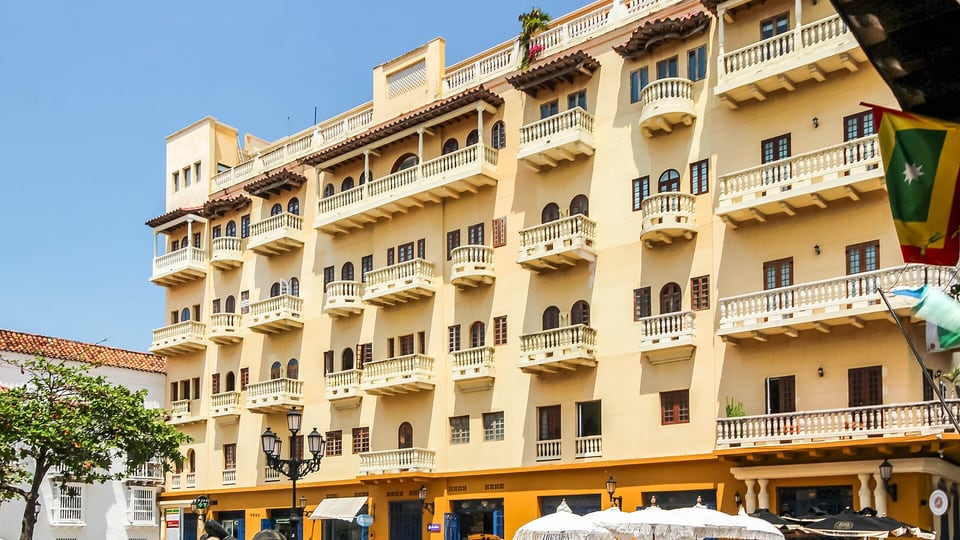
The walled city
The Ciudad Amurallada holds the quarters UNESCO lists: San Pedro around the cathedral and San Diego, where merchants lived. The main way in is the Puerta del Reloj, crowned with its clock early in the 18th century, which opens onto the Plaza de los Coches, once the center of the slave market.
Best for: Plazas, balconied houses and churches on foot, early in the morning or after sunset · Area: Centro and San Diego, inside the walls
Plan for The streets are compact, but daytime highs average 31 to 32°C all year, so midday walking is hard work. Street vendors work the plazas, and the city’s 2025 overcharging reports included the old town, so agree a price before accepting fruit or a drink.
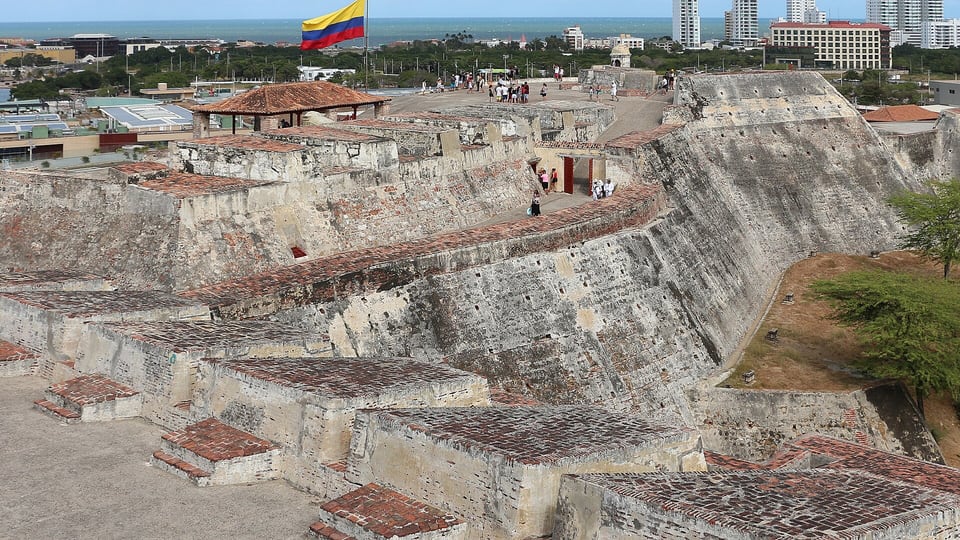
Castillo San Felipe de Barajas
The fortress on the San Lázaro hill guarded the land approach to the city. Its operator dates it to 1657, and Antonio de Arévalo expanded it in 1763. Admiral Vernon’s British assault on it failed on 20 April 1741, and tunnels run beneath its batteries, some of them open to visitors.
Best for: Military history, the tunnels and a view across the city to the Bocagrande towers · Area: San Lázaro hill, Pie de la Popa, about 20 minutes’ walk from the old town
Plan for It opens daily from 7:00 to 18:00. The 2026 rate for international visitors is 38,000 pesos, with reduced rates for Colombians with ID and children aged 6 to 13, and free entry under six. The ramparts have little shade, so go at opening.
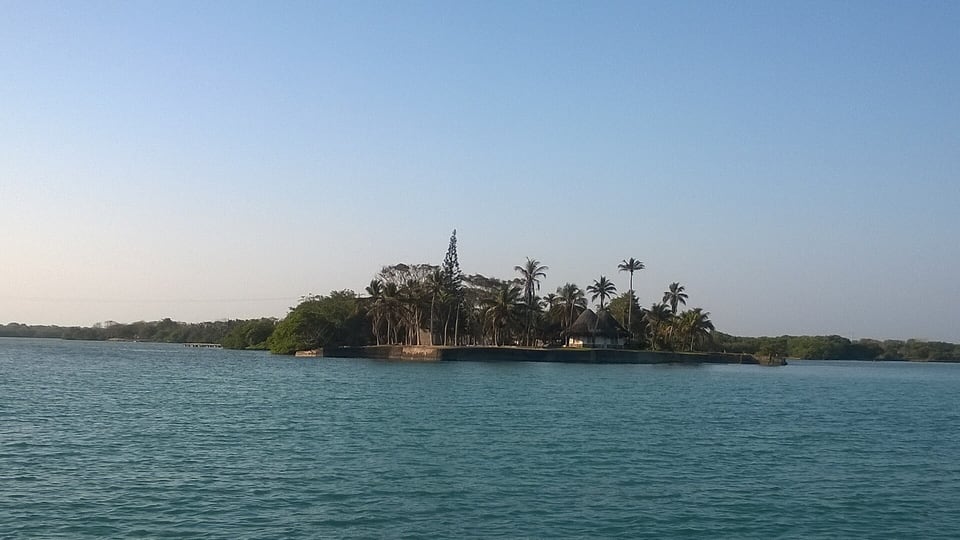
Rosario Islands by boat
The islands lie inside the Parque Nacional Natural Corales del Rosario y de San Bernardo, opened on 6 June 1977 to protect coral reefs, seagrass beds and mangroves. It is Colombia’s only underwater national park, with 170 fish species and 52 coral species recorded.
Best for: Snorkeling over the reefs and swimming in clear water · Area: Offshore to the southwest; boats leave from La Bodeguita dock beside the walled city
Plan for The park asks visitors not to touch or stand on coral, bans single-use plastics and requires boats to slow near the islands. Since 1 March 2026 every visitor must hold accident and assistance insurance, and tours differ on whether the park and dock fees are included.
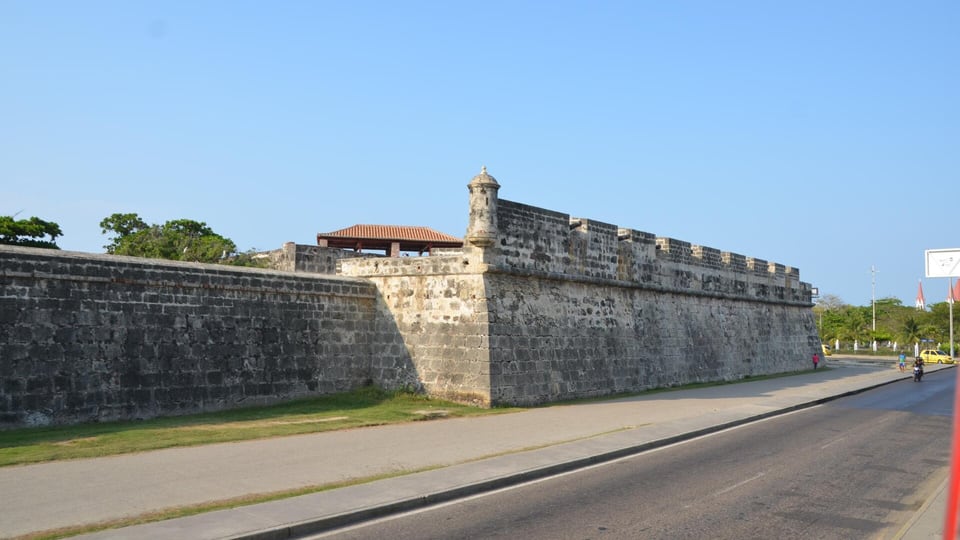
Walking the city walls
Spain commissioned Italian engineer Bautista Antonelli in 1586 to plan the defense of its Caribbean ports, and in 1594 he drew up plans for a walled Cartagena. Building went on for two centuries until Antonio de Arévalo completed the works in 1796. At Las Bóvedas, 23 bombproof vaults built between 1789 and 1795 were later used as prison cells.
Best for: A late-afternoon walk on the ramparts with the sea on one side and the old town on the other · Area: The ramparts around Centro and San Diego, from the Clock Gate to Las Bóvedas
Plan for The ramparts are exposed, with almost no shade, so a walk toward sunset suits the heat better than midday. Las Bóvedas now holds craft and souvenir shops rather than exhibits.
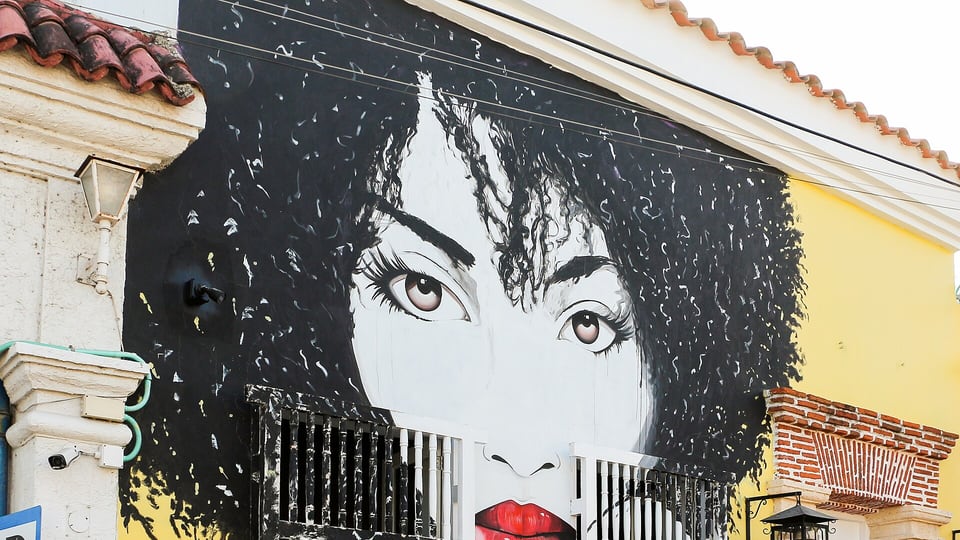
Getsemaní
Getsemaní, just outside the walls, is the quarter UNESCO calls the popular one, and its militia helped proclaim independence in 1811. Long a working-class barrio, it has changed sharply over the last decade as old houses became boutique hotels, and its walls now carry murals, some about the neighborhood’s own history.
Best for: Murals by day, and Plaza de la Trinidad in the evening when street performers and food stands gather · Area: Between the walled city and Castillo San Felipe, around Plaza de la Trinidad and Calle de la Sierpe
Plan for Many of the city’s hostels and small hotels are here, so the plazas stay busy after dark. The UK FCDO’s warning about drinks being drugged in bars and clubs applies to nights out here as anywhere in Colombia.
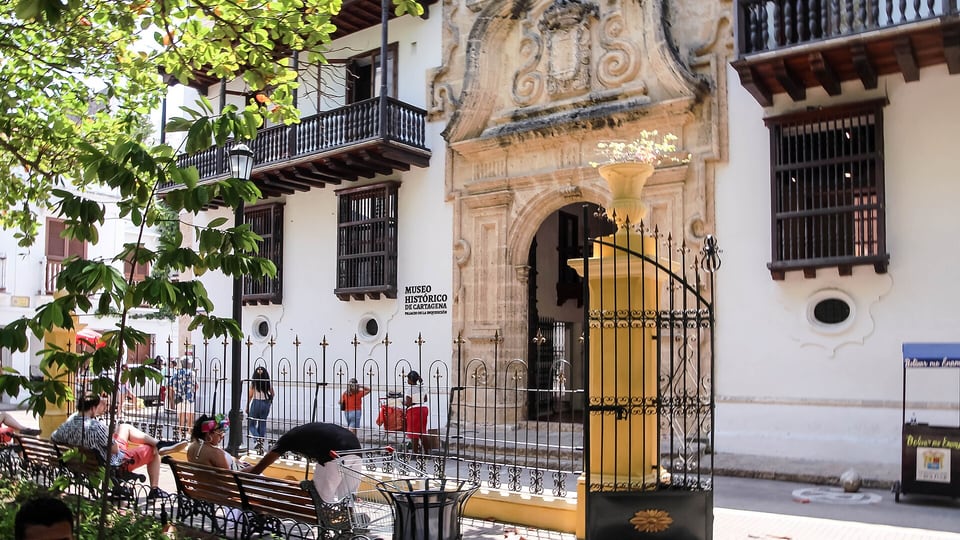
Palace of the Inquisition
Cartagena became the third city in the Spanish empire with a tribunal of the Holy Office, established in 1610, and its palace on Plaza de Bolívar was completed in 1770. The tribunal punished 767 people before it was abolished in 1811. The building now houses the Museo Histórico de Cartagena.
Best for: The city’s colonial and republican history in one building beside Plaza de Bolívar · Area: Plaza de Bolívar, in the walled city
Plan for The torture instruments on display are often taken as the tribunal’s own, but many such pieces are regarded as modern replicas or later inventions, with little evidence they were used in Cartagena. Read them as reconstructions.
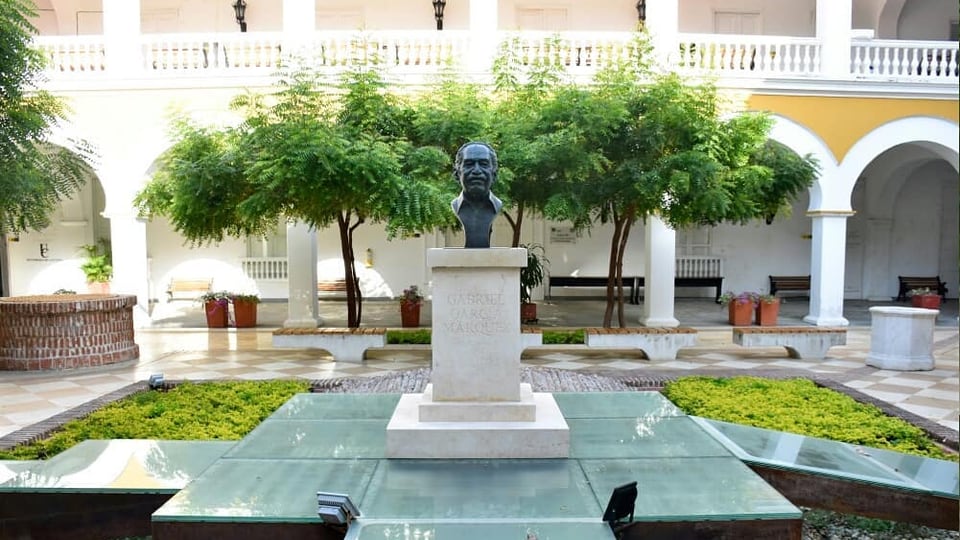
García Márquez’s Cartagena
Gabriel García Márquez moved to the University of Cartagena to study law in 1948 and wrote for El Universal in 1948 and 1949. In May 2016 part of his ashes was placed in the Claustro de La Merced, a university cloister near his seafront house, beneath a bronze bust by Katie Murray.
Best for: Readers of the 1982 Nobel laureate, on a walk through the old town · Area: Claustro de La Merced, in the walled city
Plan for He was born in Aracataca and lived for decades in Mexico City, so Cartagena holds his early journalism and his memorial rather than a museum of his life. The rest of his ashes stayed in Mexico.
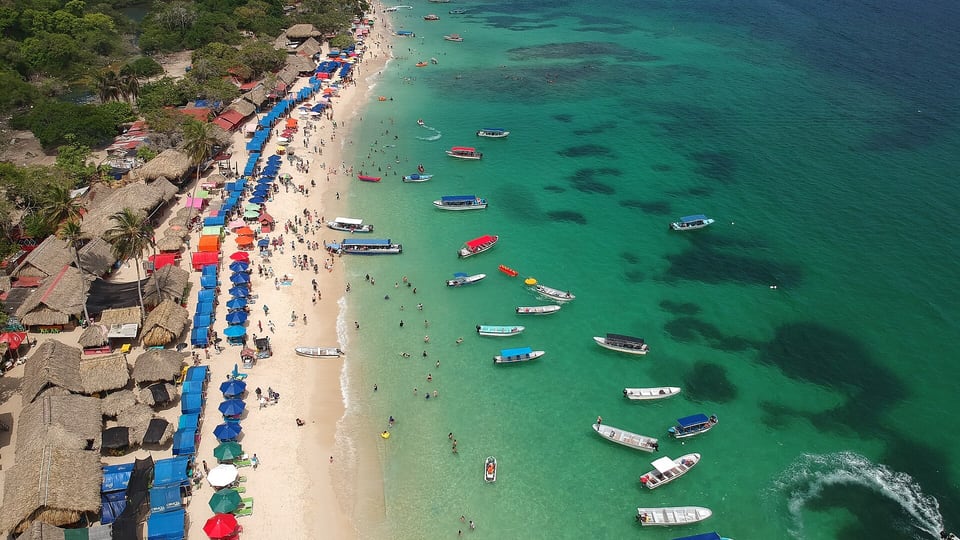
Playa Blanca on Barú
Playa Blanca is a white-sand beach on Barú, a former peninsula south of the city. The Canal del Dique cut Barú off and a bridge now links it, so the beach can be reached by road or by boat. It lies inside the national park, which set its capacity at 3,124 people at a time in 2016.
Best for: A swimming day on calm water, by boat or by road · Area: Barú, south of Cartagena, across the bridge or by boat
Plan for On holidays the beach can fill: police closed access on Holy Thursday 2019 once the limit was reached. The city’s 2025 overcharging reports centered on beaches including Playa Blanca, so agree every chair, drink and meal price first.
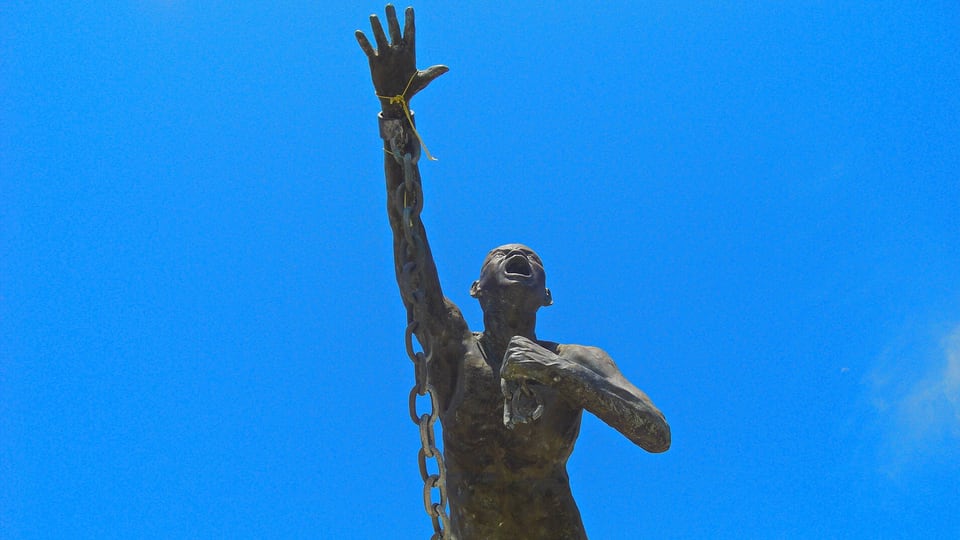
San Basilio de Palenque
UNESCO describes Palenque as one of the walled communities founded by people who escaped slavery in the 17th century, and the only one to survive. It is widely known as the first free town in the Americas. Its Palenquero language, in UNESCO’s words, is the only Spanish-based creole in Latin America with Bantu grammatical features.
Best for: Music, the Palenquero language and the history of resistance, with a guide from the town · Area: Mahates municipality, Bolívar, about 50km from Cartagena
Plan for Go with a tour led by or arranged with people from the town, and ask before photographing anyone. UNESCO records that residents face discrimination and ethnic stereotyping, so a visit treated as a curiosity misses the point.
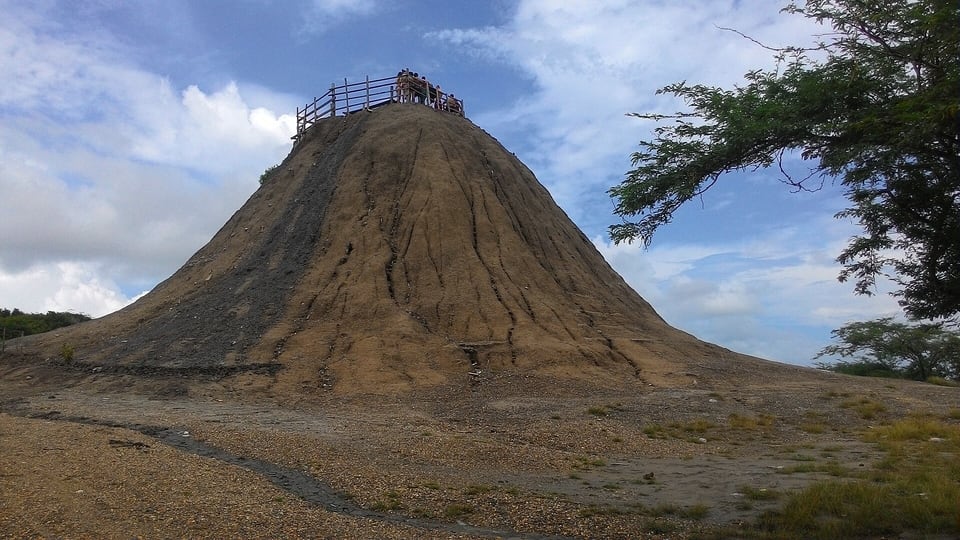
El Totumo mud volcano
El Totumo is a mud volcano some 15 to 20m high in Santa Catalina municipality, on the coast road toward Barranquilla. A wooden staircase leads to the crater, where 10 to 15 people at a time float in warm, dense mud before rinsing off in the lagoon beside it.
Best for: A half-day outing with a mud bath and a lagoon rinse · Area: Santa Catalina, Bolívar, north of Cartagena on the coast road
Plan for Local attendants offer massages, photographs and bag-minding at the site, each a paid service, so ask the rate first. The mud’s healing reputation rests on local claims, not established medicine.
Plan three, four or five days in Cartagena
Three days: the old town, the walls and San Felipe
Pick this length for the walled city, a sunset walk on the walls, the Palace of the Inquisition, Castillo San Felipe and an evening in Getsemaní.
Everything here is within walking distance of the Clock Gate except San Felipe, about 20 minutes on foot, so no transport planning is needed.
The trade-off The sea stays a view from the ramparts; the islands and Playa Blanca need a day of their own.
Four days: add one day on the water
Pick this length to add a Rosario Islands snorkel trip or a Playa Blanca day from La Bodeguita dock.
Island tours listed here run about seven to seven and a half hours, and the park and dock fees and insurance come on top of some of them.
The trade-off Choosing the islands or Playa Blanca usually means only one of them, since each fills the day.
Five days or more: Palenque, El Totumo and a slower pace
Pick this length to add San Basilio de Palenque, about 50km away, or a half day at the El Totumo mud volcano.
Palenque fills most of a day by road; El Totumo takes about four hours with transfers and leaves the evening free.
The trade-off Doing both in five days leaves only one spare day for heat, rain or rest.
Sources
checked 2026-09-27. Recommendations are editorial judgements based on the cited sources below.
- UNESCO World Heritage Centre — Port, Fortresses and Group of Monuments, Cartagena
- Wikipedia — Cartagena, Colombia
- Parques Nacionales Naturales de Colombia — PNN Corales del Rosario y de San Bernardo
- Dimar — Muelle La Bodeguita, the authorized departure point for passenger boats to the Rosario and San Bernardo islands
- Wikipedia — San Basilio de Palenque
- Wikipedia — El Totumo
Choose a base in Cartagena
The walled city: every sight on foot
Consider Centro or San Diego if walking out of the door into the UNESCO quarter matters most.
The Clock Gate, Plaza de Bolívar and the walls are minutes apart, and La Bodeguita dock is at the edge of the quarter.
The trade-off Its plazas are the busiest in the city by day, and vendors work them until late.
Getsemaní: murals and evenings outside the walls
Consider Getsemaní for small hotels and hostels near Plaza de la Trinidad, a short walk from the Clock Gate.
It is the closest base to Castillo San Felipe and puts evening street life on the doorstep.
The trade-off Its fast change has displaced long-time residents, and Plaza de la Trinidad is crowded most evenings.
Bocagrande: towers and beach hotels
Consider Bocagrande for a large hotel on the beach, with the old town a short taxi ride away.
Its beaches are grey volcanic sand between breakwaters, and Avenida San Martín carries the shops and restaurants.
The trade-off Every trip to the walled city or Getsemaní means a taxi, and its beach vendors have a record of overcharging.
Sources
checked 2026-09-27. Recommendations are editorial judgements based on the cited sources below.
Airport, taxis and getting around
Rafael Núñez International Airport (CTG) sits in the Crespo neighborhood between the Caribbean and the Ciénaga de la Virgen, about ten minutes’ drive from the old city. It is named for Rafael Núñez, the Cartagena-born president who wrote the words of the national anthem.
It is the largest airport in Colombia’s northern Caribbean region by passengers, with domestic flights and international routes to cities in North, Central and South America.
The UK FCDO advises using licensed telephone or app-based taxis wherever possible, and its warning on drugging says to use only pre-booked taxis. US government staff in Colombia may not use street taxis or public transport that is not prearranged.
Best time to visit
Winter (December-February)
The heart of the dry season, which IDEAM data put at December to April, with almost no rain in February. November to February are the windiest months, and the breeze takes some of the edge off daytime highs of about 31°C.
- Crowds
- Varies by event and attraction
Spring (March-April)
The dry season continues until the first rains, and highs start to climb toward 32°C. Holy Week always falls in March or April, and in 2019 police closed Playa Blanca on Holy Thursday once it reached capacity.
- Crowds
- Varies by event and attraction
Summer (May-August)
The rainy season starts in May, bringing 10 to 15 rainy days a month. June to August have the year’s highest average highs, around 32°C, so plan walks for early morning.
- Crowds
- Varies by event and attraction
Autumn (September-November)
The wettest stretch: October averages about 236mm of rain at the airport, the most of any month. The FCDO notes that hurricanes and tropical storms, though uncommon, can affect the Caribbean coast. The independence festivities around 11 November close the season.
- Crowds
- Varies by event and attraction
Food: arepas de huevo, posta cartagenera and fruit from the palenqueras
Arepa de huevo is the Caribbean coast’s fried corn arepa, split open, filled with a raw egg and fried again, and Cartagena celebrates it at its Festival del Frito during the Fiestas de La Candelaria. Carimañolas belong to the same street-food tradition, and quibbe arrived with Syrian and Lebanese immigrants.
Posta cartagenera, a beef dish, is one of the plates ProColombia lists as the city’s own. Seafood comes as ceviche and shrimp cocktails, served in Colombia with saltine crackers, and coconut rice is common in coastal cities.
Palenqueras from San Basilio de Palenque carry basins of tropical fruit on their heads and sell fruit, cocadas, alegrías and tamarind balls. Posing for photos is part of their living: El Universal reported about 20,000 pesos a picture in 2025, so ask first. Limonada de coco, cream of coconut blended with lime, sugar and ice, is popular along the coast.
City profile
- Population (Cartagena district (the municipality), 2018 census; the wider metropolitan area is counted separately, 2018): 876,885
Pedro de Heredia founded Cartagena on 1 June 1533 on the site of the Indigenous village of Calamarí. The port became a key link for silver shipped to Spain from Potosí.
By the 17th century Cartagena was one of the main slave markets of the Americas, centered on the Plaza de los Coches. The Jesuit Peter Claver ministered to enslaved Africans arriving at the port, and his remains lie in the church now named for him.
After raids such as Francis Drake’s in 1586, Spain fortified the city for some two centuries. In 1741 defenders under Sebastián de Eslava and Blas de Lezo turned back Admiral Edward Vernon’s British siege.
On 11 November 1811 an armed militia from Getsemaní, the Lanceros de Getsemaní, with Pedro Romero among its leaders, helped proclaim the city’s independence from Spain. Cartagena still marks the date with its independence festivities each November.
Famous for:
- Its walled old town and fortifications, which UNESCO describes as the most extensive in South America.
- Castillo San Felipe de Barajas on the San Lázaro hill, where the British assault of 20 April 1741 failed.
- Gabriel García Márquez, the 1982 Nobel laureate, who studied and worked as a reporter here and whose ashes rest partly in the Claustro de La Merced.
- Palenqueras, women from San Basilio de Palenque who sell fruit and sweets in the old town’s plazas.
Why Cartagena is worth the trip
UNESCO inscribed the Port, Fortresses and Group of Monuments of Cartagena on the World Heritage List in 1984. It calls the fortifications the most extensive in South America and names three historic quarters: San Pedro, with the cathedral; San Diego, where merchants lived; and Getsemaní, the popular quarter.
The city’s African history is visible in its streets. Palenqueras from San Basilio de Palenque sell fruit in the plazas, and Palenque itself, about 50km away, was founded by people who had escaped slavery. UNESCO proclaimed its cultural space a Masterpiece of the Oral and Intangible Heritage of Humanity in 2005.
The Rosario Islands lie inside the Corales del Rosario y de San Bernardo National Natural Park, created in 1977 to protect coral reefs, seagrass and mangroves. Boats leave from La Bodeguita dock beside the walled city, and visitors owe a park entry fee and a dock port fee, which some tours include and others do not.
The US State Department rates Colombia Level 3, reconsider travel, in an advisory last updated on 17 April 2025; its do-not-travel list names Arauca, Cauca, Norte de Santander and the Venezuelan border, not Bolívar. The UK FCDO warns against all but essential travel to southern Bolívar, not the city.
Daytime highs average 31 to 32°C in every month, and rain falls mostly from May to November, peaking in October. Beach vendors are persistent: the city logged 289 reports of tourists being overcharged between January and July 2025, mostly on beaches.
- Plan by trip type
- Walled city and Getsemaní on the bay · San Felipe inland · Bocagrande towers to the south · Rosario Islands, Playa Blanca and Palenque as day trips
- Good first stay
- 3 days: walled city, walls, San Felipe and Getsemaní; 4 days adds one boat day to the islands; 5 or more adds San Basilio de Palenque or El Totumo
- Climate
- Hot and humid all year: daytime highs average 31-32°C in every month; rain falls mostly May to November and peaks in October; December to April is dry
- Main gateway
- Rafael Núñez International (CTG), in the Crespo neighborhood, about ten minutes’ drive from the old city
Planning your Cartagena, Colombia visit: FAQs
Is this Cartagena in Colombia or in Spain?
This guide covers Cartagena de Indias on Colombia’s Caribbean coast, capital of Bolívar department and home to CTG airport. Cartagena in Spain is a separate port city in the Region of Murcia, which the Colombian city was named after.
Is Cartagena safe to visit?
The US State Department rates Colombia Level 3, reconsider travel, and the UK FCDO does not advise against travel to Cartagena itself. The FCDO warns of pickpocketing and mugging on the Caribbean coast, scopolamine drugging, robberies set up through dating apps, and express kidnappings by fake taxi drivers. Use pre-booked taxis and never leave a drink unattended.
What do Rosario Islands and Playa Blanca trips charge on top of the tour?
The national park charges an entry fee, 13,500 pesos per person in 2026 for the Rosario sector, and La Bodeguita dock collects a port fee per passenger. Since 1 March 2026 the park also requires accident and assistance insurance. Check which of the three a tour includes.
When is the rainy season?
Rain falls mostly from May to November, with October the wettest month, according to IDEAM data, and December to April is the dry season. It is hot all year, with daytime highs of 31 to 32°C.
Where is Gabriel García Márquez buried?
Part of his ashes rest in the Claustro de La Merced of the University of Cartagena, in the walled city, placed there in May 2016 beneath a bronze bust. The ashes of his wife, Mercedes Barcha, were placed beside his in March 2022.
Is San Basilio de Palenque really the first free town in the Americas?
It is widely described that way, including by Colombia’s tourism agency. UNESCO’s own wording is that Palenque is one of the walled communities founded by escaped slaves in the 17th century, and the only one to survive. In 1713 an agreement signed by Bishop Antonio María Casiani recognised the community’s right to its land, on condition that it took in no new runaways.
How do I deal with vendors and touts?
Agree the price before accepting anything, from a drink on the beach to a photo with a palenquera. The city recorded 289 overcharging reports in the first seven months of 2025, and takes reports around the clock through Titán Chat on WhatsApp, +57 304 251 1127.
Which boats to the islands are authorized?
Dimar, Colombia’s maritime authority, names La Bodeguita dock as the authorized departure point for passenger boats to the Rosario and San Bernardo islands. The park asks passengers to wear life jackets and to check the boat’s capacity.
Make your Cartagena, Colombia plans
Compare tours, tickets and activities in Cartagena, Colombia →
Choose your departure market and search flights to Cartagena, Colombia from the Mubboo Flights homepage.
Compare flights ↗Sources
Latest source check: .
Show all 44 sources
- UNESCO World Heritage Centre — Port, Fortresses and Group of Monuments, Cartagena (checked 2026-09-27)
- UNESCO — Cultural space of Palenque de San Basilio (Representative List of the Intangible Cultural Heritage) (checked 2026-09-27)
- Fortificaciones Cartagena de Indias — Castillo de San Felipe de Barajas: plan your visit (checked 2026-09-27)
- Fortificaciones Cartagena de Indias — Resolución 005 of 9 January 2026 (2026 rates) (checked 2026-09-27)
- Parques Nacionales Naturales de Colombia — PNN Corales del Rosario y de San Bernardo (checked 2026-09-27)
- Parques Nacionales Naturales de Colombia — Mandatory visitor insurance in Corales del Rosario (14 June 2026) (checked 2026-09-27)
- Vanguardia — 2026 entry fees for Colombia’s national parks (1 January 2026) (checked 2026-09-27)
- Dimar — Muelle La Bodeguita, the authorized departure point for passenger boats to the Rosario and San Bernardo islands (checked 2026-09-27)
- El Universal — Muelle La Bodeguita: colonial past and tourist present (29 August 2024) (checked 2026-09-27)
- El Universal — Cartagena on alert over excessive charges to tourists (3 August 2025) (checked 2026-09-27)
- El Universal — Tourist reported an abusive charge and got the money back (17 September 2026) (checked 2026-09-27)
- El País (Cali) — Playa Blanca closed after reaching its capacity (checked 2026-09-27)
- GOV.UK — Colombia travel advice: safety and security (checked 2026-09-27)
- GOV.UK — Colombia travel advice: warnings and insurance (updated 23 September 2026) (checked 2026-09-27)
- US Department of State — Colombia Travel Advisory (checked 2026-09-27)
- Wikipedia — Cartagena, Colombia (checked 2026-09-27)
- Wikipedia (es) — Cartagena de Indias (checked 2026-09-27)
- Wikipedia — Castillo San Felipe de Barajas (checked 2026-09-27)
- Wikipedia — Palace of the Inquisition (Cartagena, Colombia) (checked 2026-09-27)
- Wikipedia — Puerta del Reloj (checked 2026-09-27)
- Wikipedia — Las Bóvedas (checked 2026-09-27)
- Wikipedia — Peter Claver (checked 2026-09-27)
- Wikipedia — Convento de la Popa (checked 2026-09-27)
- Wikipedia — Bocagrande (checked 2026-09-27)
- Wikipedia — Rosario and San Bernardo Corals National Natural Park (checked 2026-09-27)
- Wikipedia — Isla Barú (checked 2026-09-27)
- Wikipedia — San Basilio de Palenque (checked 2026-09-27)
- Al Jazeera — How the Americas’ first free town took its independence back (11 August 2024) (checked 2026-09-27)
- ProColombia (Colombia Travel) — San Basilio de Palenque cultural space (checked 2026-09-27)
- Wikipedia — Gabriel García Márquez (checked 2026-09-27)
- Gulf News (AFP) — Cartagena lays to rest García Márquez’s ashes (checked 2026-09-27)
- Infobae — Mercedes Barcha’s ashes rest beside García Márquez’s in Cartagena (25 March 2022) (checked 2026-09-27)
- Wikipedia — Rafael Núñez International Airport (checked 2026-09-27)
- Wikipedia — El Totumo (checked 2026-09-27)
- Wikipedia (es) — Volcán del Totumo (checked 2026-09-27)
- Cartagena Cómo Vamos — Rainy season in Cartagena (IDEAM data) (checked 2026-09-27)
- ProColombia (Colombia Travel) — What to eat in Cartagena de Indias (checked 2026-09-27)
- El Universal — Palenqueras as the face of the historic center’s identity (22 January 2025) (checked 2026-09-27)
- Wikipedia (es) — Arepa de huevo (checked 2026-09-27)
- Wikipedia — Ceviche (checked 2026-09-27)
- Wikipedia — Colombian cuisine (checked 2026-09-27)
- My Colombian Recipes — Limonada de coco (coconut limeade) (checked 2026-09-27)
- Latina Republic — The wall art of Getsemaní (20 January 2022) (checked 2026-09-27)
- The booking platform — Cartagena (Colombia) destination mapping d4498 (checked 2026-09-27)
Photo credits
- walled city — © Dr. Thomas Liptak · CC BY-SA 4.0.
- castillo san felipe — Bernard Gagnon · CC BY-SA 4.0.
- rosario islands — SebastianGalvis · CC BY-SA 4.0.
- city walls — Joe Ross from Lansing, Michigan · CC BY-SA 2.0.
- getsemani — Bernard Gagnon · CC BY-SA 4.0.
- palace of the inquisition — © Dr. Thomas Liptak · CC BY-SA 4.0.
- garcia marquez cartagena — Esteban B.H. · CC BY-SA 4.0.
- playa blanca baru — Felipeortegag · CC BY-SA 4.0.
- san basilio de palenque — kosmel bonfante (original photograph, via Panoramio); cropped and edited by User:Chyah · CC BY 3.0.
- totumo mud volcano — Dasha Shishkova · CC BY-SA 4.0.
Mubboo Editorial Team · Reviewed by Mubboo Editorial Team


