
Cairns travel guide
Cairns
Cairns is the base city for the Great Barrier Reef and the Daintree rainforest, not a beach resort in its own right: the city's own waterfront is a tidal mudflat with no swimmable beach, and the real destinations sit offshore or inland.
Most visits centre on an outer reef pontoon day, a Kuranda day combining the 1891 scenic railway and the Skyrail cableway, and a Daintree and Cape Tribulation day across the cable-free river ferry, treated as three separate full days rather than one combined loop.

Find your Cairns experience
Explore Cairns Before You Book
Take a virtual drive or walk, then find tours and tickets for the places you like.

Activities
Featured activities in Cairns


Prices at a glance
What we sell today and what recent flight searches found. No hotel prices; nothing here is a trip total.
- Tours and tickets in Cairnsfrom US$63.06
Live from Viator when this page loaded · per adult · changes by date.
Top experiences
Top experiences in Cairns
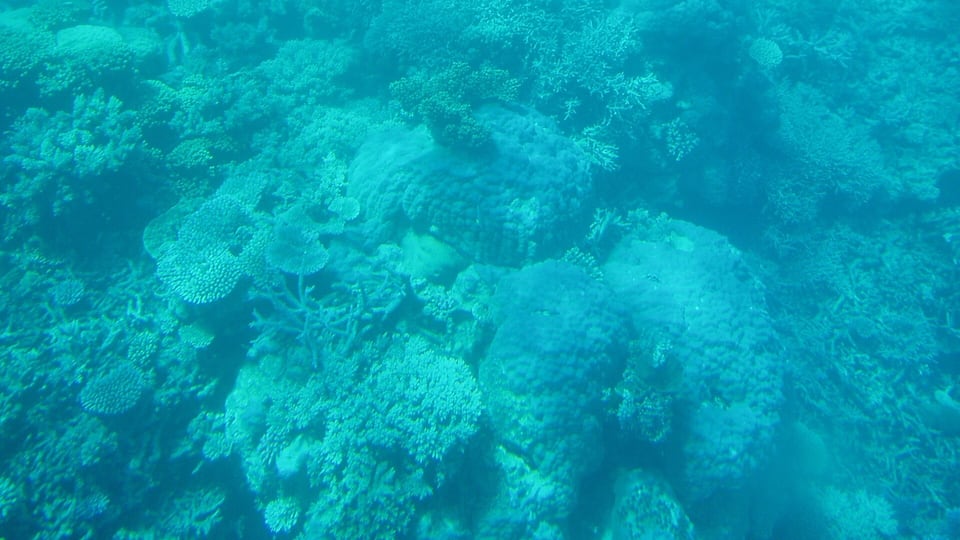
Outer Great Barrier Reef Pontoon Day Trip
Outer reef pontoon trips run roughly 90 minutes each way by boat, mooring at a fixed platform on the outer Great Barrier Reef with snorkel gear, a semi-submersible or underwater observatory, and sometimes an introductory or certified dive included.
Best for: Travellers who want the reef proper rather than the closer inner-reef islands, and are comfortable with a longer boat day · Area: Departs Cairns's Reef Fleet Terminal, moors on the outer reef roughly 90 minutes offshore
Plan for The longer crossing suits calmer sailors better than a short inner-reef hop, and site conditions genuinely vary by mooring and season rather than being uniform.
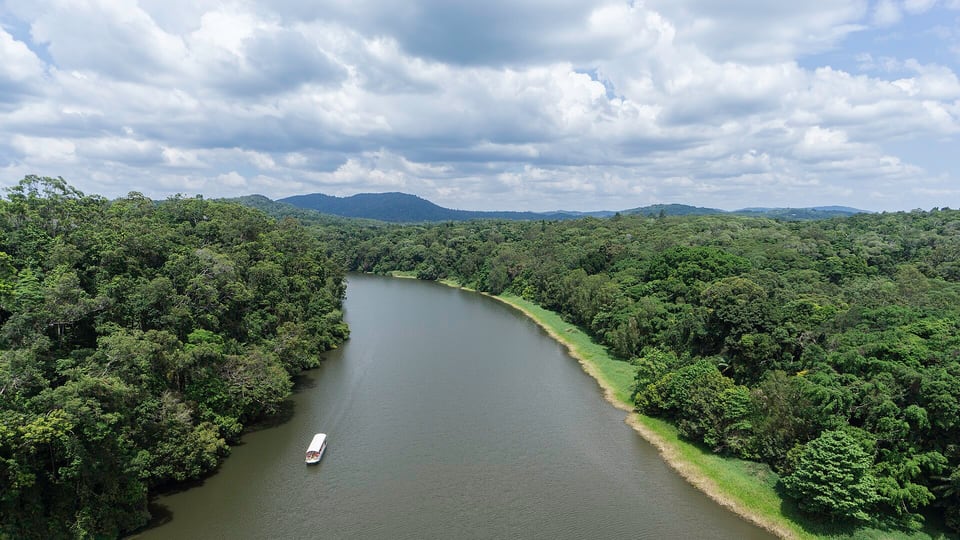
Skyrail Rainforest Cableway
Skyrail runs 7.5km between Smithfield and Kuranda, taking about 90 minutes one-way with stops at Red Peak's boardwalks and the Barron Falls lookout inside Barron Gorge National Park.
Best for: Travellers who want a canopy-level view of the Wet Tropics rainforest rather than a ground-level walk · Area: Smithfield terminal, just north of Cairns, to Kuranda village
Plan for The gondola ride depends on clear weather for the Barron Falls view, and combining it with the railway for a return trip means planning both legs' timetables together.
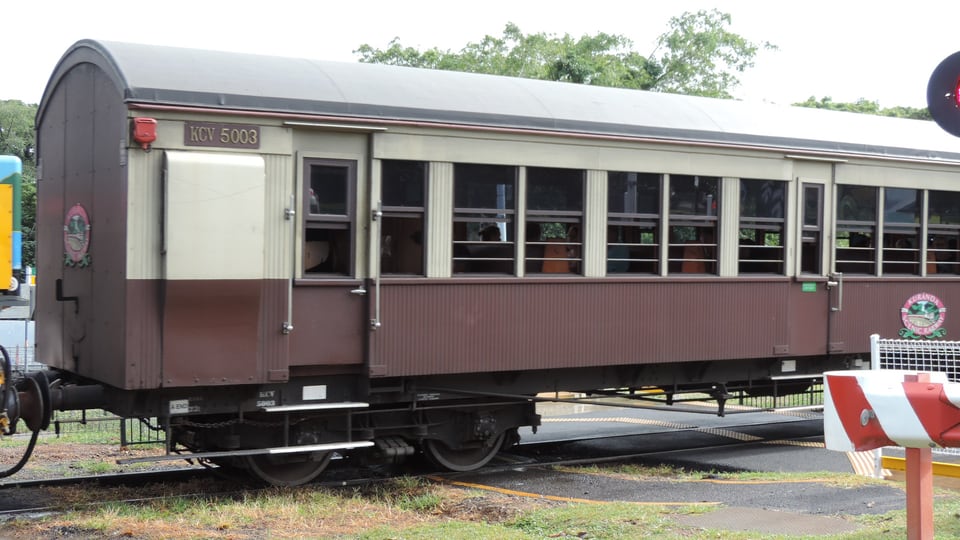
Kuranda Scenic Railway
The railway has carried passengers since 25 June 1891 along a 37km line that climbs 327 metres from Cairns through 15 hand-cut tunnels and across 55 bridges to reach the Atherton Tableland.
Best for: Travellers who want the region's original 19th-century engineering story alongside the gorge views · Area: Cairns to Kuranda, via Freshwater, through the Barron Gorge
Plan for The train runs on a fixed timetable and a set carriage-window view, so travellers wanting to stop and walk partway should pair it with Skyrail rather than ride it alone both ways.
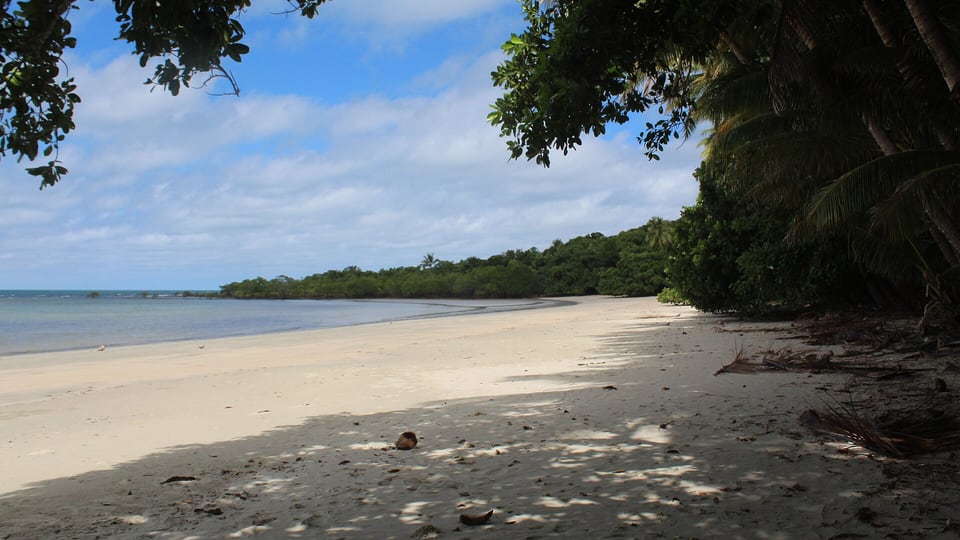
Daintree Rainforest and Cape Tribulation
A Daintree day trip crosses the cable-free Daintree River ferry into the Wet Tropics World Heritage rainforest, reaching Cape Tribulation, commonly described as the point where the rainforest meets the reef.
Best for: Travellers who want the region's oldest, most genuinely wild rainforest rather than a managed nature-park stop · Area: North of the Daintree River ferry crossing, beyond Mossman and Port Douglas
Plan for The full round trip from Cairns is a long day, so travellers based in Port Douglas reach it faster, and roads north of Cape Tribulation itself need a 4WD.
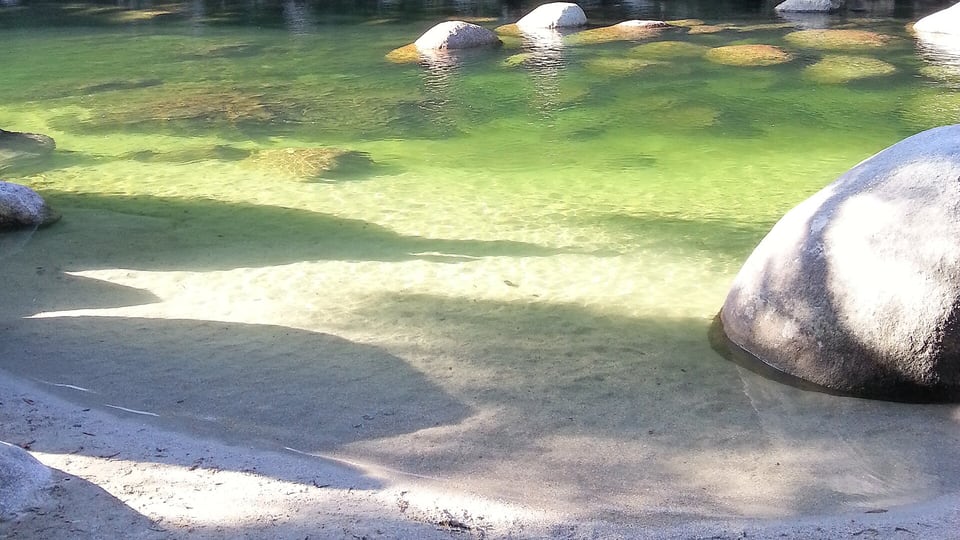
Mossman Gorge Ngadiku Dreamtime Walk
The Kuku Yalanji-owned Mossman Gorge Centre runs Ngadiku Dreamtime Walks four times daily, opening with a traditional smoking ceremony before a guide leads visitors past bush-food and bush-medicine plants along private rainforest tracks.
Best for: Travellers who want an Indigenous-led rainforest experience owned and guided by the Traditional Custodians themselves · Area: Mossman Gorge, inside Daintree National Park, south of the main Daintree River crossing
Plan for Walks run at four fixed daily times and must be booked at the centre, and private vehicles cannot drive into the gorge itself, so it needs more planning than a drop-in stop.
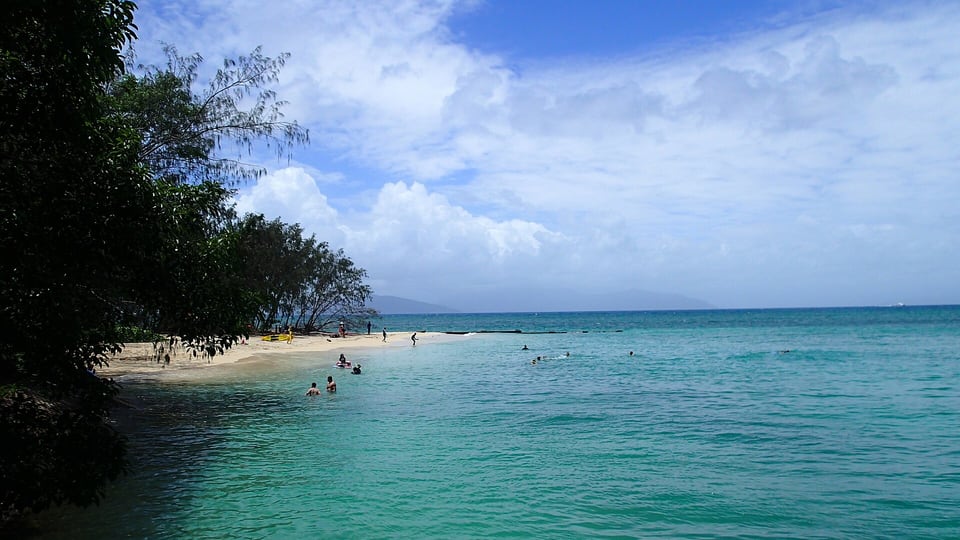
Green Island
Green Island, a coral cay national park about 27km offshore, is roughly 45 minutes each way by catamaran and pairs a walkable rainforest interior with glass-bottom-boat and snorkelling access to its fringing reef.
Best for: Travellers who want a short crossing and a flat, easily explored island rather than a long outer-reef boat day · Area: 27km offshore from Cairns, a coral cay national park
Plan for Being closer to shore and river outflow than the outer reef, its coral is generally less varied than a true outer reef pontoon mooring.
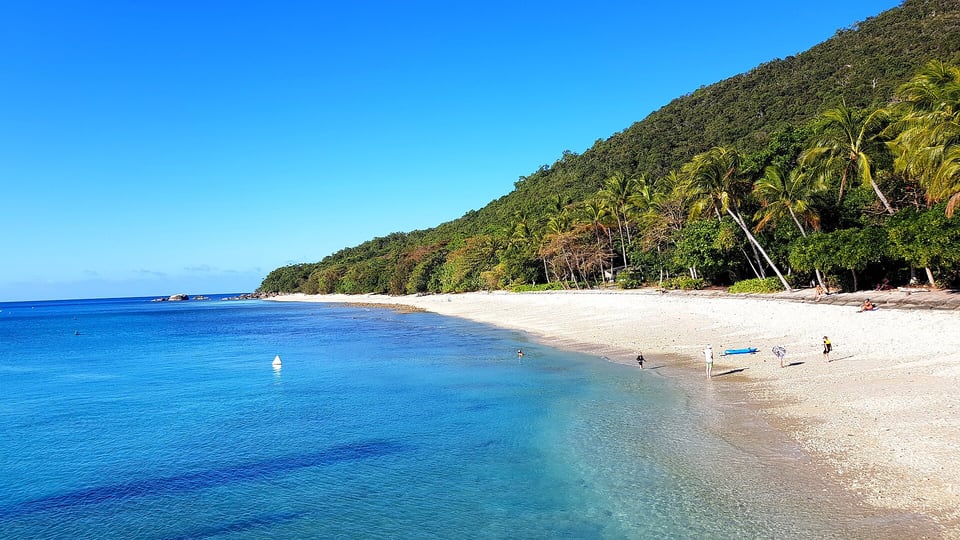
Fitzroy Island
Fitzroy Island, a continental island roughly 45 minutes offshore by ferry, is about 90 percent national park, mixing granite-boulder rainforest walking tracks with a fringing reef in a way Green Island's flatter coral cay does not.
Best for: Travellers who want island walking tracks as much as the reef itself, on the same short crossing as Green Island · Area: Roughly 45 minutes offshore from Cairns by ferry, a granite continental island
Plan for The walking tracks reward an unhurried visit rather than a rushed stop, so travellers on a tight schedule may get more from Green Island's more compact layout.
Tjapukai Aboriginal Cultural Park
Tjapukai Aboriginal Cultural Park, named for the Tjapukai people whose country covers Cairns to Kuranda, stages dance and fire theatre alongside boomerang- and spear-throwing and bush-tucker demonstrations at its Smithfield site near the Skyrail base station.
Best for: Travellers who want a structured, theatre-style introduction to Aboriginal culture that can be paired with Skyrail on the same day · Area: Smithfield, adjacent to the Skyrail Cairns terminal, just north of the city
Plan for Its fixed program and larger scale suit a group-tour day better than Mossman Gorge's smaller, walk-based format, a genuine difference in kind rather than quality.
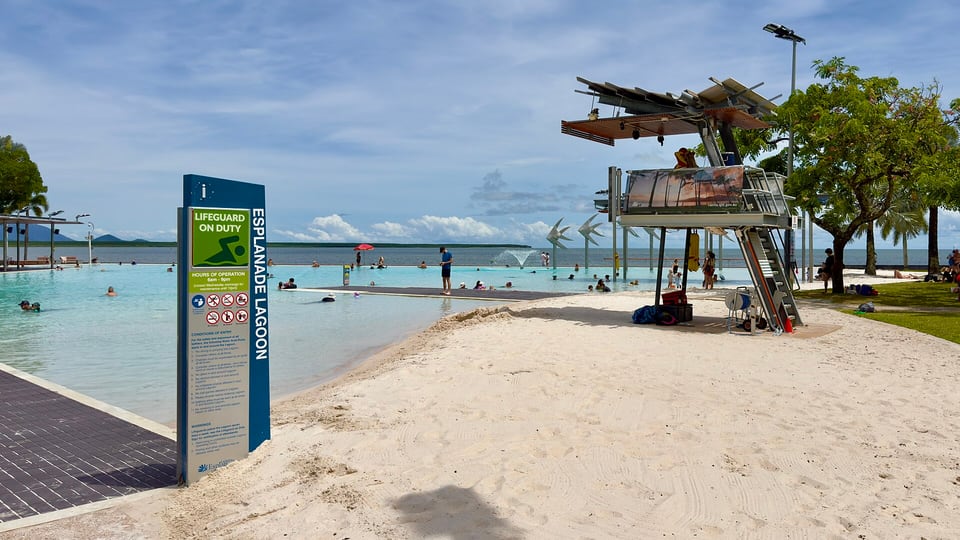
Cairns Esplanade Lagoon
Cairns built a free, 4,800 square metre saltwater lagoon on its city Esplanade in 2003 specifically because the inlet itself is tidal, muddy and carries stinger risk in the wet season, giving the city a safe, lifeguarded year-round swimming spot.
Best for: Travellers based in the city centre who want a real, free swim without a stinger suit or a boat trip · Area: Cairns city centre, along the Esplanade waterfront
Plan for It closes overnight and periodically for maintenance, and it is a pool experience rather than an ocean swim, a trade some travellers only notice once they see it.
Plan two, four or seven days in Cairns
Two days: one reef day, one Kuranda day
Choose this plan for a short first visit: book an outer reef pontoon operator that names its specific reef site for the first day, then take the railway and Skyrail as a pair for the second.
Two full days is enough to cover the reef and Kuranda without rushing either, provided each stays its own day rather than being combined.
The trade-off A two-day trip has no room for the Daintree or a cultural half day, so those wait for a longer stay.
Four days: add the Daintree and a cultural or island half day
Choose this plan when two days feel rushed: it makes room for a full Daintree and Cape Tribulation day and either a Mossman Gorge walk or a Green Island or Fitzroy Island half day.
Four days is enough to add the region's rainforest and cultural depth without stacking two full tour days back to back.
The trade-off Squeezing the Daintree and a cultural stop into fewer than four days usually means dropping one entirely.
A week or more: a Port Douglas base, a dive course and a weather buffer
Choose this plan on a longer stay: base a night or two in Port Douglas for easier Daintree access, add a multi-day PADI dive course if certification interests you, and hold a flexible day if travelling in wet season.
A dive course and a Port Douglas base both benefit from the slack a week or more allows that a shorter trip does not have.
The trade-off Adding a second base and a dive course works well across a week or more; compressing both into a shorter trip usually means dropping one.
Sources
checked 2026-09-24. Recommendations are editorial judgements based on the cited sources below.
- The booking platform: Cairns & the Tropical North destination mapping
- Skyrail Rainforest Cableway: visitor FAQ
- UNESCO World Heritage Centre: Wet Tropics of Queensland
- Mossman Gorge Cultural Centre: Ngadiku Dreamtime Walks
- Port Douglas, Queensland (Wikipedia)
- Queensland Poisons Information Centre: sea creature bites and stings
Choose a Cairns base and explore nearby
Cairns City: a base for the easiest access to everything
Consider this base when minimising transfer time from the airport and maximising reef and Kuranda tour choice matters more than a beach on the doorstep.
Cairns city's Reef Fleet Terminal and central location put nearly every tour departure within easy reach, at the cost of having no swimmable ocean beach itself.
The trade-off Choosing the city centre for that convenience means accepting the Esplanade lagoon, a pool, rather than a real beach, a trade worth making when logistics matter more than sand.
Palm Cove or Port Douglas: a beach base or the Daintree gateway
Consider Palm Cove for a genuine sand beach within easy reach of the city, or Port Douglas when Daintree and Cape Tribulation access matters more than the airport transfer time.
Both sit north of Cairns on the coast road, trading the city centre's tour-departure density for a real beach and, at Port Douglas, the shortest realistic Daintree day.
The trade-off This choice suits travellers willing to arrange transfers or pickups from further out in exchange for waking up on an actual beach.
Kuranda: a base for a rainforest-village night above the crowds
Consider this base when a quiet evening above the range, away from the roughly 10am-to-3pm day-tripper window, matters more than staying near the coast.
Kuranda's markets and railway station sit inside a genuine rainforest village reached only by the railway, Skyrail or a shuttle bus.
The trade-off Waking up in Kuranda means giving up Cairns city's beach and coastal dining options, a fair swap only for a traveller who wants the rainforest itself as the base.
Sources
checked 2026-09-24. Recommendations are editorial judgements based on the cited sources below.
Airport and getting around
Cairns Airport (CNS), operated by North Queensland Airports and sitting about 7km north of the city centre, runs around 27 domestic routes and a smaller set of international routes led by Japan.
Kuranda has no ordinary road access for a scheduled visitor route in the same way the railway and Skyrail do; almost every visitor arrives by the heritage train, the cableway, or a shuttle bus along the range road.
The only crossing into the Daintree's northern side is a small cable-free vehicle ferry over the Daintree River, a genuine saltwater crocodile habitat where the Queensland Government has never built a bridge for exactly that reason.
Best time to visit
Spring (September–November)
The dry-to-wet transition: building heat and humidity, thinner crowds than the June-August peak, and a returning stinger risk that resumes around October or November ahead of the wet season proper.
- Crowds
- Varies by event and attraction
Summer (December–February)
The wet season's peak: the heaviest rain, the highest humidity, active stinger season and a real, if generally low, monthly chance of a tropical cyclone crossing the Far North Queensland coast.
- Crowds
- Varies by event and attraction
Autumn (March–May)
Wet-season rain gradually easing, though stinger season officially continues into May, so ocean swimming outside the Esplanade lagoon or a stinger-suit-equipped reef boat still carries real risk through this period.
- Crowds
- Varies by event and attraction
Winter (June–August)
The dry season's core and Far North Queensland's most comfortable, most crowded tourist window: little rain, no marine stingers, and generally the clearest underwater visibility on the outer reef.
- Crowds
- Varies by event and attraction
Food, produce and local life
The volcanic red soil and cooler elevation of the Atherton Tableland, inland from Kuranda, grows Australia's main coffee-producing region alongside tropical fruit rarely found this far south, sold daily at Kuranda's two markets.
Bush-tucker demonstrations at Mossman Gorge and Tjapukai introduce native plant foods, such as bush lime and other rainforest fruits, that Kuku Yalanji and Tjapukai people have used for generations before any European crop arrived.
City profile
- Population (Cairns urban centre (significant urban area), Australian Bureau of Statistics count, 2021 census, 2021): 169,312
Cairns was founded in October 1876 as a port serving the Hodgkinson River goldfield, and was not formally declared a town until 1903, decades after the gold rush that created it.
UNESCO inscribed the Wet Tropics of Queensland, a roughly 450km-long band of rainforest that includes the Daintree, as a World Heritage Area in 1988, citing relict Gondwanan-era plant lineages found almost nowhere else on Earth.
Famous for:
- The Great Barrier Reef Marine Park Authority continuously tracks reef condition across more than 3,000 individual reefs, publishing dated bleaching and coral-cover updates rather than a single verdict on the whole system.
- The Wet Tropics Management Authority describes its rainforests as among the world's oldest continuously surviving tropical rainforests, holding plant lineages inherited from the ancient Gondwanan supercontinent that broke apart tens of millions of years ago.
- Box jellyfish and the much smaller Irukandji jellyfish appear in Far North Queensland's coastal waters roughly November to May, and swimming nets at some beaches keep out the larger box jellyfish but cannot stop the Irukandji.
What makes a Cairns visit worthwhile
The Reef Authority's own record lists mass coral bleaching events in 2016, 2017, 2020, 2022, 2024 and 2025, and reef condition varies significantly by location, so operators favour comparatively healthier sites rather than the whole reef looking uniform. That honesty matters more than a postcard claim: the reef is still worth seeing, but which site a boat visits genuinely differs.
Cairns sits within a day's reach of two separate UNESCO World Heritage systems, the Great Barrier Reef Marine Park and the Wet Tropics rainforest, a genuinely uncommon pairing of a coral reef and an ancient rainforest around one small city.
Every reef tour price already includes the Reef Authority's Environmental Management Charge, a real per-person daily fee (AUD 8.50 full-day, AUD 4.25 part-day, in September 2026) that operators collect and remit to fund day-to-day reef management, a specific, citable fact most generic guides skip.
- Plan by trip type
- Outer reef pontoon · Kuranda by rail & Skyrail · Daintree & Cape Tribulation · Reef islands
- Good first stay
- 2–3 days for the reef and Kuranda, 4–5 with the Daintree and an island day
- Climate constraint
- Dry season May–Oct is stinger-free and clearest · Wet/stinger season Nov–Apr
- Main gateway
- Cairns Airport (CNS), about 7km north of downtown
Planning your Cairns visit: FAQs
Is Cairns city itself worth visiting, or is it just a gateway?
Cairns city has real value of its own, the Esplanade lagoon, Reef Fleet Terminal and dining strip, but most travellers correctly treat it as a base: the reef, Kuranda and the Daintree, not the city centre, are the reasons people fly here.
Is the Great Barrier Reef still worth visiting given the coral bleaching?
Yes for most visitors, with an honest caveat: the Reef Authority's own record shows mass bleaching in six recent years, and reef condition varies by site, so a trip's value depends on the operator's specific mooring, not the reef as a single entity.
Should I choose an outer reef pontoon trip or Green Island or Fitzroy Island?
Choose an outer reef pontoon trip for the reef proper and the widest coral variety, or Green Island or Fitzroy Island for a shorter crossing and a genuine island to walk, a real trade between distance and terrain, not a right-or-wrong choice.
Can I swim in the ocean at Cairns, and what is stinger season?
Outside the Cairns Esplanade lagoon and any netted beach, treat November to May as genuine stinger season: reef boats provide full-body stinger suits, and swimming unprotected in the open ocean during these months is a real, not theoretical, risk.
Should I take the Kuranda Scenic Railway, Skyrail, or both?
Most first-time visitors do both, one direction each: the railway's slower, more historic climb one way and Skyrail's canopy-level gondola the other, since each shows the same Barron Gorge terrain in a genuinely different way.
Are crocodiles a real risk around Cairns and the Daintree?
Yes, saltwater crocodiles genuinely inhabit the Daintree River and other Far North Queensland waterways; a guided river cruise is the standard, safe way to see one, and swimming in rivers or estuaries outside patrolled areas is not advisable.
Make your Cairns plans
Compare tours, tickets and activities in Cairns →
Choose your departure market and search flights to Cairns from the Mubboo Flights homepage.
Compare flights ↗Sources
Latest source check: .
Show all 26 sources
- Reef Authority (Great Barrier Reef Marine Park Authority) — coral bleaching explainer and mass bleaching timeline (2016-2025) (checked 2026-09-24)
- Reef Authority — Environmental Management Charge rates and rules (checked 2026-09-24)
- Australian Institute of Marine Science — Annual Summary Report of Coral Reef Condition 2024/25 (checked 2026-09-24)
- Wet Tropics Management Authority — Gondwana and the rainforest's ancient plant lineage (checked 2026-09-24)
- UNESCO World Heritage Centre — Wet Tropics of Queensland (inscribed 1988) (checked 2026-09-24)
- Kuranda Scenic Railway (checked 2026-09-24)
- Skyrail Rainforest Cableway — visitor FAQ (checked 2026-09-24)
- Mossman Gorge Cultural Centre — Ngadiku Dreamtime Walks (checked 2026-09-24)
- Tjapukai Aboriginal Cultural Park (checked 2026-09-24)
- Queensland Poisons Information Centre — sea creature bites and stings (checked 2026-09-24)
- Cairns Airport (checked 2026-09-24)
- Cairns Airport (CNS) — Wikipedia (checked 2026-09-24)
- Cairns Regional Council — History of Cairns from the 1870s (checked 2026-09-24)
- ABC News — Cairns Esplanade Lagoon remains a tourist magnet, 20 years on (checked 2026-09-24)
- Cairns Regional Council — Cairns Esplanade Walk and Lagoon visitor fact sheet (checked 2026-09-24)
- Cairns, Queensland — Wikipedia (checked 2026-09-24)
- Fitzroy Island — resort and ferry site (checked 2026-09-24)
- Visit Green Island — visitor guide (checked 2026-09-24)
- The booking platform — Cairns & the Tropical North destination mapping d754 (checked 2026-09-24)
- Green Island, Queensland — Wikipedia (checked 2026-09-24)
- Daintree Rainforest — Wikipedia (checked 2026-09-24)
- Port Douglas, Queensland — Wikipedia (checked 2026-09-24)
- Palm Cove, Queensland — Wikipedia (checked 2026-09-24)
- Kuranda, Queensland — Wikipedia (checked 2026-09-24)
- Kuranda.org — Village in the Rainforest, history and markets (checked 2026-09-24)
- ABC News — early start to deadly stinger season (checked 2026-09-24)
Photo credits
- great barrier reef outer reef pontoon — Edibe Celik · CC0.
- skyrail rainforest cableway — Lenny K Photography from Sydney, Australia · CC BY 2.0.
- kuranda scenic railway — Kerry Raymond · CC BY 4.0.
- daintree cape tribulation — Mwarnes · CC BY-SA 4.0.
- mossman gorge dreamtime walk — Dhx1 · CC0.
- green island — Eliza Fan · CC BY-SA 4.0.
- fitzroy island — Sarah Zacharia · CC BY-SA 4.0.
- cairns esplanade lagoon — Chris Olszewski · CC BY-SA 4.0.
- kuranda railway locomotive detail — Calistemon · CC BY-SA 3.0.
- great barrier reef coral detail — Edibe Celik · CC0.
Mubboo Editorial Team · Reviewed by Mubboo Editorial Team


