
Brussels travel guide
Brussels
Brussels is a compact capital built around the Grand-Place. The EU Quarter sits east around Schuman, Sablon and the Marolles sit just south of the old town, and Ixelles and Saint-Gilles hold the Art Nouveau townhouses further south. Bruges and Ghent are both under an hour and a half away by direct train, so many visitors add one or both as day trips.
Two days cover the Grand-Place, Manneken Pis and the Atomium. Four or five days add the EU Quarter’s Parlamentarium, the comic strip murals and a working lambic brewery. A week makes room for a full day each in Bruges and in Ghent.

Find your Brussels experience
Explore Brussels Before You Book
Take a virtual drive or walk, then find tours and tickets for the places you like.

Activities
Featured activities in Brussels


Prices at a glance
What we sell today and what recent flight searches found. No hotel prices; nothing here is a trip total.
- Tours and tickets in Brusselsfrom US$40.04
Live from Viator when this page loaded · per adult · changes by date.
Top experiences
Top experiences in Brussels
Grand-Place / Grote Markt
UNESCO inscribed the Grand-Place in 1998, describing it as an exceptional and highly successful blend of architectural and artistic styles. The square’s guild houses were rebuilt within a few years of French artillery destroying the medieval square in 1695, and the Brabant Gothic Hôtel de Ville still anchors one side.
Best for: Seeing the guild houses and city hall that define central Brussels · Area: The historic core, inside the Pentagon
Plan for The square is busy at peak times. The Flower Carpet covers it only every two years, in mid-August of even years, when normal square use is suspended for a long weekend.
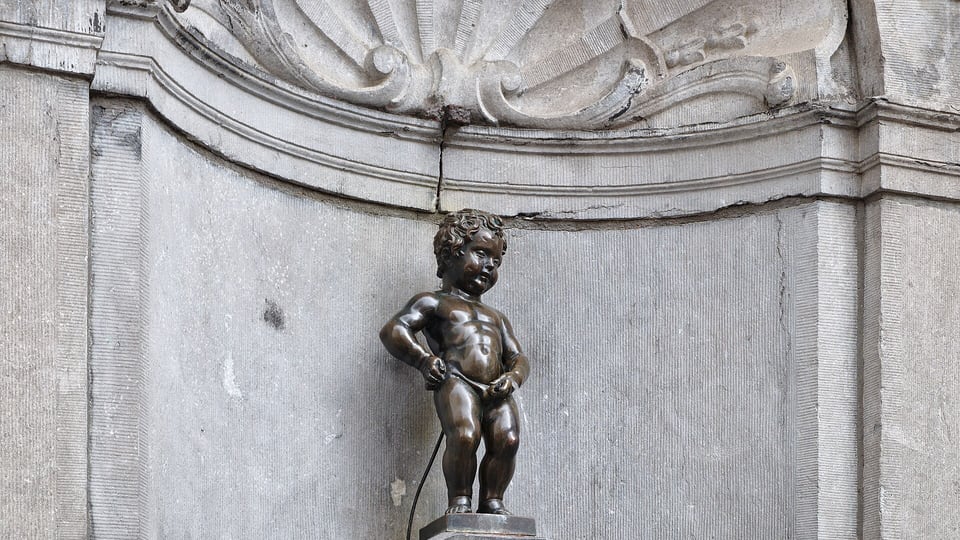
Manneken Pis and its GardeRobe museum
The current bronze, cast in 1965, replaces an original attributed to Jérôme Duquesnoy the Elder and probably installed in 1620. The best-known legend involves the infant Duke Godfrey III of Leuven in a 1142 battle. The City of Brussels dresses the statue in costumes drawn from a roughly 140-piece collection, housed nearby at the GardeRobe MannekenPis museum, which opened in February 2017.
Best for: Seeing Brussels’s most famous - and honestly its smallest - landmark, then the museum that explains it · Area: A few streets from the Grand-Place
Plan for Many first-time visitors are surprised by how small and unassuming the statue is in person. The GardeRobe museum, a separate paid ticket, is what actually makes the costume tradition tangible.
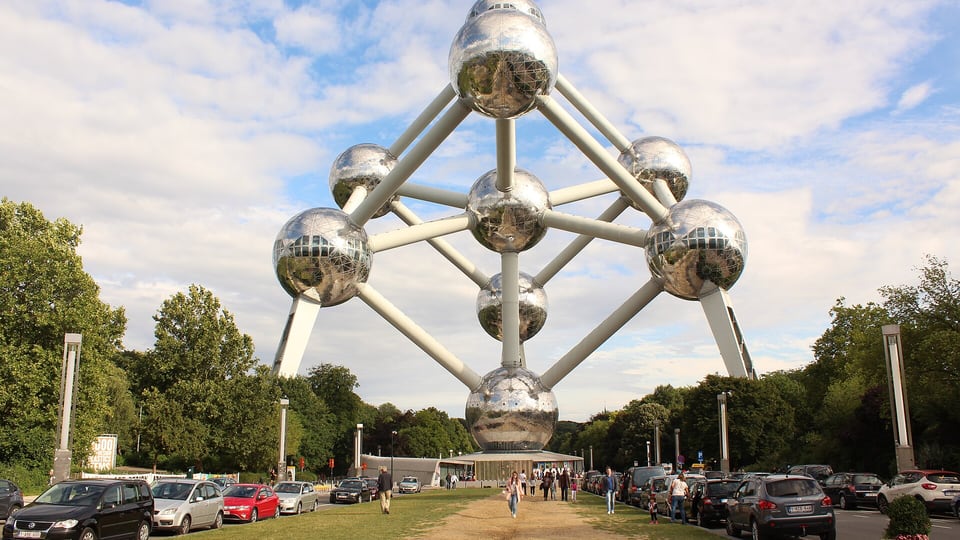
The Atomium
Engineer André Waterkeyn designed the Atomium with architects André and Jean Polak for Expo 58, the 1958 Brussels World’s Fair that drew 41,454,412 admissions over its April-to-October run. Its nine 18-metre steel spheres represent an iron crystal cell. Built to last only six months, it was never taken down, and it was restored in 2006.
Best for: Panoramic views from the top sphere and a look at genuine 1950s futurism · Area: Heysel/Laeken, north of the centre
Plan for It stands apart from the historic core, so it needs a dedicated metro trip rather than a walk from the Grand-Place. The panoramic restaurant and exhibitions inside also take real time to see properly.
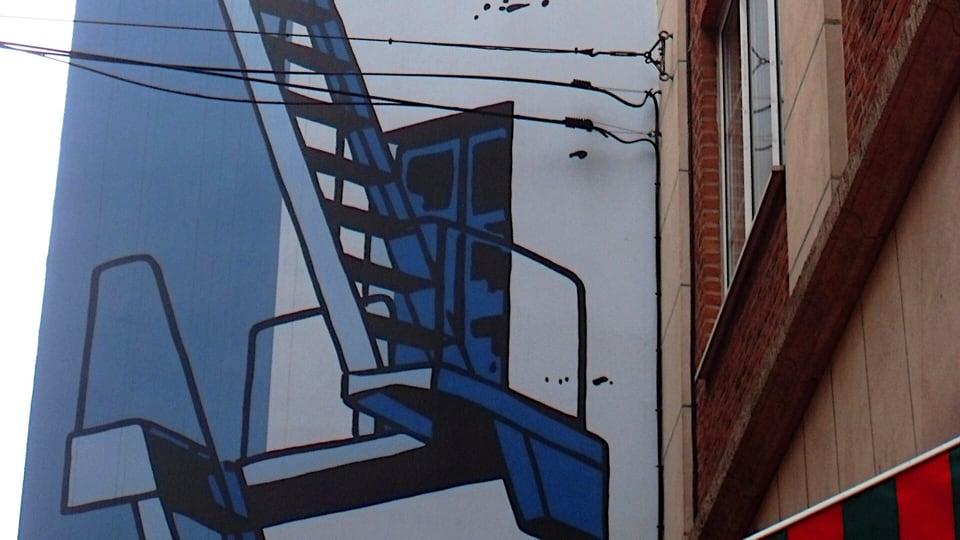
Belgian Comic Strip Center and the Comic Strip Route
The CBBD opened on 6 October 1989, inside a former textile department store designed by Victor Horta in 1905-06. It covers the history of Belgian comics from the Spirou and Tintin era onward. Outside, the Comic Strip Route began in 1991 and now covers more than 50 murals across the Pentagon, Laeken and Auderghem, depicting Tintin, the Smurfs, Lucky Luke and other Belgian characters.
Best for: Comics fans, and anyone curious about the Horta building itself · Area: Rue des Sables, near the northern edge of the Pentagon, with murals scattered citywide
Plan for The murals are spread across the city, so seeing more than a handful means real walking or a planned route. Some have also faded or been repainted over the decades.
See Belgian Comic Strip Center and the Comic Strip Route tours
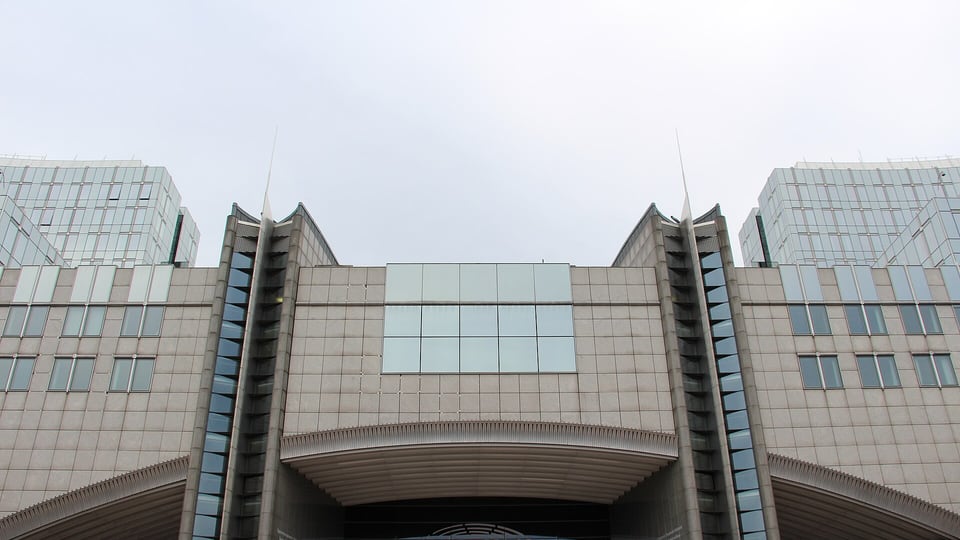
The EU Quarter: Parlamentarium and the Hemicycle
Brussels is the European Parliament’s seat city alongside Strasbourg. The Parlamentarium is a free, self-guided multimedia visitor centre that takes about 90 minutes and runs in all 24 EU languages. The Hemicycle, the actual debating chamber, is also free but needs prior registration and a valid ID document.
Best for: Understanding what “the EU capital” actually means, in person · Area: Schuman/Etterbeek, east of the historic core
Plan for The Hemicycle closes for renovation from January 2027 until further notice, so plan on the Parlamentarium alone after that date unless it has reopened. Demonstrations in the Schuman area can also disrupt access.
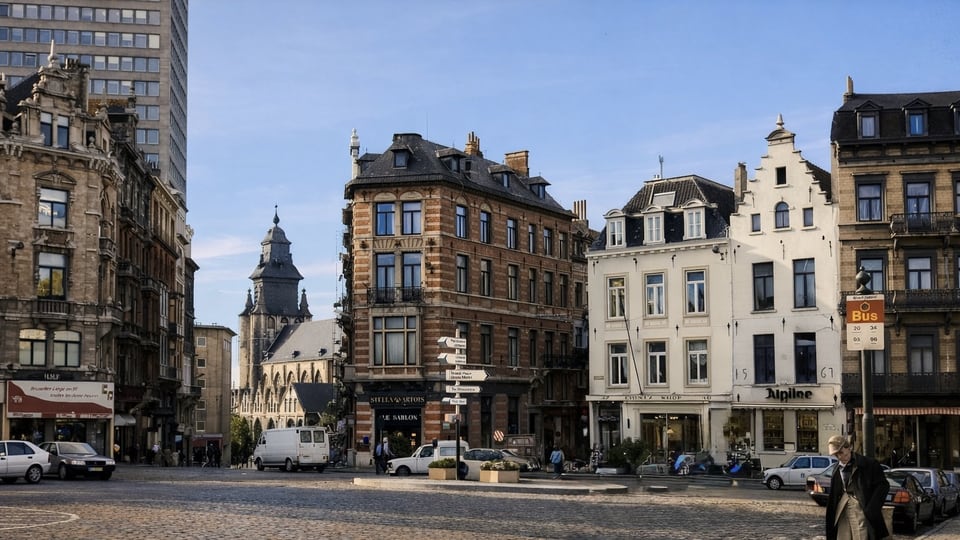
Sablon and Marolles: chocolate, antiques and a flea market
Place du Grand Sablon holds a weekend antiques market alongside long-established chocolatiers, while the Marolles below it holds a daily flea market on Place du Jeu de Balle. Visit.brussels, the city’s own tourism board, describes the pairing as antiques and tradition.
Best for: Chocolate shopping and browsing antiques without a tour group · Area: Sablon/Marolles, south of the Grand-Place
Plan for The antiques market runs only on weekends, and the neighbourhood has gentrified sharply, which shows up in Sablon’s prices.
See Sablon and Marolles: chocolate, antiques and a flea market tours
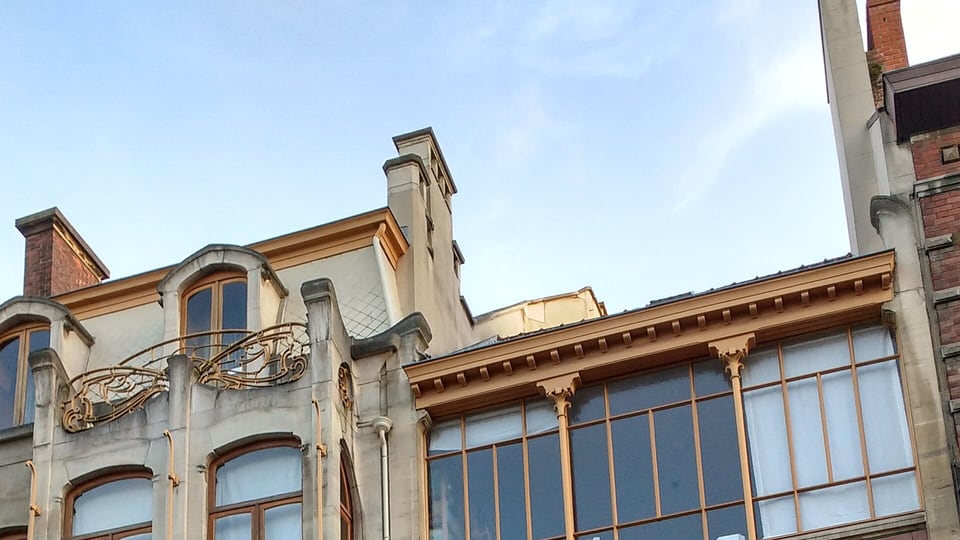
The Horta Museum and Brussels Art Nouveau
Victor Horta’s own house and workshop (1898-1901) in Saint-Gilles is one of four buildings in UNESCO’s “Major Town Houses of the Architect Victor Horta,” inscribed in 2000 alongside the Hôtel Tassel, Hôtel Solvay and Hôtel van Eetvelde. Its ironwork stairwell and stained glass are original.
Best for: Seeing Art Nouveau from the inside, not just admiring a facade · Area: Saint-Gilles/Ixelles, south of the centre
Plan for The museum limits visitor numbers to protect the interior, so a timed ticket is worth booking ahead. The other three Horta buildings are private and viewable only from outside.
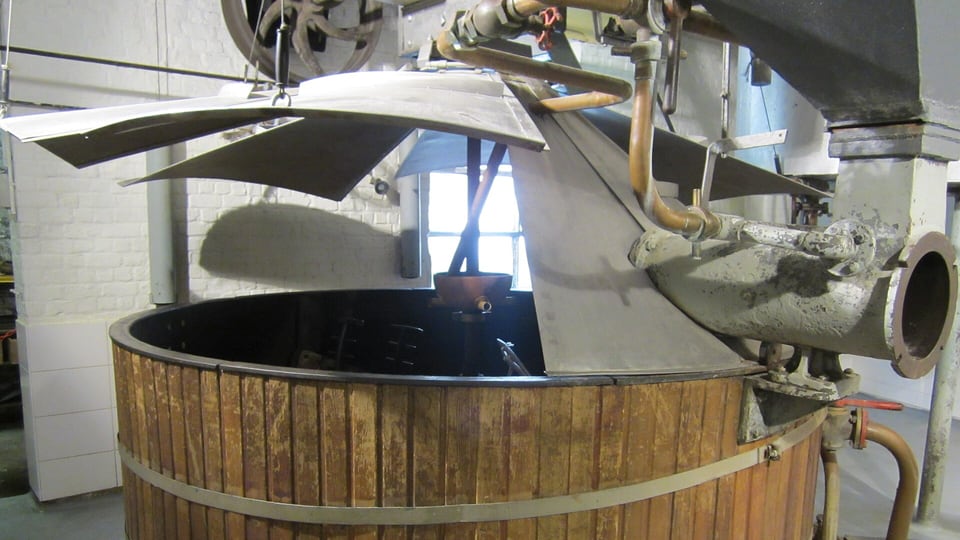
Cantillon Brewery and the Brussels Museum of the Gueuze
Paul Cantillon founded the brewery in 1900. It is the only lambic brewery still operating inside Brussels of more than 100 that once existed in the city, and it is still run by the same family, now in its fourth generation. Cantillon brews using spontaneous fermentation with wild yeast, rather than a controlled yeast strain, and the site has doubled as a working museum since 1978.
Best for: A real, single-family brewery visit rather than a generic beer tour · Area: Anderlecht, just west of Brussels-Midi/Zuid station
Plan for It is a small, working brewery outside the historic core, so tour slots are limited and it takes real travel time to reach.
See Cantillon Brewery and the Brussels Museum of the Gueuze tours
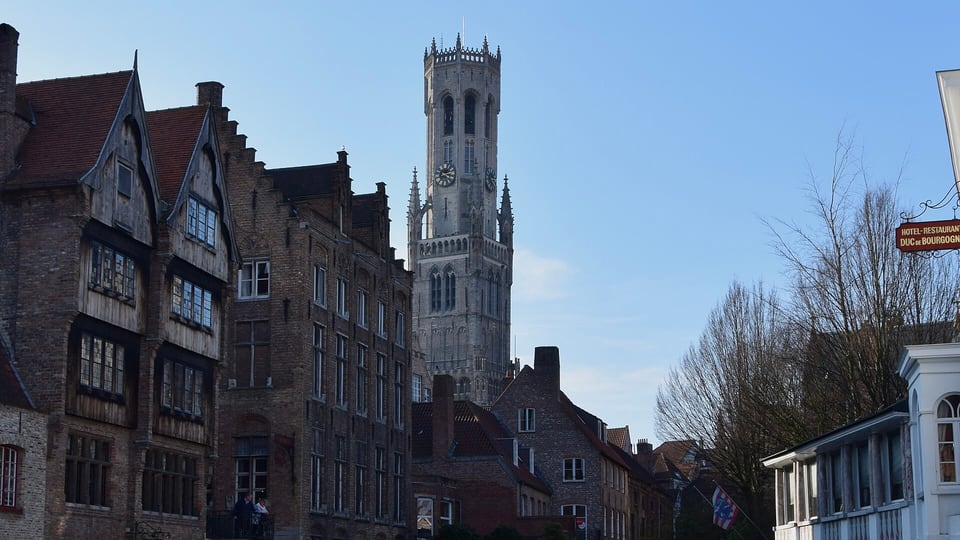
Bruges, a day trip by direct train
UNESCO inscribed the Historic Centre of Brugge on 30 November 2000, describing it as an outstanding example of a medieval settlement associated with Flemish Primitive painters such as Jan van Eyck and Hans Memling. Direct trains connect Brussels and Bruges.
Best for: A full historic town in one day without changing base · Area: West Flanders, reached from Brussels-Central/Brussels-Zuid
Plan for As a single-day return trip, expect crowds around the main squares at midday, and plan the train back before evening.
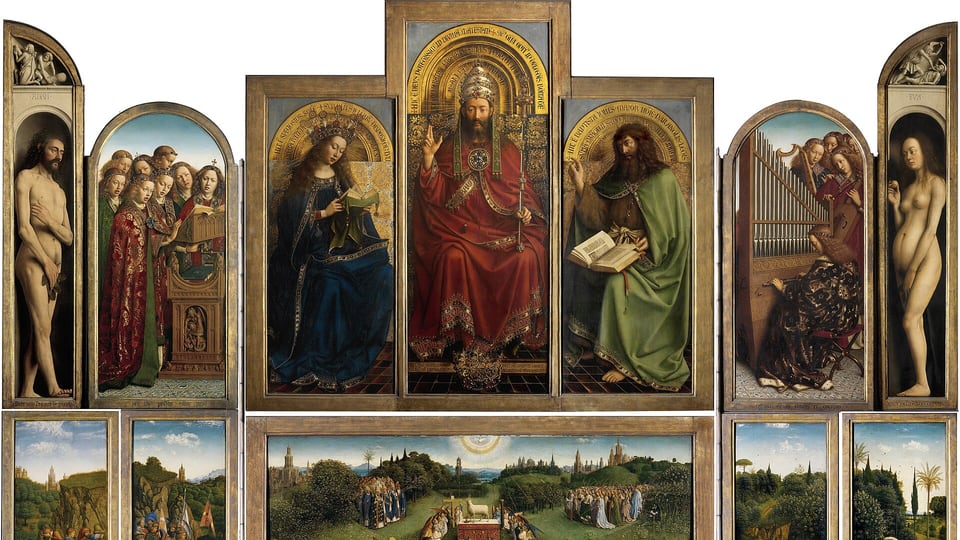
Ghent, a day trip for the Ghent Altarpiece
Saint Bavo’s Cathedral holds the Ghent Altarpiece, a polyptych begun by Hubert van Eyck and completed by his brother Jan van Eyck by 1432. Entry to the cathedral itself is free, but seeing the altarpiece needs a separate timed ticket.
Best for: Van Eyck’s altarpiece and Ghent’s own historic centre, on a direct train · Area: East Flanders, reached from Brussels-Central
Plan for The altarpiece is mid-restoration: its third and final phase started 3 May 2023 and is due to finish in spring 2027. Part of what a visitor sees in the cathedral right now is a colour photograph rather than the restored original panel, and the ticket sells out ahead on busy days.
Plan two, five or seven days in Brussels
Two days: Grand-Place and the Atomium
Pick this length for the old town, Manneken Pis and one dedicated trip out to the Atomium.
Work a chocolate or waffle stop into the first afternoon near the Grand-Place.
The trade-off The EU Quarter, the comic murals and any day trip wait for another visit.
Four to five days: add the EU Quarter and the murals
Pick this length once the Parlamentarium, the Comic Strip Route and Cantillon matter as much as the Grand-Place.
The Parlamentarium is free and takes about 90 minutes; book the Hemicycle ahead if you want the debating chamber too.
The trade-off A day trip to Bruges or Ghent still needs its own extra day.
A week: add Bruges and Ghent
Pick this length to fit a full day each in Bruges and Ghent by direct train, plus the Horta Museum.
Book the Ghent Altarpiece ticket ahead; it sells out on busy days.
The trade-off Each day trip is a full day away from Brussels itself.
Sources
checked 2026-09-28. Recommendations are editorial judgements based on the cited sources below.
Choose where to spend your time in Brussels
The historic core, for a first visit
Consider the Pentagon for the Grand-Place, Manneken Pis and most of the comic murals, all on foot.
It sits a few minutes from Brussels-Central station.
The trade-off Some streets just off the Grand-Place are aimed squarely at tourists.
The EU Quarter, for the institutions
Consider Schuman/Etterbeek if seeing the EU institutions in person is a priority.
Two direct trains an hour link Brussels Airport with the EU Quarter.
The trade-off It is quiet outside office hours and on weekends.
Sablon and Marolles, for chocolate and antiques
Consider this pairing for chocolate shopping and a genuine flea market away from the main tourist flow.
The Grand Sablon antiques market runs weekends only.
The trade-off Sablon itself has gentrified, and prices reflect it.
Sources
checked 2026-09-28. Recommendations are editorial judgements based on the cited sources below.
Two airports and a bilingual city
Brussels Airport (BRU) at Zaventem has its own railway station directly beneath the terminal. Six direct trains an hour run to Brussels-Central in about 18 minutes, and two of those trains an hour also connect the airport directly with the EU Quarter.
Brussels South Charleroi Airport (CRL), used mainly by low-cost carriers, is a separate airport about 46km south of Brussels, not a second terminal of BRU. A Flibco shuttle bus runs between CRL and Brussels-Midi/Zuid station. A local TEC bus line (A1) covers the shorter 20-minute hop between CRL and Charleroi’s own Central station.
Brussels is officially bilingual: French and Dutch. Street signs, transit announcements and public documents appear in both languages throughout the Brussels-Capital Region.
Best time to visit
Spring (March-May)
IRM/KMI’s Uccle normals (1991-2020) put the average temperature at 7.1°C in March, rising to 13.9°C in May. Rainfall is fairly even across the season, from about 47mm in April to 60mm in May.
- Crowds
- Varies by event and attraction
Summer (June-August)
The average temperature peaks at 18.7°C in July, with August close behind at 18.4°C. August is also the wettest summer month, averaging about 87mm of rain.
- Crowds
- Varies by event and attraction
Autumn (September-November)
The average temperature falls from 15.2°C in September to 7.2°C in November, and rainfall rises through the season, reaching about 76mm in November.
- Crowds
- Varies by event and attraction
Winter (December-February)
The coldest normal month is January at 3.7°C, with December and February close to it. December and January are also among the wettest months, each averaging around 75-87mm of rain.
- Crowds
- Varies by event and attraction
Food: waffles, chocolate, beer and moules-frites
Belgium keeps two distinct waffles apart. The Brussels waffle is rectangular, made from a light, yeast-leavened batter, and comes out crisp with deep pockets, usually served with toppings. The Liège waffle is smaller and rounder, made from a dense, brioche-like dough studded with pearl sugar that caramelises on the griddle, and is traditionally eaten plain, hot or cold.
The Belgian praline, a chocolate shell around a soft filling, was invented in 1912 by Jean Neuhaus II at the family’s Brussels shop in the Galeries Royales Saint-Hubert. His wife Louise Agostini developed the ballotin gift box in 1915, to stop the pralines being crushed in paper bags. Grand Sablon still holds several of the city’s best-known chocolatiers today.
Belgium’s beer culture was inscribed by UNESCO as intangible cultural heritage in 2016. Of the small number of Trappist breweries recognised worldwide, five are in Belgium. Cantillon, in Brussels itself, brews a different and older style, lambic, and is not a Trappist brewery.
Moules-frites, mussels with fries, is treated as Belgium’s national dish, though its exact origin is contested. One account traces it to a Liège restaurant in 1875, while another describes a more gradual 19th-century development among street vendors in cities including Brussels.
City profile
- Population (The Brussels-Capital Region: 19 municipalities, established 1989, per Wikipedia citing Statbel. The smaller City of Brussels municipality, which contains the Grand-Place, had 198,314 residents the same year., 2024): 1,249,597
Brussels traces its founding to a chapel built around 580CE by Saint Gaugericus on an island in the Senne river. 979 is usually cited as the city’s founding year, when Charles, Duke of Lower Lorraine, transferred Saint Gudula’s relics there.
French artillery under Louis XIV destroyed the medieval Grand-Place in a three-day bombardment in 1695. The square was rebuilt within a few years under the City Magistrate’s supervision, and UNESCO inscribed the rebuilt Grand-Place as a World Heritage Site in 1998.
The Belgian Revolution began in Brussels in 1830 and led to Belgian independence the same year, with Brussels as the new country’s capital.
The Brussels-Capital Region was established as its own region in 1989. Brussels also hosts the European Commission, the Council of the EU and the European Parliament’s Brussels seat, which is why it is informally called the Capital of Europe.
Famous for:
- The Grand-Place, a UNESCO World Heritage site since 1998, and its rebuilt 17th-century guild houses around the Brabant Gothic Hôtel de Ville.
- Being the European Union’s de facto capital and, on Wikipedia’s own account, one of the city’s nicknames.
- A comic-strip heritage real enough to earn Brussels the nickname “Comic City”: Tintin, the Smurfs and dozens of other characters were created here.
- Belgian beer culture, inscribed by UNESCO as intangible cultural heritage in 2016, and the Belgian praline, invented in Brussels in 1912.
Why Brussels is more than a stopover
Brussels is the one place where the European Union’s institutions sit close enough together to walk between. The Parlamentarium, the European Parliament’s free visitor centre, takes about 90 minutes and runs in all 24 EU languages. The Hemicycle, the actual debating chamber, is also free to visit but needs prior registration and a valid ID.
The Belgian Comic Strip Center occupies a former textile department store designed by Victor Horta in 1905-06. Outside it, the Comic Strip Route, started in 1991, now covers more than 50 murals across the city, depicting Tintin, the Smurfs, Lucky Luke and other characters created in Belgium.
Belgium’s beer culture was inscribed by UNESCO as intangible heritage in 2016. Five of the small number of Trappist breweries worldwide sit in Belgium, and Brussels keeps an older tradition alive too: Cantillon, the city’s only lambic brewery, has run under the same family since 1900. The Belgian praline was invented at a Brussels chocolate shop in 1912.
The US State Department rates Belgium Level 2, exercise increased caution, citing crime, terrorism and civil unrest. The UK FCDO sets Belgium’s national terrorism threat level at 3, “Serious,” naming transport hubs and government buildings as likely targets, and separately flags theft and demonstrations around Schuman.
Both advisories reflect a real history. Coordinated bombings hit two transport sites in Brussels on 22 March 2016, including the Maelbeek metro station in the European Quarter, killing 32 people plus the three attackers.
- Plan by trip type
- Grand-Place old town · EU Quarter · Sablon and Marolles · day trips to Bruges and Ghent
- Good first stay
- 2 days: Grand-Place and the Atomium. 4-5 days: add the EU Quarter and comic route. A week: add Bruges and Ghent
- Languages
- Officially bilingual French and Dutch; street signs, transit announcements and public documents appear in both
- Main gateway
- Brussels Airport (BRU) at Zaventem, train under the terminal; Brussels South Charleroi (CRL), a separate low-cost airport 46km south, by shuttle bus
Planning your Brussels visit: FAQs
Is Manneken Pis worth seeing, or is it overrated?
It is small: the bronze statue is 55.5cm tall, 61cm including its base, and Wikipedia notes the niche it has stood in since 1770 makes it look even smaller than its original setting. Many first-time visitors are surprised by how modest it is in person. The payoff is next door: the GardeRobe MannekenPis museum holds roughly 140 of its costumes, added at a rate of about 20-30 new ones a year.
Which airport should I fly into, Brussels Airport or Brussels South Charleroi?
Brussels Airport (BRU) at Zaventem sits 12km from the centre, with a train station under the terminal and six direct trains an hour. Brussels South Charleroi (CRL), used mainly by low-cost carriers, is a separate airport about 46km south of the city. It links to Brussels-Midi/Zuid by a Flibco shuttle bus, not a direct train.
Do I need to speak French or Dutch in Brussels?
No. Brussels is officially bilingual French and Dutch, and street signs, transit announcements and public documents appear in both languages throughout the region; English is also widely used in tourist-facing settings.
How many Trappist breweries are there, really?
The International Trappist Association unites 15 abbeys worldwide, but its own pages disagree on exactly how many brew beer: the products overview says ten, while its dedicated beers page lists and describes eleven. Of the breweries actually listed, five are in Belgium: Chimay, Rochefort, Westmalle, Westvleteren and Orval. Cantillon, the well-known lambic brewery inside Brussels itself, is not Trappist.
When does the Flower Carpet happen at the Grand-Place?
The Flower Carpet is biennial, held only in even-numbered years, over a long weekend around 15 August. It began in 1971 and became a regular fixture from 1986; the most recent edition ran on 16 August 2026, and the next is due in August 2028.
Is Brussels safe to visit?
The US State Department rates Belgium Level 2, exercise increased caution, citing crime, terrorism and civil unrest. The UK FCDO sets the national terrorism threat level at 3, “Serious,” and separately flags theft and demonstrations around Schuman. Coordinated bombings killed 32 people at Brussels Airport and the Maelbeek metro station on 22 March 2016, part of why transport hubs are named specifically.
Will I see a tourist tax added to my hotel bill?
Yes. The Brussels-Capital Region raised its tax on tourist accommodation from 1 January 2026, charged per room per night and applied directly by the hotel or other accommodation, rather than something to arrange separately.
Make your Brussels plans
Compare tours, tickets and activities in Brussels →
Choose your departure market and search flights to Brussels from the Mubboo Flights homepage.
Compare flights ↗Sources
Latest source check: .
Show all 53 sources
- UNESCO World Heritage Centre — La Grand-Place, Brussels (checked 2026-09-28)
- UNESCO World Heritage Centre — Historic Centre of Brugge (checked 2026-09-28)
- UNESCO World Heritage Centre — Major Town Houses of the Architect Victor Horta (Brussels) (checked 2026-09-28)
- UNESCO Intangible Cultural Heritage — Beer culture in Belgium (inscribed 2016) (checked 2026-09-28)
- International Trappist Association — Abbeys (checked 2026-09-28)
- International Trappist Association — Beers (checked 2026-09-28)
- International Trappist Association — Products (checked 2026-09-28)
- GardeRobe MannekenPis (City of Brussels) — The tradition of the dressings (checked 2026-09-28)
- Wikipedia — Manneken Pis (checked 2026-09-28)
- Atomium — Expo 58 (checked 2026-09-28)
- Atomium — Discover the Atomium (checked 2026-09-28)
- Wikipedia — Atomium (checked 2026-09-28)
- Belgian Comic Strip Center (CBBD) — Home (checked 2026-09-28)
- Wikipedia — Belgian Comic Strip Center (checked 2026-09-28)
- Wikipedia — Brussels' Comic Book Route (checked 2026-09-28)
- European Parliament — Parlamentarium (checked 2026-09-28)
- European Parliament — The Hemicycle (checked 2026-09-28)
- Wikipedia — Brussels (checked 2026-09-28)
- Wikipedia — City of Brussels (checked 2026-09-28)
- Brussels Airport — Train to and from Brussels Airport (checked 2026-09-28)
- Brussels South Charleroi Airport — Access & Parking (checked 2026-09-28)
- Wikipedia — Brussels South Charleroi Airport (checked 2026-09-28)
- Saint Bavo's Cathedral — Buy tickets: the Ghent Altarpiece (checked 2026-09-28)
- Wikipedia — Ghent Altarpiece (checked 2026-09-28)
- Wikipedia — Liège waffle (checked 2026-09-28)
- GOV.UK — Belgium travel advice: safety and security (checked 2026-09-28)
- US Department of State — Belgium Travel Advisory (checked 2026-09-28)
- Wikipedia — 2016 Brussels bombings (checked 2026-09-28)
- European Commission (DG Migration and Home Affairs) — 22 March marks 10 years since Brussels terrorist attacks (checked 2026-09-28)
- European Union — Belgium country profile (official languages and language communities) (checked 2026-09-28)
- Institut Royal Météorologique (IRM/KMI) — Uccle climate normals 1991-2020, average temperature (checked 2026-09-28)
- Institut Royal Météorologique (IRM/KMI) — Uccle climate normals 1991-2020, precipitation (checked 2026-09-28)
- Wikipedia — Cantillon (brewery) (checked 2026-09-28)
- visit.brussels — The Sablon and Marolles districts: antiques and tradition (checked 2026-09-28)
- Wikipedia — Horta Museum (checked 2026-09-28)
- Wikipedia — Neuhaus (chocolatier) (checked 2026-09-28)
- Wikipedia — Moules-frites (checked 2026-09-28)
- Brussels-Capital Region (be.brussels) — Tax on tourist accommodation establishments: higher rates from 1 January 2026 (checked 2026-09-28)
- City of Brussels — Flower Carpet (checked 2026-09-28)
- Wikipedia — Flower Carpet (Brussels) (checked 2026-09-28)
- Wikipedia — Language legislation in Belgium (checked 2026-09-28)
- Trainline — Brussels to Ghent by train (NMBS/SNCB timetable aggregator) (checked 2026-09-28)
- Rome2Rio — Brussels to Bruges (NMBS/SNCB timetable aggregator) (checked 2026-09-28)
- The booking platform — Brussels destination mapping d458 (checked 2026-09-28)
- The booking platform — Brussels: Historical Walking Tour with Chocolate & Waffle Tasting (product 74908P1) (checked 2026-09-28)
- The booking platform — Brussels Atomium Ticket and Audio Tour (product 5562645P25) (checked 2026-09-28)
- The booking platform — Brussels Choco-Story Chocolate Museum Visit (product 67012P1) (checked 2026-09-28)
- The booking platform — Belgian Beer Tasting in Brussels (product 6785BRUSSELS) (checked 2026-09-28)
- The booking platform — Comic Book Tour in Brussels (product 328609P1) (checked 2026-09-28)
- The booking platform — Brussels and Bureaucracy: A Self-Guided Tour of the EU District (product 110804P856) (checked 2026-09-28)
- The booking platform — Bruges and Ghent Day Trip from Brussels (product 6877P39) (checked 2026-09-28)
- The booking platform — Historical Walking Tour: Legends of Bruges (product 62056P31) (checked 2026-09-28)
- The booking platform — Historical Walking Tour: Legends of Gent (product 309017P1) (checked 2026-09-28)
Photo credits
- manneken pis — Trougnouf · CC BY 4.0.
- atomium — Theedi · CC BY-SA 4.0.
- comic strip center and route — Ferran Cornellà · CC BY-SA 3.0.
- eu quarter parliamentarium — Fred Romero from Paris, France · CC BY 2.0.
- sablon marolles — MeCorbeau · CC0.
- horta museum art nouveau — Fernando Losada Rodríguez · CC BY-SA 4.0.
- cantillon brewery — Schwars1 · CC BY-SA 3.0.
- bruges day trip — Ank Kumar · CC BY-SA 4.0.
- ghent day trip — Jan van Eyck / Presumably Hubert van Eyck · Public domain.
Mubboo Editorial Team · Reviewed by Mubboo Editorial Team


