
Total Trip Cost and Value
What's actually in your ticket price besides the fare
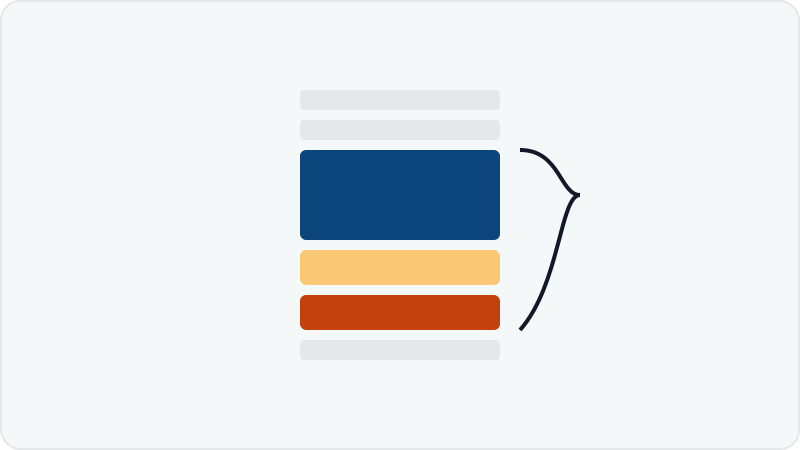
Every fare breakdown has two very different lines pretending to be one number. The fare is what the airline is charging for the seat. Everything underneath it — labelled taxes, fees and charges — is mostly money the airline is legally required to collect on someone else's behalf and hand over: governments, airport authorities, security agencies.
Reading that second line correctly changes what a surprisingly large ticket price is actually telling you.
- A ticket price is really two different numbers stacked together: the fare, and everything the airline collects for someone else.
- Taxes, fees and charges below the fare line mostly go to governments, airports and security agencies, not the airline.
- The airline is a collector here, not the payee — it hands most of that second line over rather than keeping it.
- This split is a structural, industry-wide fact, not something one airline decided to make your ticket look expensive.
Why is the taxes-and-fees line sometimes bigger than the fare?
Because it is not one thing — it is a bundle of separate government and airport levies the airline collects on a single line for convenience.
Aviation's own regulator distinguishes the two: the International Civil Aviation Organization defines a charge as a levy designed specifically to recover the cost of providing aviation facilities and services, and a tax as a levy designed to raise general government revenue that is not tied to aviation costs at all.
Taxes are set by legislation; charges are usually negotiated commercially between airlines and airport authorities. Both get lumped into the same line on your ticket, which is why it can grow well past the fare on some routes without any single item being unreasonable.
Does the airline keep this money?
For the large majority of it, no. IATA's own guidance states plainly that passenger-based taxes, fees and charges are generally indirect taxes: the passenger pays the amount, but the legal obligation to collect it and remit it to the relevant government or airport authority sits with the airline.
The airline is a collection agent, not a beneficiary — and industry practice explicitly holds that these collected amounts should not themselves be taxed again, because they never become airline revenue in the first place.
How big is this, industry-wide?
Large, and growing structurally rather than at any one airline's discretion. IATA states that since the 1980s, the amount airlines have been required to collect in ticket taxes, fees and charges has grown from under USD 1 billion to more than USD 64 billion today — across an industry whose IATA member airlines alone carry 83% of the world's air traffic.
That growth reflects decisions by governments and airports, not pricing choices by the carrier printed on your ticket.
A tax and a fee are not the same thing, even on your ticket
It is worth holding onto the ICAO distinction the next time a breakdown looks opaque. A charge recovers a specific cost — the security screening you walked through, the runway your aircraft used, the terminal you stood in.
A tax raises general government revenue and is not tied to any specific aviation cost at all; it exists because a legislature decided air travel is a taxable activity, the same way it might tax fuel or tobacco.
The practical difference: charges are usually negotiated between the airline and the airport or service provider, while taxes are set by law. Neither one is something the airline invented, and neither one is optional for the airline to apply once it has been set.
The airline is a collector, not the payee
This is the part that reframes the whole line. Passenger taxes and fees are structured as indirect taxes: you pay the amount, but the obligation to collect and remit it belongs to the airline, which must ensure the price you pay actually covers what it owes the relevant authority.
There is a related principle worth knowing because it protects you from a second layer of cost: there should be no tax on, or within, a tax. Industry guidance holds that fees and charges an airline collects and remits should not themselves form part of the transaction value used to calculate a further sales-based tax, because the airline never treats them as its own revenue in the first place.
When that principle is followed correctly, you are not being taxed twice on the same government levy.
| Line item | Who sets it | Who keeps it |
|---|---|---|
| Fare | The airline | The airline |
| Taxes, fees and charges | Governments, airports, security agencies | Passed through — the airline mostly hands it over |
The scale is a structural fact, not a pricing decision
It helps to see the number in context. Ticket-related tax and fee collection has grown from under USD 1 billion in the 1980s to more than USD 64 billion today, across an industry where IATA's 290-plus member airlines alone represent 83% of global air traffic.
That is not one airline discovering a new fee — it is the cumulative effect of governments and airports around the world each adding, adjusting or introducing their own charges over four decades, all of it funnelled through the same line on your ticket.
A route with an unusually large taxes-and-fees figure is usually telling you something about where you are flying from and to — which jurisdictions and airports are involved — more than it is telling you anything about the airline's pricing strategy.
Charged at booking, or charged at flying?
Most of it — 87% by IATA's figures — is collected on a transport basis: it is due because you were actually carried, not simply because you bought a ticket. This differs from sales-based taxes, which are triggered at the moment of purchase regardless of whether the flight happens.
The distinction matters when a trip falls through. Transport-basis charges are, by design, tied to the flight actually occurring, which is part of why unused-ticket refunds of these amounts are a recognised and expected process rather than a discretionary favour — though the mechanics of getting a specific refund still depend on the fare rules attached to your ticket, which this page does not cover.
What to actually check on your own breakdown
A few habits make a fare breakdown legible instead of overwhelming:
- Separate the fare line from everything below it mentally before judging whether a price is high — they answer different questions.
- Remember that standard exemptions exist industry-wide: infants under 2 (occupying a seat or not), children under 12, same-aircraft or same-flight-number transit passengers, and transfer passengers continuing within a mandated window such as 24 hours. If a fare for an infant or a short transit shows full adult taxes and fees, that is worth querying.
- Do not assume a large taxes-and-fees total means the airline is padding the price — most of it is money set by governments and airports that the airline is required to pass through.
- Separately, watch for airline-imposed carrier surcharges, which are a different category from government and airport taxes and fees and are not covered by the collector principle above — they are the airline's own charge, not a pass-through.
- If a specific line item looks wrong, ask what it is rather than assuming it is arbitrary: most have a name, a issuing authority, and a defined basis, even when the airline's own receipt only shows a code.
FAQ
If I get a refund, do I get the taxes and fees back too?
Because most taxes and fees are transport-basis charges tied to actually flying, refunding them when a flight does not happen is the recognised industry mechanism rather than a special favour — but the specific refund process and any airline-side conditions depend on your fare rules, which are outside what this article covers.
Are airline fuel surcharges the same as taxes and fees?
No. Fuel and other carrier-imposed surcharges are the airline's own charge, separate from the government and airport taxes and fees this article describes, and they are not covered by the collector/no-tax-on-tax principles that apply to pass-through levies.
Why do taxes and fees vary so much between two similar-looking routes?
Because each jurisdiction and airport sets its own taxes and charges independently; a route touching more airports, countries or higher-charging jurisdictions accumulates more of them. The variation reflects those independent decisions, not the airline changing its markup.
Sources
- IATA: Best Practices for Taxes, Fees & Charges on Air Tickets (2022 edition) — ICAO tax/charge distinction, collection principles, exemptions (checked 2026-08-20)
This article explains the general mechanics and classification of ticket taxes, fees and charges from IATA's published best-practice guidance. It does not list, price or evaluate any specific national or airport tax, and does not cover airline-imposed surcharges, fare rules, or refund procedures for a particular airline.
Mubboo compares flight options and may earn a commission when a traveller uses a partner link; we do not sell tickets or control provider inventory.
Mubboo Flights Editorial · Reviewed by mubboo-editorial-review (2026-08-20)