
Connections and Transit
One ticket or two: what actually protects your connection
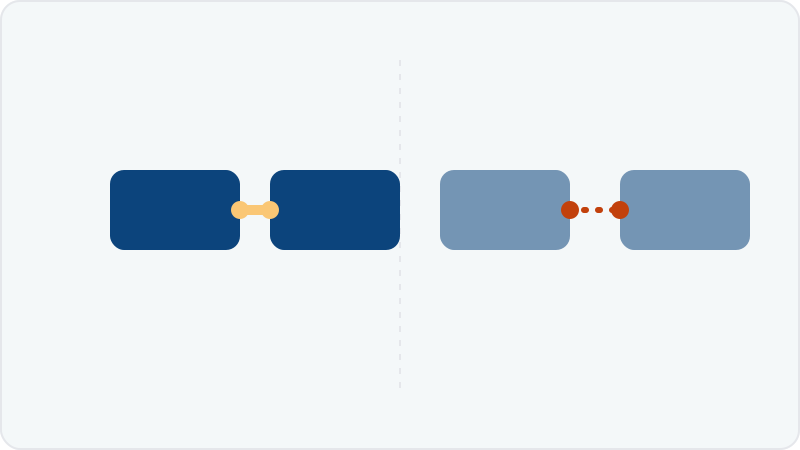
Two itineraries can look identical on a results page — same airports, same times, one price lower — and be completely different products. The difference is whether the flights sit on one interlined ticket or on two separate ones. On one ticket, a missed connection is the airlines' problem: the delivering airline has to rebook you.
On two tickets, the second airline never agreed to anything, and the missed flight is simply yours to replace.
- One interlined ticket means a missed connection is the airlines’ problem: the delivering airline must rebook you.
- Two separate tickets mean the second airline owes you nothing — replacing the missed flight is on you.
- Checked baggage can only go all the way through on an interline agreement; on separate tickets, plan to collect and recheck.
- Separate tickets are not a scam — they are a different product, priced lower because part of the risk moved to you.
If my first flight is late and I miss the next one, who fixes it?
On a single interlined ticket, the airlines do. IATA's interline guidance is explicit: under Resolution 766, when a passenger arrives at an interline point too late to make the connection, it is the responsibility of the delivering airline to cancel any continuing space that cannot be used and rebook the passenger as necessary.
On two separate tickets there is no delivering airline in that sense — the second carrier sold you an unrelated flight and owes you nothing when you are not on it.
What can I actually claim when a protected connection fails?
IATA Resolution 735d, Article 6 puts the duty on the carrier responsible for the delay: it must arrange a reasonable alternative route within a reasonable time, and where that cannot be done, it may need to compensate the passenger for expenses — the guidance names hotel room, suitable meals and beverages, ground transportation, transit taxes and reasonable communications costs.
Hotel accommodation is arranged by the delivering carrier. This is a documented industry obligation, not goodwill.
Will my checked bag go all the way through?
On an interlined ticket, that is what the agreement is for. On separate tickets it is the exception, not the rule: IATA's baggage guidance states that unless subject to specific agreement between airlines, through check-in baggage on separate tickets is prohibited.
Where a carrier does it anyway without an agreement in place, IATA Resolution 754 treats it as a fault in the baggage prorate process, with 100% of the mishandling expense charged to the airline that checked the bag — which is why most will not do it, and you should plan to collect and re-check.
What actually makes a connection "protected"
Protection does not come from the airports lining up or the layover looking comfortable. It comes from a contract between airlines that exists before you book. IATA maintains the interline agreements that, in its own description, spell out the basic rules airlines follow when collecting money and issuing documents for carriage on each other's services.
The scale is substantial: the bilateral file alone covers 4,626 passenger and cargo ticketing interline agreements, and a single recent edition of the multilateral manual recorded more than 220 new agreements alongside 30-odd withdrawals.
When your two flights sit on one ticket issued under that framework, the airlines have agreed in advance how to hand you — and your bag — from one to the other, and what happens when that handover fails. When they sit on two tickets, no such agreement is in play for your journey, however neatly the times appear to connect.
What the airlines owe you when a protected connection breaks
The rebooking duty is the core of it. Resolution 766 makes the delivering airline responsible for cancelling continuing space that can no longer be used and rebooking the passenger as necessary — you do not buy a new ticket and argue about it later.
The expense duty sits with whoever caused the delay. Under Resolution 735d, Article 6, that carrier must arrange a reasonable alternative route within a reasonable time; where it cannot, it may owe direct expenses incurred because of the involuntary change, and IATA's guidance enumerates them: hotel, meals and beverages, ground transport, transit taxes, reasonable communications.
The delivering carrier is the one that arranges the hotel.
Knowing these two duties by name changes the conversation at a transfer desk from a request for sympathy into a question about a published obligation.
What is different about two separate tickets
Everything above stops applying. The second airline has a contract with you for a flight you did not board; whether you were late because your first flight was delayed is, contractually, not its concern. Replacing that flight is your cost, at whatever the price is on the day.
The bag makes it concrete. IATA's baggage standards state that unless there is a specific agreement between the airlines, through check-in on separate tickets is prohibited, and that doing it without an agreement in place increases the risk of the bag being mishandled at the transfer point.
So the realistic plan on two tickets is: collect the bag, clear whatever the transfer requires, check in again from scratch — inside a layover you chose while looking at a screen, not at the airport.
None of this makes separate tickets a scam. It makes them a different product, sold next to the first one at a lower price because part of the risk moved to you.
| Situation | One ticket | Two tickets |
|---|---|---|
| Missed connection | Delivering airline rebooks you | You buy a replacement yourself |
| Checked bag | Can check through under the interline agreement | Through check-in is prohibited without one; collect and recheck |
| Cost if it fails | Airline's documented obligation (Resolution 735d) | Yours, at whatever the price is that day |
Even on one ticket, what is not automatic
The interline baseline has explicit edges, and the guidance says so. Recommended Practice RP1775's provisions do not apply to international intra-EU traffic, and some airlines' tariffs limit the conditions under which the provisions apply at all.
Statutory passenger-rights regimes then sit on top of this and differ by where you fly — they can add considerably to what is owed, but they are not part of the interline baseline.
The practical reading: one ticket buys you a documented starting position, not a guaranteed outcome. Before a trip where a missed connection would be expensive, the operating airline's conditions of carriage are the document that governs your specific case.
How to tell what you are buying — and when self-transfer is still worth it
The structure is knowable before you pay, and it is usually the single most useful thing on the page:
- Look for one booking reference covering all legs. Two references, two confirmation emails, or a booking labelled self-transfer or virtual interlining means two tickets.
- Check whether the bag is checked through to the final destination. If the booking flow says you collect and re-check, the connection is not protected.
- Read the layover as a working number, not a gap: on two tickets you need time for arrival, baggage reclaim, any immigration or security process, and a fresh check-in that may have its own cut-off.
- Self-transfer is defensible when the layover is long, the trip can absorb a missed leg without cascading costs, the second ticket is cheap to replace, or you were going to stop over anyway.
- It is a poor trade when the second leg is expensive or infrequent, when the connection is the last one of the day, when you are carrying a checked bag through a short layover, or when a missed leg breaks something unrefundable at the other end.
- If a platform sells a guarantee covering self-transfer disruption, treat it as an insurance product with its own terms and limits — read what it actually covers before it becomes the reason you booked.
FAQ
How can I tell if my flights are on one ticket?
One booking reference covering every leg, a single itinerary confirmation, and baggage checked through to the final destination are the practical signals. Separate confirmations, or wording like self-transfer or virtual interlining, indicate two tickets.
Does a long layover make separate tickets safe?
It reduces the risk rather than removing it. The second airline still has no obligation to you if you miss the flight, and IATA's guidance notes that through check-in on separate tickets is prohibited absent a specific agreement between the airlines, so you should plan to collect and re-check the bag regardless of how long the gap is.
Is a codeshare the same as an interline connection?
They are related but not identical: a codeshare is a marketing arrangement about whose code appears on a flight, while interlining is the agreement layer that lets airlines carry each other's passengers and baggage under agreed rules. What matters for protection is whether your journey is on one ticket issued under an interline agreement.
Sources
- IATA: Interline Considerations on Irregular Operations (Resolutions 766, 735d Article 6, RP1775) (checked 2026-08-20)
- IATA: Interline Considerations on Baggage Standards (through check-in on separate tickets; Resolution 754) (checked 2026-08-20)
- IATA: Multilateral Interline Traffic Agreements (MITA/BIETA) manual (checked 2026-08-20)
This article states the interline baseline from IATA's own guidance documents. Statutory passenger-rights regimes vary by market and sit on top of that baseline; individual airline tariffs can limit when the provisions apply. For a specific trip, the operating airline's conditions of carriage govern.
Mubboo compares flight options and may earn a commission when a traveller uses a partner link; we do not sell tickets or control provider inventory.
Mubboo Flights Editorial · Reviewed by mubboo-editorial-review (2026-08-20)