
Berlin travel guide
Berlin
Berlin's compact historic core sits in Mitte around Brandenburg Gate and Museum Island, ringed by Kreuzberg and Friedrichshain's nightlife and Cold War sites to the east, Prenzlauer Berg to the north, and Charlottenburg's old West Berlin core to the west. Sachsenhausen Memorial and Potsdam sit outside the city as separate day trips.
A first visit usually centers Brandenburg Gate, the Holocaust Memorial, the Reichstag dome and one Berlin Wall site. A longer stay adds Museum Island and the TV Tower, and a genuinely full trip sets aside separate full days for the Sachsenhausen Memorial and Potsdam rather than rushing either.

Find your Berlin experience
Explore Berlin Before You Book
Take a virtual drive or walk, then find tours and tickets for the places you like.

Activities
Featured activities in Berlin


Prices at a glance
What we sell today and what recent flight searches found. No hotel prices; nothing here is a trip total.
- Tours and tickets in Berlinfrom US$22.84
Live from Viator when this page loaded · per adult · changes by date.
Top experiences
Top experiences in Berlin
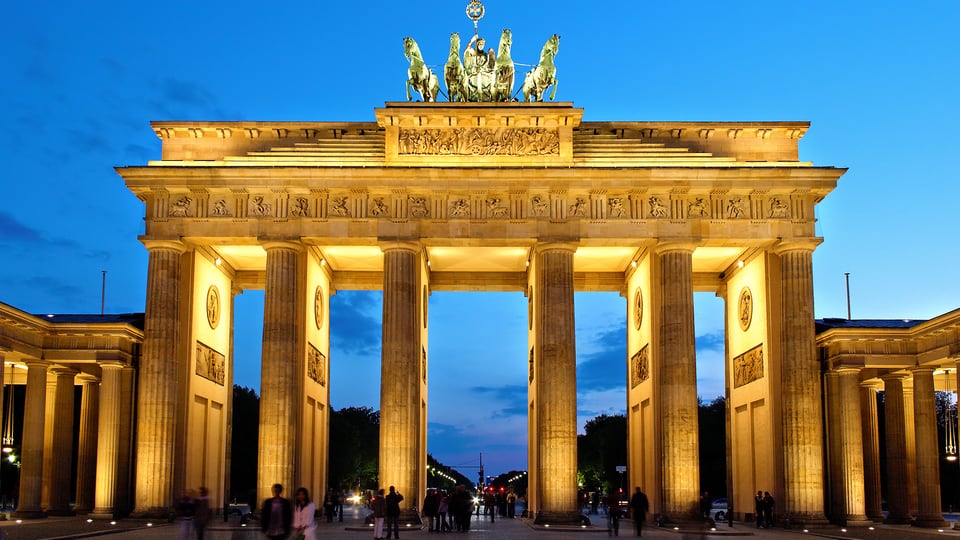
Brandenburg Gate
Built 1788-1791 under King Frederick William II to designs by Carl Gotthard Langhans, the neoclassical gate's bronze Quadriga was carried off by Napoleon in 1806 and returned in 1814, redesigned to carry an Iron Cross. During the Wall era it sat in the sealed-off no-man's-land, closed from 13 August 1961 until 22 December 1989.
Best for: Travelers wanting the real construction history and Cold War role behind Berlin's single most photographed monument, not just a "famous landmark" description · Area: Pariser Platz, Mitte, at the western end of Unter den Linden
Plan for The gate and Pariser Platz are free and open at all times, but the square draws heavy crowds around midday; an early morning or evening visit gives clearer photos and a quieter square.
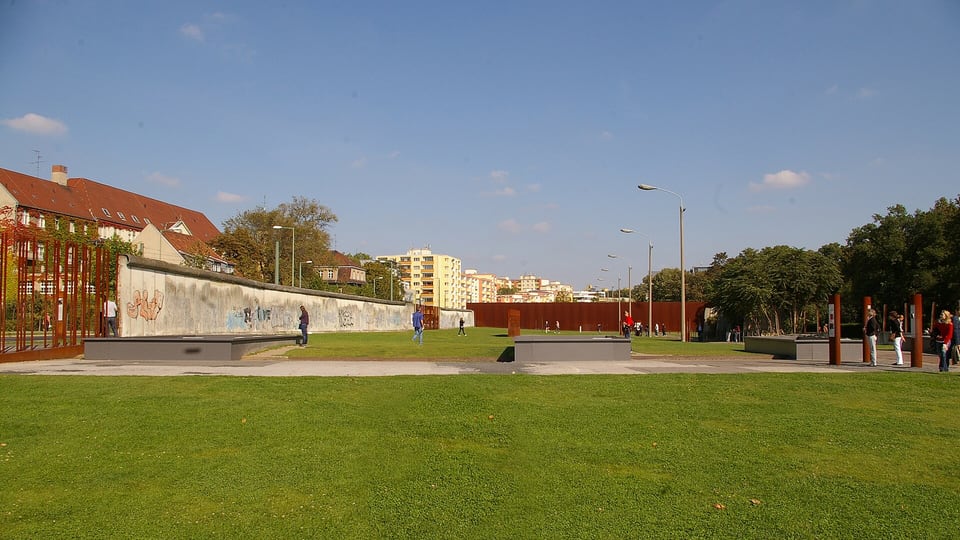
Berlin Wall Memorial (Gedenkstätte Berliner Mauer)
On Bernauer Straße, this is the most historically rigorous and extensively preserved Wall site: a real surviving death-strip section with its watchtower and border fortifications intact. It pairs an indoor Documentation Center exhibition with an outdoor exhibition on the 155km border that once ran around all of West Berlin.
Best for: Travelers wanting the most historically accurate, least commercialized encounter with the physical Wall and how the border actually worked · Area: Bernauer Straße, Mitte/Wedding border
Plan for The outdoor grounds are free and open-air at any time, but the indoor Documentation Center and exhibitions run on set opening hours, so check the current opening hours before you go to avoid a wasted trip.
See Berlin Wall Memorial (Gedenkstätte Berliner Mauer) tours
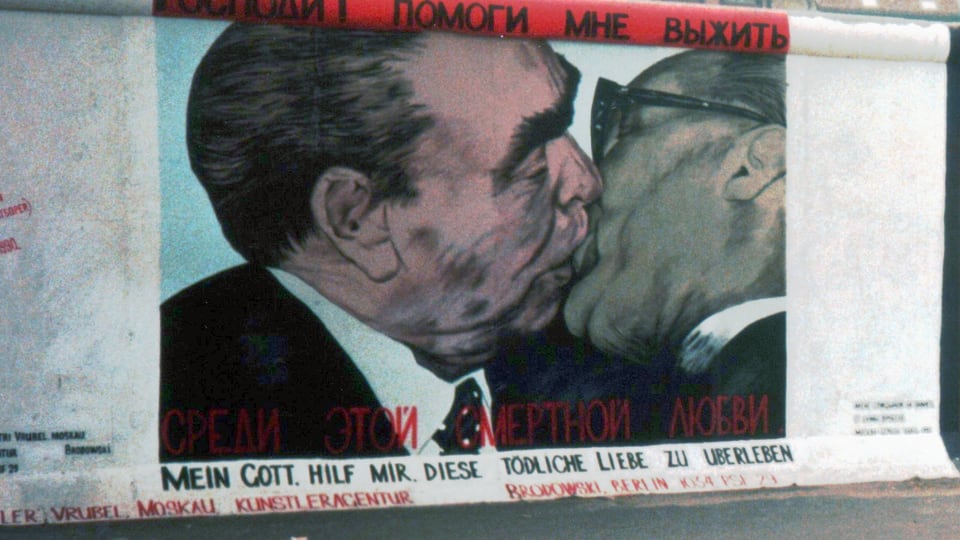
East Side Gallery
The longest surviving stretch of the Berlin Wall, 1,316m along the Spree in Friedrichshain, painted by 118 artists from 21 countries in spring 1990 -- about 105 murals, including Dmitri Vrubel's famous fraternal-kiss painting. Two-thirds of the originals were damaged by weather and vandalism; most murals visible today are 2009 repaintings, a real preservation detail worth knowing.
Best for: Travelers wanting a free walk past real Wall concrete covered in political art, honestly mostly a documented 2009 restoration · Area: Mühlenstraße, Friedrichshain, between Ostbahnhof and Oberbaumbrücke
Plan for Free and open at all times, drawing over 3 million visitors a year, so early morning offers the clearest view of the murals without crowds blocking the wall.
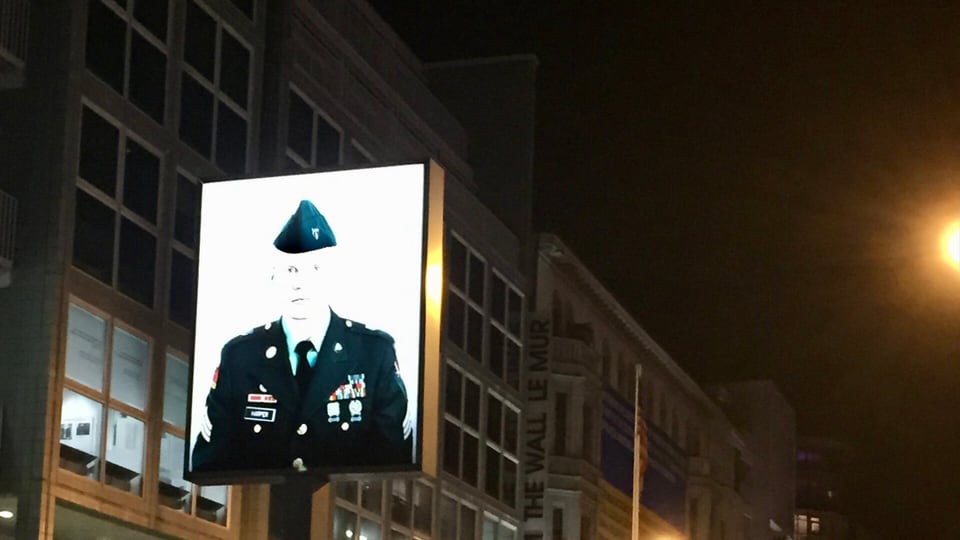
Checkpoint Charlie
The best-known Cold War crossing point between East and West Berlin, active from August 1961 to June 1990 as the only designated crossing for foreign tourists, diplomats and Allied personnel. The original guardhouse now sits in the Allied Museum; what stands on Friedrichstraße today is a post-1990 reconstruction, and paid photos with costumed reenactors were banned by Berlin authorities in November 2019.
Best for: Travelers wanting the real Cold War function of this crossing alongside an honest note about its current commercialized, reconstructed state · Area: Friedrichstraße, Mitte
Plan for The street-level site is free and always viewable, but it is a reconstruction, not an original structure; the nearby Mauermuseum (Museum Haus am Checkpoint Charlie) charges separate admission for deeper historical exhibits.
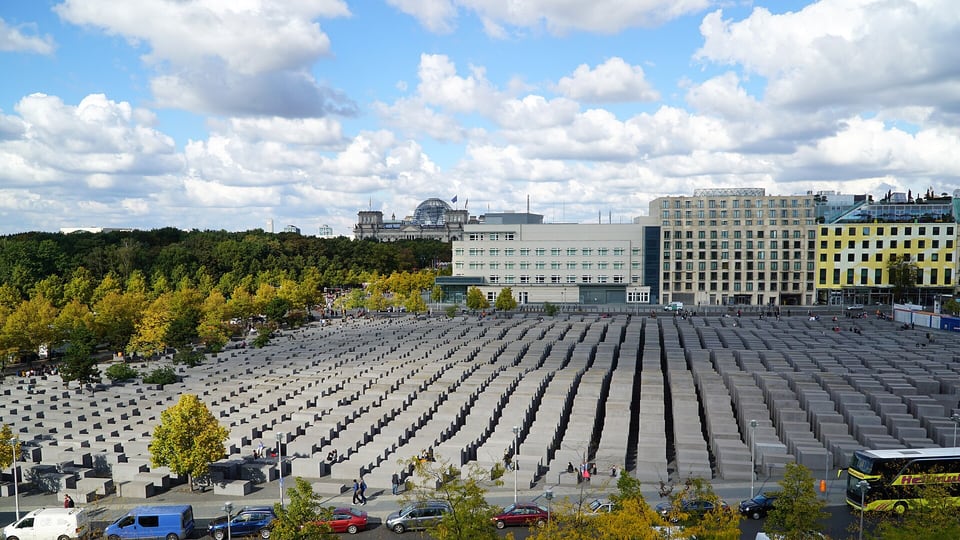
Memorial to the Murdered Jews of Europe
Architect Peter Eisenman's memorial, built 2003-2004 and opened 12 May 2005, covers 1.9 hectares with 2,711 concrete stelae of varying heights arranged in a grid one block south of Brandenburg Gate, on ground that once held part of the Wall's death strip. Its underground Place of Information holds the names of an estimated 3 million Jewish Holocaust victims, sourced from Yad Vashem.
Best for: Travelers seeking a real, historically grounded place of reflection for this specific history, approached with the gravity it deserves · Area: Cora-Berliner-Straße, Mitte, one block south of Brandenburg Gate
Plan for The outdoor stelae field is free and open at all times; the underground Place of Information keeps set hours and is best visited with time to read its Room of Names in full rather than rushed.
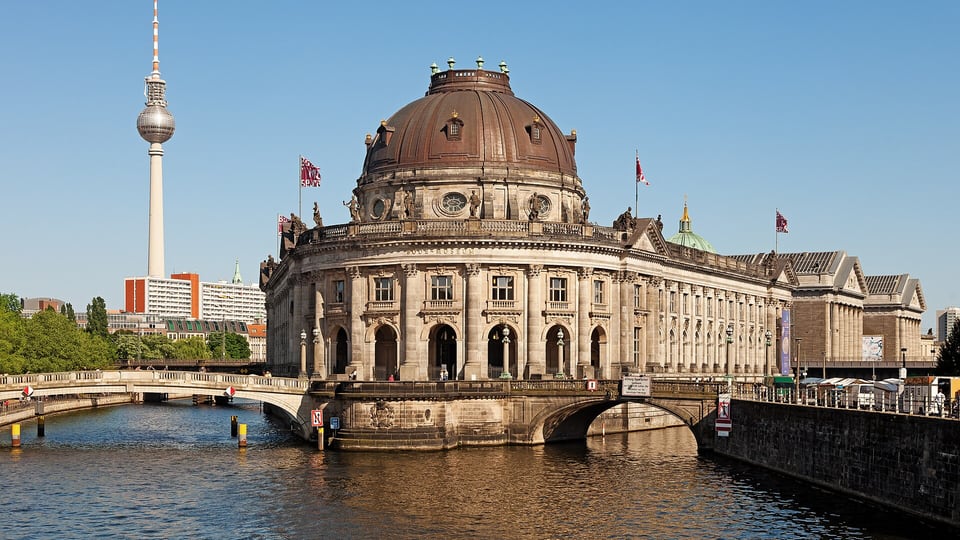
Museum Island (Museumsinsel)
A UNESCO World Heritage Site since 1999, Museum Island holds five museums: the Neues Museum (Nefertiti bust), the Altes Museum (Greek and Roman antiquities), the Alte Nationalgalerie (19th-century art) and the Bode Museum (sculpture, Byzantine art) are all open. The fifth, the Pergamon Museum, is honestly closed since October 2023, its North Wing due back 2027, full reopening not until 2037-2043.
Best for: Travelers wanting the real, current state of all five museums, honestly including which one is closed and for how long · Area: Museumsinsel, Mitte, on the Spree island
Plan for A combined day ticket covers the four open museums, but does not restore access to the closed Pergamon; travelers wanting the Ishtar Gate should instead visit the nearby Pergamonmuseum. Das Panorama exhibition, which shows a 3D reconstruction and a real Telephos Frieze fragment.
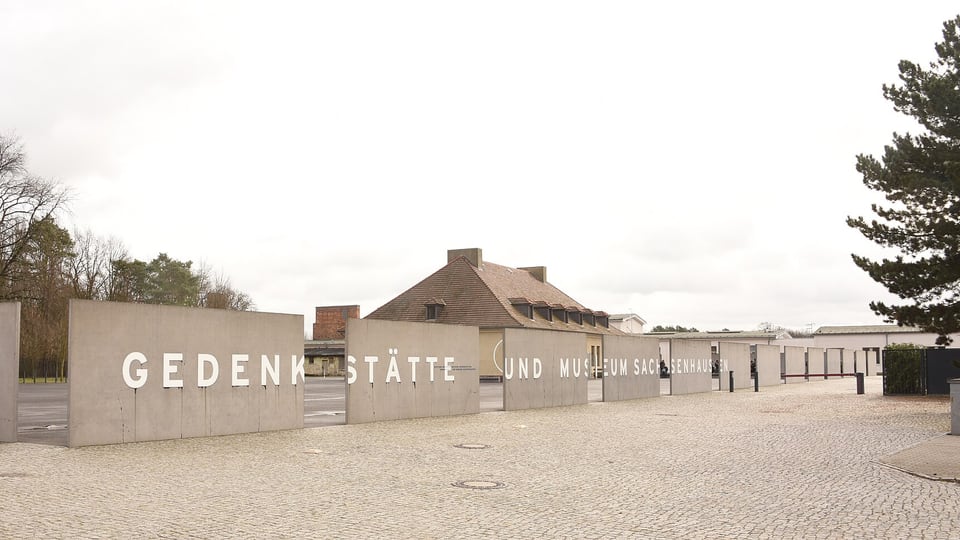
Sachsenhausen Memorial and Museum
Opened in summer 1936 near Oranienburg as a model camp for the SS concentration-camp system, Sachsenhausen held more than 200,000 prisoners through 1945, tens of thousands of whom died from hunger, disease, forced labor and extermination operations. It became a national memorial in 1961 and has operated since 1993 as a memorial and contemporary-history museum -- a distinct, separate site from Dachau near Munich.
Best for: Travelers wanting a real, historically accurate encounter with this specific site, approached with the same gravity as any other camp memorial · Area: Oranienburg, about 35km north of central Berlin
Plan for A genuinely solemn half-day-to-full-day commitment that rewards unhurried time reading the exhibitions respectfully, not a rushed stop squeezed between other Berlin sightseeing on the same day.
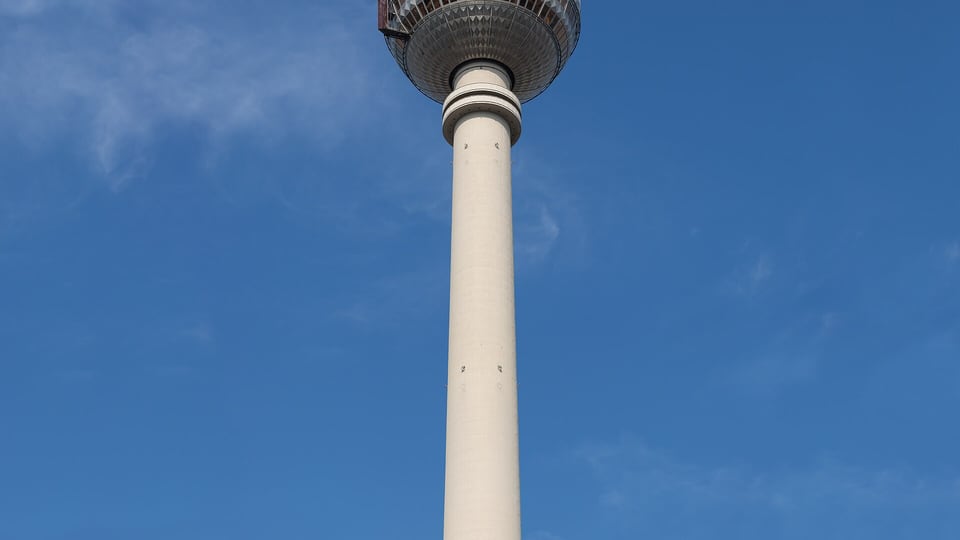
Berlin TV Tower (Fernsehturm) and Alexanderplatz
Built 1965-1969 by the East German government as a broadcasting facility and a deliberate symbol of communist power, the 368m Fernsehturm remains Germany's tallest structure. Its 203m deck draws about 1.2 million visitors a year; sunlight on its steel dome casts a cross-shaped reflection Berliners nicknamed the 'Pope's Revenge,' a real joke about the GDR's church-cross removals.
Best for: Travelers wanting the real GDR-era political story behind Berlin's tallest structure, not just a generic city-view photo stop · Area: Alexanderplatz, Mitte
Plan for The elevator reaches the deck in about 40 seconds, but timed-entry tickets sell out on busy days; booking ahead online avoids the walk-up queue at street level.
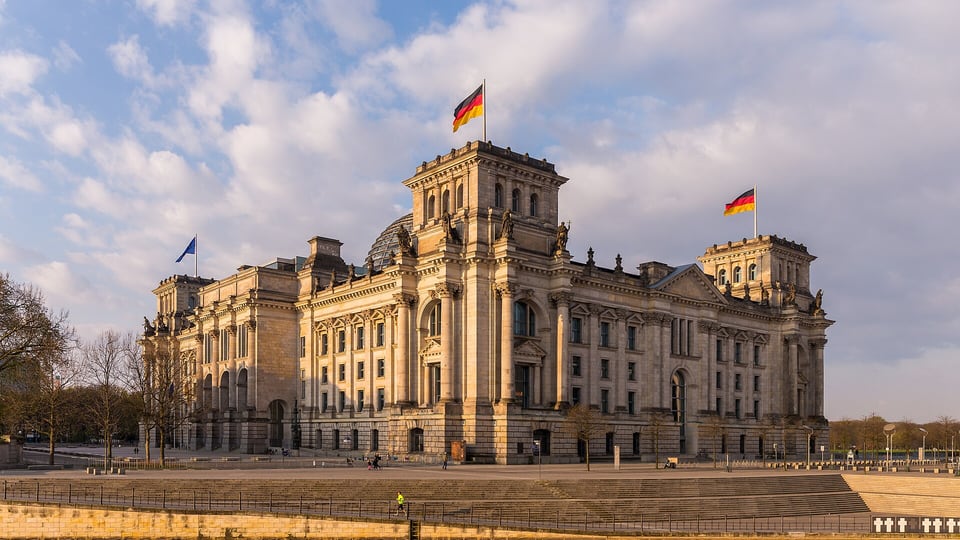
Reichstag Building and glass dome
Built 1884-1894, the Reichstag survived a pivotal 27 February 1933 arson fire that helped the Nazis consolidate power, then heavy WWII damage including Soviet soldiers' graffiti still partly preserved inside. Norman Foster's 1995-1999 renovation added the modern glass dome, and the Bundestag has met there since 19 April 1999; the dome remains free to visit but requires advance online registration.
Best for: Travelers wanting the real 1933-fire-to-1999-rebuild arc behind Germany's working parliament building, plus a free 360-degree city view · Area: Platz der Republik, Tiergarten/Mitte border, near Brandenburg Gate
Plan for Entry is free but mandatory advance online registration and strict security screening mean this cannot be a spontaneous same-day stop; book a slot days ahead.
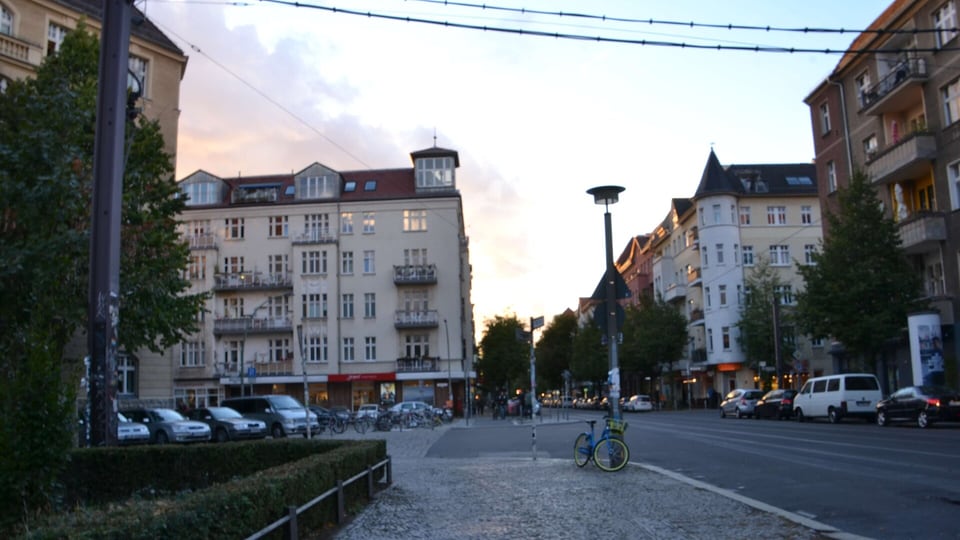
Kreuzberg and Friedrichshain: contemporary arts, nightlife and food
Berlin's techno and club culture, built in East Berlin's abandoned post-1989 spaces (clubs including Berghain, founded 1998), was added to Germany's Nationwide Inventory of Intangible Cultural Heritage in March 2024. These neighborhoods also gave rise to the döner kebab in the early 1970s -- genuinely disputed between two snack-stand owners -- and Maybachufer still hosts a real Tuesday/Friday Turkish market.
Best for: Travelers wanting Berlin's real, currently-thriving contemporary reputation alongside its historical weight, not a city frozen in the 20th century · Area: Kreuzberg and Friedrichshain, east and southeast of Mitte
Plan for Berlin's most-cited clubs run famously strict, unpredictable door policies with no guaranteed entry, so travelers prioritizing a specific club should treat it as a maybe, not a booking.
See Kreuzberg and Friedrichshain: contemporary arts, nightlife and food tours
Plan two, four or seven-plus days in Berlin
Two to three days: the Berlin essentials
Pick this length to cover Brandenburg Gate, the Holocaust Memorial, the Reichstag dome and one Berlin Wall site.
These fit comfortably within Mitte's compact, walkable core, with the Reichstag dome booked a few days ahead.
The trade-off This length skips Museum Island, the TV Tower and both day trips entirely, so it suits a highlights-only visit or a stop within a longer trip.
Four to five days: add Museum Island, the TV Tower and a neighborhood evening
Pick this length once the four open Museum Island museums, the TV Tower and an evening in Kreuzberg or Friedrichshain all matter.
This spreads Berlin's sightseeing across more days and adds real cultural breadth beyond the historical core.
The trade-off This length still leaves both day trips for the longer stay below, since Sachsenhausen and Potsdam each realistically need their own day.
A week or more: both day trips, unhurried
Pick this length to fit both the Sachsenhausen Memorial and Potsdam day trips without rushing either, plus a genuinely unhurried pace through Prenzlauer Berg and Charlottenburg.
A week allows the full city beyond the highlights, including both major day trips at their own realistic pace.
The trade-off A shorter trip cannot fit this depth without turning at least one day trip into a rushed, disrespectful dash.
Sources
checked 2026-09-25. Recommendations are editorial judgements based on the cited sources below.
Choose a Berlin base and explore nearby
Mitte: a base for landmarks and walkability, at the cost of tourist crowds
Consider this base for Brandenburg Gate, the Holocaust Memorial and the Reichstag all within walking distance, accepting the densest tourist crowds in the city.
This puts Berlin's core landmarks within a short walk, at the cost of higher hotel prices and heavier foot traffic than other districts.
The trade-off Choosing Mitte means accepting crowds and cost for landmark density and flat, easy walking.
Kreuzberg/Friedrichshain: a base for nightlife and current culture
Consider these districts for direct access to the East Side Gallery, Berlin's UNESCO-recognized club scene and its real döner-kebab food history, alongside a genuinely less touristic daily feel.
This trades some historical landmark density for nightlife, food and a currently-evolving cultural identity.
The trade-off Basing here means a short U-Bahn ride to Mitte's core landmarks, a reasonable trade for nightlife and food access.
Charlottenburg: a base for former West Berlin and a quieter pace
Consider Charlottenburg when the Kurfürstendamm, Charlottenburg Palace and the former West Berlin side of the divided-city story matter more than central Mitte nightlife.
This area's real West Berlin history and currywurst connection give it a different character than Mitte's dense historical core.
The trade-off Basing here means a longer trip to reach Mitte's core sights, a worthwhile trade for travelers prioritizing the West Berlin story and a quieter pace.
Sources
checked 2026-09-25. Recommendations are editorial judgements based on the cited sources below.
Airport, safety and getting around
Berlin Brandenburg Airport (BER) opened 31 October 2020, replacing Tegel and Schönefeld, both fully closed by 2021. It sits about 18km southeast of the center; the FEX Airport Express reaches Hauptbahnhof in about 23 minutes, four times an hour.
Mitte's core is flat and walkable; the wider city runs on an integrated U-Bahn, S-Bahn, tram and bus network, with a single ABC-zone ticket covering day trips to Oranienburg and Potsdam.
The UK FCDO rates a terrorism attack as very likely in Germany, citing a July 2026 vehicle attack on a Berlin Pride crowd, and separately flags routine pickpocketing risk at stations and crowded gatherings.
Best time to visit
Winter (December-February)
Berlin's coldest season, averaging around 3.2°C by day in January (down to about -2.2°C at night) with occasional snow, and genuinely the quietest time to see Mitte's landmarks and the open Museum Island museums.
- Crowds
- Low
Spring (March-May)
A genuine shoulder season as temperatures climb from Berlin's cold winter, with lighter crowds at Brandenburg Gate, the Holocaust Memorial and the Reichstag dome than the summer peak.
- Crowds
- Varies by event and attraction
Summer (June-August)
Berlin's warmest season, averaging around 25.0°C in July, when the TV Tower, the East Side Gallery and Museum Island draw the year's heaviest crowds. For Reichstag dome slots and TV Tower tickets in peak weeks, book well ahead.
- Crowds
- High
Autumn (September-November)
Opens with German Unity Day on 3 October, marking the 1990 reunification with a real annual festival around Brandenburg Gate, before crowds ease toward November.
- Crowds
- Varies by event and attraction
Food, markets and local life
Herta Heuwer invented currywurst around 1949 at a Charlottenburg snack stand, mixing ketchup or Worcestershire sauce with curry powder from British soldiers over grilled pork sausage. She patented the sauce as "Chillup" in 1951, and Germany still eats an estimated 800 million currywursts a year, 70 million in Berlin alone.
Berlin's Kreuzberg district is widely credited as the döner kebab sandwich's birthplace in the early 1970s, though who invented it first is genuinely disputed between Mahmut Aygün (1971) and Kadir Nurman (1972) -- both real, documented figures, stated honestly rather than crediting one as settled.
Berlin's large Turkish community still runs its own real weekly market: the Türkenmarkt at Maybachufer, on the Neukölln side of the canal bordering Kreuzberg, held every Tuesday and Friday with up to 180 traders along roughly half a mile of canal-side stalls.
City profile
- Population (City of Berlin, 2022 census; the wider metropolitan area is a distinct, broader figure of roughly 6.2 million, 2022): 3,700,000
Berlin's traditionally cited founding date is 1237, the year of the earliest documented mention of the twin trading settlements of Cölln and Berlin on either side of the Spree river.
Berlin became the capital of the Kingdom of Prussia in 1701, then capital of the newly unified German Empire in 1871 -- by the 1920s Berlin had grown into the world's third-largest city by size.
Following WWII, Berlin was split into Allied occupation sectors; the East German government built the Berlin Wall starting 13 August 1961, dividing the city for 28 years until it fell on 9 November 1989.
Germany was officially reunified at midnight on 3 October 1990, and Berlin became the reunified capital again, though the federal government's relocation from Bonn was not completed until 1999-2000.
Famous for:
- Berlin's techno and club culture, built in the abandoned industrial spaces East Berlin left behind after 1989, was added to Germany's Nationwide Inventory of Intangible Cultural Heritage on 14 March 2024 -- the first time club culture received that status in Germany.
- Few capitals carry as many distinct, back-to-back 20th-century regimes as Berlin: Weimar-era capital, Nazi capital, a city split by the Wall for 28 years, and reunified capital since 1990 -- each period left its own real, still-visible sites.
- Berlin snack-stand owner Herta Heuwer invented currywurst around 1949 in Charlottenburg, patenting her sauce as "Chillup" in 1951 -- Germany still eats an estimated 70 million currywursts a year in Berlin alone.
- Berlin is widely credited as the birthplace of the döner kebab sandwich in the early 1970s, though who invented it first is genuinely disputed between Mahmut Aygün (1971) and Kadir Nurman (1972).
What makes a Berlin visit worthwhile
The Berlin Wall stood for 28 years, from 13 August 1961 until it fell on 9 November 1989. Over 100,000 people attempted to escape across it, and estimates of those killed trying to cross range from 136 to more than 200 -- real, checkable figures rather than a vague historical backdrop.
The Memorial to the Murdered Jews of Europe, designed by Peter Eisenman and completed in 2004, is presented here as a memorial and place of reflection, not a conventional sightseeing stop. Its underground Place of Information holds the names of roughly 3 million Jewish Holocaust victims.
Checkpoint Charlie operated as a real Cold War crossing from 1961 to June 1990, but the guardhouse standing there today is a post-1990 reconstruction. Berlin banned paid photos with costumed reenactors in 2019 -- a genuinely useful honesty note rather than untouched history.
The UK FCDO's Germany travel advice states that terrorists are very likely to try to carry out attacks. In July 2026 one person was killed and 29 injured when a vehicle drove into a Christopher Street Day crowd in Berlin, a real, current safety fact stated plainly.
Berlin genuinely holds both realities at once: a city dense with memorial sites to two of the 20th century's worst regimes, and, since 2024, a UNESCO-recognized techno and club culture built in the spaces the Wall's fall left behind. This page treats both honestly.
- Plan by trip type
- Mitte landmarks around Brandenburg Gate · Kreuzberg & Friedrichshain nightlife and Wall sites · day trips to Sachsenhausen and Potsdam
- Good first stay
- 2-3 days: Brandenburg Gate, Holocaust Memorial, Reichstag dome, one Wall site; 4-5 days adds Museum Island & TV Tower; a week+ fits Sachsenhausen and Potsdam
- Climate
- Oceanic/humid continental: cold winters without permanent snow, warm summers, ~3.2°C January, ~25.0°C July
- Main gateway
- BER airport, about 18km southeast of the center; FEX Airport Express reaches Hauptbahnhof in about 23 minutes
Planning your Berlin visit: FAQs
Is Checkpoint Charlie a real historical site or a reconstruction?
It was a real Cold War crossing from 1961 to June 1990, but the guardhouse standing there today is a post-1990 reconstruction -- the original sits in the Allied Museum -- and Berlin banned paid photos with costumed reenactors in November 2019.
Who really invented the döner kebab?
It's genuinely disputed: Mahmut Aygün is credited with serving one version at a West Berlin Kreuzberg snack stand in 1971, and Kadir Nurman with another in 1972 -- both real historical figures, with no single settled answer.
Can I still see the Pergamon Altar and Ishtar Gate at Museum Island?
No -- the Pergamon Museum has been completely closed since October 2023 for renovation, expected to stay mostly closed until 2037-2043 (its North Wing alone is due back in 2027). A separate Panorama exhibition nearby shows a 3D reconstruction and a real Telephos Frieze fragment instead.
How should I approach the Memorial to the Murdered Jews of Europe?
As a memorial and place of reflection: the outdoor stelae field is free and open at all times, and the underground Place of Information holds the names of roughly 3 million Jewish Holocaust victims -- worth unhurried time rather than a quick walk-through.
Is Sachsenhausen the same as Dachau?
No -- they are two separate, real memorial sites. Sachsenhausen sits about 35km north of Berlin near Oranienburg, opened in 1936, while Dachau sits near Munich, opened in 1933; each has its own history and deserves its own visit, not treated interchangeably.
Which airport serves Berlin now, and is Tegel still open?
Berlin Brandenburg Airport (BER) has been the sole commercial gateway since it opened 31 October 2020; both older airports, Tegel and Schönefeld, are fully closed (Tegel by November 2020, Schönefeld's old terminal by 2021).
Is Berlin safe to visit, honestly?
Berlin is a large, genuinely welcoming capital that also carries real, documented risks: the UK FCDO rates a terrorist attack as very likely, citing a July 2026 vehicle attack on a Berlin Pride crowd, and separately flags ordinary pickpocketing risk in crowds and at stations.
Is Berlin's techno scene really UNESCO-recognized?
Yes, in a specific and real way: on 14 March 2024, Berlin's club culture -- including named clubs like Berghain and Tresor -- was added to Germany's own Nationwide Inventory of Intangible Cultural Heritage, the first time club culture received that status in the country.
Make your Berlin plans
Compare tours, tickets and activities in Berlin →
Choose your departure market and search flights to Berlin from the Mubboo Flights homepage.
Compare flights ↗Sources
Latest source check: .
Show all 23 sources
- Wikipedia — Berlin (checked 2026-09-25)
- Wikipedia — Berlin Wall (checked 2026-09-25)
- Wikipedia — East Side Gallery (checked 2026-09-25)
- Wikipedia — Checkpoint Charlie (checked 2026-09-25)
- Stiftung Berliner Mauer — Berlin Wall Memorial site (checked 2026-09-25)
- Wikipedia — Memorial to the Murdered Jews of Europe (checked 2026-09-25)
- Wikipedia — Brandenburg Gate (checked 2026-09-25)
- Wikipedia — Museum Island (checked 2026-09-25)
- Wikipedia — Pergamon Museum (checked 2026-09-25)
- Sachsenhausen Memorial and Museum (checked 2026-09-25)
- Wikipedia — Berlin Brandenburg Airport (checked 2026-09-25)
- BER Airport — public transport page (checked 2026-09-25)
- Wikipedia — Berlin Television Tower (checked 2026-09-25)
- Wikipedia — Reichstag building (checked 2026-09-25)
- Wikipedia — German reunification (checked 2026-09-25)
- Wikipedia — Currywurst (checked 2026-09-25)
- Wikipedia — Kadir Nurman (döner kebab dispute) (checked 2026-09-25)
- visitBerlin.de — Berlin tourism site: Maybachufer Turkish Market (checked 2026-09-25)
- UNESCO — Techno-Walk in Berlin (Intangible Cultural Heritage) (checked 2026-09-25)
- Designboom — Berlin techno gets UNESCO heritage status (checked 2026-09-25)
- GOV.UK — Germany travel advice: safety and security (checked 2026-09-25)
- Wikipedia — Potsdam (checked 2026-09-25)
- The booking platform — Berlin destination mapping d488 (checked 2026-09-25)
Photo credits
- brandenburg gate — Thomas Wolf , www.foto-tw.de · CC BY-SA 3.0.
- berlin wall memorial — N-Lange.de · CC BY-SA 3.0.
- east side gallery — Lklundin · CC BY-SA 3.0.
- checkpoint charlie — Ank Kumar · CC BY-SA 4.0.
- holocaust memorial — Alexander Blum · CC BY-SA 4.0.
- museum island — Thomas Wolf , www.foto-tw.de · CC BY-SA 3.0.
- sachsenhausen memorial — Christian Michelides · CC BY-SA 4.0.
- tv tower alexanderplatz — Christian Wolf ( www.c-w-design.de ) · CC BY-SA 3.0 de.
- reichstag dome — Ansgar Koreng · CC BY-SA 3.0 de.
- kreuzberg nightlife arts — LeadingWeb Webdesign und Marketing aus Berlin · CC BY-SA 4.0.
Mubboo Editorial Team · Reviewed by Mubboo Editorial Team


