
Thailand · Asia
Bangkok
Bangkok separates cleanly into a few kinds of day: Rattanakosin’s temple core, the river and canal network, Chinatown’s food streets, and the BTS and MRT corridors reaching Sukhumvit and Silom. None of these overlap on a map, so choose the contrast you want rather than forcing every name into one route.

Find your Bangkok experience
Explore Bangkok Before You Book
Take a virtual drive or walk, then find tours and tickets for the places you like.
Activities
Featured activities in Bangkok

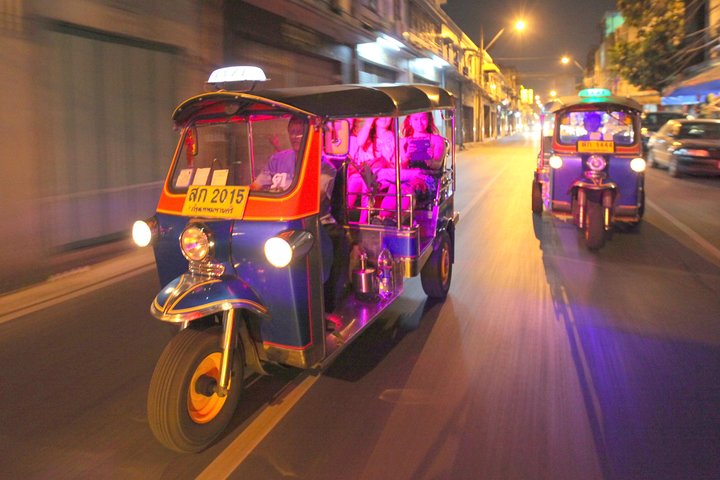


Prices at a glance
What we sell today and what recent flight searches found. No hotel prices; nothing here is a trip total.
- Tours and tickets in Bangkokfrom US$20.71
Live from Viator when this page loaded · per adult · changes by date.
Flights to Bangkok
- From Dubaione-way from AED 601
- From Singaporeone-way from SGD 109
- From Londonone-way from £229
Lowest fare seen in recent flight searches for that route; the airline or booking site confirms the final fare.
Plan Bangkok by time and budget
Top experiences
Top experiences in Bangkok
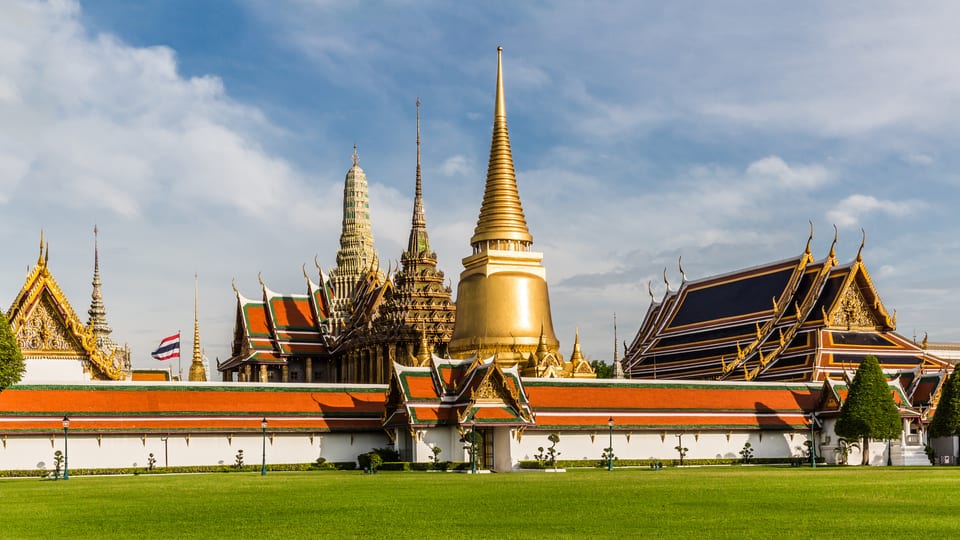
Grand Palace and Wat Phra Kaew
The 1782 palace complex, 218,000 square metres inside roughly 19,000 metres of wall, marks where the capital moved after the fall of Ayutthaya, and Wat Phra Kaew inside it serves as the Chapel Royal, built with no monastic quarters because monks have never lived there.
Best for: Travellers who want Bangkok’s founding history in one site · Area: Rattanakosin, Na Phra Lan Road
Plan for Tickets are sold until 15:30 for grounds that stay open to 16:30, and the dress-code check at the entrance turns away shorts, sleeveless tops and see-through clothing before entry.
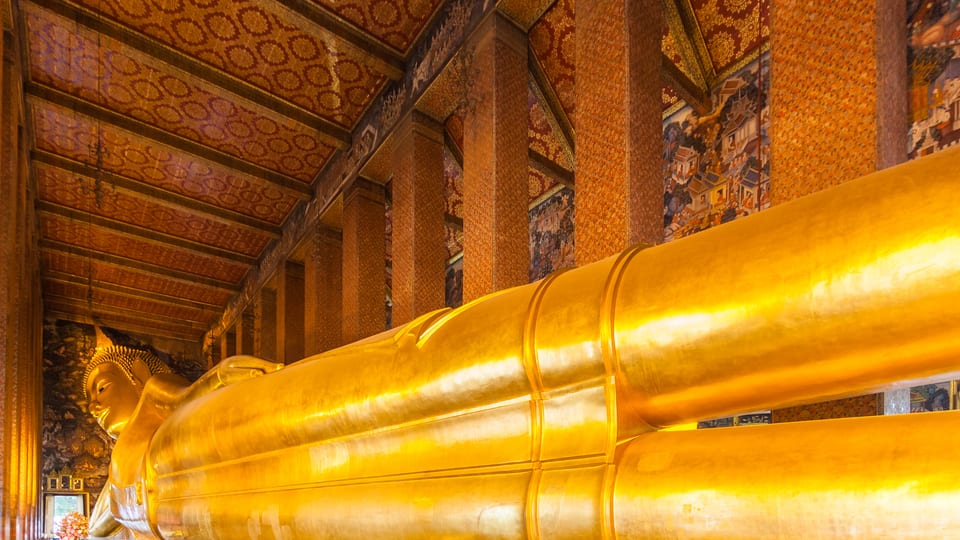
Wat Pho
Wat Pho’s full name is Wat Phra Chetuphon Wimon Mangkhalaram Rajwaramahawihan, a first-grade royal monastery restored under King Rama I and expanded over sixteen years and seven months under King Rama III. King Rama III also had 1,431 stone inscriptions on medicine, massage and other subjects carved into the temple between 1831 and 1841.
Best for: Visitors who want Bangkok’s own knowledge-preservation story, not only its architecture · Area: Phra Nakhon, immediately south of the Grand Palace
Plan for The grounds occupy 20 acres and stay open later than the Grand Palace, to 18:00, so pairing the two in one day works best when Wat Pho follows the palace rather than the other way round.
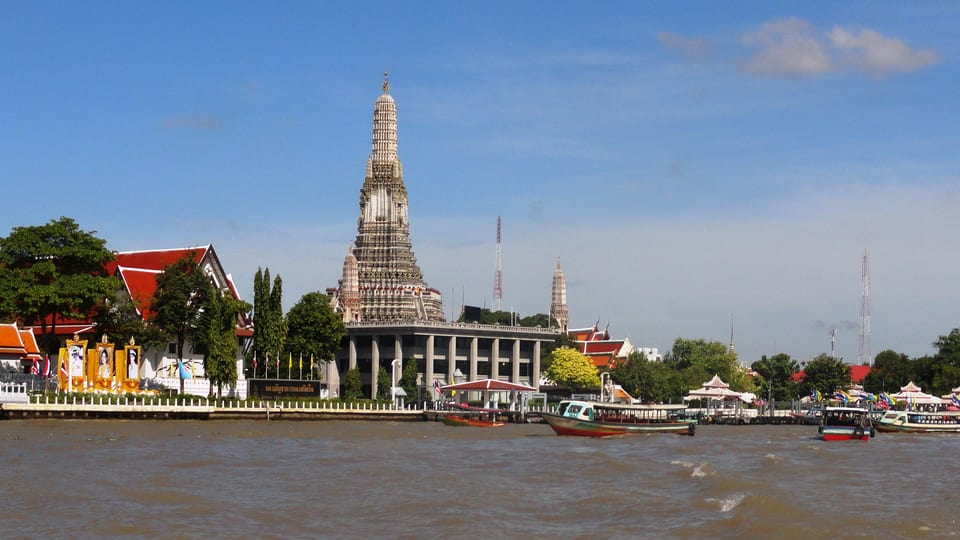
Wat Arun
A Buddhist temple has stood on this site since the Ayutthaya Kingdom (1351 to 1767), and reaching it means crossing the Chao Phraya from Tha Tien pier by a short ferry that departs roughly every ten minutes.
Best for: Visitors who want the river, not just another temple interior, as part of the visit · Area: Thonburi, opposite Tha Tien pier
Plan for Do not trust anyone near the pier offering a cheap ride or claiming the temple is closed; go straight to Tha Tien pier and the public ferry queue instead.
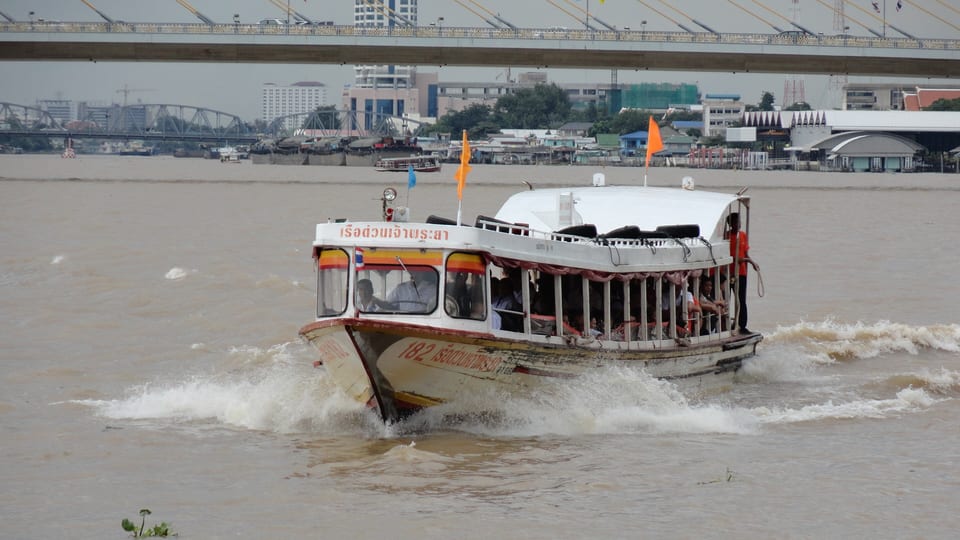
Chao Phraya Express Boat
The express boat runs several flag-marked commuter routes (orange, yellow, green-yellow and red) between piers from Pak Kret to Wat Rajsingkorn, so the flag colour, not the words “Chao Phraya” alone, determines which stretch of the river a given boat actually covers.
Best for: Travellers who want to move between Sathorn, Rattanakosin and Thonburi without road traffic · Area: Piers along the Chao Phraya, Sathorn to Tha Tien
Plan for The flagged commuter routes run on a weekday timetable, so confirm both the flag colour and the day of the week before building a river leg around one.
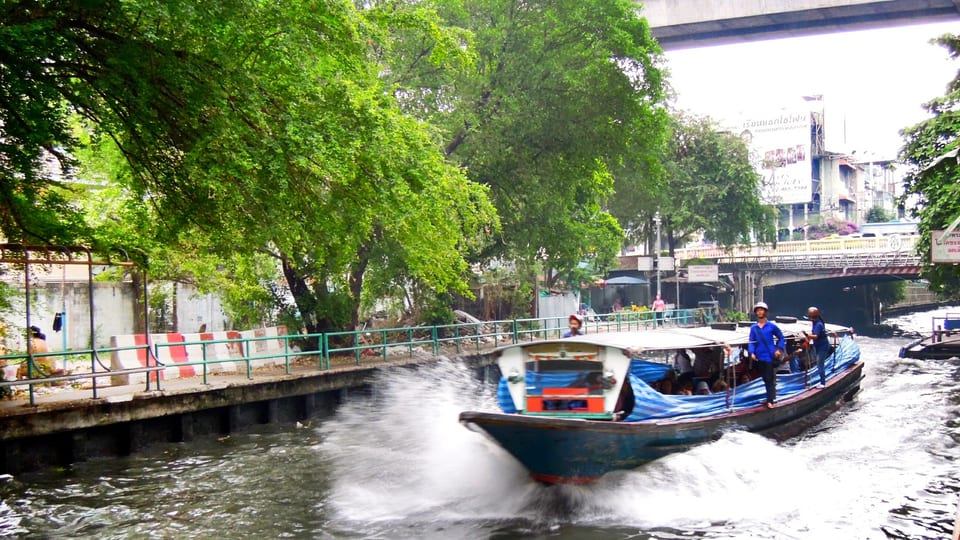
Khlong Saen Saep canal boat
A separate network from the Chao Phraya Express Boat, this canal service has linked central Bangkok since 1990 along an eighteen-kilometre route connecting the Golden Mount area with Pratunam and on toward Sukhumvit.
Best for: Travellers who want a canal-level view of the city away from the main river · Area: Khlong Saen Saep, from Panfa Leelard pier toward Pratunam
Plan for The canal boats share no piers with the Chao Phraya Express Boat, so a route using both means planning two separate boat legs rather than one continuous ride.
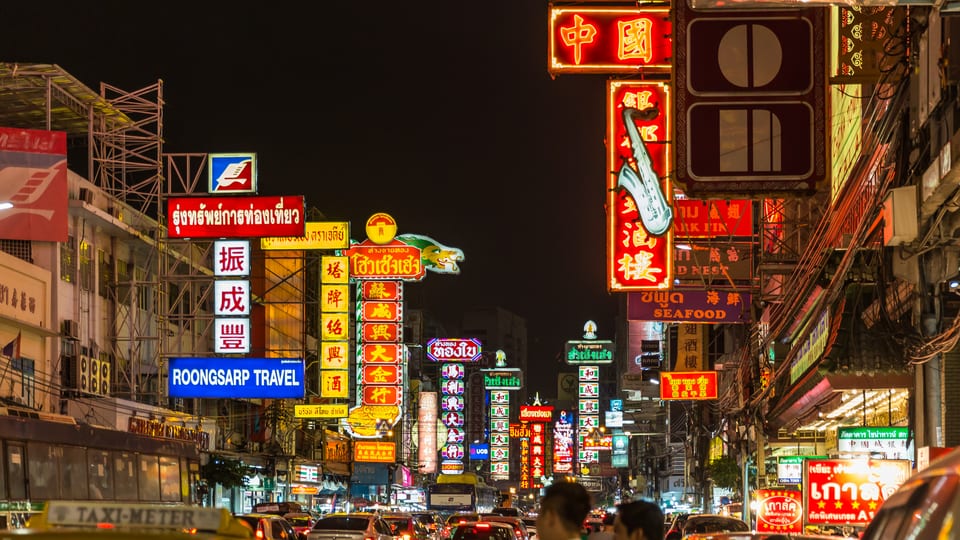
Yaowarat (Chinatown)
The Tourism Authority of Thailand lists Yaowarat alongside Sampeng and Phahurat among Bangkok’s market and shopping districts, and Bangkok Metropolitan Administration’s own tourism material treats Yaowarat Road as a dedicated food and street-life destination in its own right.
Best for: Food-focused travellers and an evening that is not built around a temple · Area: Samphanthawong, between the river and the old city
Plan for The district gets busier and louder after dark, so travellers who prefer a quiet evening should plan a Yaowarat visit earlier in the day or choose a different district for dinner.
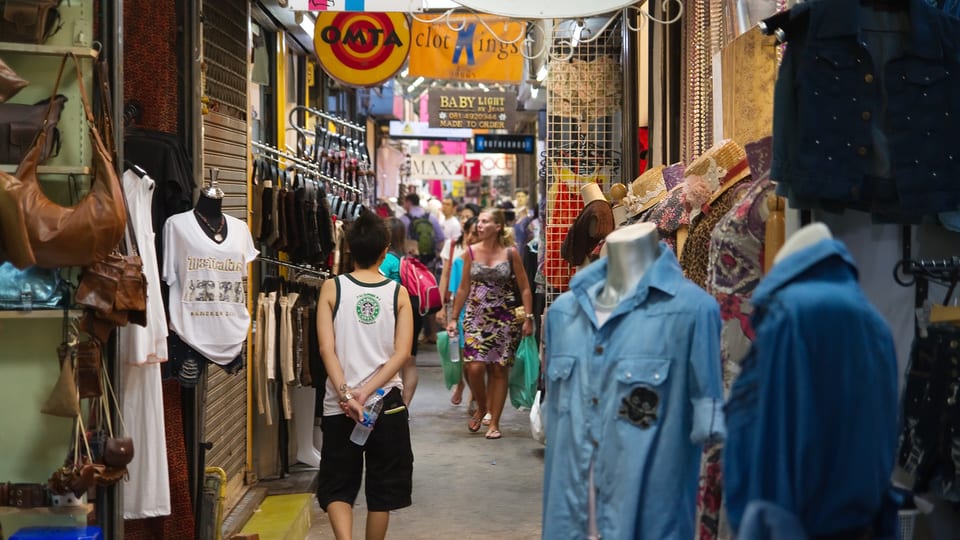
Chatuchak Weekend Market
Chatuchak is billed as the world’s largest weekend market, with 26 sections and more than 15,000 stalls across roughly 35 acres. The market moved to its permanent site in 1982, and its clocktower was built in 1987 to mark King Bhumibol Adulyadej’s sixtieth birthday.
Best for: Market browsers whose stay includes a Saturday or Sunday · Area: Chatuchak district, north of the old city
Plan for The market’s identity is built around the weekend; a weekday visit shows a mostly closed site rather than the market described above.
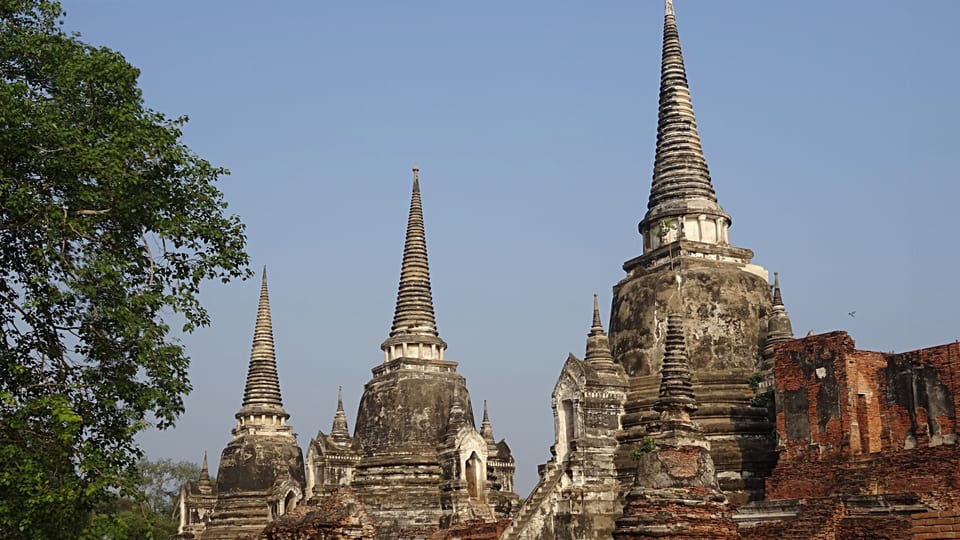
Ayutthaya day trip
UNESCO inscribed the Historic City of Ayutthaya, founded around 1350 as the second Siamese capital after Sukhothai and destroyed by the Burmese army in 1767, as a World Heritage Site in 1991. Its 289-hectare ruined core includes Wat Mahathat and Wat Phra Si Sanphet.
Best for: Travellers who want dedicated time for Thai history outside the modern city · Area: Phra Nakhon Si Ayutthaya Province, north of Bangkok on the rail line
Plan for Ayutthaya is a dedicated day trip, not a Bangkok neighbourhood; reaching the ruins by train from Bang Sue still leaves local transport around the 289-hectare site to arrange separately.
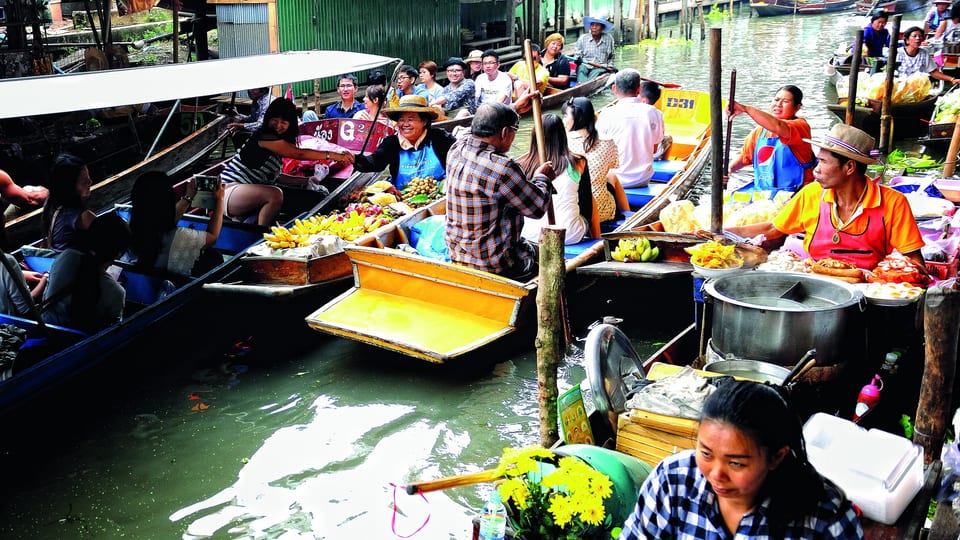
Floating market day trip: Damnoen Saduak or Amphawa
Damnoen Saduak’s canal, built on King Rama IV’s initiative to link the Mae Klong River with Chinese-community waterways and finished, at 32 kilometres with more than 200 branches, under King Rama V, still carries produce boats through the morning. Amphawa’s market instead trades only Friday through Sunday, 10:00 to 20:30, near Wat Amphawan Chetiyaram, with a firefly boat tour after dark.
Best for: Travellers who want to see Thailand’s canal-based trade rather than another Bangkok street · Area: Ratchaburi (Damnoen Saduak) or Samut Songkhram (Amphawa) provinces, west of Bangkok
Plan for The two markets sit in different provinces and keep different hours, so treat the choice between them as one day’s plan, not a single trip that visits both.
See Floating market day trip: Damnoen Saduak or Amphawa tours
Plan one, three or five days in Bangkok
One day: Rattanakosin first, the river second
Give Rattanakosin the morning: the Grand Palace and Wat Phra Kaew before the heat and the tour groups build, then Wat Pho a short walk south while the same dress code and the same walking shoes still apply. Only add the Tha Tien crossing to Wat Arun if the afternoon still has room for the pier and the return ferry.
The Grand Palace checks the dress code at the entrance, so arriving already dressed for it, shoulders and knees covered and no shorts, is what actually saves time, not an earlier arrival on its own. Wat Pho keeps a longer afternoon window than the palace, which is exactly why it is the second stop rather than the first.
The trade-off Yaowarat is a short MRT Blue Line ride from Sanam Chai, so distance is not the obstacle. Its food streets and Chatuchak’s stalls each need hours on foot, and fitting either into a temple morning takes those hours from the Grand Palace and Wat Pho.
Three days: Rattanakosin, the river, and Sukhumvit or Silom
Day one stays in Rattanakosin as above. Day two follows the water: a Chao Phraya Express Boat leg past Sathorn towards Tha Tien, then the short cross-river ferry for Wat Arun. Treat any Khlong Saen Saep canal-boat leg toward Pratunam as a separate outing on a different part of the day; the two boat networks share no piers. Day three moves inland to Sukhumvit or Silom on the BTS or MRT.
The BTS Sukhumvit and Silom lines meet only at Siam, and neither reaches Rattanakosin. The MRT Blue Line does: Sanam Chai, beside Wat Pho, is on the same line as its Sukhumvit station, next to BTS Asok, and its Si Lom station, so a hotel near the temples keeps a direct train to either district for the evening.
The trade-off Adding Yaowarat to the same three days usually shortens the Sukhumvit or Silom day; Chinatown works better as its own evening than as a stop wedged between two other plans.
Five days: add Yaowarat and Chatuchak, on the right days
Use day four for Yaowarat, arriving by MRT in the late afternoon so the food stalls and shopfronts are already open before dark. Save day five for Chatuchak, and only on a Saturday or Sunday: the market operates as a weekend market, so a weekday visit does not work regardless of how the rest of the trip is scheduled.
Chatuchak has 26 sections and more than 15,000 stalls spread across roughly 35 acres, more ground than a half-day covers on foot, so treat the market as one full day’s anchor rather than a stop before or after something else.
The trade-off Fitting a day trip to Ayutthaya or a floating market into the same five days means dropping either Yaowarat or Chatuchak; six days is a more realistic minimum once one full-day excursion joins the plan.
Costed plans: One Day in Bangkok: ฿2,500 or Less? → · Bangkok in 3 Days for ฿3,500? →
Sources
checked 2026-09-12. Recommendations are editorial judgements based on the cited sources below.
Choose a Bangkok base and explore nearby
Rattanakosin: a base for the temple core, on the MRT but not the BTS
Consider Rattanakosin when having the Grand Palace, Wat Phra Kaew and Wat Pho within walking distance matters more than the BTS network, and the MRT Blue Line from Sanam Chai or a river boat covers the rest of your plans.
The district sits on the Chao Phraya’s east bank near Tha Chang and Tha Tien piers, so a Chao Phraya Express Boat leg is usually the most direct way out to Sathorn or the riverside hotel district without touching a road.
The trade-off Only the MRT Blue Line serves Rattanakosin, at Sanam Chai; anywhere on the BTS alone, such as Thong Lo, means changing networks, and the riverside districts are a boat ride away.
Riverside and Sathorn: a base for the boats, not the temples
Consider the riverside district around Bang Rak and Sathorn when the Chao Phraya Express Boat network and a direct BTS interchange matter more than a short walk to any single temple.
Saphan Taksin station puts the Silom BTS line directly above Sathorn Pier. From here, a Silom evening, a morning boat to Tha Tien for Wat Arun, and a return by BTS are three separate trips from the same base, none of them needing a taxi.
The trade-off Unlike Rattanakosin, nothing in this district is a walk from the Grand Palace; every temple visit here starts with a river-boat or ferry leg first.
Sukhumvit or Silom: a base for the BTS and MRT network
Consider Sukhumvit when the BTS Sukhumvit Line’s reach toward Asok, Thong Lo and the stations near Chatuchak matters more than proximity to the river. Consider Silom instead when the MRT Blue Line’s Si Lom interchange and a business-district evening matter more.
The Sukhumvit and Silom lines meet only at Siam station, so a hotel deep in Sukhumvit and a dinner deep in Silom is one change at Siam, not one direct ride, even though both districts sit on the same two-line network.
The trade-off Neither district sits near the river. The temple core is an MRT Blue Line ride to Sanam Chai, and Wat Arun then needs the short ferry from Tha Tien across the Chao Phraya.
Sources
checked 2026-09-12. Recommendations are editorial judgements based on the cited sources below.
Airports and getting around
Suvarnabhumi Airport (BKK), opened in 2006, and Don Mueang International Airport (DMK) are Bangkok’s two commercial airports, linked by a free inter-airport shuttle bus. The Airport Rail Link’s City Line runs eight stations between Suvarnabhumi and Phaya Thai, meeting the BTS Sukhumvit Line; Don Mueang instead connects to the city by public bus routes A1 through A4.
Within the city, the BTS Sukhumvit and Silom lines meet at Siam, and the MRT Blue Line reaches Sukhumvit and Silom through separate interchange stations. The BTS does not reach Rattanakosin, but the MRT Blue Line does, at Sanam Chai beside Wat Pho; river boats, the Khlong Saen Saep canal boat and taxis cover the riverside and canal districts.
Best time to visit
Spring (March–May)
Heat builds through the hot season: TMD normals put April as the hottest month by mean maximum temperature, and rainfall increases sharply by May as the south-west monsoon approaches.
- Crowds
- Varies by event and attraction
Notable events
- Songkran, the Thai New Year water festival, with Bangkok events that ran from 9 to 15 April in 2026
Summer (June–August)
The south-west monsoon brings frequent rain through the middle of the year; TMD normals show consistently wet conditions from June through August, so plan an indoor alternative for outdoor routes.
- Crowds
- Varies by event and attraction
Autumn (September–November)
September is the wettest month in the Bangkok Metropolis normals, and rainfall drops off sharply by November as the monsoon retreats.
- Crowds
- Varies by event and attraction
Notable events
- Loi Krathong on the Chao Phraya, celebrated in 2025 with a river festival at nine piers from Wat Pho to ICONSIAM on 3 to 5 November
Winter (December–February)
This is the driest stretch in the TMD normals and brings the year’s coolest mornings, though Bangkok stays warm through the afternoon even at its coolest time of year.
- Crowds
- Varies by event and attraction
Notable events
- Chinese New Year celebrations on Yaowarat Road, which in 2026 ran until 1 March
Food, markets and local life
Yaowarat’s food streets run on foot traffic and shopfronts rather than a fixed structure. Chatuchak organises the same instinct into 26 sections and more than 15,000 stalls, open only on Saturdays and Sundays. The canal-based trade at Damnoen Saduak and Amphawa is a moving line of boats rather than a street of stalls.
Choosing among them is a choice of format, not a ranking. Yaowarat needs no fixed plan, just walking until something looks good. Chatuchak needs a rough idea of which of its 26 sections matter, since covering all of them in one visit is unrealistic. A floating market means picking Damnoen Saduak for its morning canal trade or Amphawa for its Friday-to-Sunday food and fireflies, not both in one day.
City profile
- Population (Bangkok provincial administration census scope, 2025 Population and Housing Census provisional result, 2025): 8,890,112
In 1782 the capital moved to the left bank of the Chao Phraya, and the Grand Palace was built on a 218,000-square-metre site inside roughly 19,000 metres of wall to serve as both royal residence and administrative centre.
Wat Phra Kaew, inside the Grand Palace, serves as the Chapel Royal and was built with no monastic living quarters, since Buddhist monks have never resided there.
Wat Pho, restored under King Rama I and expanded over sixteen years and seven months under King Rama III, holds 1,431 stone inscriptions on medicine, massage and other subjects, carved between 1831 and 1841 and registered by UNESCO as Memory of the World in 2011.
Famous for:
- A royal and religious core built around the Grand Palace, Wat Phra Kaew, Wat Pho and, across the river, Wat Arun, standing on a site occupied since the Ayutthaya Kingdom.
- Chatuchak Weekend Market, billed as the world’s largest weekend market across 26 sections and more than 15,000 stalls.
- A river and canal city, where the Chao Phraya Express Boat and the separate Khlong Saen Saep canal network carry both commuters and visitors.
What makes a Bangkok visit worthwhile
Rattanakosin puts the Grand Palace, Wat Phra Kaew and Wat Pho within a short walk of each other. A first-time visitor can build a focused history morning without a taxi between stops, provided the Grand Palace’s dress code is checked in advance rather than worked out at the entrance.
The Chao Phraya Express Boat’s flagged commuter routes and the separate Khlong Saen Saep canal network let a visitor cross the city without road traffic, and the short ferry to Wat Arun turns a temple visit into a river crossing as well.
One day cannot hold both the Rattanakosin temples and a day trip to Ayutthaya or a floating market. Grand Palace tickets alone are sold only until 15:30, and each excursion is its own half-day-to-full-day commitment once travel time is counted.
- Plan by area
- Rattanakosin · River and canals · Yaowarat · BTS/MRT corridors
- Good first stay
- 3–5 days for distinct city areas
- Climate constraint
- April heat · September rain
- Airports
- BKK and DMK
Watch Bangkok
Bangkok travel video: a practical first-trip guide | Mubboo Flights
This 4.1-minute city guide connects Grand Palace, Chao Phraya, Yaowarat, BTS, and Lumpini Park into a practical first-trip plan, helping travellers choose what fits instead of rushing through a checklist. English narration with reviewed English subtitles in the YouTube player.

Planning your Bangkok visit: FAQs
Can I visit the Grand Palace, Wat Pho and Wat Arun in one day?
Yes, and the sequence matters more than the pace. Visit the Grand Palace and Wat Phra Kaew in the morning before the 15:30 ticket cutoff, Wat Pho a short walk south while it stays open later, then cross by the Tha Tien ferry to Wat Arun if the afternoon allows. Arrive already dressed to the Grand Palace’s rule, shoulders and knees covered, since the check happens at the entrance.
Which Bangkok area is most convenient?
Convenience depends on the journeys you will repeat. Rattanakosin is strongest for the temple core and has the MRT Blue Line at Sanam Chai, though not the BTS. Riverside and Sathorn combine the river boats with a BTS interchange; Yaowarat suits a food-led stay; Sukhumvit and Silom put the BTS and MRT network first. No single district minimises every trip in this guide.
Is Ayutthaya part of Bangkok?
No. Ayutthaya sits in its own province north of Bangkok on the rail line and was inscribed by UNESCO as a World Heritage Site in 1991. Plan it as a dedicated day trip or overnight stay rather than a city neighbourhood.
Should I visit Damnoen Saduak or Amphawa?
Damnoen Saduak trades most days of the week through the morning; Amphawa’s market runs only Friday through Sunday, 10:00 to 20:30, and adds a firefly boat tour after dark. The two sit in different provinces, so the real choice is morning canal trade versus an evening food-and-firefly visit, not which market is better.
How do I get from the airport into the city?
From Suvarnabhumi, the Airport Rail Link’s City Line reaches Phaya Thai in eight stations, where it meets the BTS Sukhumvit Line. From Don Mueang, public bus routes A1 through A4 reach central Bangkok directly, or the free inter-airport shuttle bus connects to Suvarnabhumi’s rail link.
Do I need to dress a certain way for Bangkok’s temples?
Yes. The Grand Palace requires shoulders and knees covered and refuses shorts, sleeveless tops and see-through clothing, checked at the entrance before tickets are sold; a free sarong loan is generally available there, though arriving already dressed correctly avoids that queue. Wat Pho and Wat Arun expect the same modest standard even without a formal ticket-booth check.
Make your Bangkok plans
Compare tours, tickets and activities in Bangkok →
Choose your departure market and search flights to Bangkok from the Mubboo Flights homepage.
Compare flights ↗Sources
Latest source check: .
Show all 28 sources
- Thailand National Statistical Office — 2025 Population and Housing Census provisional Bangkok result (checked 2026-09-12)
- The Grand Palace — History (checked 2026-09-12)
- The Grand Palace — Schedules (checked 2026-09-12)
- Your Thai Guide — Grand Palace and temple dress code (checked 2026-09-12)
- Wat Pho — History (checked 2026-09-12)
- UNESCO — Memory of the World, Epigraphic Archives of Wat Pho (checked 2026-09-12)
- Wat Arun — Getting There (checked 2026-09-12)
- Tourism Authority of Thailand — Bangkok (checked 2026-09-12)
- Bangkok Metropolitan Administration — neighbourhood guide (checked 2026-09-12)
- Bangkok Metropolitan Administration — Visit Bangkok (checked 2026-09-12)
- Bangkok Metropolitan Administration — Yaowarat and Banthat Thong tourism guide (checked 2026-09-12)
- Thai Meteorological Department — climatological data 1991–2020 (checked 2026-09-12)
- BTS SkyTrain — System Structure (checked 2026-09-12)
- Khaosod English — Sanam Chai MRT station (Blue Line, opened July 2019) in the Rattanakosin conservation area beside Wat Pho (checked 2026-09-12)
- Airports of Thailand — Suvarnabhumi Airport (checked 2026-09-12)
- Airports of Thailand — Don Mueang International Airport (checked 2026-09-12)
- Airport Rail Link (Bangkok) — reference summary (secondary source; the operator’s own English site could not be reached by automated fetch or browser navigation during this pass) (checked 2026-09-12)
- MRT (Bangkok) — reference summary (checked 2026-09-12)
- Khlong Saen Saep boat service — reference summary (checked 2026-09-12)
- Chao Phraya Express Boat (checked 2026-09-12)
- Chatuchak Market — About (checked 2026-09-12)
- UNESCO World Heritage Centre — Historic City of Ayutthaya (checked 2026-09-12)
- Tourism Authority of Thailand — Damnoen Saduak Floating Market (checked 2026-09-12)
- Tourism Authority of Thailand — Amphawa Floating Market (checked 2026-09-12)
- The booking platform — Bangkok destination mapping d343 (checked 2026-09-12)
- TAT Newsroom (Tourism Authority of Thailand) — Chinese New Year Festival 2026 around Thailand (checked 2026-09-17)
- TAT Newsroom (Tourism Authority of Thailand) — Songkran Festival 2026 (checked 2026-09-17)
- TAT Newsroom (Tourism Authority of Thailand) — Loi Krathong Festival 2025 (checked 2026-09-17)
Photo credits
- grand palace wat phra kaew — Original image: Ninara from Helsinki, Finland. Edit: TSP · CC BY 4.0.
- wat pho — Diego Delso · CC BY-SA 3.0.
- wat arun — Fabio Achilli from Milano, Italy · CC BY 2.0.
- chao phraya express boat — Fabio Achilli from Milano, Italy · CC BY 2.0.
- khlong saen saep — David McKelvey from Brisbane, Australia · CC BY 2.0.
- yaowarat — Ninara from Helsinki, Finland · CC BY 2.0.
- chatuchak — JJ Harrison (https://www.jjharrison.com.au/) · CC BY-SA 3.0.
- ayutthaya — ErwinMeier · CC BY-SA 4.0.
- floating market — Mr.Niwat Tantayanusorn, Ph.D. · CC BY-SA 4.0.
Mubboo Editorial Team · Reviewed by Mubboo Editorial Team


