
Athens travel guide
Athens
Give the Acropolis and Plaka their own focused day before branching out: a museums-and-Syntagma day, a Kolonaki-or-Koukaki neighbourhood day, or a Cape Sounion or Delphi day trip each answer a different question about the city than the Parthenon alone.

Find your Athens experience
Explore Athens Before You Book
Take a virtual drive or walk, then find tours and tickets for the places you like.
Activities
Featured activities in Athens


Prices at a glance
What we sell today and what recent flight searches found. No hotel prices; nothing here is a trip total.
- Tours and tickets in Athensfrom US$38.82
Live from Viator when this page loaded · per adult · changes by date.
Plan Athens by time and budget
Top experiences
Top experiences in Athens
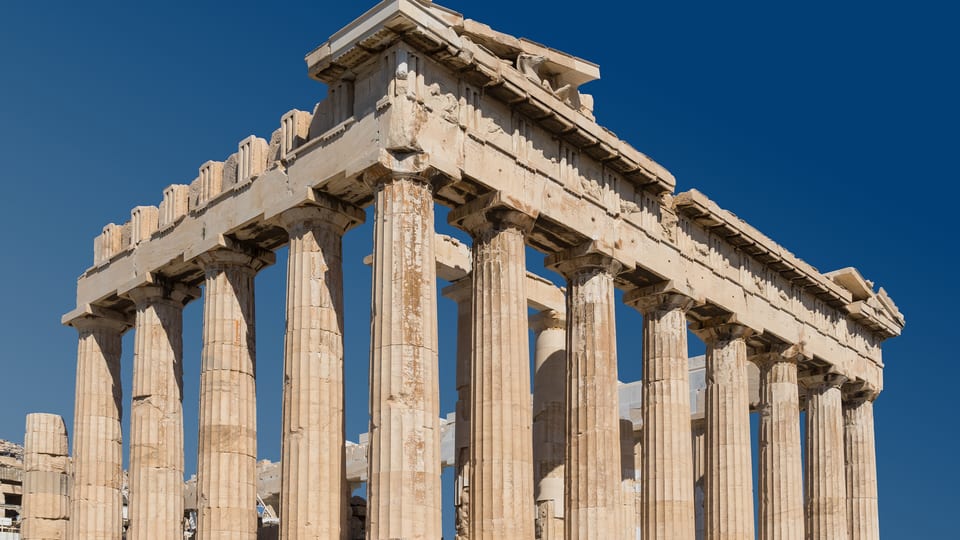
Acropolis and Parthenon
The Parthenon, Propylaea, Erechtheion and Temple of Athena Nike were all built between 447 and 406 BC under Pericles’ building programme, and UNESCO inscribed the Acropolis in 1987 as the greatest architectural ensemble bequeathed by Greek antiquity.
Best for: Visitors wanting the monuments on the hill before the museum that holds their sculptures · Area: Acropolis Hill, above Plaka
Plan for The hill’s marble paths are steep, slippery when wet and shadeless, so mid-afternoon in summer heat is the hardest time to climb them.
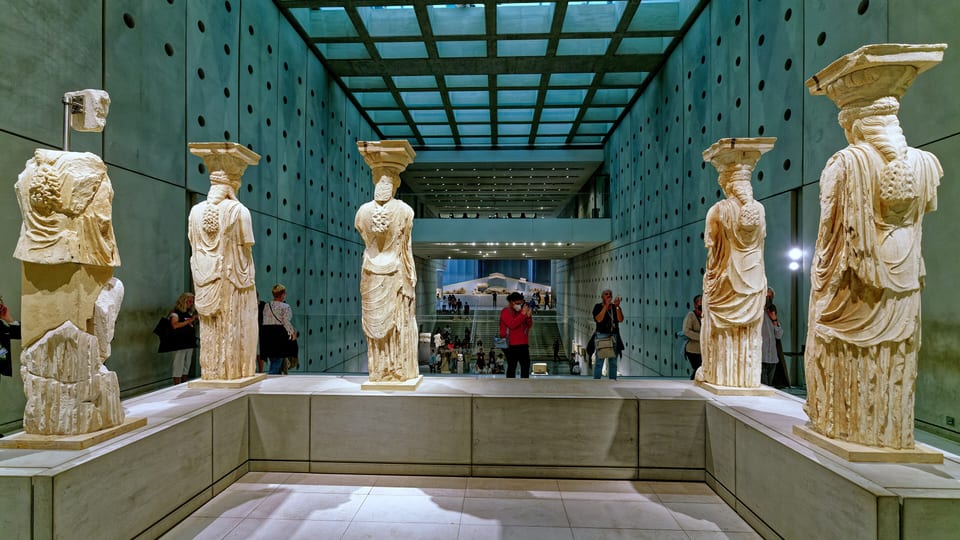
Acropolis Museum
Opened on 20 June 2009 to a Bernard Tschumi design 300 metres from the monuments, the museum displays more than 4,250 objects across 14,000 square metres and recorded 2,000,312 visitors in 2024.
Best for: Visitors wanting the original sculptures explained up close after seeing the hill itself · Area: Makrygianni, at the foot of the Acropolis
Plan for The top-floor Parthenon Gallery is the museum’s busiest section, so a visit timed right after the Acropolis itself often means the heaviest crowds of the day.
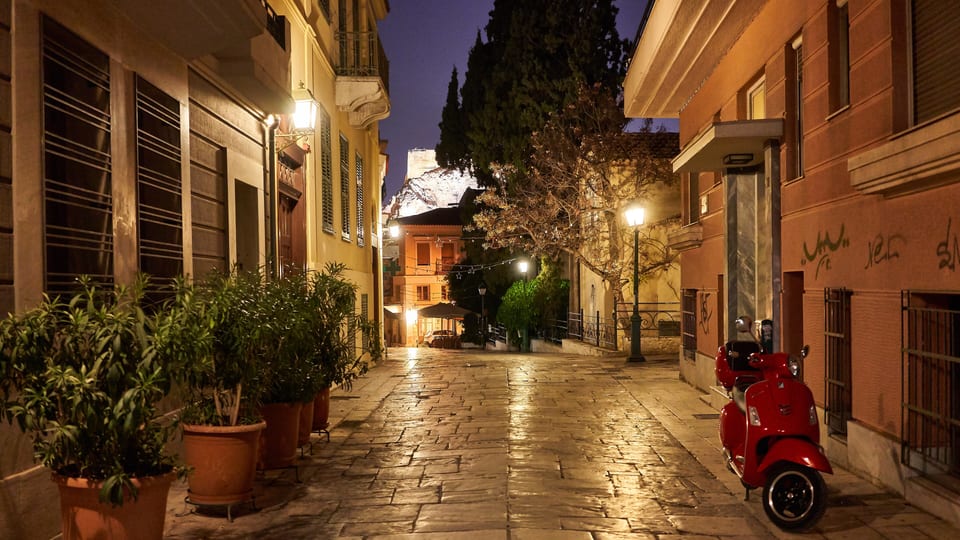
Plaka and Anafiotika
Plaka’s lanes hug the base of the Acropolis and include the Benizelos Mansion, the oldest surviving house in Athens, and Anafiotika, a whitewashed quarter built by workers from the island of Anafi that still resembles a Cycladic village.
Best for: Visitors wanting a walkable historic neighbourhood rather than another museum · Area: Between the Acropolis and Syntagma
Plan for Plaka is Athens’ most visited neighbourhood, so its main lanes carry the heaviest visitor crowds in the city.
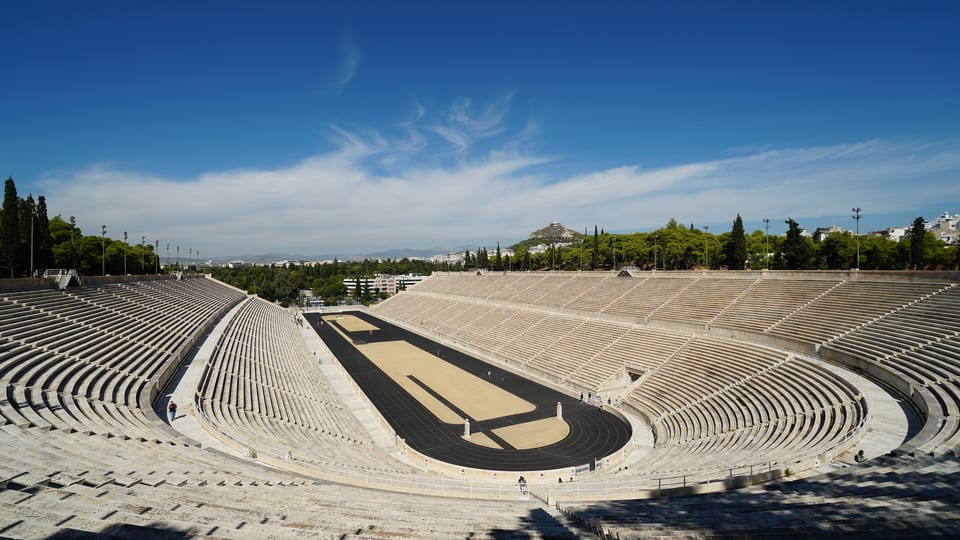
Panathenaic Stadium
First used in 330 BC and rebuilt entirely in marble for the first modern Olympic Games in 1896, funded by George Averoff and designed by Anastasios Metaxas and Ernst Ziller, it remains the only stadium in the world built completely of marble.
Best for: Visitors interested in the Olympic revival and ancient athletics · Area: Pangrati, south-east of the National Garden
Plan for The stadium is a single-monument visit lasting under an hour, so it pairs better with a nearby neighbourhood than with a full day on its own.
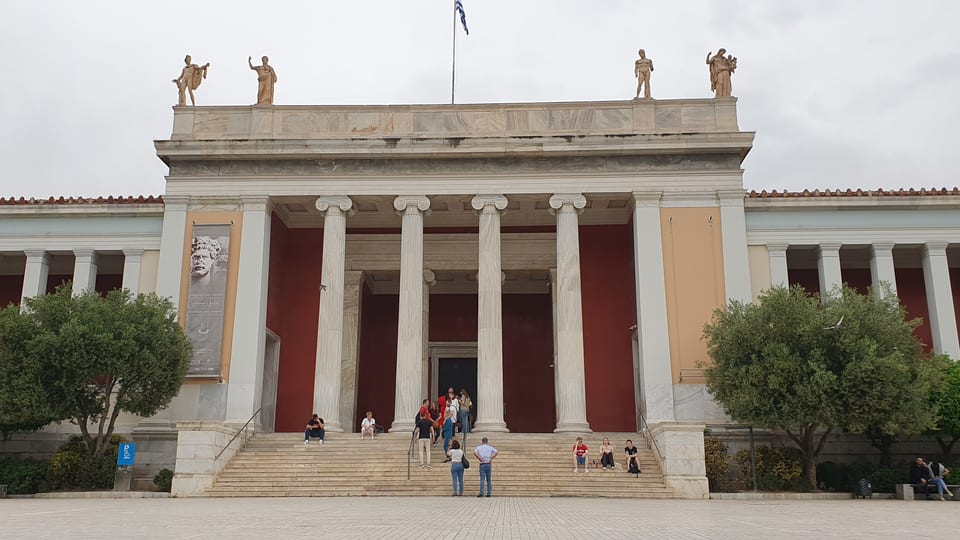
National Archaeological Museum
Built in 1866–89 and extended in 1925–39, it is Greece’s largest museum, showing more than 11,000 items on permanent display including the so-called Mask of Agamemnon and frescoes from Akrotiri on Santorini.
Best for: History-focused visitors wanting artefacts from across Greece, not only Athens · Area: Exarcheia, north of Omonia
Plan for It sits apart from the Acropolis-Plaka core, so reaching it needs a deliberate metro or tram trip rather than a stop on a walking route.
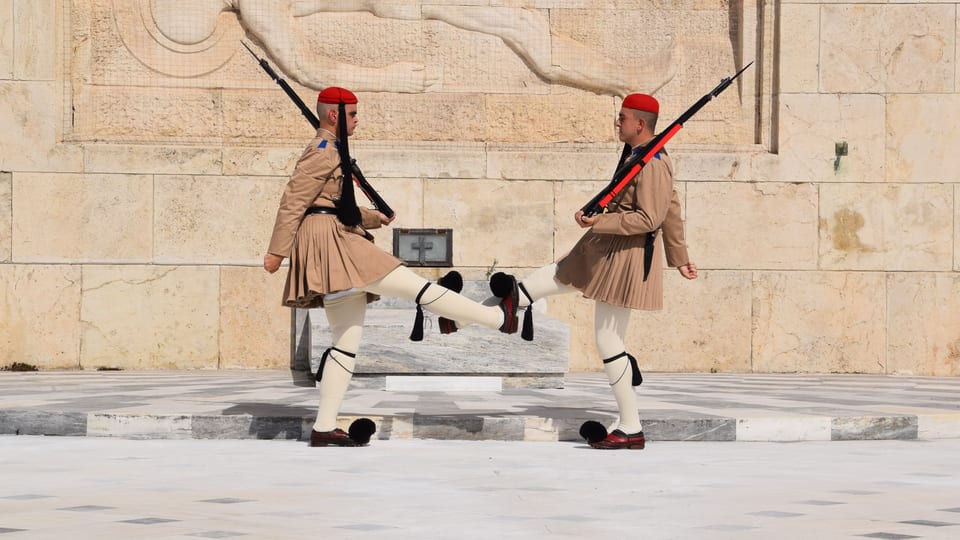
Syntagma Square and the changing of the Evzones guard
The Presidential Guard’s Evzones change on the hour in front of the Tomb of the Unknown Soldier outside the Hellenic Parliament, with an expanded Sunday ceremony; Syntagma Square itself is where Athenians rose up against King Otto in 1843 to demand a constitution.
Best for: Visitors wanting a short, free ceremonial tradition between other stops · Area: Syntagma, in front of the Hellenic Parliament
Plan for The hourly changing is brief and the square gets crowded around it; the fuller Sunday ceremony draws the largest crowds of the week.
See Syntagma Square and the changing of the Evzones guard tours
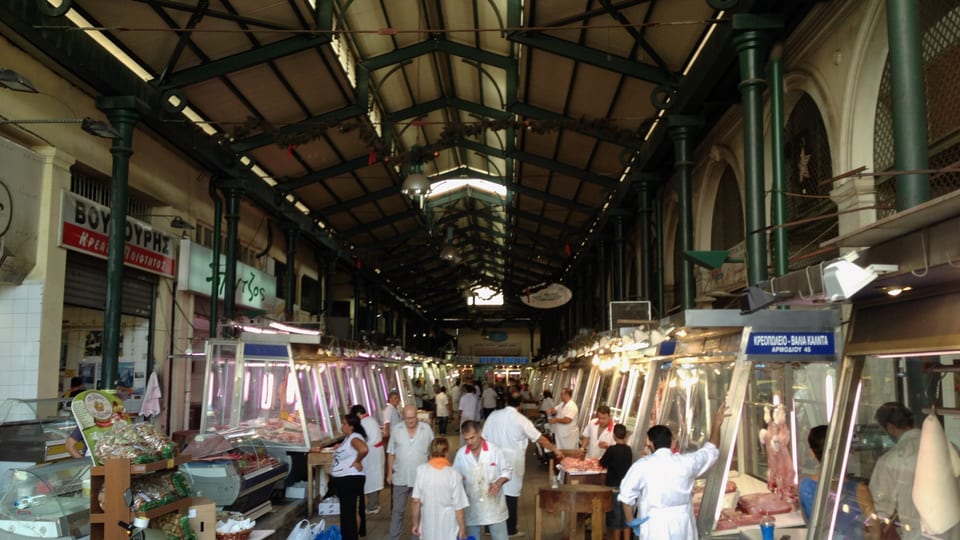
Varvakios Central Market
Inaugurated in 1884 after a fire destroyed its predecessor, the covered market on Athinas Street houses one of Europe’s largest fresh fish markets alongside meat, fruit-and-vegetable and cheese traders, restocked with several tons of fresh fish each day.
Best for: Food-focused travellers wanting a working market rather than a tourist-facing food hall · Area: Athinas Street, between Monastiraki and Omonia
Plan for The market trades a full working week rather than a tourist weekend rhythm, and the fish hall’s busiest hours are early morning rather than a typical mid-morning visit.
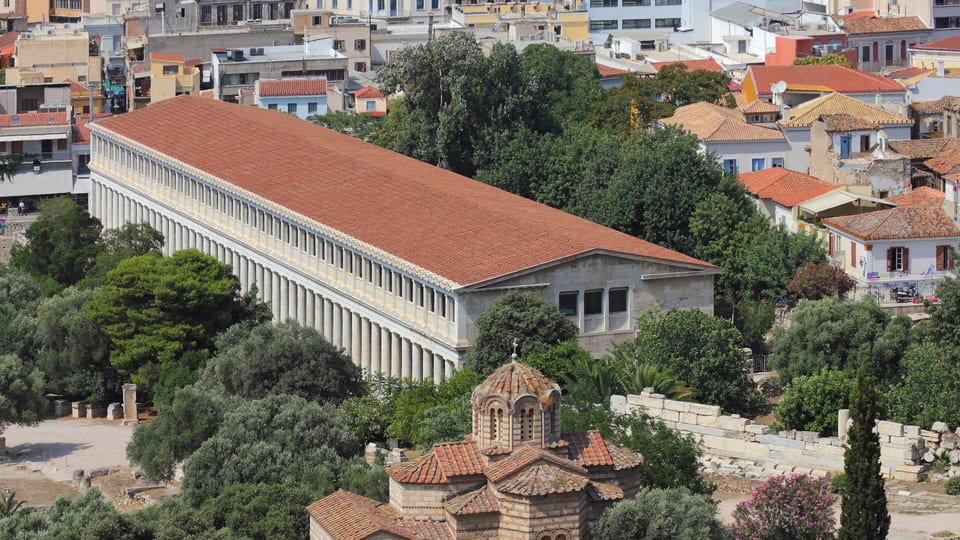
Ancient Agora and the Stoa of Attalos
Bounded by the Acropolis, the Areopagus and the Agoraios Kolonos hills, the square held the Bouleuterion where laws were drafted and the Tholos where the executive sat. The reconstructed 2nd-century BC Stoa of Attalos now serves as the site museum beside the 5th-century BC Temple of Hephaestus.
Best for: Visitors wanting the institutions behind the Acropolis’s monuments, not only the monuments themselves · Area: Between Monastiraki and Thiseio, on the Acropolis’s northwest slope
Plan for The Temple of Hephaestus and the Stoa of Attalos sit at opposite ends of a large open site, so a brief stop usually favours one end over the other.
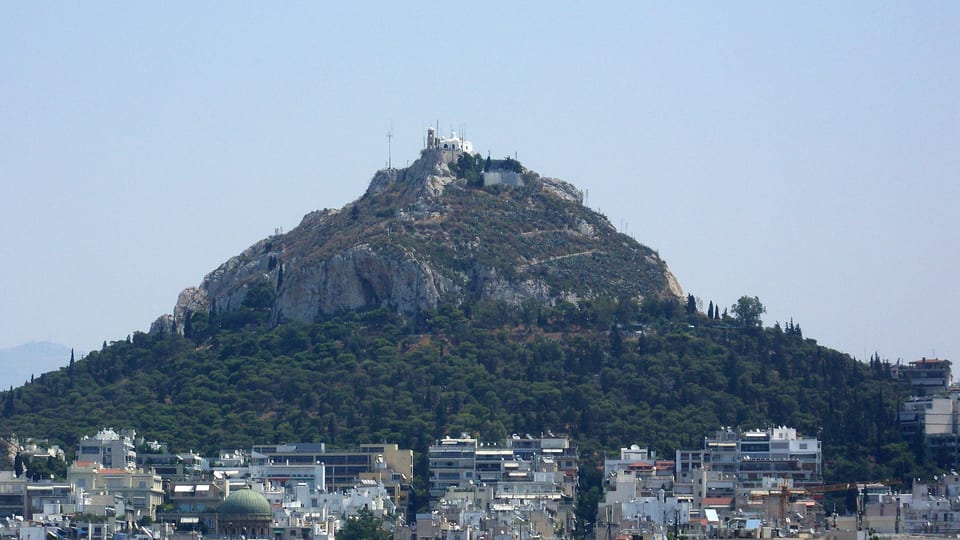
Lycabettus Hill
At 277 metres, Lycabettus is the highest point in central Athens, and its funicular, running through a 210-metre tunnel since 1965, reaches the summit chapel of Agios Georgios in about three minutes from Kolonaki.
Best for: Visitors wanting one orientation view over the Acropolis, the city grid and the sea rather than another ground-level site · Area: Kolonaki, at the funicular’s Aristippou Street terminus
Plan for Each funicular carriage carries only 34 passengers, and queues can build in the hour before sunset when most visitors aim for the view; the marked path up on foot avoids that wait but takes considerably longer.
Plan one, three or five days in Athens
One day: the Acropolis, the Ancient Agora and Plaka only
Spend the whole day on the rock and its immediate surroundings. Book the Acropolis for an opening-hour slot, walk down into the Ancient Agora with its own ticket, then finish in Plaka once the afternoon heat eases. Leave the Acropolis Museum and every other district for a later day.
The Ministry of Culture's own booking platform requires a declared entry slot for the Acropolis rather than open walk-up entry, and the Ancient Agora is a separate ticket for a separate site, so this pairing means two bookings. Changes to a booked slot are allowed up to two hours beforehand, twice, though the ticket itself is non-refundable.
The trade-off The Acropolis Museum sits only a few minutes' walk from the hill but is an entirely separate ticket on a separate platform; folding it into the same day usually means rushing its top-floor Parthenon Gallery just as the museum's own afternoon crowds build.
Three days: add the Acropolis Museum, Syntagma and a Kolonaki or Koukaki day
Give the Acropolis Museum its own morning on day two, ahead of a Syntagma and changing-of-the-guard visit; the museum's own busiest hours build in the afternoon, right after the Acropolis itself closes for the day. Use day three for whichever neighbourhood matches the trip's pace, Kolonaki's cafés or Koukaki's quieter streets.
The Acropolis Museum sells general admission through its own separate e-ticketing platform, not the Ministry of Culture's site ticket, so plan two tickets, not one. The National Archaeological Museum can replace the Kolonaki or Koukaki afternoon on day three for a history-focused trip instead.
The trade-off Resist a fourth subject on day three: Kolonaki, Koukaki and the National Archaeological Museum each take the whole afternoon, and splitting it between two of them leaves both half-seen.
Five days: add Lycabettus, Piraeus or a Cape Sounion day trip
Use day four for Lycabettus Hill's funicular and a Varvakios Market morning, then choose one shape for day five: a half-day Piraeus-and-Aegina Saronic crossing, or a Cape Sounion sunset drive along the coast. Pick one, not both; they use the day differently.
The Lycabettus funicular runs a three-minute climb from Kolonaki to the summit chapel, while a Saronic ferry to Aegina takes roughly an hour ten minutes each way from Piraeus, itself a direct Metro Line 1 ride with no transfer from central Athens. Cape Sounion's Temple of Poseidon stays open until sunset, which is the point of visiting it that late in the day.
The trade-off Resist adding Delphi or Meteora to a five-day trip: Delphi alone needs a full day and Meteora needs either a guided day of about 12 to 14 hours or an overnight stay, so either would consume the whole margin a five-day trip has left.
Costed plans: One Day in Athens: €80 or Less? → · Athens in 3 Days for €190? →
Sources
checked 2026-09-12. Recommendations are editorial judgements based on the cited sources below.
- Hellenic Heritage (hh.gr): ticket-booking platform, tickets.hh.gr
- Hellenic Heritage (hh.gr): Ancient Agora of Athens
- Acropolis Museum: Plan Your Visit
- This is Athens: Kolonaki Neighbourhood Guide
- Lycabettus Hill: cable car operator site
- Saronic Ferries: Aegina route page
- Hellenic Heritage (hh.gr): Sounion
Choose an Athens base and explore nearby
Plaka or Koukaki: which base keeps the Acropolis closest?
Choose Plaka when being inside the old town after dark, with its lanes and tavernas outside the door, matters more than a quiet night. Choose Koukaki when a quieter, more residential five-minute walk to the Acropolis Museum matters more than sleeping inside Plaka's own streets.
Both sit within walking distance of the Acropolis itself, so the choice is really about evening character rather than morning access. Plaka's lanes stay busy with tavernas and visitors after dark, while Koukaki keeps a quieter residential street life.
The trade-off Neither base helps with an early Piraeus ferry departure; a traveller with a pre-dawn crossing should treat Plaka or Koukaki as the sightseeing base and accept a taxi or metro transfer on departure morning rather than moving hotels.
Kolonaki or Monastiraki: café pace or flea-market nightlife?
Choose Kolonaki when café terraces, shopping streets and the Lycabettus funicular matter more than being inside the historic core. Choose Monastiraki when the flea market and a livelier, later evening scene matter more than a quiet night.
Kolonaki keeps a slower residential rhythm even at night, while Monastiraki's square stays busy well after the shops close, with bars and small restaurants filling in around it.
The trade-off Monastiraki's Line 1 connection makes it the more convenient base for a Piraeus ferry morning; Kolonaki has no such direct line and needs a change at Syntagma or Monastiraki first.
Should Piraeus ever be the base instead of central Athens?
Base in central Athens even on a trip that includes a Saronic Gulf island day; treat Piraeus as a one-night stop only immediately before an early departure or an overnight ferry, not as a multi-night sightseeing base.
This is Athens describes Piraeus as having grown into one of the largest passenger ports in the world, but its own sights sit apart from the Acropolis, Plaka and every other district in this guide. Metro Line 1 already reaches it from central Athens with no transfer, so a separate overnight base buys little beyond avoiding one early ride.
The trade-off Sleeping in Piraeus saves a pre-dawn metro ride on departure morning, but costs a taxi or metro trip back into central Athens for every other evening of the stay.
Sources
checked 2026-09-12. Recommendations are editorial judgements based on the cited sources below.
Airport and getting around
Athens International Airport (ATH), which handled a record 33.99 million passengers in 2025, up 6.7% year-on-year, is the city’s main international gateway. Metro Line 3 reaches Syntagma in roughly 45 minutes, a suburban-rail alternative reaches Larissis Station in a similar time, and an X95 express bus and a flat-rate metered taxi are further options.
OASA’s metro, tram and bus network, including three metro lines, covers Plaka, Monastiraki, Kolonaki, Koukaki and every district in this guide. Monastiraki and Syntagma both sit on multiple lines, making them the network’s main transfer points.
Best time to visit
Spring (March–May)
Mild, warming conditions with generally shorter queues at the Acropolis than summer, though cool snaps remain possible into April.
- Crowds
- Varies by event and attraction
Notable events
- Orthodox Easter holidays, on dates that change each year, when museums and sites close or keep limited hours
Summer (June–August)
Hot and dry, with average highs near 33°C in July and August, bringing the year’s heaviest visitor numbers to the Acropolis; early starts and weekday visits help manage both heat and crowds.
- Crowds
- Varies by event and attraction
Notable events
- The Assumption holiday on 15 August, when museums and sites close or keep limited hours
Autumn (September–November)
Early autumn keeps much of summer’s mild weather with fewer crowds, before cooler, wetter conditions typically arrive in November.
- Crowds
- Varies by event and attraction
Notable events
- Oxi Day national holiday on 28 October
- The Athens Marathon. The Authentic, finishing at the Panathenaic Stadium on 8 November in 2026
Winter (December–February)
Athens’ coldest and wettest stretch, with daytime highs generally 10–14°C, suiting museums and covered markets more than long outdoor walks.
- Crowds
- Low
Food, markets and local life
Varvakios Central Market on Athinas Street, inaugurated in 1884, still trades fish, meat, fruit and vegetables six days a week, and the streets around it hold the city’s spice and cheese shops; go in the morning, when the fish hall is working.
Evenings divide by district: Plaka’s tavernas are set for visitors and close early, Psyrri’s bars and mezedopoleia behind Monastiraki run late, and Koukaki’s tables are where the neighbourhood eats. Choose the district before the dish.
City profile
- Population (Municipality of Athens (Dimos Athinaion), 2021 Population-Housing Census, Hellenic Statistical Authority (ELSTAT), reference date 22 October 2021, 2021): 643,452
Athens has been continuously inhabited for at least 5,000 years, with the oldest known human presence at the Cave of Schist dated to between the 11th and 7th millennia BC.
Athens replaced Nafplio as the capital of the newly independent Greek state in 1834, after the war of independence had reduced the city to only a few thousand residents; it was rebuilt from that low point into the modern capital.
Famous for:
- The Acropolis and its Parthenon, built between 447 and 432 BC under the statesman Pericles and inscribed by UNESCO in 1987.
- The Panathenaic Stadium, the world’s only stadium built entirely of marble, rebuilt for the first modern Olympic Games in 1896.
- The National Archaeological Museum, Greece’s largest museum, holding more than 11,000 items on permanent display from the Neolithic period to the Hellenistic age.
What makes an Athens visit worthwhile
The Parthenon, the Erechtheion’s Caryatid porch and the Propylaea gateway were each built between 447 and 406 BC under Pericles’ building programme, and the Acropolis Museum, opened in 2009 a few hundred metres away, displays more than 4,250 of the original objects at eye level. Hill first, museum after, and the top-floor sculptures match the buildings you just passed; rushed into one hour, they are two queues.
Plaka’s neoclassical lanes, the Panathenaic Stadium’s marble seating and the Varvakios Central Market’s working stalls show three different sides of Athens. Tourist-facing old town, Olympic-revival heritage and a working city market that still trades six days a week: no single neighbourhood covers all three.
Athens is not a beach stop or a one-night layover: the Acropolis and its museum fill a full day, Plaka or a first neighbourhood a further half-day, and the sea means a ferry or a coast road, not a walk from the hotel.
- Plan by area
- Acropolis & Plaka · Museums & Syntagma · Neighbourhoods · Day trip
- Good first stay
- 4–5 days for the Acropolis, museums and Plaka
- Climate constraint
- Hot dry summers · Mild wet winters, Mediterranean climate
- Main airport
- ATH · Metro Line 3 to Syntagma in about 45 minutes
Watch Athens
First Time in Athens: From the Acropolis to the Streets
Explore how the Acropolis, its museum, the Ancient Agora, Plaka and modern Athens fit together. Mubboo’s animated guide helps first-time visitors decide what to see in one day, where to slow down and when a second day makes sense.

Planning your Athens visit: FAQs
Can I see the Acropolis and the Acropolis Museum in one day?
They can share a day if the Acropolis slot is the first of the morning and the museum follows before its afternoon crowds; on an arrival day that order usually collapses into a rushed Parthenon Gallery, so give the museum the next morning instead.
Which area should I stay in for a first visit?
Plaka or Koukaki on a first visit: both are a walk to the Acropolis entrance, Plaka from the north and Koukaki from the south by the museum. Kolonaki is for a café-led return visit and Monastiraki for nightlife with Metro Line 1 to the port outside the door.
When is Athens least crowded?
March to May and October to November are the months when the Acropolis slots are easiest to book and the climb is not made in 35-degree heat; the timed-entry system spreads the summer crowd but does not shrink it.
How much time does the Acropolis Museum really need?
A focused visit takes roughly an hour and a half to two hours; travellers wanting to read every panel in the top-floor Parthenon Gallery should allow longer.
Should I visit the Ancient Agora on the same day as the Acropolis?
The Agora needs a ticket of its own, separate from the Acropolis, so pairing the two on one day means two bookings. The Temple of Hephaestus and the Stoa of Attalos sit at opposite ends of a large site, though, so a rushed visit usually favours one end over the other.
Is Piraeus worth a visit beyond the ferry terminal?
Piraeus reaches central Athens directly on Metro Line 1 with no transfer, but its own sights are thin next to a full day in Athens itself or on an island. It suits an overnight stop before an early ferry more than a planned sightseeing day.
Make your Athens plans
Compare tours, tickets and activities in Athens →
Choose your departure market and search flights to Athens from the Mubboo Flights homepage.
Compare flights ↗Sources
Latest source check: .
Show all 27 sources
- Hellenic Statistical Authority (ELSTAT) — 2021 Population-Housing Census results (checked 2026-09-12)
- UNESCO World Heritage Centre — Acropolis, Athens (checked 2026-09-12)
- Acropolis Museum — Museum History (checked 2026-09-12)
- National Archaeological Museum — Collections (checked 2026-09-12)
- Panathenaic Stadium (checked 2026-09-12)
- This is Athens (Athens tourism guide) — Plaka Neighbourhood Guide (checked 2026-09-12)
- This is Athens — A Local’s Guide to Koukaki (checked 2026-09-12)
- This is Athens — Kolonaki Neighbourhood Guide (checked 2026-09-12)
- This is Athens — Monastiraki & Psirri Neighbourhood Guide (checked 2026-09-12)
- This is Athens — Athens Central Food Market (checked 2026-09-12)
- Athens International Airport — December 2025 passenger traffic statistics (checked 2026-09-12)
- This is Athens — Airport Transportation (Metro, Bus, Taxi) (checked 2026-09-12)
- OASA (Athens Urban Transport Organisation) — Metro Line 3 to Airport (checked 2026-09-12)
- Hellenic Heritage / ODAP — ticket store, Acropolis of Athens single-site ticket (checked 2026-09-19)
- The booking platform — Athens destination mapping d496 (checked 2026-09-19)
- Wikipedia — Athens (used only as a documented fallback for the municipality-level 2021 census figure, since ELSTAT’s own per-municipality dataset is an interactive tool rather than a simple readable page) (checked 2026-09-12)
- Hellenic Heritage (hh.gr) — Ministry of Culture destination page, Ancient Agora of Athens (checked 2026-09-19)
- Hellenic Heritage (hh.gr) — Ministry of Culture destination page, Acropolis of Athens (checked 2026-09-19)
- Hellenic Heritage / ODAP — live ticket-booking platform (tickets.hh.gr) (checked 2026-09-19)
- Hellenic Heritage (hh.gr) — Ministry of Culture destination page, Sounion (checked 2026-09-12)
- Lycabettus Hill — cable car operator site (checked 2026-09-12)
- Acropolis Museum — Plan Your Visit (opening hours and tickets) (checked 2026-09-12)
- This is Athens — Piraeus Neighbourhood Guide (checked 2026-09-12)
- Saronic Ferries — Aegina route page (checked 2026-09-12)
- This is Athens, Holidays and Opening Hours (checked 2026-09-17)
- Athens Marathon. The Authentic, Marathon Race (checked 2026-09-17)
- The booking platform — Meteora destination mapping d28822 (checked 2026-09-19)
Photo credits
- acropolis — Jebulon · CC0.
- acropolis museum — Holger Uwe Schmitt · CC BY-SA 4.0.
- plaka — George E. Koronaios · CC BY-SA 4.0.
- stadium — George E. Koronaios · CC0.
- namuseum — Yair-haklai · CC BY-SA 4.0.
- syntagma — Luc.T · CC BY 2.0.
- market — athenswalk · CC0.
- agora — A.Savin · CC BY-SA 3.0.
- lycabettus — Eusebius · CC BY 3.0.
Mubboo Editorial Team · Reviewed by Mubboo Editorial Team


