
Amalfi Coast travel guide
Amalfi Coast
The Amalfi Coast is a string of towns on the steep southern shore of the Sorrento Peninsula, joined by one 40km road from Vietri sul Mare to Positano. UNESCO has listed it as the Costiera Amalfitana since 1997. Positano, Amalfi and Ravello draw most visitors, with Praiano, Furore, Atrani and Cetara between and beyond them.
For a first visit, three days cover Positano, Amalfi’s cathedral and paper mill, and the villas of Ravello, but leave no spare day for bad weather. Walkers and island lovers need four or five days for the Path of the Gods and a boat day to Capri. Sorrento, over the ridge on the Bay of Naples, is a common base but not part of the coast itself.

Find your Amalfi Coast experience
Explore Amalfi Coast Before You Book
Take a virtual drive or walk, then find tours and tickets for the places you like.

Activities
Featured activities in Amalfi Coast


Prices at a glance
What we sell today and what recent flight searches found. No hotel prices; nothing here is a trip total.
- Tours and tickets in Amalfi Coastfrom US$102
Live from Viator when this page loaded · per adult · changes by date.
Top experiences
Top experiences in Amalfi Coast
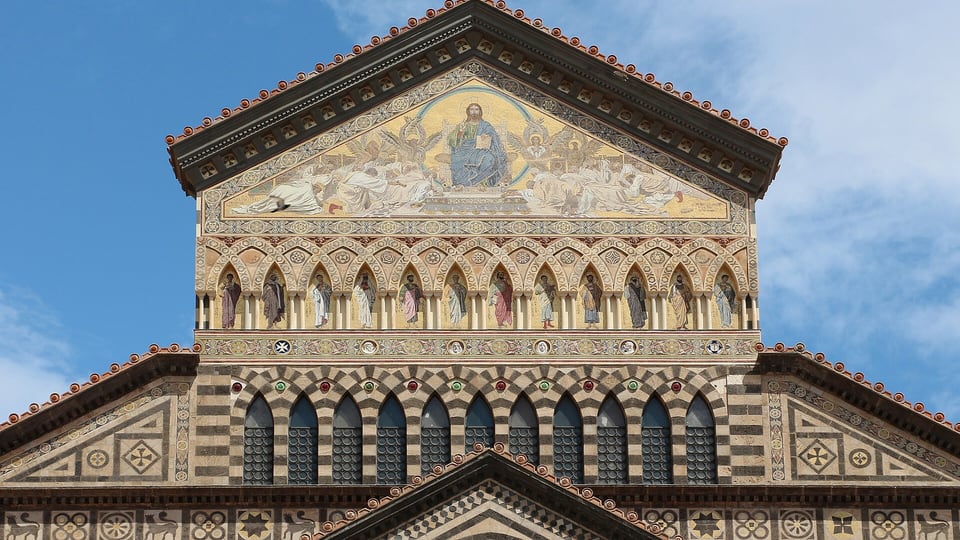
Amalfi Cathedral of Sant’Andrea
Sixty-two wide, steep steps climb from Piazza Duomo to the cathedral doors. The bronze doors were cast in Constantinople before 1066 and signed by Simeon of Syria, the earliest post-Roman bronze doors in Italy. The relics of Saint Andrew were brought from Constantinople after the Fourth Crusade, and a stair from the nave leads down to the crypt that holds them.
Best for: Seeing the coast’s medieval wealth in one building, on a first morning in Amalfi · Area: Piazza Duomo, Amalfi
Plan for The striped façade looks medieval but is largely 19th-century: part of the old front collapsed in 1861, and Errico Alvino’s rebuilding was finished in 1891. The steps are a real obstacle for anyone with limited mobility, and it is a working church, so dress modestly.
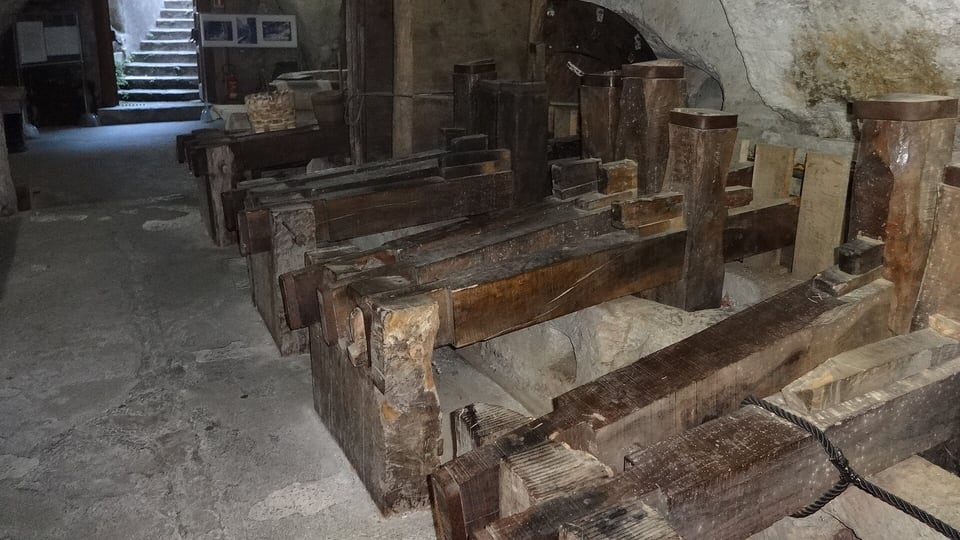
The Paper Museum and the Valley of the Mills
Amalfi made bambagina, a paper of linen, cotton and hemp rags, from at least the 13th century, even after Emperor Frederick II banned it in 1220 as less durable than parchment. By the 18th century some 20 mills worked in and around the town. The museum, set up in 1969 in a medieval mill, still makes sheets by hand.
Best for: A hands-on hour on the craft that financed the town, away from the harbor crowds · Area: Upper Amalfi, at the start of the path into the Valle delle Ferriere
Plan for It sits at the top of the town, so it is a steady uphill walk from the cathedral square. The visit is short, and it pairs well with a walk further up the valley on a cooler day.
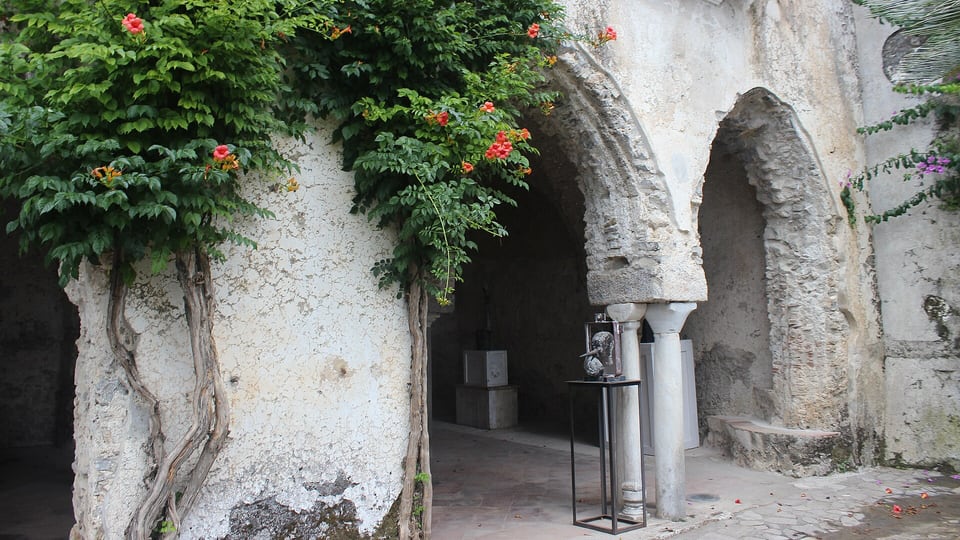
Villa Rufolo and the Ravello Festival
The Rufolo family, merchants named in Boccaccio’s Decameron, built the villa in the 13th century. Francis Nevile Reid restored it in the mid-1800s. Wagner visited in 1880 and saw its garden as Klingsor’s magic garden in the second act of Parsifal, and the belvedere now carries the main stage of the Ravello Festival.
Best for: Gardens, towers and a summer concert above the sea · Area: Piazza Duomo, Ravello
Plan for Ravello sits on the hill above Amalfi with no beach, so it is a separate half day by bus from Amalfi. The festival runs mainly from July to September.
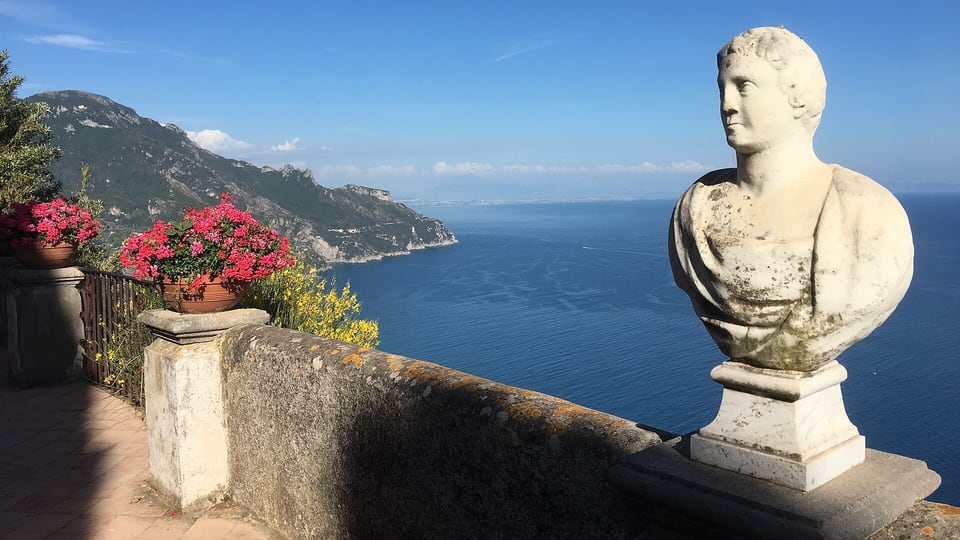
Villa Cimbrone and the Terrace of Infinity
Ernest William Beckett, later Lord Grimthorpe, bought Villa Cimbrone in 1904 and rebuilt it with borrowed Gothic, Moorish and Venetian details. At the end of its gardens, the Terrazza dell’Infinito, a balcony lined with marble busts, looks down the coast; guests included Virginia Woolf, John Maynard Keynes and Greta Garbo.
Best for: The widest view on the coast, reached on foot from Ravello’s square · Area: Southern tip of the Ravello ridge
Plan for The villa itself is a hotel. Its gardens and terrace are open to visitors, but the rooms are not.
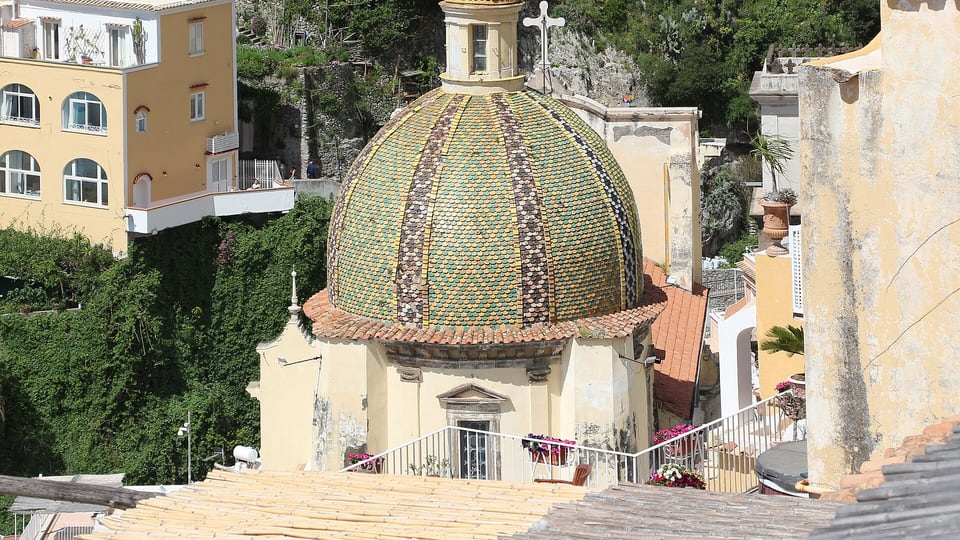
Positano: the dome, the stairs and Spiaggia Grande
Positano climbs the limestone slopes of the Lattari Mountains in a web of stairways. At its foot, the church of Santa Maria Assunta has a majolica-tiled dome and a 13th-century Byzantine icon of a Black Madonna. Beneath it, MAR Positano, opened in 2018, shows a frescoed room of a Roman villa, the only such painting found on the coast.
Best for: The coast’s best-known view, a beach afternoon and an evening stroll · Area: Positano, the western end of the coast
Plan for Almost every route here is a staircase, which makes it the hardest town on the coast for anyone with limited mobility. Local legend says pirates heard a voice cry “Posa, posa” and landed the icon here; treat that as legend. Locals describe short-stay visitors rushing through its lanes in season.
See Positano: the dome, the stairs and Spiaggia Grande tours
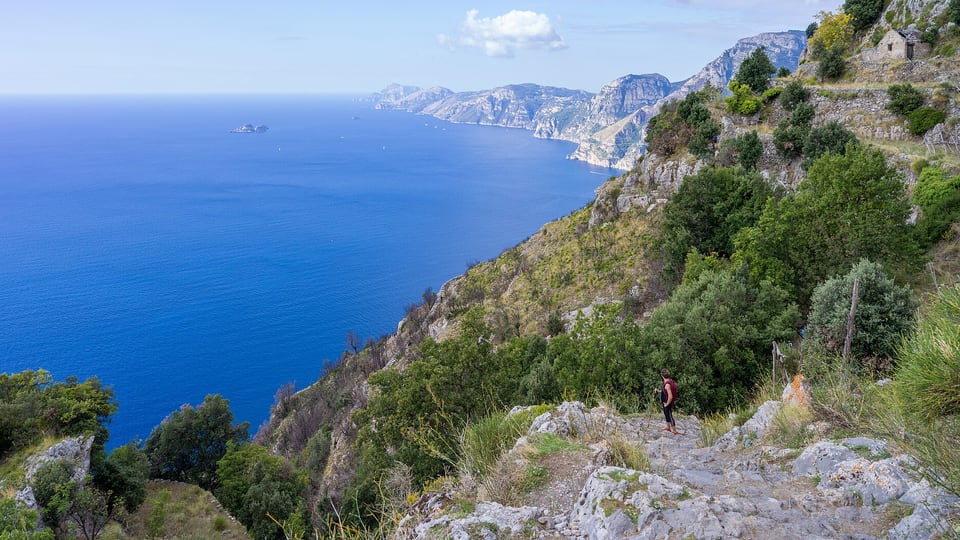
The Path of the Gods (Sentiero degli Dei)
The trail runs about 9km from Bomerano, a village of Agerola, to Nocelle above Positano. It is mostly downhill, losing about 590 meters, and the Touring Club Italiano grades it easy walking (type E) of around six hours with stops. From Nocelle, about 1,700 steps drop to Arienzo in Positano, or a bus saves the descent.
Best for: Fit walkers who want the coast from above rather than from the road · Area: Bomerano (Agerola) to Nocelle (Positano), high above Praiano
Plan for Some sections are narrow, crumbly or slippery, especially at the valley heads, and the Touring Club warns of recent landslides. Wear proper boots, stay on the main path at forks, and check that your insurance covers hiking, as the FCDO advises.
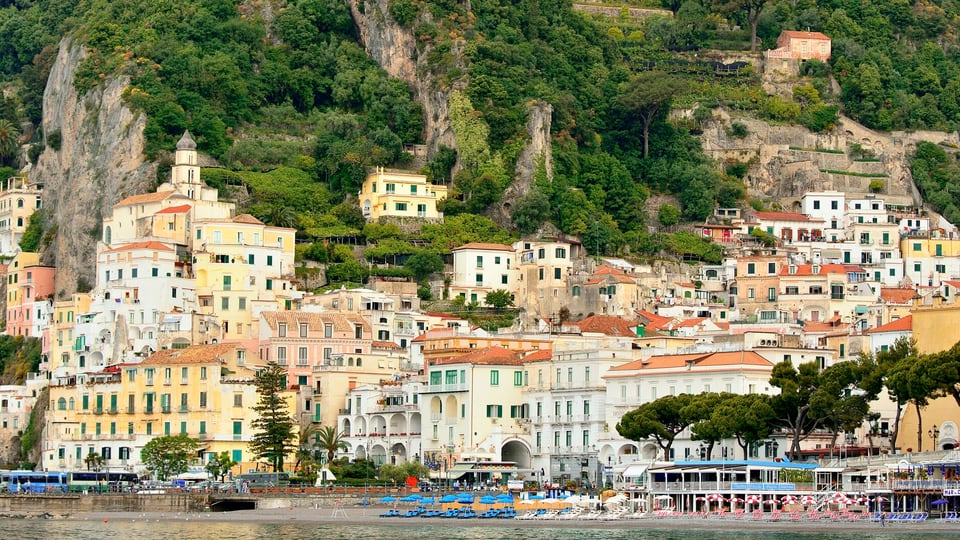
The coast by boat
From the water you see how the towns fit into their ravines, and you avoid the road altogether. Public ferries link Positano and Amalfi in 10 to 35 minutes. Small-group and private boats run from Amalfi and Positano with swimming stops in coves the road never reaches.
Best for: A day on the water that doubles as transport between towns · Area: Positano to Amalfi, and on toward Cetara
Plan for Boats depend on the sea: rough days cancel sailings and swimming stops. The FCDO advises following beach flags and taking care of undercurrents and hidden rocks when you swim from a boat or beach.
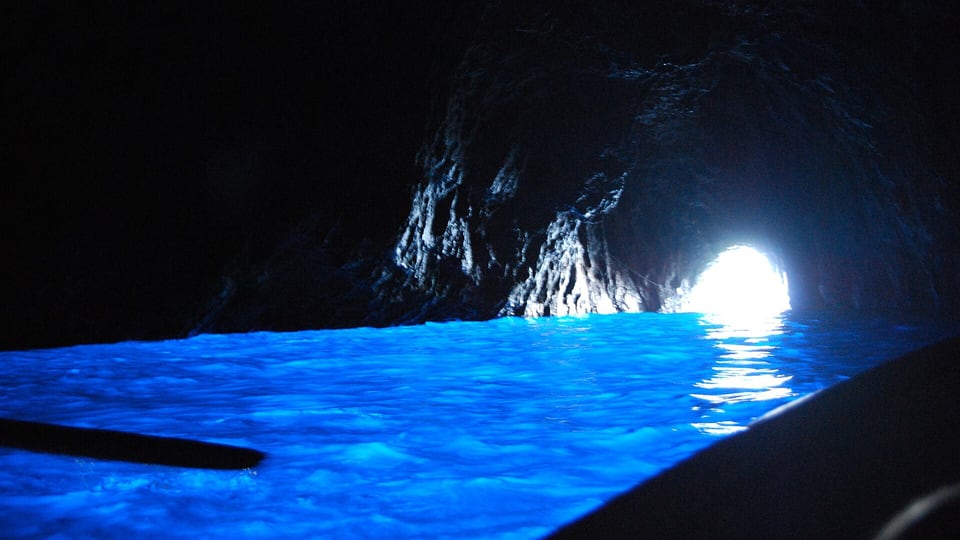
Capri and the Blue Grotto by boat
Ferries reach Capri from Positano in 21 to 65 minutes and from Amalfi in about 35. On the island, the Blue Grotto glows because sunlight enters through an opening below the water. Its entrance is only about 2 meters wide and about 1 meter high at low tide, so visitors lie flat in a four-person rowboat to pass through.
Best for: An island day that starts and ends on the coast · Area: Capri, west of Positano across open sea
Plan for The Ministry of Culture closes the grotto in adverse sea and weather, and from November to March it opens only until 14:00. The rowboat is ticketed separately from site entry, and swimming inside is forbidden.
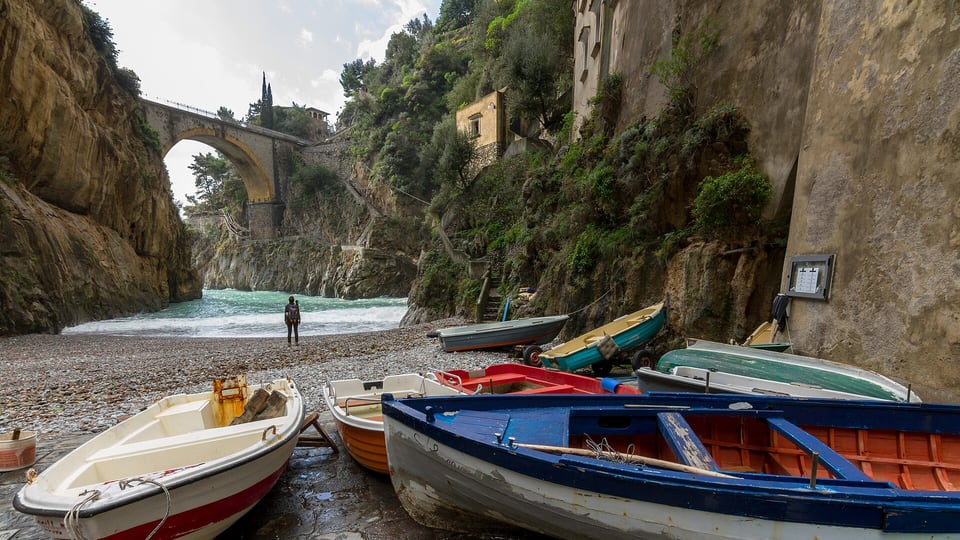
Praiano and the Furore fjord
Praiano lies between Positano and Amalfi, and its Vettica Maggiore quarter is part of the UNESCO area. Just east, the so-called fjord of Furore is really a ria cut by the Schiato torrent coming down from Agerola. The coast road crosses it on a bridge, and the hamlet of Fiordo di Furore sits at sea level below.
Best for: A quieter middle of the coast, with a swim in a gorge · Area: Between Positano and Amalfi, below Agerola
Plan for There is little room at the bottom of the gorge. Furore’s municipality climbs from sea level to Agerola at 550 meters, so there is no single village center to walk around.
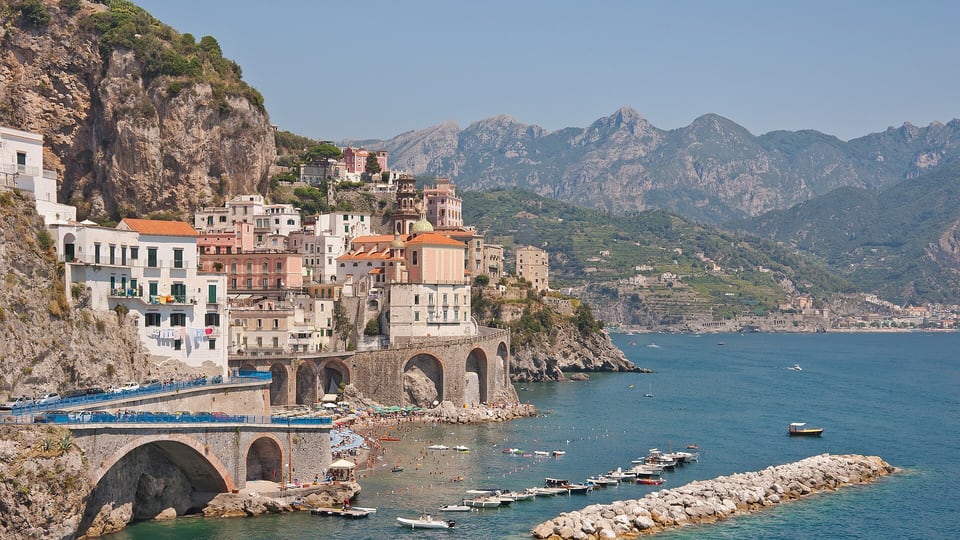
Atrani and Cetara
Atrani, a few minutes east of Amalfi, covers 12 hectares, the smallest municipality in Italy, and its square leads to the beach through an old passage. Further east lies Cetara, a fishing village. Its colatura di alici, an anchovy sauce aged under salt, became Campania’s first fishery product with protected origin in 2020.
Best for: Two small towns that still feel lived in, one for a walk and one for lunch · Area: East of Amalfi, toward Salerno
Plan for Neither has big sights; an unhurried walk, swim or lunch is the point. Cetara is at the eastern end, so from Positano it is a long ride by bus or boat.
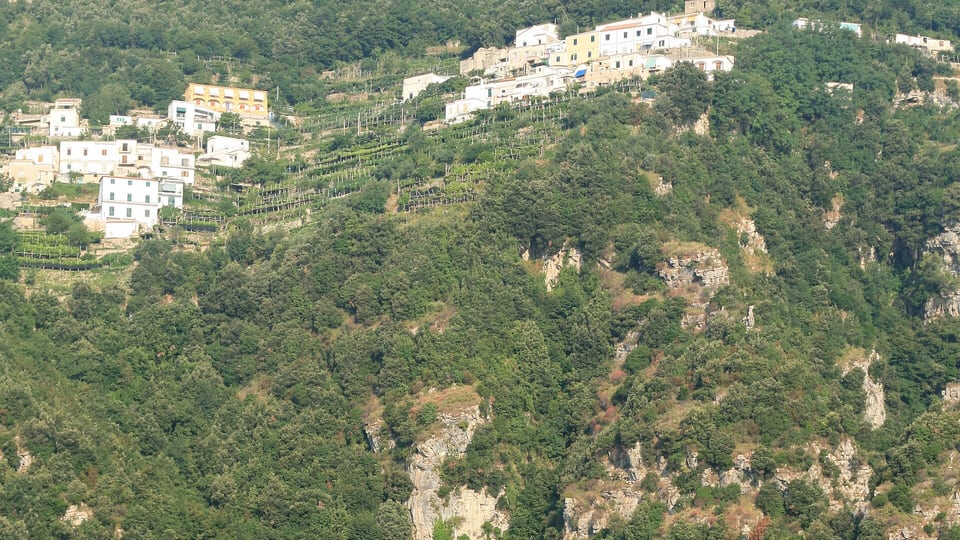
Lemon terraces and limoncello
The Sfusato Amalfitano is a tapered, thick-skinned lemon, protected since 2001 as Limone Costa d’Amalfi IGP across 12 coast municipalities. It grows on terraces under pergolas once covered with straw mats called pagliarelle, now mostly shade netting. The best fruit is picked between March and late July.
Best for: A farm visit or tasting that explains the terraces you see everywhere · Area: Terraced slopes above Amalfi, Minori, Maiori and the other IGP towns
Plan for Limoncello is made by soaking the zest in spirit and adding syrup, and its origin is disputed: one industry account credits a Capri family in the early 1900s, while others point to Sicily. The IGP protects the fruit, not every bottle sold in the shops.
Plan three, five or seven days on the Amalfi Coast
Three days: the three famous towns
Pick this length for one day each in Positano, Amalfi and Ravello.
Use ferries between Positano and Amalfi and the bus up to Ravello.
The trade-off The Path of the Gods and Capri both wait for another trip.
Five days: add the walk and the island
Pick this length once the Path of the Gods and a Capri boat day both matter.
Put the boat day early, so a rough sea still leaves time to rebook.
The trade-off Two active days back to back are tiring in summer heat.
A week: the smaller towns and slow days
Pick this length to add Atrani, Cetara, Furore and a food class.
Consider splitting the stay between the western and eastern ends.
The trade-off Changing hotels on a coast of stairs means carrying luggage twice.
Sources
checked 2026-09-27. Recommendations are editorial judgements based on the cited sources below.
Choose a base on the Amalfi Coast
Positano: the view, at the cost of stairs
Consider Positano if beaches, boats and the classic view come first.
Ferries link it with Amalfi and Capri, and the Path of the Gods ends above the town.
The trade-off Every errand involves steps, and July and August bring the heaviest crowds.
Amalfi or Atrani: the transport hub
Consider Amalfi if you want buses and ferries in every direction from your door.
Ravello, Positano, Agerola and Salerno are all a direct bus or boat away.
The trade-off The waterfront is busy with day visitors from late morning.
Ravello or Sorrento: calm evenings or big-town convenience
Consider Ravello for quiet gardens and concerts, or Sorrento for trains and more hotels.
Ravello sits above Amalfi; Sorrento is over the ridge on the Bay of Naples.
The trade-off Neither is on the sea at the coast’s level, so every beach day starts with a transfer.
Sources
checked 2026-09-27. Recommendations are editorial judgements based on the cited sources below.
Airports, buses and ferries
Most visitors fly into Naples (NAP). Curreri Viaggi runs about eight coaches a day from the terminal to Sorrento, and from Sorrento buses and ferries reach Positano.
Salerno Costa d’Amalfi (QSR) resumed scheduled flights in July 2024. A SITA Sud bus runs from it via Vietri and Maiori to Amalfi.
Along the coast, SITA Sud buses and ferries replace driving the narrow road; our FAQ explains its number-plate rule.
Best time to visit
Spring (April-May)
Highs reach about 20°C in April. The lemon harvest is under way, the Blue Grotto is back on its longer April-to-October hours, and number-plate limits on the road apply only around Easter and the 25 April to 1 May holidays.
- Crowds
- Varies by event and attraction
Summer (June-August)
Highs average about 31°C in July and August and rain is rare. The Ravello Festival fills the season, the road is at its busiest, and from August the number-plate limits apply every day.
- Crowds
- Varies by event and attraction
Autumn (September-October)
Highs are still about 24°C in October. Plate limits run daily through September and only at weekends and holidays in October, and rain increases toward November.
- Crowds
- Varies by event and attraction
Winter (November-March)
November is the wettest month and January highs are about 13°C. The Blue Grotto opens only until 14:00, and heavy rain can bring rockfalls onto the road, as it did at Maiori in January 2026.
- Crowds
- Varies by event and attraction
Food: scialatielli, colatura and lemons
Scialatielli are short, thick ribbons of fresh pasta made with milk and eggs, chewy enough to be compared to gnocchi. Amalfi-born chef Enrico Cosentino devised them about 50 years ago, and they were first served at La Caravella in Amalfi. Look for them with clams or mixed seafood.
Colatura di alici di Cetara is an amber sauce that drips from anchovies matured under salt in small chestnut barrels. The fish come from within 12 miles of the Salerno coast, and the sauce has had protected designation of origin since October 2020. A few drops dress a plate of spaghetti with garlic and oil.
The delizia al limone is a small dome of sponge soaked in lemon syrup and covered in lemon cream. Sorrento pastry chef Carmine Marzuillo presented it in 1978 at a national chefs’ convention, and it has since spread to pastry shops across the coast.
Amalfi lemons turn up everywhere: in desserts, in salads and in limoncello served cold after dinner. The protected lemon is the Sfusato Amalfitano, and the tastiest fruit comes between March and late July.
City profile
- Population (Comune di Amalfi, the coast’s historic center, 5.7 square kilometers, 2025): 4,611
- Population (Comune di Positano, the coast’s western town, 2026): 3,643
Amalfi broke from Byzantine rule in 839 and elected its first duke in 958. In the 10th and 11th centuries its merchants traded with Byzantium and the Fatimid Caliphate, and UNESCO ties much of the coast’s architecture to this maritime republic.
Robert Guiscard’s Normans took Amalfi in 1073, and Pisa sacked it in 1135 and 1137. An earthquake and storm in 1343 destroyed its harbor and ended its seafaring power.
Amalfi became a resort in the Edwardian era, when members of the British upper class wintered there. Ernest Beckett rebuilt Villa Cimbrone in Ravello from 1904 and hosted members of the Bloomsbury Group.
UNESCO inscribed the Costiera Amalfitana in 1997: 11,231 hectares across 15 municipalities, with terraced vineyards and citrus groves held up by drystone walls.
Famous for:
- Towns stacked on cliffs, where UNESCO notes narrow streets and steep stairs that recall eastern souks.
- The Sfusato Amalfitano lemon, protected since 2001 as Limone Costa d’Amalfi IGP and grown on terraces all along the coast.
- The gardens of Ravello, where Villa Rufolo inspired Wagner in 1880 and hosts the Ravello Festival each summer.
- Bambagina, the handmade paper still produced in Amalfi’s old mills.
Why the Amalfi Coast is more than Positano’s view
UNESCO calls the coast an outstanding Mediterranean cultural landscape. Towns cling to the rock, lemon gardens and vineyards climb terraces above them, and old footpaths still link the villages.
The coast carries the memory of a medieval sea power. Amalfi’s cathedral holds relics brought from Constantinople, and its bronze doors were cast there before 1066. Its paper mills and Ravello’s villas show how that wealth was spent.
Summer brings real pressure on a small place. One road serves the whole coast, and from 1 August to 30 September 2026 the authorities limited cars on it every day by number plate. Locals describe short-stay visitors rushing through, so May, June and October are calmer choices.
The US State Department rates Italy Level 2, exercise increased caution, because of terrorism, advising alertness at tourist spots. The UK FCDO, updated on 17 September 2026, warns of pickpocketing and bag-snatching at major tourist attractions, undercurrents at some beaches and summer wildfire risk.
- Plan by trip type
- Positano (west) · Praiano and Furore · Amalfi and Atrani · Ravello above · Cetara (east)
- Good first stay
- 3 days: Positano, Amalfi and Ravello. 4-5 days: add the Path of the Gods and a Capri boat day. Longer: add Atrani, Cetara and slow days on the water
- Climate
- Hot, dry summers with highs near 31°C in July and August; mild, wet winters, with November the rainiest month
- Main gateway
- Naples Airport (NAP) for most flights; Salerno Costa d’Amalfi Airport (QSR) has scheduled flights again since July 2024
Planning your Amalfi Coast visit: FAQs
Is the Amalfi Coast safe?
Generally, yes. The US State Department rates Italy Level 2 because of terrorism and advises alertness in tourist spots. The FCDO says crime is low but pickpocketing is higher at major attractions, some beaches have strong undercurrents and wildfires are a summer risk.
Can I drive the Amalfi Coast road?
Yes, with limits: an ANAS rule on the SS163 from Vietri sul Mare to Positano bans cars from 10:00 to 18:00 on alternate days by the last digit of the plate. In 2026 it ran daily from 1 August to 30 September, and at weekends and holidays from late May to July and in October. Residents, taxis and hire-with-driver cars are exempt; hotel guests only on check-in and check-out days.
Should I take the bus or the ferry?
SITA Sud runs lines from Amalfi to Positano and Sorrento, to Ravello, to Agerola and to Salerno. In summer the buses share the one road with all the traffic, so ferries are often easier between the main towns: Positano to Amalfi takes 10 to 35 minutes. Boats need calm seas, so keep the bus as a fallback.
When can I get into the Blue Grotto?
The Ministry of Culture opens it from 09:00 to 18:00 between April and October and from 09:00 to 14:00 between November and March, closing it whenever sea or weather conditions are adverse. The low entrance means a calm sea and a low tide give the best chance.
How hard is the Path of the Gods?
The Touring Club Italiano grades it easy hiking: about 9km, mostly downhill, around six hours with stops. The difficulty lies in narrow, stony sections and the 1,700 steps from Nocelle down to Positano, which you can skip by bus.
Is Sorrento on the Amalfi Coast?
Not strictly. Sorrento faces the Bay of Naples on the north side of the peninsula, while the Amalfi Coast lines the southern shore, and Sorrento is not one of the UNESCO-listed towns. It is a practical base, with trains to Naples and boats to Positano.
Can I see Pompeii from the Amalfi Coast?
Yes, as a day trip toward Naples; our Naples guide covers the site.
Did Flavio Gioia of Amalfi invent the compass?
Probably not, and he may never have existed. The story seems to come from a text of 1511 in which a misplaced comma turned “according to Flavio”, meaning the historian Flavio Biondo, into an inventor called Flavio.
Is the coast manageable with limited mobility?
It is hard. UNESCO describes steep stairs throughout the towns, Positano is built on stairways, and the Amalfi cathedral has 62 steep steps. SITA Sud offers wheelchair-equipped buses on its Salerno line with two days’ notice.
Do landslides close the road?
Sometimes, after heavy rain. In 2026 rockfalls closed the SS163 at Maiori on 7 January, when traffic went over the Chiunzi Pass, and at Tordigliano, between Sorrento and Positano, from 28 to 29 July. Build slack into a winter transfer.
Make your Amalfi Coast plans
Compare tours, tickets and activities in Amalfi Coast →
Choose your departure market and search flights to Amalfi Coast from the Mubboo Flights homepage.
Compare flights ↗Sources
Latest source check: .
Show all 50 sources
- UNESCO World Heritage Centre — Costiera Amalfitana (checked 2026-09-27)
- Wikipedia — Amalfi Coast (checked 2026-09-27)
- Wikipedia — Amalfi (checked 2026-09-27)
- Wikipedia — Duchy of Amalfi (checked 2026-09-27)
- Wikipedia — Amalfi Cathedral (checked 2026-09-27)
- Wikipedia — Flavio Gioia (checked 2026-09-27)
- Wikipedia — Amalfi paper (checked 2026-09-27)
- Visit Amalfi — Paper Museum (checked 2026-09-27)
- Wikipedia — Positano (checked 2026-09-27)
- Wikipedia — Ravello (checked 2026-09-27)
- Wikipedia — Praiano (checked 2026-09-27)
- Wikipedia — Furore (checked 2026-09-27)
- Wikipedia — Atrani (checked 2026-09-27)
- Wikipedia — Sorrento (checked 2026-09-27)
- Wikipedia — Salerno (climate data) (checked 2026-09-27)
- Wikipedia — Villa Rufolo (checked 2026-09-27)
- Wikipedia — Villa Cimbrone (checked 2026-09-27)
- Villa Rufolo — visitor information (checked 2026-09-27)
- Fondazione Ravello — Ravello Festival 2026 (checked 2026-09-27)
- Comune di Praiano — ANAS ordinance on alternating number plates on the SS163 Amalfitana (1 June 2026) (checked 2026-09-27)
- Distretto Turistico Costa d’Amalfi — Alternating number plates on the Amalfi Coast in 2026 (14 March 2026) (checked 2026-09-27)
- ANSA — The Amalfi Coast split in two by a landslide (7 January 2026) (checked 2026-09-27)
- Salernonotizie — Rockfall closes the SS163 at Vico Equense between Sorrento and Positano (28 July 2026) (checked 2026-09-27)
- Euronews Travel — Pass on Positano: a local on the Amalfi Coast crowds (Nick Dauk, 8 February 2025) (checked 2026-09-27)
- Salerno Costa d’Amalfi Airport (GESAC) — Getting here by bus (checked 2026-09-27)
- Wikipedia — Salerno Costa d’Amalfi Airport (checked 2026-09-27)
- Curreri Viaggi — Naples Airport to Sorrento shuttle bus (checked 2026-09-27)
- Wikipedia — Circumvesuviana (checked 2026-09-27)
- SITA Sud — Amalfi Coast summer 2026 timetable notice (checked 2026-09-27)
- Ferryhopper — Ferries from Amalfi (checked 2026-09-27)
- Ferryhopper — Ferries from Positano (checked 2026-09-27)
- Alicost — Amalfi Coast ferry routes (checked 2026-09-27)
- Touring Club Italiano — Il Sentiero degli Dei da Agerola a Positano (checked 2026-09-27)
- Ministero della Cultura — Grotta Azzurra (checked 2026-09-27)
- Wikipedia — Blue Grotto (Capri) (checked 2026-09-27)
- Regione Campania — Limone Costa d’Amalfi IGP (checked 2026-09-27)
- Wikipedia — Limoncello (checked 2026-09-27)
- Regione Campania — La Colatura di alici di Cetara è DOP (21 October 2020) (checked 2026-09-27)
- Wikipedia — Colatura di alici (checked 2026-09-27)
- Wikipedia — Scialatielli (checked 2026-09-27)
- Ravello Notizie — Chef Enrico Cosentino, inventor of scialatielli, named Magister of Amalfi civilisation (2026) (checked 2026-09-27)
- Il Mattino — Sorrento pastry chef Carmine Marzuillo, inventor of the delizia al limone (checked 2026-09-27)
- GOV.UK — Italy travel advice: safety and security (updated 17 September 2026) (checked 2026-09-27)
- US Department of State — Italy Travel Advisory (Level 2, 23 May 2025) (checked 2026-09-27)
- The booking platform — Amalfi Coast destination mapping d946 (checked 2026-09-27)
- The booking platform — Small Group Amalfi Coast Boat Day Tour from Amalfi (product 29823P5) (checked 2026-09-27)
- The booking platform — Hike the Path of the Gods from Sorrento (product 6530P394) (checked 2026-09-27)
- The booking platform — Capri Blue Grotto Small-Group Boat Day Tour from Sorrento (product 42612P9) (checked 2026-09-27)
- The booking platform — Amalfi limoncello tour, tasting or making class (product 34132P1) (checked 2026-09-27)
- The booking platform — Amalfi Coast Day Tour from Sorrento: Positano, Amalfi and Ravello (product 5633744P6) (checked 2026-09-27)
Photo credits
- amalfi duomo — Bernard Gagnon · CC BY 4.0.
- amalfi paper museum — Derbrauni · CC BY-SA 4.0.
- ravello villa rufolo — Miguel Hermoso Cuesta · CC BY-SA 3.0.
- ravello villa cimbrone — Miguel Hermoso Cuesta · CC BY-SA 4.0.
- positano town and beach — Bernard Gagnon · CC BY 4.0.
- path of the gods — Wolfgang Moroder · CC BY-SA 3.0.
- coast by boat — Peter K Burian · CC BY-SA 4.0.
- capri and blue grotto — Elenagm · CC BY-SA 4.0.
- praiano and furore — Ugeorge · CC BY-SA 3.0.
- atrani and cetara — Paolo Costa Baldi · CC BY 3.0.
- lemon terraces and limoncello — Jensens · Public domain.
Mubboo Editorial Team · Reviewed by Mubboo Editorial Team


